
Automated Algo Trading Market Report 2026
Global Outlook – By Component (Solution, Service), By Trading Type (Stock Markets, FOREX, Exchange Traded Funds (ETF), Cryptocurrencies), By Deployment Mode (On-Premises, Cloud), By Application (Trade Execution, Statistical Arbitrage, Strategy Implementation, Electronic Market Making, Liquidity Detection), By End User (Pension Funds, Prime Brokers, Investment Funds) – Market Size, Trends, Strategies, and Forecast to 2030
Automated Algo Trading Market Overview
• Automated Algo Trading market size has reached to $24 billion in 2025 • Expected to grow to $44.55 billion in 2030 at a compound annual growth rate (CAGR) of 13.2% • Growth Driver: Cloud-Based Solutions Fueling Growth In The Automated Algorithmic Trading Market • Market Trend: Advancements In Automated Algorithmic Trading Is Enhancing Efficiency and Profitability • North America was the largest region in 2025 and Asia-Pacific is the fastest growing region.Market Gains By 2030 – Top Opportunities By Segment
Market Gain identifies the most promising market opportunities by highlighting the segments or products expected to generate the highest incremental revenue growth over the next five years.
What Is Covered Under Automated Algo Trading Market?
Automated algo trading refers to the practice of using computer algorithms to execute trading decisions automatically, without human intervention. Automated algo trading aims to capitalize on market inefficiencies and execute trades with precision and speed, often across multiple markets and asset classes, by enabling traders to implement complex trading strategies, manage risk, and capitalize on market opportunities more efficiently. The main types of automated algo trading components include solutions and services. A solution component refers to a specific element or module within the overall system that contributes to the functionality and effectiveness of the automated trading process. Various types of trading include stock markets, FOREX, exchange-traded funds (ETF), bonds, cryptocurrencies, and others. It can be deployed on-premises and in the cloud for several applications, such as trade execution, stealth or gaming, statistical arbitrage, strategy implementation, electronic market making, and liquidity detection. Various end-users involved are personal investors, credit unions, trusts, pension funds, insurance firms, prime brokers, and investment funds.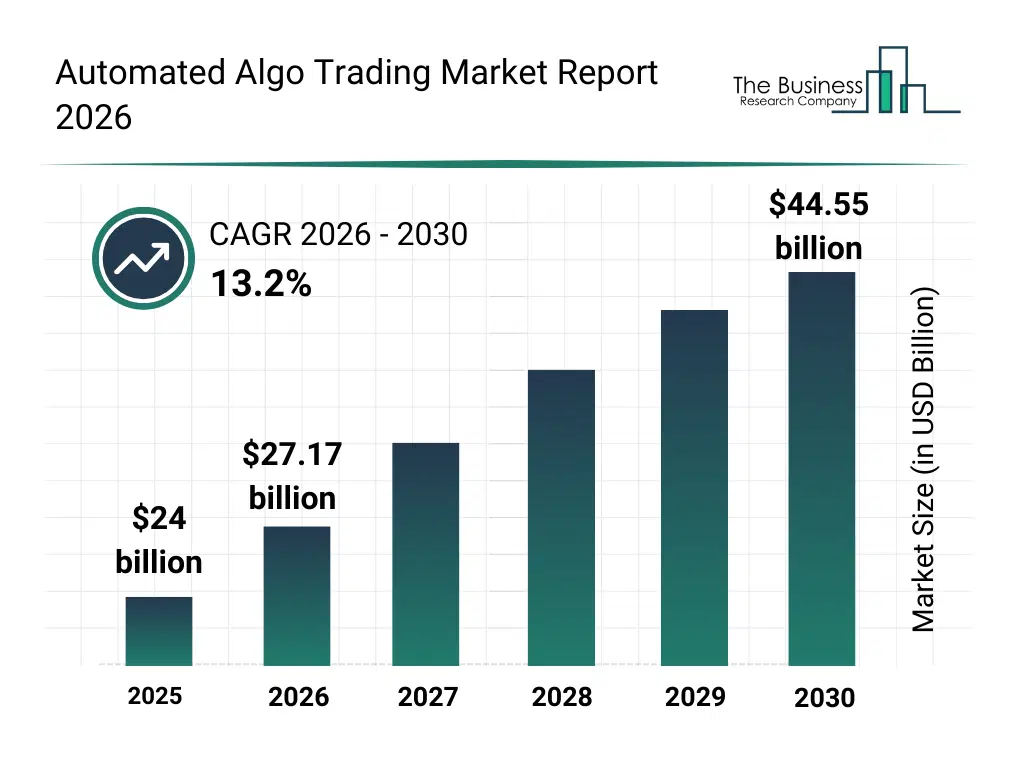
What Is The Automated Algo Trading Market Size and Share 2026?
The automated algo trading market size has grown rapidly in recent years. It will grow from $24 billion in 2025 to $27.17 billion in 2026 at a compound annual growth rate (CAGR) of 13.2%. The growth in the historic period can be attributed to increasing electronic trading adoption, expansion of global financial markets access, rising institutional participation in algorithmic trading, growth of quantitative investment strategies, increased availability of market data feeds.What Is The Automated Algo Trading Market Growth Forecast?
The automated algo trading market size is expected to see rapid growth in the next few years. It will grow to $44.55 billion in 2030 at a compound annual growth rate (CAGR) of 13.2%. The growth in the forecast period can be attributed to increasing adoption of machine learning trading models, rising regulatory focus on automated trading transparency, expansion of cloud-native trading platforms, growing demand for multi-asset algo strategies, increased use of real-time risk analytics. Major trends in the forecast period include increasing adoption of ai-driven trading algorithms, rising use of high-frequency trading platforms, growing demand for real-time market data integration, expansion of cloud-based algo trading deployment, enhanced focus on automated risk management.
Global Automated Algo Trading Market Segmentation
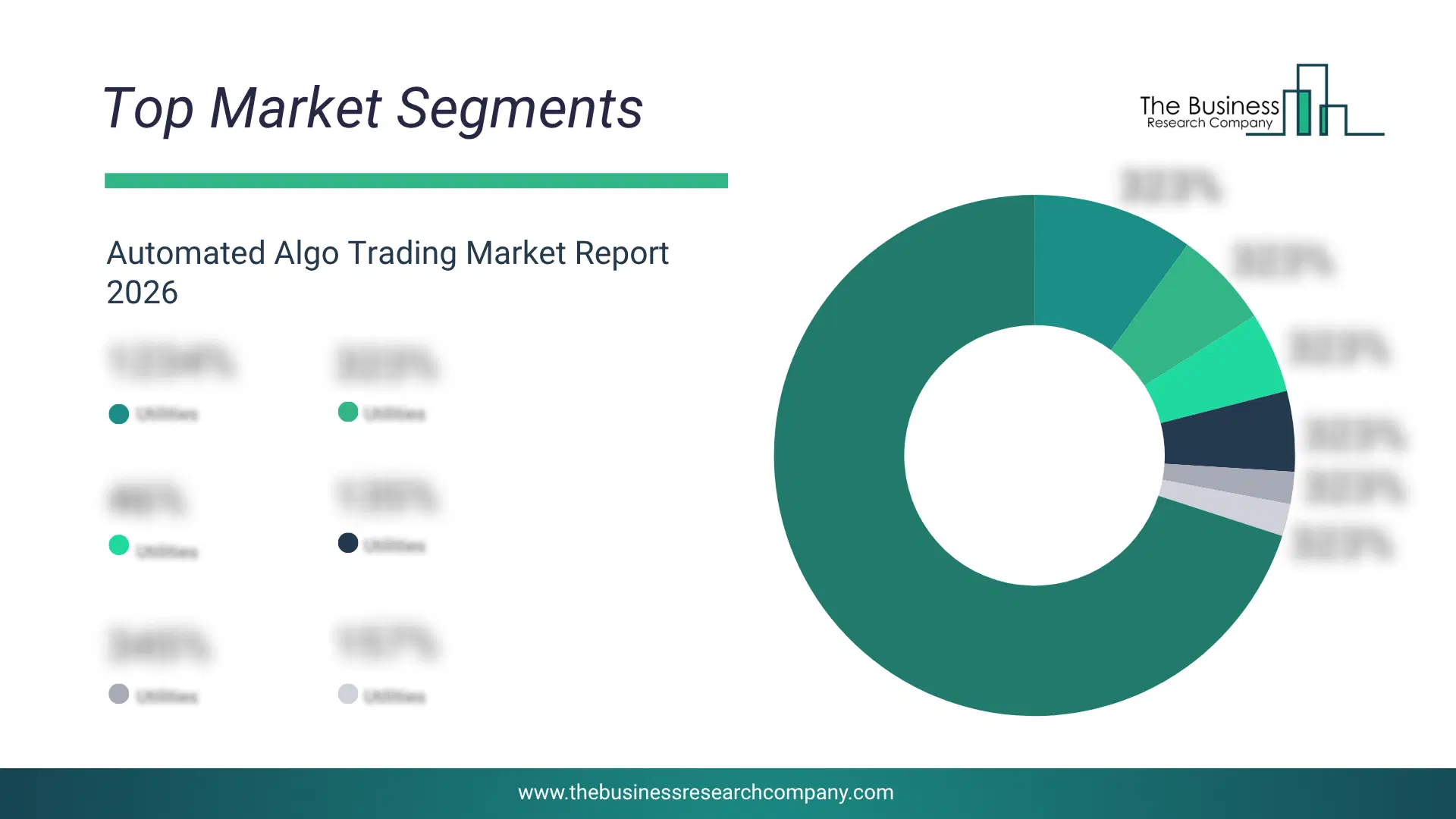
1) By Component: Solution, Service 2) By Trading Type: Stock Markets, FOREX, Exchange Traded Funds (ETF), Cryptocurrencies 3) By Deployment Mode: On-Premises, Cloud 4) By Application: Trade Execution, Statistical Arbitrage, Strategy Implementation, Electronic Market Making, Liquidity Detection 5) By End User: Pension Funds, Prime Brokers, Investment Funds Subsegments: 1) By Solution: Trading Algorithms, Risk Management Solutions, Market Data Feeds, Execution Management Systems (Ems), Portfolio Management Solutions, Backtesting Tools 2) By Service: Consulting And Advisory Services, Integration And Implementation Services, Managed Services, Maintenance And Support Services The top segments in the automated algo trading market will be: • Solution will reach $32.89 Billion by 2030. • Service will reach $11.4 Billion by 2030.What Is The Driver Of The Automated Algo Trading Market?
An increase in the use of cloud-based solutions is expected to propel the growth of the automated algo trading market going forward. Cloud-based solutions refer to software, services, or resources that are hosted and accessed over the Internet instead of on local servers or personal devices. The increase in the use of cloud-based solutions can be attributed to their scalability, cost-effectiveness, flexibility, and accessibility from anywhere with an Internet connection. Cloud-based solutions facilitate automated algorithmic trading by providing real-time access to market data, enabling rapid execution of trades, and ensuring seamless integration with trading platforms and systems, ultimately enhancing efficiency and profitability for traders For instance, in December 2023, according to Eurostat, a Luxembourg-based statistical office of the European Union, in 2023, 45.2?% of EU enterprises purchased cloud?computing services. Therefore, an increase in the use of cloud-based solutions is driving the growth of the automated algo trading industry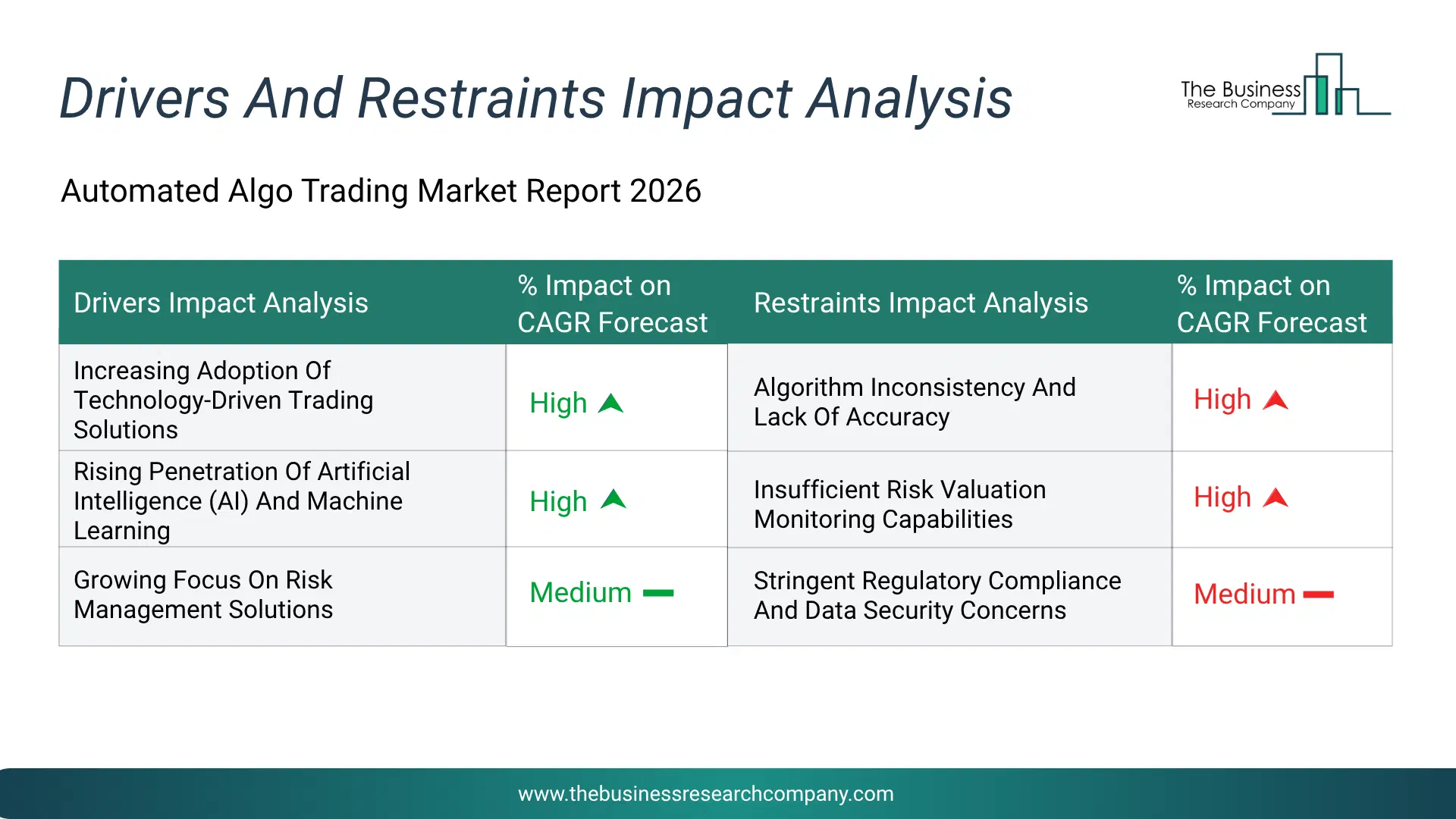
Infographic Chart Showing Key Market Drivers Analysis And Restraints For Automated Algo Trading Market
The chart presents an impact analysis of key drivers and restraints, quantifying their relative influence on the market's growth rate and helping assess the balance between growth enablers and limiting factors. This chart offers a high-level perspective; the full report contains more detailed insights.
How Will The Drivers Impact Growth In The Global Automated Algo Trading Market?
• Increasing Adoption Of Technology-Driven Trading Solutions (High) – During the forecast period, the increasing adoption of technology-driven trading solutions is expected to become a key growth driver for the automated algo trading market by 2030. Increasing Adoption of Technology-Driven Trading Solutions is a major driver for the automated algo trading market because financial institutions are rapidly shifting toward digital and high-speed trading environments. Advanced trading platforms allow traders to execute large volumes of transactions with minimal latency and higher operational efficiency. These solutions improve order accuracy, reduce manual intervention, and enable continuous market monitoring across multiple asset classes. The growing use of cloud computing, big data analytics, and real-time market intelligence further strengthens automated trading capabilities. Institutional investors and brokerage firms are increasingly investing in technology-enabled infrastructure to gain competitive advantages in volatile markets. In addition, the expansion of electronic exchanges and digital financial ecosystems continues to accelerate demand for automated trading systems globally. • Rising Penetration Of Artificial Intelligence (AI) And Machine Learning (High) – During the forecast period, the rising penetration of artificial intelligence (AI) and machine learning is expected to emerge as a major factor driving the expansion of the automated algo trading market by 2030. Rising Penetration of Artificial Intelligence (AI) and Machine Learning is significantly driving the automated algo trading market by enabling smarter and faster trading decisions. AI-powered algorithms can analyze massive volumes of market data, historical patterns, and price movements in real time to identify profitable trading opportunities. Machine learning models continuously improve trading accuracy by adapting to changing market conditions and investor behavior. These technologies also help firms reduce human bias and enhance predictive analytics for portfolio optimization. Hedge funds, investment banks, and proprietary trading firms are increasingly adopting AI-based systems to improve execution speed and maximize returns. Furthermore, the integration of natural language processing and sentiment analysis allows trading platforms to react instantly to financial news and market events, boosting market demand. • Growing Focus On Risk Management Solutions (Medium) – During the forecast period, the growing focus on risk management solutions is expected to act as a key growth catalyst for the automated algo trading market by 2030. Growing Focus on Risk Management Solutions is an important driver for the automated algo trading market because investors and financial institutions are prioritizing capital protection in highly volatile markets. Automated trading systems help minimize exposure to sudden market fluctuations by using predefined risk parameters, stop-loss mechanisms, and real-time monitoring tools. These platforms enable traders to manage portfolio risks more effectively while maintaining trading discipline and consistency. Regulatory pressures and the need for transparent trading practices are also encouraging firms to adopt advanced risk-controlled algorithmic systems. In addition, automated solutions can rapidly detect abnormal market movements and execute corrective actions faster than manual trading methods. As financial markets become increasingly complex, the demand for intelligent risk management capabilities continues to support the growth of automated algo trading technologies.How Will The Restraints Impact Growth In The Global Automated Algo Trading Market?
• Algorithm Inconsistency And Lack Of Accuracy (High) – During the forecast period, the algorithm Inconsistency And Lack Of Accuracy acts as a major restraint for the automated algo trading market because trading algorithms may fail to perform consistently under rapidly changing market conditions. Many automated systems rely heavily on historical data and predefined patterns, which may not accurately predict unexpected economic events or market volatility. Even minor coding errors, incorrect assumptions, or flawed trading logic can lead to substantial financial losses within seconds. Inaccurate algorithms may also generate false trading signals, increasing the risk of poor investment decisions and execution failures. As financial markets become more complex, maintaining high algorithm precision and adaptability becomes increasingly challenging for trading firms. Concerns regarding reliability and unpredictable performance reduce investor confidence and limit broader adoption of automated trading platforms. • Insufficient Risk Valuation Monitoring Capabilities (High) – During the forecast period, the insufficient Risk Valuation Monitoring Capabilities restrain the growth of the automated algo trading market because many trading systems struggle to accurately assess evolving financial risks in real time. Rapid market fluctuations, geopolitical events, and sudden liquidity changes can create trading conditions that are difficult for algorithms to interpret effectively. Inadequate monitoring capabilities may prevent systems from identifying abnormal market behavior or managing exposure efficiently during high-volatility situations. This increases the chances of uncontrolled losses, flash crashes, and poor portfolio management outcomes. Financial regulators and institutional investors are becoming more cautious about the operational risks associated with weak risk evaluation frameworks in automated trading environments. Moreover, the absence of robust real-time oversight tools reduces investor confidence and creates challenges for firms attempting to scale automated trading operations safely. • Stringent Regulatory Compliance And Data Security Concerns (Medium) – During the forecast period, the stringent regulatory compliance and data security concerns act as a significant restraint for the automated algo trading market because financial markets are heavily regulated to prevent market manipulation, unfair trading practices, and systemic risks. Regulatory authorities across different countries impose strict requirements related to algorithm transparency, trade reporting, risk controls, and operational monitoring, which increase compliance costs for trading firms. Frequent regulatory updates also create challenges for companies in maintaining and modifying their trading systems according to evolving legal standards. In addition, automated trading platforms handle large volumes of sensitive financial and transactional data, making them vulnerable to cyberattacks, data breaches, and unauthorized access. Concerns regarding cybersecurity risks and protection of confidential trading strategies reduce confidence among institutional and retail investors. As a result, the complexity of regulatory compliance and growing data security challenges can slow the adoption of automated algo trading solutions.Key Players In The Global Automated Algo Trading Market
Major companies operating in the automated algo trading market are Citadel Securities, Virtu Financial, Jane Street, Optiver, Susquehanna International Group, Jump Trading, Hudson River Trading, Tower Research Capital, DRW, Flow Traders, Wolverine Trading, Two Sigma Securities, Allston Trading, Geneva Trading, IMC Trading, XTX Markets, QuantConnect, AlgoTrader, Trading Technologies, FlexTrade Systems, InfoReach, Tethys Technology, QuantHouse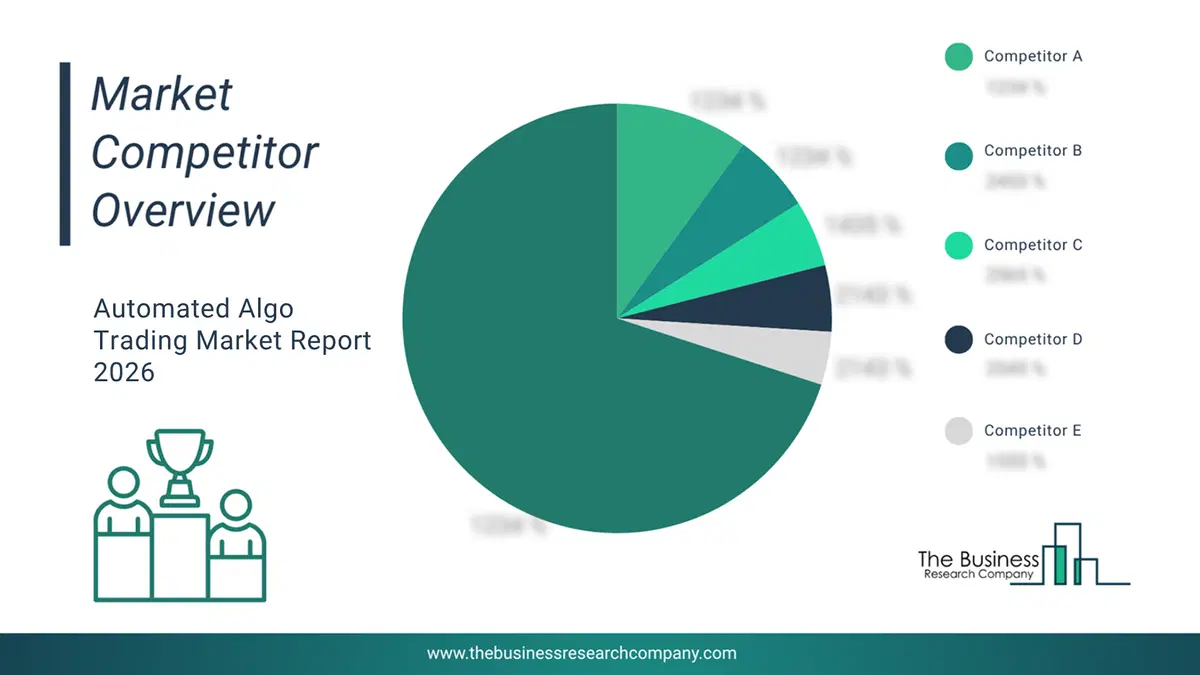
This chart is for illustrative purposes; the full report includes a detailed competitor analysis and comprehensive overview of the top 10 companies in the market.
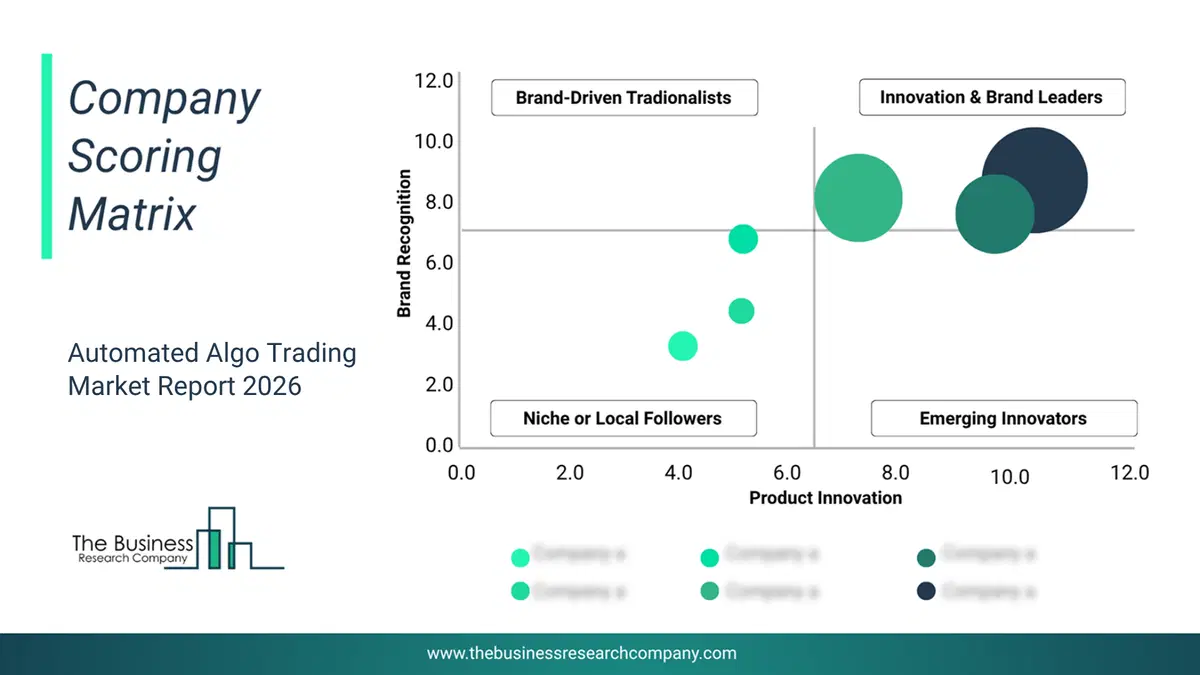
This chart maps companies by product innovation and brand strength, with bubble size indicating relative revenue, helping identify market leaders, challengers, and niche players. This is an illustrative chart; the full report provides a complete and accurate competitive analysis.
Global Automated Algo Trading Market Trends and Insights
Major companies operating in the automated algo trading market are focusing on developing advanced solutions, such as fully automated crypto trading software, to enhance trading efficiency and profitability for users. A fully automated crypto trading software, within the context of automated algo trading, refers to a specialized software solution designed to execute cryptocurrency trading strategies automatically without the need for manual intervention. For instance, in March 2023, SMARD LLC, a US-based trading enhancement tool, launched a fully automated crypto trading software that enables users to trade on the cryptocurrency market without the need for programming or extensive knowledge of the crypto space. This software utilizes sophisticated algorithms and machine learning to execute trades automatically, continuously monitoring market conditions to make informed decisions. It aims to enhance trading efficiency by offering algorithmic trading capabilities supported by academic research and multiple strategies.What Are Latest Mergers And Acquisitions In The Automated Algo Trading Market?
In July 2024, Clear Street LLC, a US‑based cloud‑native financial technology or brokerage firm, acquired Fox River (algorithmic trading business of Instinet) for an undisclosed amount. With this acquisition, Clear Street aimed to strengthen its electronic and algorithmic execution capabilities for institutional and quant‑driven clients in U.S. and Canadian equities. Fox River Capital LLC is a US‑based trading‑technology business that specializes in providing algorithmic execution solutions and high‑performance trading algorithms for both buy‑ and sell‑side firms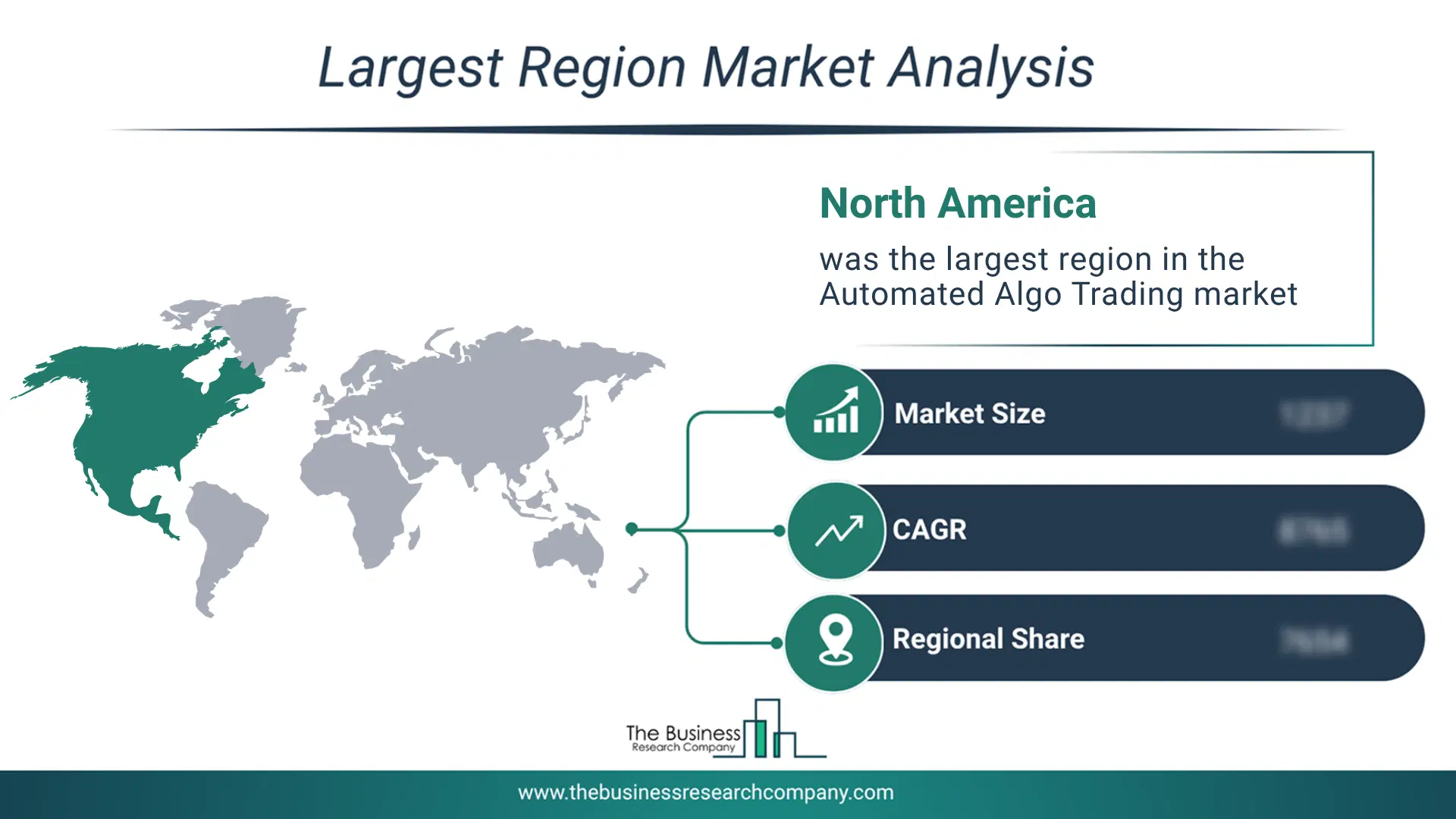
Regional Outlook
North America was the largest region in the automated algo trading market in 2025. Asia-Pacific is expected to be the fastest-growing region in the forecast period. The regions covered in this market report are Asia-Pacific, South East Asia, Western Europe, Eastern Europe, North America, South America, Middle East, Africa. The countries covered in this market report are Australia, Brazil, China, France, Germany, India, Indonesia, Japan, Taiwan, Russia, South Korea, UK, USA, Canada, Italy, Spain.What Defines the Automated Algo Trading Market?
The automated algo trading market includes revenues earned by entities by providing services, such as backtesting and optimization, real-time market data feeds, portfolio management, and integration with brokerage platforms. The market value includes the value of related goods sold by the service provider or included within the service offering. Only goods and services traded between entities or sold to end consumers are included.How is Market Value Defined and Measured?
The market value is defined as the revenues that enterprises gain from the sale of goods and/or services within the specified market and geography through sales, grants, or donations in terms of the currency (in USD unless otherwise specified). The revenues for a specified geography are consumption values that are revenues generated by organizations in the specified geography within the market, irrespective of where they are produced. It does not include revenues from resales along the supply chain, either further along the supply chain or as part of other products.
This chart presents market attractiveness based on a quantitative evaluation of growth, competition, strategic alignment, and risk, offering a clear view of opportunity areas for decision-making. This chart is for illustrative purposes; the full report contains the complete analysis.

This chart highlights the Total Addressable Market (TAM) by estimating the maximum revenue opportunity using an assumption-driven approach, supporting strategic planning and opportunity sizing across markets. The chart is illustrative; the full report provides a more comprehensive analysis.
What Key Data and Analysis Are Included in the Automated Algo Trading Market Report 2026?
The automated algo trading market research report is one of a series of new reports from The Business Research Company that provides market statistics, including Market Report 2026?global market size, regional shares, competitors with the market share, detailed market segments, market trends and opportunities, and any further data you may need to thrive in the automated algo trading Market Report 2026? The market research report delivers a complete perspective of everything you need, with an in-depth analysis of the current and future state of the Market Report 2026?Automated Algo Trading Market Report Forecast Analysis
| Report Attribute | Details |
|---|---|
| Market Size Value In 2026 | $27.17 billion |
| Revenue Forecast In 2030 | $44.55 billion |
| Growth Rate | CAGR of 13.2% from 2026 to 2030 |
| Base Year For Estimation | 2025 |
| Actual Estimates/Historical Data | 2020-2025 |
| Forecast Period | 2026 - 2030 |
| Market Representation | Revenue in USD Billion and CAGR from 2026 to 2030 |
| Segments Covered | Component, Trading Type, Deployment Mode, Application, End User |
| Regional Scope | Asia-Pacific, Western Europe, Eastern Europe, North America, South America, Middle East, Africa |
| Country Scope | The countries covered in the report are Australia, Brazil, China, France, Germany, India, Indonesia, Japan, Taiwan, Russia, South Korea, UK, USA, Canada, Italy, Spain. |
| Key Companies Profiled | Citadel Securities, Virtu Financial, Jane Street, Optiver, Susquehanna International Group, Jump Trading, Hudson River Trading, Tower Research Capital, DRW, Flow Traders, Wolverine Trading, Two Sigma Securities, Allston Trading, Geneva Trading, IMC Trading, XTX Markets, QuantConnect, AlgoTrader, Trading Technologies, FlexTrade Systems, InfoReach, Tethys Technology, QuantHouse |
| Customization Scope | Request for Customization |
| Pricing And Purchase Options | Explore Purchase Options |