
Automated Drug Compounding Systems Market Report 2026
Global Outlook – By Product (Robotic Compounding Systems, Automated Liquid Compounding Systems, Tablet And Capsule Dispensers, Injectable Compounding Robots, IV Admixture Systems, Oral Liquid Compounding Systems), By Component (Equipment, Software, Consumables, Services), By Technology (Robotic-Based Systems, Semi-Automated Systems, Gravimetric Dosing Systems, Volumetric Dosing Systems, Hybrid Dosing Systems), By End-User (Hospitals, Clinics, Retail Pharmacies, Compounding Pharmacies, Pharmaceutical Manufacturers) – Market Size, Trends, Strategies, and Forecast to 2030
Automated Drug Compounding Systems Market Overview
• Automated Drug Compounding Systems market size has reached to $1.85 billion in 2025 • Expected to grow to $3.28 billion in 2030 at a compound annual growth rate (CAGR) of 12% • Growth Driver: Rising Prevalence Of Chronic Diseases Fueling The Growth Of The Market Due To Demand For Precise, Individualized Medication • Market Trend: Enhancing Drug Preparation With Seamless TPN Automation, Precision Compounding, And Integrated Workflow Control • North America was the largest region in 2025 and Asia-Pacific is the fastest growing region.What Is Covered Under Automated Drug Compounding Systems Market?
Automated drug compounding systems are advanced technologies designed to accurately prepare customized medications with minimal human intervention. They use robotics, software, and controlled environments to ensure precision, sterility, and consistency in drug preparation. These systems help reduce errors, improve safety, and streamline pharmacy operations. The main products of automated drug compounding systems include robotic compounding systems, automated liquid compounding systems, tablet and capsule dispensers, injectable compounding robots, IV admixture systems, and oral liquid compounding systems. Robotic compounding systems refer to fully automated robotic platforms designed to accurately and efficiently prepare medications, including sterile and non-sterile formulations, while minimizing human error and exposure to hazardous drugs. The components such as specialized equipment, software, consumables and services. The technologies, including robotic-based systems, semi-automated systems, gravimetric and volumetric dosing, and hybrid dosing systems. The key end users such as hospitals, clinics, retail pharmacies, compounding pharmacies, and pharmaceutical manufacturers.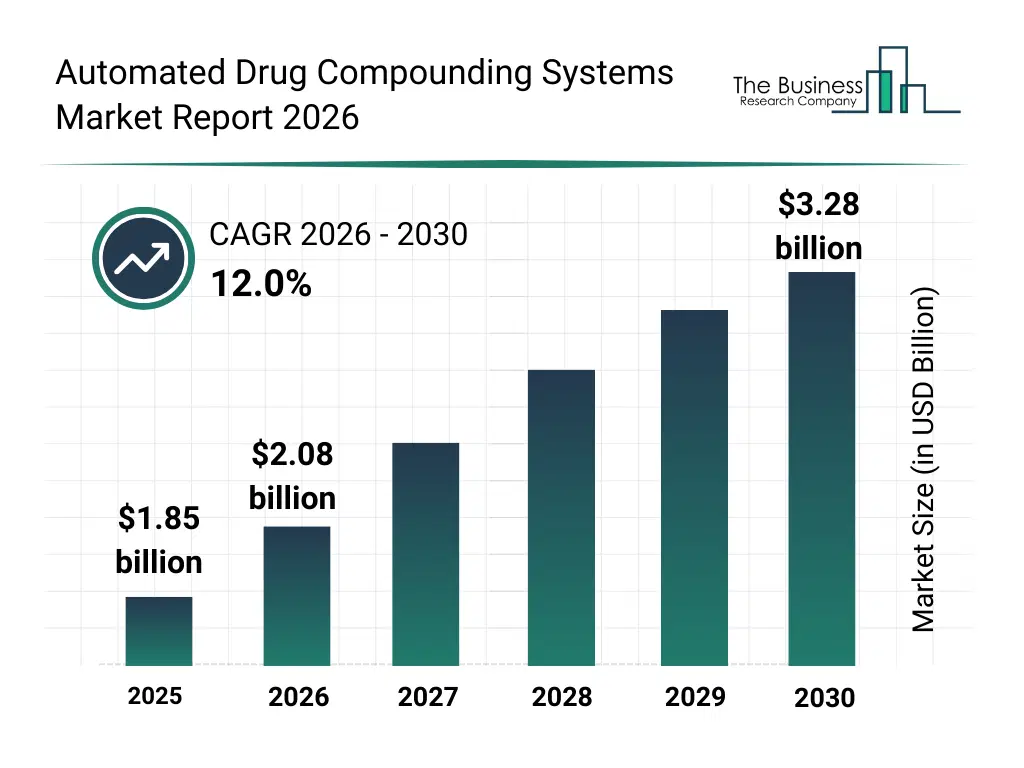
What Is The Automated Drug Compounding Systems Market Size and Share 2026?
The automated drug compounding systems market size has grown rapidly in recent years. It will grow from $1.85 billion in 2025 to $2.08 billion in 2026 at a compound annual growth rate (CAGR) of 12.3%. The growth in the historic period can be attributed to increasing adoption of automated systems in hospital pharmacies, rising need to minimize medication errors, growing focus on sterile and accurate drug preparation, increasing workflow burden on pharmacy staff, and rising demand for time-saving compounding processes.What Is The Automated Drug Compounding Systems Market Growth Forecast?
The automated drug compounding systems market size is expected to see rapid growth in the next few years. It will grow to $3.28 billion in 2030 at a compound annual growth rate (CAGR) of 12.0%. The growth in the forecast period can be attributed to growing investment in healthcare automation, increasing integration of software and automation tools, rising need for standardization in drug compounding, growing focus on reducing contamination risks, increasing hospital spending on automation infrastructure, and rising need for operational efficiency in pharmacies. Major trends in the forecast period include advancement in robotic-assisted drug compounding technologies, innovation in software integration for pharmacy management, integration of AI for error reduction in compounding processes, advancement in real-time monitoring and quality control systems, and innovation in automated sterile compounding techniques.
Global Automated Drug Compounding Systems Market Segmentation
1) By Product: Robotic Compounding Systems, Automated Liquid Compounding Systems, Tablet And Capsule Dispensers, Injectable Compounding Robots, IV Admixture Systems, Oral Liquid Compounding Systems 2) By Component: Equipment, Software, Consumables, Services 3) By Technology: Robotic-Based Systems, Semi-Automated Systems, Gravimetric Dosing Systems, Volumetric Dosing Systems, Hybrid Dosing Systems 4) By End-User: Hospitals, Clinics, Retail Pharmacies, Compounding Pharmacies, Pharmaceutical Manufacturers Subsegments: 1) By Robotic Compounding Systems: Fully Automated Sterile Compounding Robots, Hazardous Drug Compounding Robots, Non-Hazardous Drug Compounding Robots, High-Throughput Pharmacy Robots, Closed-System Robotic Compounding Units 2) By Automated Liquid Compounding Systems: Large-Volume Parenteral (LVP) Compounding Systems, Small-Volume Parenteral (SVP) Compounding Systems, Multi-Drug Liquid Compounding Units, Volumetric And Gravimetric Liquid Compounding Systems, Pediatric Liquid Dosing Compounding Systems 3) By Tablet and Capsule Dispensers: Automated Tablet Counting Dispensers, Unit-Dose Packaging Systems, Multi-Dose Blister Dispensing Units, Capsule Filling and Dispensing Systems, High-Speed Pharmacy Dispensing Robots 4) By Injectable Compounding Robots: Chemotherapy Drug Compounding Robots, TPN (Total Parenteral Nutrition) Compounding Robots, High-Precision Syringe Preparation Robots, Sterile Injectable Filling Robots, Hazardous Injectable Handling Systems 5) By IV Admixture Systems: Automated IV Bag Filling Systems, IV Nutrition (TPN) Admixture Systems, IV Antibiotic Admixture Devices, Pharmacy Cleanroom IV Automation Units, Closed-System IV Compounding Systems 6) By Oral Liquid Compounding Systems: Pediatric Oral Liquid Compounding Machines, Flavoring & Suspension Mixing Systems, Multi-Ingredient Oral Liquid Compounding Units, Gravimetric Oral Solution Compounding Systems, Low-Volume Oral Dosing Compounding SystemsWhat Are The Drivers Of The Automated Drug Compounding Systems Market?
The increasing prevalence of chronic diseases is expected to propel the growth of the automated drug compounding systems market going forward. Chronic diseases are long-lasting health conditions that usually progress slowly over time, such as diabetes, heart disease, and arthritis, and often require ongoing medical attention and lifestyle management to control symptoms and prevent complications. Chronic diseases are increasing largely due to unhealthy lifestyles, including poor diet, physical inactivity, and smoking, which raise the risk of conditions such as diabetes, heart disease, and obesity. Automated drug compounding systems aid in chronic disease management by precisely preparing individualized medications tailored to each patient’s needs. They improve treatment accuracy and consistency, reducing errors and enhancing long-term therapeutic outcomes. For instance, in June 2024, according to the National Health Service, a UK-based government department, 3,615,330 individuals registered with a general practitioner (GP) were diagnosed with non-diabetic hyperglycemia or pre-diabetes (a condition with elevated blood sugar levels, not high enough to be classified as diabetes) in 2023, marking an 18% increase from 3,065,825 cases in 2022. Therefore, the increasing prevalence of chronic diseases is driving the growth of the automated drug compounding systems industry. The shortage of skilled pharmacy staff is expected to propel the growth of the automated drug compounding systems market going forward. The shortage of skilled pharmacy staff refers to the limited availability of trained pharmacists and technicians capable of safely preparing and dispensing medications in hospitals, clinics, and compounding pharmacies. The rise in the shortage of skilled pharmacy staff is due to increasing patient loads and the growing prevalence of chronic diseases requiring precise pharmaceutical care. Automated drug compounding systems reduce reliance on skilled pharmacy staff by enabling accurate, consistent, and efficient preparation of medications with minimal human intervention, reducing errors and workload for pharmacy staff. For instance, in August 2024, according to the National Center for Health Workforce Studies, a US-based health workforce research organization, projections indicate a shortage of 4,980 pharmacists over the next 15 years through 2036, while overall demand for pharmacists is expected to grow 3% from 2022 to 2032, raising concerns amid declining application trends. Therefore, the shortage of skilled pharmacy staff is driving the growth of the automated drug compounding systems industry.Key Players In The Global Automated Drug Compounding Systems Market
Major companies operating in the automated drug compounding systems market are Becton Dickinson and Company, Baxter International Inc., B. Braun Melsungen AG, Fresenius Kabi AG, ICU Medical Inc., Omnicell Inc., Eckert & Ziegler SE, Swisslog Healthcare AG, EQUASHIELD Medical Ltd., Trasis S.A., Loccioni Group S.p.A., ARxIUM Inc., Comecer S.p.A., Tema Sinergie S.p.A., Epic Medical Pte. Ltd., IBA Radiopharma Solutions S.A., Steriline S.r.l., Elysia-Raytest GmbH, Curifylabs OY, Kapsam Health Solutions Pvt. Ltd.
This chart is for illustrative purposes; the full report includes a detailed competitor analysis and comprehensive overview of the top 10 companies in the market.
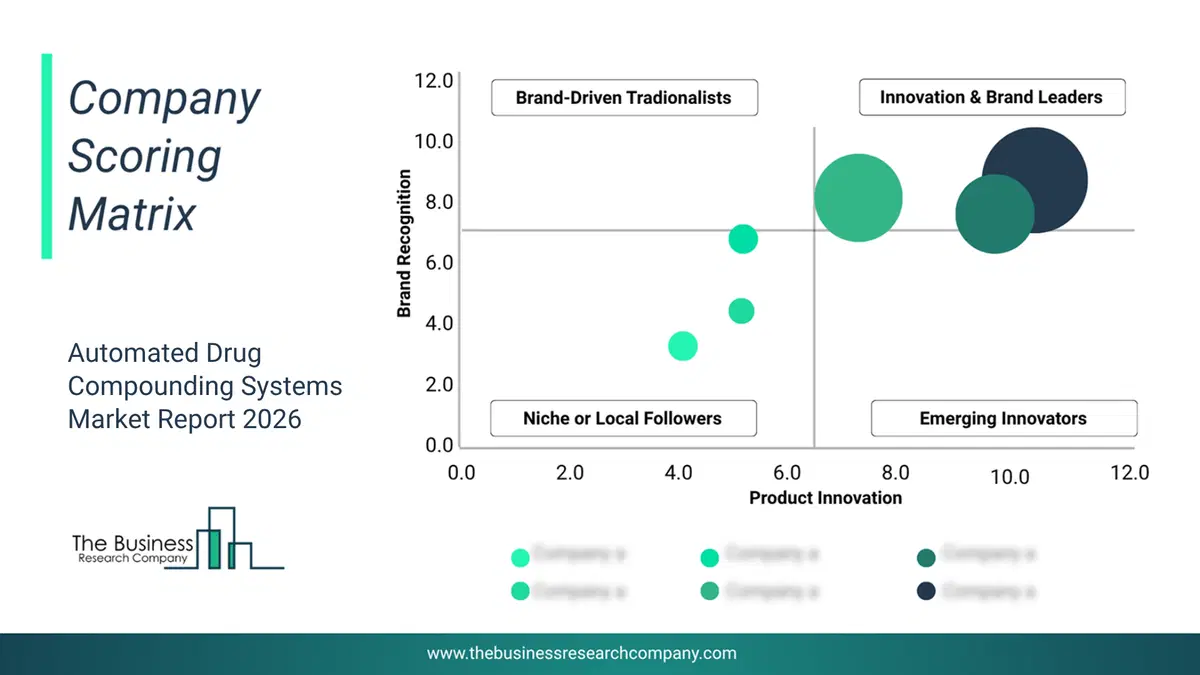
This chart maps companies by product innovation and brand strength, with bubble size indicating relative revenue, helping identify market leaders, challengers, and niche players. This is an illustrative chart; the full report provides a complete and accurate competitive analysis.
Global Automated Drug Compounding Systems Market Trends and Insights
Major companies operating in the automated drug compounding systems market are focusing on developing advanced systems, such as total parenteral nutrition (TPN) automation systems, to improve accuracy, safety, and efficiency in preparing personalized intravenous formulations. A total parenteral nutrition (TPN) automation system refers to a compounding platform that not only automates the mixing and dispensing of total parenteral nutrition (TPN) solutions but also integrates prescription validation and workflow management tools to reduce human error and ensure sterile, high-quality preparation. For instance, in May 2025, MediServ Co. Ltd., launched the APEX TPN Compounding System in Riyadh, ushering in a new era of precision and automation for parenteral nutrition workflows. The system, showcased with its EasyComp integration software, enhances the total parenteral nutrition (TPN) process by linking validated prescriptions through to sterile, accurate compounding, streamlining pharmacy operations and reducing manual tasks.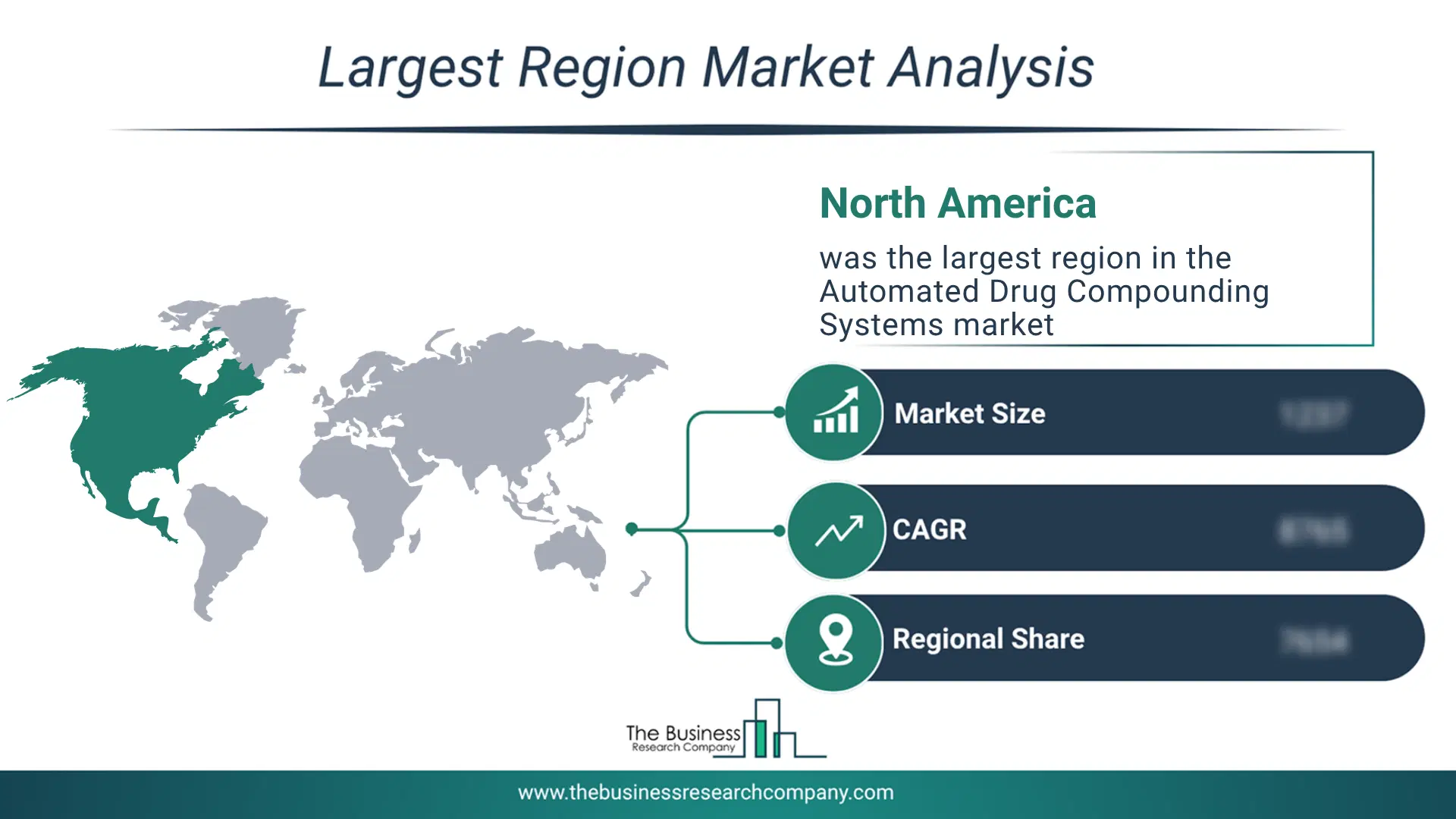
Regional Insights
North America was the largest region in the automated drug compounding Systems market in 2025. Asia-Pacific is expected to be the fastest-growing region in the forecast period. The regions covered in this market report are Asia-Pacific, South East Asia, Western Europe, Eastern Europe, North America, South America, Middle East, Africa. The countries covered in this market report are Australia, Brazil, China, France, Germany, India, Indonesia, Japan, Taiwan, Russia, South Korea, UK, USA, Canada, Italy, Spain.What Defines the Automated Drug Compounding Systems Market?
The automated drug compounding systems market consists of revenues earned by entities by providing services such as automated medication preparation, sterile drug compounding, accuracy verification, workflow optimization support, system maintenance, and software-based monitoring and control. The market value includes the value of related goods sold by the service provider or included within the service offering. The automated drug compounding systems market also includes sales of robotic compounding units, automated liquid and powder compounding systems, software platforms for compounding accuracy, and related accessories and components. Values in this market are ‘factory gate’ values, that is, the value of goods sold by the manufacturers or creators of the goods, whether to other entities (including downstream manufacturers, wholesalers, distributors, and retailers) or directly to end customers. The value of goods in this market includes related services sold by the creators of the goods.How is Market Value Defined and Measured?
The market value is defined as the revenues that enterprises gain from the sale of goods and/or services within the specified market and geography through sales, grants, or donations in terms of the currency (in USD unless otherwise specified). The revenues for a specified geography are consumption values that are revenues generated by organizations in the specified geography within the market, irrespective of where they are produced. It does not include revenues from resales along the supply chain, either further along the supply chain or as part of other products.
This chart presents market attractiveness based on a quantitative evaluation of growth, competition, strategic alignment, and risk, offering a clear view of opportunity areas for decision-making. This chart is for illustrative purposes; the full report contains the complete analysis.

This chart highlights the Total Addressable Market (TAM) by estimating the maximum revenue opportunity using an assumption-driven approach, supporting strategic planning and opportunity sizing across markets. The chart is illustrative; the full report provides a more comprehensive analysis.
What Key Data and Analysis Are Included in the Automated Drug Compounding Systems Market Report 2026?
The automated drug compounding systems market research report is one of a series of new reports from The Business Research Company that provides market statistics, including industry global market size, regional shares, competitors with the market share, detailed market segments, market trends and opportunities, and any further data you may need to thrive in the automated drug compounding systems industry. The market research report delivers a complete perspective of everything you need, with an in-depth analysis of the current and future state of the industry.Automated Drug Compounding Systems Market Report Forecast Analysis
| Report Attribute | Details |
|---|---|
| Market Size Value In 2026 | $2.08 billion |
| Revenue Forecast In 2030 | $3.28 billion |
| Growth Rate | CAGR of 12% from 2026 to 2030 |
| Base Year For Estimation | 2025 |
| Actual Estimates/Historical Data | 2020-2025 |
| Forecast Period | 2026 - 2030 |
| Market Representation | Revenue in USD Billion and CAGR from 2026 to 2030 |
| Segments Covered | Product, Component, Technology, End-User |
| Regional Scope | Asia-Pacific, Western Europe, Eastern Europe, North America, South America, Middle East, Africa |
| Country Scope | The countries covered in the report are Australia, Brazil, China, France, Germany, India, Indonesia, Japan, Taiwan, Russia, South Korea, UK, USA, Canada, Italy, Spain. |
| Key Companies Profiled | Becton Dickinson and Company, Baxter International Inc., B. Braun Melsungen AG, Fresenius Kabi AG, ICU Medical Inc., Omnicell Inc., Eckert & Ziegler SE, Swisslog Healthcare AG, EQUASHIELD Medical Ltd., Trasis S.A., Loccioni Group S.p.A., ARxIUM Inc., Comecer S.p.A., Tema Sinergie S.p.A., Epic Medical Pte. Ltd., IBA Radiopharma Solutions S.A., Steriline S.r.l., Elysia-Raytest GmbH, Curifylabs OY, Kapsam Health Solutions Pvt. Ltd. |
| Customization Scope | Request for Customization |
| Pricing And Purchase Options | Explore Purchase Options |