
Automated Next-Generation Sequencing (NGS) Library Preparation Market Report 2026
Global Outlook – By Type (Targeted Genome Sequencing, Whole Genome Sequencing, Whole Exome Sequencing, Other Sequencing Types), By Workflow (Nucleic Acid Extraction, Fragmentation, Adapter Ligation, Purification And Quantification), By Application (Drug And Biomarker Discovery, Disease Diagnostics, Other Applications), By End-Use (Hospitals And Clinics, Academic And Research Institutions, Pharmaceutical And Biotechnology Companies, Other End-Users) - Market Size, Trends, Strategies, and Forecast to 2030
Automated Next-Generation Sequencing (NGS) Library Preparation Market Overview
• Automated Next-Generation Sequencing (NGS) Library Preparation market size has reached to $0.72 billion in 2025 • Expected to grow to $1.35 billion in 2030 at a compound annual growth rate (CAGR) of 13.3% • Growth Driver: Rise In Gene Therapy Fueling The Growth Of The Market Due To Increasing Need For Accurate Genetic Analysis And Validation • Market Trend: Advancing Genomic Analysis Through Cutting-Edge Sequencing Innovation • North America was the largest region in 2025 and Asia-Pacific is the fastest growing region.What Is Covered Under Automated Next-Generation Sequencing (NGS) Library Preparation Market?
Automated next-generation sequencing (NGS) library preparation refers to the use of robotic systems and software to perform the complex and repetitive steps involved in preparing DNA or RNA samples for sequencing. This process includes fragmentation, end-repair, adapter ligation, and amplification, ensuring consistency, scalability, and reduced human error in high-throughput sequencing workflows. The main types of automated next-generation sequencing (NGS) library preparation are targeted genome sequencing, whole genome sequencing, whole exome sequencing, and others. Targeted genome sequencing focuses on analyzing specific genomic regions of interest, offering high-depth coverage and cost-effective mutation detection for both diagnostic and research applications. The workflow involves steps such as nucleic acid extraction, fragmentation, adapter ligation, purification, and quantification. These processes are widely applied in drug and biomarker discovery, disease diagnostics, and others by several end users, including hospitals and clinics, academic and research institutions, pharmaceutical and biotechnology companies, and others.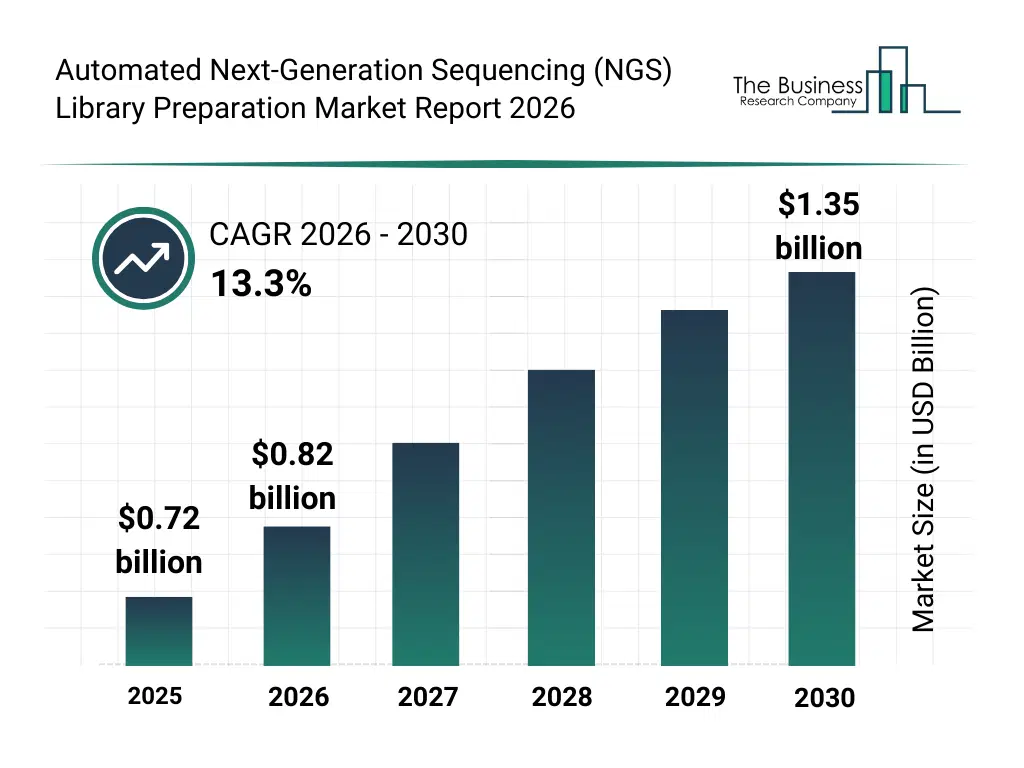
What Is The Automated Next-Generation Sequencing (NGS) Library Preparation Market Size and Share 2026?
The automated next-generation sequencing (ngs) library preparation market size has grown rapidly in recent years. It will grow from $0.72 billion in 2025 to $0.82 billion in 2026 at a compound annual growth rate (CAGR) of 13.9%. The growth in the historic period can be attributed to expansion of genomic research activities, increasing adoption of NGS in clinical research, growth of precision medicine initiatives, rising demand for scalable sequencing workflows, improvements in sequencing chemistry technologies.What Is The Automated Next-Generation Sequencing (NGS) Library Preparation Market Growth Forecast?
The automated next-generation sequencing (ngs) library preparation market size is expected to see rapid growth in the next few years. It will grow to $1.35 billion in 2030 at a compound annual growth rate (CAGR) of 13.3%. The growth in the forecast period can be attributed to growing use of NGS in diagnostics, increasing investments in automated laboratory infrastructure, expansion of population genomics programs, rising demand for rapid sequencing turnaround times, increasing adoption of single-cell sequencing workflows. Major trends in the forecast period include increasing adoption of fully automated library preparation platforms, rising demand for high-throughput sequencing workflows, growing integration of robotics in sample processing, expansion of standardized and reproducible ngs pipelines, enhanced focus on error reduction and workflow consistency.
Global Automated Next-Generation Sequencing (NGS) Library Preparation Market Segmentation
1) By Type: Targeted Genome Sequencing, Whole Genome Sequencing, Whole Exome Sequencing, Other Sequencing Types 2) By Workflow: Nucleic Acid Extraction, Fragmentation, Adapter Ligation, Purification And Quantification 3) By Application: Drug And Biomarker Discovery, Disease Diagnostics, Other Applications 4) By End-Use: Hospitals And Clinics, Academic And Research Institutions, Pharmaceutical And Biotechnology Companies, Other End-Users Subsegments: 1) By Targeted Genome Sequencing: Amplicon-Based Targeted Sequencing, Hybridization Capture-Based Targeted Sequencing, Custom Targeted Panels, Pre-designed Gene Panels 2) By Whole Genome Sequencing: Human Whole Genome Sequencing, Animal Whole Genome Sequencing, Plant Whole Genome Sequencing, Microbial Whole Genome Sequencing 3) By Whole Exome Sequencing: Standard Exome Sequencing, Clinical Exome Sequencing, Custom Exome Panels, Ultra-Rapid Exome Sequencing 4) By Other Sequencing Types: RNA Sequencing (RNA-Seq), Epigenome Sequencing, Metagenomic Sequencing, Single-Cell SequencingWhat Is The Driver Of The Automated Next-Generation Sequencing (NGS) Library Preparation Market?
The rise in gene therapy is expected to propel the growth of the automated next-generation sequencing (NGS) library preparation market going forward. Gene therapy is a treatment method that alters a person's genes to cure or prevent diseases. Gene therapy is increasing due to the rising prevalence of genetic disorders that require targeted and long-lasting treatment solutions. Automated NGS library preparation is used in gene therapy to accurately analyze and validate genetic modifications by preparing high-quality DNA or RNA samples for sequencing. For instance, in April 2024, according to the American Society of Gene and Cell Therapy, a US-based non-profit medical and scientific organization, in the fourth quarter of 2023, the number of phase III gene therapy clinical trials rose by 10%, marking the first quarterly increase since the third quarter of 2022. Therefore, the rise in gene therapy is driving the growth of the automated next-generation sequencing (NGS) library preparation industry.Key Players In The Global Automated Next-Generation Sequencing (NGS) Library Preparation Market
Major companies operating in the automated next-generation sequencing (ngs) library preparation market are F. Hoffmann-La Roche Ltd., Thermo Fisher Scientific Inc., Agilent Technologies India Private Limited, Illumina Inc., Beckman Coulter Inc., Bio-Rad Laboratories Inc., IDT Corporation, Tecan Group AG, Hamilton Company, Takara Bio Inc., 10x Genomics Inc., Oxford Nanopore Technologies plc, Twist Bioscience Corporation, New England Biolabs Inc., SPT Labtech Limited, Watchmaker Genomics Inc., Pillar Biosciences Inc., Aurora Biomed Inc., BGI Group, SEQWELL INC., Hudson Robotics Inc.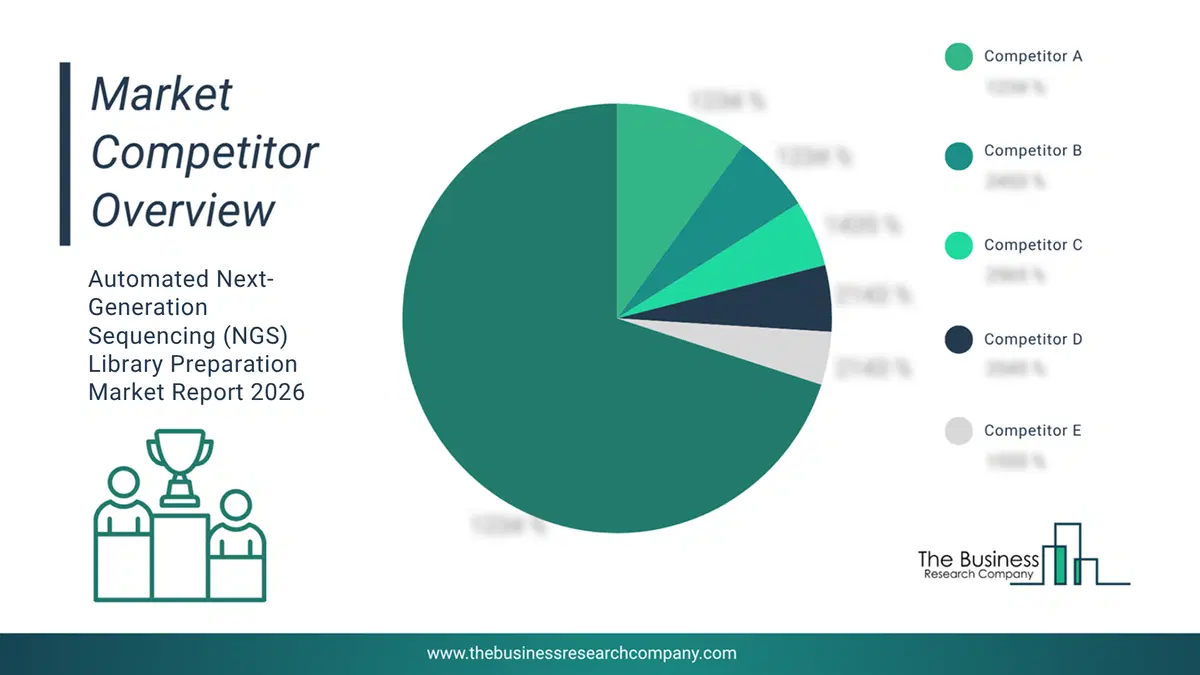
This chart is for illustrative purposes; the full report includes a detailed competitor analysis and comprehensive overview of the top 10 companies in the market.
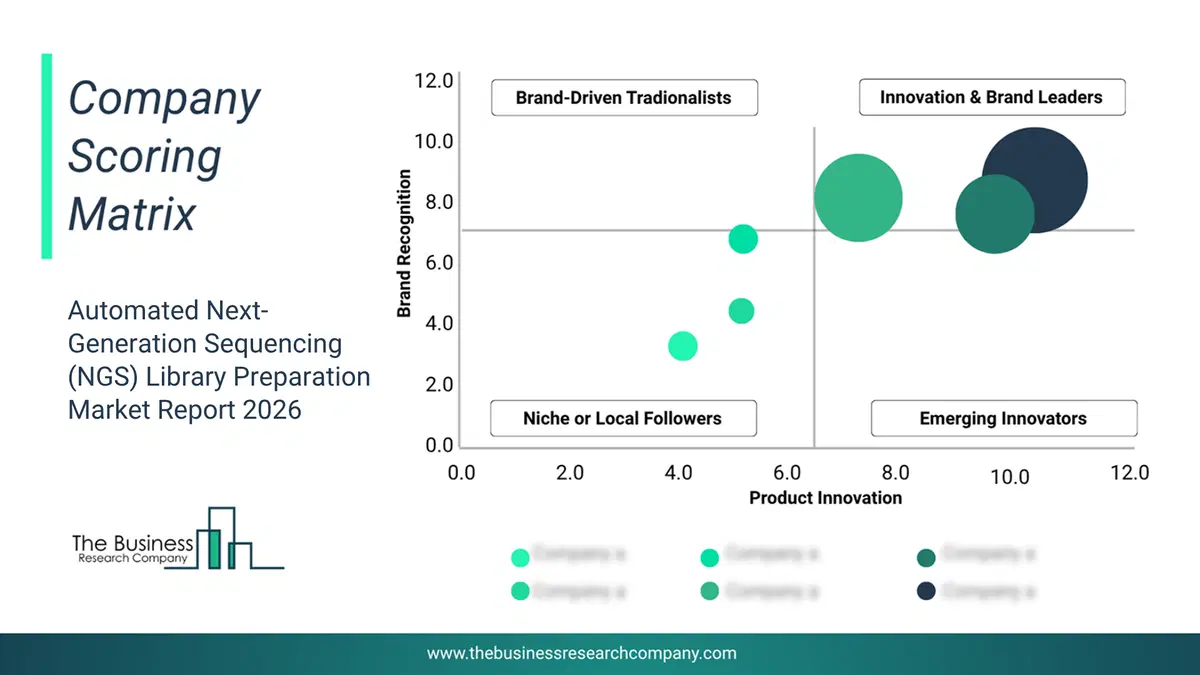
This chart maps companies by product innovation and brand strength, with bubble size indicating relative revenue, helping identify market leaders, challengers, and niche players. This is an illustrative chart; the full report provides a complete and accurate competitive analysis.
Global Automated Next-Generation Sequencing (NGS) Library Preparation Market Trends and Insights
Major companies operating in the automated next-generation sequencing (NGS) library preparation market are focusing on developing advanced technologies, such as Xpandomer technology, to enhance sequencing speed, improve data accuracy, and increase scalability, thereby streamlining workflows and supporting more efficient and reliable genomic analysis. Xpandomer technology is an advanced deoxyribonucleic acid (DNA) or ribonucleic acid (RNA) sequencing method that converts a target nucleic acid molecule into a synthetic, expanded polymer called an Xpandomer, which is approximately 50 times longer than the original deoxyribonucleic acid (DNA) or ribonucleic acid (RNA) strand. For instance, in February 2025, Roche AG, a Switzerland-based biotechnology company, launched Sequencing by Expansion, a cutting-edge sequencing platform designed to improve genomic resolution for advanced diagnostics, disease research, and precision medicine applications. This innovative automated next-generation sequencing (NGS) library preparation system streamlines complex workflows, enhances data quality, and accelerates genomic analysis to support advanced research and personalized medicine. The sequencing by expansion platform is highly versatile, enabling precise analysis of various genomic alterations across a wide range of diseases, including cancer and rare genetic disorders, by enhancing resolution and accuracy for deeper biological insights.What Are Latest Mergers And Acquisitions In The Automated Next-Generation Sequencing (NGS) Library Preparation Market?
In January 2023, Agilent Technologies Inc., a US-based biotechnology company, acquired Avida Biomed for an undisclosed amount. This acquisition of Avida Biomed boosts its cancer research and diagnostics capabilities by adding advanced NGS tools that work well with Agilent’s platforms. This strengthens Agilent’s position in precision medicine, allowing faster, more efficient genomic analysis for applications such as biomarker discovery and therapy selection. Avida Biomed is a US-based biotechnology company that specializes in developing high-performance NGS target enrichment workflows for cancer research.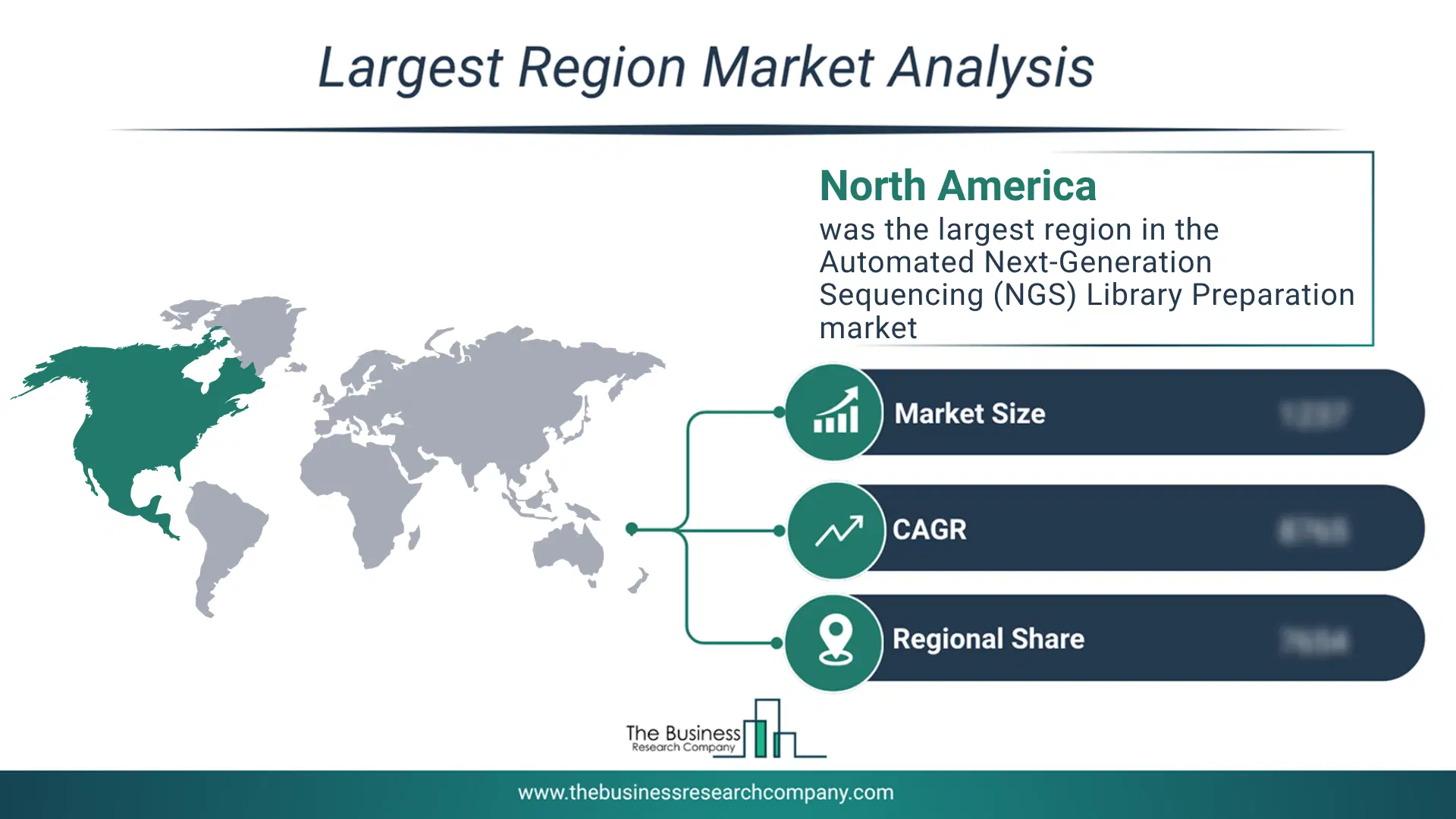
Regional Outlook
North America was the largest region in the automated next-generation sequencing (NGS) library preparation market in 2025. Asia-Pacific is expected to be the fastest-growing region in the forecast period. The regions covered in this market report are Asia-Pacific, South East Asia, Western Europe, Eastern Europe, North America, South America, Middle East, Africa. The countries covered in this market report are Australia, Brazil, China, France, Germany, India, Indonesia, Japan, Taiwan, Russia, South Korea, UK, USA, Canada, Italy, Spain.What Defines the Automated Next-Generation Sequencing (NGS) Library Preparation Market?
The automated next-generation sequencing (NGS) library preparation market consists of revenues earned by entities by providing services such as sample processing automation, quality control, and workflow optimization solutions. The market value includes the value of related goods sold by the service provider or included within the service offering. The automated next-generation sequencing (NGS) library preparation market also includes sales of workstations, robotic liquid handlers, and others. Values in this market are ‘factory gate’ values, that is the value of goods sold by the manufacturers or creators of the goods, whether to other entities (including downstream manufacturers, wholesalers, distributors and retailers) or directly to end customers. The value of goods in this market includes related services sold by the creators of the goods.How is Market Value Defined and Measured?
The market value is defined as the revenues that enterprises gain from the sale of goods and/or services within the specified market and geography through sales, grants, or donations in terms of the currency (in USD unless otherwise specified). The revenues for a specified geography are consumption values that are revenues generated by organizations in the specified geography within the market, irrespective of where they are produced. It does not include revenues from resales along the supply chain, either further along the supply chain or as part of other products.
This chart presents market attractiveness based on a quantitative evaluation of growth, competition, strategic alignment, and risk, offering a clear view of opportunity areas for decision-making. This chart is for illustrative purposes; the full report contains the complete analysis.

This chart highlights the Total Addressable Market (TAM) by estimating the maximum revenue opportunity using an assumption-driven approach, supporting strategic planning and opportunity sizing across markets. The chart is illustrative; the full report provides a more comprehensive analysis.
What Key Data and Analysis Are Included in the Automated Next-Generation Sequencing (NGS) Library Preparation Market Report 2026?
The automated next-generation sequencing (ngs) library preparation market research report is one of a series of new reports from The Business Research Company that provides market statistics, including industry global market size, regional shares, competitors with the market share, detailed market segments, market trends and opportunities, and any further data you may need to thrive in the automated next-generation sequencing (ngs) library preparation industry. The market research report delivers a complete perspective of everything you need, with an in-depth analysis of the current and future state of the industry.Automated Next-Generation Sequencing (NGS) Library Preparation Market Report Forecast Analysis
| Report Attribute | Details |
|---|---|
| Market Size Value In 2026 | $0.82 billion |
| Revenue Forecast In 2030 | $1.35 billion |
| Growth Rate | CAGR of 13.3% from 2026 to 2030 |
| Base Year For Estimation | 2025 |
| Actual Estimates/Historical Data | 2020-2025 |
| Forecast Period | 2026 - 2030 |
| Market Representation | Revenue in USD Billion and CAGR from 2026 to 2030 |
| Segments Covered | Type, Workflow, Application, End-Use |
| Regional Scope | Asia-Pacific, Western Europe, Eastern Europe, North America, South America, Middle East, Africa |
| Country Scope | The countries covered in the report are Australia, Brazil, China, France, Germany, India, Indonesia, Japan, Taiwan, Russia, South Korea, UK, USA, Canada, Italy, Spain |
| Key Companies Profiled | F. Hoffmann-La Roche Ltd., Thermo Fisher Scientific Inc., Agilent Technologies India Private Limited, Illumina Inc., Beckman Coulter Inc., Bio-Rad Laboratories Inc., IDT Corporation, Tecan Group AG, Hamilton Company, Takara Bio Inc., 10x Genomics Inc., Oxford Nanopore Technologies plc, Twist Bioscience Corporation, New England Biolabs Inc., SPT Labtech Limited, Watchmaker Genomics Inc., Pillar Biosciences Inc., Aurora Biomed Inc., BGI Group, SEQWELL INC., Hudson Robotics Inc. |
| Customization Scope | Request for Customization |
| Pricing And Purchase Options | Explore Purchase Options |