

Automatic Immunohistochemical Staining Instrument Market Report 2026
Global Outlook – By Product Type (Fully Automated Stainers, Semi-Automated Stainers, Manual Stainers), By Technology (Slide Staining, Tissue Staining, Fluorescent Staining), By Consumables (Antibodies, Staining Kits, Slides, Coverslips), By Application (Oncology, Cardiovascular Diseases, Neurological Disorders, Infectious Diseases), By End-User (Hospitals, Diagnostic Laboratories, Academic Institutes, Research Laboratories) – Market Size, Trends, Strategies, and Forecast to 2030
Automatic Immunohistochemical Staining Instrument Market Overview
• Automatic Immunohistochemical Staining Instrument market size has reached to $1.3 billion in 2025 • Expected to grow to $1.83 billion in 2030 at a compound annual growth rate (CAGR) of 7% • Growth Driver: Growing Prevalence Of Chronic Diseases Fueling The Growth Of The Market Due To Increasing Diagnostic Demand • Market Trend: Innovative Reagents Revolutionize Immunohistochemistry Workflows • North America was the largest region in 2025 and Asia-Pacific is the fastest growing region.What Is Covered Under Automatic Immunohistochemical Staining Instrument Market?
Automatic immunohistochemical staining instrument is a laboratory device used to automate the process of staining tissue samples for the detection of specific proteins or antigens. Its primary purpose is to enhance the accuracy, consistency, and efficiency of immunohistochemistry (IHC) tests, which are essential for diagnosing various diseases, including cancer, by visualizing specific molecular markers in tissue sections. The main product types in the automatic immunohistochemical staining instrument are fully automated stainers, semi-automated stainers and manual stainers. Fully automated stainers refer to advanced laboratory instruments designed to perform immunohistochemical or histological staining processes with minimal human intervention. The technologies involved include slide staining, tissue staining, and fluorescent staining. Consumables used in the process comprise antibodies, staining kits, slides, and coverslips. These instruments are applied in areas such as oncology, cardiovascular diseases, neurological disorders, and infectious diseases. Key end-users include hospitals, diagnostic laboratories, academic institutions, and research laboratories.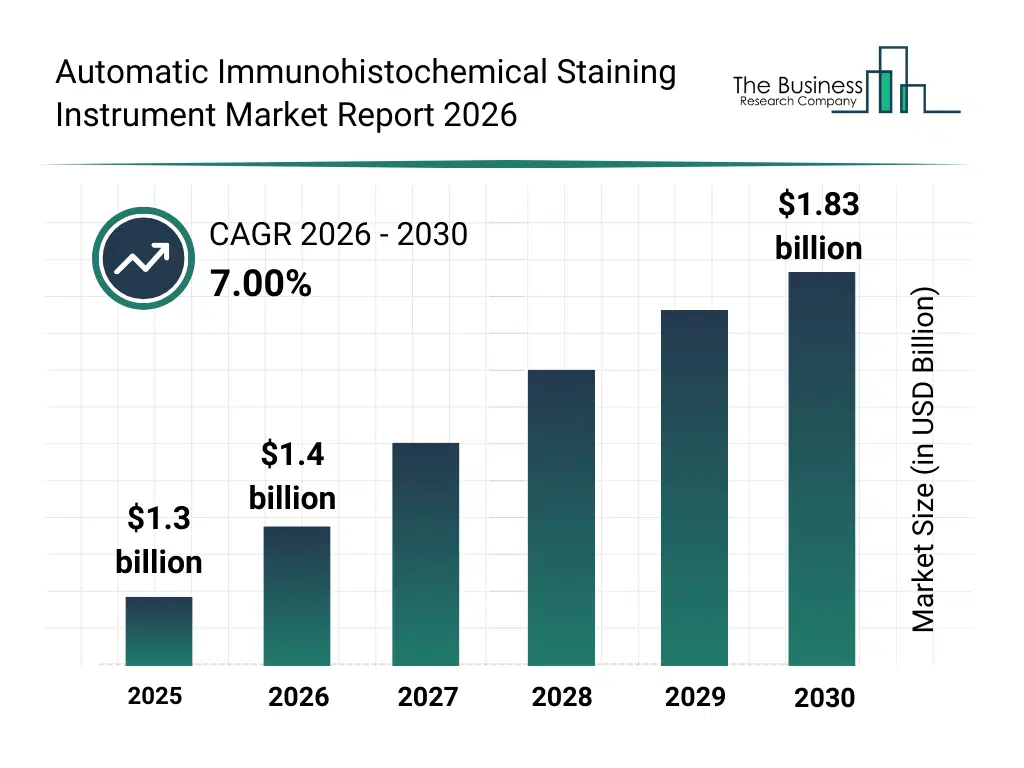
What Is The Automatic Immunohistochemical Staining Instrument Market Size and Share 2026?
The automatic immunohistochemical staining instrument market size has grown strongly in recent years. It will grow from $1.3 billion in 2025 to $1.4 billion in 2026 at a compound annual growth rate (CAGR) of 7.1%. The growth in the historic period can be attributed to rising cancer diagnostic testing volumes, expansion of pathology laboratory infrastructure, increased reliance on immunohistochemistry in disease diagnosis, growing availability of automated laboratory instruments, rising demand for reproducible diagnostic results.What Is The Automatic Immunohistochemical Staining Instrument Market Growth Forecast?
The automatic immunohistochemical staining instrument market size is expected to see strong growth in the next few years. It will grow to $1.83 billion in 2030 at a compound annual growth rate (CAGR) of 7.0%. The growth in the forecast period can be attributed to increasing adoption of precision oncology diagnostics, growing investments in digital pathology platforms, rising demand for laboratory automation, expansion of companion diagnostics development, increasing focus on personalized medicine approaches. Major trends in the forecast period include increasing adoption of fully automated ihc staining systems, rising demand for high-throughput diagnostic workflows, growing integration of digital pathology compatibility, expansion of standardized and reproducible staining protocols, enhanced focus on workflow efficiency in laboratories.
Global Automatic Immunohistochemical Staining Instrument Market Segmentation
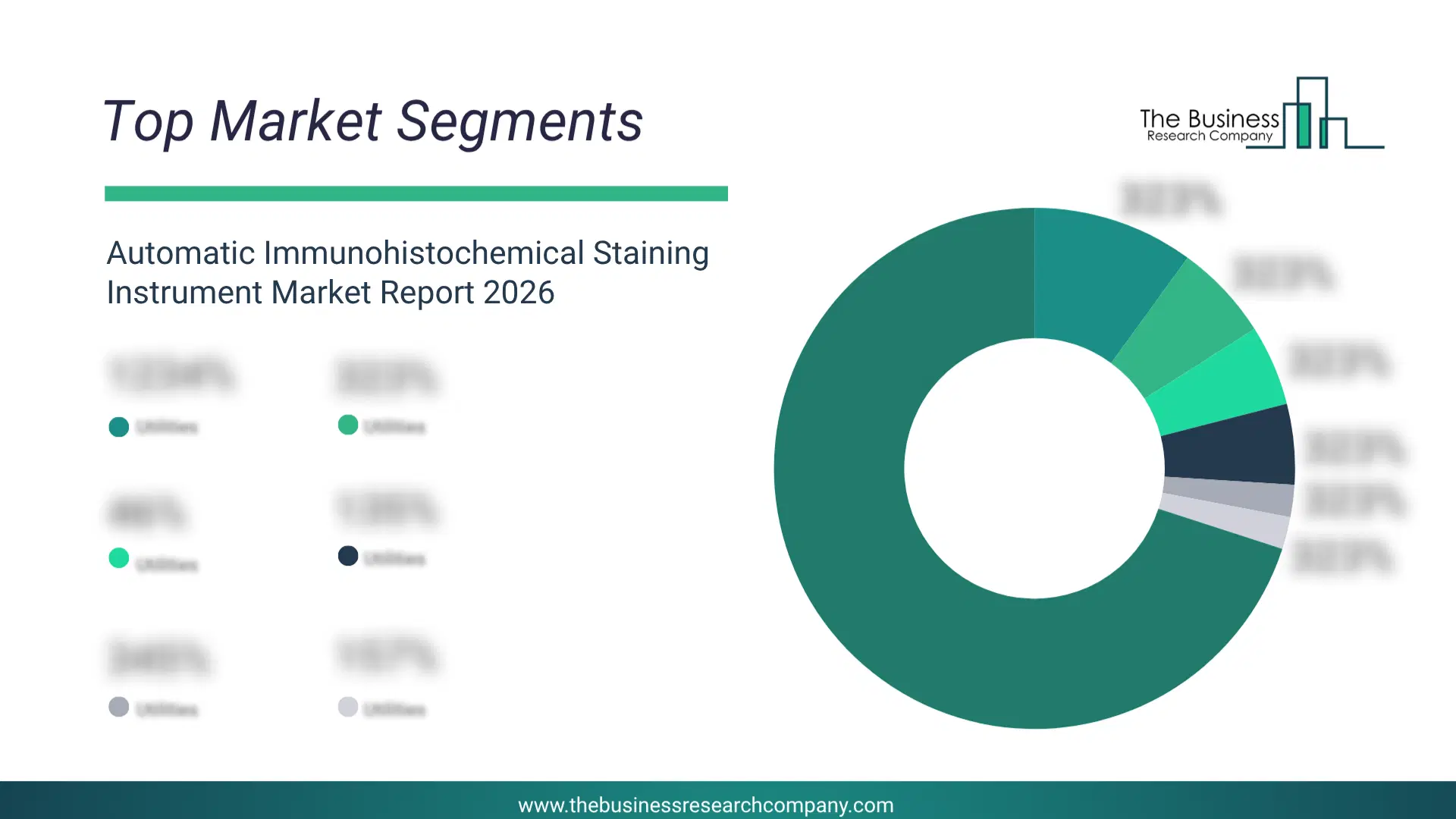
1) By Product Type: Fully Automated Stainers, Semi-Automated Stainers, Manual Stainers 2) By Technology: Slide Staining, Tissue Staining, Fluorescent Staining 3) By Consumables: Antibodies, Staining Kits, Slides, Coverslips 4) By Application: Oncology, Cardiovascular Diseases, Neurological Disorders, Infectious Diseases 5) By End-User: Hospitals, Diagnostic Laboratories, Academic Institutes, Research Laboratories Subsegments: 1) By Fully Automated Stainers: Compact Automated Stainers, High-Throughput Stainers, Benchtop Automated Stainers 2) By Semi-Automated Stainers: Programmable Stainers, Timer-Based Stainers, Hybrid Stainers 3) By Manual Stainers: Dip-Type Manual Stainers, Rotary Manual Stainers, Handheld Staining KitsWhat Is The Driver Of The Automatic Immunohistochemical Staining Instrument Market?
The growing prevalence of chronic diseases is expected to propel the growth of the automatic immunohistochemical staining instrument market going forward. Chronic diseases refer to long-term medical conditions that typically progress slowly and require ongoing management. It includes diabetes, heart disease, hypertension, arthritis, chronic respiratory diseases, cancer, and obesity. The increasing prevalence of chronic diseases is due to lifestyle changes, inferior diet, and lack of physical activity, which contribute to long-term health complications. Automatic immunohistochemical staining instruments enhance diagnostic capabilities by providing precise and efficient tissue analysis, making them essential for detecting chronic diseases. They reduce manual effort with fast, automated staining processes, improving diagnostic accuracy and enabling earlier disease detection. For instance, in June 2024, according to the National Health Service, a UK-based government department, 3,615,330 individuals registered with a general practitioner (GP) were diagnosed with non-diabetic hyperglycemia or pre-diabetes in 2023, marking an 18% increase from 3,065,825 cases in 2022. Therefore, the growing prevalence of chronic diseases is driving the growth of the automatic immunohistochemical staining instrument industry.Key Players In The Global Automatic Immunohistochemical Staining Instrument Market
Major companies operating in the automatic immunohistochemical staining instrument market are F. Hoffmann-La Roche AG, Thermo Fisher Scientific, Agilent Technologies, Leica Biosystems, Sakura Finetek, Olympus Corporation, Biocare Medical, Celnovte Biotechnology Co. Ltd., BioGenex Laboratories, Diagnostic BioSystems, ADS Biotec, Fuzhou Maixin Biotech Co. Ltd., Shenzhen Dartmon Biotechnology Co. Ltd., Ventana Medical Systems, Dako (Agilent Pathology), Nichirei Biosciences Inc., Abcam plc, Bio-Rad Laboratories, Milestone Medical, Medite GmbH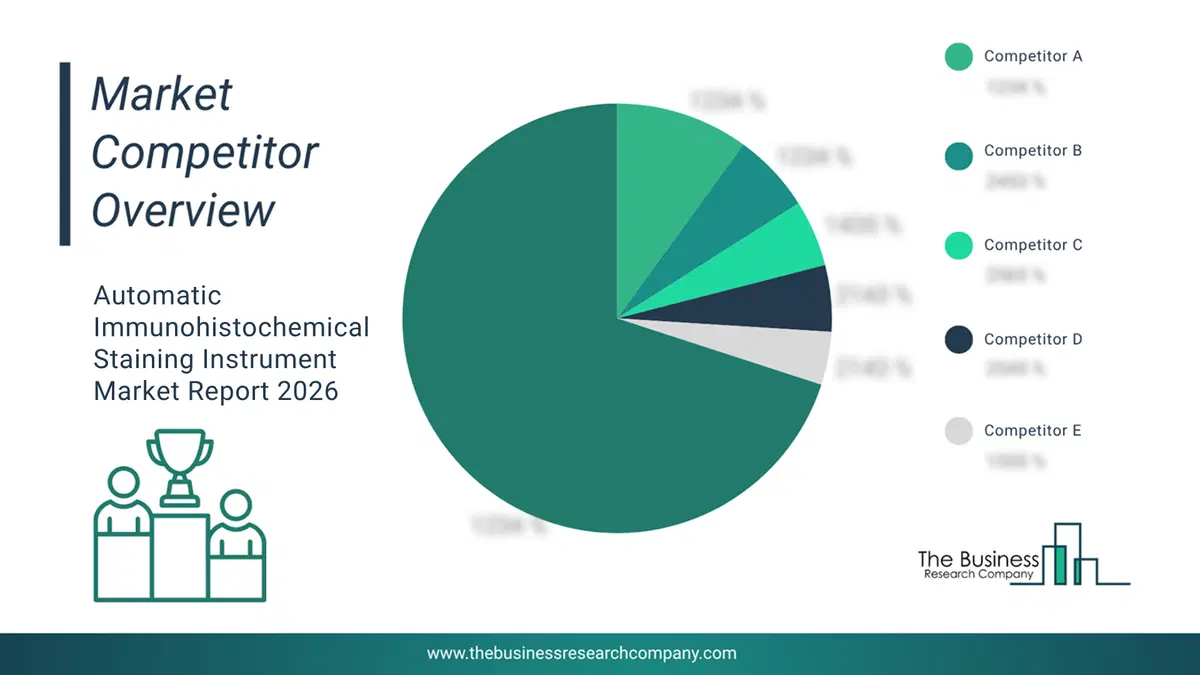
This chart is for illustrative purposes; the full report includes a detailed competitor analysis and comprehensive overview of the top 10 companies in the market.
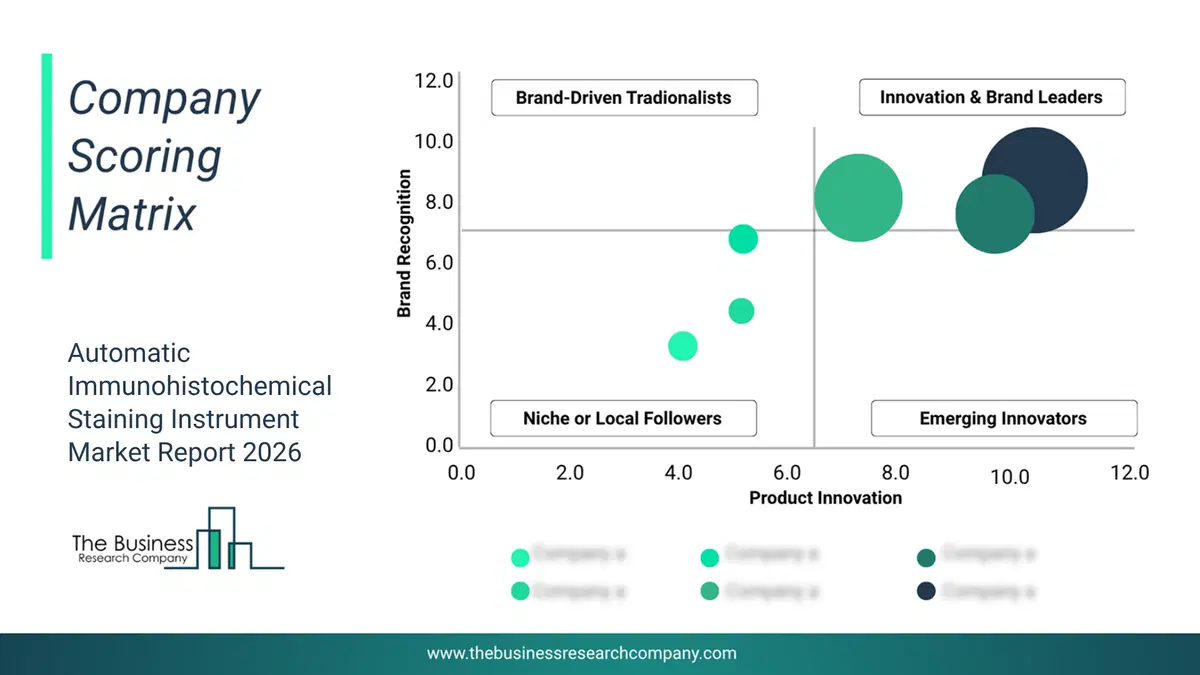
This chart maps companies by product innovation and brand strength, with bubble size indicating relative revenue, helping identify market leaders, challengers, and niche players. This is an illustrative chart; the full report provides a complete and accurate competitive analysis.
Global Automatic Immunohistochemical Staining Instrument Market Trends and Insights
Major companies operating in the automatic immunohistochemical staining instrument market are focusing on developing innovative solutions, such as antibody alternative reagents, to enhance tissue analysis's accuracy, efficiency, and versatility while reducing costs and improving reproducibility. An antibody alternative reagent refers to a non-antibody molecule such as an aptamer, affirmer, or antibody mimetic that can specifically bind to target antigens and is used in place of traditional antibodies for research, diagnostic, or therapeutic applications. For instance, in March 2023, Aptamer Group plc, a UK-based biotechnology company, launched Optimer-Fc, a new reagent solution for automated immunohistochemistry (IHC) workflows. Optimer-Fc offers an innovative antibody alternative for immunohistochemistry, expanding target detection and enhancing assay selectivity. It integrates smoothly into automated immunohistochemistry (IHC) workflows to accurately identify established and novel biomarkers.What Are Latest Mergers And Acquisitions In The Automatic Immunohistochemical Staining Instrument Market?
In July 2023, Bio-Techne Corporation, a US-based biotechnology and life sciences company, acquired Lunaphore Technologies SA for $170.1 million. With this acquisition, Bio-Techne strengthens its position in spatial biology and automated IHC by integrating Lunaphore’s microfluidic staining platforms, boosting high-throughput tissue analysis and precision research. Lunaphore Technologies SA is a Switzerland-based biotech company specializing in automated immunohistochemistry (IHC) and immunofluorescence (IF) staining instruments.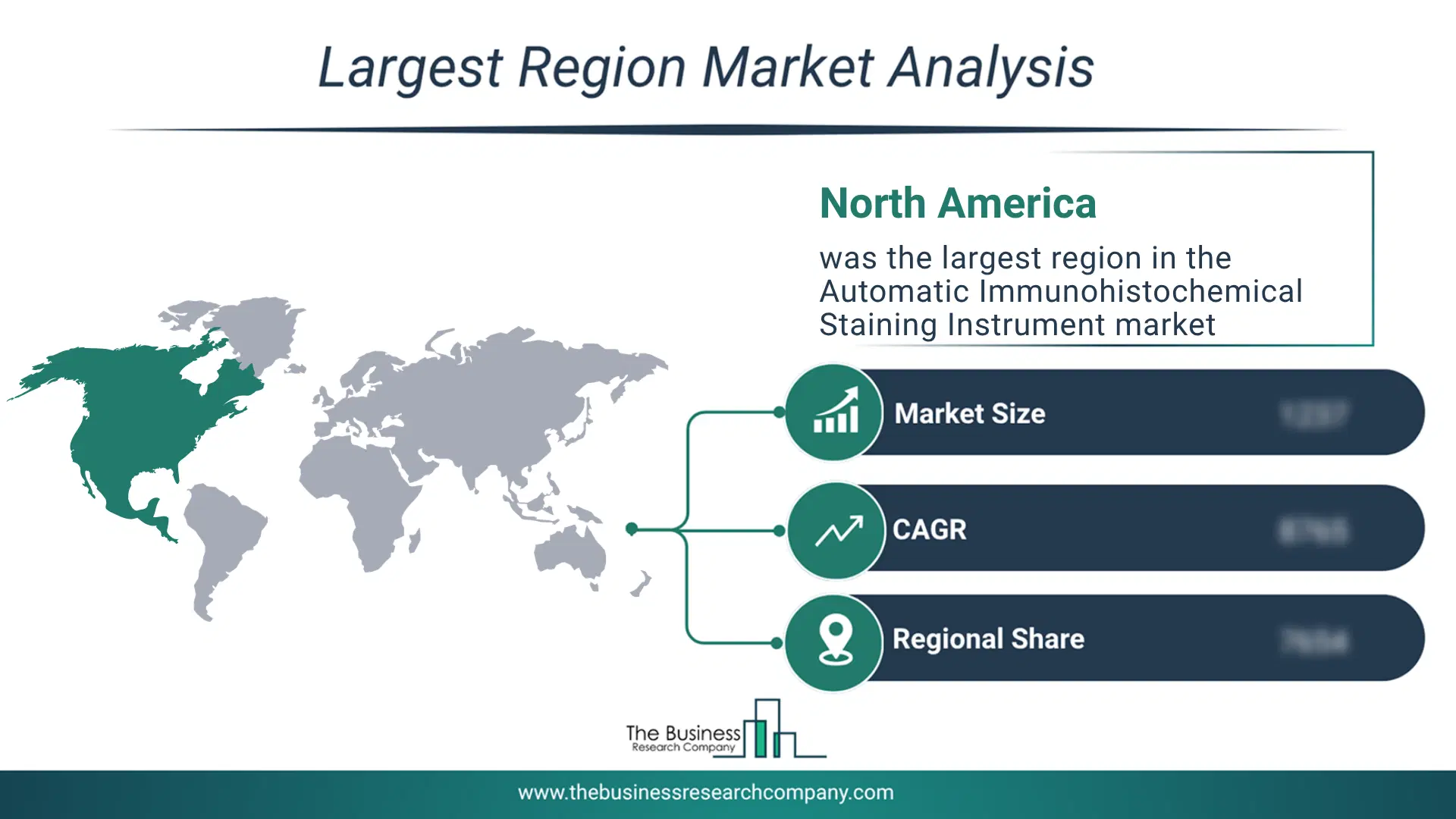
Regional Outlook
North America was the largest region in the automatic immunohistochemical staining instrument market in 2025. Asia-Pacific is expected to be the fastest-growing region in the forecast period. The regions covered in this market report are Asia-Pacific, South East Asia, Western Europe, Eastern Europe, North America, South America, Middle East, Africa. The countries covered in this market report are Australia, Brazil, China, France, Germany, India, Indonesia, Japan, Taiwan, Russia, South Korea, UK, USA, Canada, Italy, SpainWhat Defines the Automatic Immunohistochemical Staining Instrument Market?
The automatic immunohistochemical staining instrument market consists of sales of slide holders, reagent dispensers, detection systems, and associated consumables such as antibodies, detection kits, and chromogens used in the immunohistochemical staining process. Values in this market are ‘factory gate’ values, that is, the value of goods sold by the manufacturers or creators of the goods, whether to other entities (including downstream manufacturers, wholesalers, distributors, and retailers) or directly to end customers. The value of goods in this market includes related services sold by the creators of the goods.How is Market Value Defined and Measured?
The market value is defined as the revenues that enterprises gain from the sale of goods and/or services within the specified market and geography through sales, grants, or donations in terms of the currency (in USD unless otherwise specified). The revenues for a specified geography are consumption values that are revenues generated by organizations in the specified geography within the market, irrespective of where they are produced. It does not include revenues from resales along the supply chain, either further along the supply chain or as part of other products.
This chart presents market attractiveness based on a quantitative evaluation of growth, competition, strategic alignment, and risk, offering a clear view of opportunity areas for decision-making. This chart is for illustrative purposes; the full report contains the complete analysis.

This chart highlights the Total Addressable Market (TAM) by estimating the maximum revenue opportunity using an assumption-driven approach, supporting strategic planning and opportunity sizing across markets. The chart is illustrative; the full report provides a more comprehensive analysis.
What Key Data and Analysis Are Included in the Automatic Immunohistochemical Staining Instrument Market Report 2026?
The automatic immunohistochemical staining instrument market research report is one of a series of new reports from The Business Research Company that provides market statistics, including industry global market size, regional shares, competitors with the market share, detailed market segments, market trends and opportunities, and any further data you may need to thrive in the automatic immunohistochemical staining instrument industry. The market research report delivers a complete perspective of everything you need, with an in-depth analysis of the current and future state of the industry.Automatic Immunohistochemical Staining Instrument Market Report Forecast Analysis
| Report Attribute | Details |
|---|---|
| Market Size Value In 2026 | $1.4 billion |
| Revenue Forecast In 2030 | $1.83 billion |
| Growth Rate | CAGR of 7% from 2026 to 2030 |
| Base Year For Estimation | 2025 |
| Actual Estimates/Historical Data | 2020-2025 |
| Forecast Period | 2026 - 2030 |
| Market Representation | Revenue in USD Billion and CAGR from 2026 to 2030 |
| Segments Covered | Product Type, Technology, Consumables, Application, End-User |
| Regional Scope | Asia-Pacific, Western Europe, Eastern Europe, North America, South America, Middle East, Africa |
| Country Scope | The countries covered in the report are Australia, Brazil, China, France, Germany, India, Indonesia, Japan, Taiwan, Russia, South Korea, UK, USA, Canada, Italy, Spain. |
| Key Companies Profiled | F. Hoffmann-La Roche AG, Thermo Fisher Scientific, Agilent Technologies, Leica Biosystems, Sakura Finetek, Olympus Corporation, Biocare Medical, Celnovte Biotechnology Co. Ltd., BioGenex Laboratories, Diagnostic BioSystems, ADS Biotec, Fuzhou Maixin Biotech Co. Ltd., Shenzhen Dartmon Biotechnology Co. Ltd., Ventana Medical Systems, Dako (Agilent Pathology), Nichirei Biosciences Inc., Abcam plc, Bio-Rad Laboratories, Milestone Medical, Medite GmbH |
| Customization Scope | Request for Customization |
| Pricing And Purchase Options | Explore Purchase Options |