
Automatic Train Control Market Report 2026
Global Outlook – By Service (Consulting, Integration And Deployment, Support And Maintenance), By Automation (GoA 1, GoA 2, GoA 3, GoA 4), By Train Type (Urban, Mainline) – Market Size, Trends, Strategies, and Forecast to 2030
Automatic Train Control Market Overview
• Automatic Train Control market size has reached to $4.15 billion in 2025 • Expected to grow to $6.25 billion in 2030 at a compound annual growth rate (CAGR) of 8.5% • Growth Driver: Impact Of Growing Demand For Public Transportation On The Automatic Train Control Market • Market Trend: Hyundai Rotem Launches KTCS-2 System To Enhance Safety And Efficiency In Automatic Train Control • Asia-Pacific was the largest region and fastest growing region.What Is Covered Under Automatic Train Control Market?
Automatic train control (ATC) refers to a system of technologies developed to automate several aspects of train operation to ensure efficient, safe, and reliable railway transportation. This technology is used to aid in railway safety, improve operational efficiency, and maximize the utilization of railway infrastructure. The main types of automatic train control services are consulting, integration and deployment, and support and maintenance. Consulting refers to providing expert advice and guidance on implementing and optimizing automated systems for train operations, enhancing safety, efficiency, and reliability in rail transportation. The automation grade for train control includes GoA 1, GoA 2, GoA 3, and GoA 4, which are used in several types of trains, such as urban and mainline.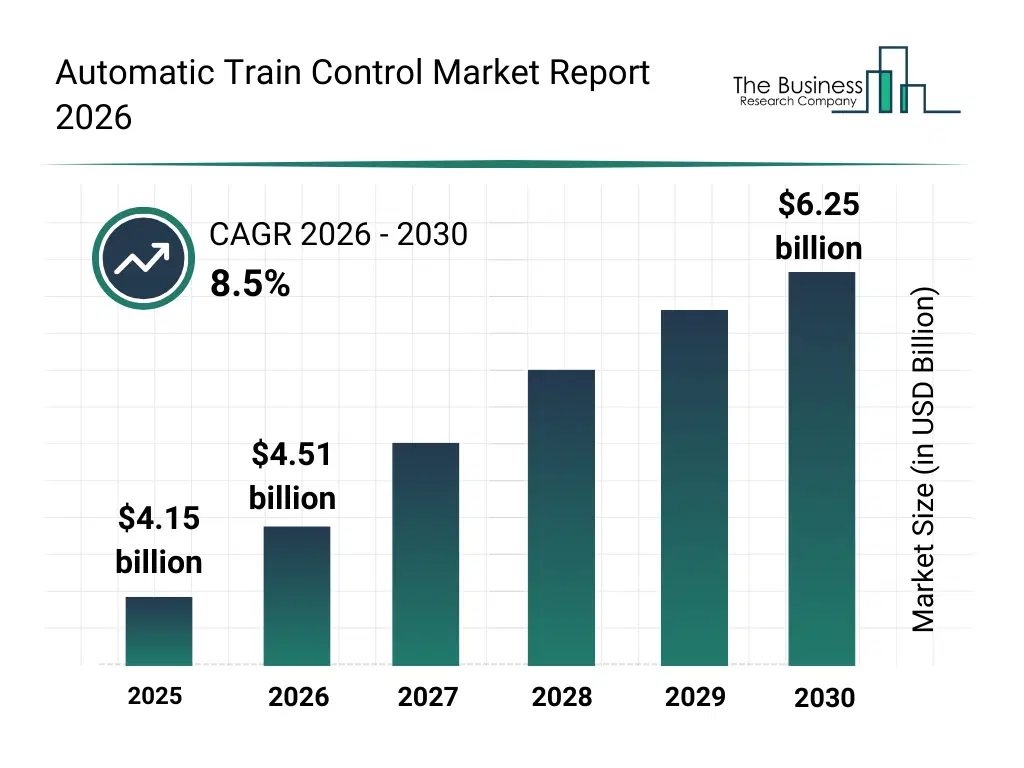
What Is The Automatic Train Control Market Size and Share 2026?
The automatic train control market size has grown strongly in recent years. It will grow from $4.15 billion in 2025 to $4.51 billion in 2026 at a compound annual growth rate (CAGR) of 8.8%. The growth in the historic period can be attributed to urban transit expansion, signaling system upgrades, demand for rail safety, adoption of ats and atp systems, rail capacity constraints.What Is The Automatic Train Control Market Growth Forecast?
The automatic train control market size is expected to see strong growth in the next few years. It will grow to $6.25 billion in 2030 at a compound annual growth rate (CAGR) of 8.5%. The growth in the forecast period can be attributed to driverless train adoption, smart mobility investments, real-time rail analytics, energy-efficient operations, government rail digitization. Major trends in the forecast period include adoption of fully automated train operations, expansion of communication-based control, integration of predictive safety systems, growth of urban rail automation, demand for network optimization.
Global Automatic Train Control Market Segmentation
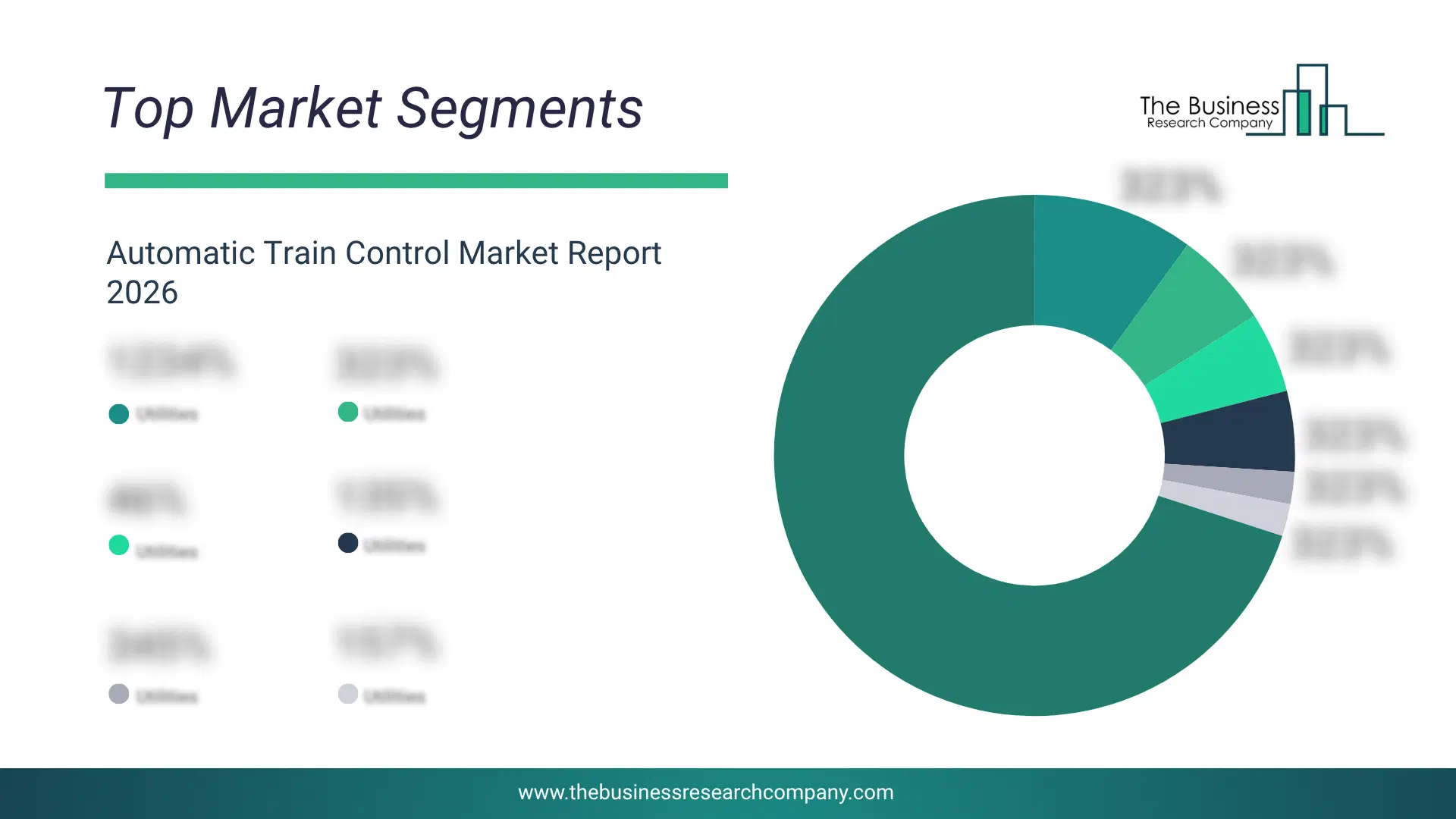
1) By Service: Consulting, Integration And Deployment, Support And Maintenance 2) By Automation: GoA 1, GoA 2, GoA 3, GoA 4 3) By Train Type: Urban, Mainline Subsegments: 1) By Consulting: Feasibility Studies, System Design And Planning, Regulatory Compliance Consulting 2) By Integration And Deployment: System Integration Services, Hardware And Software Deployment, Testing And Commissioning Services 3) By Support And Maintenance: Technical Support Services, Maintenance And Repair Services, Upgrades And System EnhancementsWhat Is The Driver Of The Automatic Train Control Market?
The growing demand for public transportation is expected to fuel the growth of the automatic train control market going forward. Public transport refers to transportation services that are available for use by the general public and are typically operated by the government or private entities. The growing demand for public transportation is driven by the increasing need for sustainable and affordable mobility solutions in increasingly urbanized environments. The increasing need for public transport exerts a significant influence on the development and adoption of automatic train control systems by prioritizing safety, efficiency, capacity management, modernization, and integration within transportation networks. For instance, in April 2024, according to the American Public Transportation Association, a US-based non-profit group, transit travellers took 7.1 billion trips on public transportation in 2023, up 16% from 2022. Therefore, the growing demand for public transportation is driving the growth of the automatic train control industry.Key Players In The Global Automatic Train Control Market
Major companies operating in the automatic train control market report include Siemens AG, Alstom SA, Hitachi Ltd., Thales Group, Wabtec Corporation, Mitsubishi Electric Corporation, Toshiba Corporation, CAF Signalling S.A.U., Vossloh Signaling GmbH, Kyosan Electric Manufacturing Ltd, Ansaldo STS, CRRC Corporation Limited, China Railway Signal & Communication Corporation, Nippon Signal Co. Ltd., Union Switch & Signal, Scheidt & Bachmann GmbH, Bombardier Transportation, Hyundai Rotem Company, Talgo S.A., Siemens Mobility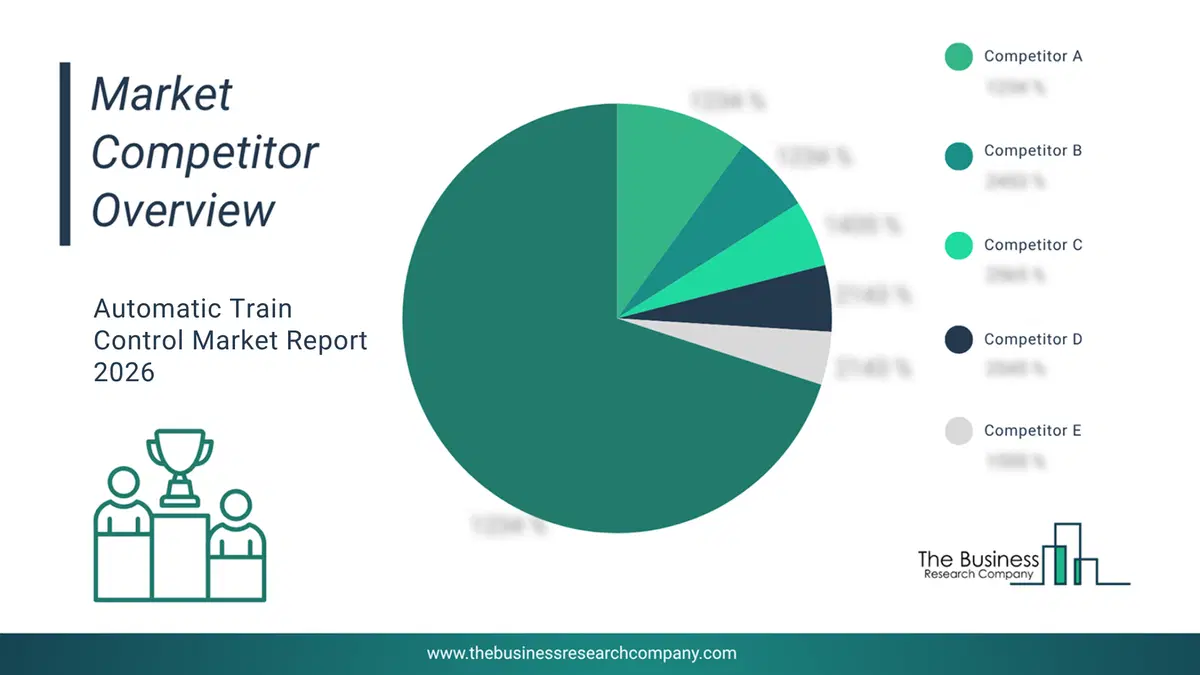
This chart is for illustrative purposes; the full report includes a detailed competitor analysis and comprehensive overview of the top 10 companies in the market.
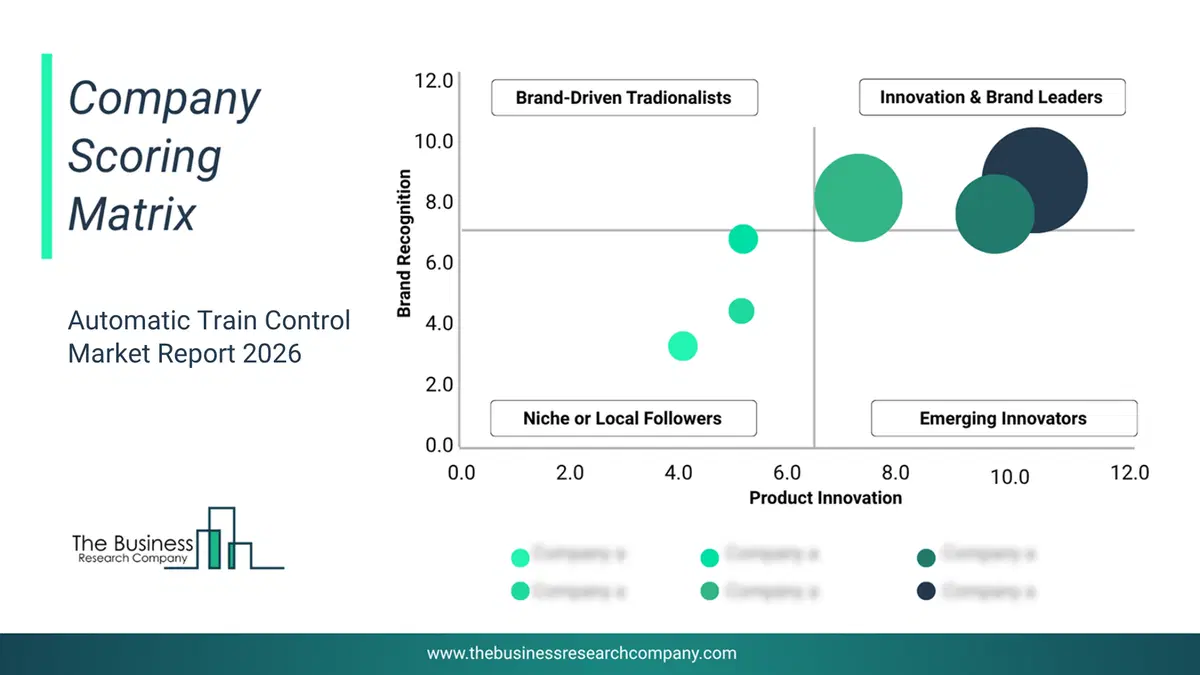
This chart maps companies by product innovation and brand strength, with bubble size indicating relative revenue, helping identify market leaders, challengers, and niche players. This is an illustrative chart; the full report provides a complete and accurate competitive analysis.
Global Automatic Train Control Market Trends and Insights
Major companies operating in the automatic train control market are focusing on developing technologically advanced solutions. Such as KTCS-2 system along Jeolla line to address several critical industry demands. The KTCS-2 system on the Jeolla line enhances train safety and efficiency with automatic control features, allowing for better scheduling and reduced intervals between trains. For instance, in November 2023, according to the Hyundai Rotem, a Korean-based heavy industry company launched the Korean Train Control System 2 (KTCS-2) on a 180-kilometer section of the Jeolla Line between Iksan and Yeosu. This advanced LTE-based wireless signaling system enhances real-time communication between trains and control centers, improving operational efficiency and safety while reducing service headways by up to 23%. The KTCS-2 eliminates the need for track-mounted balises, leading to lower installation and maintenance costs. Following successful trials, Hyundai Rotem plans to expand the KTCS-2 system throughout South Korea and into international markets, aligning with European Train Control System (ETCS) standards. Additionally, the company is developing the next version, KTCS-3, which aims to support automatic train operations without track circuits.What Are Latest Mergers And Acquisitions In The Automatic Train Control Market?
In June 2023, Siemens Mobility, a Germany-based transport company, acquired Optrail s.r.l. for an undisclosed amount. Through this acquisition, Siemens aims to enhance its digital product portfolio for timetable construction and dispatching by integrating Optrail's advanced optimization algorithms into its Train Planning System, improving rail operation efficiency, reducing dispatching times, minimizing delays, and increasing train speeds, thereby solidifying Siemens Mobility's position as a leading software supplier in the rail industry. Optrail s.r.l. is an Italy-based technology company that provides unique algorithms for automatic train control.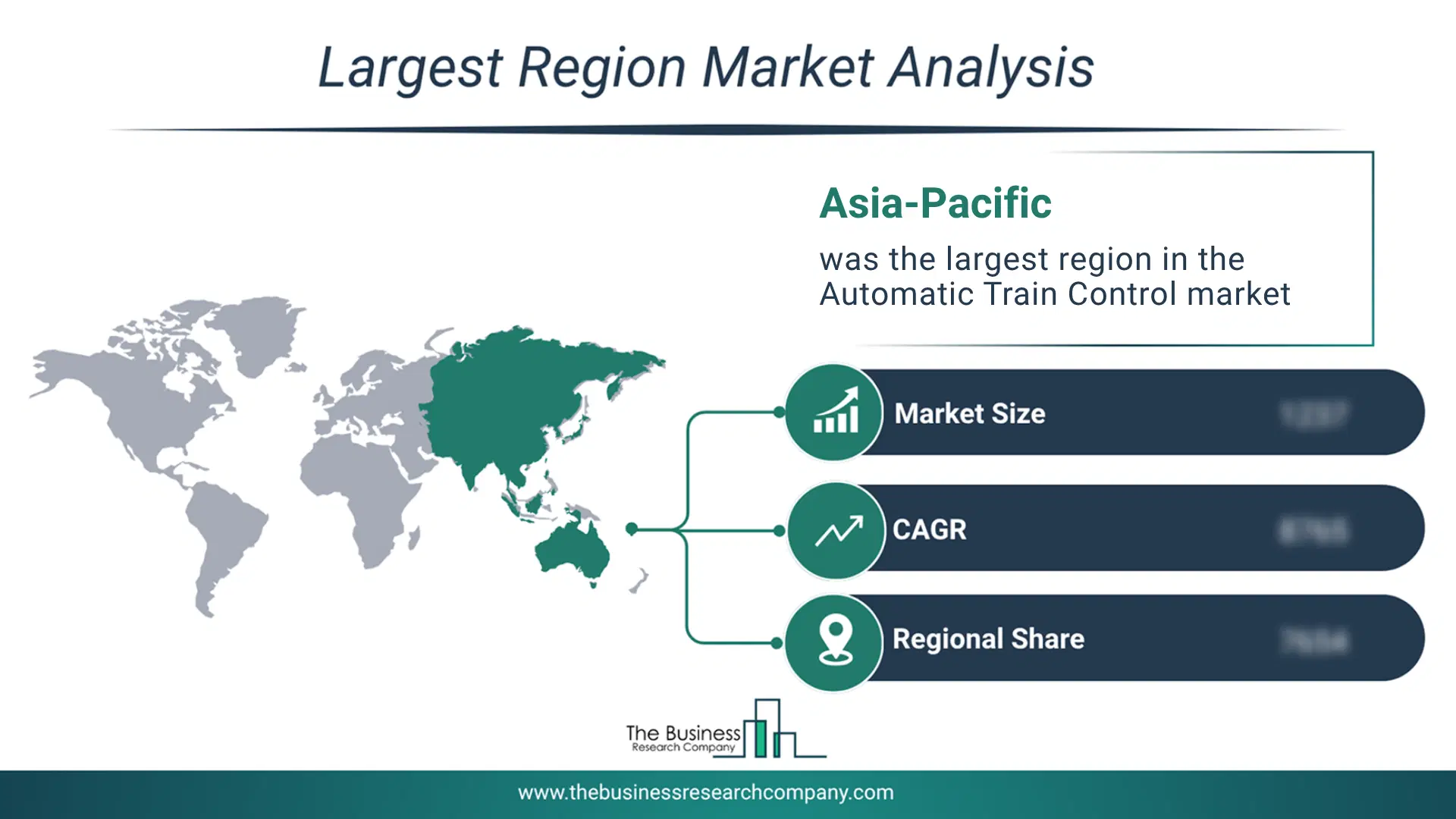
Regional Outlook
Asia-Pacific was the largest region in the automatic train control market in 2025. It is expected to be the fastest-growing region in the forecast period. The regions covered in this market report include Asia-Pacific, South East Asia, Western Europe, Eastern Europe, North America, South America, Middle East, Africa. The countries covered in this market report include Australia, Brazil, China, France, Germany, India, Indonesia, Japan, Taiwan, Russia, South Korea, UK, USA, Canada, Italy, SpainWhat Defines the Automatic Train Control Market?
The automatic train control market consists of revenues earned by entities by providing signaling, speed control, automatic braking, monitoring and reporting, and emergency response. The market value includes the value of related goods sold by the service provider or included within the service offering. Only goods and services traded between entities or sold to end consumers are included. The automatic train control (ATC) market also includes sales of onboard computers, sensors, signaling devices, and communication systems. Values in this market are ‘factory gate’ values, that is the value of goods sold by the manufacturers or creators of the goods, whether to other entities (including downstream manufacturers, wholesalers, distributors and retailers) or directly to end customers. The value of goods in this market includes related services sold by the creators of the goods.How is Market Value Defined and Measured?
The market value is defined as the revenues that enterprises gain from the sale of goods and/or services within the specified market and geography through sales, grants, or donations in terms of the currency (in USD unless otherwise specified). The revenues for a specified geography are consumption values that are revenues generated by organizations in the specified geography within the market, irrespective of where they are produced. It does not include revenues from resales along the supply chain, either further along the supply chain or as part of other products.
This chart presents market attractiveness based on a quantitative evaluation of growth, competition, strategic alignment, and risk, offering a clear view of opportunity areas for decision-making. This chart is for illustrative purposes; the full report contains the complete analysis.

This chart highlights the Total Addressable Market (TAM) by estimating the maximum revenue opportunity using an assumption-driven approach, supporting strategic planning and opportunity sizing across markets. The chart is illustrative; the full report provides a more comprehensive analysis.
What Key Data and Analysis Are Included in the Automatic Train Control Market Report 2026?
The automatic train control market research report is one of a series of new reports from The Business Research Company that provides market statistics, including industry global market size, regional shares, competitors with the market share, detailed market segments, market trends and opportunities, and any further data you may need to thrive in the automatic train control industry. The market research report delivers a complete perspective of everything you need, with an in-depth analysis of the current and future state of the industry.Automatic Train Control Market Report Forecast Analysis
| Report Attribute | Details |
|---|---|
| Market Size Value In 2026 | $4.51 billion |
| Revenue Forecast In 2030 | $6.25 billion |
| Growth Rate | CAGR of 8.8% from 2026 to 2030 |
| Base Year For Estimation | 2025 |
| Actual Estimates/Historical Data | 2020-2025 |
| Forecast Period | 2026 - 2030 - 2030 |
| Market Representation | Revenue in USD Billion and CAGR from 2026 to 2030 |
| Segments Covered | Service, Automation, Train Type |
| Regional Scope | Asia-Pacific, Western Europe, Eastern Europe, North America, South America, Middle East, Africa |
| Country Scope | The countries covered in the report are Australia, Brazil, China, France, Germany, India, Indonesia, Japan, Taiwan, Russia, South Korea, UK, USA, Canada, Italy, Spain. |
| Key Companies Profiled | Siemens AG, Alstom SA, Hitachi Ltd., Thales Group, Wabtec Corporation, Mitsubishi Electric Corporation, Toshiba Corporation, CAF Signalling S.A.U., Vossloh Signaling GmbH, Kyosan Electric Manufacturing Ltd, Ansaldo STS, CRRC Corporation Limited, China Railway Signal & Communication Corporation, Nippon Signal Co. Ltd., Union Switch & Signal, Scheidt & Bachmann GmbH, Bombardier Transportation, Hyundai Rotem Company, Talgo S.A., Siemens Mobility |
| Customization Scope | Request for Customization |
| Pricing And Purchase Options | Explore Purchase Options |