
Automobile Oxygen Sensor Market Report 2026
Global Outlook – By Product Type ( Zirconia Sensor, Wideband Zirconia Sensor, Titania Sensor), By Location ( Catalytic Converter, Exhaust Manifold), By Application ( Gasoline Fueled Vehicle, Diesel-Fueled Vehicle), By Sales Channel ( Original Equipment Manufacturers, Original Equipment Suppliers, Independent Automotive Suppliers ), By End Use ( Passenger Vehicle, Light Commercial Vehicle, Heavy Commercial Vehicle) – Market Size, Trends, Strategies, and Forecast to 2030
Automobile Oxygen Sensor Market Overview
• Automobile Oxygen Sensor market size has reached to $6.9 billion in 2025 • Expected to grow to $9.09 billion in 2030 at a compound annual growth rate (CAGR) of 5.7% • Growth Driver: Growth Of The Automobile Oxygen Sensor Market Driven By Increasing Vehicle Production • Market Trend: Diabit Launches Bluetooth-Enabled OBD2 Code Reader With Advanced Oxygen Sensor Diagnostics • North America was the largest region in 2025 and Asia-Pacific is the fastest growing region.What Is Covered Under Automobile Oxygen Sensor Market?
Automobile oxygen sensors, or O2 sensors, are electronic devices that measure the proportion of oxygen in the exhaust gas of internal combustion engines to optimize engine performance and reduce emissions. They are primarily used in the automotive industry to adjust the air-to-fuel ratio for catalytic converter efficiency and ensure proper converter function. The main product types of automobile oxygen sensors are the zirconia sensors, wideband zirconia sensors and titania sensors. A zirconia sensor is an electrochemical device that measures oxygen concentration in gases, utilizing zirconium dioxide to generate a voltage output based on the difference in oxygen levels between the exhaust gas and ambient air. The various locations include a catalytic converter and exhaust manifold and the several applications involved are gasoline-fueled vehicles and diesel-fueled vehicles and they are distributed through multiple sales channels such as original equipment manufacturers, original equipment suppliers and independent automotive suppliers. The various end users include passenger vehicles, light commercial vehicles and heavy commercial vehicles.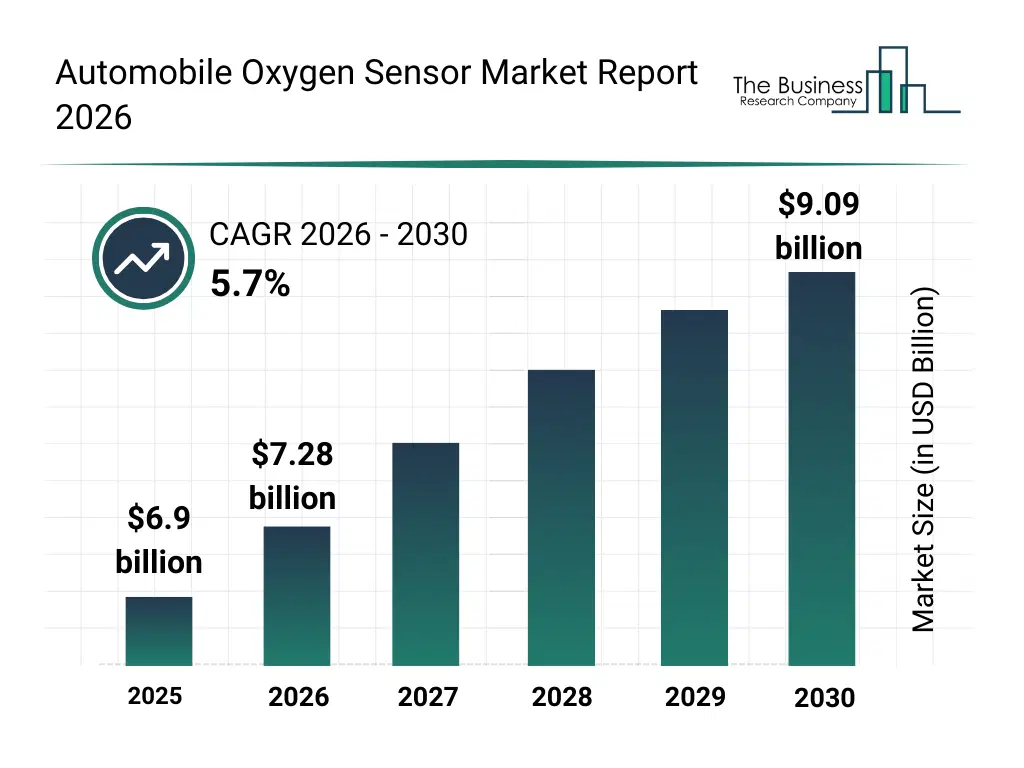
What Is The Automobile Oxygen Sensor Market Size 2026 And Growth Rate?
The automobile oxygen sensor market size has grown strongly in recent years. It will grow from $6.9 billion in 2025 to $7.28 billion in 2026 at a compound annual growth rate (CAGR) of 5.6%. The growth in the historic period can be attributed to implementation of vehicle emission regulations, widespread adoption of catalytic converters, growth of passenger vehicle production, increasing focus on fuel efficiency, expansion of gasoline engine platforms.What Is The Automobile Oxygen Sensor Market Growth Forecast?
The automobile oxygen sensor market size is expected to see strong growth in the next few years. It will grow to $9.09 billion in 2030 at a compound annual growth rate (CAGR) of 5.7%. The growth in the forecast period can be attributed to tightening global emission norms, growth of hybrid vehicle production, rising demand for advanced engine management systems, expansion of commercial vehicle fleets, increasing adoption of onboard diagnostics. Major trends in the forecast period include growing adoption of wideband oxygen sensors for emission control, increasing integration of heated oxygen sensors in engines, rising demand for high accuracy air fuel ratio monitoring, expansion of durable sensors for harsh exhaust environments, growing focus on compliance with stringent emission standards.
Global Automobile Oxygen Sensor Market Segmentation
1) By Product Type: Zirconia Sensor, Wideband Zirconia Sensor, Titania Sensor 2) By Location: Catalytic Converter, Exhaust Manifold 3) By Application: Gasoline Fueled Vehicle, Diesel-Fueled Vehicle 4) By Sales Channel: Original Equipment Manufacturers, Original Equipment Suppliers, Independent Automotive Suppliers 5) By End Use: Passenger Vehicle, Light Commercial Vehicle, Heavy Commercial Vehicle Subsegments: 1) By Zirconia Sensor: Narrowband Zirconia Sensor, Zirconia Sensor With Heater, Zirconia Oxygen Sensor For Exhaust Gas 2) By Wideband Zirconia Sensor: Wideband Zirconia Lambda Sensor, Wideband Oxygen Sensor With Integrated Heater, Wideband O2 Sensor For Air-Fuel Ratio Control 3) By Titania Sensor: Titania-Based Air-Fuel Ratio Sensor, Titania Oxygen Sensor For Engine Control, Titania Sensor With Built-In HeaterWhat Is The Driver Of The Automobile Oxygen Sensor Market?
The increasing vehicle production is expected to drive the growth of the automobile oxygen sensor market. Vehicle production refers to manufacturing vehicles, from initial design to final assembly and delivery. The increase in vehicle production is due to rising consumer demand, economic growth, supportive government policies, and expanding global markets. Automobile oxygen sensors are used in vehicle production to ensure optimal engine performance, fuel efficiency, and emissions control by monitoring the oxygen levels in the exhaust gases, which helps calibrate the air-fuel mixture and meet regulatory standards. For instance, in March 2025, the European Automobile Manufacturers' Association (ACEA), a Belgium-based trade association, reported that in 2024, global car sales totaled 74.6 million units, representing a 2.5% increase over 2023. Therefore, the increasing vehicle production is expected to drive the growth of the automobile oxygen sensor industry.Key Players In The Global Automobile Oxygen Sensor Market
Major companies operating in the automobile oxygen sensor market are Bosch Automotive Parts Inc., Hitachi Automotive Systems Ltd., Denso Corporation, Continental AG, Francisco Albero SAU, Mitsubishi Electric Corporation, Honeywell International Inc., Valeo, Kyocera Corporation, TE Connectivity Ltd., BorgWarner Inc., Analog Devices Inc., Fujikura Ltd., NGK Spark Plug Co. Ltd., Delphi Technologies, Yokogawa Electric Corporation, Standard Motor Products Inc., KEMET Corporation, CTS Corporation, Pricol Limited, Federal-Mogul Corporation, Honeywell International Inc., Walker Products Inc., SJ Automotive Co. Ltd., Ceradex Corporation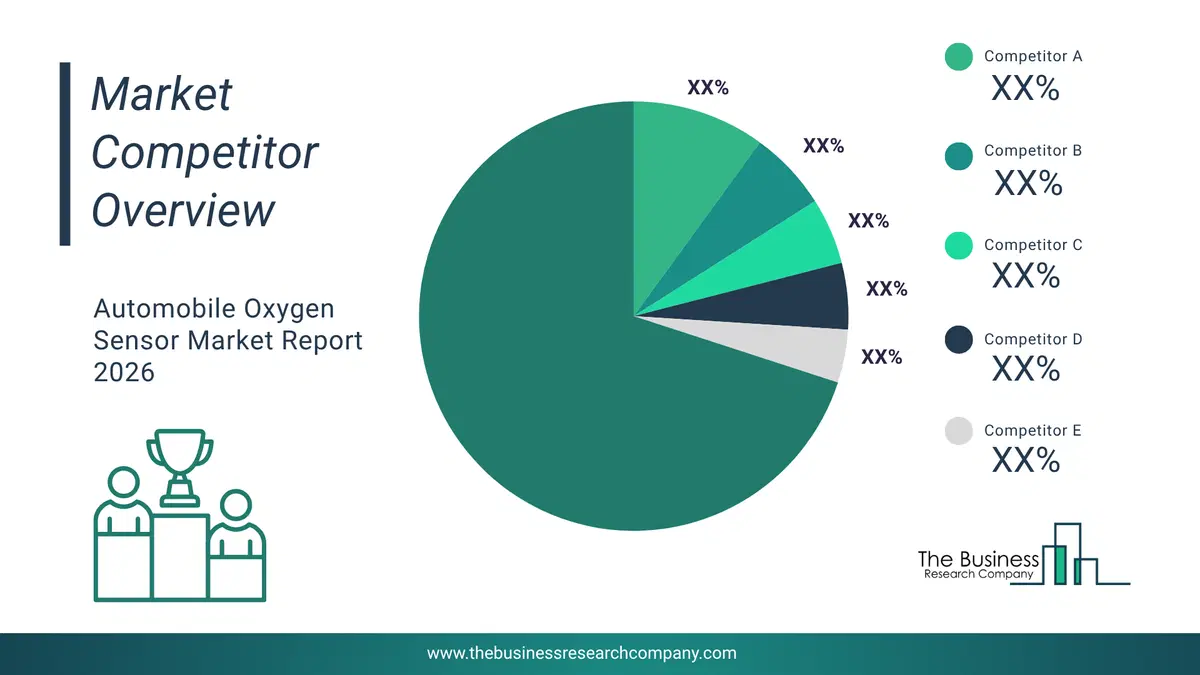
This chart is for illustrative purposes; the full report includes a detailed competitor analysis and comprehensive overview of the top 10 companies in the market.
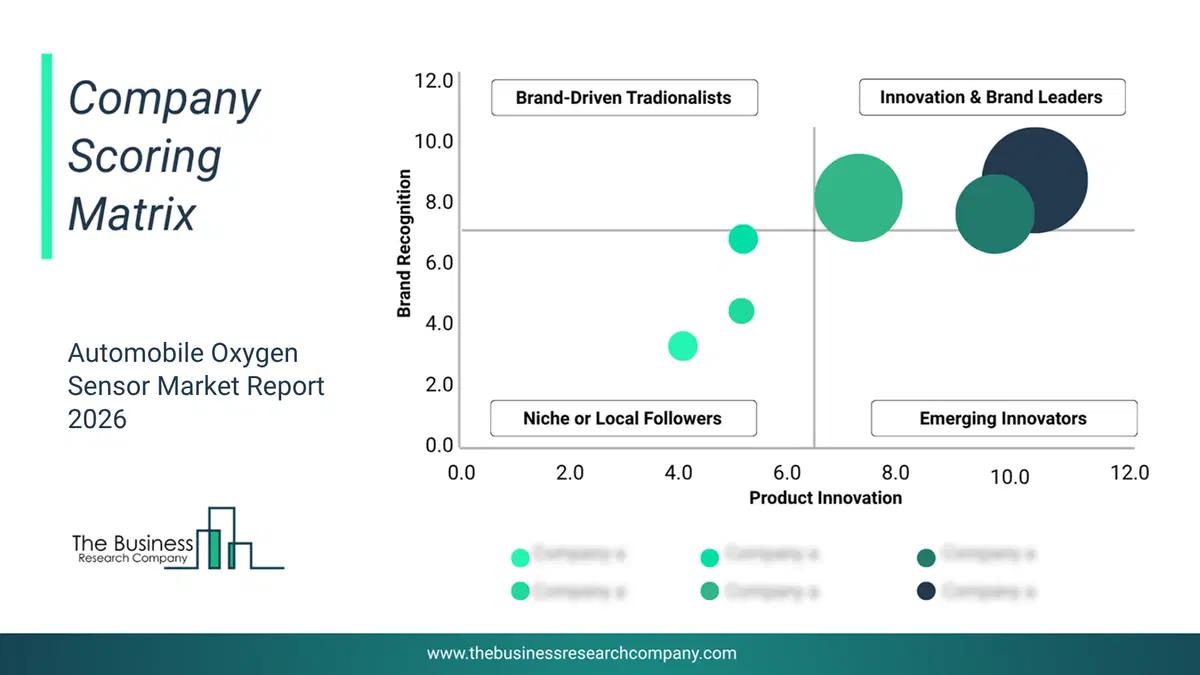
This chart maps companies by product innovation and brand strength, with bubble size indicating relative revenue, helping identify market leaders, challengers, and niche players. This is an illustrative chart; the full report provides a complete and accurate competitive analysis.
Global Automobile Oxygen Sensor Market Trends and Insights
Major companies in the automobile oxygen sensor market are focused on developing innovative products, such as OBD2 code reader, to enhance their product offerings and stay competitive. An OBD2 code reader is a diagnostic tool that interfaces with a vehicle's On-Board Diagnostics (OBD) system. This system monitors and controls various aspects of the vehicle's performance, emissions, and other critical functions. For instance, in January 2024, Diabit, a China-based automotive diagnostic tool manufacturing company, introduced the B25 on-board diagnostics OBD2 code reader. This advanced device offers wireless connectivity via Bluetooth 4.0, allowing users to easily access diagnostic data and trouble codes from their vehicle's OBD2 port. Key features include I/M readiness status for emissions testing and live sensor data monitoring, including information on oxygen sensors, coolant temperature, and fuel system performance. The B25 enhances vehicle diagnostics with its seamless wireless functionality and comprehensive data access.What Are Latest Mergers And Acquisitions In The Automobile Oxygen Sensor Market?
In September 2023, Process Sensing Technologies, a UK-based monitoring instrument and system producer, acquired Sensore Electronic GmbH for an undisclosed sum. With this acquisition, Process Sensing Technologies aims to expand its advanced sensing and monitoring solutions portfolio, enhance its technological capabilities, and strengthen its market position by integrating Sensore Electronic GmbH's expertise in high-precision sensors and instrumentation. Sensore Electronic is an Austria-based company that specializes in manufacturing zirconia oxygen sensors.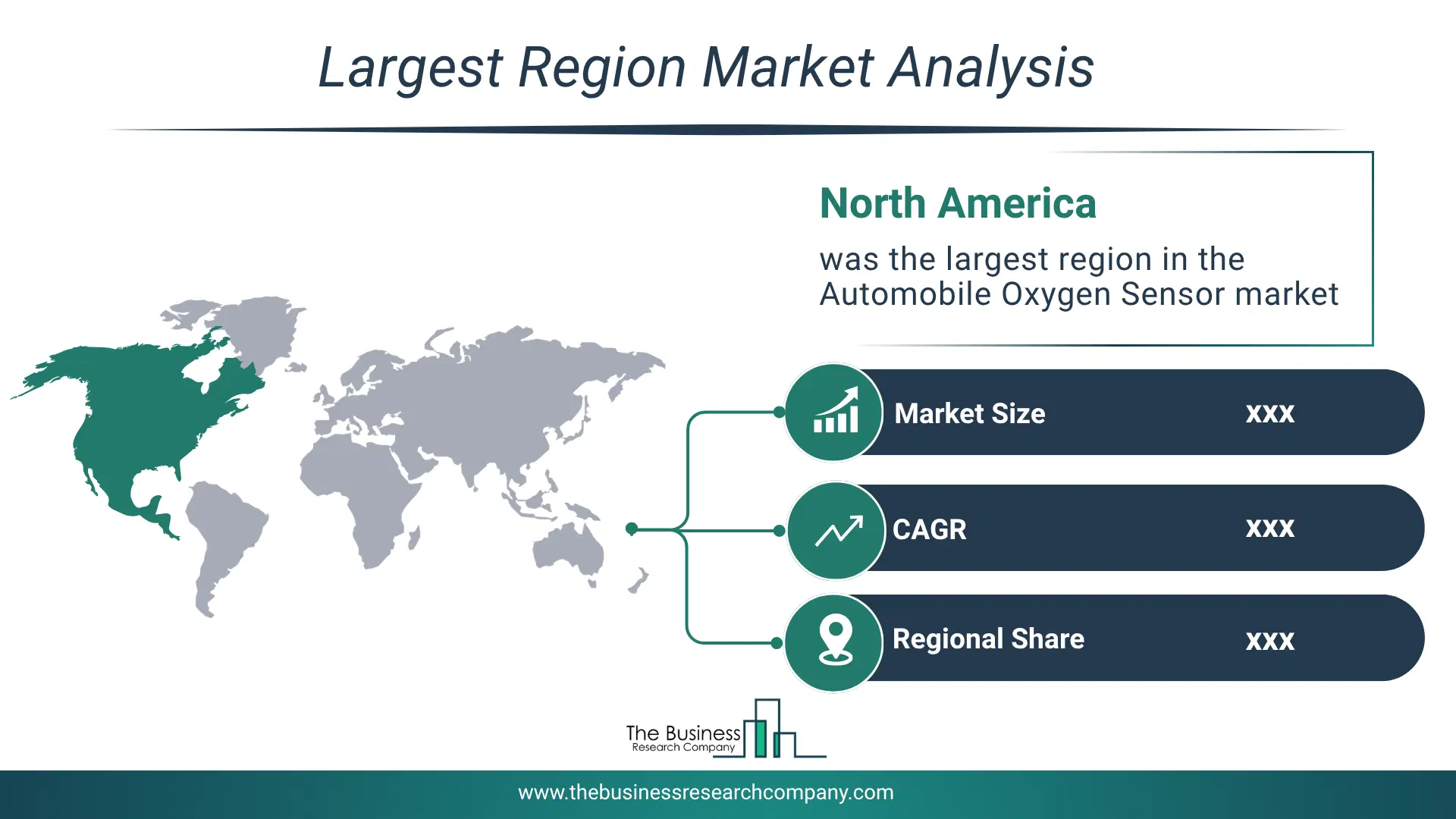
Regional Outlook
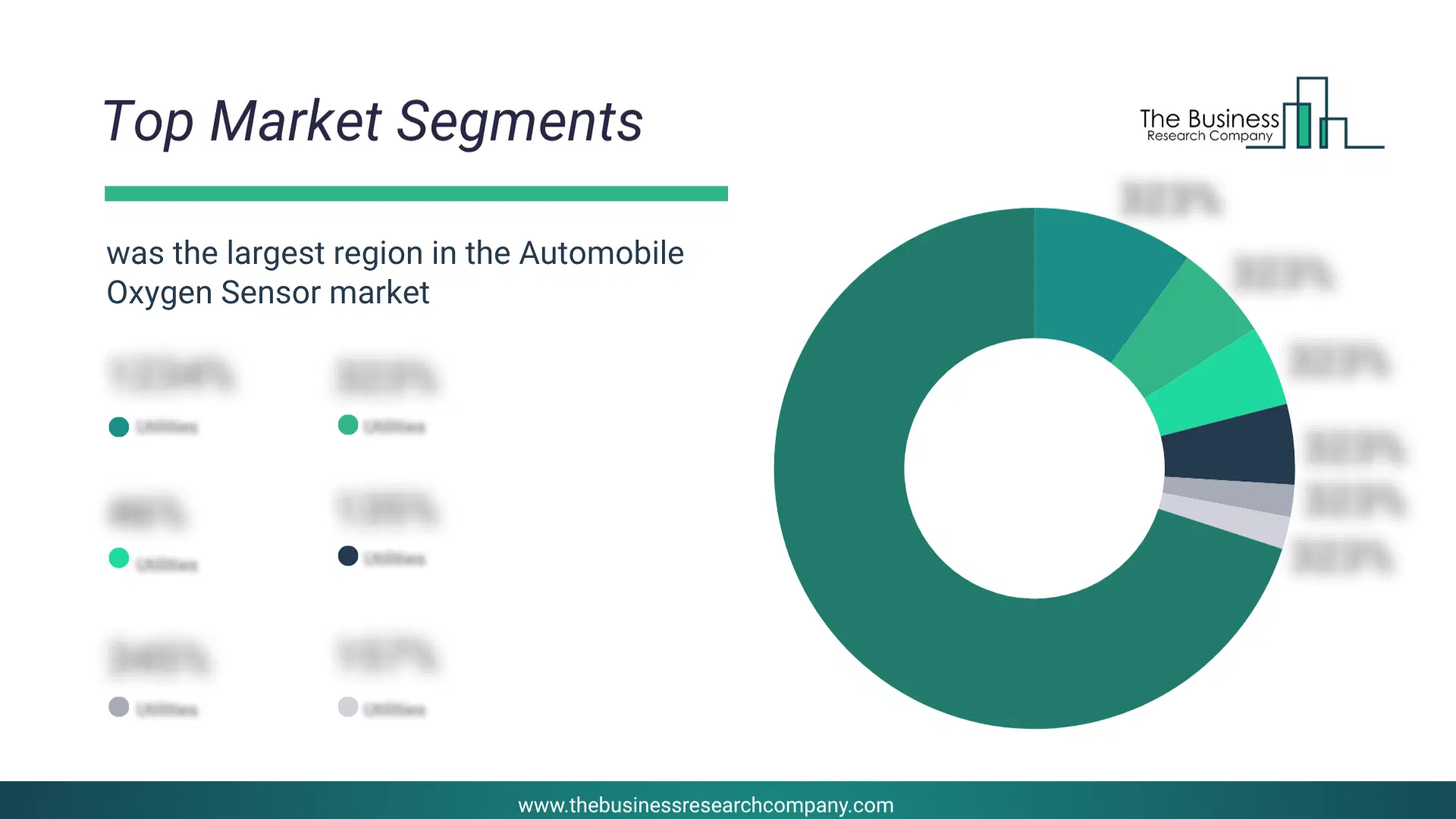
North America was the largest region in the automobile oxygen sensor market in 2025. Asia-Pacific is expected to be the fastest-growing region in the forecast period. The regions covered in this market report are Asia-Pacific, South East Asia, Western Europe, Eastern Europe, North America, South America, Middle East, Africa. The countries covered in this market report are Australia, Brazil, China, France, Germany, India, Indonesia, Japan, Taiwan, Russia, South Korea, UK, USA, Canada, Italy, Spain.What Defines the Automobile Oxygen Sensor Market?
The automobile oxygen sensor market consists of sales of heated oxygen sensors, lambda sensors, digital oxygen sensors and dual-function sensors. Values in this market are ‘factory gate’ values, that is the value of goods sold by the manufacturers or creators of the goods, whether to other entities (including downstream manufacturers, wholesalers, distributors and retailers) or directly to end customers. The value of goods in this market includes related services sold by the creators of the goods.How is Market Value Defined and Measured?
The market value is defined as the revenues that enterprises gain from the sale of goods and/or services within the specified market and geography through sales, grants, or donations in terms of the currency (in USD unless otherwise specified). The revenues for a specified geography are consumption values that are revenues generated by organizations in the specified geography within the market, irrespective of where they are produced. It does not include revenues from resales along the supply chain, either further along the supply chain or as part of other products.
This chart presents market attractiveness based on a quantitative evaluation of growth, competition, strategic alignment, and risk, offering a clear view of opportunity areas for decision-making. This chart is for illustrative purposes; the full report contains the complete analysis.

This chart highlights the Total Addressable Market (TAM) by estimating the maximum revenue opportunity using an assumption-driven approach, supporting strategic planning and opportunity sizing across markets. The chart is illustrative; the full report provides a more comprehensive analysis.
What Key Data and Analysis Are Included in the Automobile Oxygen Sensor Market Report 2026?
The automobile oxygen sensor market research report is one of a series of new reports from The Business Research Company that provides market statistics, including industry global market size, regional shares, competitors with the market share, detailed market segments, market trends and opportunities, and any further data you may need to thrive in the automobile oxygen sensor industry. The market research report delivers a complete perspective of everything you need, with an in-depth analysis of the current and future state of the industry.Automobile Oxygen Sensor Market Report Forecast Analysis
| Report Attribute | Details |
|---|---|
| Market Size Value In 2026 | $7.28 billion |
| Revenue Forecast In 2030 | $9.09 billion |
| Growth Rate | CAGR of 5.7% from 2026 to 2030 |
| Base Year For Estimation | 2025 |
| Actual Estimates/Historical Data | 2020-2025 |
| Forecast Period | 2026 - 2030 |
| Market Representation | Revenue in USD Billion and CAGR from 2026 to 2030 |
| Segments Covered | Product Type, Location, Application, Sales Channel, End Use |
| Regional Scope | Asia-Pacific, Western Europe, Eastern Europe, North America, South America, Middle East, Africa |
| Country Scope | The countries covered in the report are Australia, Brazil, China, France, Germany, India, Indonesia, Japan, Taiwan, Russia, South Korea, UK, USA, Canada, Italy, Spain. |
| Key Companies Profiled | Bosch Automotive Parts Inc., Hitachi Automotive Systems Ltd., Denso Corporation, Continental AG, Francisco Albero SAU, Mitsubishi Electric Corporation, Honeywell International Inc., Valeo, Kyocera Corporation, TE Connectivity Ltd., BorgWarner Inc., Analog Devices Inc., Fujikura Ltd., NGK Spark Plug Co. Ltd., Delphi Technologies, Yokogawa Electric Corporation, Standard Motor Products Inc., KEMET Corporation, CTS Corporation, Pricol Limited, Federal-Mogul Corporation, Honeywell International Inc., Walker Products Inc., SJ Automotive Co. Ltd., Ceradex Corporation |
| Customization Scope | Request for Customization |
| Pricing And Purchase Options | Explore Purchase Options |