
Automotive Aerodynamic Market Report 2026
Global Outlook – By Component (Services, Software), By Mechanism (Active System, Passive System), By Electric Vehicles (Battery Electric Vehicle (BEV), Hybrid Electric Vehicle (HEV), Plug-In Hybrid Electric Vehicle (PHEV), Fuel Cell Electric Vehicle (FCEV)), By Vehicle (Passenger Cars, Light Commercial Vehicles, Heavy Commercial Vehicles), By Application (Air Dam, Diffuser, Gap Fairing, Grille Shutter, Side Skirts, Spoiler, Wind Deflector, Other Applications) – Market Size, Trends, Strategies, and Forecast to 2030
Automotive Aerodynamic Market Overview
• Automotive Aerodynamic market size has reached to $29.51 billion in 2025 • Expected to grow to $36.86 billion in 2030 at a compound annual growth rate (CAGR) of 4.5% • Growth Driver: Rising Demand For Electric Vehicles Fueling Growth Of Automotive Aerodynamics Market • Market Trend: Automakers Innovate Aerodynamic Drag-Reducing Systems To Boost Efficiency And Performance • Asia-Pacific was the largest region and fastest growing region.What Is Covered Under Automotive Aerodynamic Market?
Automotive aerodynamics refers to the study of how air flows around and through vehicles. Its primary goal is to reduce air resistance (drag) and improve fuel efficiency, performance, and stability. This involves designing vehicle shapes to optimize airflow, minimize turbulence, and control lift and downforce. Key elements include streamlined body shapes, underbody panels, and aerodynamic aids like spoilers and diffusers. The main components of automotive aerodynamics are services and software. Services include testing, consulting, and engineering services that help automotive manufacturers design and optimize vehicle aerodynamics. These services are vital for achieving regulatory compliance and improving vehicle performance. The various mechanisms are active systems and passive systems used in various electric vehicles such as battery electric vehicles (BEV), hybrid electric vehicles (HEV), plug-in hybrid electric vehicles (PHEV), and fuel cell electric vehicles (FCEV). The various vehicles involved are passenger cars, light commercial vehicles, and heavy commercial vehicles and are used in various applications such as air dams, diffusers, gap fairing, grille shutters, side skirts, spoilers, wind deflectors, and others.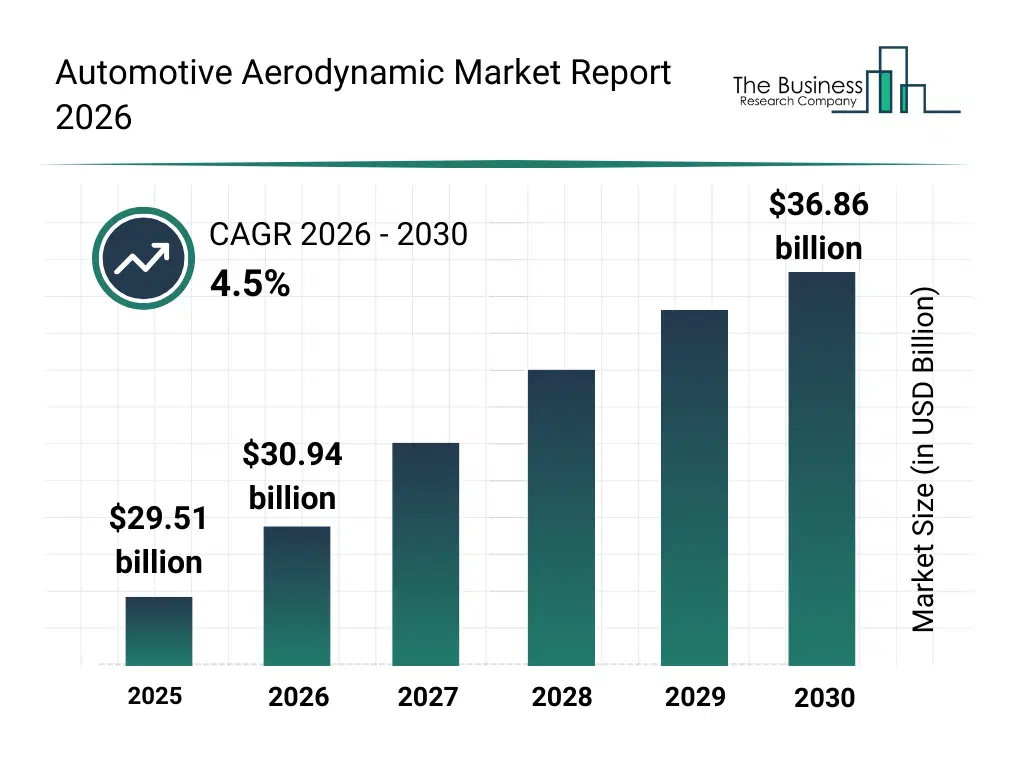
What Is The Automotive Aerodynamic Market Size and Share 2026?
The automotive aerodynamic market size has grown steadily in recent years. It will grow from $29.51 billion in 2025 to $30.94 billion in 2026 at a compound annual growth rate (CAGR) of 4.8%. The growth in the historic period can be attributed to fuel efficiency optimization, motorsport-derived designs, use of wind tunnel testing, automotive performance demand, regulatory emission targets.What Is The Automotive Aerodynamic Market Growth Forecast?
The automotive aerodynamic market size is expected to see steady growth in the next few years. It will grow to $36.86 billion in 2030 at a compound annual growth rate (CAGR) of 4.5%. The growth in the forecast period can be attributed to ev range optimization, software-driven aero design, active grille shutter adoption, lightweight material innovation, autonomous vehicle stability requirements. Major trends in the forecast period include increasing focus on drag reduction, adoption of active aerodynamic systems, integration of cfd-based design tools, growth of aerodynamics in ev platforms, demand for lightweight aero components.
Global Automotive Aerodynamic Market Segmentation
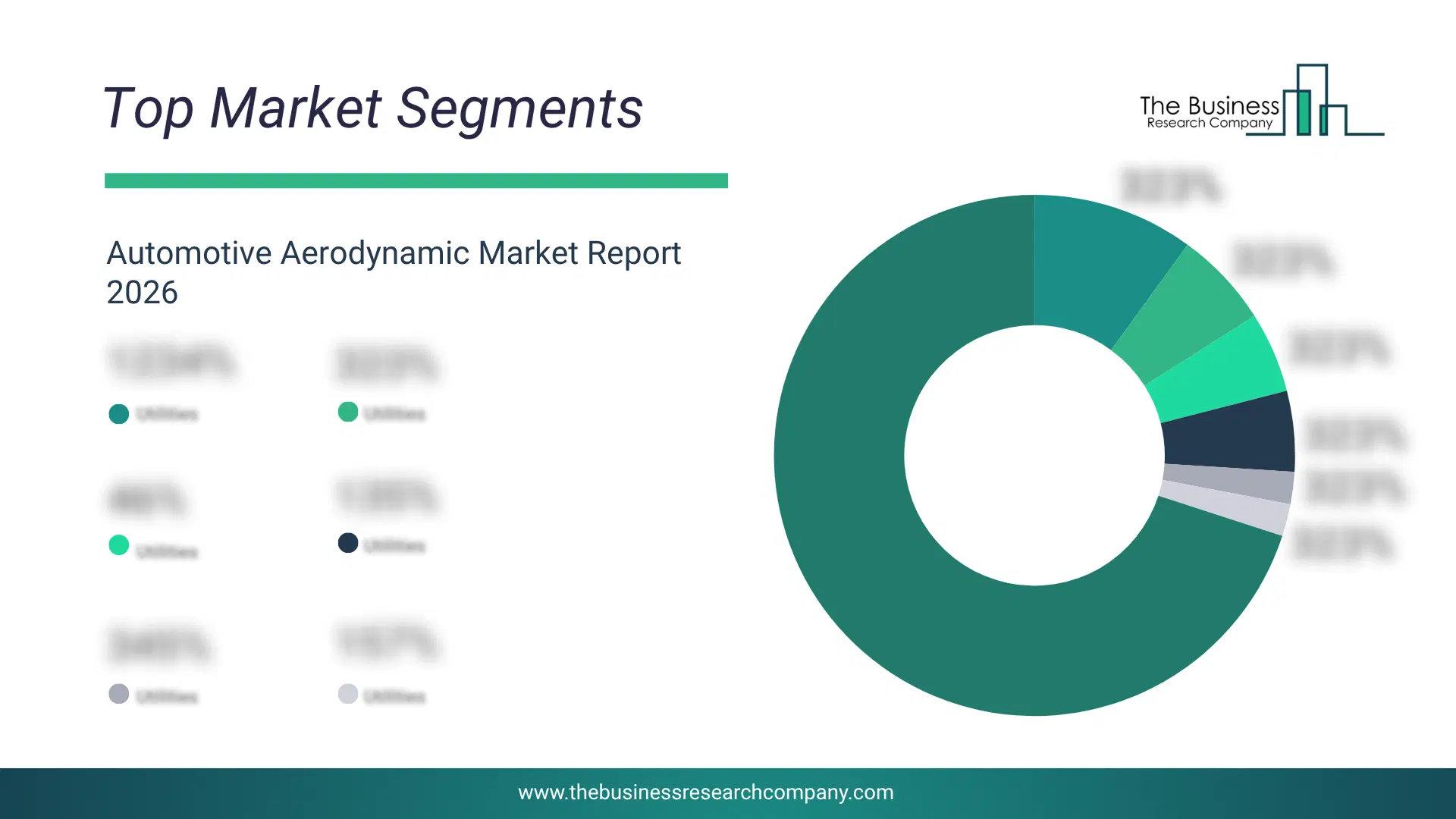
1) By Component: Services, Software 2) By Mechanism: Active System, Passive System 3) By Electric Vehicles: Battery Electric Vehicle (BEV), Hybrid Electric Vehicle (HEV), Plug-In Hybrid Electric Vehicle (PHEV), Fuel Cell Electric Vehicle (FCEV) 4) By Vehicle: Passenger Cars, Light Commercial Vehicles, Heavy Commercial Vehicles 5) By Application: Air Dam, Diffuser, Gap Fairing, Grille Shutter, Side Skirts, Spoiler, Wind Deflector, Other Applications Subsegments: 1) By Services: Aerodynamic Testing Services, Consulting And Engineering Services, Prototyping And Design Optimization, Aerodynamic Analysis And Performance Evaluation, Post-Testing Modifications And Adjustments 2) By Software: Computational Fluid Dynamics (CFD) Software, Vehicle Aerodynamics Simulation Software, Design Optimization Software, 3d Modeling And Visualization Tools, Aerodynamic Performance Evaluation SoftwareWhat Is The Driver Of The Automotive Aerodynamic Market?
The rising demand for electric vehicles is expected to propel the growth of the automotive aerodynamics market going forward. Electric vehicles (EVs) utilize electric motors powered by stored electricity, rather than internal combustion engines, for propulsion. The rising demand for electric vehicles is due to environmental consciousness, governmental support through incentives, technological progress in batteries, reduced operational expenses, and efforts to enhance urban air quality. Automotive aerodynamics in electric vehicles (EVs) enhance efficiency by reducing drag, improving range, and optimizing stability at high speeds, ensuring maximum performance from the stored energy in their batteries. For instance, in April 2024, according to the International Energy Agency, a France-based intergovernmental energy organisation, global electric car sales in 2023 climbed to nearly 14 million units, accounting for 18 percent of all cars sold worldwide, up from 14 percent in 2022, with 3.5 million more electric cars sold compared to the previous year representing a 35 percent year on year increase. Therefore, the rising demand for electric vehicles is driving the growth of the automotive aerodynamics industry.Key Players In The Global Automotive Aerodynamic Market
Major companies operating in the automotive aerodynamic market report include Tesla Inc., BMW AG, Mercedes-Benz Group AG, Audi AG, Porsche AG, Volkswagen AG, Toyota Motor Corporation, Honda Motor Co. Ltd., Hyundai Motor Company, Kia Corporation, Volvo Cars, Volvo Group, Scania AB, Daimler Truck AG, Ford Motor Company, General Motors, Stellantis N.V., Rivian Automotive, Lucid Group, BYD Company Limited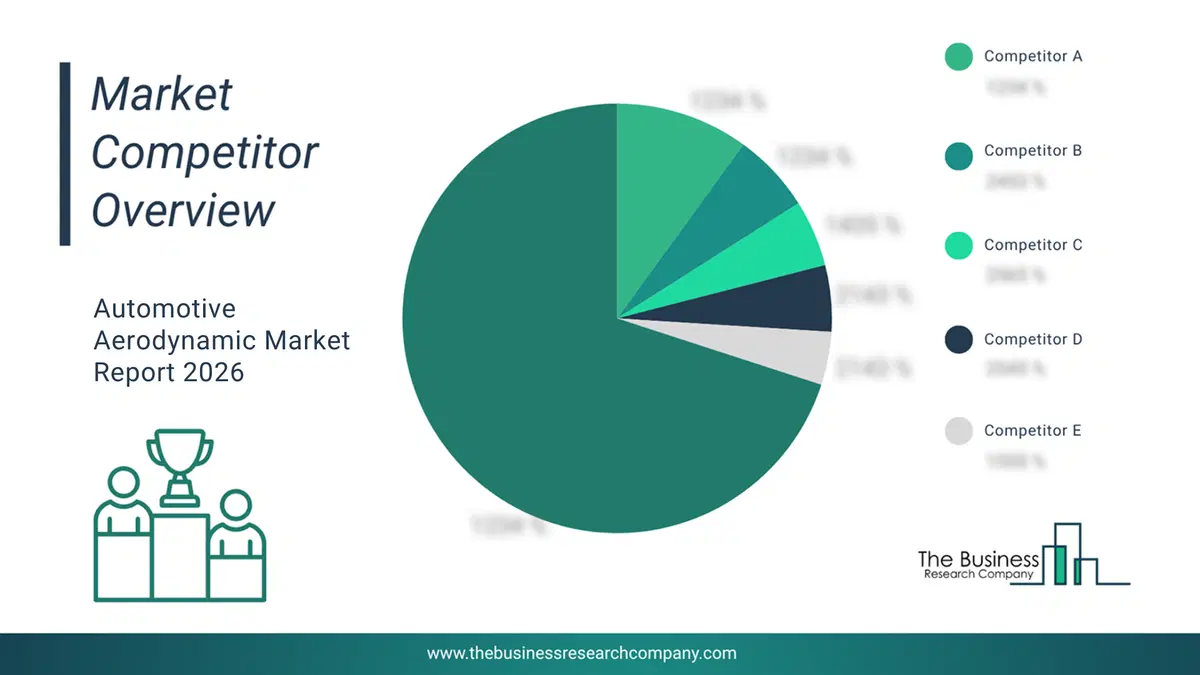
This chart is for illustrative purposes; the full report includes a detailed competitor analysis and comprehensive overview of the top 10 companies in the market.
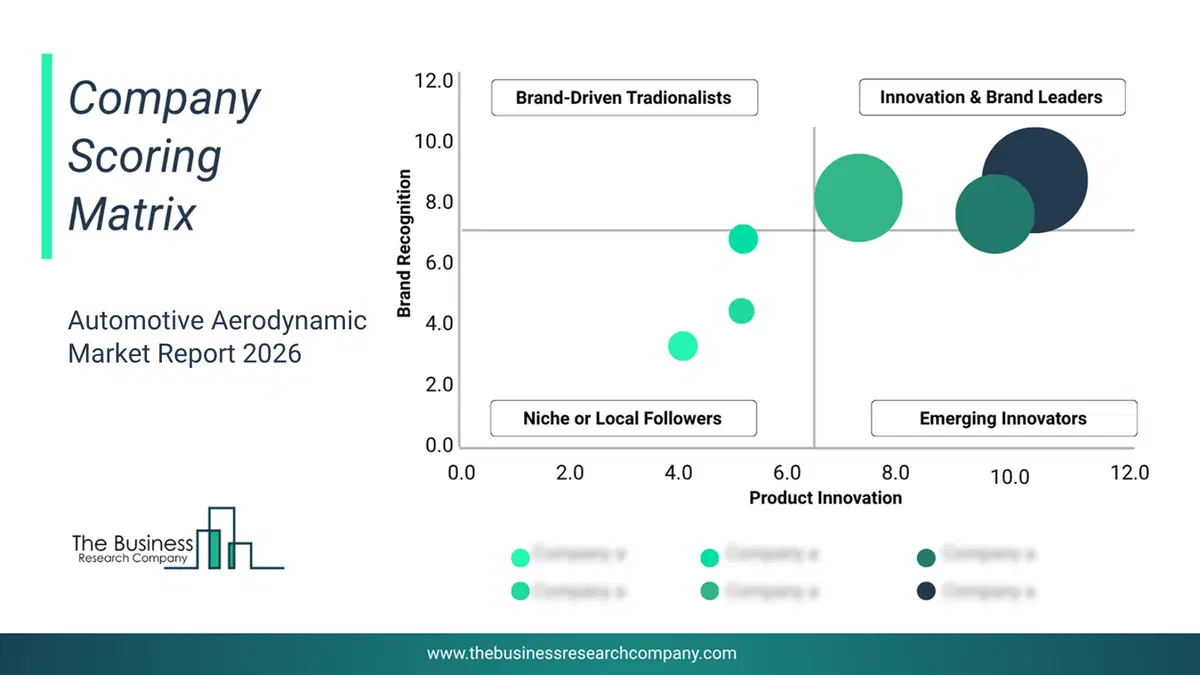
This chart maps companies by product innovation and brand strength, with bubble size indicating relative revenue, helping identify market leaders, challengers, and niche players. This is an illustrative chart; the full report provides a complete and accurate competitive analysis.
Global Automotive Aerodynamic Market Trends and Insights
Major companies operating in the automotive aerodynamics market are focused on developing innovative technologies, such as aerodynamic drag-reducing systems, to enhance fuel efficiency, improve vehicle performance, and reduce carbon emissions. Aerodynamic drag-reducing systems are technologies and design strategies to minimize the resistance that a vehicle, aircraft, or other moving object encounters from the air as it moves. For instance, in January 2024, Hyundai Motor Company, a South Korean-based automotive manufacturer, launched active air skirt technology that improves vehicle aerodynamics. This cutting-edge system features active flaps integrated into the vehicle's front bumper and underbody, automatically adjusting to optimize airflow based on driving conditions. The vehicle at higher speeds deploys the flap to reduce drag, enhancing fuel efficiency and performance. Conversely, the flaps retract at lower speeds or when cooling is required to allow for better airflow to the engine and brakes.What Are Latest Mergers And Acquisitions In The Automotive Aerodynamic Market?
In November 2023, Consolidated Metco Inc., a US-based manufacturer of components for the commercial vehicle industry, acquired TruckLabs for an undisclosed amount. With this acquisition, ConMet aims to expand its portfolio of fuel-saving technologies, bring efficiency benefits to more customers, leverage its manufacturing expertise, and position itself as a one-stop shop for improving the overall efficiency of heavy-duty trucks and trailers. TruckLabs is a US-based company that develops aerodynamic solutions for the trucking industry.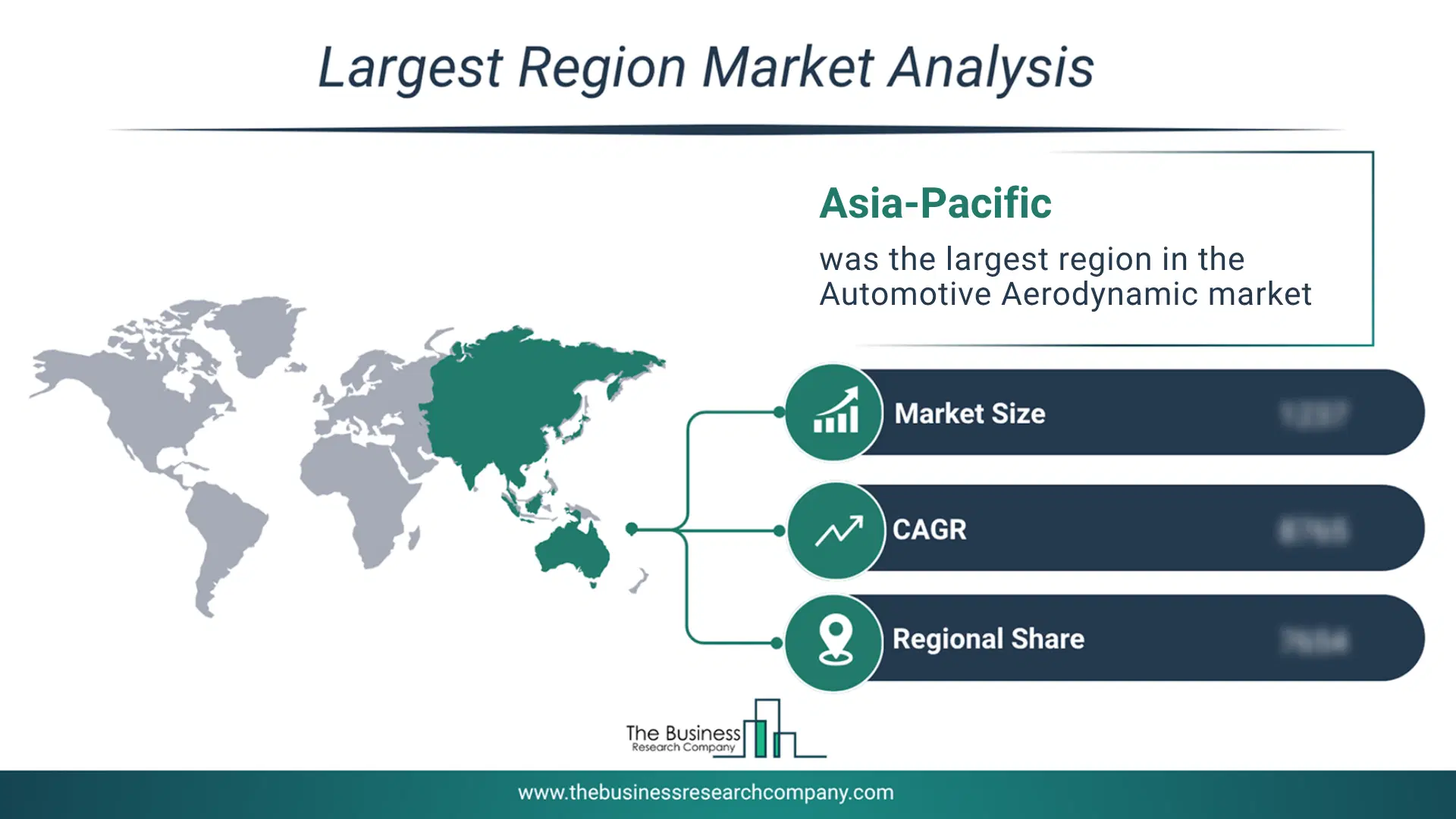
Regional Outlook
Asia-Pacific was the largest region in the automotive aerodynamic market in 2025, and is expected to be the fastest-growing region in the forecast period. The regions covered in this market report include Asia-Pacific, South East Asia, Western Europe, Eastern Europe, North America, South America, Middle East, Africa. The countries covered in this market report include Australia, Brazil, China, France, Germany, India, Indonesia, Japan, Taiwan, Russia, South Korea, UK, USA, Canada, Italy, SpainWhat Defines the Automotive Aerodynamic Market?
The automotive aerodynamics market consists of sales of spoilers, diffusers, underbody panels, vortex generators, and splitters. Values in this market are ‘factory gate’ values, that is the value of goods sold by the manufacturers or creators of the goods, whether to other entities (including downstream manufacturers, wholesalers, distributors and retailers) or directly to end customers. The value of goods in this market includes related services sold by the creators of the goods.How is Market Value Defined and Measured?
The market value is defined as the revenues that enterprises gain from the sale of goods and/or services within the specified market and geography through sales, grants, or donations in terms of the currency (in USD unless otherwise specified). The revenues for a specified geography are consumption values that are revenues generated by organizations in the specified geography within the market, irrespective of where they are produced. It does not include revenues from resales along the supply chain, either further along the supply chain or as part of other products.
This chart presents market attractiveness based on a quantitative evaluation of growth, competition, strategic alignment, and risk, offering a clear view of opportunity areas for decision-making. This chart is for illustrative purposes; the full report contains the complete analysis.

This chart highlights the Total Addressable Market (TAM) by estimating the maximum revenue opportunity using an assumption-driven approach, supporting strategic planning and opportunity sizing across markets. The chart is illustrative; the full report provides a more comprehensive analysis.
What Key Data and Analysis Are Included in the Automotive Aerodynamic Market Report 2026?
The automotive aerodynamic market research report is one of a series of new reports from The Business Research Company that provides market statistics, including industry global market size, regional shares, competitors with the market share, detailed market segments, market trends and opportunities, and any further data you may need to thrive in the automotive aerodynamic industry. The market research report delivers a complete perspective of everything you need, with an in-depth analysis of the current and future state of the industry.Automotive Aerodynamic Market Report Forecast Analysis
| Report Attribute | Details |
|---|---|
| Market Size Value In 2026 | $30.94 billion |
| Revenue Forecast In 2030 | $36.86 billion |
| Growth Rate | CAGR of 4.8% from 2026 to 2030 |
| Base Year For Estimation | 2025 |
| Actual Estimates/Historical Data | 2020-2025 |
| Forecast Period | 2026 - 2030 - 2030 |
| Market Representation | Revenue in USD Billion and CAGR from 2026 to 2030 |
| Segments Covered | Component, Mechanism, Electric Vehicles, Vehicle, Application |
| Regional Scope | Asia-Pacific, Western Europe, Eastern Europe, North America, South America, Middle East, Africa |
| Country Scope | The countries covered in the report are Australia, Brazil, China, France, Germany, India, Indonesia, Japan, Taiwan, Russia, South Korea, UK, USA, Canada, Italy, Spain. |
| Key Companies Profiled | Tesla Inc., BMW AG, Mercedes-Benz Group AG, Audi AG, Porsche AG, Volkswagen AG, Toyota Motor Corporation, Honda Motor Co. Ltd., Hyundai Motor Company, Kia Corporation, Volvo Cars, Volvo Group, Scania AB, Daimler Truck AG, Ford Motor Company, General Motors, Stellantis N.V., Rivian Automotive, Lucid Group, BYD Company Limited |
| Customization Scope | Request for Customization |
| Pricing And Purchase Options | Explore Purchase Options |