

Automotive Composites Market Report 2026
Global Outlook – By Material (Glass Fiber Composites, Natural Fiber Composites, Carbon Fiber Composites, Aramid Fiber Composites, Other Materials), By Resin (Thermoplastic, Thermoset), By Manufacturing Process (Compression Molding, Injection Molding, Resin Transfer Molding (RTM), Other Manufacturing Processes), By Application (Exterior, Interior, Structural And Powertrain, Other Applications) – Market Size, Trends, Strategies, and Forecast to 2030
Automotive Composites Market Overview
• Automotive Composites market size has reached to $8.95 billion in 2025 • Expected to grow to $14.23 billion in 2030 at a compound annual growth rate (CAGR) of 9.5% • Growth Driver: Impact Of Demand For Lightweight And Fuel-Efficient Vehicles On The Automotive Composites Market • Market Trend: Advanced Eco-Friendly Solutions Enhanced Market Growth • Asia-Pacific was the largest region in 2025 and Europe is the fastest growing region.What Is Covered Under Automotive Composites Market?
Automotive composites refer to materials composed of two or more distinct components combined to enhance vehicle performance, efficiency, and durability. These materials typically include a reinforcing phase, such as fibers or particles, embedded within a matrix material. They are used extensively in automotive manufacturing to reduce weight, improve fuel efficiency, and enhance structural integrity across various vehicle components. The main materials of automotive composites are glass fiber composites, natural fiber composites, carbon fiber composites, aramid fiber composites, and others. Glass fiber composites refer to materials where glass fibers are embedded within a resin matrix, known for their strength, lightweight nature, and versatility in various industrial applications. These composites utilize resins such as thermoplastics and thermosets and are manufactured through processes such as compression molding, injection molding, and resin transfer molding (RTM), and others. They find applications in exterior, interior, structural elements, powertrain and others.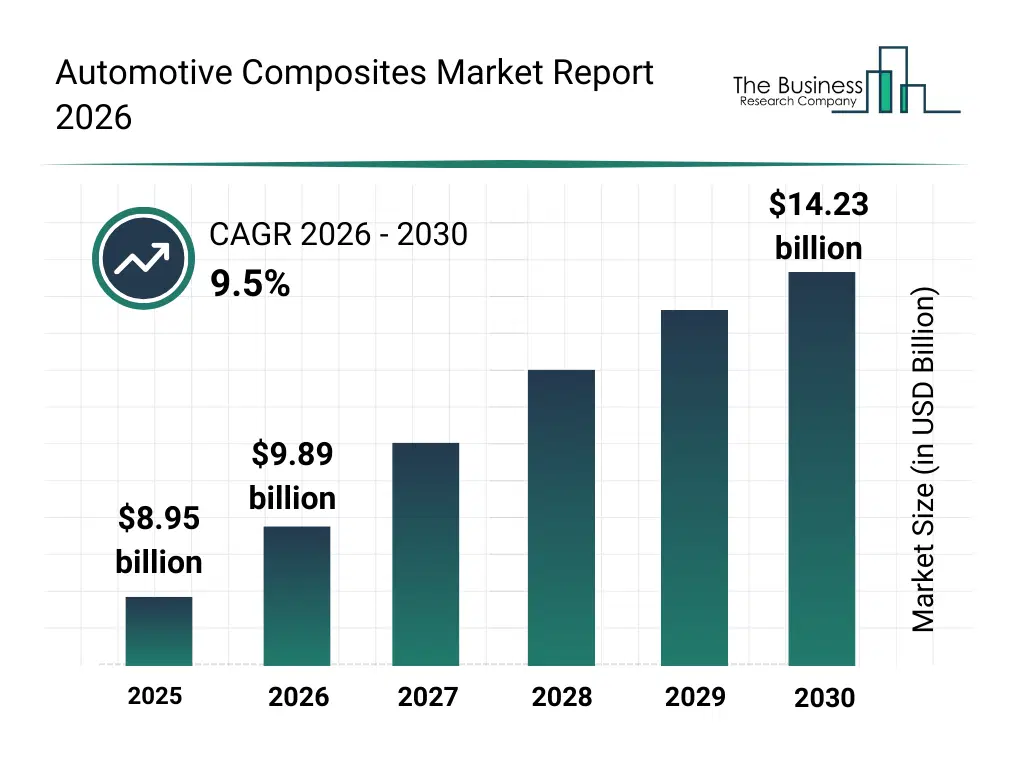
What Is The Automotive Composites Market Size and Share 2026?
The automotive composites market size has grown rapidly in recent years. It will grow from $8.95 billion in 2025 to $9.89 billion in 2026 at a compound annual growth rate (CAGR) of 10.5%. The growth in the historic period can be attributed to fuel efficiency regulations, demand for lightweight vehicles, performance enhancement needs, glass fiber adoption, composite manufacturing expansion.What Is The Automotive Composites Market Growth Forecast?
The automotive composites market size is expected to see strong growth in the next few years. It will grow to $14.23 billion in 2030 at a compound annual growth rate (CAGR) of 9.5%. The growth in the forecast period can be attributed to ev production growth, battery range optimization, recyclable composite innovation, high-strength material demand, advanced molding technologies. Major trends in the forecast period include increasing use of lightweight materials, growth of carbon fiber adoption, expansion of structural composite applications, adoption of sustainable composites, integration in ev platforms.
Global Automotive Composites Market Segmentation
1) By Material: Glass Fiber Composites, Natural Fiber Composites, Carbon Fiber Composites, Aramid Fiber Composites, Other Materials 2) By Resin: Thermoplastic, Thermoset 3) By Manufacturing Process: Compression Molding, Injection Molding, Resin Transfer Molding (RTM), Other Manufacturing Processes 4) By Application: Exterior, Interior, Structural And Powertrain, Other Applications Subsegments: 1) By Glass Fiber Composites: E-Glass Composites, S-Glass Composites 2) By Natural Fiber Composites: Hemp Fiber Composites, Jute Fiber Composites, Flax Fiber Composites 3) By Carbon Fiber Composites: Continuous Carbon Fiber Composites, Short Carbon Fiber Composites 4) By Aramid Fiber Composites: Kevlar-Based Composites, Twaron-Based Composites 5) By Other Materials: Basalt Fiber Composites, PEEK Composites (Polyetheretherketone)What Is The Driver Of The Automotive Composites Market?
The increasing demand for lightweight and fuel-efficient vehicles is expected to propel the growth of the automotive composites market going forward. Lightweight and fuel-efficient vehicles refer to automobiles designed to minimize overall weight through materials such as composites and alloys, aiming to reduce fuel consumption and emissions while improving performance. The rising adoption of lightweight and fuel-efficient vehicles is driven by regulatory pressures for lower emissions, consumer demand for improved fuel economy, and advancements in materials technology enabling lighter yet stronger vehicle components. Automotive composites are used to replace traditional materials such as steel, reducing vehicle weight and improving fuel efficiency through their high strength-to-weight ratio and design flexibility. For instance, in June 2024, according to the Bureau of Economic Analysis, a US-based government agency, the sales of lightweight vehicles, encompassing automobiles and light trucks, surged from 13.5 million units in December 2022 to 16.1 million units by December 2023 in the USA. Therefore, the increasing demand for lightweight and fuel-efficient vehicles will drive the automotive composites industry.Key Players In The Global Automotive Composites Market
Major companies operating in the automotive composites market report include BASF SE, Compagnie de Saint-Gobain S.A, Toray Industries Inc., DuPont de Nemours Inc., Owens Corning Corporation, Lanxess AG, Teijin Ltd., Solvay S.A., Avient Corporation, Johns Manville Corp., Hexcel Corporation, SGL Carbon India Private Limited, Gurit (Tianjin) Composite Material Co. Ltd., Momentive Performance Materials Inc., UFP Technologies Inc., Exel Composites plc, Mitsubishi Chemical Carbon Fiber and Composites Inc., Sigmatex Limited, Composites Evolution Ltd., Innegra Technologies LLC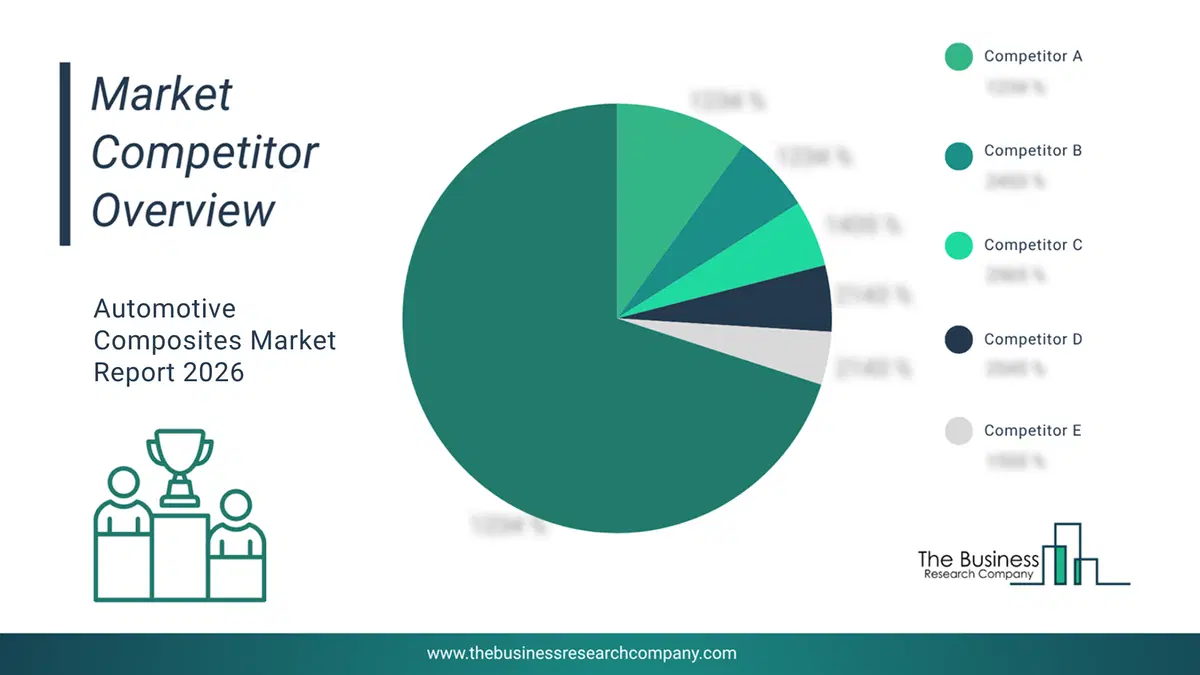
This chart is for illustrative purposes; the full report includes a detailed competitor analysis and comprehensive overview of the top 10 companies in the market.
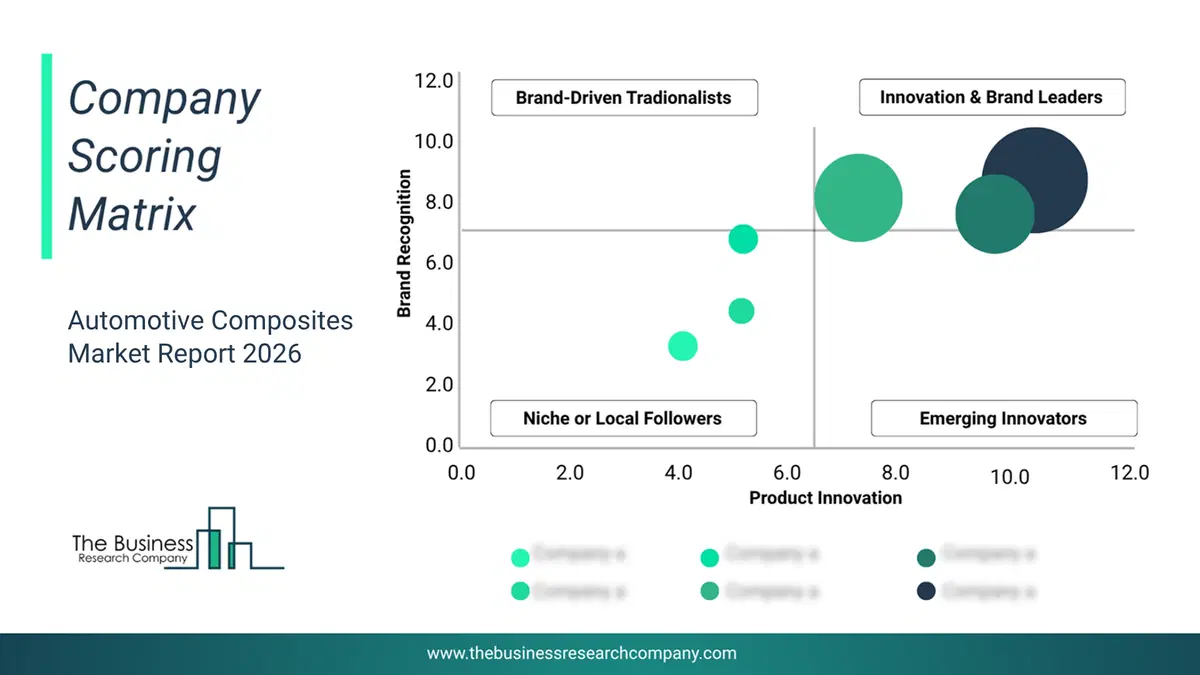
This chart maps companies by product innovation and brand strength, with bubble size indicating relative revenue, helping identify market leaders, challengers, and niche players. This is an illustrative chart; the full report provides a complete and accurate competitive analysis.
Global Automotive Composites Market Trends and Insights
Major companies operating in the automotive composites market are focused on developing innovations such as glass fiber composite technology to enhance strength and reduce weight in vehicle manufacturing. Glass fiber composite technology refers to the use of glass fibers embedded in a resin matrix to create strong and lightweight materials for various applications, including automotive components. For instance, in June 2024, Navrattan Group, an India-based technology company, launched the E-Bus, built using composite fiber materials. Employing high-quality glass fiber composite technology merged with integrated processes, this E-Bus represents a leap forward in electric vehicle design. The use of these advanced materials results in a reduced body weight and a lower gross vehicle weight, significantly enhancing the overall efficiency of the bus.What Are Latest Mergers And Acquisitions In The Automotive Composites Market?
In September 2023, Michelin, a France-based tire manufacturing company, acquired Flex Composite Group for $754.22 million (€700 million). Through this acquisition, companies will combine their expertise in polymer composite solutions, with Michelin bringing its unparalleled innovation and R&D capabilities and FCG contributing advanced customer engagement and industrial process expertise. Flex Composite Group is a France-based advanced automotive composite material manufacturing company.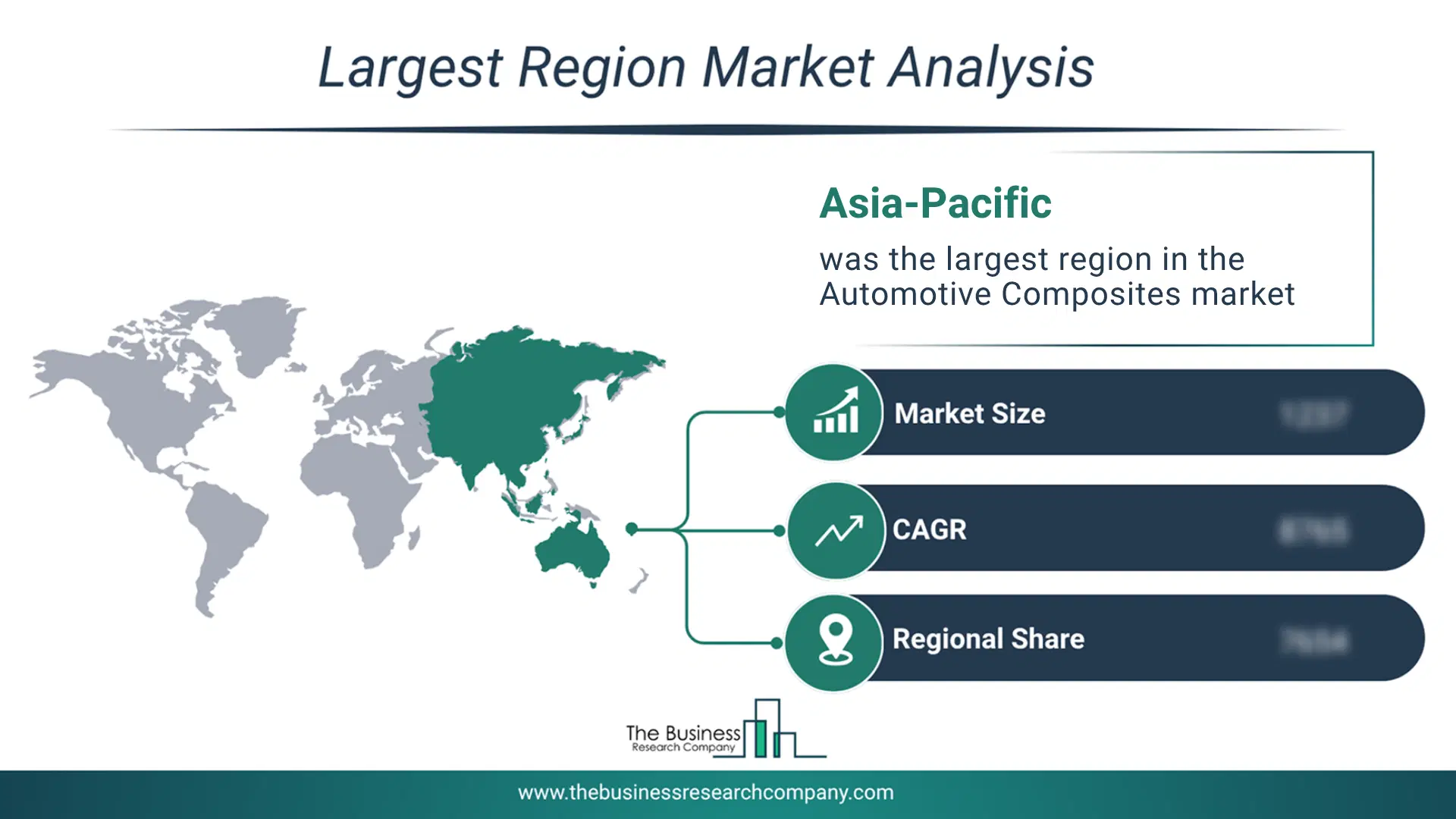
Regional Outlook
Asia-Pacific was the largest region in the automotive composites market in 2025. Europe is expected to be the fastest-growing region in the forecast period. The regions covered in this market report include Asia-Pacific, South East Asia, Western Europe, Eastern Europe, North America, South America, Middle East, Africa. The countries covered in this market report include Australia, Brazil, China, France, Germany, India, Indonesia, Japan, Taiwan, Russia, South Korea, UK, USA, Canada, Italy, SpainWhat Defines the Automotive Composites Market?
The automotive composites market consists of sales of metal matrix composites, polymer matrix composites, and carbon nanotube composites. Values in this market are ‘factory gate’ values, that is the value of goods sold by the manufacturers or creators of the goods, whether to other entities (including downstream manufacturers, wholesalers, distributors, and retailers) or directly to end customers. The value of goods in this market includes related services sold by the creators of the goods.How is Market Value Defined and Measured?
The market value is defined as the revenues that enterprises gain from the sale of goods and/or services within the specified market and geography through sales, grants, or donations in terms of the currency (in USD unless otherwise specified). The revenues for a specified geography are consumption values that are revenues generated by organizations in the specified geography within the market, irrespective of where they are produced. It does not include revenues from resales along the supply chain, either further along the supply chain or as part of other products.
This chart presents market attractiveness based on a quantitative evaluation of growth, competition, strategic alignment, and risk, offering a clear view of opportunity areas for decision-making. This chart is for illustrative purposes; the full report contains the complete analysis.

This chart highlights the Total Addressable Market (TAM) by estimating the maximum revenue opportunity using an assumption-driven approach, supporting strategic planning and opportunity sizing across markets. The chart is illustrative; the full report provides a more comprehensive analysis.
What Key Data and Analysis Are Included in the Automotive Composites Market Report 2026?
The automotive composites market research report is one of a series of new reports from The Business Research Company that provides market statistics, including industry global market size, regional shares, competitors with the market share, detailed market segments, market trends and opportunities, and any further data you may need to thrive in the automotive composites industry. The market research report delivers a complete perspective of everything you need, with an in-depth analysis of the current and future state of the industry.Automotive Composites Market Report Forecast Analysis
| Report Attribute | Details |
|---|---|
| Market Size Value In 2026 | $9.89 billion |
| Revenue Forecast In 2030 | $14.23 billion |
| Growth Rate | CAGR of 10.5% from 2026 to 2030 |
| Base Year For Estimation | 2025 |
| Actual Estimates/Historical Data | 2020-2025 |
| Forecast Period | 2026 - 2030 - 2030 |
| Market Representation | Revenue in USD Billion and CAGR from 2026 to 2030 |
| Segments Covered | Material, Resin, Manufacturing Process, Application |
| Regional Scope | Asia-Pacific, Western Europe, Eastern Europe, North America, South America, Middle East, Africa |
| Country Scope | The countries covered in the report are Australia, Brazil, China, France, Germany, India, Indonesia, Japan, Taiwan, Russia, South Korea, UK, USA, Canada, Italy, Spain. |
| Key Companies Profiled | BASF SE, Compagnie de Saint-Gobain S.A, Toray Industries Inc., DuPont de Nemours Inc., Owens Corning Corporation, Lanxess AG, Teijin Ltd., Solvay S.A., Avient Corporation, Johns Manville Corp., Hexcel Corporation, SGL Carbon India Private Limited, Gurit (Tianjin) Composite Material Co. Ltd., Momentive Performance Materials Inc., UFP Technologies Inc., Exel Composites plc, Mitsubishi Chemical Carbon Fiber and Composites Inc., Sigmatex Limited, Composites Evolution Ltd., Innegra Technologies LLC |
| Customization Scope | Request for Customization |
| Pricing And Purchase Options | Explore Purchase Options |