

Automotive Energy Recovery System Market Report 2026
Global Outlook – By Subsystem (Turbocharger, Exhaust Gas Recirculation, Regenerative Braking System), By Propulsion (Internal Combustion Engine (ICE), Electric), By Key Technology (Camera, Fusion, Light Detection And Ranging (LiDAR), Radio Detection And Ranging (Radar)), By Vehicle (Passenger Cars, Light Commercial Vehicles, Heavy Commercial Vehicles) – Market Size, Trends, Strategies, and Forecast to 2030
Automotive Energy Recovery System Market Overview
• Automotive Energy Recovery System market size has reached to $24.15 billion in 2025 • Expected to grow to $38.14 billion in 2030 at a compound annual growth rate (CAGR) of 9.5% • Growth Driver: Electric and Hybrid Vehicle Surge Fuels Automotive Energy Recovery System Market Growth • Market Trend: Advancements In Hybrid Energy Recovery Systems For High-Performance Vehicles • Asia-Pacific was the largest region in 2025.What Is Covered Under Automotive Energy Recovery System Market?
Automotive energy recovery systems are technologies used in vehicles to capture and reuse energy that would otherwise be wasted. These systems improve overall efficiency and reduce fuel consumption by converting energy from various sources into usable power. Automotive energy recovery systems enhance vehicle efficiency, particularly in hybrid and electric vehicles, by maximizing energy utilization and reducing reliance on external power sources. The main subsystems of automotive energy recovery systems are turbochargers, exhaust gas recirculation, and regenerative braking systems. A turbocharger refers to a device used in internal combustion engines to enhance their efficiency and power output. The various propulsion includes internal combustion engines (ICE) and electric and several key technologies involved are cameras, fusion technology, light detection and ranging (LiDAR), and radio detection and ranging (Radar) and they are used in various vehicles such as passenger cars, light commercial vehicles, and heavy commercial vehicles.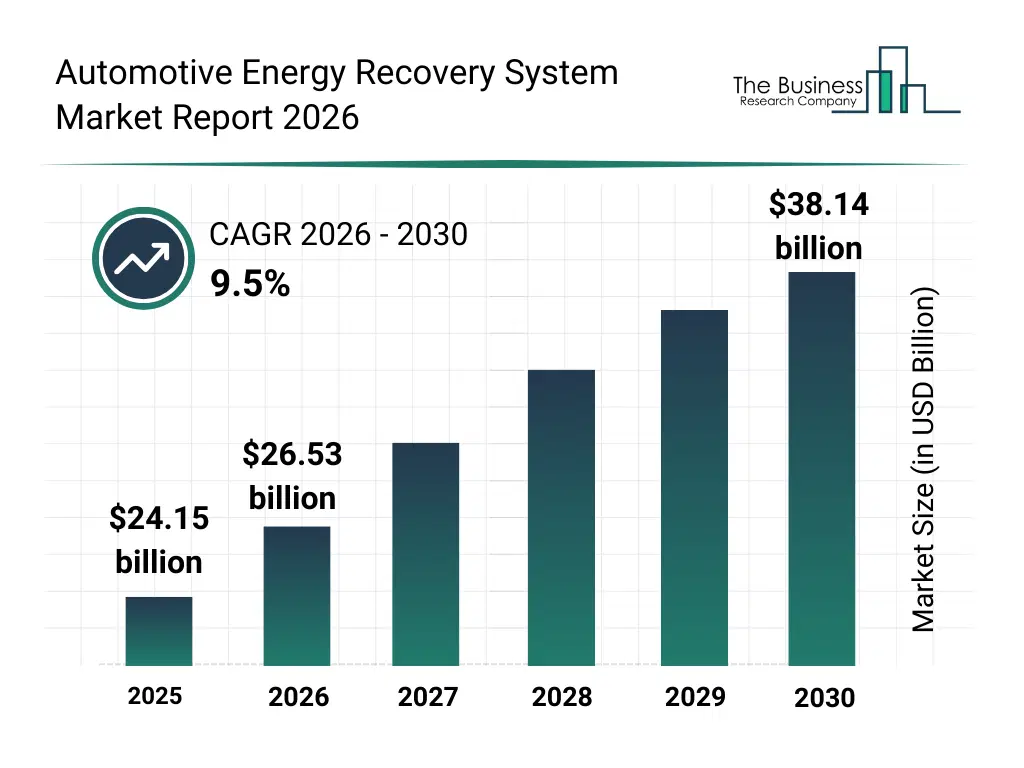
What Is The Automotive Energy Recovery System Market Size and Share 2026?
The automotive energy recovery system market size has grown strongly in recent years. It will grow from $24.15 billion in 2025 to $26.53 billion in 2026 at a compound annual growth rate (CAGR) of 9.8%. The growth in the historic period can be attributed to ice efficiency optimization, turbocharger adoption, fuel economy regulations, early hybrid vehicle penetration, automotive powertrain innovation.What Is The Automotive Energy Recovery System Market Growth Forecast?
The automotive energy recovery system market size is expected to see strong growth in the next few years. It will grow to $38.14 billion in 2030 at a compound annual growth rate (CAGR) of 9.5%. The growth in the forecast period can be attributed to ev adoption growth, energy efficiency mandates, battery optimization, integration with vehicle electronics, next-generation hybrid architectures. Major trends in the forecast period include integration of regenerative braking systems, advanced turbocharging technologies, energy recovery in hybrid vehicles, expansion of electric recovery systems, lightweight energy recovery components.
Global Automotive Energy Recovery System Market Segmentation
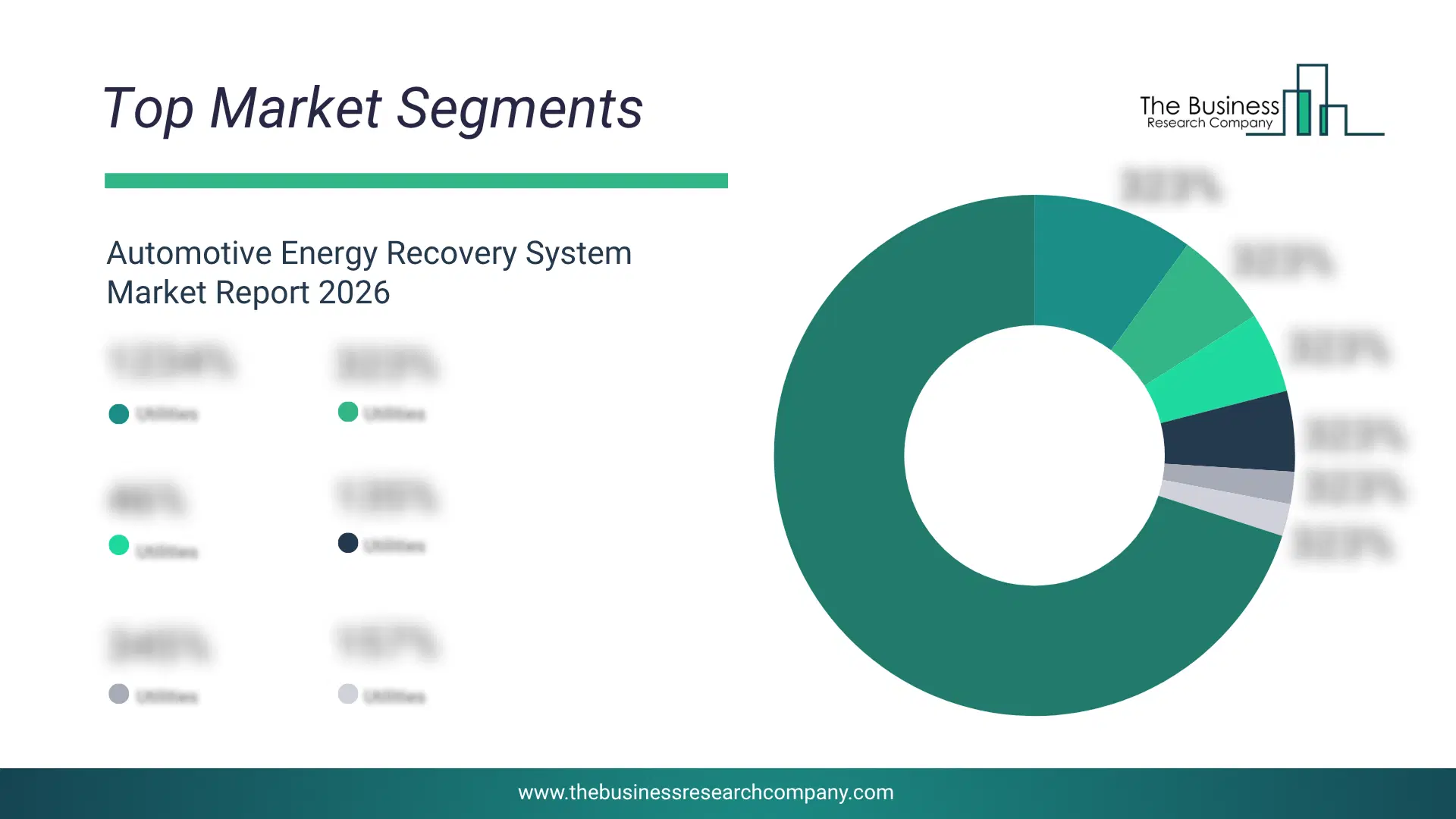
1) By Subsystem: Turbocharger, Exhaust Gas Recirculation, Regenerative Braking System 2) By Propulsion: Internal Combustion Engine (ICE), Electric 3) By Key Technology: Camera, Fusion, Light Detection And Ranging (LiDAR), Radio Detection And Ranging (Radar) 4) By Vehicle: Passenger Cars, Light Commercial Vehicles, Heavy Commercial Vehicles Subsegments: 1) By Turbocharger: Single Turbocharger, Twin Turbocharger, Variable Geometry Turbocharger (VGT) 2) By Exhaust Gas Recirculation (EGR): Low-Pressure EGR, High-Pressure EGR, EGR Coolers 3) By Regenerative Braking System: Kinetic Energy Recovery Systems (KERS), Electric Regenerative Braking Systems, Hydraulic Regenerative Braking SystemsWhat Is The Driver Of The Automotive Energy Recovery System Market?
The increasing demand for electric and hybrid vehicles is expected to propel the growth of the automotive energy recovery system market going forward. Electric vehicles (EVs) are vehicles that run solely on electricity stored in batteries. In contrast, hybrid vehicles combine an internal combustion engine with electric motors to optimize fuel efficiency and reduce emissions. The demand for electric and hybrid vehicles is due to advancements in battery technology, growing environmental awareness, government incentives, and the rising demand for fuel-efficient and low-emission transportation options. Automotive energy recovery systems in electric and hybrid vehicles capture and reuse energy from braking and other processes to enhance efficiency, extend range, and reduce overall energy consumption. For instance, in August 2024, according to the U.S. Energy Information Administration, a US-based government agency, in the second quarter of 2024 (2Q24), combined sales of hybrid vehicles, plug-in hybrid electric vehicles (PHEVs), and battery electric vehicles (BEVs) rose to 18.7% of total new light-duty vehicle (LDV) sales, up from 17.8% in 1Q24. This increase was driven mainly by hybrid electric vehicles (HEVs), whose share rose from 8.6% in 1Q24 to 9.6% in 2Q24; PHEV share increased modestly from 1.7% to 2.0%, while BEV share reached 7.1% of the LDV market roughly comparable to its share in 2Q23. Therefore, the increasing demand for electric and hybrid vehicles is driving the growth of the automotive energy recovery system industry.Key Players In The Global Automotive Energy Recovery System Market
Major companies operating in the automotive energy recovery system market report include Toyota Motor Corporation, General Motors Company, BMW Group, Robert Bosch GmbH, Hitachi Automotive Systems Ltd., Nissan Motor Co. Ltd., Audi AG, Panasonic Corporation, Denso Corporation, ZF Friedrichshafen AG, Continental AG, Hyundai Precision & Industries Corporation, Magna International Inc., Mitsubishi Electric Corporation, Honeywell International Inc., Aisin Seiki Co. Ltd., Cummins Inc., Valeo SA, Schaeffler AG, Parker Hannifin Corporation, BorgWarner Inc., GKN Automotive Ltd., Delphi Technologies Inc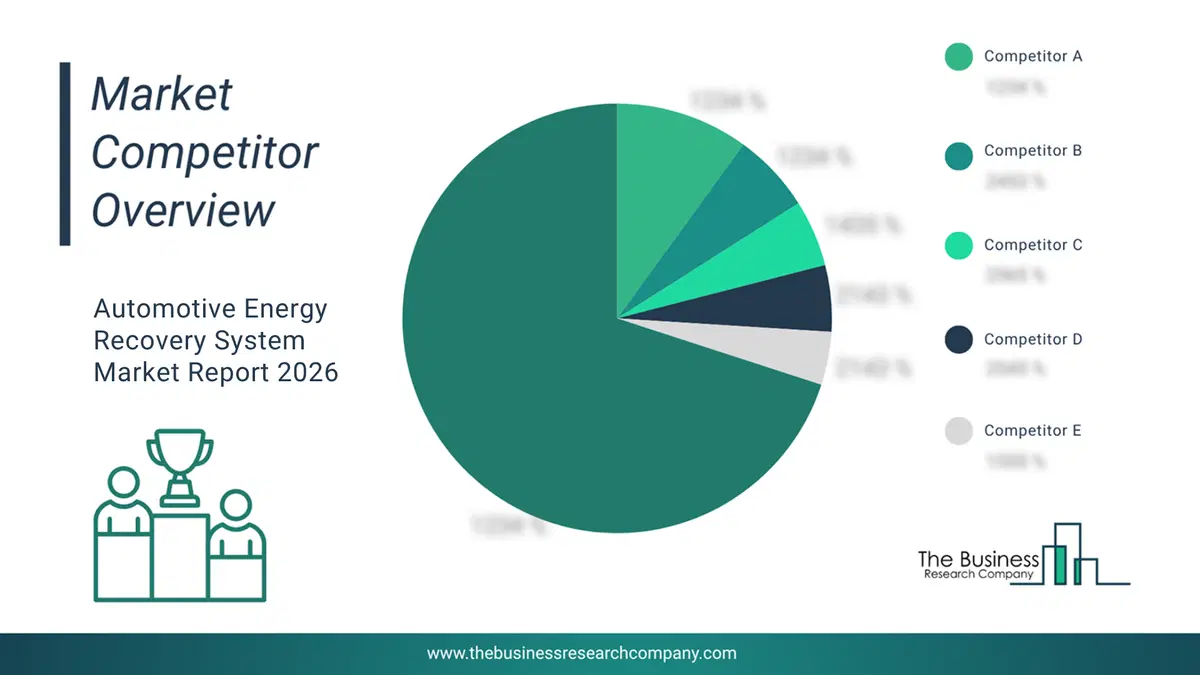
This chart is for illustrative purposes; the full report includes a detailed competitor analysis and comprehensive overview of the top 10 companies in the market.
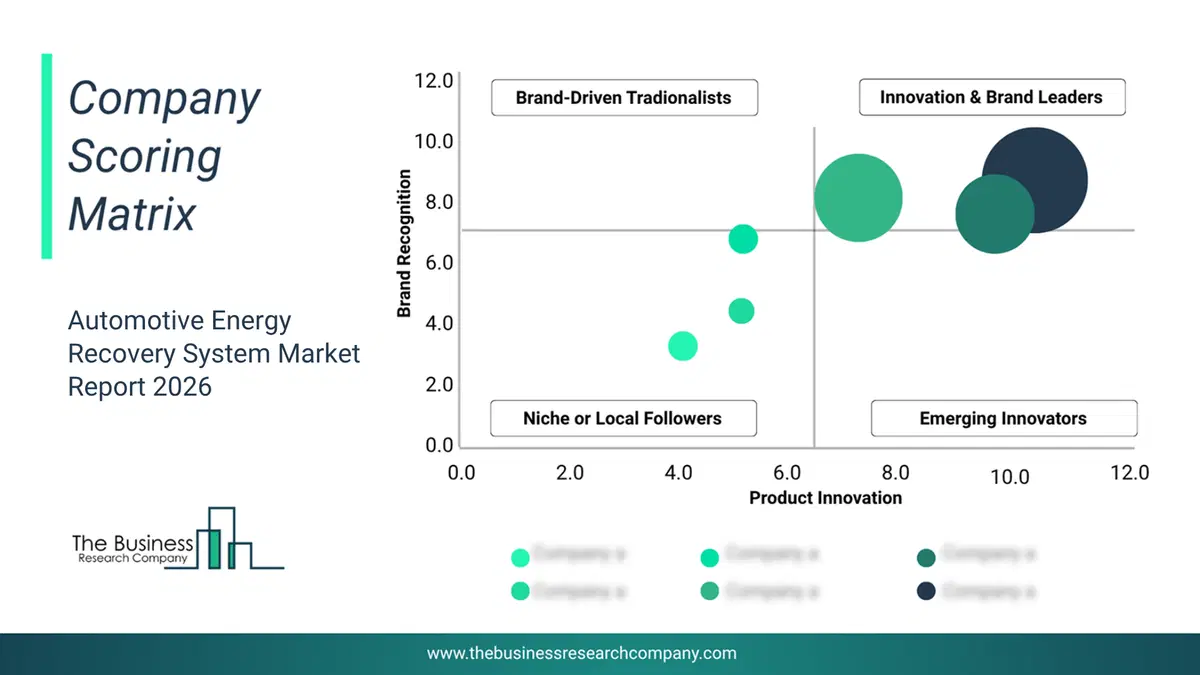
This chart maps companies by product innovation and brand strength, with bubble size indicating relative revenue, helping identify market leaders, challengers, and niche players. This is an illustrative chart; the full report provides a complete and accurate competitive analysis.
Global Automotive Energy Recovery System Market Trends and Insights
Major companies operating in the automotive energy recovery system market are focusing on developing innovative solutions, such as hybrid energy recovery and management systems, to meet the rising demand for energy-efficient and high-performance electric and hybrid vehicles. Hybrid energy recovery systems capture electrical energy from multiple sources, including kinetic energy from braking and thermal energy from exhausts, which can then be strategically deployed to boost performance or conserved to maximize energy harvesting, unlike traditional internal combustion systems that dissipate such energy as waste heat. For instance, in September 2023, Formula 1, a UK-based motorsport organization, launched the “Hybrid Energy System” graphic powered by AWS, an innovative visualization tool that tracks and displays the real-time usage and harvesting of electrical energy in F1 cars. The system identifies three driver behaviors neutral (balanced usage), recharging (maximizing energy recovery), and deploying (using harvested energy for performance boosts) enabling teams and broadcasters to understand energy strategy and optimize performance. This technology integrates real-time telemetry, energy balance computations, and cloud-based analytics to provide actionable insights for energy recovery management, demonstrating how advanced energy recovery systems can enhance vehicle efficiency and strategic decision-making.What Are Latest Mergers And Acquisitions In The Automotive Energy Recovery System Market?
In June 2023, ZF Friedrichshafen AG, a Germany-based automotive technology company, partnered with Tevva Ltd. to co-develop a regenerative braking system for zero-emission trucks. With this partnership, ZF and Tevva aim to boost electric-vehicle efficiency and range by integrating ZF’s Electronic Brake System (EBS) with Tevva’s battery-electric truck drivetrain, enabling up to four times more energy recuperation compared to conventional air-brake systems, while maintaining safety and reducing brake wear. Tevva Ltd. is a UK-based electric commercial vehicle manufacturer that specializes in producing battery-electric and hydrogen-range-extended trucks optimized for urban delivery and sustainable transportation.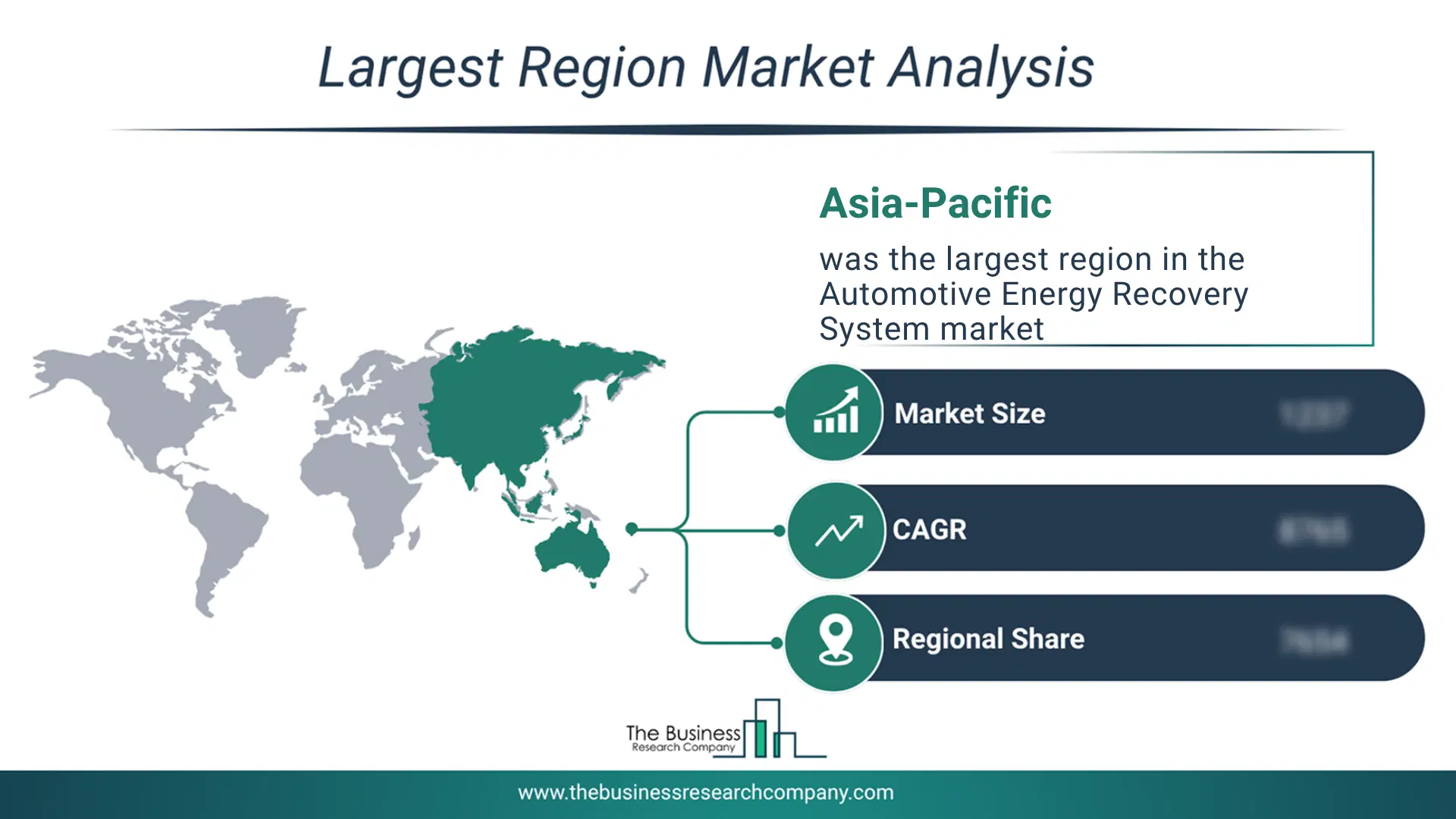
Regional Outlook
Asia-Pacific was the largest region in the automotive energy recovery system market in 2025. The regions covered in this market report include Asia-Pacific, South East Asia, Western Europe, Eastern Europe, North America, South America, Middle East, Africa. The countries covered in this market report include Australia, Brazil, China, France, Germany, India, Indonesia, Japan, Taiwan, Russia, South Korea, UK, USA, Canada, Italy, SpainWhat Defines the Automotive Energy Recovery System Market?
The automotive energy recovery systems market consists of sales of flywheel energy storage systems, auxiliary power units (APUs), and hydraulic energy recovery systems. Values in this market are ‘factory gate’ values, that is the value of goods sold by the manufacturers or creators of the goods, whether to other entities (including downstream manufacturers, wholesalers, distributors and retailers) or directly to end customers. The value of goods in this market includes related services sold by the creators of the goods.How is Market Value Defined and Measured?
The market value is defined as the revenues that enterprises gain from the sale of goods and/or services within the specified market and geography through sales, grants, or donations in terms of the currency (in USD unless otherwise specified). The revenues for a specified geography are consumption values that are revenues generated by organizations in the specified geography within the market, irrespective of where they are produced. It does not include revenues from resales along the supply chain, either further along the supply chain or as part of other products.
This chart presents market attractiveness based on a quantitative evaluation of growth, competition, strategic alignment, and risk, offering a clear view of opportunity areas for decision-making. This chart is for illustrative purposes; the full report contains the complete analysis.

This chart highlights the Total Addressable Market (TAM) by estimating the maximum revenue opportunity using an assumption-driven approach, supporting strategic planning and opportunity sizing across markets. The chart is illustrative; the full report provides a more comprehensive analysis.
What Key Data and Analysis Are Included in the Automotive Energy Recovery System Market Report 2026?
The automotive energy recovery system market research report is one of a series of new reports from The Business Research Company that provides market statistics, including industry global market size, regional shares, competitors with the market share, detailed market segments, market trends and opportunities, and any further data you may need to thrive in the automotive energy recovery system industry. The market research report delivers a complete perspective of everything you need, with an in-depth analysis of the current and future state of the industry.Automotive Energy Recovery System Market Report Forecast Analysis
| Report Attribute | Details |
|---|---|
| Market Size Value In 2026 | $26.53 billion |
| Revenue Forecast In 2030 | $38.14 billion |
| Growth Rate | CAGR of 9.8% from 2026 to 2030 |
| Base Year For Estimation | 2025 |
| Actual Estimates/Historical Data | 2020-2025 |
| Forecast Period | 2026 - 2030 - 2030 |
| Market Representation | Revenue in USD Billion and CAGR from 2026 to 2030 |
| Segments Covered | Subsystem, Propulsion, Key Technology, Vehicle |
| Regional Scope | Asia-Pacific, Western Europe, Eastern Europe, North America, South America, Middle East, Africa |
| Country Scope | The countries covered in the report are Australia, Brazil, China, France, Germany, India, Indonesia, Japan, Taiwan, Russia, South Korea, UK, USA, Canada, Italy, Spain. |
| Key Companies Profiled | Toyota Motor Corporation, General Motors Company, BMW Group, Robert Bosch GmbH, Hitachi Automotive Systems Ltd., Nissan Motor Co. Ltd., Audi AG, Panasonic Corporation, Denso Corporation, ZF Friedrichshafen AG, Continental AG, Hyundai Precision & Industries Corporation, Magna International Inc., Mitsubishi Electric Corporation, Honeywell International Inc., Aisin Seiki Co. Ltd., Cummins Inc., Valeo SA, Schaeffler AG, Parker Hannifin Corporation, BorgWarner Inc., GKN Automotive Ltd., Delphi Technologies Inc |
| Customization Scope | Request for Customization |
| Pricing And Purchase Options | Explore Purchase Options |