
Automotive Fabric Market Report 2026
Global Outlook – By Fabric Type (Polyester, Vinyl, Leather, Nylon, Other Fabric Types ), By Vehicle Type (Passenger Vehicles, Commercial Vehicles), By Application (Carpets or Floor Covering, Upholstery, Pre-Assembled Interior Components, Safety-Belts, Airbags, Other Applications) – Market Size, Trends, Strategies, and Forecast to 2030
Automotive Fabric Market Overview
• Automotive Fabric market size has reached to $39.61 billion in 2025 • Expected to grow to $50.27 billion in 2030 at a compound annual growth rate (CAGR) of 5% • Growth Driver: Growing Automobile Demand Boosts Automotive Fabric Market Worldwide • Market Trend: Antimicrobial Fabric To Ensure Clean And Safe Automotive Interiors • Asia-Pacific was the largest region in 2025.Market Gains By 2030 – Top Opportunities By Segment
Market Gain identifies the most promising market opportunities by highlighting the segments or products expected to generate the highest incremental revenue growth over the next five years.
What Is Covered Under Automotive Fabric Market?
The automotive fabric refers to textiles used in the automotive industry to manufacture upholstery and interiors of vehicles. These automotive fabrics are woven or nonwoven, coated or composite in nature. The primary goal of these fabrics is to provide maximum comfort, safety, and security to passengers while driving. The main types of automotive fabric are polyester, vinyl, leather, nylon, and others. Polyester refers to the automotive fabric made out of polyester. The polyester fabrics are used in car upholstery, automotive carpets, and seat covers. The different vehicle types include passenger vehicles and commercial vehicles and are applied in automobile carpets or floor coverings, upholstery, pre-assembled interior components, tires, safety-belts, airbags, and other applications.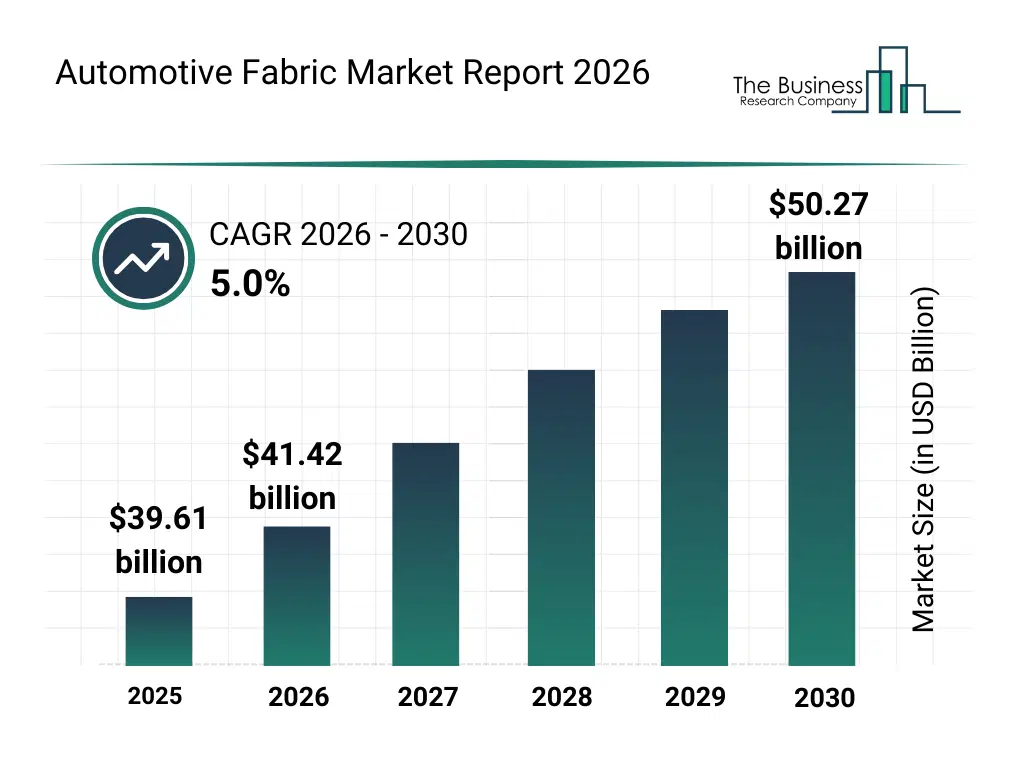
What Is The Automotive Fabric Market Size and Share 2026?
The automotive fabric market size has grown steadily in recent years. It will grow from $39.61 billion in 2025 to $41.42 billion in 2026 at a compound annual growth rate (CAGR) of 4.6%. The growth in the historic period can be attributed to vehicle interior customization, growth of passenger vehicle sales, safety regulation compliance, demand for comfort features, textile manufacturing advancements.What Is The Automotive Fabric Market Growth Forecast?
The automotive fabric market size is expected to see steady growth in the next few years. It will grow to $50.27 billion in 2030 at a compound annual growth rate (CAGR) of 5.0%. The growth in the forecast period can be attributed to electric vehicle interior redesigns, use of recycled fabrics, lightweighting initiatives, premium interior demand, innovation in smart textiles. Major trends in the forecast period include growing use of sustainable interior materials, demand for lightweight automotive textiles, expansion of safety textile applications, adoption of advanced composite fabrics, focus on interior comfort.
Global Automotive Fabric Market Segmentation
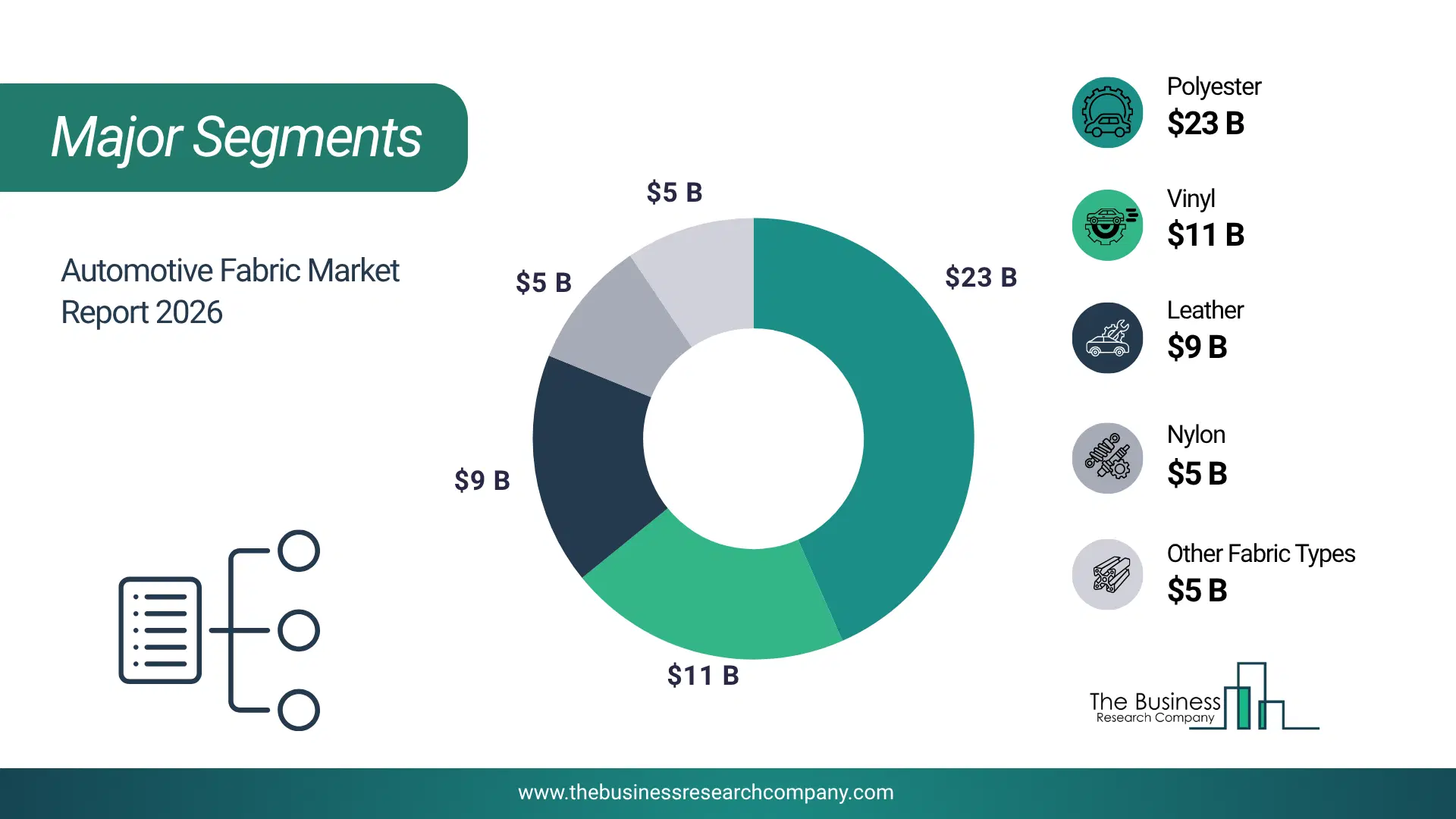
1) By Fabric Type: Polyester, Vinyl, Leather, Nylon, Other Fabric Types 2) By Vehicle Type: Passenger Vehicles, Commercial Vehicles 3) By Application: Carpets or Floor Covering, Upholstery, Pre-Assembled Interior Components, Safety-Belts, Airbags, Other Applications Subsegments: 1) By Polyester: Woven Polyester, Non-Woven Polyester, Blended Polyester 2) By Vinyl: PVC Vinyl, PU Vinyl 3) By Leather: Genuine Leather, Synthetic Leather, Suede Leather 4) By Nylon: Woven Nylon, Non-woven Nylon, Blended Nylon 5) By Other Fabric Types: Cotton, Acrylic, Wool, Specialty Fabrics The top segments in the automotive fabric market will be: • Polyester will reach $22.65 Billion by 2030. • Vinyl will reach $11.26 Billion by 2030. • Leather will reach $8.95 Billion by 2030. • Nylon will reach $4.63 Billion by 2030. • Other Fabric Types will reach $4.56 Billion by 2030.What Is The Driver Of The Automotive Fabric Market?
An increase in automobile demand is expected to propel the automotive fabric market going forward. Economies worldwide have been steadily increasing, which has increased the standard of living, further increasing purchasing power. The advent of the COVID-19 pandemic also resulted in individuals preferring a safer mode of transportation that promoted social distancing and thus boosted the growth of automobiles. The increasing demand for automobiles will increase the demand for automobile fabrics as they offer passengers maximum comfort, safety, and security during the drive. For instance, in September 2024, according to the European Automobile Manufacturers' Association, a Belgium-based European Commission, in 2023, car production in the European Union reached 12.2 million units, marking an 11.6% rise from 2022. Therefore, the increased demand for passenger and commercial vehicles drives the growth of the automotive fabric industry.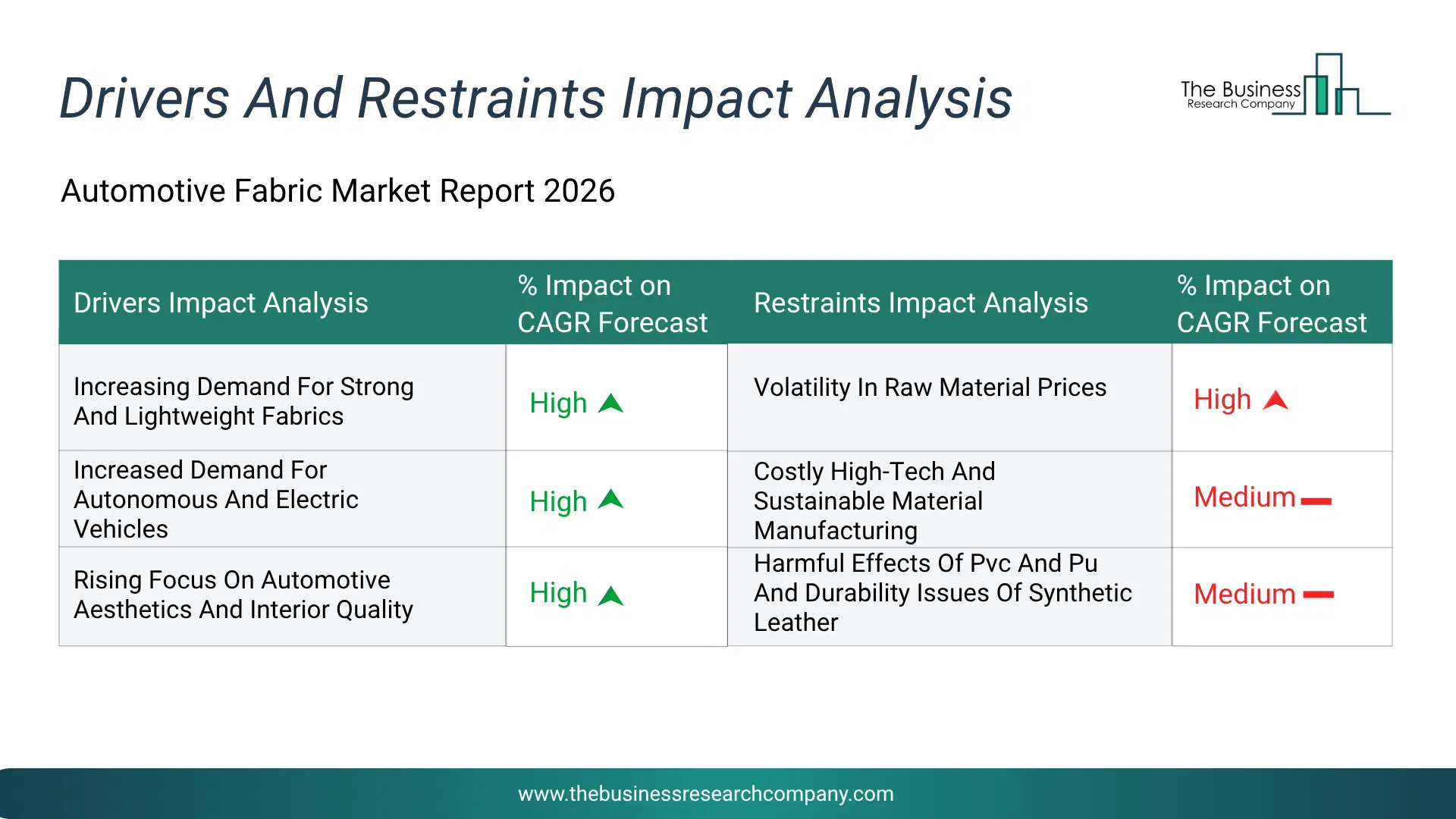
Infographic Chart Showing Key Market Drivers Analysis And Restraints For Automotive Fabric Market
The chart presents an impact analysis of key drivers and restraints, quantifying their relative influence on the market's growth rate and helping assess the balance between growth enablers and limiting factors. This chart offers a high-level perspective; the full report contains more detailed insights.
How Will The Drivers Impact Growth In The Global Automotive Fabric Market?
• Increasing Demand For Strong And Lightweight Fabrics (High) – During the forecast period,the increasing demand for strong and lightweight fabrics is expected to become a key growth driver for the automotive fabric market by 2030. The growing emphasis on fuel efficiency and emission reduction in the automotive sector is significantly increasing the demand for strong and lightweight fabrics. Automakers are continuously exploring materials that can reduce overall vehicle weight without compromising durability and safety. Advanced automotive fabrics provide the required strength while being lighter than traditional materials. This shift supports compliance with stringent environmental regulations across global markets. Additionally, lightweight fabrics enhance vehicle performance and energy efficiency, particularly in electric vehicles. Their application in seats, airbags, and interiors further strengthens their importance. As a result, this trend is driving consistent growth in the automotive fabric market. • Increased Demand For Autonomous And Electric Vehicles (High) – During the forecast period,the increased demand for autonomous and electric vehicles is expected to emerge as a major factor driving the expansion of the automotive fabric market by 2030. The rapid rise of autonomous and electric vehicles is creating new opportunities for automotive fabrics. These vehicles require innovative interior designs and advanced materials to enhance comfort, safety, and functionality. Automotive fabrics play a crucial role in integrating smart features such as sensors and heating elements. Electric vehicles also demand lightweight materials to improve battery efficiency and driving range. Additionally, autonomous vehicles focus heavily on passenger experience, increasing the need for high-quality interior fabrics. This evolving landscape is encouraging manufacturers to develop specialized textile solutions. Consequently, the growing adoption of these vehicles acts as a strong driver for the market. • Rising Focus On Automotive Aesthetics And Interior Quality (High) – During the forecast period,the rising focus on automotive aesthetics and interior quality is expected to act as a key growth catalyst for the automotive fabric market by 2030. Consumers are increasingly prioritizing comfort, aesthetics, and premium interiors when purchasing vehicles, which is boosting the demand for high-quality automotive fabrics. Manufacturers are investing in innovative designs, textures, and colors to enhance visual appeal. Automotive fabrics contribute significantly to the overall cabin experience, including seating, door panels, and headliners. The shift toward luxury and customization is further driving the adoption of advanced textile materials. Additionally, improved fabric technologies offer better durability, stain resistance, and ease of maintenance. This trend is particularly strong in mid-range and premium vehicle segments. As a result, the focus on interior quality is fueling market expansion.How Will The Restraints Impact Growth In The Global Automotive Fabric Market?
• Volatility In Raw Material Prices (High) – During the forecast period,the fluctuations in the prices of raw materials such as polyester, nylon, and other synthetic fibers create significant challenges for automotive fabric manufacturers. These price variations are often influenced by changes in crude oil prices and global supply-demand dynamics. As input costs become unpredictable, manufacturers face difficulty in maintaining stable pricing strategies. This can lead to reduced profit margins or increased product costs for end-users. In highly competitive markets, passing on these costs is not always feasible. Additionally, long-term contracts and planning become more complex due to uncertainty. Smaller manufacturers are particularly vulnerable to such fluctuations. Overall, price volatility acts as a major restraint on market stability and growth. • Costly High-Tech And Sustainable Material Manufacturing (High) – During the forecast period,the development and production of high-tech and sustainable automotive fabrics involve significant investment in research, technology, and specialized equipment. Advanced materials such as recycled fabrics, bio-based textiles, and smart fabrics require complex manufacturing processes. These processes increase production costs compared to conventional materials. As a result, the final product becomes more expensive, limiting its adoption in cost-sensitive markets. Additionally, manufacturers must invest in continuous innovation to meet evolving environmental standards. This further adds to operational expenses and financial pressure. Smaller companies may struggle to compete due to limited resources. Consequently, high manufacturing costs act as a barrier to widespread market growth. • Harmful Effects Of Pvc And Pu And Durability Issues Of Synthetic Leather (High) – During the forecast period,the use of materials such as PVC and PU in automotive fabrics raises environmental and health concerns, which can restrict their adoption. These materials may release harmful substances during production and disposal, attracting regulatory scrutiny. Increasing awareness among consumers regarding sustainability is also reducing preference for such materials. Additionally, synthetic leather made from these substances often faces durability issues such as cracking, peeling, and wear over time. This affects product lifespan and customer satisfaction. Automakers are therefore shifting toward alternative materials, reducing demand for traditional synthetic options. Compliance with environmental regulations further increases costs for manufacturers. Overall, these factors collectively act as a restraint on the automotive fabric market.Key Players In The Global Automotive Fabric Market
Major companies operating in the automotive fabric market report include Acme Mills Pvt Ltd., Suminoe Textile Co. Ltd., Arvind Limited, Grupo Antolin Irausa SA, Heathcoat Fabrics Limited, Lear Corporation, Martur Automotive Seating Systems, Navbharat Textile Industries Ltd., Seiren Co. Ltd., Sage Automotive Interiors Inc., Toyoda Boshoku Asia Co. Ltd., Aunde Faze Three Autofab Ltd., Haartz Corporation, Tenowo GmbH, Shandong Exceeding Auto Interior Parts Co. Ltd., Adient plc, Faurecia SA, Yanfeng Automotive Trim Systems Co Ltd., Trevira GmbH, Joyson Safety Systems Holdings Limited, Seton Company Inc., Bader GmbH & Co. KG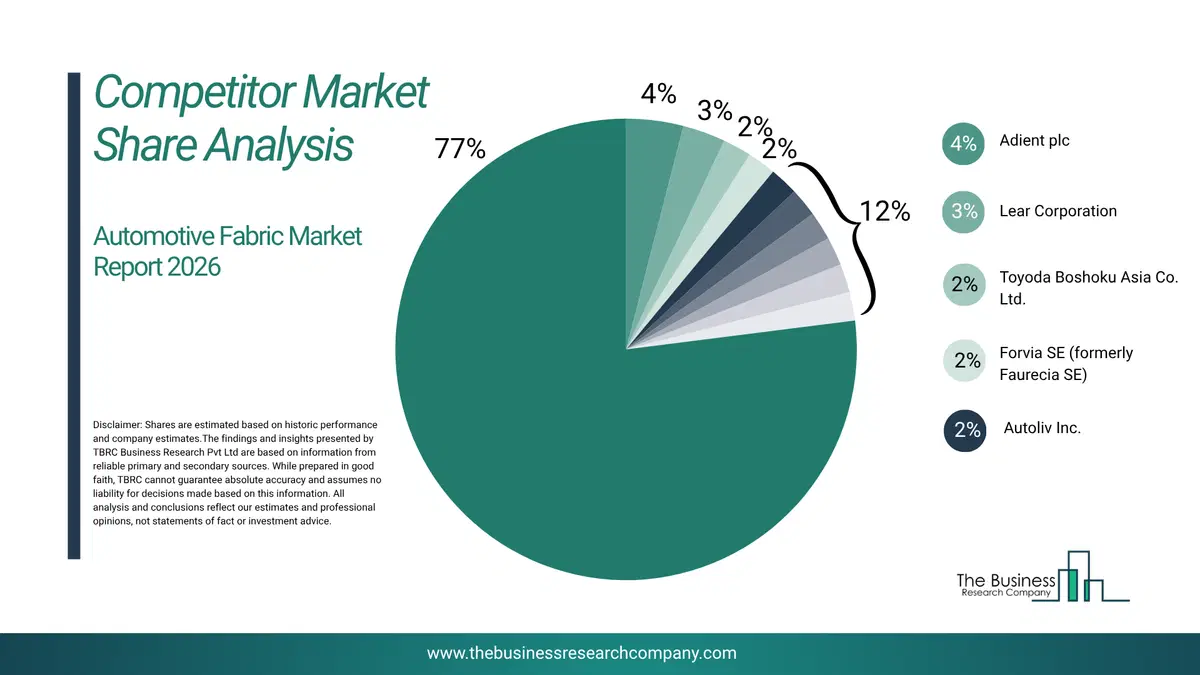
This chart is for illustrative purposes; the full report includes a detailed competitor analysis and comprehensive overview of the top 10 companies in the market.
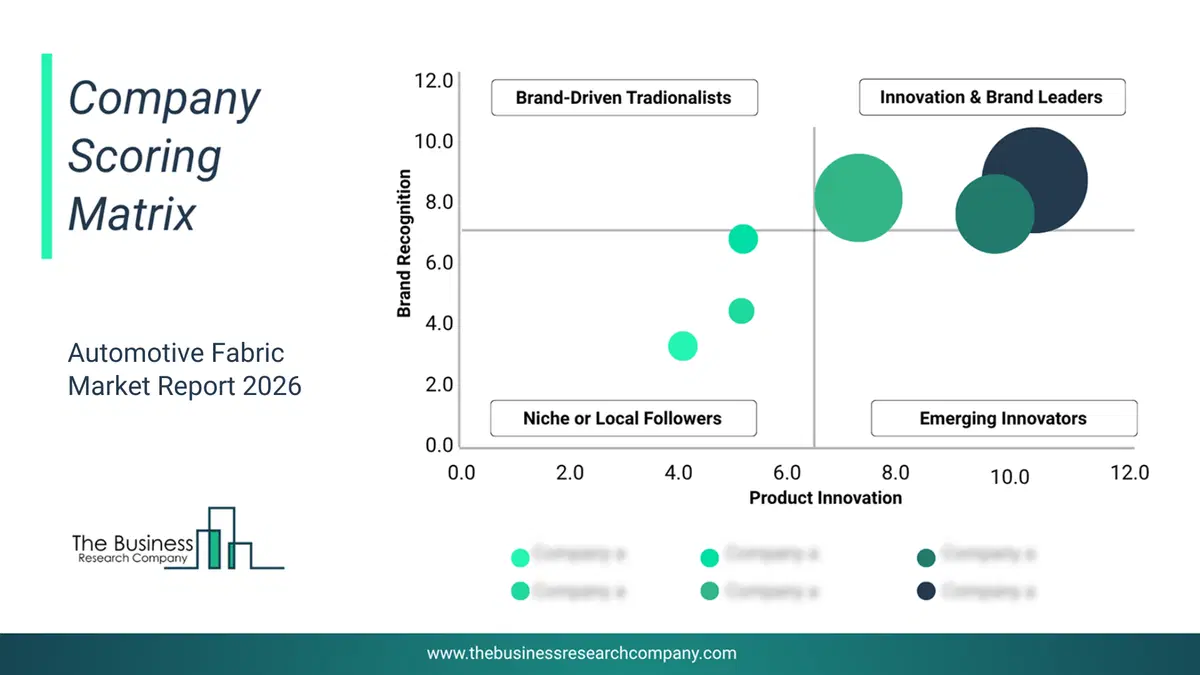
This chart maps companies by product innovation and brand strength, with bubble size indicating relative revenue, helping identify market leaders, challengers, and niche players. This is an illustrative chart; the full report provides a complete and accurate competitive analysis.
Global Automotive Fabric Market Trends and Insights
Major companies operating in the automotive fabric market are developing innovative products, such as antimicrobial fabric. Antimicrobial fabric is designed to inhibit the growth of microorganisms, preventing the spread of bacteria and ensuring a hygienic and odor-resistant textile. For instance, in March 2023, ACME Mills, a manufacturer and exporter of home and hotel textiles, announced the launch of its new antimicrobial fabric, SafeTEX. The fabric is designed to help prevent the growth of bacteria and mold, which can be a problem in automotive interiors.What Are Latest Mergers And Acquisitions In The Automotive Fabric Market?
In July 2024, MinervaHub S.p.A, an Italy-based industrial company, acquired Trapuntatura Belpunto SrL for an undisclosed amount. As a result of the acquisition, the subsidiaries SAGIWA S.r.l., known for producing insulating materials for furniture, film studios, the naval sector, and highways, as well as ITTTAI S.r.l., an innovative company specializing in the production and marketing of high-quality technical fabrics with unique designs for the sports sector, will be included. Trapuntatura Belpunto SrL is an Italy-based manufacturer of automotive fabrics.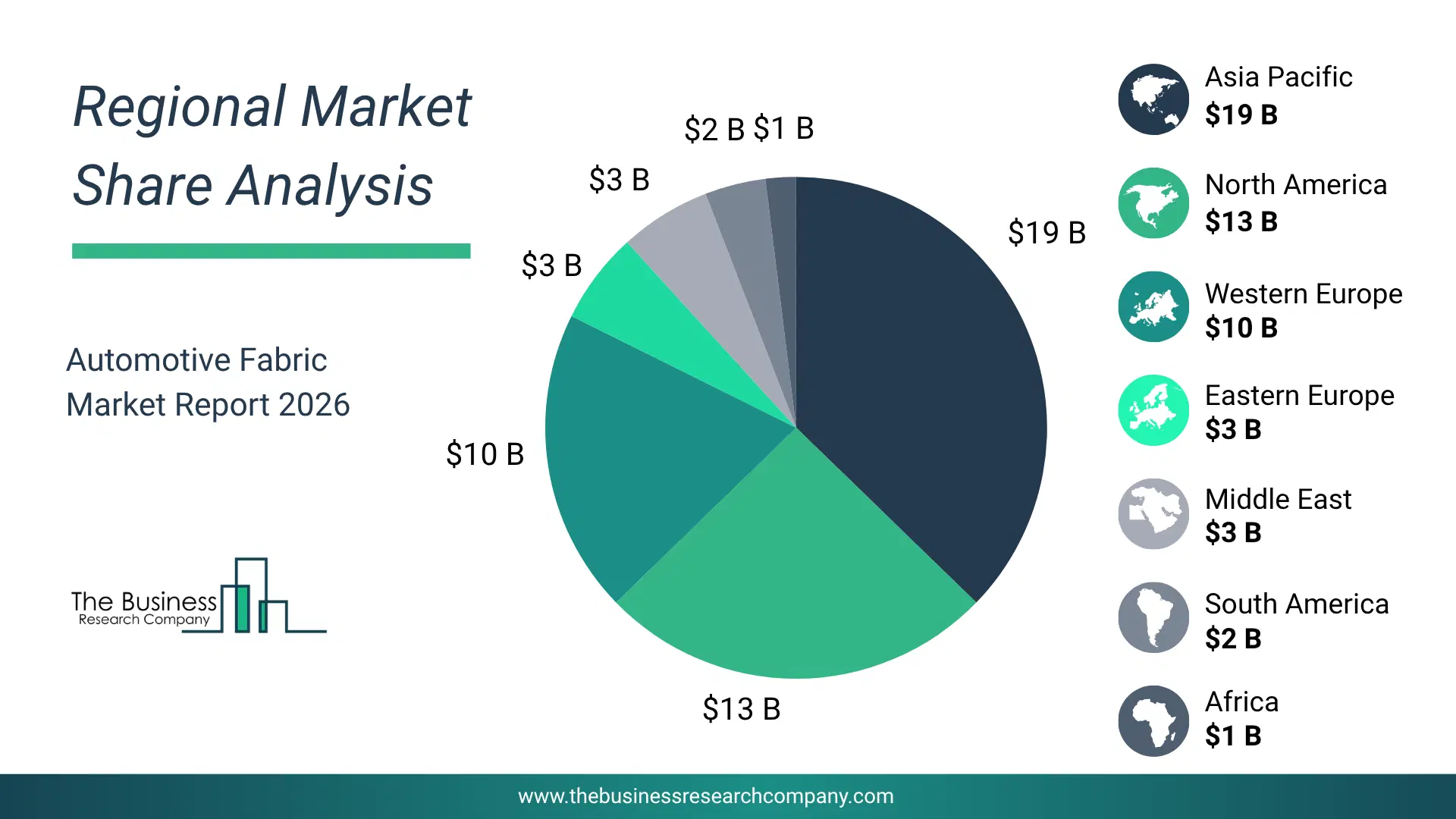
Regional Outlook
Asia-Pacific was the largest region in the automotive fabric market in 2025. The regions covered in this market report include Asia-Pacific, South East Asia, Western Europe, Eastern Europe, North America, South America, Middle East, Africa. The countries covered in this market report include Australia, Brazil, China, France, Germany, India, Indonesia, Japan, Taiwan, Russia, South Korea, UK, USA, Canada, Italy, SpainWhat Defines the Automotive Fabric Market?
The automotive fabric market consists of sales of faux Leather. Values in this market are ‘factory gate’ values, that is the value of goods sold by the manufacturers or creators of the goods, whether to other entities (including downstream manufacturers, wholesalers, distributors and retailers) or directly to end customers. The value of goods in this market includes related services sold by the creators of the goods.How is Market Value Defined and Measured?
The market value is defined as the revenues that enterprises gain from the sale of goods and/or services within the specified market and geography through sales, grants, or donations in terms of the currency (in USD unless otherwise specified). The revenues for a specified geography are consumption values that are revenues generated by organizations in the specified geography within the market, irrespective of where they are produced. It does not include revenues from resales along the supply chain, either further along the supply chain or as part of other products.
This chart presents market attractiveness based on a quantitative evaluation of growth, competition, strategic alignment, and risk, offering a clear view of opportunity areas for decision-making. This chart is for illustrative purposes; the full report contains the complete analysis.

This chart highlights the Total Addressable Market (TAM) by estimating the maximum revenue opportunity using an assumption-driven approach, supporting strategic planning and opportunity sizing across markets. The chart is illustrative; the full report provides a more comprehensive analysis.
What Key Data and Analysis Are Included in the Automotive Fabric Market Report 2026?
The automotive fabric market research report is one of a series of new reports from The Business Research Company that provides market statistics, including industry global market size, regional shares, competitors with the market share, detailed market segments, market trends and opportunities, and any further data you may need to thrive in the automotive fabric industry. The market research report delivers a complete perspective of everything you need, with an in-depth analysis of the current and future state of the industry.Automotive Fabric Market Report Forecast Analysis
| Report Attribute | Details |
|---|---|
| Market Size Value In 2026 | $41.42 billion |
| Revenue Forecast In 2030 | $50.27 billion |
| Growth Rate | CAGR of 4.6% from 2026 to 2030 |
| Base Year For Estimation | 2025 |
| Actual Estimates/Historical Data | 2020-2025 |
| Forecast Period | 2026 - 2030 |
| Market Representation | Revenue in USD Billion and CAGR from 2026 to 2030 |
| Segments Covered | Fabric Type, Vehicle Type, Application |
| Regional Scope | Asia-Pacific, Western Europe, Eastern Europe, North America, South America, Middle East, Africa |
| Country Scope | The countries covered in the report are Australia, Brazil, China, France, Germany, India, Indonesia, Japan, Taiwan, Russia, South Korea, UK, USA, Canada, Italy, Spain. |
| Key Companies Profiled | Acme Mills Pvt Ltd., Suminoe Textile Co. Ltd., Arvind Limited, Grupo Antolin Irausa SA, Heathcoat Fabrics Limited, Lear Corporation, Martur Automotive Seating Systems, Navbharat Textile Industries Ltd., Seiren Co. Ltd., Sage Automotive Interiors Inc., Toyoda Boshoku Asia Co. Ltd., Aunde Faze Three Autofab Ltd., Haartz Corporation, Tenowo GmbH, Shandong Exceeding Auto Interior Parts Co. Ltd., Adient plc, Faurecia SA, Yanfeng Automotive Trim Systems Co Ltd., Trevira GmbH, Joyson Safety Systems Holdings Limited, Seton Company Inc., Bader GmbH & Co. KG |
| Customization Scope | Request for Customization |
| Pricing And Purchase Options | Explore Purchase Options |