
Automotive Fuel Cell Market Report 2026
Global Outlook – By Type (Polymer Electronic Membrane Fuel Cell, Solid Oxide Fuel Cell (SOFC), Direct Methanol Fuel Cell (DMFC), Hybrid Fuel Cell Systems), By Fuel Type (Hydrogen, Methanol), By Power Rating (Below 100 kW, 100–200 kW, Above 200 kW), By Application (Passenger Cars, Commercial Vehicles, Other Applications) – Market Size, Trends, Strategies, and Forecast to 2030
Automotive Fuel Cell Market Overview
• Automotive Fuel Cell market size has reached to $3.94 billion in 2025 • Expected to grow to $7.45 billion in 2030 at a compound annual growth rate (CAGR) of 13.3% • Growth Driver: Surging Electric Vehicle Demand Boosting Automotive Fuel Cell Market • Market Trend: Innovates Highly Integrated Fuel Cell Systems For Automotive Advancements • Asia-Pacific was the largest region in 2025 and Europe is the fastest growing region.What Is Covered Under Automotive Fuel Cell Market?
An automotive fuel cell refers to a type of fuel cell specifically designed and optimized for use in vehicles, particularly in powering electric propulsion systems. These fuel cells convert chemical energy from hydrogen fuel into electricity through an electrochemical reaction. These fuel cells generate electricity through an electrochemical reaction between hydrogen and oxygen, producing water vapor as the only emission. The main types of automotive fuel cells are polymer electronic membrane fuel cells, phosphoric acid fuel cells (PAFC), alkaline fuel cells (AFC), and others. A Polymer Electrolyte Membrane Fuel Cell (PEMFC) is a type of fuel cell that utilizes a solid polymer electrolyte membrane to conduct protons and facilitate electrochemical reactions. It includes various fuel types, such as hydrogen, methanol, and ethanol, with different power ratings, including below 100 kW, 100–200 kW, and above 200 kW. The several applications include passenger cars, commercial vehicles, and others.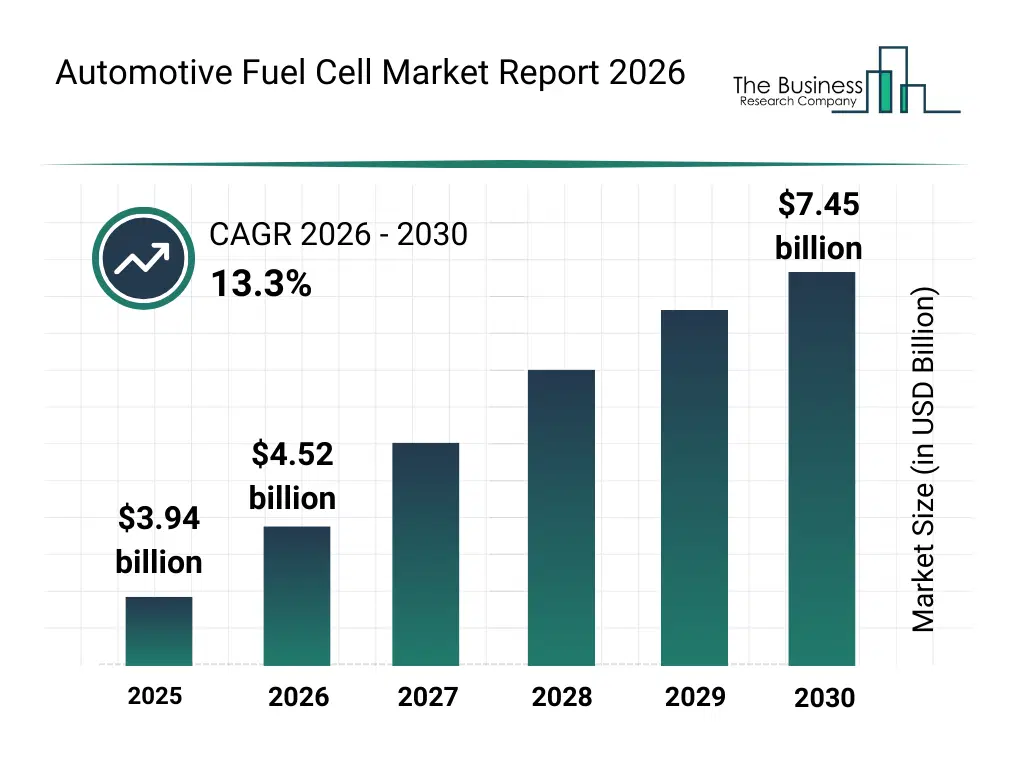
What Is The Automotive Fuel Cell Market Size and Share 2026?
The automotive fuel cell market size has grown rapidly in recent years. It will grow from $3.94 billion in 2025 to $4.52 billion in 2026 at a compound annual growth rate (CAGR) of 14.7%. The growth in the historic period can be attributed to government hydrogen initiatives, early fuel cell vehicle launches, research funding growth, pilot commercial fleets, emission reduction policies.What Is The Automotive Fuel Cell Market Growth Forecast?
The automotive fuel cell market size is expected to see rapid growth in the next few years. It will grow to $7.45 billion in 2030 at a compound annual growth rate (CAGR) of 13.3%. The growth in the forecast period can be attributed to decarbonization targets, hydrogen infrastructure expansion, fuel cell cost reduction, heavy-duty vehicle electrification, long-range zero-emission demand. Major trends in the forecast period include growth of hydrogen-powered vehicles, advancements in pem fuel cells, expansion of fuel cell commercial fleets, integration of fuel cells with ev platforms, focus on zero-emission mobility.
Global Automotive Fuel Cell Market Segmentation
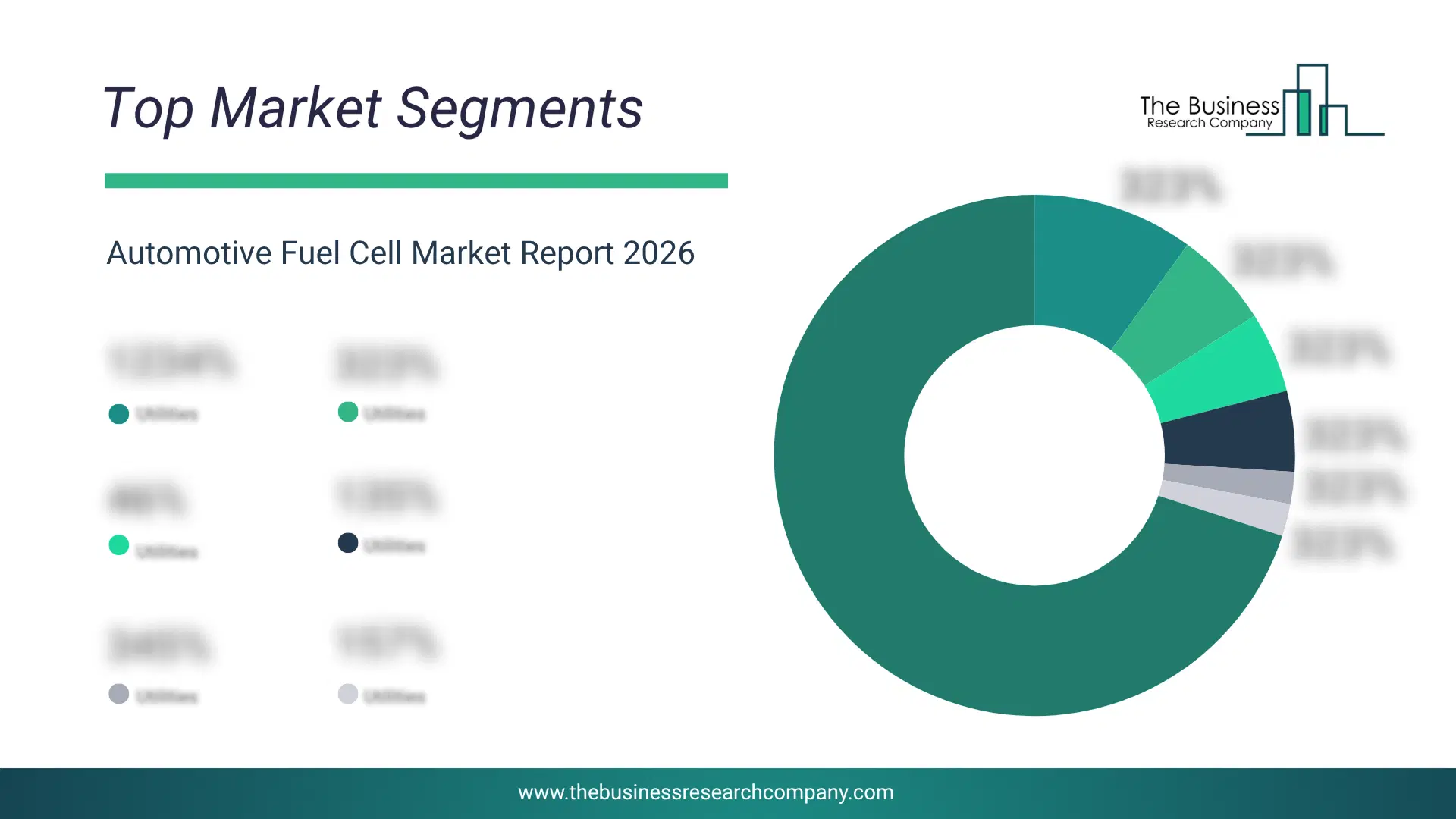
1) By Type: Polymer Electronic Membrane Fuel Cell, Solid Oxide Fuel Cell (SOFC), Direct Methanol Fuel Cell (DMFC), Hybrid Fuel Cell Systems 2) By Fuel Type: Hydrogen, Methanol 3) By Power Rating: Below 100 kW, 100–200 kW, Above 200 kW 4) By Application: Passenger Cars, Commercial Vehicles, Other Applications Subsegments: 1) By Polymer Electrolyte Membrane Fuel Cell (PEMFC): Low-Temperature PEMFC (LT-PEMFC), High-Temperature PEMFC (HT-PEMFC), PEMFC for Passenger Vehicles, PEMFC for Commercial & Heavy-Duty Vehicles, PEMFC Stack-Integrated Power Modules 2) By Solid Oxide Fuel Cell (SOFC): Automotive-Integrated, SOFC as Auxiliary Power Units (APU) for Vehicles, SOFC Range-Extender Systems for Electric Vehicles, Low-Temperature SOFC for Automotive Applications, Hybrid SOFC–Battery Systems 3) By Direct Methanol Fuel Cell (DMFC): Low-Power DMFC for Automotive Auxiliary Systems, DMFC Range-Extender Modules for Light Vehicles, DMFC–Battery Hybrid Systems 4) By Hybrid Fuel Cell Systems: Fuel Cell–Battery Hybrid Systems, Fuel Cell–Supercapacitor Hybrid Systems, Fuel Cell–Battery–Supercapacitor Integrated Systems, Fuel Cell Hybrid Powertrains for Commercial VehiclesWhat Is The Driver Of The Automotive Fuel Cell Market?
The growing demand for electric vehicles is expected to propel the growth of the automotive fuel cell market going forward. Electric vehicles (EVs) refer to vehicles that are propelled by electric motors using electrical energy stored in batteries or another energy storage device. The demand for electric vehicles (EVs) is fueled by environmental benefits such as reduced emissions, economic incentives, advancements in battery technology, and supportive government policies. Automotive fuel cells are used in electric vehicles (EVs) to generate electricity through a chemical reaction between hydrogen and oxygen rather than relying solely on battery-stored electricity. For instance, in April 2024, according to the International Energy Agency, a France-based intergovernmental organization, sales of electric vehicles increased by 3.5 million in 2023 compared to 2022, an increase of 35% annually. Therefore, the growing demand for electric vehicles is driving the growth of the automotive fuel cell industry.Key Players In The Global Automotive Fuel Cell Market
Major companies operating in the automotive fuel cell market report include Toyota Motor Company, Honda Motor Co. Ltd., Hyundai Motor Company, Daimler AG, BMW AG, Ford Motor Company, General Motors Company, Volkswagen AG, Nissan Motor Corporation, Kia Corporation, Stellantis N.V., Renault Group, Ballard Power Systems Inc., Cummins Inc., Plug Power Inc., FuelCell Energy Inc., Bloom Energy Corporation, ITM Power plc, Nedstack Fuel Cell Technology, Doosan Fuel Cell Co. Ltd.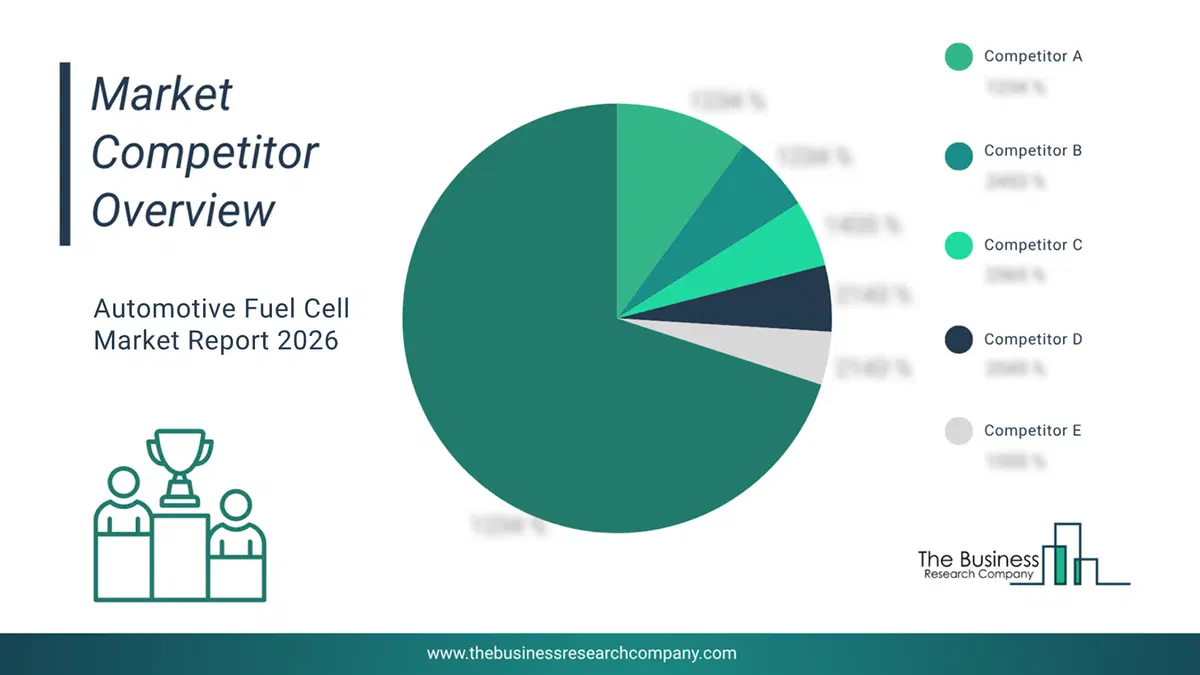
This chart is for illustrative purposes; the full report includes a detailed competitor analysis and comprehensive overview of the top 10 companies in the market.
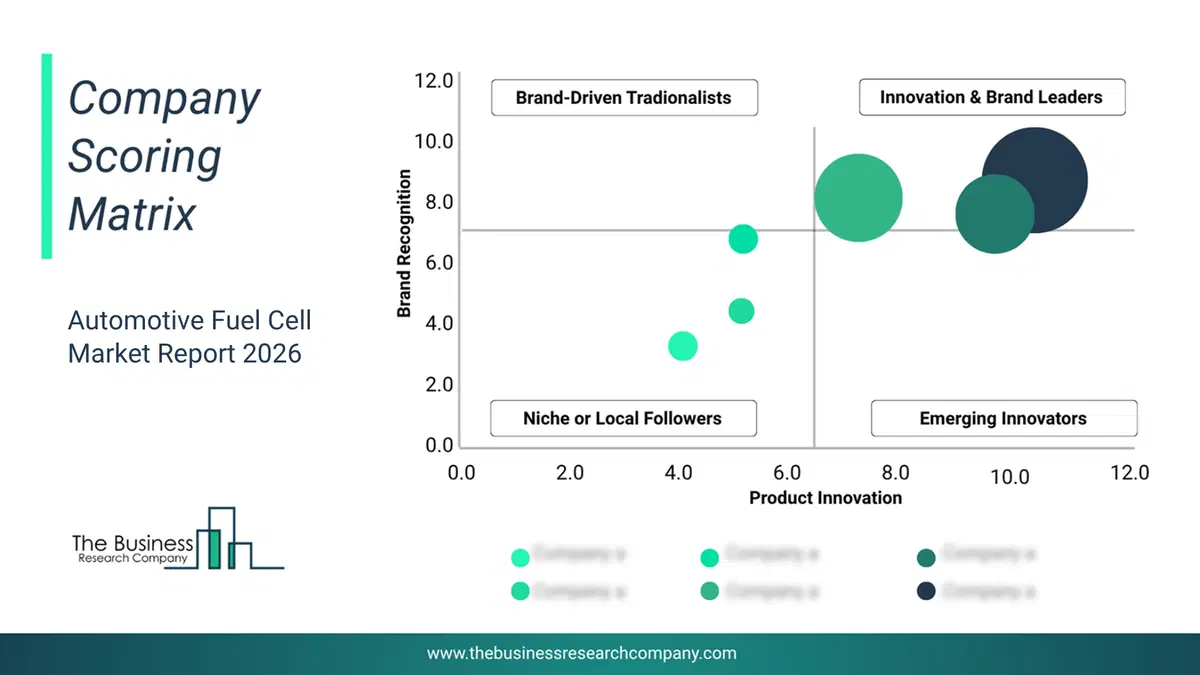
This chart maps companies by product innovation and brand strength, with bubble size indicating relative revenue, helping identify market leaders, challengers, and niche players. This is an illustrative chart; the full report provides a complete and accurate competitive analysis.
Global Automotive Fuel Cell Market Trends and Insights
Major companies operating in the automotive fuel cell market are focusing on developing innovative technologies, such as dual hydrogen fuel cell system, to cater to the increasing demand for clean energy vehicles. A dual hydrogen fuel cell system is a power setup using two fuel cells to generate electricity from hydrogen, enhancing efficiency, redundancy, or power output in various applications. For instance, in May 2023, Hyundai Motor Company, a South Korean-based automotive manufacturer company, launched the new XCIENT Fuel Cell tractor. This model features high-capacity hydrogen fuel cells, offering quick refueling and an extended range tailored for commercial transport needs. Hyundai’s vision for hydrogen mobility aims to advance sustainable trucking and build a comprehensive hydrogen ecosystem across the U.S.What Are Latest Mergers And Acquisitions In The Automotive Fuel Cell Market?
In September 2024, Toyota Motor Corporation, a Japan-based automotive manufacturer, partnered with BMW Group to advance cost-efficient hydrogen fuel cell technology for next-generation vehicles. The partnership aims to develop and scale a third-generation hydrogen fuel cell system, enabling faster commercialization of fuel cell electric vehicles and broader technological progress in hydrogen mobility. BMW Group is a Germany-based provider of fuel cell technology.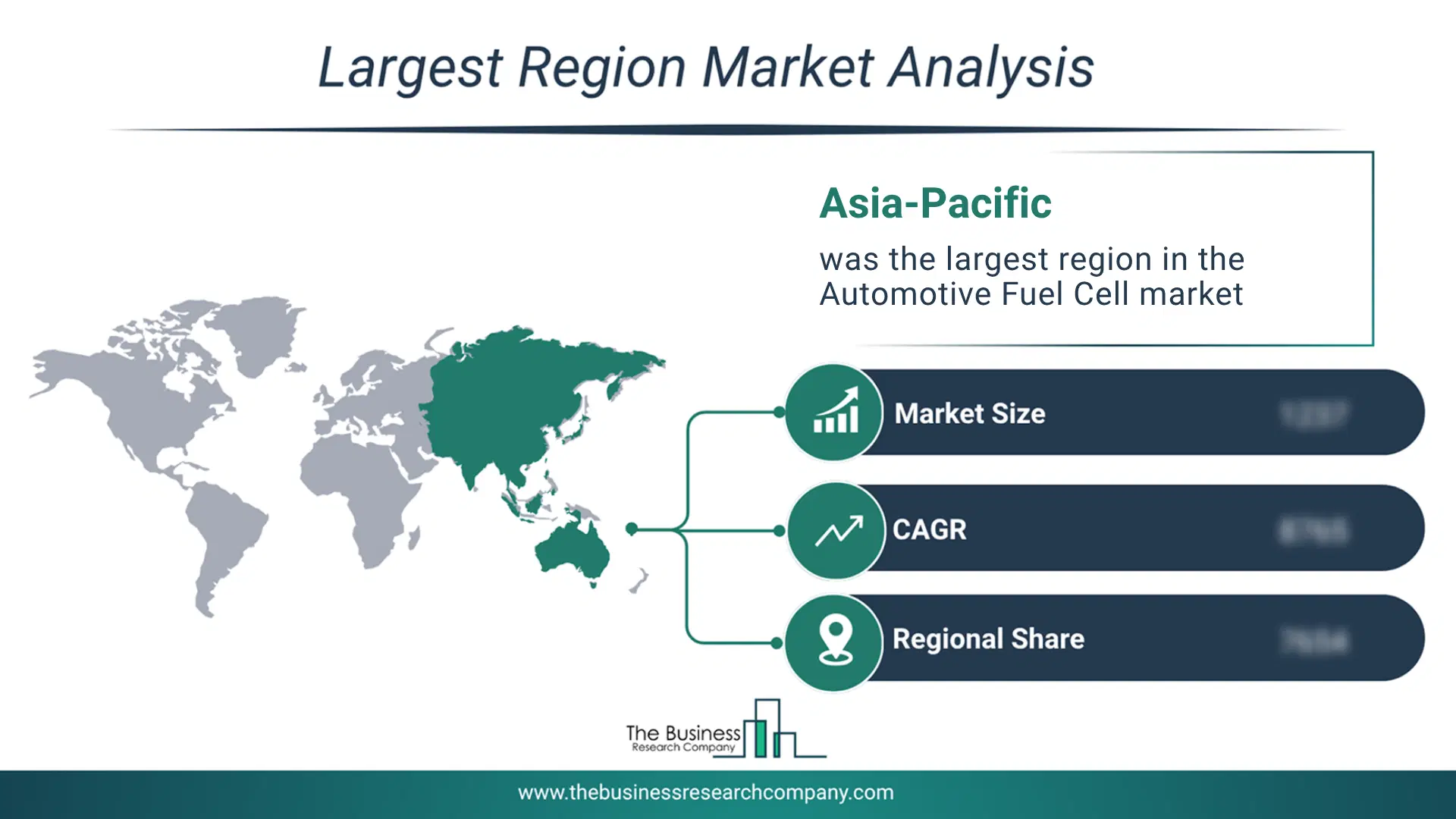
Regional Outlook
Asia-Pacific was the largest region in the automotive fuel cell market in 2025. Europe is expected to be the fastest-growing region in the forecast period. The regions covered in this market report include Asia-Pacific, South East Asia, Western Europe, Eastern Europe, North America, South America, Middle East, Africa. The countries covered in this market report include Australia, Brazil, China, France, Germany, India, Indonesia, Japan, Taiwan, Russia, South Korea, UK, USA, Canada, Italy, SpainWhat Defines the Automotive Fuel Cell Market?
The automotive fuel cell market includes revenues earned by entities by providing services such as electric power generation, energy storage and conversion, long-range and quick refueling, and quiet operation. The market value includes the value of related goods sold by the service provider or included within the service offering. The automotive fuel cell market consists of sales of products including power conditioning and control systems, electric motors, battery systems, and cooling and thermal management systems. Values in this market are ‘factory gate’ values, that is, the value of goods sold by the manufacturers or creators of the goods, whether to other entities (including downstream manufacturers, wholesalers, distributors, and retailers) or directly to end customers. The value of goods in this market includes related services sold by the creators of the goods.How is Market Value Defined and Measured?
The market value is defined as the revenues that enterprises gain from the sale of goods and/or services within the specified market and geography through sales, grants, or donations in terms of the currency (in USD unless otherwise specified). The revenues for a specified geography are consumption values that are revenues generated by organizations in the specified geography within the market, irrespective of where they are produced. It does not include revenues from resales along the supply chain, either further along the supply chain or as part of other products.
This chart presents market attractiveness based on a quantitative evaluation of growth, competition, strategic alignment, and risk, offering a clear view of opportunity areas for decision-making. This chart is for illustrative purposes; the full report contains the complete analysis.

This chart highlights the Total Addressable Market (TAM) by estimating the maximum revenue opportunity using an assumption-driven approach, supporting strategic planning and opportunity sizing across markets. The chart is illustrative; the full report provides a more comprehensive analysis.
What Key Data and Analysis Are Included in the Automotive Fuel Cell Market Report 2026?
The automotive fuel cell market research report is one of a series of new reports from The Business Research Company that provides market statistics, including industry global market size, regional shares, competitors with the market share, detailed market segments, market trends and opportunities, and any further data you may need to thrive in the automotive fuel cell industry. The market research report delivers a complete perspective of everything you need, with an in-depth analysis of the current and future state of the industry.Automotive Fuel Cell Market Report Forecast Analysis
| Report Attribute | Details |
|---|---|
| Market Size Value In 2026 | $4.52 billion |
| Revenue Forecast In 2030 | $7.45 billion |
| Growth Rate | CAGR of 14.7% from 2026 to 2030 |
| Base Year For Estimation | 2025 |
| Actual Estimates/Historical Data | 2020-2025 |
| Forecast Period | 2026 - 2030 - 2030 |
| Market Representation | Revenue in USD Billion and CAGR from 2026 to 2030 |
| Segments Covered | Type, Fuel Type, Power Rating, Application |
| Regional Scope | Asia-Pacific, Western Europe, Eastern Europe, North America, South America, Middle East, Africa |
| Country Scope | The countries covered in the report are Australia, Brazil, China, France, Germany, India, Indonesia, Japan, Taiwan, Russia, South Korea, UK, USA, Canada, Italy, Spain. |
| Key Companies Profiled | Toyota Motor Company, Honda Motor Co. Ltd., Hyundai Motor Company, Daimler AG, BMW AG, Ford Motor Company, General Motors Company, Volkswagen AG, Nissan Motor Corporation, Kia Corporation, Stellantis N.V., Renault Group, Ballard Power Systems Inc., Cummins Inc., Plug Power Inc., FuelCell Energy Inc., Bloom Energy Corporation, ITM Power plc, Nedstack Fuel Cell Technology, Doosan Fuel Cell Co. Ltd. |
| Customization Scope | Request for Customization |
| Pricing And Purchase Options | Explore Purchase Options |