
Automotive Fuel Delivery System Market Report 2026
Global Outlook – By Component (Fuel Pump, Fuel Injector, Fuel Rail, Fuel Pressure Regulator, Fuel Filter, Fuel Line And Hoses, Other Components), By Fuel Type (Gasoline, Diesel, Compressed Natural Gas, Liquefied Petroleum Gas, Ethanol Blends, Flex Fuel), By Sales Channel (Original Equipment Manufacturer, Aftermarket), By Application (Passenger Cars, Light Commercial Vehicles, Heavy Commercial Vehicles, Buses, Performance Vehicles) – Market Size, Trends, Strategies, and Forecast to 2030
Automotive Fuel Delivery System Market Overview
• Automotive Fuel Delivery System market size has reached to $8.98 billion in 2025 • Expected to grow to $13.06 billion in 2030 at a compound annual growth rate (CAGR) of 7.7% • Growth Driver: The Rising Vehicle Production Fueling The Growth Of The Market Due To Increasing Global Demand For Passenger And Commercial Vehicles • Market Trend: Innovation In Advanced Fuel Injection Technologies For High-Output Engines • North America was the largest region in 2025 and Asia-Pacific is the fastest growing region.What Is Covered Under Automotive Fuel Delivery System Market?
An automotive fuel delivery system is a vehicle subsystem designed to store, filter, regulate, and deliver fuel to the engine at the required pressure and flow rate for efficient combustion. It comprises mechanical and electronic components that ensure precise fuel supply, optimize engine performance, improve fuel efficiency, and support compliance with vehicle emission standards. The main components of automotive fuel delivery system include fuel pump, fuel injector, fuel rail, fuel pressure regulator, fuel filter, fuel line and hoses, and other components. Fuel pump refers to a critical component that transfers fuel from the tank to the engine at the required pressure, ensuring efficient fuel supply and proper engine operation. These systems support fuel types such as gasoline, diesel, compressed natural gas, liquefied petroleum gas, ethanol blends, and flex fuel. They are distributed through original equipment manufacturer and aftermarket channels and find application in passenger cars, light commercial vehicles, heavy commercial vehicles, buses, and performance vehicles.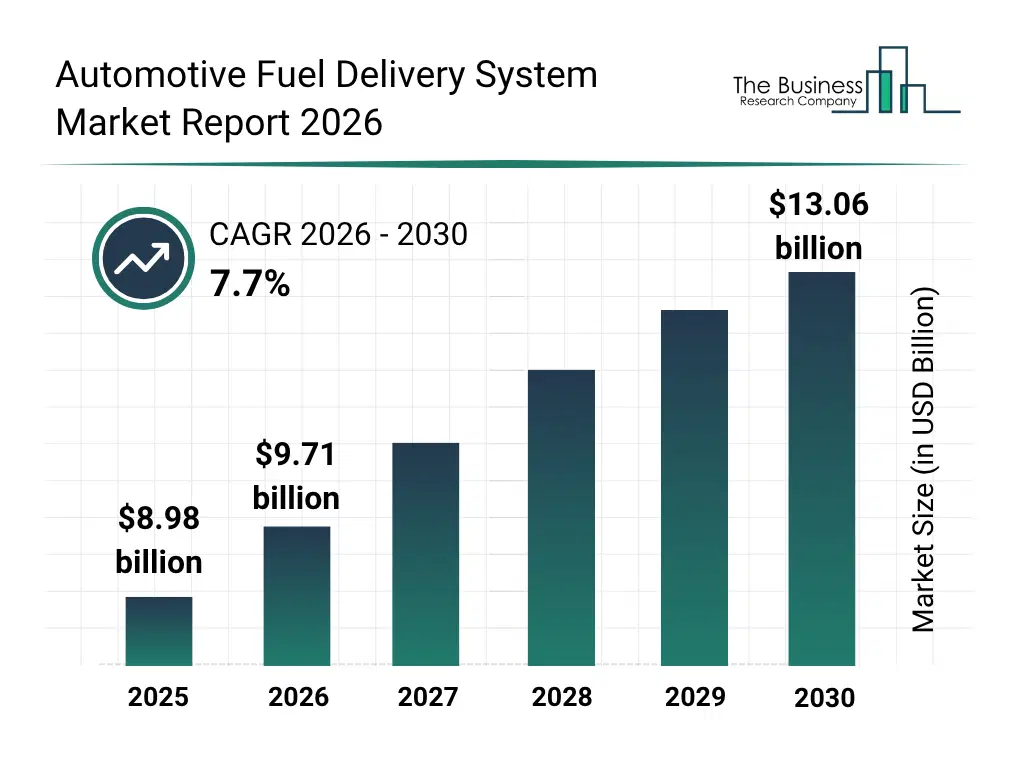
What Is The Automotive Fuel Delivery System Market Size and Share 2026?
The automotive fuel delivery system market size has grown strongly in recent years. It will grow from $8.98 billion in 2025 to $9.71 billion in 2026 at a compound annual growth rate (CAGR) of 8.1%. The growth in the historic period can be attributed to increasing vehicle production, rising demand for fuel efficient vehicles, growing adoption of electronic fuel injection systems, expansion of automotive emission regulations, increasing replacement demand for fuel system components.What Is The Automotive Fuel Delivery System Market Growth Forecast?
The automotive fuel delivery system market size is expected to see strong growth in the next few years. It will grow to $13.06 billion in 2030 at a compound annual growth rate (CAGR) of 7.7%. The growth in the forecast period can be attributed to growing adoption of alternative fuel vehicles, increasing demand for advanced fuel injection technologies, rising focus on emission reduction solutions, expansion of hybrid vehicle production, increasing investments in fuel system optimization. Major trends in the forecast period include increasing adoption of intelligent fuel management systems, rising integration of advanced manufacturing technologies in fuel system production, growing development of sustainable fuel delivery solutions, expansion of automated vehicle performance monitoring systems, increasing use of predictive maintenance technologies for fuel components.
Global Automotive Fuel Delivery System Market Segmentation
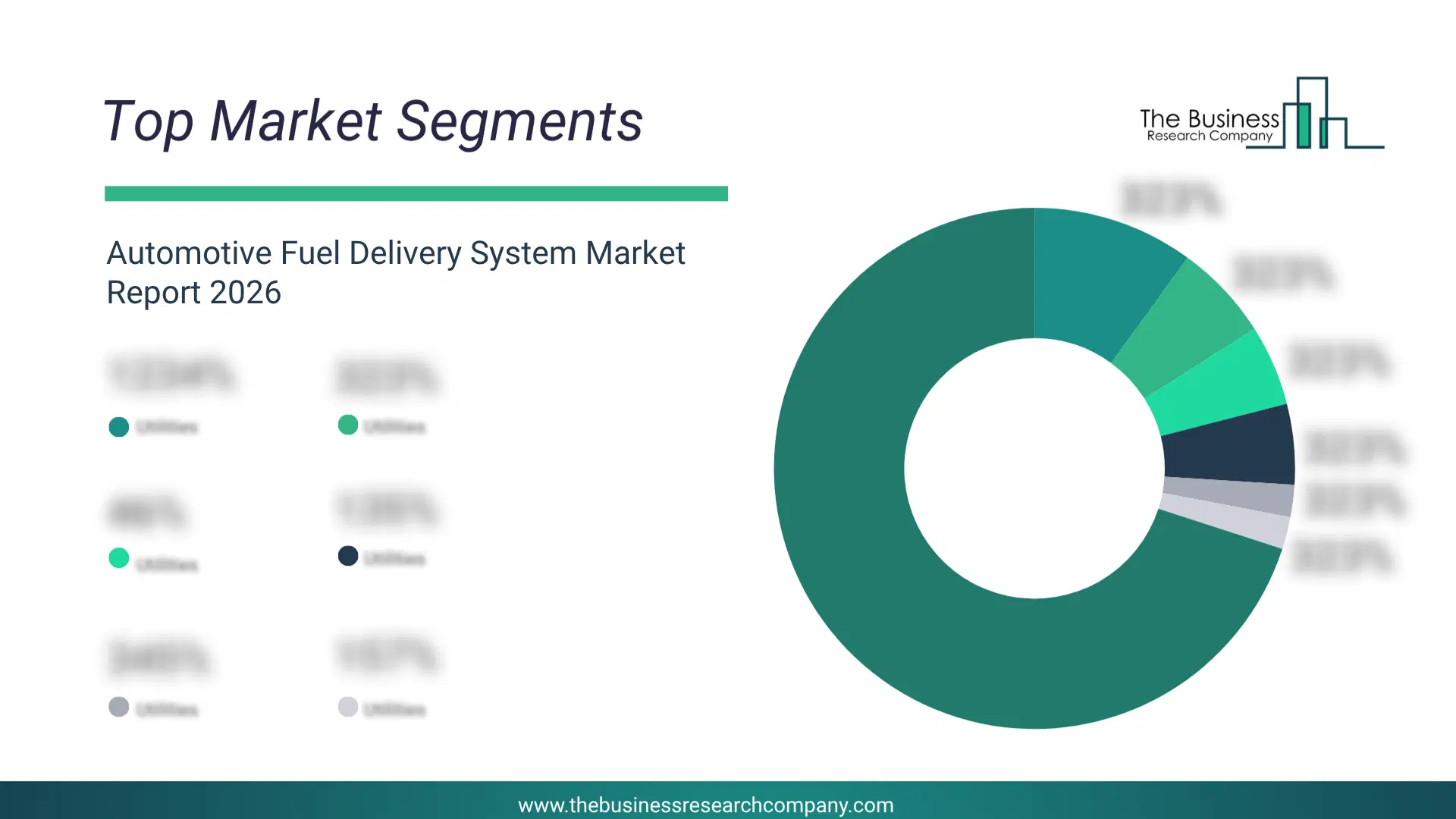
1) By Component: Fuel Pump, Fuel Injector, Fuel Rail, Fuel Pressure Regulator, Fuel Filter, Fuel Line And Hoses, Other Components 2) By Fuel Type: Gasoline, Diesel, Compressed Natural Gas, Liquefied Petroleum Gas, Ethanol Blends, Flex Fuel 3) By Sales Channel: Original Equipment Manufacturer, Aftermarket 4) By Application: Passenger Cars, Light Commercial Vehicles, Heavy Commercial Vehicles, Buses, Performance Vehicles Subsegments: 1) By Fuel Pump: Mechanical Fuel Pumps, Electric Fuel Pumps, In Tank Fuel Pumps, Inline Fuel Pumps 2) By Fuel Injector: Port Fuel Injectors, Direct Fuel Injectors, Throttle Body Fuel Injectors, Gasoline Direct Injection Fuel Injectors 3) By Fuel Rail: Aluminum Fuel Rails, Stainless Steel Fuel Rails, High Pressure Fuel Rails, Multi Port Fuel Rails 4) By Fuel Pressure Regulator: Mechanical Fuel Pressure Regulators, Electronic Fuel Pressure Regulators, Adjustable Fuel Pressure Regulators, Returnless Fuel Pressure Regulators 5) By Fuel Filter: Inline Fuel Filters, In Tank Fuel Filters, Cartridge Fuel Filters, High Efficiency Fuel Filters 6) By Fuel Line And Hoses: Rubber Fuel Hoses, Nylon Fuel Lines, Stainless Steel Braided Fuel Hoses, High Pressure Fuel Lines 7) By Other Components: Fuel Tanks, Fuel Level Sensors, Fuel Sending UnitsWhat Is The Driver Of The Automotive Fuel Delivery System Market?
The rising vehicle production are expected to propel the growth of the automotive fuel delivery system market going forward. Vehicle production refers to the manufacturing and assembly of motor vehicles into finished products ready for commercial use or sale. Vehicle production is increasing due to the rising demand for personal vehicles for daily travel and commercial vehicles for transporting goods and passengers. Automotive fuel delivery systems ensure the efficient, reliable, and precise delivery of fuel to the engine, enabling the production of high-performance, fuel-efficient, and emission-compliant vehicles that meet the growing demand for personal and commercial transportation. For instance, in April 2026, according to the International Organization of Motor Vehicle Manufacturers, a France-based trade association, global vehicle production increased from 92.7 million units in 2024 to 96.4 million units in 2025, marking a 3.9% rise, while global sales grew from 95.3 million to 99.8 million units, reflecting a 4.7% increase. Therefore, the rising vehicle production is driving the growth of the automotive fuel delivery system industry.Key Players In The Global Automotive Fuel Delivery System Market
Major companies operating in the automotive fuel delivery system market are AC S.A., Aisan Industry Co. Ltd., Aisin Corporation, BorgWarner Inc., Continental AG, DENSO Corporation, Fuel Injector Clinic LLC, Hyundai Mobis Co. Ltd., Landi Renzo S.p.A., Magna International Inc., Marelli Holdings Co. Ltd., Mikuni Corporation, Mitsuba Corporation, Nikki Co. Ltd., OPmobility SE, PHINIA Inc., Pricol Limited, Tenneco Inc., UCAL Limited, Wuxi Weifu High-Technology Group Co. Ltd., Woodward Inc., YAPP Automotive Systems Co. Ltd.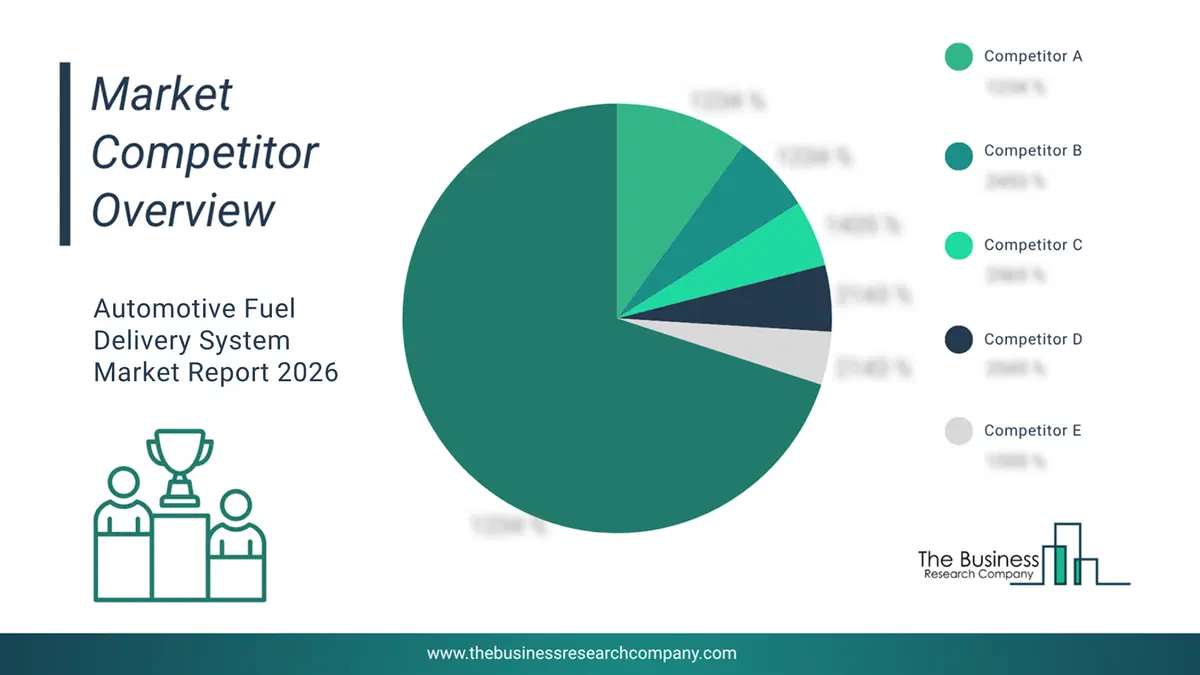
This chart is for illustrative purposes; the full report includes a detailed competitor analysis and comprehensive overview of the top 10 companies in the market.
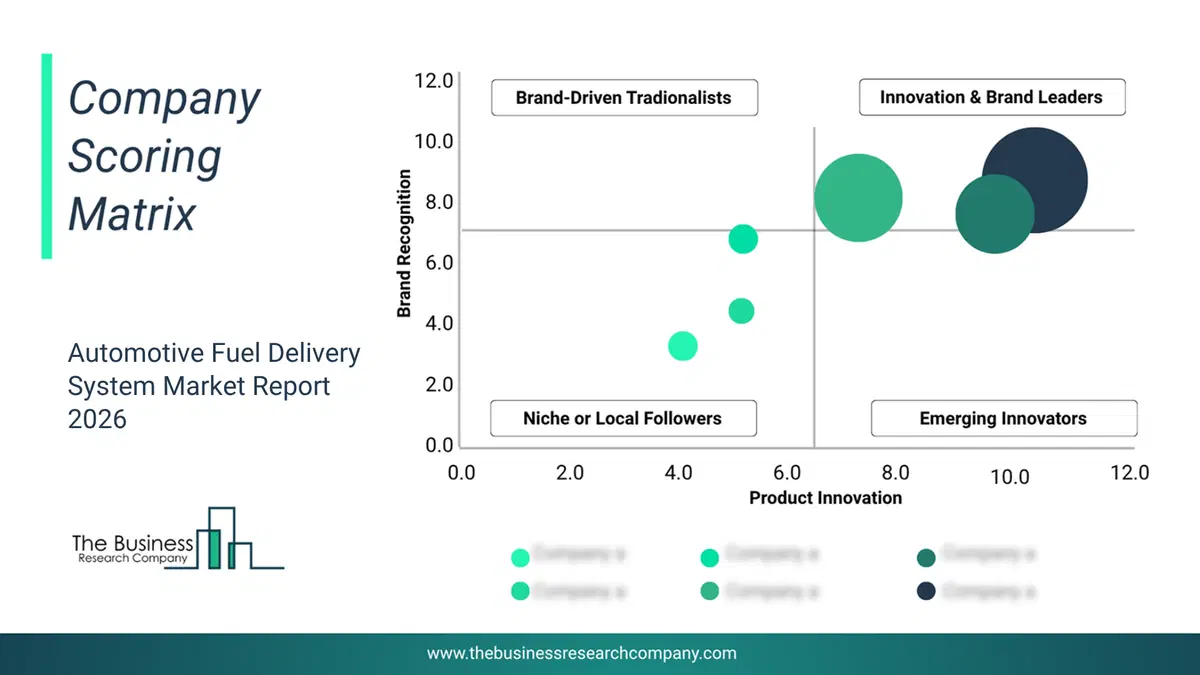
This chart maps companies by product innovation and brand strength, with bubble size indicating relative revenue, helping identify market leaders, challengers, and niche players. This is an illustrative chart; the full report provides a complete and accurate competitive analysis.
Global Automotive Fuel Delivery System Market Trends and Insights
Major companies operating in the automotive fuel delivery system market are focusing on developing advanced products, such as port injection enhancement system to enhance engine performance, improve fuel atomization, and reduce emissions in high-output gasoline engines. A port injection enhancement system is an advanced fuel delivery technology that upgrades conventional port fuel injection by increasing fuel pressure and improving fuel atomization, helping enhance engine performance, combustion efficiency, fuel economy, and emissions while supporting higher power output. For instance, in December 2023, Stanadyne Operating Company LLC, a US-based manufacturer of fuel and air management systems, launched a high-pressure port fuel injection (HPFI) enhancement kit for performance and racing gasoline engines. The system increases fuel injection pressure from approximately 5 bar to 50–100 bar using a high-pressure fuel pump and specially designed injectors, enabling around 20% higher horsepower and a 15% reduction in emissions. The kit is engineered for easy integration into existing port-injected engines and includes a high-pressure fuel rail, engine control unit, wiring harness, and other supporting components, reflecting advancements in fuel delivery technologies for high-performance automotive applications.What Are Latest Mergers And Acquisitions In The Automotive Fuel Delivery System Market?
In February 2025, Aeromotive Inc., a US-based manufacturer of high-performance fuel delivery systems and aftermarket automotive components, acquired VaporWorx LLC for an undisclosed amount. Through this acquisition, Aeromotive Inc. aims to expand its portfolio of advanced fuel management solutions by integrating VaporWorx LLC’s electronic fuel control technologies, strengthening its engineering capabilities, and enhancing fuel delivery solutions for high-performance fuel-injected vehicles. VaporWorx LLC is a US-based company specializing in pulse width modulation fuel pump controllers, electronic fuel control systems, and related fuel delivery components for automotive applications.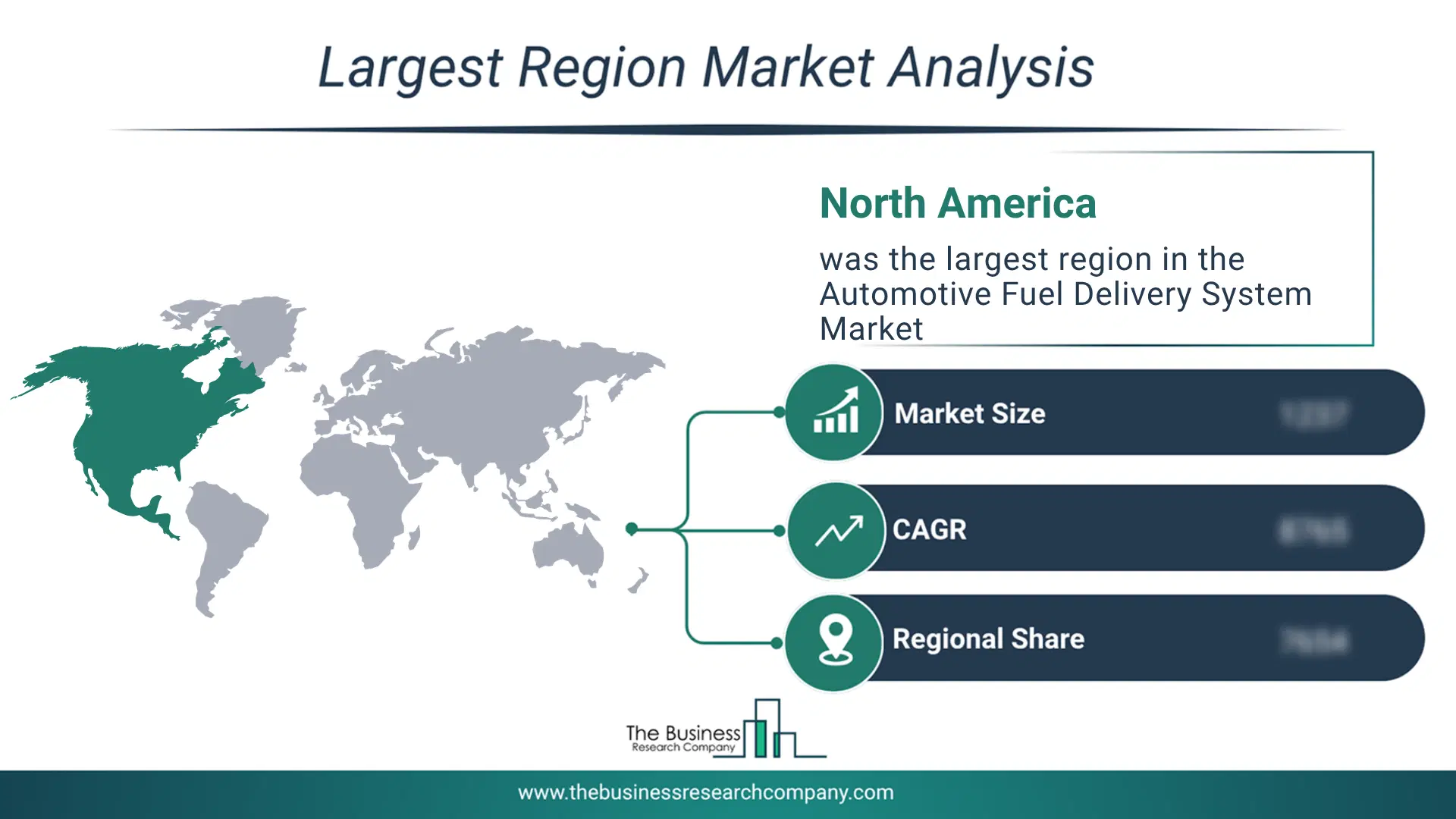
Regional Insights
North America was the largest region in the automotive fuel delivery system market in 2025. Asia-Pacific is expected to be the fastest-growing region in the forecast period. The regions covered in this market report are Asia-Pacific, South East Asia, Western Europe, Eastern Europe, North America, South America, Middle East, Africa. The countries covered in this market report are Australia, Brazil, China, France, Germany, India, Indonesia, Japan, Taiwan, Russia, South Korea, UK, USA, Canada, Italy, Spain.What Defines the Automotive Fuel Delivery System Market?
The automotive fuel delivery system market consists of sales of fuel filters, fuel pressure regulators, throttle bodies, fuel lines, fuel filler necks, fuel level sensors, fuel modules, electronic fuel delivery control units, fuel vapor management components, fuel strainers, fuel caps, and fuel sender assemblies. Values in this market are ‘factory gate’ values, that is, the value of goods sold by the manufacturers or creators of the goods, whether to other entities (including downstream manufacturers, wholesalers, distributors, and retailers) or directly to end customers. The value of goods in this market includes related services sold by the creators of the goods.How is Market Value Defined and Measured?
The market value is defined as the revenues that enterprises gain from the sale of goods and/or services within the specified market and geography through sales, grants, or donations in terms of the currency (in USD unless otherwise specified). The revenues for a specified geography are consumption values that are revenues generated by organizations in the specified geography within the market, irrespective of where they are produced. It does not include revenues from resales along the supply chain, either further along the supply chain or as part of other products.
This chart presents market attractiveness based on a quantitative evaluation of growth, competition, strategic alignment, and risk, offering a clear view of opportunity areas for decision-making. This chart is for illustrative purposes; the full report contains the complete analysis.

This chart highlights the Total Addressable Market (TAM) by estimating the maximum revenue opportunity using an assumption-driven approach, supporting strategic planning and opportunity sizing across markets. The chart is illustrative; the full report provides a more comprehensive analysis.
What Key Data and Analysis Are Included in the Automotive Fuel Delivery System Market Report 2026?
The automotive fuel delivery system market research report is one of a series of new reports from The Business Research Company that provides market statistics, including industry global market size, regional shares, competitors with the market share, detailed market segments, market trends and opportunities, and any further data you may need to thrive in the automotive fuel delivery system industry. The market research report delivers a complete perspective of everything you need, with an in-depth analysis of the current and future state of the industry.Automotive Fuel Delivery System Market Report Forecast Analysis
| Report Attribute | Details |
|---|---|
| Market Size Value In 2026 | $9.71 billion |
| Revenue Forecast In 2030 | $13.06 billion |
| Growth Rate | CAGR of 7.7% from 2026 to 2030 |
| Base Year For Estimation | 2025 |
| Actual Estimates/Historical Data | 2020-2025 |
| Forecast Period | 2026 - 2030 |
| Market Representation | Revenue in USD Billion and CAGR from 2026 to 2030 |
| Segments Covered | Component, Fuel Type, Sales Channel, Application |
| Regional Scope | Asia-Pacific, Western Europe, Eastern Europe, North America, South America, Middle East, Africa |
| Country Scope | The countries covered in the report are Australia, Brazil, China, France, Germany, India, Indonesia, Japan, Taiwan, Russia, South Korea, UK, USA, Canada, Italy, Spain. |
| Key Companies Profiled | AC S.A., Aisan Industry Co. Ltd., Aisin Corporation, BorgWarner Inc., Continental AG, DENSO Corporation, Fuel Injector Clinic LLC, Hyundai Mobis Co. Ltd., Landi Renzo S.p.A., Magna International Inc., Marelli Holdings Co. Ltd., Mikuni Corporation, Mitsuba Corporation, Nikki Co. Ltd., OPmobility SE, PHINIA Inc., Pricol Limited, Tenneco Inc., UCAL Limited, Wuxi Weifu High-Technology Group Co. Ltd., Woodward Inc., YAPP Automotive Systems Co. Ltd. |
| Customization Scope | Request for Customization |
| Pricing And Purchase Options | Explore Purchase Options |