
Automotive Fuel Filter Market Report 2026
Global Outlook – By Fuel Type (Petrol, Diesel, Alternative Fuels), By Vehicle Type (Passenger Car, Commercial Vehicle), By Sales Channel (Original Equipment Manufacturer (OEM), Aftermarket) – Market Size, Trends, Strategies, and Forecast to 2030
Automotive Fuel Filter Market Overview
• Automotive Fuel Filter market size has reached to $2.17 billion in 2025 • Expected to grow to $2.66 billion in 2030 at a compound annual growth rate (CAGR) of 4.2% • Growth Driver: Rising Vehicle Manufacturing Boosts Automotive Fuel Filter Market • Market Trend: Strategic Collaborations To Introduce Advanced Fuel Filters For Commercial Vehicles • Asia-Pacific was the largest region and fastest growing region.What Is Covered Under Automotive Fuel Filter Market?
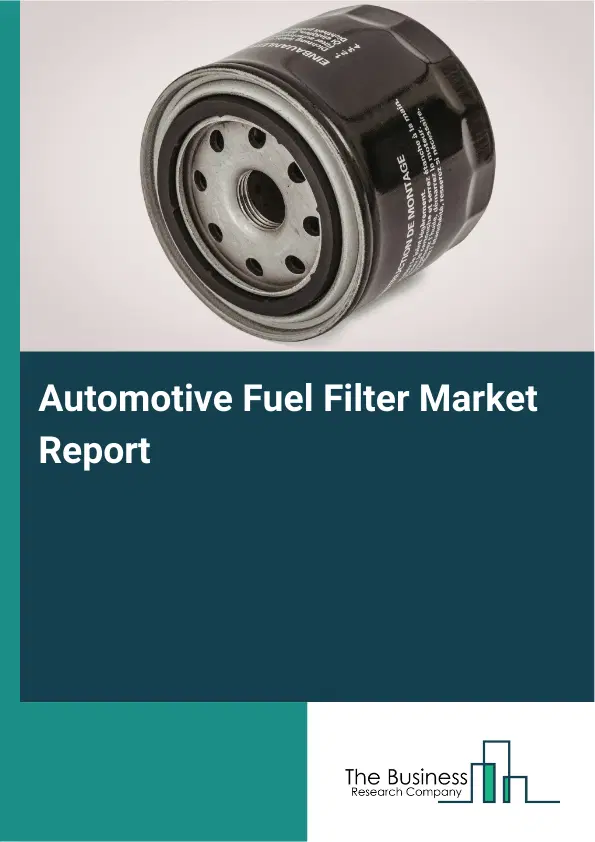
An automotive fuel filter refers to an essential component of the fuel system designed to eliminate impurities and contaminants from the fuel system to ensure that the engine receives clean and efficient fuel for optimal performance. Its primary function is to protect the engine by capturing and eliminating impurities, contaminants, and debris from the fuel, thus promoting the vehicle's longevity. The main types of fuel included in automotive fuel filters are petrol, diesel, and alternative fuels. Petrol fuel, also known as gasoline, is a type of fuel used in internal combustion engines. It is a mixture of hydrocarbons, primarily alkanes, alkenes, and alkynes, with small amounts of other compounds such as oxygenates and detergents. Various types of vehicles included passenger cars and commercial vehicles. These are sold through various sales channels, such as original equipment manufacturer (OEM) and aftermarket.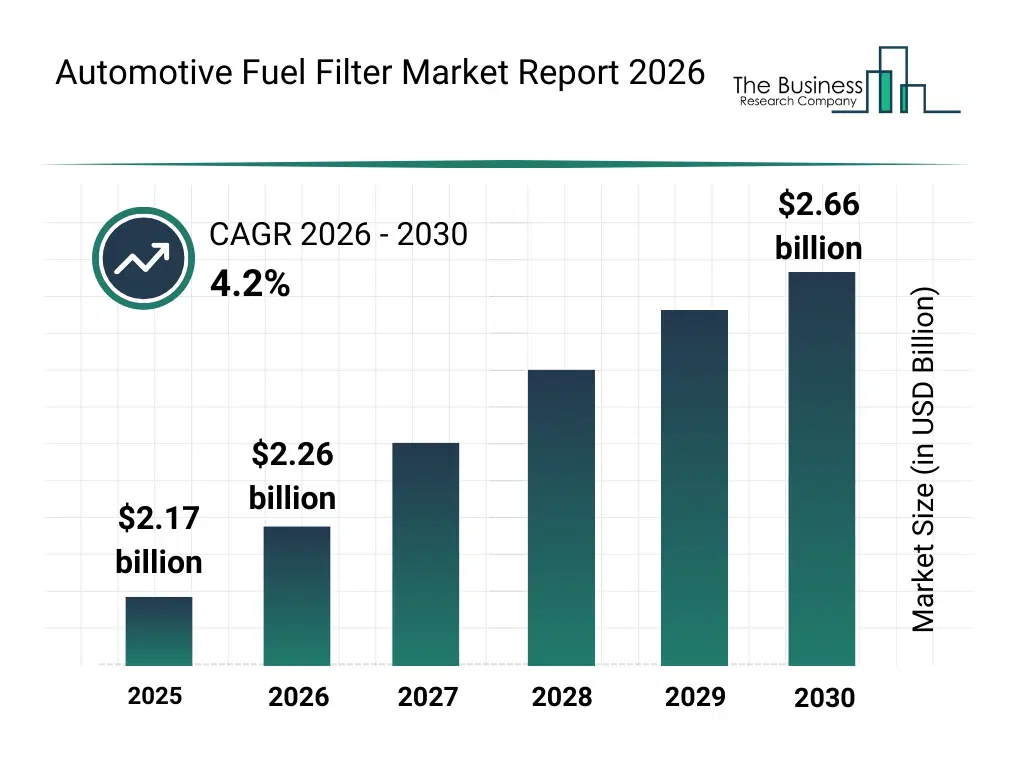
What Is The Automotive Fuel Filter Market Size and Share 2026?
The automotive fuel filter market size has grown steadily in recent years. It will grow from $2.17 billion in 2025 to $2.26 billion in 2026 at a compound annual growth rate (CAGR) of 4.0%. The growth in the historic period can be attributed to diesel vehicle dominance, fuel contamination issues, automotive maintenance practices, growth of commercial fleets, engine durability requirements.What Is The Automotive Fuel Filter Market Growth Forecast?
The automotive fuel filter market size is expected to see steady growth in the next few years. It will grow to $2.66 billion in 2030 at a compound annual growth rate (CAGR) of 4.2%. The growth in the forecast period can be attributed to electric vehicle transition impact, stricter emission norms, alternative fuel adoption, demand for extended service intervals, advanced filter media innovation. Major trends in the forecast period include adoption of high-efficiency fuel filtration, growth of diesel water separator filters, expansion of aftermarket fuel filter demand, demand for alternative fuel compatibility, focus on engine protection.
Global Automotive Fuel Filter Market Segmentation
1) By Fuel Type: Petrol, Diesel, Alternative Fuels 2) By Vehicle Type: Passenger Car, Commercial Vehicle 3) By Sales Channel: Original Equipment Manufacturer (OEM), Aftermarket Subsegments: 1) By Petrol: Gasoline Fuel Filters, Multi-Function Fuel Filters 2) By Diesel: Diesel Fuel Filters, Water Separator Filters 3) By Alternative Fuels: Compressed Natural Gas (CNG) Filters, Biofuel Filters, Ethanol Fuel FiltersWhat Is The Driver Of The Automotive Fuel Filter Market?
Rising vehicle manufacturing is expected to propel the growth of the automotive fuel filter market going forward. Vehicle manufacturing refers to producing automobiles and light trucks, including light-duty vans, pickup trucks, minivans, and sport utility vehicles. Automotive fuel filters are primarily used in cars to ensure clean fuel delivery to engines, extending engine life, enhancing fuel efficiency, and meeting stringent emission and efficiency standards. For instance, in July 2024, according to the Board of Governors of the Federal Reserve System, a US-based government agency, total vehicle output grew from 10.92 million units in the first quarter of 2024 to 11.30 million units in the second quarter. Therefore, rising vehicle manufacturing is driving the growth of the automotive fuel filter industry.Key Players In The Global Automotive Fuel Filter Market
Major companies operating in the automotive fuel filter market report include Robert Bosch GmbH, Denso Corporation, ZF Friedrichshafen AG, Continental AG, Cummins Inc., Valeo Service, Parker Hannifin Corporation, MANN+HUMMEL, Donaldson Company Inc., Sogefi Group, Ahlstrom Munksjo, Hengst SE, Champion Laboratories Inc., FRAM Group IP LLC, First Brands Group, K&N Engineering Inc., A. Kayser Automotive Systems GmbH, Filtrak BrandT GmbH, North American Filter Corporation, ALCO Filters Ltd., Luman Automotive Systems Pvt Ltd., Siam Filter Products Ltd., Fildex Filters Canada Corporation, MAHLE GmbH, Freudenberg & Co KG
This chart is for illustrative purposes; the full report includes a detailed competitor analysis and comprehensive overview of the top 10 companies in the market.
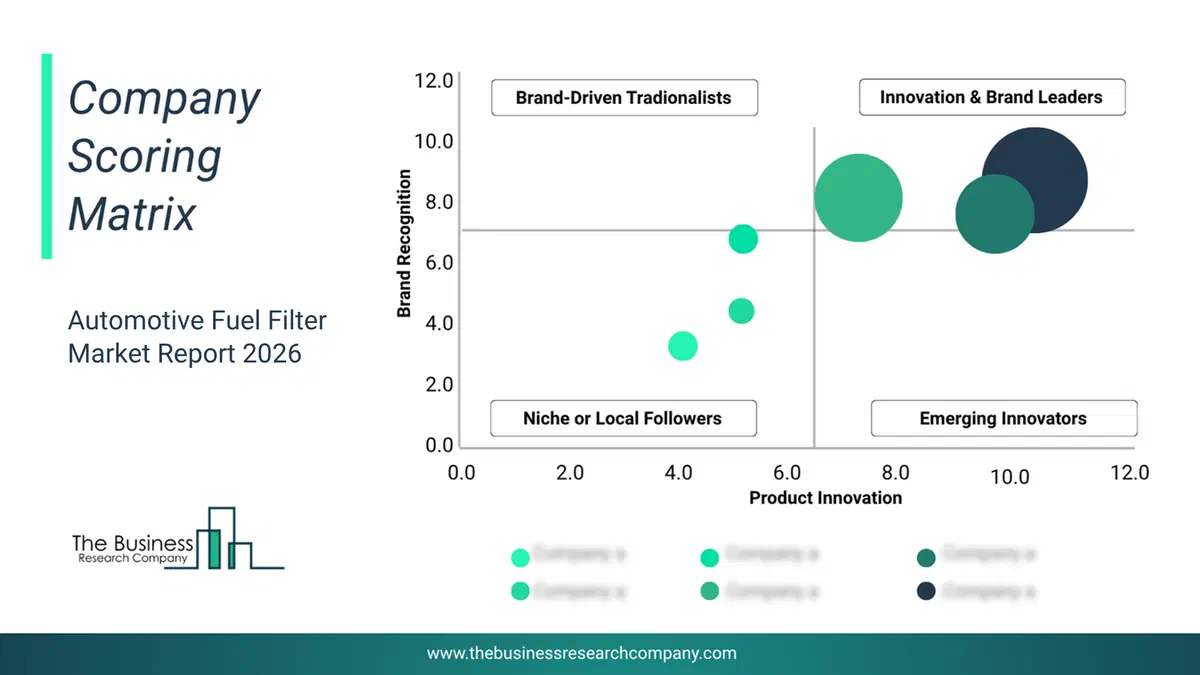
This chart maps companies by product innovation and brand strength, with bubble size indicating relative revenue, helping identify market leaders, challengers, and niche players. This is an illustrative chart; the full report provides a complete and accurate competitive analysis.
Global Automotive Fuel Filter Market Trends and Insights
Major companies operating in the automotive fuel filter market are focusing on introducing advanced products, such as fuel filters for commercial vehicles, on gaining a competitive edge in the market. A fuel filter for commercial vehicles is a component designed to remove impurities and contaminants from the fuel before it enters the engine. For instance, in December 2023, Uno Minda, an India-based manufacturer of automotive solutions, in collaboration with Roki Japan, a Japan-based automobile parts manufacturer, launched a line of air filters, oil filters, and fuel filters for commercial vehicles in the Indian aftermarket. The new filters are made with state-of-the-art Japanese technology and are intended to offer a strong defense against contaminants like dust, debris, and dirt. The fuel filter prolongs engine life, lowers fuel consumption, and provides a more comfortable driving experience by filtering out dust, debris, and water content from the fuel, preventing negative effects on fuel injection and engine components. The new line of filters, manufactured in supervised manufacturing facilities in India utilizing imported advanced filtering paper, undergoes rigorous testing for performance and durability.What Are Latest Mergers And Acquisitions In The Automotive Fuel Filter Market?
In April 2025, ABC Technologies, a Canada-based provider of custom, highly engineered technical plastics and lightweight innovations for the light vehicle industry, acquired TI Fluid Systems (TIFS) for an undisclosed amount. Through this acquisition, ABC Technologies aims to enhance its automotive fluid system capabilities, supporting a “propulsion-agnostic” offering across conventional, hybrid, and electric vehicle architectures. TI Fluid Systems is a US-based manufacturer of automotive fuel system components.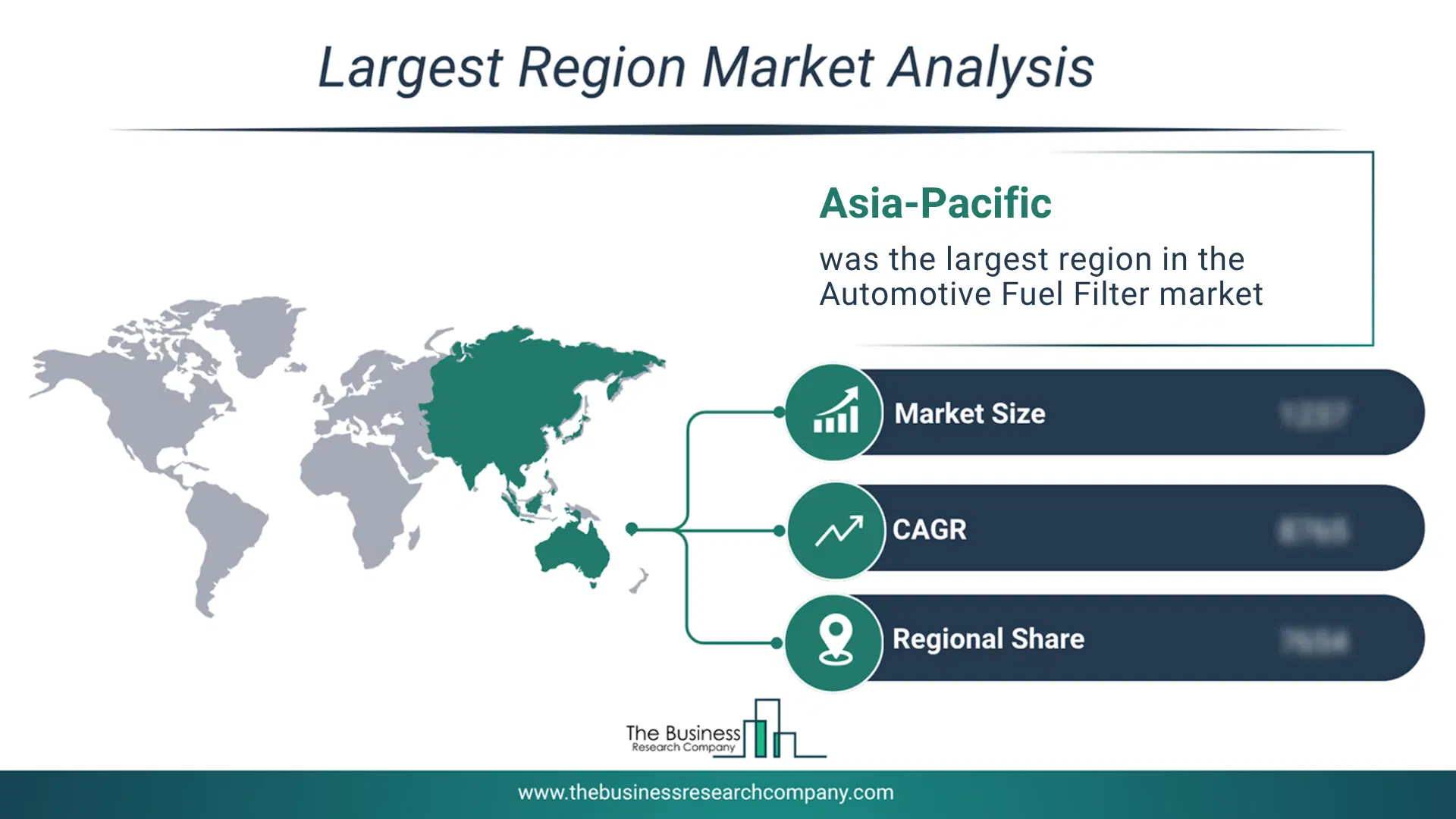
Regional Outlook
Asia-Pacific was the largest region in the automotive fuel filter market in 2025. It is expected to be the fastest-growing region in the forecast period. The regions covered in this market report include Asia-Pacific, South East Asia, Western Europe, Eastern Europe, North America, South America, Middle East, Africa. The countries covered in this market report include Australia, Brazil, China, France, Germany, India, Indonesia, Japan, Taiwan, Russia, South Korea, UK, USA, Canada, Italy, SpainWhat Defines the Automotive Fuel Filter Market?
The automotive fuel filter market consists of sales of fuel pump assemblies, fuel injectors, and fuel pressure regulators. Values in this market are ‘factory gate’ values, that is the value of goods sold by the manufacturers or creators of the goods, whether to other entities (including downstream manufacturers, wholesalers, distributors and retailers) or directly to end customers. The value of goods in this market includes related services sold by the creators of the goods.How is Market Value Defined and Measured?
The market value is defined as the revenues that enterprises gain from the sale of goods and/or services within the specified market and geography through sales, grants, or donations in terms of the currency (in USD unless otherwise specified). The revenues for a specified geography are consumption values that are revenues generated by organizations in the specified geography within the market, irrespective of where they are produced. It does not include revenues from resales along the supply chain, either further along the supply chain or as part of other products.
This chart presents market attractiveness based on a quantitative evaluation of growth, competition, strategic alignment, and risk, offering a clear view of opportunity areas for decision-making. This chart is for illustrative purposes; the full report contains the complete analysis.

This chart highlights the Total Addressable Market (TAM) by estimating the maximum revenue opportunity using an assumption-driven approach, supporting strategic planning and opportunity sizing across markets. The chart is illustrative; the full report provides a more comprehensive analysis.
What Key Data and Analysis Are Included in the Automotive Fuel Filter Market Report 2026?
The automotive fuel filter market research report is one of a series of new reports from The Business Research Company that provides market statistics, including industry global market size, regional shares, competitors with the market share, detailed market segments, market trends and opportunities, and any further data you may need to thrive in the automotive fuel filter industry. The market research report delivers a complete perspective of everything you need, with an in-depth analysis of the current and future state of the industry.Automotive Fuel Filter Market Report Forecast Analysis
| Report Attribute | Details |
|---|---|
| Market Size Value In 2026 | $2.26 billion |
| Revenue Forecast In 2030 | $2.66 billion |
| Growth Rate | CAGR of 4.0% from 2026 to 2030 |
| Base Year For Estimation | 2025 |
| Actual Estimates/Historical Data | 2020-2025 |
| Forecast Period | 2026 - 2030 - 2030 |
| Market Representation | Revenue in USD Billion and CAGR from 2026 to 2030 |
| Segments Covered | Fuel Type, Vehicle Type, Sales Channel |
| Regional Scope | Asia-Pacific, Western Europe, Eastern Europe, North America, South America, Middle East, Africa |
| Country Scope | The countries covered in the report are Australia, Brazil, China, France, Germany, India, Indonesia, Japan, Taiwan, Russia, South Korea, UK, USA, Canada, Italy, Spain. |
| Key Companies Profiled | Robert Bosch GmbH, Denso Corporation, ZF Friedrichshafen AG, Continental AG, Cummins Inc., Valeo Service, Parker Hannifin Corporation, MANN+HUMMEL, Donaldson Company Inc., Sogefi Group, Ahlstrom Munksjo, Hengst SE, Champion Laboratories Inc., FRAM Group IP LLC, First Brands Group, K&N Engineering Inc., A. Kayser Automotive Systems GmbH, Filtrak BrandT GmbH, North American Filter Corporation, ALCO Filters Ltd., Luman Automotive Systems Pvt Ltd., Siam Filter Products Ltd., Fildex Filters Canada Corporation, MAHLE GmbH, Freudenberg & Co KG |
| Customization Scope | Request for Customization |
| Pricing And Purchase Options | Explore Purchase Options |