
Automotive Occupant Sensing System Market Report 2026
Global Outlook – By Product Type (Pressure Sensors, Weight Sensors, Seat Belt Sensors, Cameras, Strain Gauges, Ultrasonic Sensors, Infrared Or Capacitive Sensors), By Vehicle Type (Passenger Cars, Light Commercial Vehicles, Heavy Commercial Vehicles), By Application And Function (Airbag Deployment Control, Seatbelt Reminder Systems, Child Presence Detection, Driver Monitoring Systems, Passenger Safety Monitoring, Cabin Comfort And Personalization), By End User (Automobile Manufacturers, Automotive Component Suppliers, Service Stations And Repair Shops, Commercial Fleets And Leases, Consumers) – Market Size, Trends, Strategies, and Forecast to 2030
Automotive Occupant Sensing System Market Overview
• Automotive Occupant Sensing System market size has reached to $2.82 billion in 2025 • Expected to grow to $5.45 billion in 2030 at a compound annual growth rate (CAGR) of 14% • Growth Driver: Growing Electrification Of Vehicles Is Fueling The Growth Of The Market Due To Increasing Demand For Advanced In-Cabin Safety Technologies • Market Trend: Technological Advancements In Camera-Based Occupant Detection Systems Enhance In-Cabin Safety And Vehicle Intelligence • North America was the largest region in 2025 and Asia-Pacific is the fastest growing region.What Is Covered Under Automotive Occupant Sensing System Market?
An automotive occupant sensing system is an advanced vehicle safety system that uses sensors and electronic control units to detect the presence, position, weight, and classification of occupants in vehicle seats. It enables intelligent control of airbag deployment and seat belt reminder systems based on occupant characteristics. Its primary purpose is to improve passenger safety, minimize the risk of collision-related injuries, and ensure compliance with automotive safety standards and regulations. The main product types of automotive occupant sensing systems include pressure sensors, weight sensors, seat belt sensors, airbag sensors, cameras, strain gauges, ultrasonic sensors, and infrared or capacitive sensors. Pressure sensors refer to sensing devices that detect changes in pressure caused by an occupant’s presence, position, or movement within a vehicle to support occupant safety functions. These systems are used in passenger cars, light commercial vehicles, heavy commercial vehicles. The various applications and functions involved are airbag deployment control, seatbelt reminder systems, child presence detection, driver monitoring systems, passenger safety monitoring, and cabin comfort and personalization, and they are used by several end users such as automobile manufacturers, automotive component suppliers, service stations and repair shops, commercial fleets and leases, and consumers.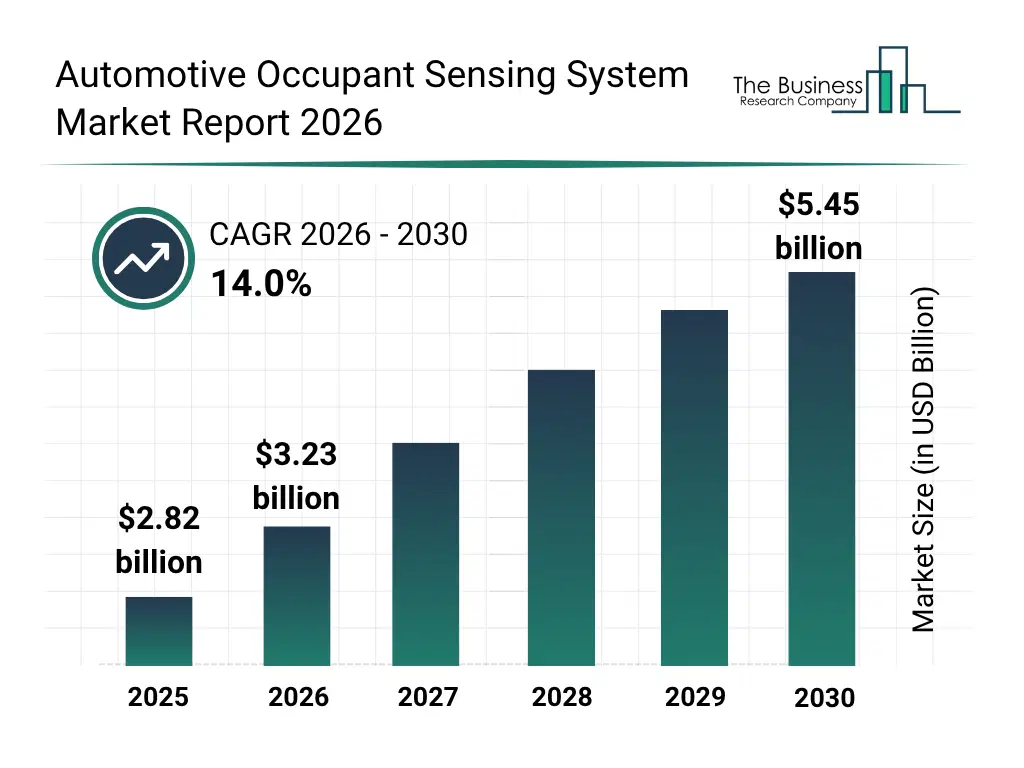
What Is The Automotive Occupant Sensing System Market Size and Share 2026?
The automotive occupant sensing system market size has grown rapidly in recent years. It will grow from $2.82 billion in 2025 to $3.23 billion in 2026 at a compound annual growth rate (CAGR) of 14.4%. The growth in the historic period can be attributed to increasing focus on vehicle occupant safety, rising adoption of electronic safety systems, growing implementation of airbag safety technologies, increasing regulatory requirements for passenger protection, rising consumer demand for enhanced vehicle safety features.What Is The Automotive Occupant Sensing System Market Growth Forecast?
The automotive occupant sensing system market size is expected to see rapid growth in the next few years. It will grow to $5.45 billion in 2030 at a compound annual growth rate (CAGR) of 14.0%. The growth in the forecast period can be attributed to increasing demand for precise occupant classification, rising adoption of child presence detection systems, growing demand for seat-based occupant monitoring, increasing integration of occupant sensing with intelligent restraint systems, rising need for improved airbag deployment accuracy. Major trends in the forecast period include increasing adoption of AI-enabled occupant detection, rising use of multi-sensor occupant classification systems, growing demand for weight and position sensing in vehicle seats, increasing integration of occupant sensing with advanced restraint systems, rising adoption of real-time occupant monitoring for enhanced passenger safety.
Global Automotive Occupant Sensing System Market Segmentation
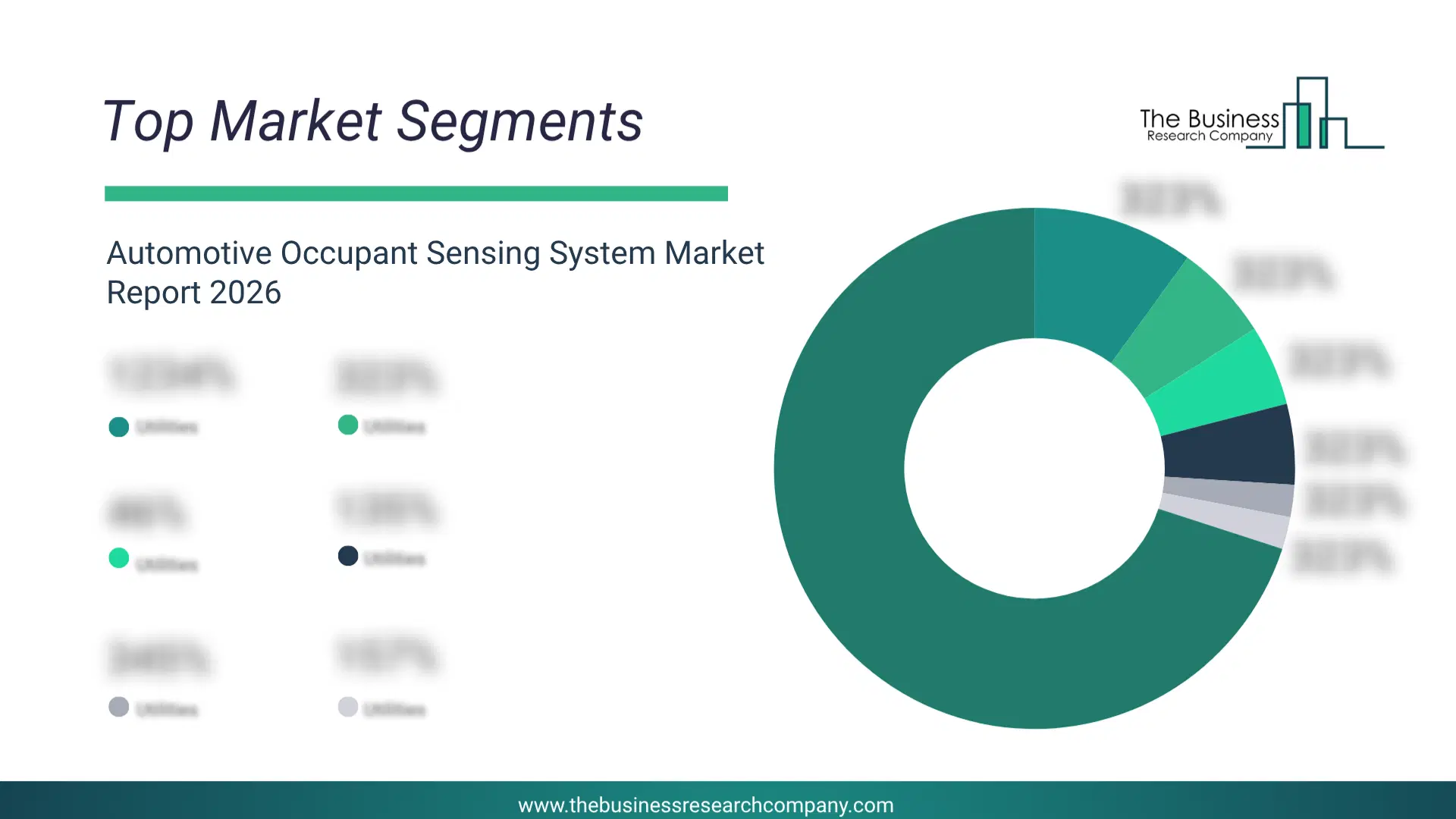
1) By Product Type: Pressure Sensors, Weight Sensors, Seat Belt Sensors, Cameras, Strain Gauges, Ultrasonic Sensors, Infrared Or Capacitive Sensors 2) By Vehicle Type: Passenger Cars, Light Commercial Vehicles, Heavy Commercial Vehicles 3) By Application And Function: Airbag Deployment Control, Seatbelt Reminder Systems, Child Presence Detection, Driver Monitoring Systems, Passenger Safety Monitoring, Cabin Comfort And Personalization 4) By End User: Automobile Manufacturers, Automotive Component Suppliers, Service Stations And Repair Shops, Commercial Fleets And Leases, Consumers Subsegments: 1) By Pressure Sensors: Seat Cushion Pressure Sensors, Seat Occupancy Pressure Sensors, Mat Based Pressure Sensors, Distributed Pressure Sensors 2) By Weight Sensors: Load Cell Sensors, Seat Weight Classification Sensors, Strain Based Weight Sensors, Multi Point Weight Sensors 3) By Seat Belt Sensors: Seat Belt Buckle Sensors, Seat Belt Tension Sensors, Seat Belt Latch Sensors, Seat Belt Usage Detection Sensors 4) By Cameras: Monocular Cameras, Stereo Vision Cameras, Near Infrared Cameras, Three Dimensional Depth Cameras 5) By Strain Gauges: Metal Foil Strain Gauges, Semiconductor Strain Gauges, Bonded Strain Gauges, Thin Film Strain Gauges 6) By Ultrasonic Sensors: Short Range Ultrasonic Sensors, Long Range Ultrasonic Sensors, Cabin Occupancy Ultrasonic Sensors, Multi Zone Ultrasonic Sensors 7) By Infrared Or Capacitive Sensors: Passive Infrared Sensors, Active Infrared Sensors, Proximity Capacitive Sensors, Touchless Capacitive SensorsWhat Is The Driver Of The Automotive Occupant Sensing System Market?
The growing electrification of vehicles is expected to propel the growth of the automotive occupant sensing system market going forward. Electrification of vehicles refers to the adoption of automobiles powered fully or partially by electricity through battery-electric, plug-in hybrid, or hybrid propulsion systems instead of conventional internal combustion engines. Electrification of vehicles is increasing due to stringent government emissions regulations that encourage the adoption of battery-electric and hybrid vehicles, accelerating the global transition toward cleaner transportation. The growing electrification of vehicles drives the automotive occupant sensing system by increasing the integration of intelligent safety and energy management features that enable accurate occupant detection, optimized airbag deployment, and efficient control of electric vehicle cabin functions. For instance, in May 2025, according to the International Energy Agency, a France-based energy policy organization, global electric car sales exceeded 17 million units in 2024, compared to nearly 14 million units in 2023, representing an increase of more than 25% year-on-year. Therefore, the growing electrification of vehicles is driving the growth of the automotive occupant sensing system industry.Key Players In The Global Automotive Occupant Sensing System Market
Major companies operating in the automotive occupant sensing system market are Autoliv Inc., DENSO Corporation, Continental AG, ZF Friedrichshafen AG, Magna International Inc., Robert Bosch GmbH, Hyundai Mobis Co. Ltd., Aptiv PLC, Panasonic Automotive Systems Co. Ltd., Valeo SA, Lear Corporation, Joyson Safety Systems Inc., Texas Instruments Incorporated, Infineon Technologies AG, NXP Semiconductors N.V., Gentex Corporation, OMRON Corporation, Melexis NV, GRAMMER AG, Tobii AB, Seeing Machines Limited, Smart Eye AB, Cipia Vision Ltd.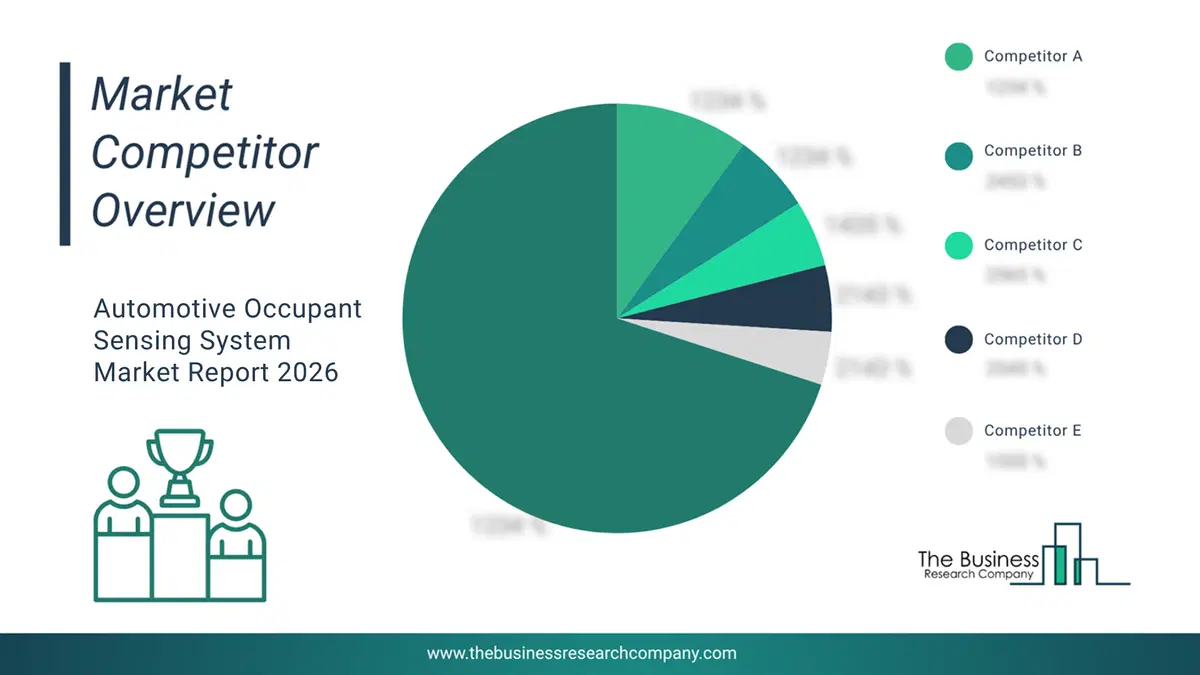
This chart is for illustrative purposes; the full report includes a detailed competitor analysis and comprehensive overview of the top 10 companies in the market.
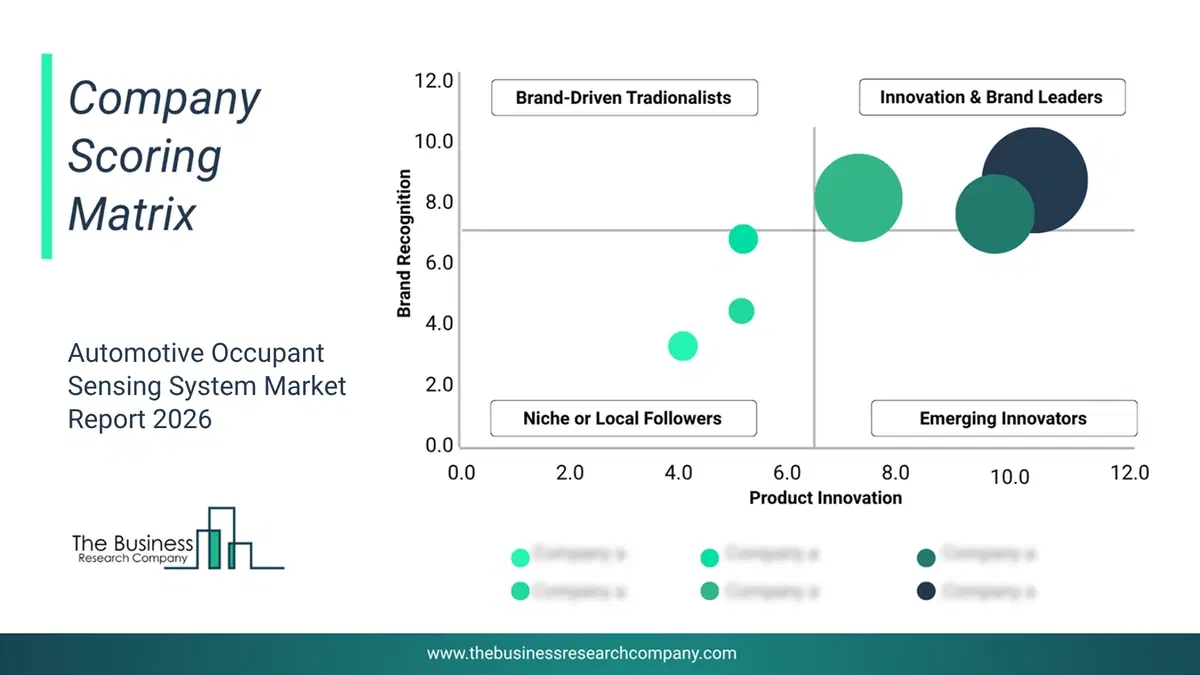
This chart maps companies by product innovation and brand strength, with bubble size indicating relative revenue, helping identify market leaders, challengers, and niche players. This is an illustrative chart; the full report provides a complete and accurate competitive analysis.
Global Automotive Occupant Sensing System Market Trends and Insights
Major companies operating in the automotive occupant sensing system market are focusing on developing advanced solutions such as camera-based occupant detection systems to improve occupant classification accuracy, optimize airbag deployment, and simplify vehicle safety architectures. Camera-based occupant detection systems use artificial intelligence (AI) and computer vision algorithms to identify occupant presence, position, posture, and physical characteristics through a single interior camera, enabling reliable in-cabin safety monitoring. For instance, in June 2026, Aptiv PLC, a Switzerland-based industrial technology company, launched Advanced Occupancy Classification (AOC), the industry's first camera-only occupant detection system. It is designed to enhance in-cabin safety while simplifying vehicle architecture. The AI- and computer vision-powered solution accurately classifies occupants based on height, weight, body position, and posture using a single interior camera, enabling optimized airbag deployment decisions while reducing system complexity and costs by up to 40% for automakers.What Are Latest Mergers And Acquisitions In The Automotive Occupant Sensing System Market?
In February 2024, Tobii AB, a Sweden-based technology company, acquired the AutoSense business from Xperi Inc. for $45 million. Through this acquisition, Tobii aims to strengthen its position in the automotive occupant sensing market by expanding its Driver Monitoring System (DMS) and Occupant Monitoring System (OMS) portfolio, leveraging AutoSense’s established automotive design wins and advanced interior sensing technologies. AutoSense is a US-based developer of automotive occupant sensing systems (AOSS), specifically camera-based occupant monitoring systems (OMS) and driver monitoring systems (DMS) for vehicle cabin safety.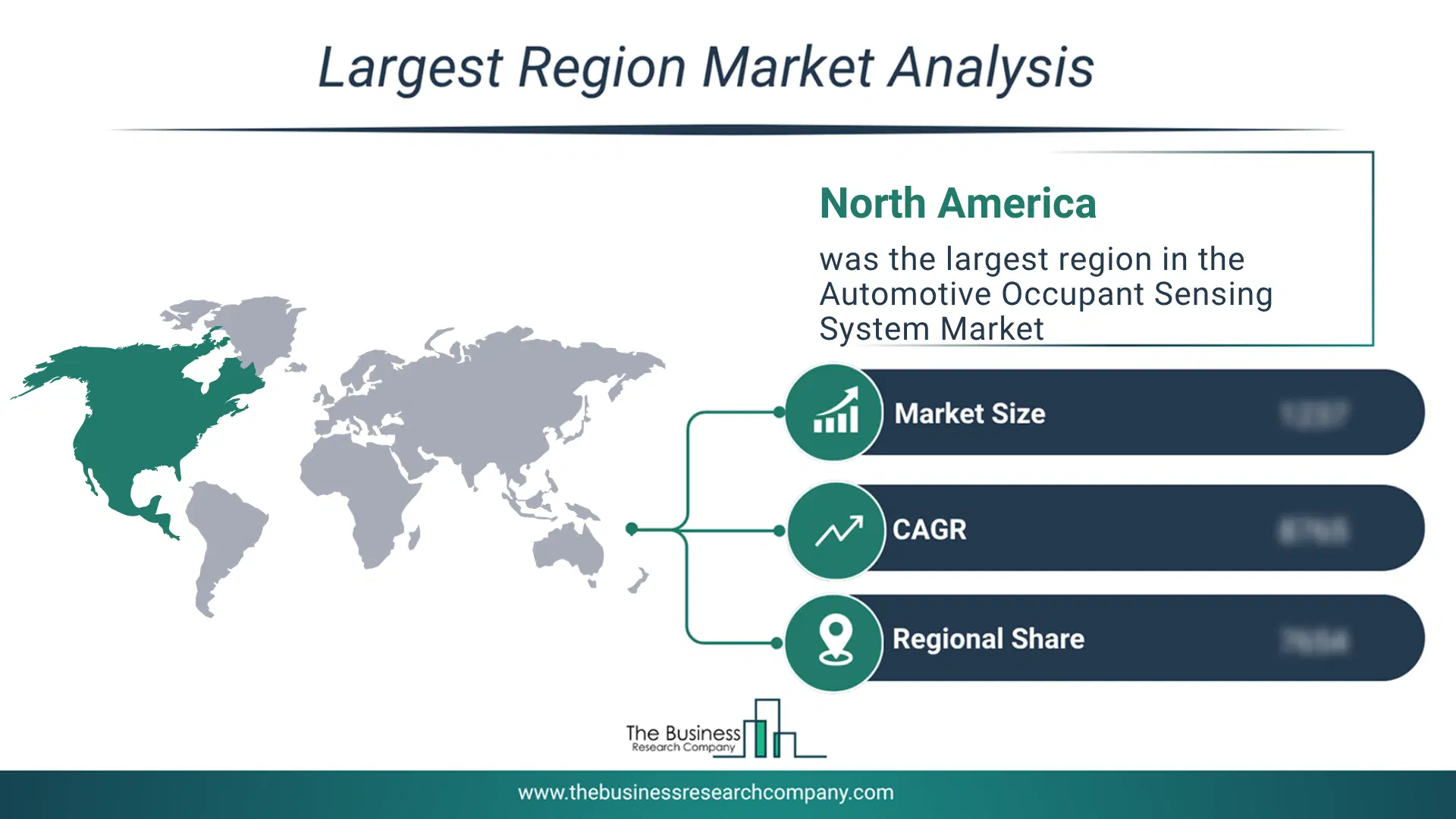
Regional Outlook
North America was the largest region in the automotive occupant sensing system market in 2025. Asia-Pacific is expected to be the fastest-growing region in the forecast period. The regions covered in this market report are Asia-Pacific, South East Asia, Western Europe, Eastern Europe, North America, South America, Middle East, Africa. The countries covered in this market report are Australia, Brazil, China, France, Germany, India, Indonesia, Japan, Taiwan, Russia, South Korea, UK, USA, Canada, Italy, Spain.What Defines the Automotive Occupant Sensing System Market?
The automotive occupant sensing system market consists of sales of occupant classification control units, seat occupancy sensor mats, millimeter wave radar sensors, and time of flight sensors. Values in this market are ‘factory gate’ values, that is, the value of goods sold by the manufacturers or creators of the goods, whether to other entities (including downstream manufacturers, wholesalers, distributors, and retailers) or directly to end customers. The value of goods in this market includes related services sold by the creators of the goods.How is Market Value Defined and Measured?
The market value is defined as the revenues that enterprises gain from the sale of goods and/or services within the specified market and geography through sales, grants, or donations in terms of the currency (in USD unless otherwise specified). The revenues for a specified geography are consumption values that are revenues generated by organizations in the specified geography within the market, irrespective of where they are produced. It does not include revenues from resales along the supply chain, either further along the supply chain or as part of other products.
This chart presents market attractiveness based on a quantitative evaluation of growth, competition, strategic alignment, and risk, offering a clear view of opportunity areas for decision-making. This chart is for illustrative purposes; the full report contains the complete analysis.

This chart highlights the Total Addressable Market (TAM) by estimating the maximum revenue opportunity using an assumption-driven approach, supporting strategic planning and opportunity sizing across markets. The chart is illustrative; the full report provides a more comprehensive analysis.
What Key Data and Analysis Are Included in the Automotive Occupant Sensing System Market Report 2026?
The automotive occupant sensing system market research report is one of a series of new reports from The Business Research Company that provides market statistics, including industry global market size, regional shares, competitors with the market share, detailed market segments, market trends and opportunities, and any further data you may need to thrive in the automotive occupant sensing system industry. The market research report delivers a complete perspective of everything you need, with an in-depth analysis of the current and future state of the industry.Automotive Occupant Sensing System Market Report Forecast Analysis
| Report Attribute | Details |
|---|---|
| Market Size Value In 2026 | $3.23 billion |
| Revenue Forecast In 2030 | $5.45 billion |
| Growth Rate | CAGR of 14.0% from 2026 to 2030 |
| Base Year For Estimation | 2025 |
| Actual Estimates/Historical Data | 2020-2025 |
| Forecast Period | 2026 - 2030 |
| Market Representation | Revenue in USD Billion and CAGR from 2026 to 2030 |
| Segments Covered | Product Type, Vehicle Type, Application And Function, End User |
| Regional Scope | Asia-Pacific, Western Europe, Eastern Europe, North America, South America, Middle East, Africa |
| Country Scope | The countries covered in the report are Australia, Brazil, China, France, Germany, India, Indonesia, Japan, Taiwan, Russia, South Korea, UK, USA, Canada, Italy, Spain. |
| Key Companies Profiled | Autoliv Inc., DENSO Corporation, Continental AG, ZF Friedrichshafen AG, Magna International Inc., Robert Bosch GmbH, Hyundai Mobis Co. Ltd., Aptiv PLC, Panasonic Automotive Systems Co. Ltd., Valeo SA, Lear Corporation, Joyson Safety Systems Inc., Texas Instruments Incorporated, Infineon Technologies AG, NXP Semiconductors N.V., Gentex Corporation, OMRON Corporation, Melexis NV, GRAMMER AG, Tobii AB, Seeing Machines Limited, Smart Eye AB, Cipia Vision Ltd. |
| Customization Scope | Request for Customization |
| Pricing And Purchase Options | Explore Purchase Options |