
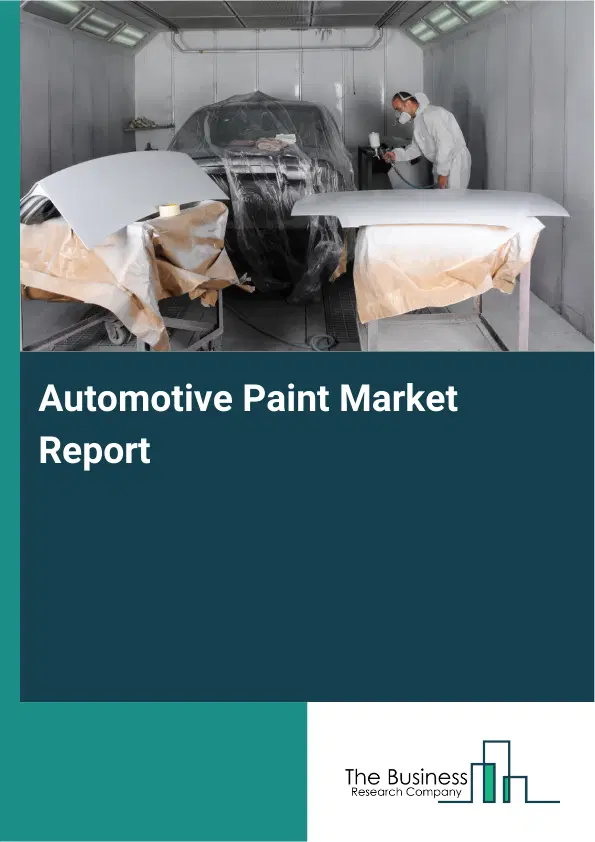
Automotive Paint Market Report 2026
Global Outlook – By Vehicle Type (Passenger Cars, Light Commercial Vehicles, Heavy Commercial Vehicles), By Coating (Primer, Base Coat, Clear Coat, Electrocoat), By Technology (Waterborne Coating, Solvent-Borne Coating, Powder Coating), By Sales Channel (Original Equipment Manufacturer (OEM), Aftermarket) – Market Size, Trends, Strategies, and Forecast to 2030
Automotive Paint Market Overview
• Automotive Paint market size has reached to $16.34 billion in 2025 • Expected to grow to $20.24 billion in 2030 at a compound annual growth rate (CAGR) of 4.2% • Growth Driver: Increasing Vehicle Production Driving Growth In Automotive Paint Market • Market Trend: Next-Generation In-Mold Coating Technology Driving Sustainable Automotive Paint Solutions • Asia-Pacific was the largest region in 2025.What Is Covered Under Automotive Paint Market?
Automotive paint refers to specialized coatings used to protect and decorate vehicles. These paints serve aesthetic and functional purposes, providing a glossy finish while protecting the vehicle's metal or composite body from corrosion, UV radiation, and other environmental damage. The main vehicle types of automotive paints are passenger cars, light commercial vehicles, and heavy commercial vehicles. Passenger cars, commonly referred to as automobiles or cars, are motor vehicles designed primarily for the transportation of passengers. The various coating types include primer, base coat, clear coat, and electro coat, and texture types used in automotive paints include solid, metallic, and other texture types the various technologies include waterborne coating, solvent-borne coating, and powder coating and are distributed through various distribution sales channels such as original equipment manufacturer (OEM), and aftermarket.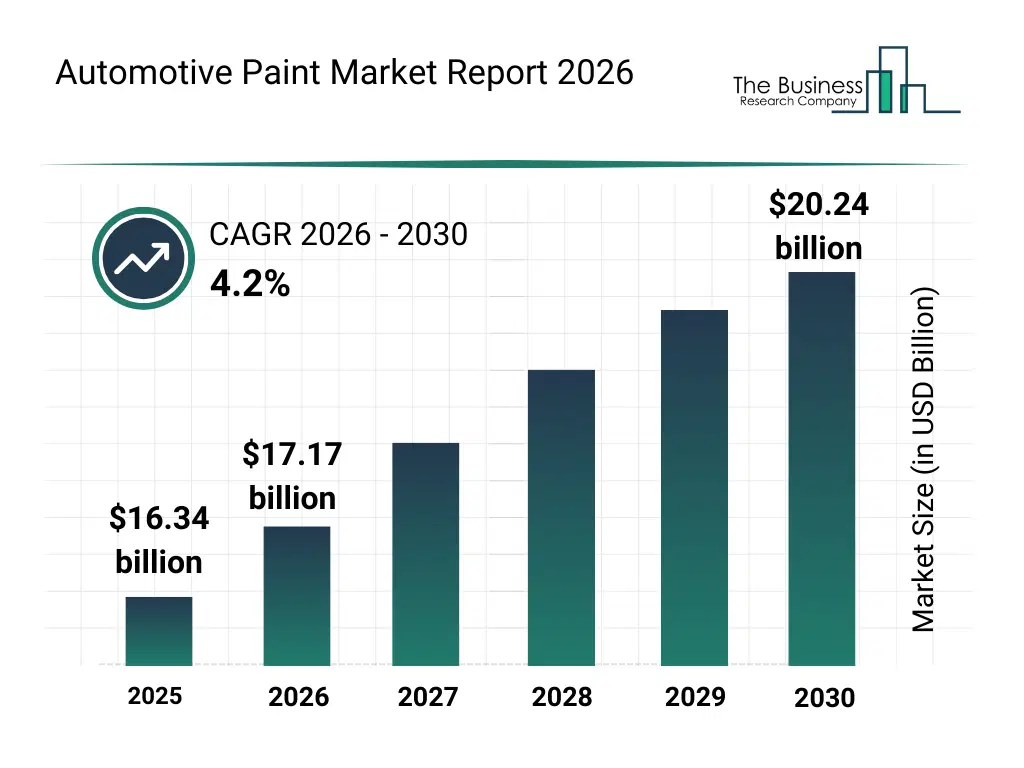
What Is The Automotive Paint Market Size and Share 2026?
The automotive paint market size has grown strongly in recent years. It will grow from $16.34 billion in 2025 to $17.17 billion in 2026 at a compound annual growth rate (CAGR) of 5.1%. The growth in the historic period can be attributed to growth in global vehicle production, demand for aesthetic vehicle finishes, corrosion protection requirements, expansion of automotive oem facilities, rise in aftermarket repainting.What Is The Automotive Paint Market Growth Forecast?
The automotive paint market size is expected to see steady growth in the next few years. It will grow to $20.24 billion in 2030 at a compound annual growth rate (CAGR) of 4.2%. The growth in the forecast period can be attributed to electric vehicle production growth, stricter environmental coating regulations, demand for durable lightweight coatings, smart factory adoption, increasing vehicle customization. Major trends in the forecast period include rising adoption of waterborne automotive coatings, increasing demand for lightweight vehicle coatings, growing use of advanced clear coat technologies, expansion of powder coatings in vehicle manufacturing, focus on enhanced corrosion and uv protection.
Global Automotive Paint Market Segmentation
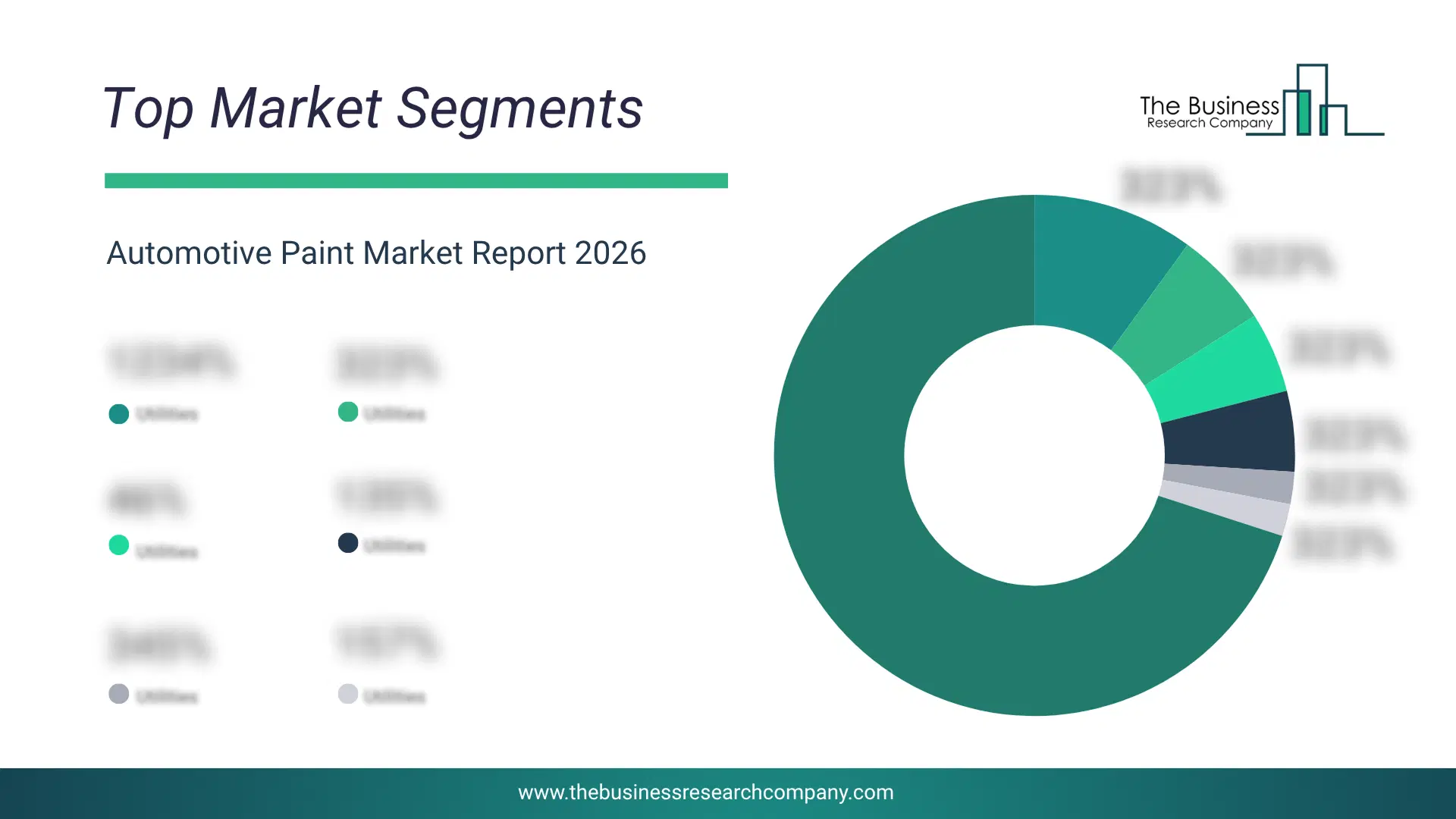
1) By Vehicle Type: Passenger Cars, Light Commercial Vehicles, Heavy Commercial Vehicles 2) By Coating: Primer, Base Coat, Clear Coat, Electrocoat 3) By Technology: Waterborne Coating, Solvent-Borne Coating, Powder Coating 4) By Sales Channel: Original Equipment Manufacturer (OEM), Aftermarket Subsegments: 1) By Passenger Cars: Sedan, Hatchback, SUV (Sport Utility Vehicle), Coupe, Convertible, Station Wagon 2) By Light Commercial Vehicles (LCVs): Pickup Trucks, Vans, Minivans 3) By Heavy Commercial Vehicles (HCVs): Trucks, Buses, TrailersWhat Is The Driver Of The Automotive Paint Market?
The increasing vehicle production is expected to propel the automotive paint market going forward. Vehicle production refers to manufacturing automobiles, from the initial design and engineering stages to the final assembly of components into finished vehicles ready for sale and distribution. The increasing vehicle production can be attributed to rising global demand for automobiles, the expansion of transportation infrastructure, and growing urbanization. Automotive paint is indispensable in vehicle production, offering aesthetic enhancement, protection, brand differentiation, corrosion resistance, and manufacturing efficiency benefits that contribute to the overall quality and success of automotive products. For instance, in April 2024, according to the Serbian Association of Vehicle and Parts Importers, a Serbia-based professional automotive organization, 93,546,599 vehicles (including 67,133,570 passenger vehicles) were produced worldwide in 2023, up from 84,830,376 vehicles in 2022. Therefore, an increase in vehicle production is driving the automotive paint industry.Key Players In The Global Automotive Paint Market
Major companies operating in the automotive paint market are BASF SE, Dow Chemical Company, 3M Company, Henkel AG And Co. KGaA, Sherwin-Williams Company, Covestro AG, PPG Industries, Akzo Nobel N.V., Eastman Chemical Company, Nippon Paint Holdings Co. Ltd., RPM International Inc., Clariant AG, KCC Corporation, Axalta Coating Systems Ltd., Cabot Corporation, Asian Paints Limited, Kansai Paint Co. Ltd., Hempel A/S, Berger Paints India Limited, Teknos Group, SK Kaken Co. Ltd., Yip's Chemical Holdings Limited, Matrix System Automotive Finishes, Cresta Paint Industries Ltd.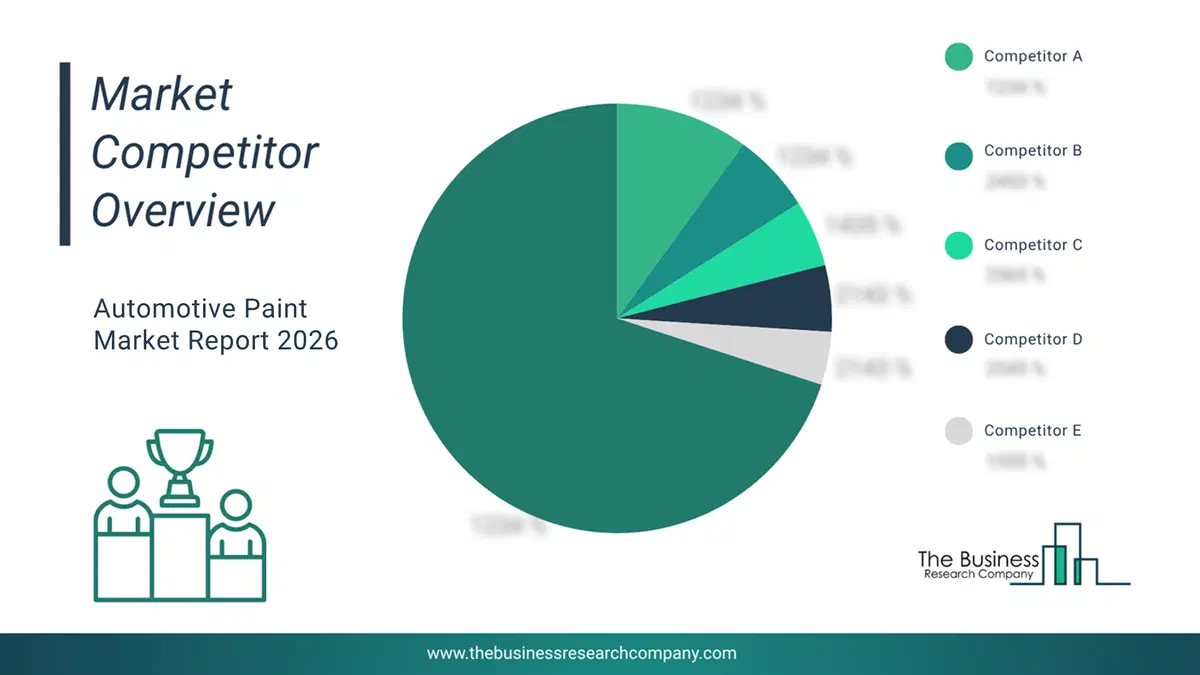
This chart is for illustrative purposes; the full report includes a detailed competitor analysis and comprehensive overview of the top 10 companies in the market.
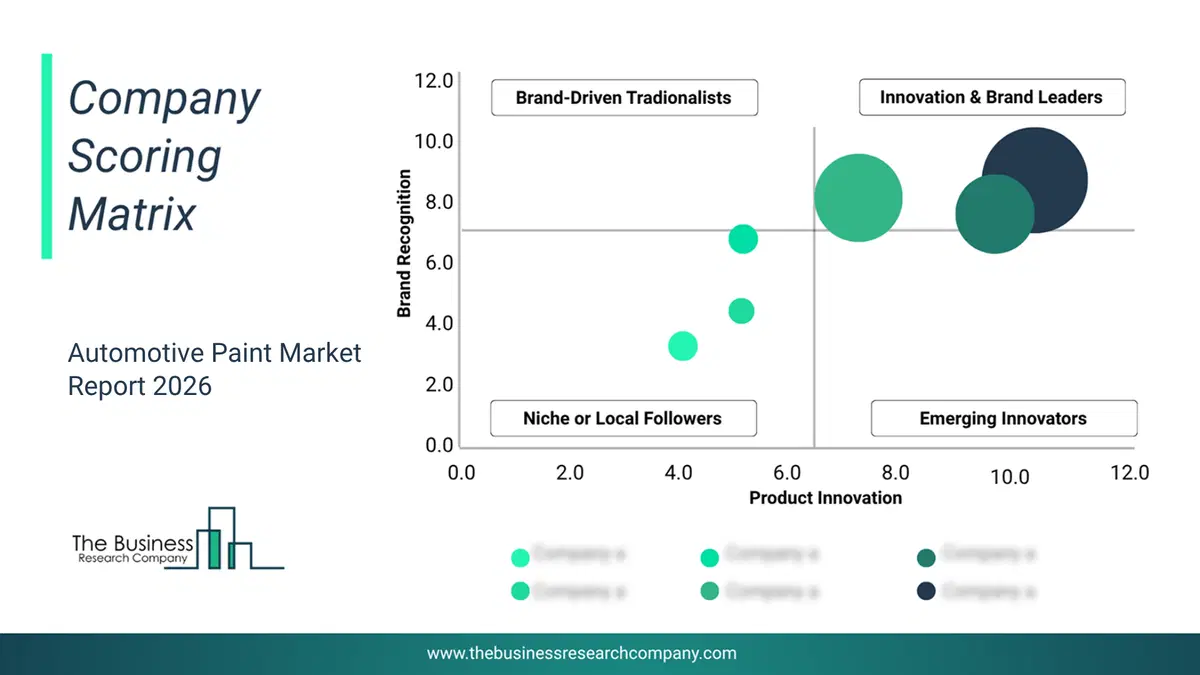
This chart maps companies by product innovation and brand strength, with bubble size indicating relative revenue, helping identify market leaders, challengers, and niche players. This is an illustrative chart; the full report provides a complete and accurate competitive analysis.
Global Automotive Paint Market Trends and Insights
Major companies operating in the automotive paint market are focusing on developing technologically advanced solutions, such as integrated injection molding, to enhance coating efficiency and sustainability. Integrated injection molding is a manufacturing process in which the injection of thermoplastic resin and the application of a surface coating are combined within the same mold cavity. For instance, in March 2025, Nippon Paint Automotive Coatings (NPAC) Co. Ltd., a Japan-based automotive coatings company, partnered with Uchihamakasei Corp., a Japan-based manufacturing company, to launch a next-generation in-mold coating (IMC) technology for automotive exterior parts. The IMC system is a solvent-free coating process integrated with thermoplastic injection molding, enabling the formation of uniform, high-quality surface finishes directly in the mold. It offers over 99% reduction in volatile organic compound (VOC) emissions, approximately 60% lower CO₂ emissions compared to conventional spray-paint processes, rapid curing in under one minute, and precise reproduction of complex textures and patterns making it ideal for sustainable automotive manufacturing and advanced exterior design applications.What Are Latest Mergers And Acquisitions In The Automotive Paint Market?
In July 2024, Axalta Coating Systems Ltd, a US-based coatings company, acquired The CoverFlexx Group for an undisclosed amount. Through this acquisition, Axalta aims to expand its specialty coatings portfolio and strengthen its presence in high-performance protective solutions. The CoverFlexx Group is a US-based company specializing in advanced coating technologies and solutions for industrial and automotive applications, providing innovative products that enhance durability and performance in protective and decorative coating applications.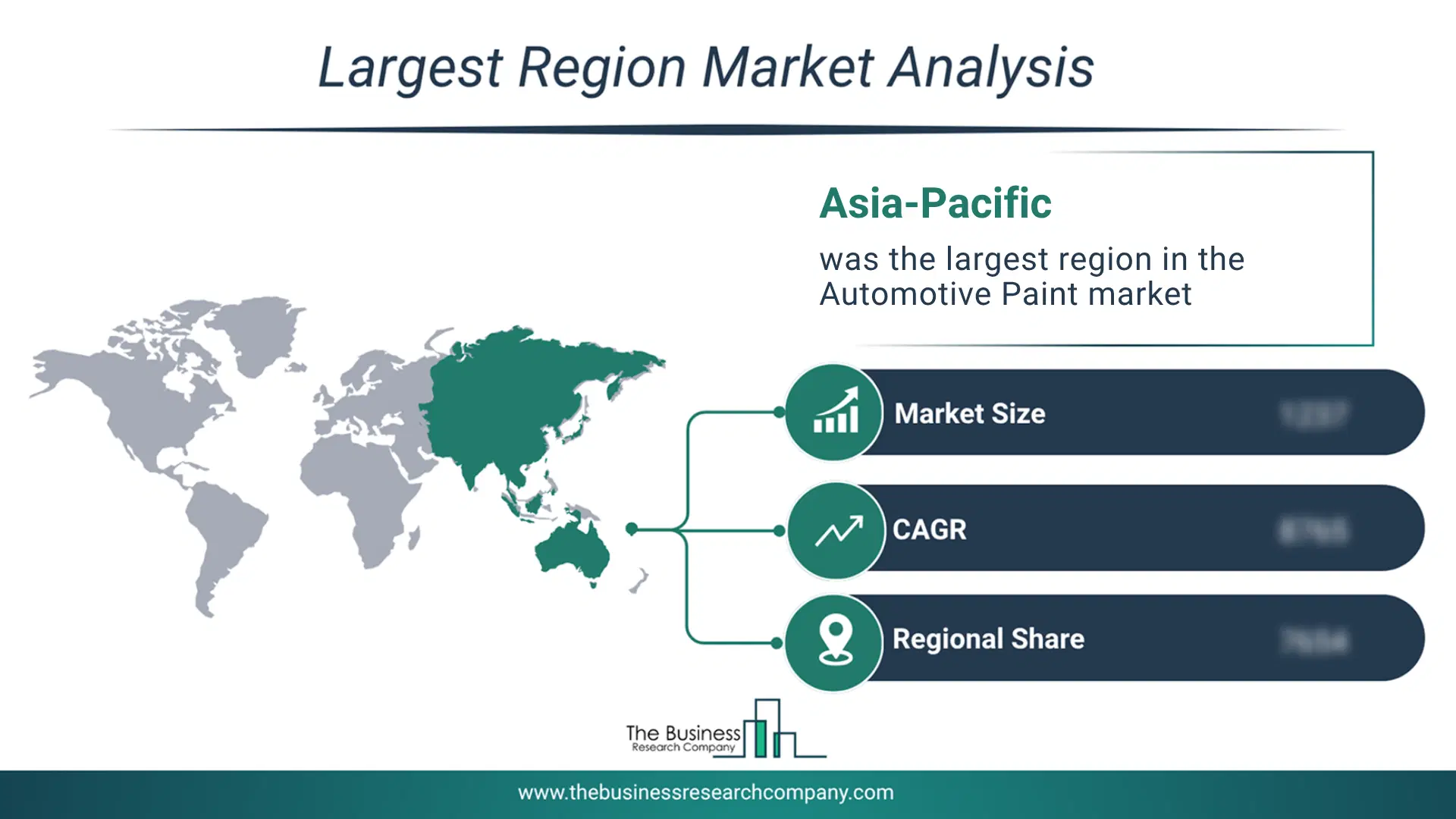
Regional Insights
Asia-Pacific was the largest region in the automotive paint market in 2025. The regions covered in this market report are Asia-Pacific, South East Asia, Western Europe, Eastern Europe, North America, South America, Middle East, Africa The countries covered in this market report are Australia, Brazil, China, France, Germany, India, Indonesia, Japan, Taiwan, Russia, South Korea, UK, USA, Canada, Italy, SpainWhat Defines the Automotive Paint Market?
The automotive paint market consist of sales of touch-up paints, activators and catalysts, specialty coatings, and additives to facilitate color matching, curing, customization, and performance enhancement of vehicle coatings. Values in this market are ‘factory gate’ values, that is the value of goods sold by the manufacturers or creators of the goods, whether to other entities (including downstream manufacturers, wholesalers, distributors and retailers) or directly to end customers. The value of goods in this market includes related services sold by the creators of the goods.How is Market Value Defined and Measured?
The market value is defined as the revenues that enterprises gain from the sale of goods and/or services within the specified market and geography through sales, grants, or donations in terms of the currency (in USD unless otherwise specified). The revenues for a specified geography are consumption values that are revenues generated by organizations in the specified geography within the market, irrespective of where they are produced. It does not include revenues from resales along the supply chain, either further along the supply chain or as part of other products.
This chart presents market attractiveness based on a quantitative evaluation of growth, competition, strategic alignment, and risk, offering a clear view of opportunity areas for decision-making. This chart is for illustrative purposes; the full report contains the complete analysis.

This chart highlights the Total Addressable Market (TAM) by estimating the maximum revenue opportunity using an assumption-driven approach, supporting strategic planning and opportunity sizing across markets. The chart is illustrative; the full report provides a more comprehensive analysis.
What Key Data and Analysis Are Included in the Automotive Paint Market Report 2026?
The automotive paint market research report is one of a series of new reports from The Business Research Company that provides market statistics, including industry global market size, regional shares, competitors with the market share, detailed market segments, market trends and opportunities, and any further data you may need to thrive in the automotive paint industry. The market research report delivers a complete perspective of everything you need, with an in-depth analysis of the current and future state of the industry.Automotive Paint Market Report Forecast Analysis
| Report Attribute | Details |
|---|---|
| Market Size Value In 2026 | $17.17 billion |
| Revenue Forecast In 2030 | $20.24 billion |
| Growth Rate | CAGR of 5.1% from 2026 to 2030 |
| Base Year For Estimation | 2025 |
| Actual Estimates/Historical Data | 2020-2025 |
| Forecast Period | 2026 - 2030 |
| Market Representation | Revenue in USD Billion and CAGR from 2026 to 2030 |
| Segments Covered | Vehicle Type, Coating, Technology, Sales Channel |
| Regional Scope | Asia-Pacific, Western Europe, Eastern Europe, North America, South America, Middle East, Africa |
| Country Scope | The countries covered in this market report are Australia, Brazil, China, France, Germany, India, Indonesia, Japan, Taiwan, Russia, South Korea, UK, USA, Canada, Italy, Spain |
| Key Companies Profiled | BASF SE, Dow Chemical Company, 3M Company, Henkel AG And Co. KGaA, Sherwin-Williams Company, Covestro AG, PPG Industries, Akzo Nobel N.V., Eastman Chemical Company, Nippon Paint Holdings Co. Ltd., RPM International Inc., Clariant AG, KCC Corporation, Axalta Coating Systems Ltd., Cabot Corporation, Asian Paints Limited, Kansai Paint Co. Ltd., Hempel A/S, Berger Paints India Limited, Teknos Group, SK Kaken Co. Ltd., Yip's Chemical Holdings Limited, Matrix System Automotive Finishes, Cresta Paint Industries Ltd. |
| Customization Scope | Request for Customization |
| Pricing And Purchase Options | Explore Purchase Options |