
Automotive Plastic Additives Market Report 2026
Global Outlook – By Additive Type (Plasticizers, Antioxidants, Heat Stabilizers, Ultraviolet Stabilizers, Flame Retardants, Impact Modifiers, Antistatic Agents, Colorants, Other Additive Types), By Plastic Type (Polypropylene, Polyethylene, Polyvinyl Chloride, Acrylonitrile Butadiene Styrene, Polyamide, Polycarbonate, Polyurethane, Other Plastic Types), By Vehicle Type (Passenger Vehicles, Light Commercial Vehicles, Heavy Commercial Vehicles, Electric Vehicles, Other Vehicle Types), By Function (Stabilization, Flame Resistance, Impact Modification, Processing Enhancement, Color Enhancement, Conductivity Improvement, Other Functions), By Application (Interior Components, Exterior Components, Under The Hood Components, Electrical Components, Lighting Components, Seating Components, Other Applications) – Market Size, Trends, Strategies, and Forecast to 2030
Automotive Plastic Additives Market Overview
• Automotive Plastic Additives market size has reached to $8.67 billion in 2025 • Expected to grow to $12.61 billion in 2030 at a compound annual growth rate (CAGR) of 7.7% • Growth Driver: Increasing Electric Vehicle Production Supports The Market Growth Due to Rising Demand for Lightweight Components • Market Trend: Low-VOC Polymer Stabilizers Enhancing Automotive Plastic Performance And Sustainability • North America was the largest region in 2025 and Asia-Pacific is the fastest growing region.What Is Covered Under Automotive Plastic Additives Market?
Automotive plastic additives are specialized chemical substances incorporated into polymer materials during manufacturing to enhance their physical, mechanical, thermal, and chemical properties. They improve the durability, stability, processability, and overall performance of plastic materials, enabling them to meet the stringent quality and performance requirements of the automotive industry. The main additive types of automotive plastic additives include plasticizers, antioxidants, heat stabilizers, ultraviolet stabilizers, flame retardants, impact modifiers, antistatic agents, colorants, and other additive types. Plasticizers refer to additives that improve the flexibility, workability, and durability of plastic materials used in automotive components. These additives are incorporated into polypropylene, polyethylene, polyvinyl chloride, acrylonitrile butadiene styrene, polyamide, polycarbonate, polyurethane, and other plastic types and are used in passenger vehicles, light commercial vehicles, heavy commercial vehicles, electric vehicles, and other vehicle types. They support functions including stabilization, flame resistance, impact modification, processing enhancement, color enhancement, and conductivity improvement and find application in interior components, exterior components, under the hood components, electrical components, lighting components, seating components, and others.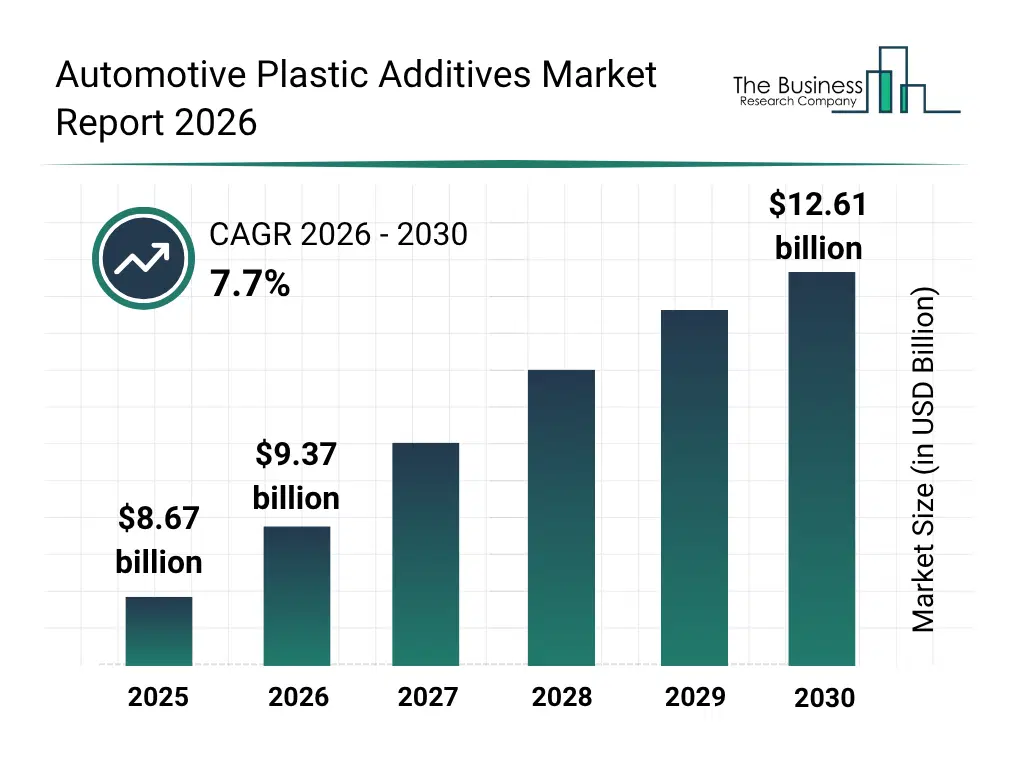
What Is The Automotive Plastic Additives Market Size and Share 2026?
The automotive plastic additives market size has grown strongly in recent years. It will grow from $8.67 billion in 2025 to $9.37 billion in 2026 at a compound annual growth rate (CAGR) of 8.1%. The growth in the historic period can be attributed to increasing automotive plastic consumption, rising demand for lightweight vehicle components, growing use of plastics in interior and exterior components, increasing demand for improved plastic durability, rising production of passenger and commercial vehicles.What Is The Automotive Plastic Additives Market Growth Forecast?
The automotive plastic additives market size is expected to see strong growth in the next few years. It will grow to $12.61 billion in 2030 at a compound annual growth rate (CAGR) of 7.7%. The growth in the forecast period can be attributed to increasing demand for bio-based plastic additives, rising adoption of high-performance polymer formulations, growing demand for flame-resistant automotive plastics, increasing use of additives for electric vehicle components, rising demand for enhanced thermal and chemical resistance. Major trends in the forecast period include increasing adoption of bio-based and non-phthalate additives, rising demand for high-performance heat stabilizers, growing use of advanced flame-retardant additives, increasing demand for enhanced impact resistance in automotive plastics, rising adoption of multifunctional plastic additive formulations.
Global Automotive Plastic Additives Market Segmentation
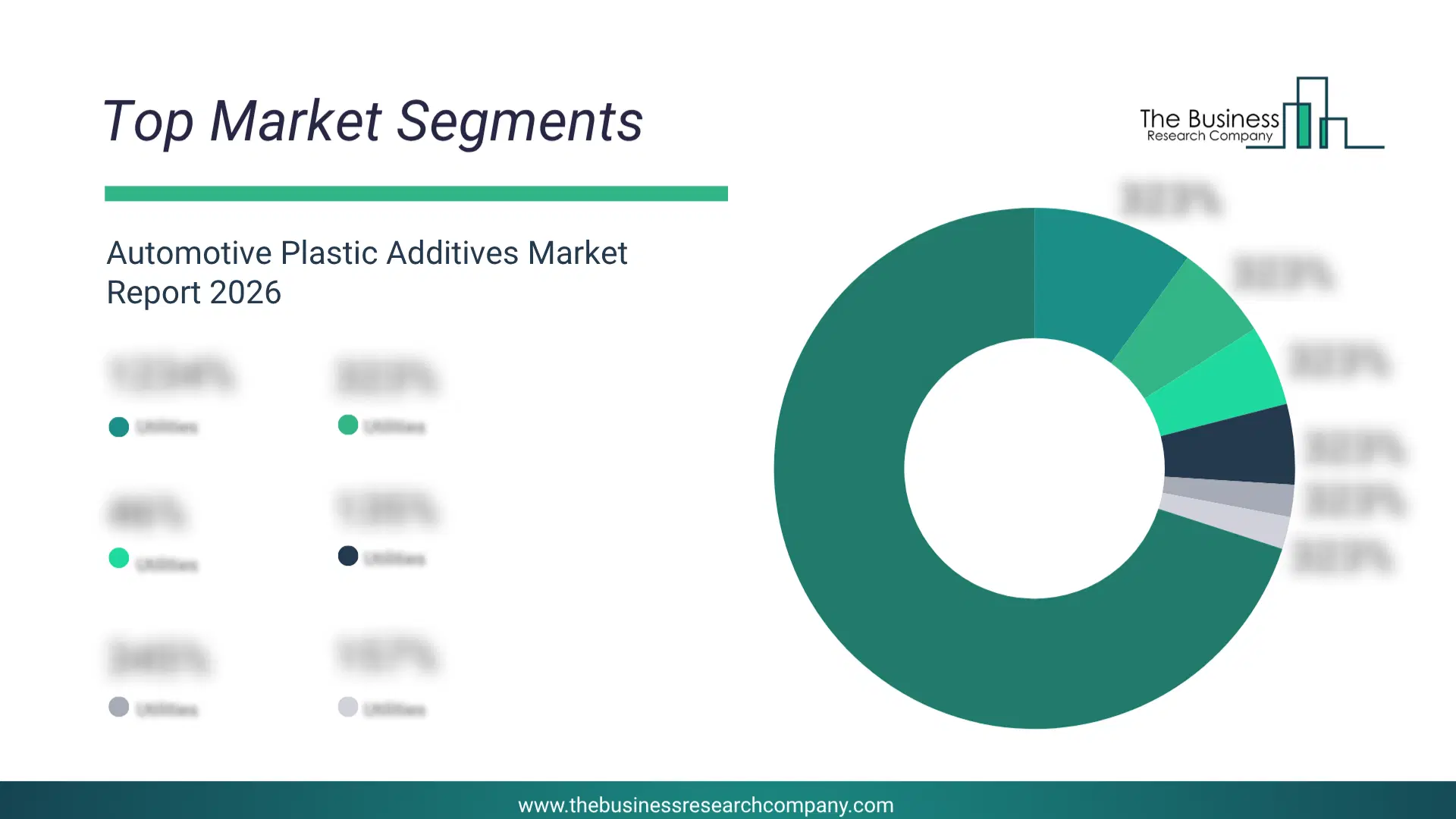
1) By Additive Type: Plasticizers, Antioxidants, Heat Stabilizers, Ultraviolet Stabilizers, Flame Retardants, Impact Modifiers, Antistatic Agents, Colorants, Other Additive Types 2) By Plastic Type: Polypropylene, Polyethylene, Polyvinyl Chloride, Acrylonitrile Butadiene Styrene, Polyamide, Polycarbonate, Polyurethane, Other Plastic Types 3) By Vehicle Type: Passenger Vehicles, Light Commercial Vehicles, Heavy Commercial Vehicles, Electric Vehicles, Other Vehicle Types 4) By Function: Stabilization, Flame Resistance, Impact Modification, Processing Enhancement, Color Enhancement, Conductivity Improvement, Other Functions 5) By Application: Interior Components, Exterior Components, Under The Hood Components, Electrical Components, Lighting Components, Seating Components, Other Applications Subsegments: 1) By Plasticizers: Phthalate Plasticizers, Non-Phthalate Plasticizers, Bio-Based Plasticizers, Polymeric Plasticizers 2) By Antioxidants: Primary Antioxidants, Secondary Antioxidants, Thioester Antioxidants, Antioxidant Blends 3) By Heat Stabilizers: Calcium-Zinc Stabilizers, Organotin Stabilizers, Barium-Zinc Stabilizers, Mixed Metal Stabilizers 4) By Ultraviolet Stabilizers: Ultraviolet Absorbers, Hindered Amine Light Stabilizers, Quenchers, Ultraviolet Stabilizer Blends 5) By Flame Retardants: Halogenated Flame Retardants, Phosphorus-Based Flame Retardants, Metal Hydroxide Flame Retardants, Nitrogen-Based Flame Retardants 6) By Impact Modifiers: Acrylic Impact Modifiers, Methacrylate-Butadiene-Styrene Impact Modifiers, Chlorinated Polyethylene Impact Modifiers, Acrylonitrile Butadiene Styrene-Based Impact Modifiers 7) By Antistatic Agents: Internal Antistatic Agents, External Antistatic Agents, Permanent Antistatic Agents, Migratory Antistatic Agents 8) By Colorants: Pigments, Dyes, Color Masterbatches, Special Effect Colorants 9) By Other Additive Types: Processing Aids, Lubricants, Nucleating Agents, Slip And Anti-Block Agents, Foaming AgentsWhat Is The Driver Of The Automotive Plastic Additives Market?
The growing adoption of electric vehicles is expected to propel the growth of the automotive plastic additives market going forward. Electric vehicles (EVs) are vehicles powered by electric motors using electricity stored in rechargeable batteries or generated by fuel cells, reducing or eliminating the need for conventional fossil fuels. Electric vehicles are gaining widespread adoption due to government incentives, stricter emission regulations, and expanding charging infrastructure that make them more affordable and practical to own. The growing adoption of electric vehicles supports automotive plastic additives by increasing the demand for lightweight, durable, and heat-resistant plastic components that improve vehicle efficiency, battery performance, and driving range. For instance, in January 2024, according to a report published by Kelley Blue Book, a US-based Cox Automotive company, in 2023, a record 1.2 million car buyers in the United States chose electric vehicles, which accounted for 7.6% of the entire U.S. vehicle market, up from 5.9% in 2022. Therefore, the growing adoption of electric vehicles is driving the growth of the automotive plastic additives industry.Key Players In The Global Automotive Plastic Additives Market
Major companies operating in the automotive plastic additives market are ExxonMobil Chemical Company, BASF SE, Dow Inc., Evonik Industries AG, Arkema S.A., LANXESS AG, Wacker Chemie AG, Kaneka Corporation, Albemarle Corporation, Nouryon Chemicals Holding B.V., Milliken & Company, ADEKA CORPORATION, Clariant AG, Songwon Industrial Co. Ltd., Tosaf Compounds Ltd., BYK-Chemie GmbH, Baerlocher GmbH, Fine Organic Industries Limited, Emery Oleochemicals Group, SABO S.p.A.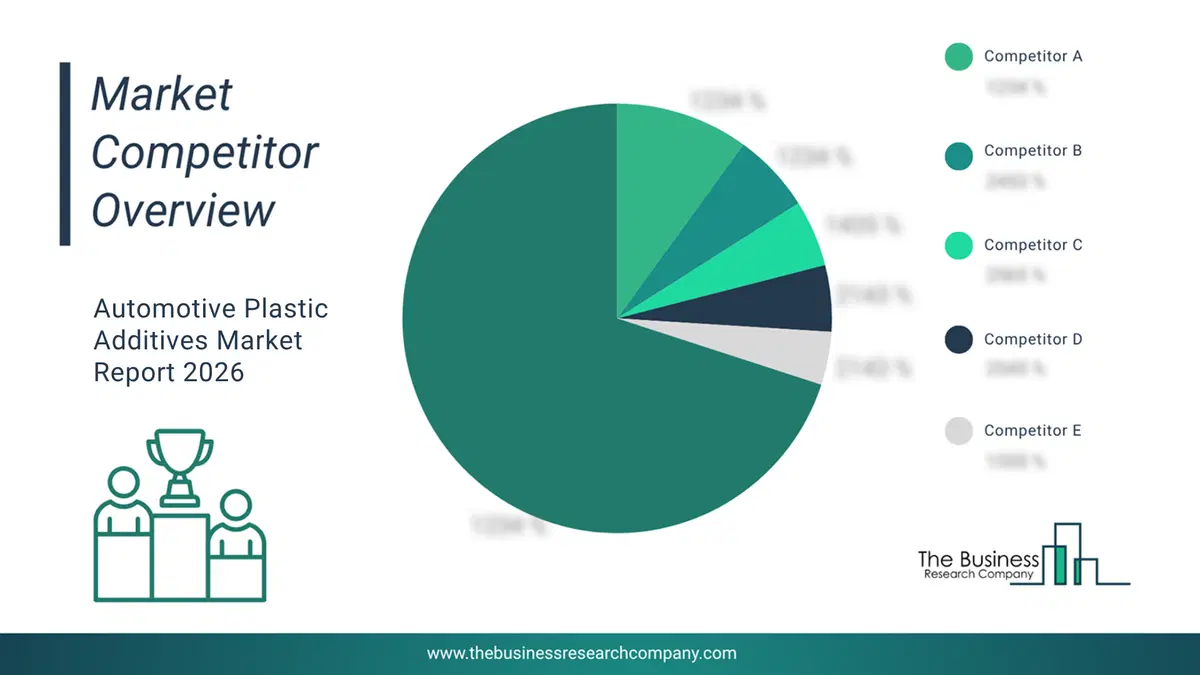
This chart is for illustrative purposes; the full report includes a detailed competitor analysis and comprehensive overview of the top 10 companies in the market.
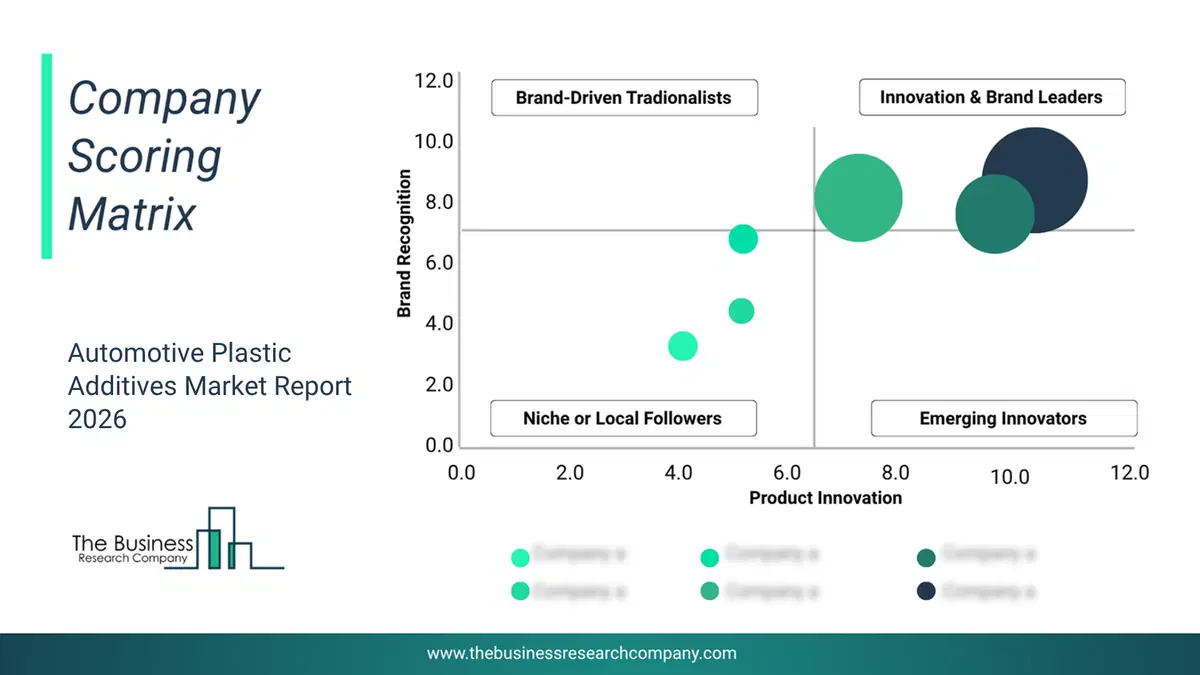
This chart maps companies by product innovation and brand strength, with bubble size indicating relative revenue, helping identify market leaders, challengers, and niche players. This is an illustrative chart; the full report provides a complete and accurate competitive analysis.
Global Automotive Plastic Additives Market Trends and Insights
Major companies operating in the automotive plastic additives market are increasingly prioritizing advanced polymer stabilization technologies, low-VOC formulations, and enhanced thermal protection to improve heat resistance, color stability, material performance, and sustainability in automotive plastic applications. Low-VOC polymer stabilizers refer to additive solutions designed to protect plastic materials from thermal degradation while minimizing volatile organic compound emissions and maintaining material appearance and performance during processing and service. For instance, in March 2025, SI Group, a US-based performance additives manufacturer, showcased ANOX NDB S2226P, an advanced stabilization solution at Chinaplas 2025. The product provides superior thermal protection, lower VOC emissions, and enhanced color stability at reduced additive loadings in compounding applications, supporting OEM requirements for high-performance automotive materials. It is integrating thermal stabilization with reduced emissions and improved color retention, ANOX NDB S2226P enables automotive manufacturers to improve the durability, appearance, and sustainability of lightweight plastic components while supporting the industry's shift toward more environmentally responsible vehicle materials.What Are Latest Mergers And Acquisitions In The Automotive Plastic Additives Market?
In January 2025, Nofia Solutions BV, a Belgium-based specialty chemicals company, acquired FRX Polymers Inc. for an undisclosed amount. With this acquisition, Nofia Solutions aimed to expand the production and adoption of halogen- and PFAS-free flame-retardant polymers across high-growth applications including consumer electronics, automotive, construction, textiles, and printed circuit boards, while strengthening its ability to meet growing customer demand. FRX Polymers Inc. is a US-based provide automotive plastic additives that develops, manufactures, and markets Nofia branded flame-retardant polymers.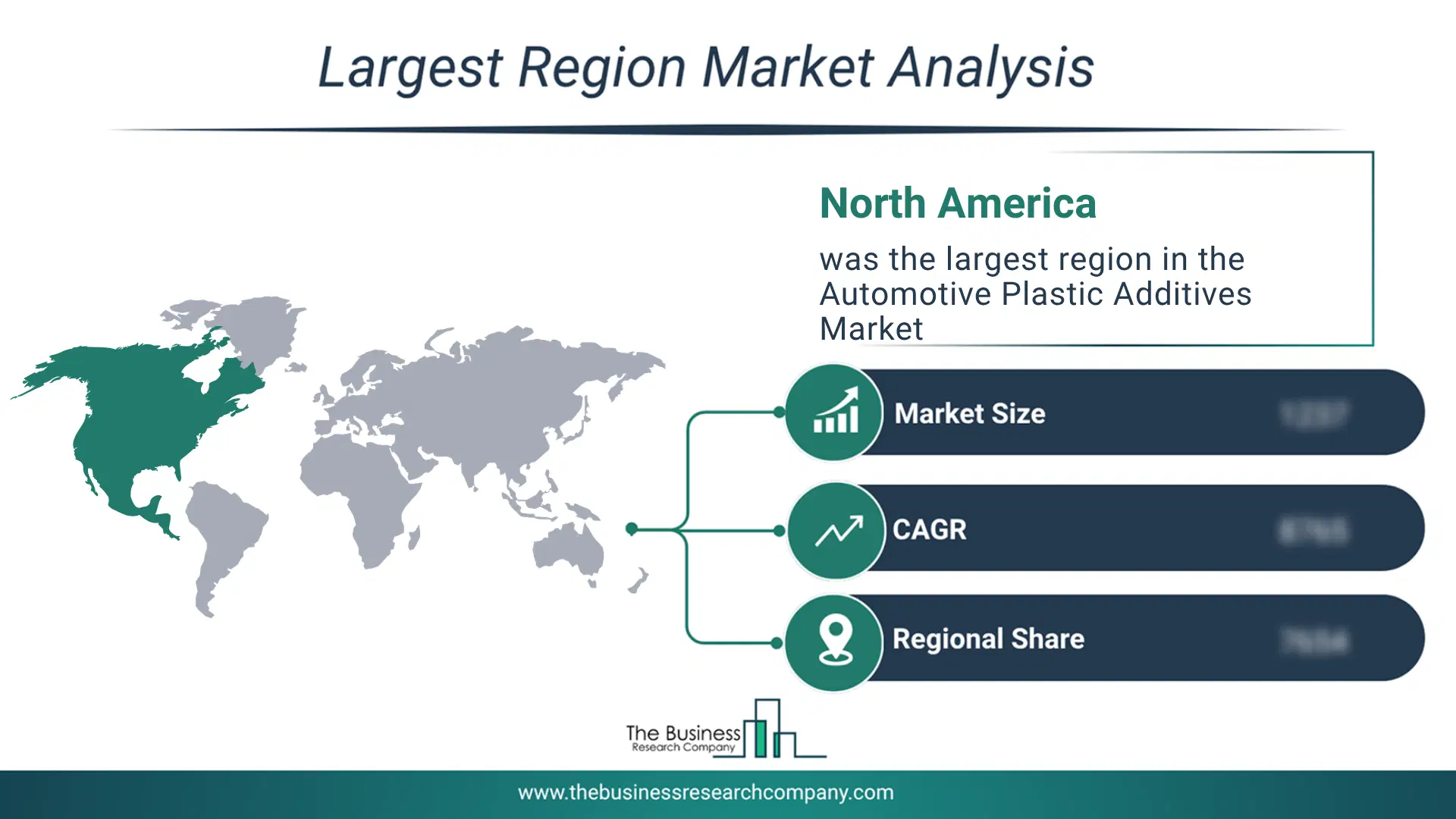
Regional Insights
North America was the largest region in the automotive plastic additives market in 2025. Asia-Pacific is expected to be the fastest-growing region in the forecast period. The regions covered in this market report are Asia-Pacific, South East Asia, Western Europe, Eastern Europe, North America, South America, Middle East, Africa. The countries covered in this market report are Australia, Brazil, China, France, Germany, India, Indonesia, Japan, Taiwan, Russia, South Korea, UK, USA, Canada, Italy, Spain.What Defines the Automotive Plastic Additives Market?
The automotive plastic additives market consists of sales of processing aids, lubricants, nucleating agents, and clarifying agents. Values in this market are ‘factory gate’ values, that is, the value of goods sold by the manufacturers or creators of the goods, whether to other entities (including downstream manufacturers, wholesalers, distributors, and retailers) or directly to end customers. The value of goods in this market includes related services sold by the creators of the goods.How is Market Value Defined and Measured?
The market value is defined as the revenues that enterprises gain from the sale of goods and/or services within the specified market and geography through sales, grants, or donations in terms of the currency (in USD unless otherwise specified). The revenues for a specified geography are consumption values that are revenues generated by organizations in the specified geography within the market, irrespective of where they are produced. It does not include revenues from resales along the supply chain, either further along the supply chain or as part of other products.
This chart presents market attractiveness based on a quantitative evaluation of growth, competition, strategic alignment, and risk, offering a clear view of opportunity areas for decision-making. This chart is for illustrative purposes; the full report contains the complete analysis.

This chart highlights the Total Addressable Market (TAM) by estimating the maximum revenue opportunity using an assumption-driven approach, supporting strategic planning and opportunity sizing across markets. The chart is illustrative; the full report provides a more comprehensive analysis.
What Key Data and Analysis Are Included in the Automotive Plastic Additives Market Report 2026?
The automotive plastic additives market research report is one of a series of new reports from The Business Research Company that provides market statistics, including industry global market size, regional shares, competitors with the market share, detailed market segments, market trends and opportunities, and any further data you may need to thrive in the automotive plastic additives industry. The market research report delivers a complete perspective of everything you need, with an in-depth analysis of the current and future state of the industry.Automotive Plastic Additives Market Report Forecast Analysis
| Report Attribute | Details |
|---|---|
| Market Size Value In 2026 | $9.37 billion |
| Revenue Forecast In 2030 | $12.61 billion |
| Growth Rate | CAGR of 7.7% from 2026 to 2030 |
| Base Year For Estimation | 2025 |
| Actual Estimates/Historical Data | 2020-2025 |
| Forecast Period | 2026 - 2030 |
| Market Representation | Revenue in USD Billion and CAGR from 2026 to 2030 |
| Segments Covered | Additive Type, Plastic Type, Vehicle Type, Function, Application |
| Regional Scope | Asia-Pacific, Western Europe, Eastern Europe, North America, South America, Middle East, Africa |
| Country Scope | The countries covered in the report are Australia, Brazil, China, France, Germany, India, Indonesia, Japan, Taiwan, Russia, South Korea, UK, USA, Canada, Italy, Spain. |
| Key Companies Profiled | ExxonMobil Chemical Company, BASF SE, Dow Inc., Evonik Industries AG, Arkema S.A., LANXESS AG, Wacker Chemie AG, Kaneka Corporation, Albemarle Corporation, Nouryon Chemicals Holding B.V., Milliken & Company, ADEKA CORPORATION, Clariant AG, Songwon Industrial Co. Ltd., Tosaf Compounds Ltd., BYK-Chemie GmbH, Baerlocher GmbH, Fine Organic Industries Limited, Emery Oleochemicals Group, SABO S.p.A. |
| Customization Scope | Request for Customization |
| Pricing And Purchase Options | Explore Purchase Options |