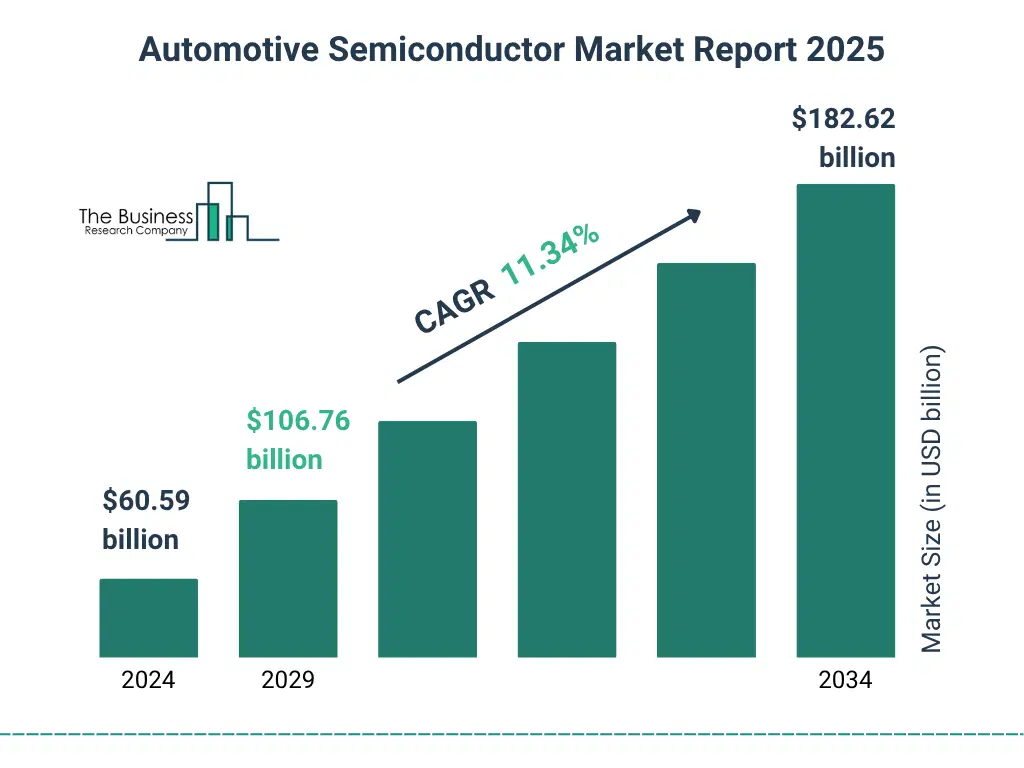
automotive semiconductors Market Drivers
The key drivers of the automotive semiconductors market include:
Rising Number Of Connected Vehicles
The rising number of connected vehicles is expected to propel the automotive semiconductor market going forward. Connected vehicles refer to automobiles equipped with internet access and advanced communication technologies that enable real-time data exchange between vehicles, infrastructure, cloud services, and other connected systems, enhancing safety, efficiency, and user experience. Automotive semiconductors provide connected vehicles with powering sophisticated electronic control units, facilitating high-speed data processing, and ensuring reliable connectivity, thereby enhancing vehicle intelligence, safety, and overall driving experience. For instance, in October 2023, according to the Department for Science, Innovation and Technology (DSIT) UK-based ministerial department, the UK’s connected and automated mobility (CAM) sector, including self-driving vehicles, could reach a value of £42 billion ($54 billion) and create up to 38,000 jobs by 2035, with 40% of cars expected to have autonomous capabilities. Therefore, the rising number of connected vehicles is propelling the automotive semiconductor market. automotive semiconductors Market Restraints
The key restraints on the automotive semiconductors market include:
Rising Cybersecurity Threats In Connected Vehicles
The rising cybersecurity threats in connected vehicles are expected to hamper the automotive semiconductor market going forward. Automotive semiconductors are hampered by rising cybersecurity threats in connected vehicles, as increasing connectivity exposes critical electronic control systems to potential cyberattacks, data breaches, and unauthorized access. Consequently, rising cybersecurity threats in connected vehicles limit consumer trust, necessitate extensive security measures, and increase compliance burdens for manufacturers. This challenge restrains market growth, as it demands continuous advancements in cybersecurity solutions, elevates development costs, and prolongs the time-to-market for innovative semiconductor technologies. For example, in February 2024, according to Tata Elxsi, an India-based design and technology services company, autonomous vehicles remain highly connected through the internet and cellular networks, making them vulnerable to cyber threats such as hacking, data breaches, and unauthorized access to real-time location data. A cyberattack on a connected vehicle could lead to system malfunctions, remote control takeover, tampering with sensor data, or even crashes, posing significant risks to passenger safety and public security. Therefore, rising cybersecurity threats in connected vehicles could hamper the automotive semiconductor market's growth.