

Automotive Thermal Management Market Report 2026
Global Outlook – By Component (Compressor, Heat Exchanger, Electric Pump, Electric Fan, Thermoelectric Module, Heating, Ventilation, And Air Conditioning System, Sensor And Controller, Thermal Interface Material, Other Components), By Vehicle Type (Passenger Cars, Light Commercial Vehicles, Heavy Commercial Vehicles), By Sales Channel (Original Equipment Manufacturer, Aftermarket), By Application (Engine Cooling, Cabin Thermal Management, Transmission Thermal Management, Battery Thermal Management, Motor And Power Electronics Thermal Management, Waste Heat Recovery And Exhaust Gas Recirculation Thermal Management), By End User (Passenger Transportation, Logistics And Freight Transportation, Construction And Mining, Other End Users) – Market Size, Trends, Strategies, and Forecast to 2030
Automotive Thermal Management Market Overview
• Automotive Thermal Management market size has reached to $77.14 billion in 2025 • Expected to grow to $107.68 billion in 2030 at a compound annual growth rate (CAGR) of 6.8% • Growth Driver: Rising Electric Vehicle Adoption Driving The Market Growth Due To Increasing Demand For Efficient Power Conversion And Energy Management • Market Trend: Advancements In Next-Generation EV Heat Pump Technology Enhancing Energy Efficiency And Driving Range • North America was the largest region in 2025 and Asia-Pacific is the fastest growing region.What Is Covered Under Automotive Thermal Management Market?
Automotive thermal management refers to the systems and technologies used in vehicles to control and regulate the temperature of critical components such as the engine, battery, power electronics, cabin, and drivetrain. It ensures optimal operating conditions by managing heat generation, transfer, and dissipation to improve vehicle performance, efficiency, safety, and durability. The main components of automotive thermal management include compressor, heat exchanger, electric pump, electric fan, thermoelectric module, heating, ventilation, and air conditioning system, sensor and controller, thermal interface material, and other components. Compressor refers to a thermal management component that circulates refrigerant within the vehicle's climate control system to regulate cabin and component temperatures efficiently. These systems are installed in passenger cars, light commercial vehicles, and heavy commercial vehicles and are supplied through original equipment manufacturer and aftermarket channels. The various applications involved are engine cooling, cabin thermal management, transmission thermal management, battery thermal management, motor and power electronics thermal management, and waste heat recovery and exhaust gas recirculation thermal management, and they are used by several end users such as passenger transportation, logistics and freight transportation, construction and mining, and others.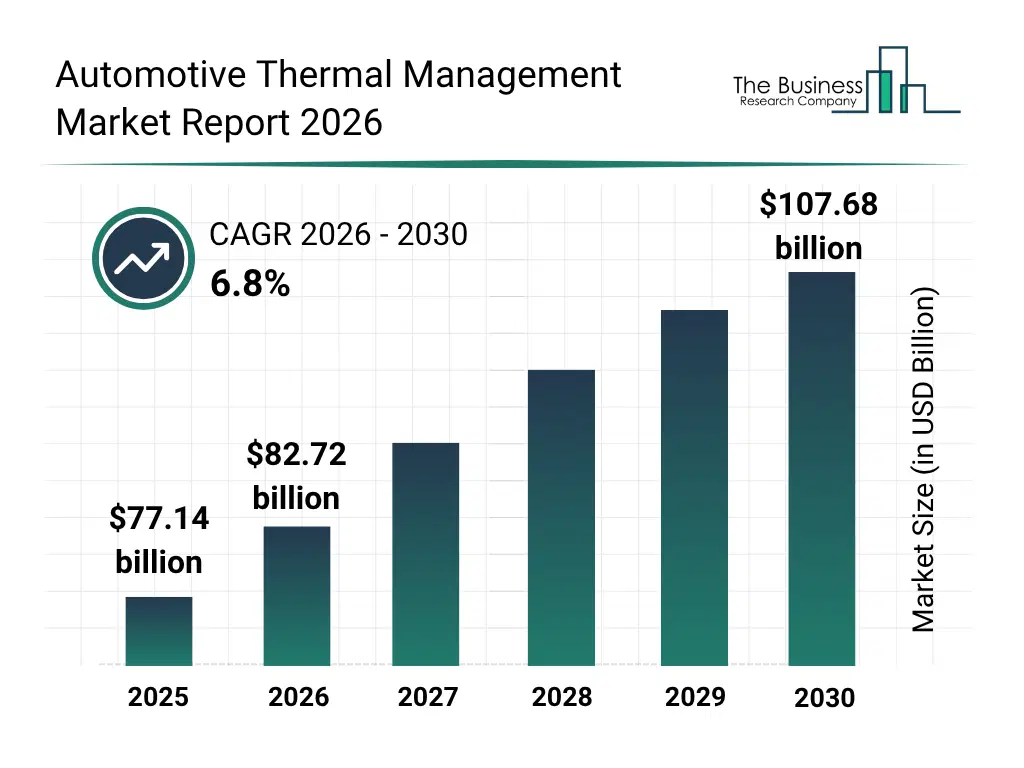
What Is The Automotive Thermal Management Market Size and Share 2026?
The automotive thermal management market size has grown strongly in recent years. It will grow from $77.14 billion in 2025 to $82.72 billion in 2026 at a compound annual growth rate (CAGR) of 7.2%. The growth in the historic period can be attributed to increasing vehicle production, growing demand for engine cooling efficiency, rising adoption of passenger comfort systems, expansion of automotive HVAC installations, increasing demand for durable thermal components.What Is The Automotive Thermal Management Market Growth Forecast?
The automotive thermal management market size is expected to see strong growth in the next few years. It will grow to $107.68 billion in 2030 at a compound annual growth rate (CAGR) of 6.8%. The growth in the forecast period can be attributed to rising electric vehicle production, growing demand for battery thermal management systems, increasing adoption of heat pump technologies, expanding use of advanced cooling materials, increasing focus on vehicle energy efficiency. Major trends in the forecast period include increasing adoption of integrated thermal management systems, growing demand for heat pump based thermal solutions, rising integration of multi circuit cooling architectures, expansion of advanced thermal interface materials, increasing focus on high efficiency refrigerant technologies.
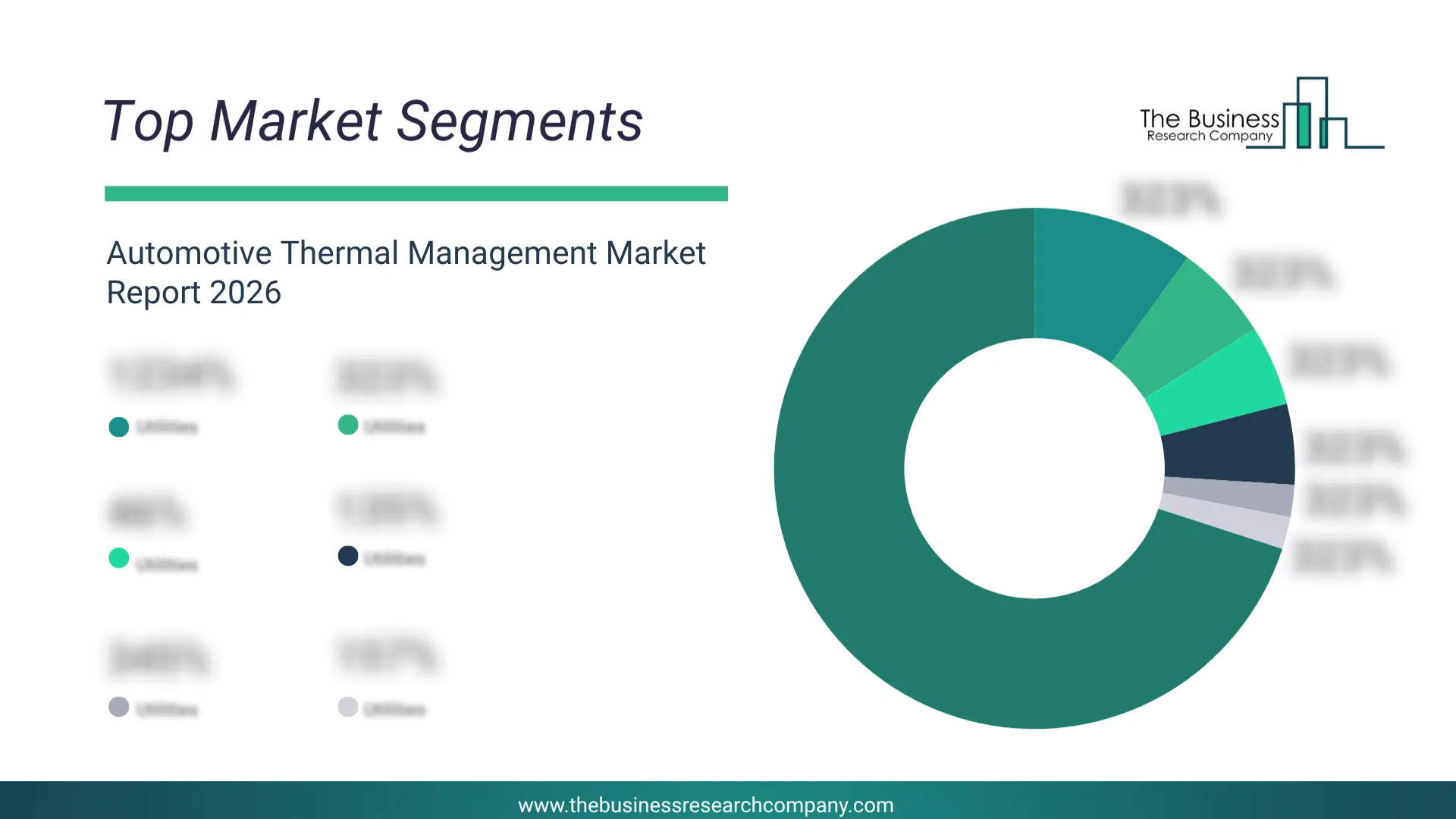
Global Automotive Thermal Management Market Segmentation
2) By Vehicle Type: Passenger Cars, Light Commercial Vehicles, Heavy Commercial Vehicles 3) By Sales Channel: Original Equipment Manufacturer, Aftermarket 4) By Application: Engine Cooling, Cabin Thermal Management, Transmission Thermal Management, Battery Thermal Management, Motor And Power Electronics Thermal Management, Waste Heat Recovery And Exhaust Gas Recirculation Thermal Management 5) By End User: Passenger Transportation, Logistics And Freight Transportation, Construction And Mining, Other End Users Subsegments: 1) By Compressor: Fixed Displacement Compressor, Variable Displacement Compressor, Electric Compressor, Scroll Compressor, Rotary Compressor 2) By Heat Exchanger: Radiator, Condenser, Evaporator, Oil Cooler, Charge Air Cooler 3) By Electric Pump: Electric Coolant Pump, Electric Water Pump, Electric Oil Pump, Electric Vacuum Pump, Auxiliary Electric Pump 4) By Electric Fan: Radiator Cooling Fan, Condenser Cooling Fan, Engine Cooling Fan, Dual Cooling Fan, Brushless Electric Fan 5) By Thermoelectric Module: Single Stage Thermoelectric Module, Multi Stage Thermoelectric Module, Cooling Thermoelectric Module, Heating Thermoelectric Module, Reversible Thermoelectric Module 6) By Heating, Ventilation, And Air Conditioning System: Automatic Climate Control System, Manual Climate Control System, Dual Zone Climate Control System, Multi Zone Climate Control System, Heat Pump System 7) By Sensor And Controller: Temperature Sensor, Pressure Sensor, Humidity Sensor, Thermal Control Unit, Electronic Thermal Controller 8) By Thermal Interface Material: Thermal Grease, Thermal Pad, Thermal Adhesive, Phase Change Material, Gap Filler Material 9) By Other Components: Coolant Hose, Expansion Tank, Control Valve, Coolant Reservoir, Air Duct SystemWhat Is The Driver Of The Automotive Thermal Management Market?
The rising adoption of electric vehicles (EVs) is expected to propel the growth of the automotive thermal management market going forward. Electric vehicles are automobiles powered wholly or partially by electric motors using energy stored in rechargeable battery systems. The adoption of electric vehicles is increasing due to growing environmental concerns, as consumers, businesses, and governments seek to reduce greenhouse gas emissions, improve air quality, and decrease dependence on fossil fuels through cleaner and more sustainable transportation solutions. Automotive thermal management optimizes electric vehicles by efficiently regulating battery, motor, and cabin temperatures to improve energy efficiency, extend driving range, and maintain consistent performance across operating conditions. For instance, in January 2025, according to the Cox Automotive, a US-based system software company, electric vehicle (EV) sales were revised to 1,212,758 units in 2023, marking a 49% increase from 2022, and continued their upward trend in 2024, growing by 7.3% to reach 1,301,411 units. Therefore, the rising adoption of electric vehicles is driving the growth of the automotive thermal management industry.Key Players In The Global Automotive Thermal Management Market
Major companies operating in the automotive thermal management market are Robert Bosch GmbH, ZF Friedrichshafen AG, DENSO Corporation, AISIN CORPORATION, Continental AG, Valeo SA, Aptiv PLC, Schaeffler AG, MAHLE GmbH, BorgWarner Inc., Marelli Holdings Co. Ltd. Holdings Co. Ltd., Dana Incorporated, Rheinmetall AG, Hankook & Company Group, Eberspächer Gruppe GmbH & Co. KG, Nidec Corporation, Webasto Group, Johnson Electric Holdings Limited, Modine Manufacturing Company, Tata AutoComp Systems Ltd., Sanden Corporation, Gentherm Incorporated, T.RAD Co. Ltd., VOSS Automotive GmbH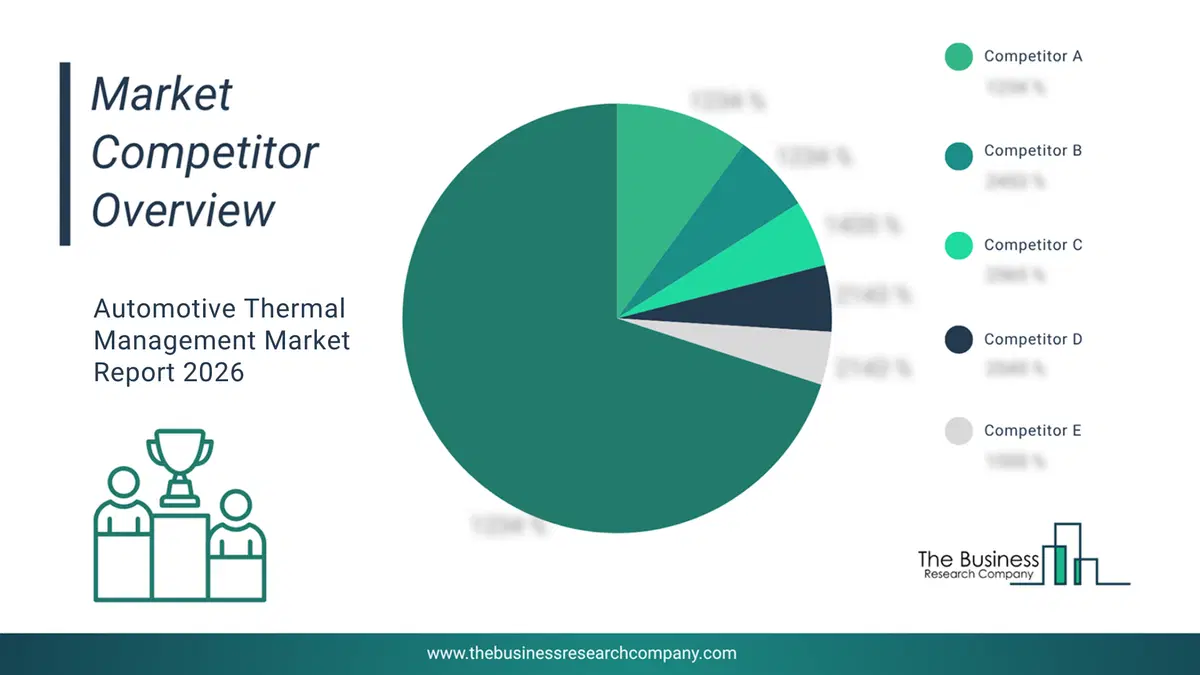
This chart is for illustrative purposes; the full report includes a detailed competitor analysis and comprehensive overview of the top 10 companies in the market.
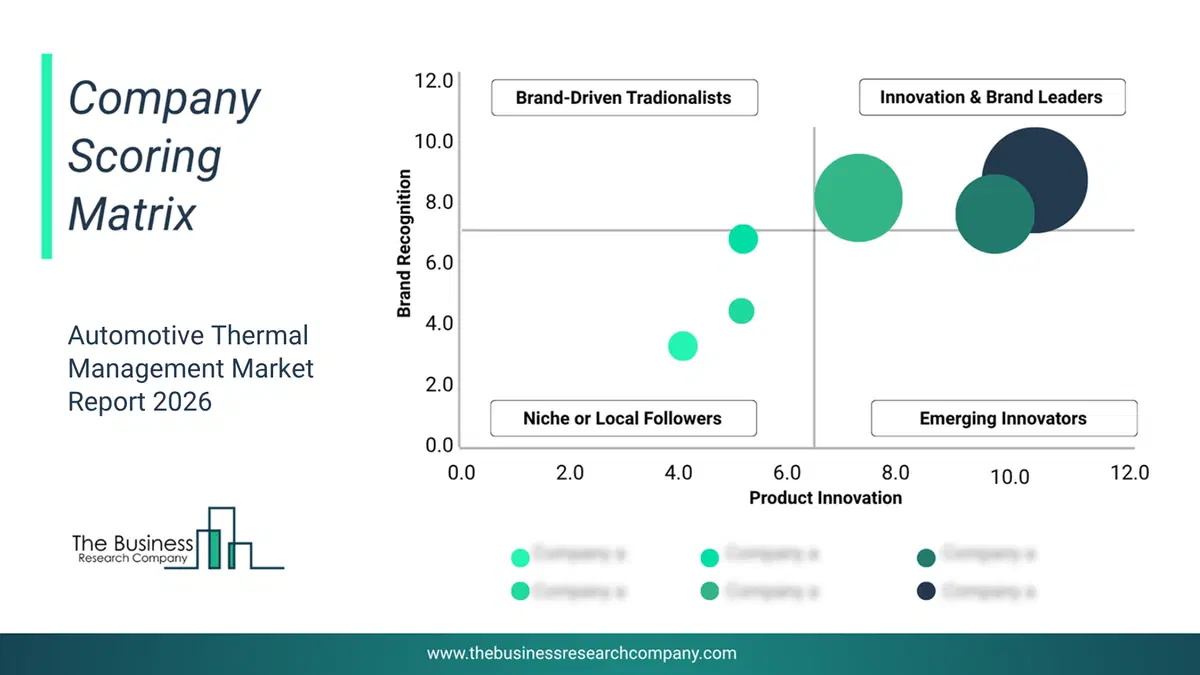
This chart maps companies by product innovation and brand strength, with bubble size indicating relative revenue, helping identify market leaders, challengers, and niche players. This is an illustrative chart; the full report provides a complete and accurate competitive analysis.
Global Automotive Thermal Management Market Trends and Insights
Major companies operating in the automotive thermal management market are focusing on developing innovative solutions, such as next-generation electric vehicle (EV) heat pump systems to enhance cabin comfort, optimize battery temperature control, and improve overall vehicle energy efficiency and driving range. EV heat pump systems are advanced thermal management technologies that efficiently regulate heating and cooling by transferring heat between vehicle components, offering a more energy-efficient alternative to traditional resistance heating and conventional HVAC systems used in earlier vehicle architectures. For instance, in August 2025, Hanon Systems Co. Ltd., a South Korea-based automotive parts company, launched the world’s first 4th generation EV heat pump system designed to significantly improve energy efficiency and driving range in electric vehicles. The system enhances thermal performance through advanced heat recovery and optimized energy distribution, allowing more efficient cabin heating and battery thermal regulation even in extreme weather conditions. It integrates improved system architecture that reduces energy losses compared to earlier-generation heat pumps, supporting longer EV range and better overall vehicle efficiency.What Are Latest Mergers And Acquisitions In The Automotive Thermal Management Market?
In April 2024, Naxnova Technologies Private Limited, an India-based design and technology company, acquired Advanced Thermal Technologies (ATT) for an undisclosed amount. With this acquisition, Naxnova aims to strengthen its thermal management technology portfolio, expand its presence in the electric vehicle sector, and enhance its capabilities in advanced heating and battery thermal solutions for automotive applications. ATT Advanced Thermal Technologies GmbH is an Austria-based company that specializes in providing comprehensive automotive thermal management solutions.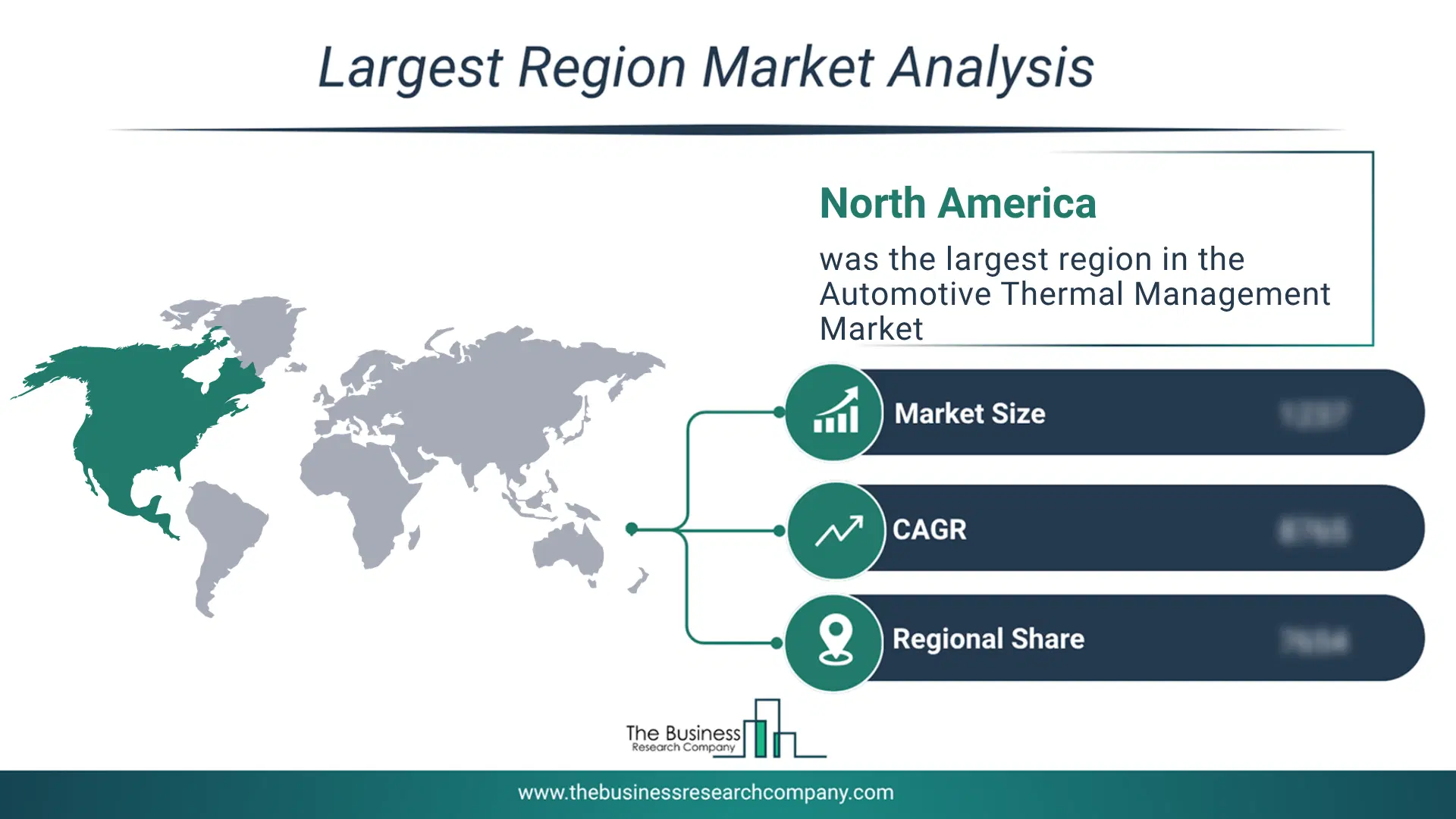
Regional Outlook/Insights
North America was the largest region in the automotive thermal management market in 2025. Asia-Pacific is expected to be the fastest-growing region in the forecast period. The regions covered in this market report are Asia-Pacific, South East Asia, Western Europe, Eastern Europe, North America, South America, Middle East, Africa. The countries covered in this market report are Australia, Brazil, China, France, Germany, India, Indonesia, Japan, Taiwan, Russia, South Korea, UK, USA, Canada, Italy, Spain.What Defines the Automotive Thermal Management Market?
The automotive thermal management market consists of sales of coolant systems, battery cooling plates, thermal management fluids, refrigeration units, and insulation materials. Values in this market are ‘factory gate’ values, that is the value of goods sold by the manufacturers or creators of the goods, whether to other entities (including downstream manufacturers, wholesalers, distributors and retailers) or directly to end customers. The value of goods in this market includes related services sold by the creators of the goods.How is Market Value Defined and Measured?
The market value is defined as the revenues that enterprises gain from the sale of goods and/or services within the specified market and geography through sales, grants, or donations in terms of the currency (in USD unless otherwise specified). The revenues for a specified geography are consumption values that are revenues generated by organizations in the specified geography within the market, irrespective of where they are produced. It does not include revenues from resales along the supply chain, either further along the supply chain or as part of other products.
This chart presents market attractiveness based on a quantitative evaluation of growth, competition, strategic alignment, and risk, offering a clear view of opportunity areas for decision-making. This chart is for illustrative purposes; the full report contains the complete analysis.

This chart highlights the Total Addressable Market (TAM) by estimating the maximum revenue opportunity using an assumption-driven approach, supporting strategic planning and opportunity sizing across markets. The chart is illustrative; the full report provides a more comprehensive analysis.
What Key Data and Analysis Are Included in the Automotive Thermal Management Market Report 2026?
The automotive thermal management market research report is one of a series of new reports from The Business Research Company that provides automotive thermal management market statistics, including automotive thermal management industry global market size, regional shares, competitors with a automotive thermal management market share, detailed automotive thermal management market segments, market trends and opportunities, and any further data you may need to thrive in the automotive thermal management industry. This automotive thermal management market research report delivers a complete perspective of everything you need, with an in-depth analysis of the current and future scenario of the industry.Automotive Thermal Management Market Report Forecast Analysis
| Report Attribute | Details |
|---|---|
| Market Size Value In 2026 | $82.72 billion |
| Revenue Forecast In 2030 | $107.68 billion |
| Growth Rate | CAGR of 6.8% from 2026 to 2030 |
| Base Year For Estimation | 2025 |
| Actual Estimates/Historical Data | 2020-2025 |
| Forecast Period | 2026 - 2030 |
| Market Representation | Revenue in USD Billion and CAGR from 2026 to 2030 |
| Segments Covered | Component, Vehicle Type, Sales Channel, Application, End User |
| Regional Scope | Asia-Pacific, Western Europe, Eastern Europe, North America, South America, Middle East, Africa |
| Country Scope | The countries covered in the report are Australia, Brazil, China, France, Germany, India, Indonesia, Japan, Taiwan, Russia, South Korea, UK, USA, Canada, Italy, Spain. |
| Key Companies Profiled | Robert Bosch GmbH, ZF Friedrichshafen AG, DENSO Corporation, AISIN CORPORATION, Continental AG, Valeo SA, Aptiv PLC, Schaeffler AG, MAHLE GmbH, BorgWarner Inc., Marelli Holdings Co. Ltd. Holdings Co. Ltd., Dana Incorporated, Rheinmetall AG, Hankook & Company Group, Eberspächer Gruppe GmbH & Co. KG, Nidec Corporation, Webasto Group, Johnson Electric Holdings Limited, Modine Manufacturing Company, Tata AutoComp Systems Ltd., Sanden Corporation, Gentherm Incorporated, T.RAD Co. Ltd., VOSS Automotive GmbH |
| Customization Scope | Request for Customization |
| Pricing And Purchase Options | Explore Purchase Options |