

Automotive Tire Market Report 2026
Global Outlook – By Rim Size (Less Than 15 Inches; 15 To 20 Inches; More Than 20 Inches), By Vehicle Type (Passenger Vehicle; Commercial Vehicle; Electric Vehicle), By Manufacturing (Radial Tire; Bias Tire), By Distribution Channel (Original Equipment Manufacturer (Oem); Aftermarket), By Season Type (Summer; Winter; All Seasons) – Market Size, Trends, Strategies, and Forecast to 2030
Automotive Tire Market Overview
• Automotive Tire market size has reached to $143.87 billion in 2025 • Expected to grow to $189.53 billion in 2030 at a compound annual growth rate (CAGR) of 5.7% • Growth Driver: Electric And Hybrid Vehicles Drive Growth In The Automotive Tire Market • Market Trend: Automotive Tire Market Witnesses Emphasis On Tire Pressure Sensor Technology • Asia-Pacific was the largest region in 2025.Market Gains By 2030 – Top Opportunities By Segment
Market Gain identifies the most promising market opportunities by highlighting the segments or products expected to generate the highest incremental revenue growth over the next five years.
What Is Covered Under Automotive Tire Market?
An automotive tire refers to an element consisting of a rubber ring around the rim of an automobile wheel. Automotive tires are used in automobiles to support the weight of the vehicle, absorb road shocks, transmit traction, torque, and braking forces to the road surface and maintain and change the direction of travel. Tires are mounted on rims and pressurized air is pumped into them. The main rim types of automotive tires include less than 15 inches, 15 to 20 inches, and more than 20 inches. Less than 15 inches refers to automotive tires for vehicles with rim sizes less than 15 inches. The various vehicle types include passenger vehicles, commercial vehicles, and electric vehicles. The automotive tires manufacturing types include radial tires and bias tires. The different distribution channel of automotive tires includes original equipment manufacturer (OEM) and aftermarket for season types such as summer, winter and all-seasons.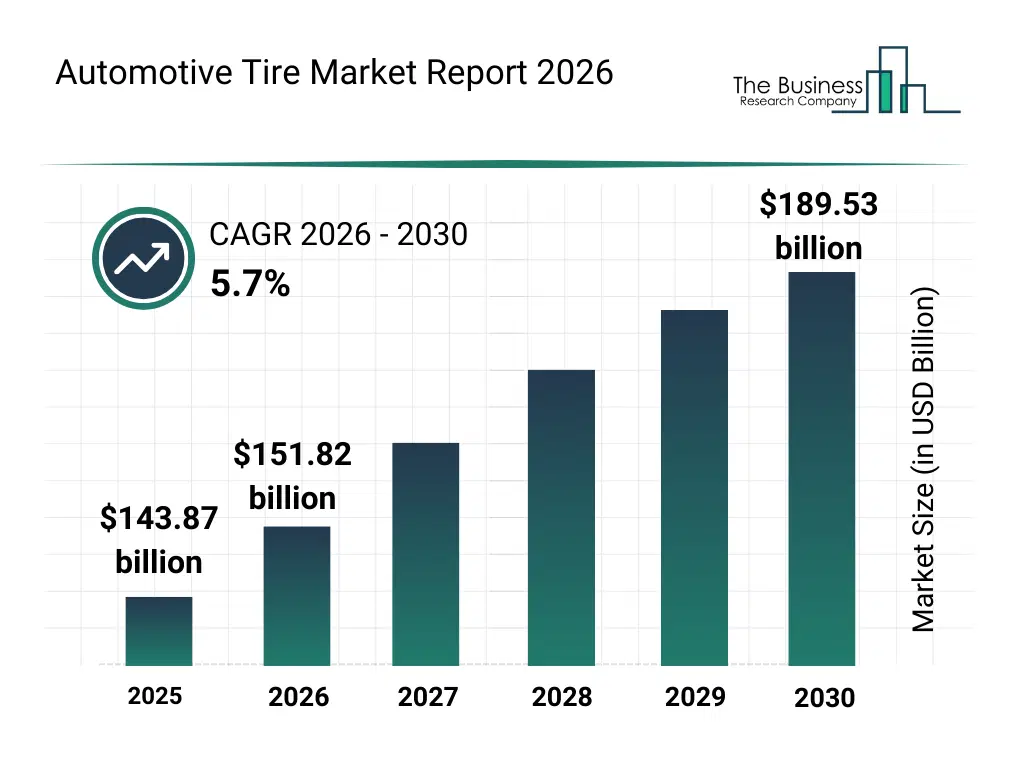
What Is The Automotive Tire Market Size and Share 2026?
The automotive tire market size has grown strongly in recent years. It will grow from $143.87 billion in 2025 to $151.82 billion in 2026 at a compound annual growth rate (CAGR) of 5.5%. The growth in the historic period can be attributed to expansion of global vehicle parc, growth of radial tire manufacturing, rising demand for replacement tires, standardization of tire safety regulations, increasing vehicle ownership rates.What Is The Automotive Tire Market Growth Forecast?
The automotive tire market size is expected to see strong growth in the next few years. It will grow to $189.53 billion in 2030 at a compound annual growth rate (CAGR) of 5.7%. The growth in the forecast period can be attributed to increasing penetration of electric vehicles, rising demand for high-performance and specialty tires, expansion of connected vehicle technologies, growing focus on tire sustainability, increasing adoption of smart tire monitoring systems. Major trends in the forecast period include increasing demand for low rolling resistance tires, rising adoption of tires designed for electric vehicles, growing use of sustainable and recycled materials, expansion of smart and sensor-enabled tires, enhanced focus on all-season performance.
Global Automotive Tire Market Segmentation
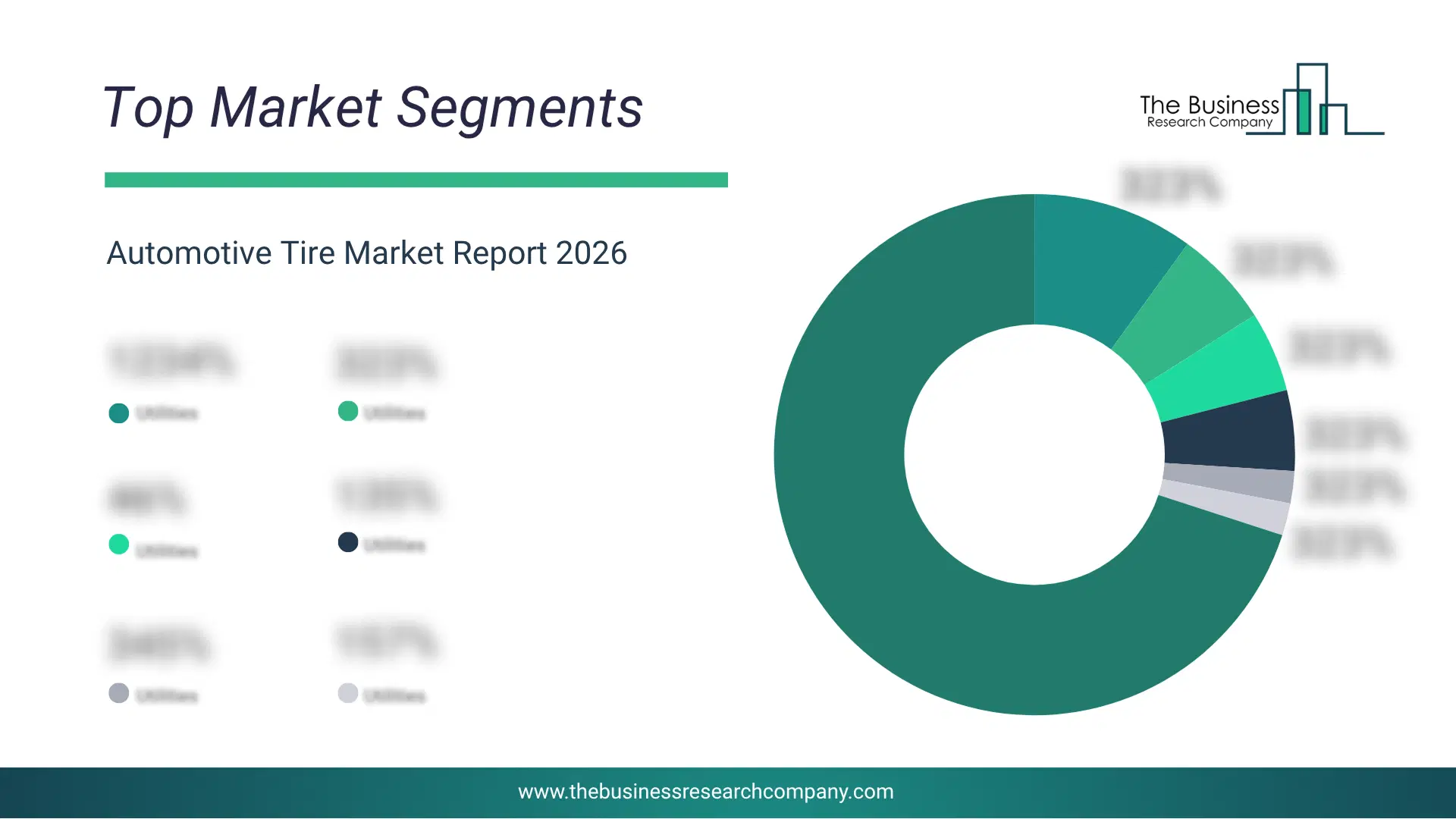
1) By Rim Size: Less Than 15 Inches, 15 To 20 Inches, More Than 20 Inches 2) By Vehicle Type: Passenger Vehicle, Commercial Vehicle, Electric Vehicle 3) By Manufacturing: Radial Tire, Bias Tire 4) By Distribution Channel: Original Equipment Manufacturer (Oem), Aftermarket 5) By Season Type: Summer, Winter, All Seasons Subsegments: 1) By Less Than 15 Inches: Passenger Car Tires, Light Truck Tires, Motorcycle Tires, Other Specialty Tires 2) By 15 To 20 Inches: Passenger Car Tires, Sport Utility Vehicle (SUV) Tires, Light Truck Tires, Performance Tires 3) By More Than 20 Inches: Sport Utility Vehicle (SUV) Tires, Light Truck Tires, Performance Tires, Heavy-Duty Truck Tires The top segments in the automotive tire market will be: • Less Than 15 Inches will reach $89.27 Billion by 2030. • 15 To 20 Inches will reach $69.03 Billion by 2030. • More Than 20 Inches will reach $29.41 Billion by 2030.What Is The Driver Of The Automotive Tire Market?
The development of electric and hybrid vehicles is expected to propel the growth of the automotive tire market going forward. An electric vehicle is a type of automobile that is powered by electricity, typically through one or more electric motors, rather than an internal combustion engine that relies on gasoline or diesel fuel. Hybrid vehicles a re a type of automobile that combines two or more distinct power sources to propel the vehicle. Automotive tires in electric and hybrid vehicles play a crucial role in optimizing energy efficiency, range, and overall performance, addressing specific requirements associated with the distinct characteristics of electric and hybrid drivetrains. For instance, in April 2025, according to the International Council on Clean Transportation (ICCT), a US-based an independent, nonprofit research organization, passenger electric vehicle (battery-electric + plug-in hybrid) sales reached about 1.56 million in 2024, and EVs accounted for 10% of all light-duty vehicle sales up from a lower percentage in 2023. Therefore, the development of electric and hybrid vehicles is driving the growth of the automotive tire industry.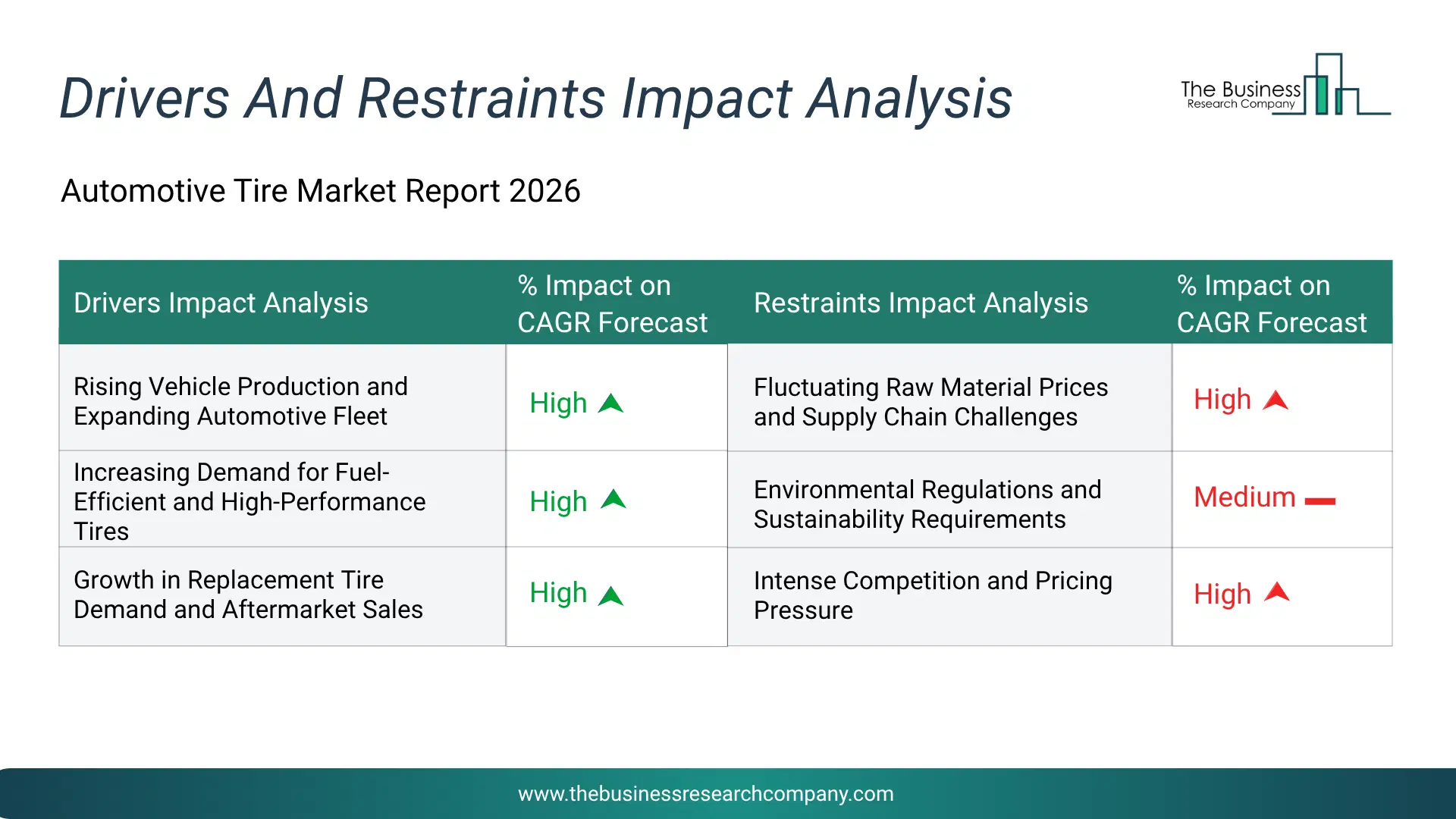
Infographic Chart Showing Key Market Drivers Analysis And Restraints For Automotive Tire Market
The chart presents an impact analysis of key drivers and restraints, quantifying their relative influence on the market's growth rate and helping assess the balance between growth enablers and limiting factors. This chart offers a high-level perspective; the full report contains more detailed insights.
How Will The Drivers Impact Growth In The Global Automotive Tire Market?
• Rising Vehicle Production and Expanding Automotive Fleet (High) – During the forecast period, the rising vehicle production and expanding automotive fleet is expected to become a key growth driver for the automotive tire market by 2030. The steady growth in global vehicle production, particularly in emerging economies, is a primary factor supporting demand for automotive tires. Increasing urbanization, rising disposable incomes, and expanding mobility needs are driving higher sales of passenger cars, commercial vehicles, and two-wheelers. As the automotive fleet expands, replacement cycles for tires also increase, creating sustained aftermarket demand. Additionally, the growth of logistics, e-commerce, and transportation services is boosting the need for commercial vehicle tires, further strengthening overall market expansion. • Increasing Demand for Fuel-Efficient and High-Performance Tires (High) – During the forecast period, the increasing demand for fuel-efficient and high-performance tires is expected to emerge as a major factor driving the expansion of the automotive tire market by 2030. Consumers and fleet operators are increasingly prioritizing fuel efficiency, safety, and durability, leading to growing demand for advanced tire technologies. Low rolling resistance tires, radial tires, and smart tires with embedded sensors are gaining traction due to their ability to improve mileage, reduce emissions, and enhance driving performance. Automakers are also collaborating with tire manufacturers to develop vehicle-specific tire solutions, further accelerating innovation and adoption of high-performance tire products across segments. • Growth in Replacement Tire Demand and Aftermarket Sales (High) – During the forecast period, the growth in replacement tire demand and aftermarket sales is expected to act as a key growth catalyst for the automotive tire market by 2030. The replacement tire segment represents a significant portion of the overall automotive tire market, driven by wear-and-tear cycles, road conditions, and vehicle usage patterns. Increasing vehicle age in several regions is further boosting aftermarket tire demand. Organized retail expansion, online tire sales platforms, and improved distribution networks are making tire replacement more accessible to consumers. This consistent replacement demand provides stability and long-term growth opportunities for tire manufacturers and distributors.How Will The Restraints Impact Growth In The Global Automotive Tire Market?
• Fluctuating Raw Material Prices and Supply Chain Challenges (High) – During the forecast period, the automotive tire industry depends heavily on raw materials such as natural rubber, synthetic rubber, carbon black, steel, and chemicals. Fluctuations in raw material prices due to supply constraints, geopolitical issues, and changes in commodity markets can increase manufacturing costs and impact profit margins. Additionally, disruptions in global supply chains, transportation delays, and logistics challenges can affect production schedules and inventory availability. These cost and supply uncertainties act as restraints on market growth and operational stability. • Environmental Regulations and Sustainability Requirements (High) – During the forecast period, the increasing environmental concerns and stricter regulations related to emissions, tire disposal, and manufacturing processes are creating challenges for tire manufacturers. Companies are required to invest in sustainable materials, recycling technologies, and eco-friendly production methods to meet regulatory standards. While these initiatives encourage innovation, they also increase research, development, and compliance costs. The need to balance sustainability goals with cost efficiency creates additional pressure on manufacturers and may limit growth opportunities in certain segments. • Intense Competition and Pricing Pressure (High) – During the forecast period, intense competition and pricing pressure is expected to restrain the growth of the automotive tire market by 2030. The market is highly competitive, with numerous global and regional manufacturers competing on price, product quality, and technological innovation. Continuous pricing pressure, particularly in the replacement tire segment, limits profit margins and reduces manufacturers' ability to recover rising raw material and production costs. Additionally, the presence of low-cost tire producers and counterfeit products in some markets further intensifies competition, posing challenges to long-term profitability.Key Players In The Global Automotive Tire Market
Major companies operating in the automotive tire market are Continental AG, Bridgestone Corporation, Michelin Group, Goodyear Tire & Rubber Company, Nankang Rubber Tire Corp. Ltd., Sumitomo Rubber Industries Ltd., Hankook & Company Co. Ltd., Pirelli & C. S.p.A, The Yokohama Rubber Co. Ltd., MRF Limited, Trelleborg AB, Toyo Tire Corporation, Sailun Group Co. Ltd., Cheng Shin Rubber Ind. Co. Ltd., Cheng Shin Rubber Industry Co., Apollo Tyres Ltd., Giti Tire Global Trading Pte. Ltd., Shandong Linglong Group Co. Ltd., Kumho Tire Co. Inc., Linglong Tire Co. Ltd., Cooper Tire & Rubber Company, Nexen Tire Corporation, Nokian Tyres plc, JK Tyre & Industries Ltd., CEAT Limited, Triangle Tyre Co. Ltd., Double Coin Holdings Ltd., Aeolus Tyre Co. Ltd., Salsons Impex Pvt. Ltd., Shinko Tires USA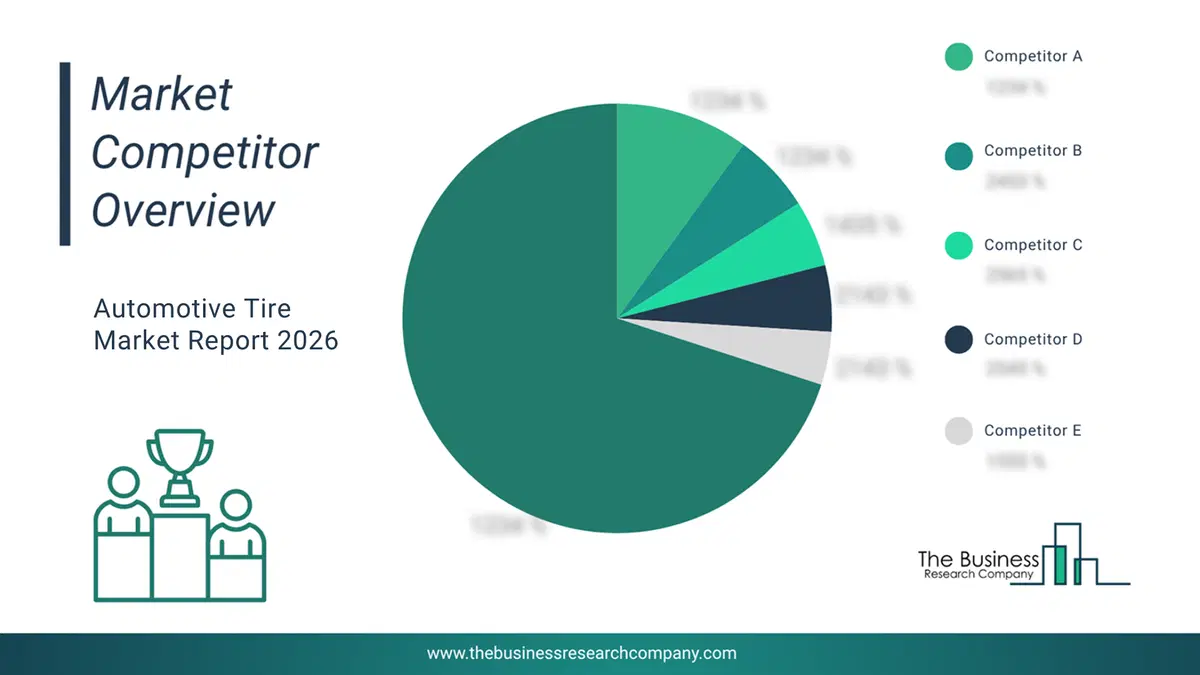
This chart is for illustrative purposes; the full report includes a detailed competitor analysis and comprehensive overview of the top 10 companies in the market.
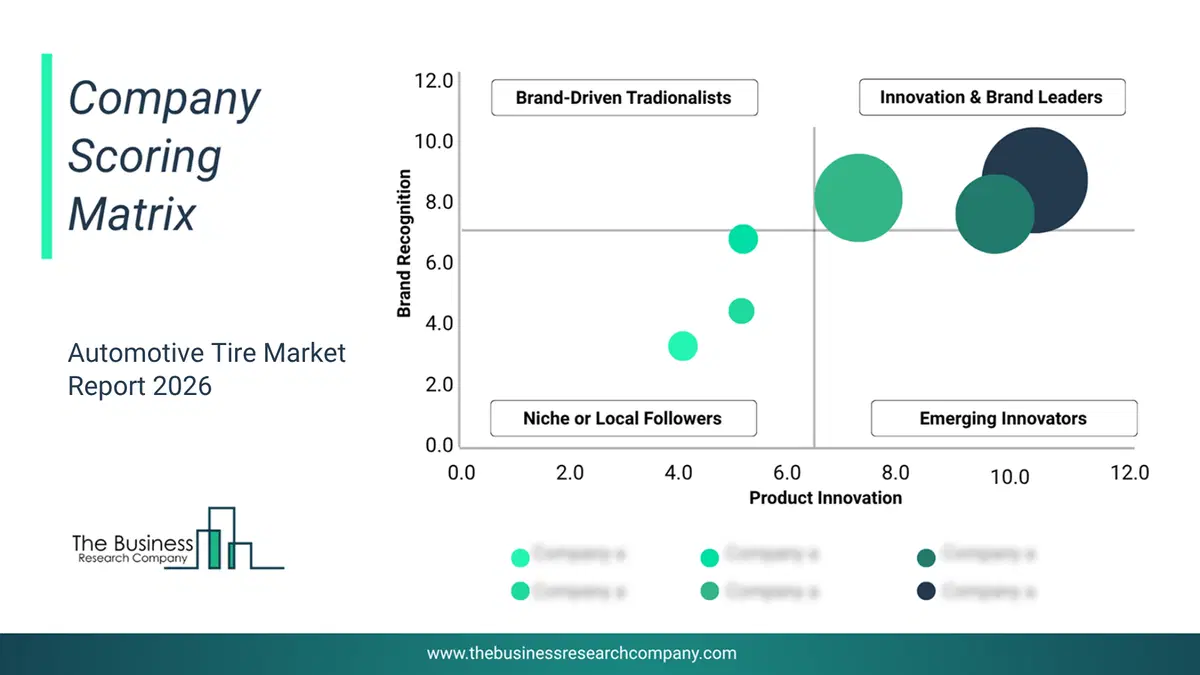
This chart maps companies by product innovation and brand strength, with bubble size indicating relative revenue, helping identify market leaders, challengers, and niche players. This is an illustrative chart; the full report provides a complete and accurate competitive analysis.
Global Automotive Tire Market Trends and Insights
Major companies operating in the automotive tire market are focused on developing innovative solutions, such as tire pressure sensor, to gain a competitive edge in the market. A tire pressure sensor, also known as a TPMS sensor, is a small electronic device installed in each wheel of a vehicle's tire pressure monitoring system (TPMS). For instance, in September 2023, Infineon Technologies AG, a Germany-based semiconductor manufacturer, launched XENSIV SP49 tire pressure monitoring sensor. It combines pressure and temperature sensors along with an application-specific integrated circuit (ASIC) for enhanced functionality and performance. It is equipped with powerful 32-bit Arm M0+ core that enables advanced tire features like on-tire auto-position sensing, tire inflation assistance, tire blowout detection, and load detection.What Are Latest Mergers And Acquisitions In The Automotive Tire Market?
In January 2024, Wonderland Tire, a Michigan-based company, specializes in providing a range of tire services and products, acquired Carter Tire & Automotive for an undisclosed amount. the acquisition allows Wonderland Tire to expand its geographical footprint into a new market area located between its existing stores in western Michigan and Chicago, Illinois. This location is strategically advantageous for increasing accessibility to customers and enhancing service delivery in the region. Carter Tire & Automotive, an Indiana-based company, provides a comprehensive range of services and products in the automotive sector, primarily focusing on tires and auto repair.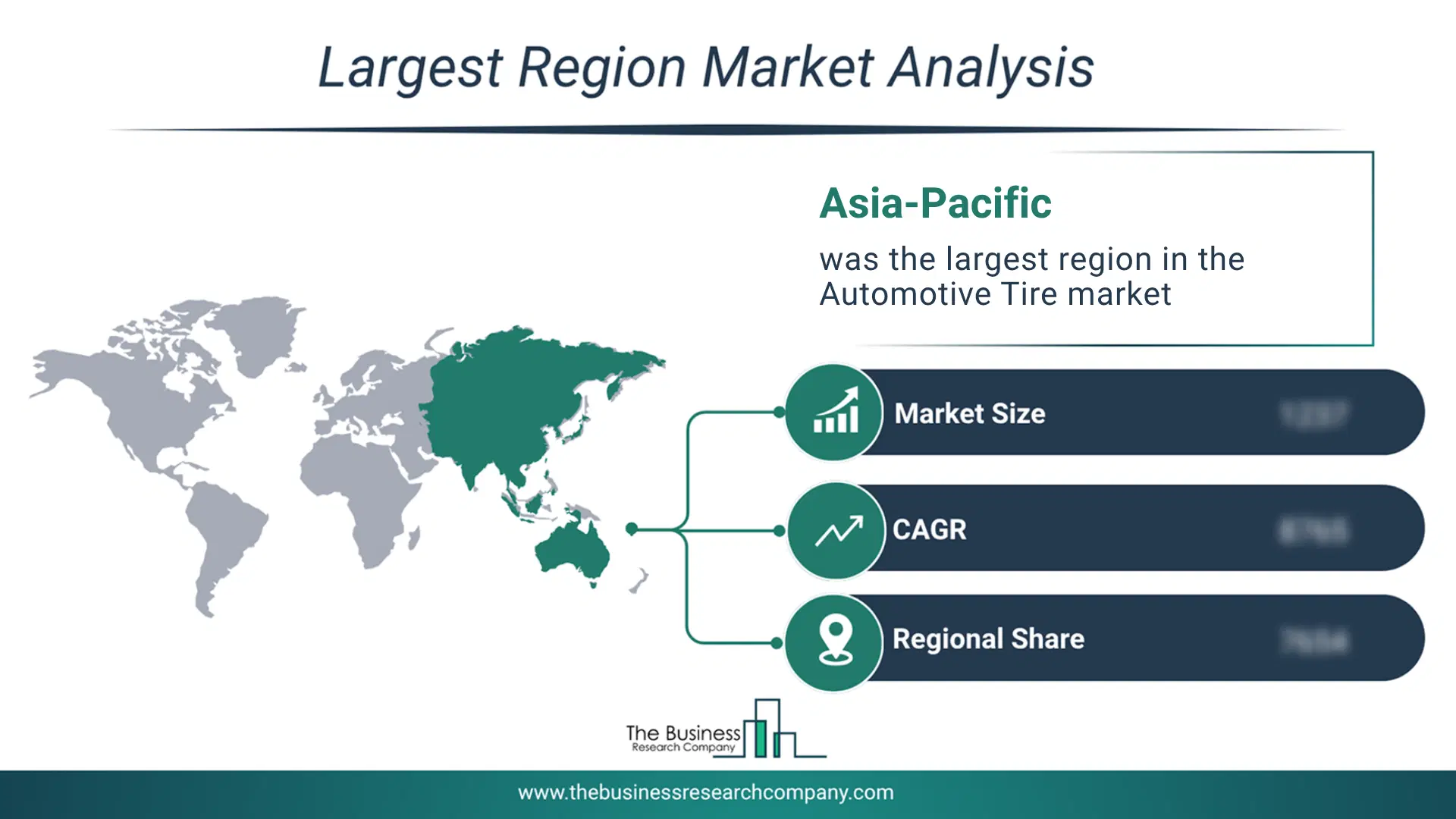
Regional Outlook
Asia-Pacific was the largest region in the automotive tire market in 2025. The regions covered in this market report are Asia-Pacific, South East Asia, Western Europe, Eastern Europe, North America, South America, Middle East, Africa. The countries covered in this market report are Australia; Brazil; China; France; Germany; India; Indonesia; Japan; Taiwan; Russia; South Korea; UK; USA; Canada; Italy; Spain.What Defines the Automotive Tire Market?
The automotive tire market consists of sales of synthetic polymers, natural rubbers, fillers, antioxidants, and antiozonants. Values in this market are ‘factory gate’ values, that is the value of goods sold by the manufacturers or creators of the goods, whether to other entities (including downstream manufacturers, wholesalers, distributors and retailers) or directly to end customers. The value of goods in this market includes related services sold by the creators of the goods.How is Market Value Defined and Measured?
The market value is defined as the revenues that enterprises gain from the sale of goods and/or services within the specified market and geography through sales, grants, or donations in terms of the currency (in USD unless otherwise specified). The revenues for a specified geography are consumption values that are revenues generated by organizations in the specified geography within the market, irrespective of where they are produced. It does not include revenues from resales along the supply chain, either further along the supply chain or as part of other products.
This chart presents market attractiveness based on a quantitative evaluation of growth, competition, strategic alignment, and risk, offering a clear view of opportunity areas for decision-making. This chart is for illustrative purposes; the full report contains the complete analysis.

This chart highlights the Total Addressable Market (TAM) by estimating the maximum revenue opportunity using an assumption-driven approach, supporting strategic planning and opportunity sizing across markets. The chart is illustrative; the full report provides a more comprehensive analysis.
What Key Data and Analysis Are Included in the Automotive Tire Market Report 2026?
The automotive tire market research report is one of a series of new reports from The Business Research Company that provides market statistics, including Market Report 2026?global market size, regional shares, competitors with the market share, detailed market segments, market trends and opportunities, and any further data you may need to thrive in the automotive tire Market Report 2026? The market research report delivers a complete perspective of everything you need, with an in-depth analysis of the current and future state of the Market Report 2026?Automotive Tire Market Report Forecast Analysis
| Report Attribute | Details |
|---|---|
| Market Size Value In 2026 | $151.82 billion |
| Revenue Forecast In 2030 | $189.53 billion |
| Growth Rate | CAGR of 5.5% from 2026 to 2030 |
| Base Year For Estimation | 2025 |
| Actual Estimates/Historical Data | 2020-2025 |
| Forecast Period | 2026 - 2030 |
| Market Representation | Revenue in USD Billion and CAGR from 2026 to 2030 |
| Segments Covered | Rim Size, Vehicle Type, Manufacturing, Distribution Channel, Season Type |
| Regional Scope | Asia-Pacific, Western Europe, Eastern Europe, North America, South America, Middle East, Africa |
| Country Scope | The countries covered in the report are Australia, Brazil, China, France, Germany, India, Indonesia, Japan, Taiwan, Russia, South Korea, UK, USA, Canada, Italy, Spain. |
| Key Companies Profiled | Continental AG, Bridgestone Corporation, Michelin Group, Goodyear Tire & Rubber Company, Nankang Rubber Tire Corp. Ltd., Sumitomo Rubber Industries Ltd., Hankook & Company Co. Ltd., Pirelli & C. S.p.A, The Yokohama Rubber Co. Ltd., MRF Limited, Trelleborg AB, Toyo Tire Corporation, Sailun Group Co. Ltd., Cheng Shin Rubber Ind. Co. Ltd., Cheng Shin Rubber Industry Co., Apollo Tyres Ltd., Giti Tire Global Trading Pte. Ltd., Shandong Linglong Group Co. Ltd., Kumho Tire Co. Inc., Linglong Tire Co. Ltd., Cooper Tire & Rubber Company, Nexen Tire Corporation, Nokian Tyres plc, JK Tyre & Industries Ltd., CEAT Limited, Triangle Tyre Co. Ltd., Double Coin Holdings Ltd., Aeolus Tyre Co. Ltd., Salsons Impex Pvt. Ltd., Shinko Tires USA |
| Customization Scope | Request for Customization |
| Pricing And Purchase Options | Explore Purchase Options |