
Automotive Wire And Cable Material Market Report 2026
Global Outlook – By Type (Polyvinyl Chloride (PVC), Polypropylene (PP), Cross-Linked Polyethylene (XLPE), Thermoplastic Polyurethane (TPU), Polyphenylene Ether (PPE), Other Types), By Component (Conductors, Insulation Materials, Filler and Bedding Materials, Protective Coatings and Tapes), By Application (Passenger Vehicles, Light Commercial Vehicles, Heavy Commercial Vehicles) – Market Size, Trends, Strategies, and Forecast to 2030
Automotive Wire And Cable Material Market Overview
• Automotive Wire And Cable Material market size has reached to $5.47 billion in 2025 • Expected to grow to $7.66 billion in 2030 at a compound annual growth rate (CAGR) of 7% • Growth Driver: Electric Vehicles Propel Growth Of The Automotive Wire And Cable Material Market • Market Trend: Advanced Silicone Rubber Transforms High-Voltage Automotive Cables • Asia-Pacific was the largest region in 2025.Market Gains By 2030 – Top Opportunities By Segment
Market Gain identifies the most promising market opportunities by highlighting the segments or products expected to generate the highest incremental revenue growth over the next five years.
What Is Covered Under Automotive Wire And Cable Material Market?
Automotive wire and cable materials refer to the types of materials used in the manufacturing of wires and cables that are specifically designed for use in vehicles. These materials are designed to meet specific performance criteria related to temperature resistance, flexibility, durability, and conductivity to ensure reliable operation in the automotive environment. The main types of automotive wire and cable material are polyvinyl chloride (PVC), polypropylene (PP), cross-linked polyethylene (XLPE), thermoplastic polyurethane (TPU), polyphenylene ether (PPE), and others. Polyvinyl chloride (PVC) is a versatile synthetic plastic polymer widely used in various industries due to its durability, flexibility, and resistance to environmental factors. The various components include connectors, terminals, wires, and others for different applications, such as passenger vehicles, light commercial vehicles, and heavy commercial vehicles.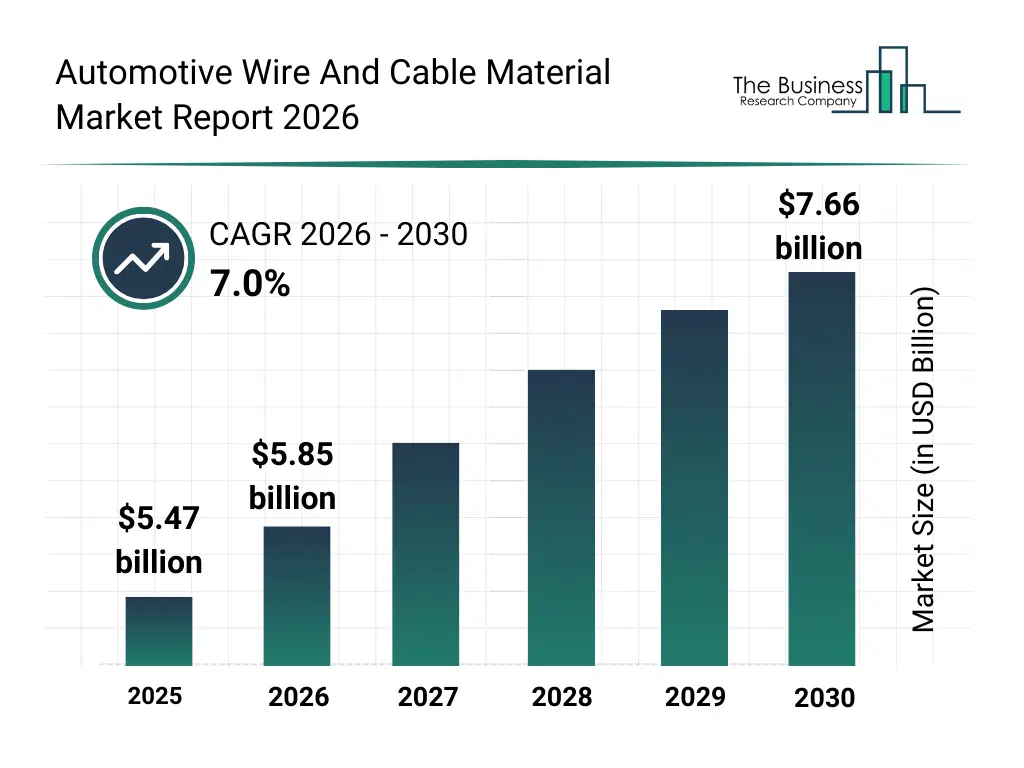
What Is The Automotive Wire And Cable Material Market Size and Share 2026?
The automotive wire and cable material market size has grown strongly in recent years. It will grow from $5.47 billion in 2025 to $5.85 billion in 2026 at a compound annual growth rate (CAGR) of 6.9%. The growth in the historic period can be attributed to automotive electrification growth, pvc insulation dominance, wiring harness standardization, passenger vehicle demand, material availability.What Is The Automotive Wire And Cable Material Market Growth Forecast?
The automotive wire and cable material market size is expected to see strong growth in the next few years. It will grow to $7.66 billion in 2030 at a compound annual growth rate (CAGR) of 7.0%. The growth in the forecast period can be attributed to electric vehicle penetration, advanced safety requirements, lightweight vehicle design, high-voltage wiring demand, smart vehicle connectivity. Major trends in the forecast period include growing demand for high-temperature materials, expansion of ev wiring systems, adoption of lightweight insulation materials, focus on fire-resistant cables, integration of data and power cables.
Global Automotive Wire And Cable Material Market Segmentation
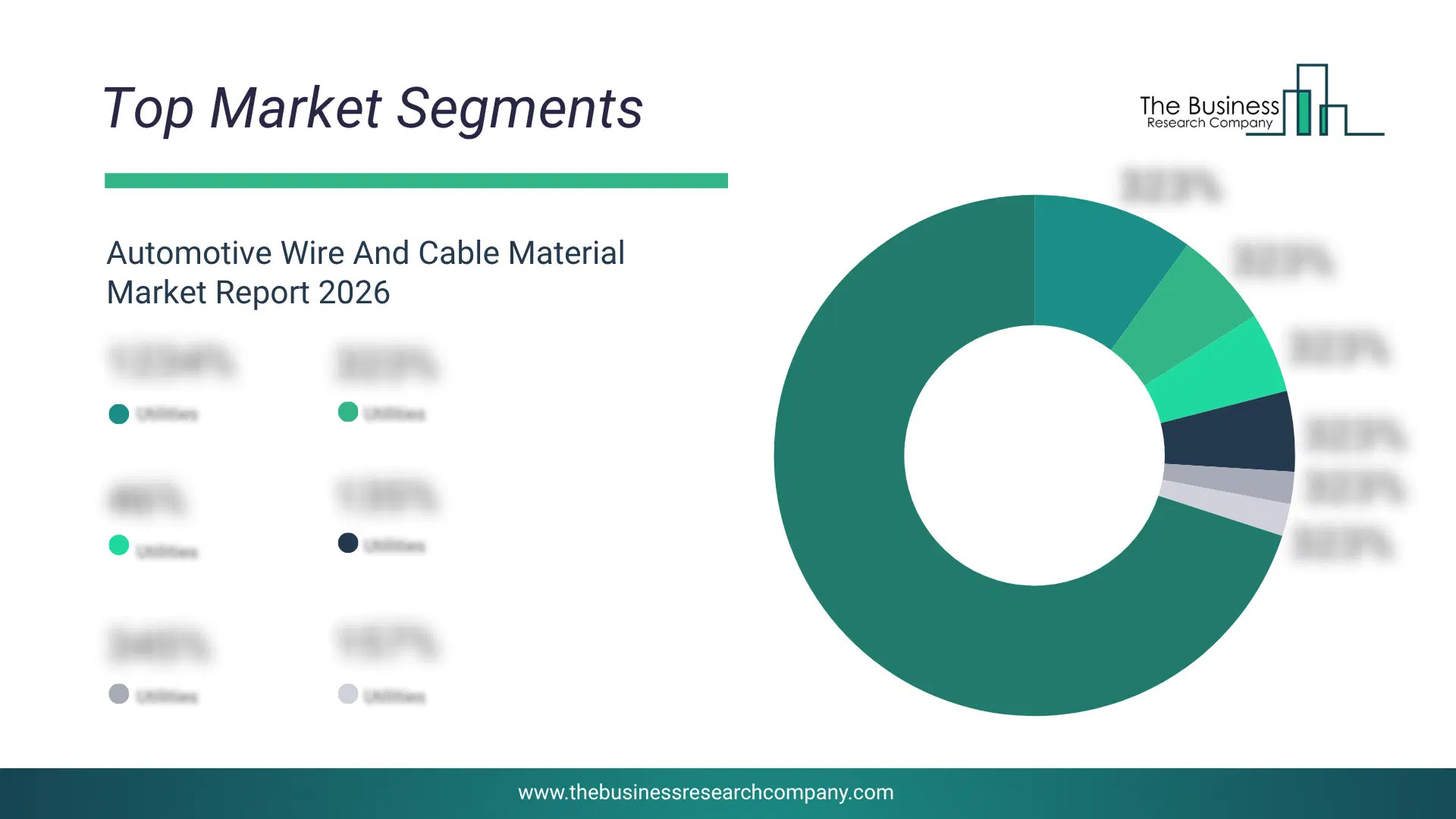
1) By Type: Polyvinyl Chloride (PVC), Polypropylene (PP), Cross-Linked Polyethylene (XLPE), Thermoplastic Polyurethane (TPU), Polyphenylene Ether (PPE), Other Types 2) By Component: Conductors, Insulation Materials, Filler and Bedding Materials, Protective Coatings and Tapes 3) By Application: Passenger Vehicles, Light Commercial Vehicles, Heavy Commercial Vehicles Subsegments: 1) By Polyvinyl Chloride (PVC): Flexible PVC For Wiring Insulation, Rigid PVC For Cable Sheath, Flame-Retardant PVC, PVC With UV Stabilization, PVC With High-Temperature Resistance, PVC For Automotive Power Cables 2) By Polypropylene (PP): PP For Low-Voltage Wire Insulation, High-Temperature Resistant Polypropylene, Flame-Retardant Polypropylene Cables, Reinforced Polypropylene Cables For Durability, PP For Automotive HVAC Systems And Control Wiring, Polypropylene For Automotive Connector Insulation 3) By Cross-Linked Polyethylene (XLPE): XLPE For High-Voltage Wire Insulation, Low-Smoke XLPE For Automotive Fire Safety, XLPE For High-Temperature Applications, Cross-Linked Polyethylene For Electric Vehicle (EV) Charging Cables, XLPE For Power Distribution Cables, XLPE With Enhanced Mechanical Properties 4) By Thermoplastic Polyurethane (TPU): TPU For Flexible Wiring Applications, TPU For Cable Sheathing In Harsh Environments, Oil-Resistant TPU Cables, TPU For Automotive Sensor And Data Cables, TPU With High Abrasion Resistance, TPU For High-Performance Automotive Wiring 5) By Polyphenylene Ether (PPE): PPE For Automotive Electrical Connectors, High-Temperature PPE For Power Cables, PPE For Flame-Retardant Applications, PPE For Lightweight Automotive Cables, PPE For Under-The-Hood Wiring, PPE For Hybrid And Electric Vehicle Wiring 6) By Other Types: Polyethylene (PE) For General Automotive Wiring, Fluoropolymers (E.G., PTFE) For High-Performance Cables, Silicone Rubber For High-Temperature Wiring, Nylon (PA) For Cable Sheath And Insulation, Ethylene Tetrafluoroethylene (ETFE) For Extreme Conditions, Thermoplastic Elastomers (TPE) For Flexible Wiring Solutions The top segments in the automotive wire and cable material market will be: • Polyvinyl Chloride (PVC) will reach $3.91 Billion by 2030. • Polypropylene (PP) will reach $1.16 Billion by 2030. • Cross-Linked Polyethylene (XLPE) will reach $1.16 Billion by 2030. • Thermoplastic Polyurethane (TPU) will reach $0.64 Billion by 2030. • Polyphenylene Ether (PPE) will reach $0.4 Billion by 2030.What Is The Driver Of The Automotive Wire And Cable Material Market?
The increase in demand for electric vehicles is expected to propel the growth of the automotive wire and cable material market going forward. Electric vehicles (EVs) refer to vehicles that are powered by electric motors and use energy stored in rechargeable batteries or another energy storage device. The demand for electric vehicles is increasing for several reasons, including government policies and incentives, improvements in battery technology, and growing awareness of climate change and pollution. Electric vehicles rely on automotive wires and cables to transmit power and data among batteries, motors, and electronic systems, ensuring smooth and safe functionality. For instance, in July 2023, according to the Internal Energy Agency, a France-based autonomous intergovernmental organization, over 2.3 million electric cars were sold in the first quarter of 2023, a 25% increase from the same period in 2022. By the end of 2023, sales are expected to reach 14 million, representing a 35% year-on-year increase. Therefore, the rise in demand for electric vehicles is driving the growth of the automotive wire and cable material industry.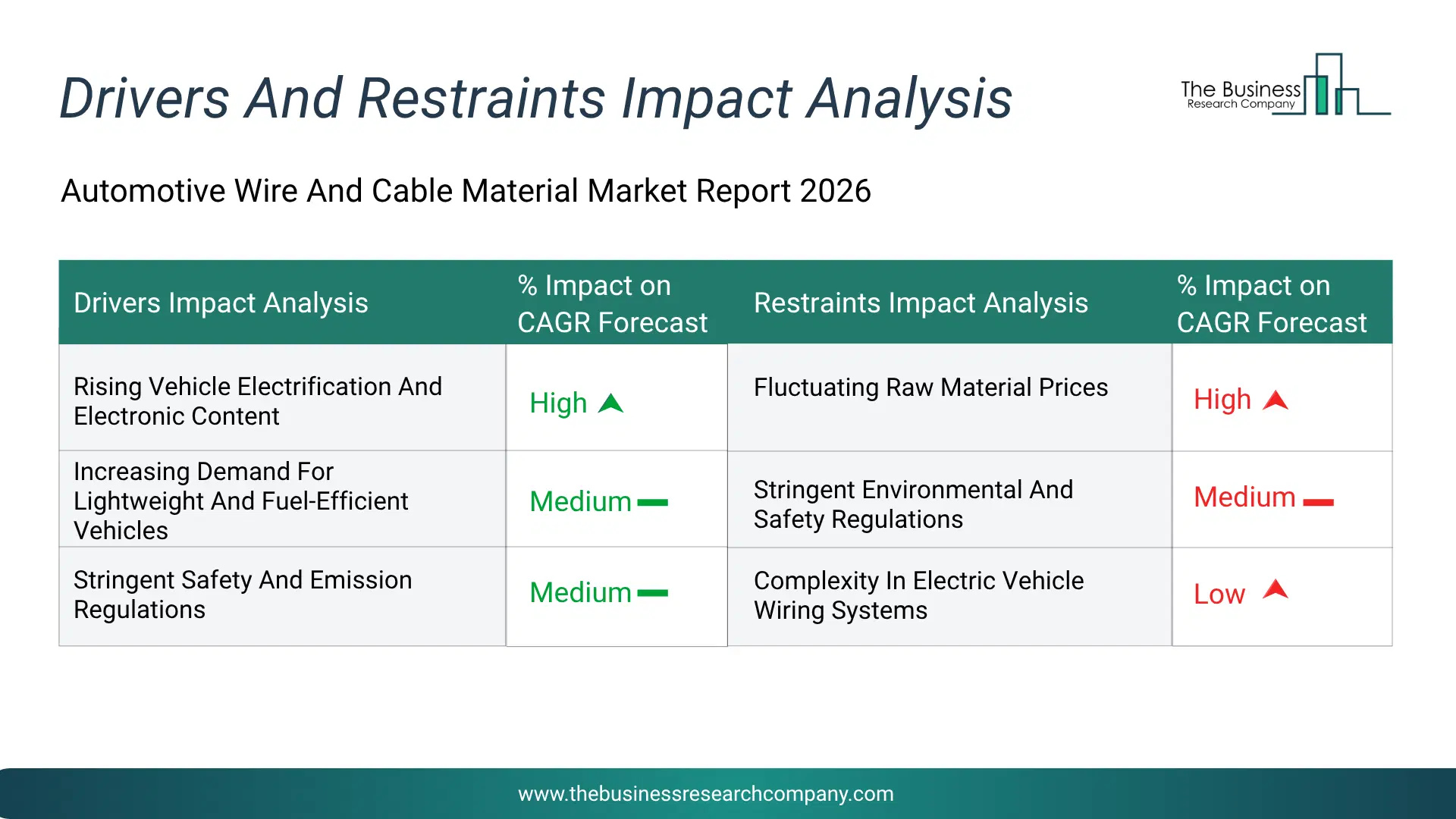
Infographic Chart Showing Key Market Drivers Analysis And Restraints For Automotive Wire And Cable Material Market
The chart presents an impact analysis of key drivers and restraints, quantifying their relative influence on the market's growth rate and helping assess the balance between growth enablers and limiting factors. This chart offers a high-level perspective; the full report contains more detailed insights.
How Will The Drivers Impact Growth In The Global Automotive Wire And Cable Material Market?
• Rising Vehicle Electrification And Electronic Content (High) – During the forecast period, the rising vehicle electrification and electronic content is expected to become a key growth driver for the automotive wire and cable material market by 2030. Modern vehicles are incorporating an increasing number of electronic control units, advanced driver assistance systems, digital cockpits, connectivity modules, and battery management systems that require sophisticated wiring solutions. The transition toward hybrid and battery-electric platforms is also increasing demand for materials capable of supporting higher voltages, enhanced thermal stability, and reliable power transmission. Material manufacturers are therefore focusing on developing advanced compounds that improve electrical performance and long-term durability. • Increasing Demand For Lightweight And Fuel-Efficient Vehicles (Medium) – During the forecast period, the increasing demand for lightweight and fuel-efficient vehicles is expected to emerge as a major factor driving the expansion of the automotive wire and cable material market by 2030. Automotive manufacturers are pursuing vehicle weight reduction strategies to improve energy efficiency, extend electric driving range, and meet evolving performance requirements. This trend is encouraging the adoption of advanced wire and cable materials that offer reduced mass without compromising mechanical strength or electrical functionality. Innovative polymer formulations and compact cable designs are enabling manufacturers to optimize wiring harness systems while maintaining reliability. • Stringent Safety And Emission Regulations (Medium) – During the forecast period, the stringent safety and emission regulations are expected to act as a key growth catalyst for the automotive wire and cable material market by 2030. Regulatory authorities are establishing increasingly rigorous standards related to vehicle safety, electrical reliability, fire resistance, and environmental performance. These requirements are encouraging the use of high-quality insulation and protective materials that can withstand demanding operating conditions while supporting compliance objectives. Automotive manufacturers are also upgrading electrical systems to meet regulatory expectations associated with advanced vehicle technologies. As regulatory frameworks continue to evolve globally, adoption of premium wire and cable materials is expected to accelerate.How Will The Restraints Impact Growth In The Global Automotive Wire And Cable Material Market?
• Fluctuating Raw Material Prices (High) – During the forecast period, the fluctuating raw material prices act as a major restraint for the automotive wire and cable materials market by directly impacting production costs and profit margins. Key materials such as copper and specialty polymers experience frequent price volatility due to global supply-demand imbalances and geopolitical factors. This unpredictability makes it difficult for manufacturers to maintain stable pricing strategies and long-term contracts. As a result, automotive OEMs may delay procurement or shift toward cost-effective alternatives, reducing demand consistency. Overall, price instability creates uncertainty across the value chain, limiting steady market growth. • Stringent Environmental And Safety Regulations (Medium) – During the forecast period, the stringent environmental and safety regulations act as a restraint by imposing strict compliance requirements on material selection and manufacturing processes. Regulations related to emissions, recyclability, and hazardous substances push manufacturers to adopt eco-friendly and high-performance materials, often at higher costs. Meeting these standards requires continuous R&D investment and process modifications, increasing operational complexity. Smaller players may struggle to comply due to limited resources, leading to market consolidation. Consequently, regulatory pressure slows down production scalability and raises barriers to entry in the market. • Complexity In Electric Vehicle Wiring Systems (Medium) – During the forecast period, the complexity in electric vehicle wiring systems acts as a restraint by increasing the technical challenges associated with designing and manufacturing advanced cable materials. EVs require high-voltage, lightweight, and heat-resistant wiring solutions, which demand specialized materials and engineering expertise. This complexity raises production costs and extends development timelines for manufacturers. Additionally, ensuring durability and safety under varying operating conditions further complicates material innovation. As a result, the transition toward advanced automotive architectures slows market expansion and limits widespread adoption.Key Players In The Global Automotive Wire And Cable Material Market
Major companies operating in the automotive wire and cable material market report include ExxonMobil Chemical Limited, Reliance Industries Limited, BASF SE, Saudi Basic Industries Corporation (SABIC), LyondellBasell Industries Holdings BV, LG Chem Ltd., INEOS Group Holdings S.A., Sumitomo Chemical Co. Ltd., Shin-Etsu Chemical Co. Ltd., Braskem S.A., Lotte Chemical Corporation, Westlake Chemical Corporation, DuPont de Nemours Inc., Mitsui Chemicals Inc., Celanese Corporation, IRPC Public Company Limited, Lubrizol Corporation, Kuraray Co. Ltd., Borealis AG, Teknor Apex Company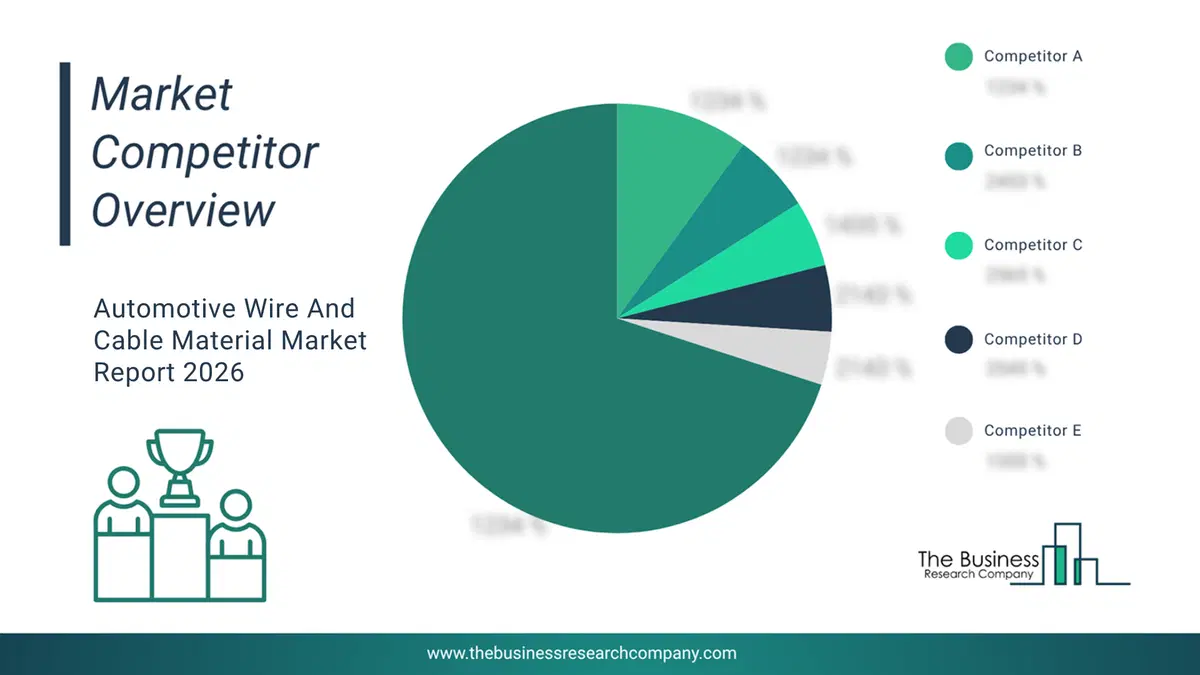
This chart is for illustrative purposes; the full report includes a detailed competitor analysis and comprehensive overview of the top 10 companies in the market.
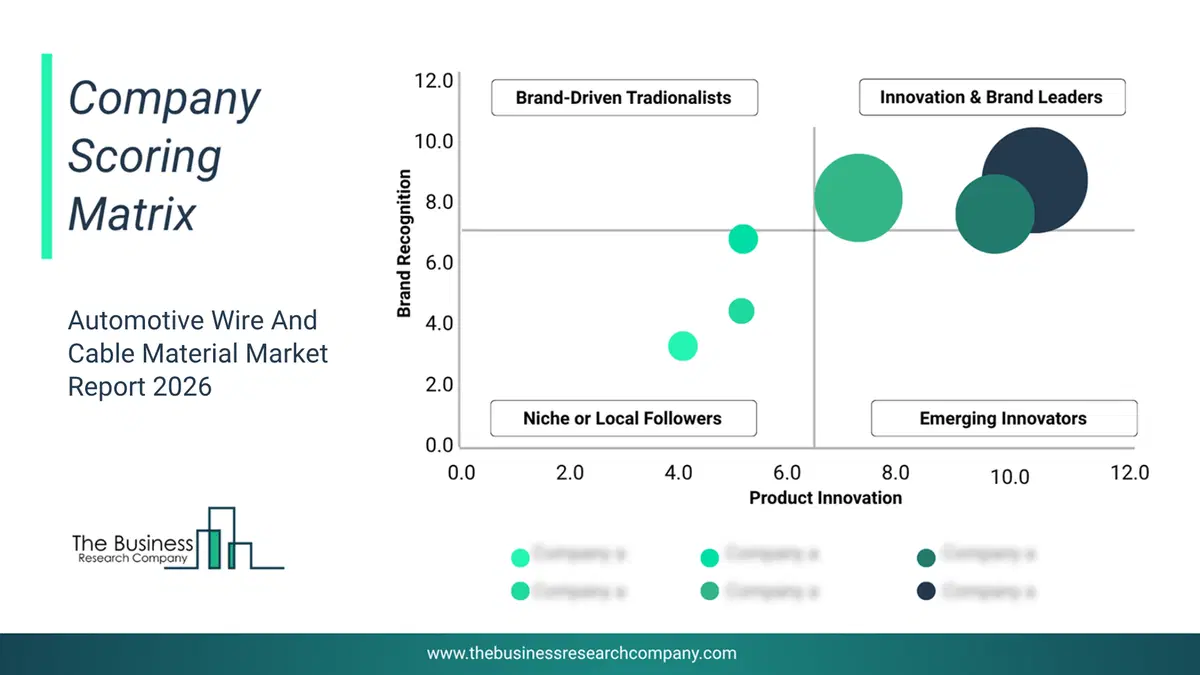
This chart maps companies by product innovation and brand strength, with bubble size indicating relative revenue, helping identify market leaders, challengers, and niche players. This is an illustrative chart; the full report provides a complete and accurate competitive analysis.
Global Automotive Wire And Cable Material Market Trends and Insights
Major companies operating in automotive wire and cable material are innovating insulation covering material for high-voltage cables to enhance durability, improve thermal resistance, and increase overall efficiency in automotive electrical systems. Insulation material for high-voltage cables is a protective coating that safeguards the cables' conductive parts, ensuring safe high-voltage electricity flow and shielding against external conditions. For instance, in March 2023, Shin-Etsu Chemical, a Japan-based chemical company, launched silicone rubber for molding that is optimal as an insulation covering material for onboard high-voltage automobile cables. Shin-Etsu Chemical's new silicone rubber for molding, KE-5641-U, offers significant improvements in flexibility and lighter weight for high-voltage cables. Its top-level dielectric withstand voltage (DWV) of 40 kV per mm surpasses the current product's 26 kV per mm, ensuring superior insulation even with thinner layers. Additionally, it combines exceptional heat and cold resistance, weather ability, flame retardancy, and long-term reliability, outperforming non-silicone insulation materials.What Are Latest Mergers And Acquisitions In The Automotive Wire And Cable Material Market?
In December 2023, GEON Performance Solutions, a US-based manufacturer specializing in performance polymer solutions, acquired Polymax TPE for an undisclosed amount. The acquisition aims to expand GEON's product portfolio and market presence in the thermoplastic elastomer (TPE) sector. This acquisition allows GEON to integrate Polymax TPE's expertise and product offerings into its own, potentially enhancing innovation capabilities and customer solutions within the polymer industry. Polymax TPE is a US-based company specializing in manufacturing thermoplastic elastomers for various applications, including wires and cables used in the automotive industry.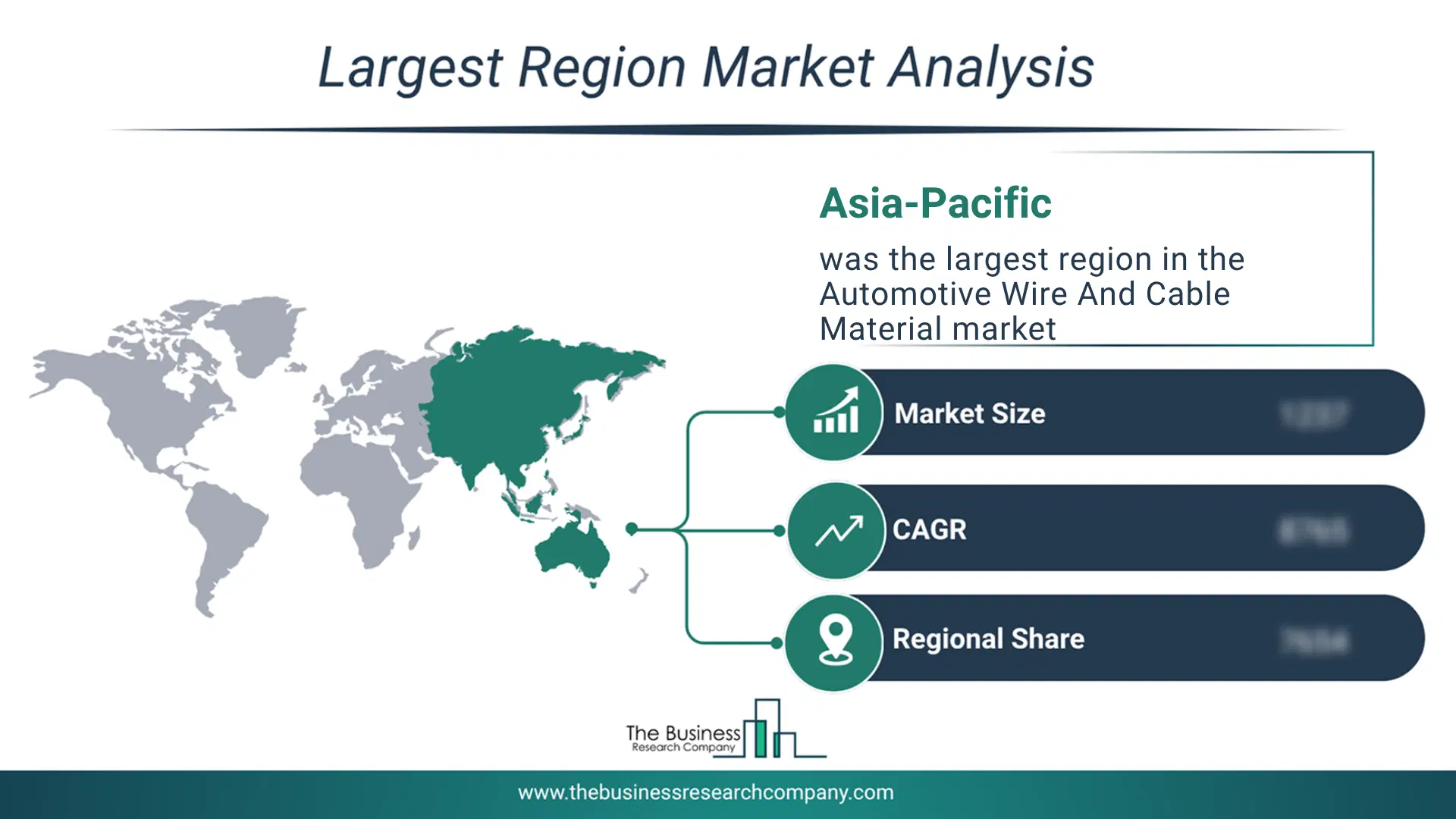
Regional Outlook
Asia-Pacific was the largest region in the automotive wire and cable material market in 2025. The regions covered in this market report include Asia-Pacific, South East Asia, Western Europe, Eastern Europe, North America, South America, Middle East, Africa. The countries covered in this market report include Australia, Brazil, China, France, Germany, India, Indonesia, Japan, Taiwan, Russia, South Korea, UK, USA, Canada, Italy, SpainWhat Defines the Automotive Wire And Cable Material Market?
The automotive wire and cable material market consists of sales of copper, nylon, fluoropolymers, and silicone. Values in this market are ‘factory gate’ values, that is, the value of goods sold by the manufacturers or creators of the goods, whether to other entities (including downstream manufacturers, wholesalers, distributors, and retailers) or directly to end customers. The value of goods in this market includes related services sold by the creators of the goods.How is Market Value Defined and Measured?
The market value is defined as the revenues that enterprises gain from the sale of goods and/or services within the specified market and geography through sales, grants, or donations in terms of the currency (in USD unless otherwise specified). The revenues for a specified geography are consumption values that are revenues generated by organizations in the specified geography within the market, irrespective of where they are produced. It does not include revenues from resales along the supply chain, either further along the supply chain or as part of other products.
This chart presents market attractiveness based on a quantitative evaluation of growth, competition, strategic alignment, and risk, offering a clear view of opportunity areas for decision-making. This chart is for illustrative purposes; the full report contains the complete analysis.

This chart highlights the Total Addressable Market (TAM) by estimating the maximum revenue opportunity using an assumption-driven approach, supporting strategic planning and opportunity sizing across markets. The chart is illustrative; the full report provides a more comprehensive analysis.
What Key Data and Analysis Are Included in the Automotive Wire And Cable Material Market Report 2026?
The automotive wire and cable material market research report is one of a series of new reports from The Business Research Company that provides market statistics, including industry global market size, regional shares, competitors with the market share, detailed market segments, market trends and opportunities, and any further data you may need to thrive in the automotive wire and cable material industry. The market research report delivers a complete perspective of everything you need, with an in-depth analysis of the current and future state of the industry.Automotive Wire And Cable Material Market Report Forecast Analysis
| Report Attribute | Details |
|---|---|
| Market Size Value In 2026 | $5.85 billion |
| Revenue Forecast In 2030 | $7.66 billion |
| Growth Rate | CAGR of 6.9% from 2026 to 2030 |
| Base Year For Estimation | 2025 |
| Actual Estimates/Historical Data | 2020-2025 |
| Forecast Period | 2026 - 2030 |
| Market Representation | Revenue in USD Billion and CAGR from 2026 to 2030 |
| Segments Covered | Type, Component, Application |
| Regional Scope | Asia-Pacific, Western Europe, Eastern Europe, North America, South America, Middle East, Africa |
| Country Scope | The countries covered in the report are Australia, Brazil, China, France, Germany, India, Indonesia, Japan, Taiwan, Russia, South Korea, UK, USA, Canada, Italy, Spain. |
| Key Companies Profiled | ExxonMobil Chemical Limited, Reliance Industries Limited, BASF SE, Saudi Basic Industries Corporation (SABIC), LyondellBasell Industries Holdings BV, LG Chem Ltd., INEOS Group Holdings S.A., Sumitomo Chemical Co. Ltd., Shin-Etsu Chemical Co. Ltd., Braskem S.A., Lotte Chemical Corporation, Westlake Chemical Corporation, DuPont de Nemours Inc., Mitsui Chemicals Inc., Celanese Corporation, IRPC Public Company Limited, Lubrizol Corporation, Kuraray Co. Ltd., Borealis AG, Teknor Apex Company |
| Customization Scope | Request for Customization |
| Pricing And Purchase Options | Explore Purchase Options |