
Autonomous Aerial Robot Market Report 2026
Global Outlook – By Robot Type (Multirotor Autonomous Aerial Robots, Fixed-Wing Autonomous Aerial Robots, Single-Rotor Autonomous Aerial Robots, Hybrid Vertical Take-Off And Landing Autonomous Aerial Robots), By Level Of Autonomy (Semi-Autonomous, Fully Autonomous), By Payload Capacity (Light Payload (Less Than 5 Kilograms), Medium Payload (5–20 Kilograms), Heavy Payload (More Than 20 Kilograms)), By Application (Agriculture, Logistics, Infrastructure Inspection, Surveillance, Environmental Monitoring), By End Use (Commercial, Government, Industrial) – Market Size, Trends, Strategies, and Forecast to 2030
Autonomous Aerial Robot Market Overview
• Autonomous Aerial Robot market size has reached to $3.86 billion in 2025 • Expected to grow to $6.94 billion in 2030 at a compound annual growth rate (CAGR) of 12.4% • Growth Driver: Increasing Deployment Of Drones Fueling The Growth Of The Market Due To Expanding Autonomous Flight Applications • Market Trend: Autonomous Indoor Inventory Scanning Drones Enhance Warehouse Efficiency • North America was the largest region in 2025 and Asia-Pacific is the fastest growing region.What Is Covered Under Autonomous Aerial Robot Market?
Autonomous aerial robots are unmanned flying systems that use artificial intelligence (AI), advanced sensors, and autonomous navigation technologies to operate with minimal or no human intervention. They can independently perceive their surroundings, make real-time decisions, and adapt to changing environments. Autonomous aerial robot capabilities improve operational efficiency, flight accuracy, and mission reliability across a wide range of applications. The main robot types of autonomous aerial robot include multirotor autonomous aerial robots, fixed-wing autonomous aerial robots, single-rotor autonomous aerial robots, and hybrid vertical take-off and landing autonomous aerial robots. Multirotor autonomous aerial robots refer to aerial robotic systems equipped with multiple rotors that enable vertical take-off and landing, hovering, maneuverability, and autonomous flight operations. These robots operate with semi-autonomous and fully autonomous levels of autonomy and are available in light payload (less than 5 kilograms), medium payload (5–20 kilograms), and heavy payload configurations (more than 20 kilograms). They find application in agriculture, logistics, infrastructure inspection, surveillance, and environmental monitoring and are used by several end uses such as commercial, government, and industrial.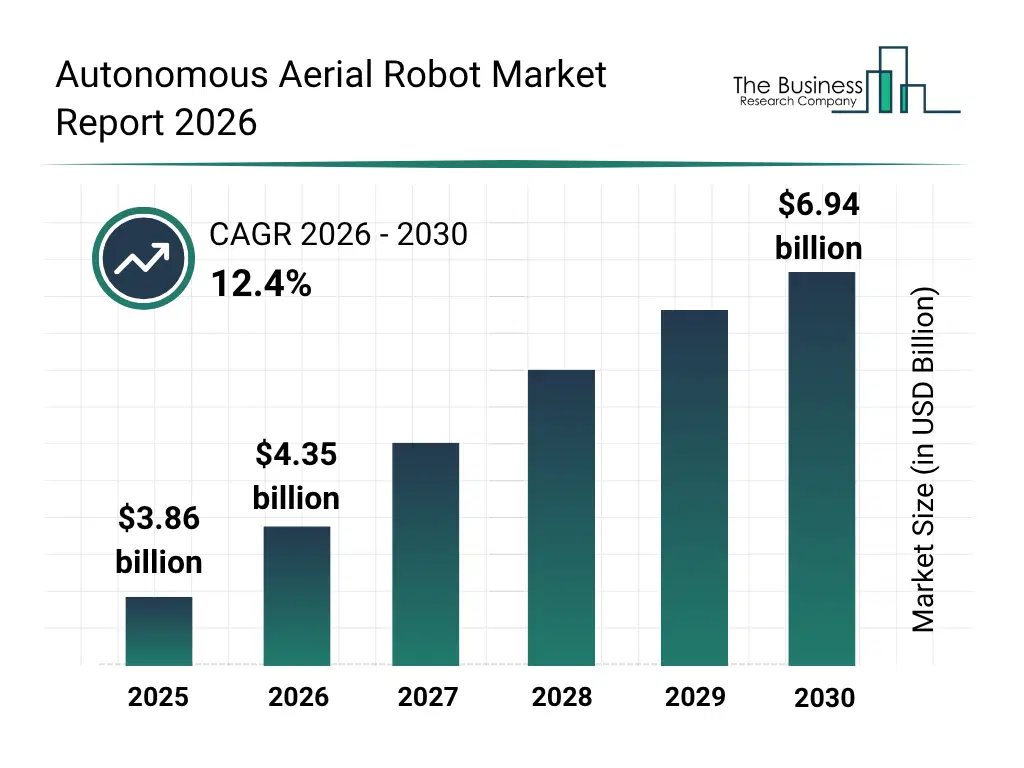
What Is The Autonomous Aerial Robot Market Size and Share 2026?
The autonomous aerial robot market size has grown rapidly in recent years. It will grow from $3.86 billion in 2025 to $4.35 billion in 2026 at a compound annual growth rate (CAGR) of 12.8%. The growth in the historic period can be attributed to increasing demand for unmanned aerial operations, rising adoption of aerial inspection activities, growing use of drones for surveillance applications, increasing demand for precision agriculture operations, expanding utilization of aerial systems for environmental monitoring.What Is The Autonomous Aerial Robot Market Growth Forecast?
The autonomous aerial robot market size is expected to see rapid growth in the next few years. It will grow to $6.94 billion in 2030 at a compound annual growth rate (CAGR) of 12.4%. The growth in the forecast period can be attributed to rising demand for autonomous aerial delivery services, increasing need for cost-efficient infrastructure inspection, growing adoption of heavy-payload aerial robots, expanding demand for long-endurance aerial operations, increasing deployment of autonomous aerial systems across industrial applications. Major trends in the forecast period include increasing adoption of advanced autonomous flight control systems, rising demand for extended flight endurance, growing use of high-precision navigation and positioning systems, increasing integration of obstacle detection and collision avoidance systems, rising demand for lightweight and high-capacity payload systems.
Global Autonomous Aerial Robot Market Segmentation
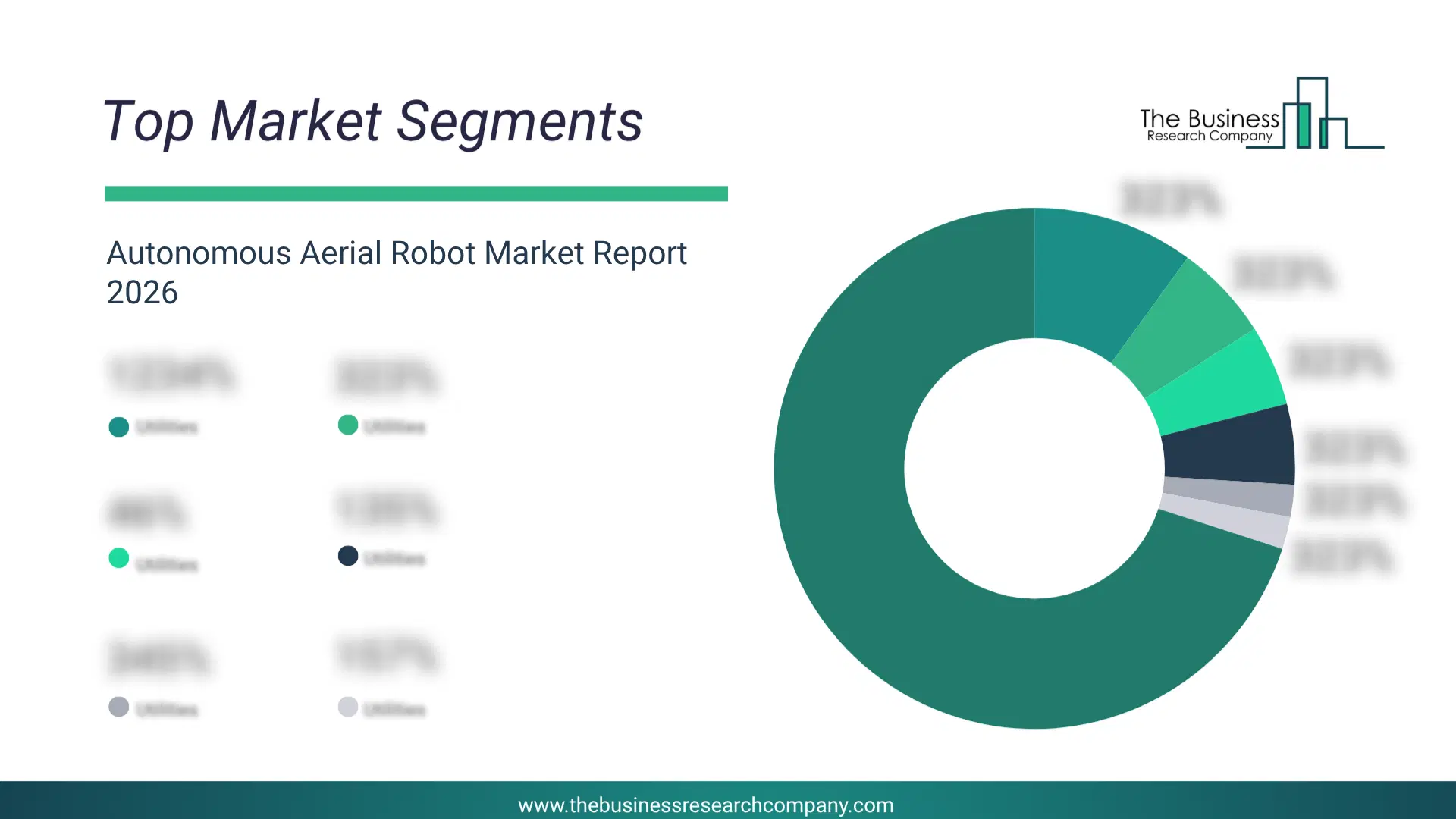
1) By Robot Type: Multirotor Autonomous Aerial Robots, Fixed-Wing Autonomous Aerial Robots, Single-Rotor Autonomous Aerial Robots, Hybrid Vertical Take-Off And Landing Autonomous Aerial Robots 2) By Level Of Autonomy: Semi-Autonomous, Fully Autonomous 3) By Payload Capacity: Light Payload (Less Than 5 Kilograms), Medium Payload (5–20 Kilograms), Heavy Payload (More Than 20 Kilograms) 4) By Application: Agriculture, Logistics, Infrastructure Inspection, Surveillance, Environmental Monitoring 5) By End Use: Commercial, Government, Industrial Subsegments: 1) By Multirotor Autonomous Aerial Robots: Quadcopter Autonomous Robots, Hexacopter Autonomous Robots, Octocopter Autonomous Robots, Coaxial Multirotor Autonomous Robots 2) By Fixed-Wing Autonomous Aerial Robots: Conventional Fixed-Wing Robots, Flying-Wing Robots, High-Endurance Fixed-Wing Robots, Long-Range Fixed-Wing Robots 3) By Single-Rotor Autonomous Aerial Robots: Conventional Helicopter Robots, Coaxial Helicopter Robots, Heavy-Lift Helicopter Robots, Utility Helicopter Robots 4) By Hybrid Vertical Take-Off And Landing Autonomous Aerial Robots: Tilt-Rotor Robots, Tilt-Wing Robots, Tail-Sitter Robots, Lift-And-Cruise Robots, Compound Hybrid RobotsWhat Is The Driver Of The Autonomous Aerial Robot Market?
The increasing deployment of drones is expected to propel the growth of the autonomous aerial robot market going forward. A drone, also known as an unmanned aerial vehicle (UAV), is an aircraft that is remotely operated or autonomously controlled to perform surveillance, reconnaissance, mapping, logistics, and combat missions. The deployment of drones is increasing as organizations adopt aerial platforms to improve operational efficiency, reduce costs, and enhance data collection capabilities across diverse applications. Drones provide the flight platform, sensors, and navigation systems that enable autonomous aerial robots to perform tasks such as surveillance, mapping, inspection, and delivery with minimal human intervention. For instance, in December 2024, according to the Federal Aviation Administration (FAA), a US-based government agency, more than one million drones are legally registered with the FAA in the United States, and thousands of commercial, recreational, and law enforcement drones operate in US airspace each day. As drone technology continues to advance, the number of registered and active drones is expected to grow further. Therefore, the increasing deployment of drones is driving the growth of the autonomous aerial robot industry.Key Players In The Global Autonomous Aerial Robot Market
Major companies operating in the autonomous aerial robot market are SZ DJI Technology Co. Ltd., Turkish Aerospace Industries Inc., AeroVironment Inc., Skydio Inc., Parrot SA, EHang Holdings Limited, Baykar Technologies Inc., Wingtra AG, Flyability SA, Delair SAS, Chengdu JOUAV Automation Tech Co. Ltd., ideaForge Technology Limited, Harris Aerial LLC, Vertical Technologies Inc., Event 38 Unmanned Systems Inc.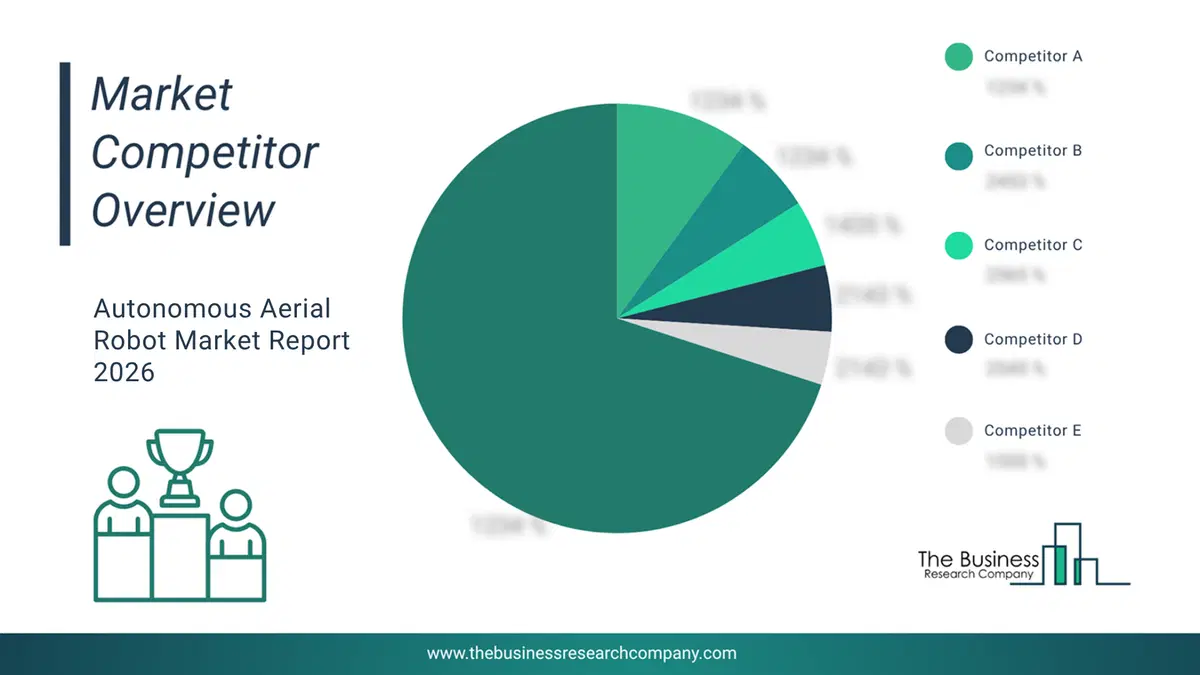
This chart is for illustrative purposes; the full report includes a detailed competitor analysis and comprehensive overview of the top 10 companies in the market.
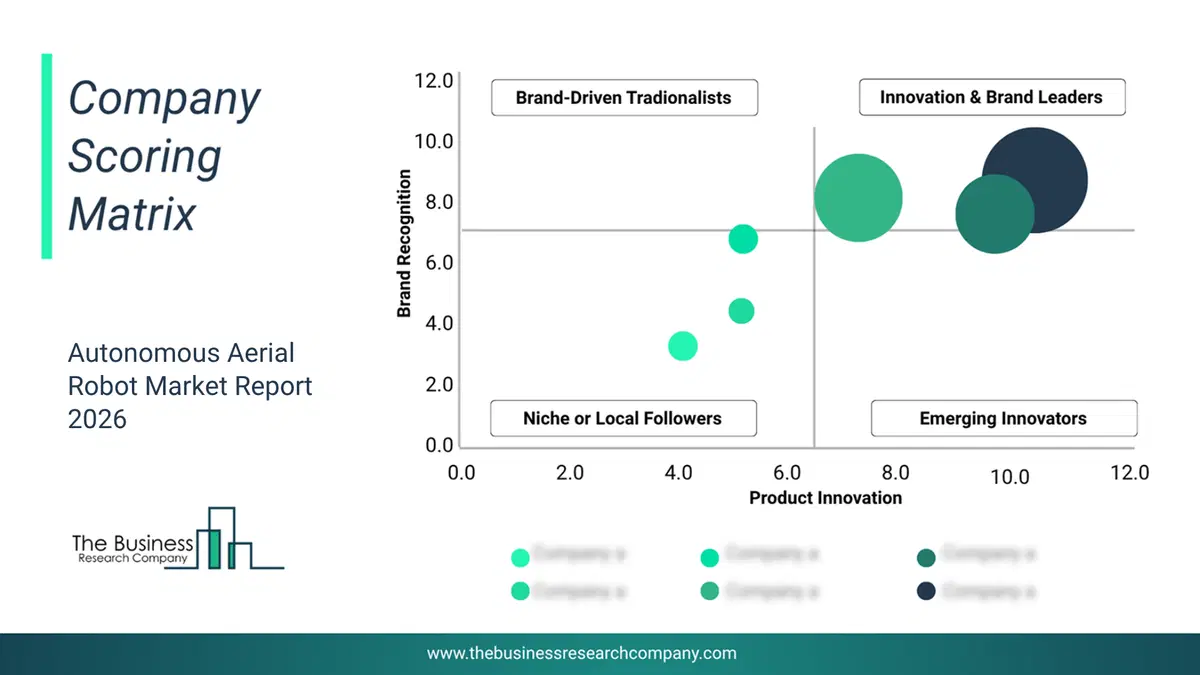
This chart maps companies by product innovation and brand strength, with bubble size indicating relative revenue, helping identify market leaders, challengers, and niche players. This is an illustrative chart; the full report provides a complete and accurate competitive analysis.
Global Autonomous Aerial Robot Market Trends and Insights
Major companies operating in the autonomous aerial robot market are focusing on developing advanced solutions, such as autonomous indoor inventory scanning drones, to enhance warehouse inventory accuracy, operational efficiency, and real-time asset visibility while reducing manual labor and operating costs. Autonomous indoor inventory scanning drones are AI-powered aerial robots that autonomously navigate indoor environments such as warehouses and distribution centers to scan, identify, and track inventory without human intervention. For instance, in February 2026, Corvus Robotics, Inc., a US-based AI and robotics supply chain company, launched Corvus One for Cold Chain, an autonomous inventory management system. It enhances autonomous warehouse inventory management by enabling continuous AI-powered indoor inventory scanning, improving inventory accuracy, increasing operational efficiency, and supporting reliable operations in cold-chain freezer environments. The Corvus One for Cold Chain drone is specifically engineered to operate autonomously in sub-zero warehouse environments, functioning continuously in temperatures as low as −20°F (−29°C) without requiring warehouse modifications.What Are Latest Mergers And Acquisitions In The Autonomous Aerial Robot Market?
In September 2024, Red Cat Holdings, a US-based drone technology and aerospace manufacturer, acquired FlightWave Aerospace Systems Corporation for an undisclosed amount. With this acquisition, Red Cat expanded its portfolio of autonomous vertical take-off and landing (VTOL) drone systems, strengthened its defense-focused unmanned aerial vehicle (UAV) capabilities, and broadened its product portfolio with long-endurance autonomous UAV solutions for military and government customers. FlightWave Aerospace Systems Corporation is a US-based company that designs and manufactures the Edge 130, a fully autonomous vertical take-off and landing (VTOL) drone that performs autonomous flight, mapping, inspection, surveillance, and reconnaissance missions.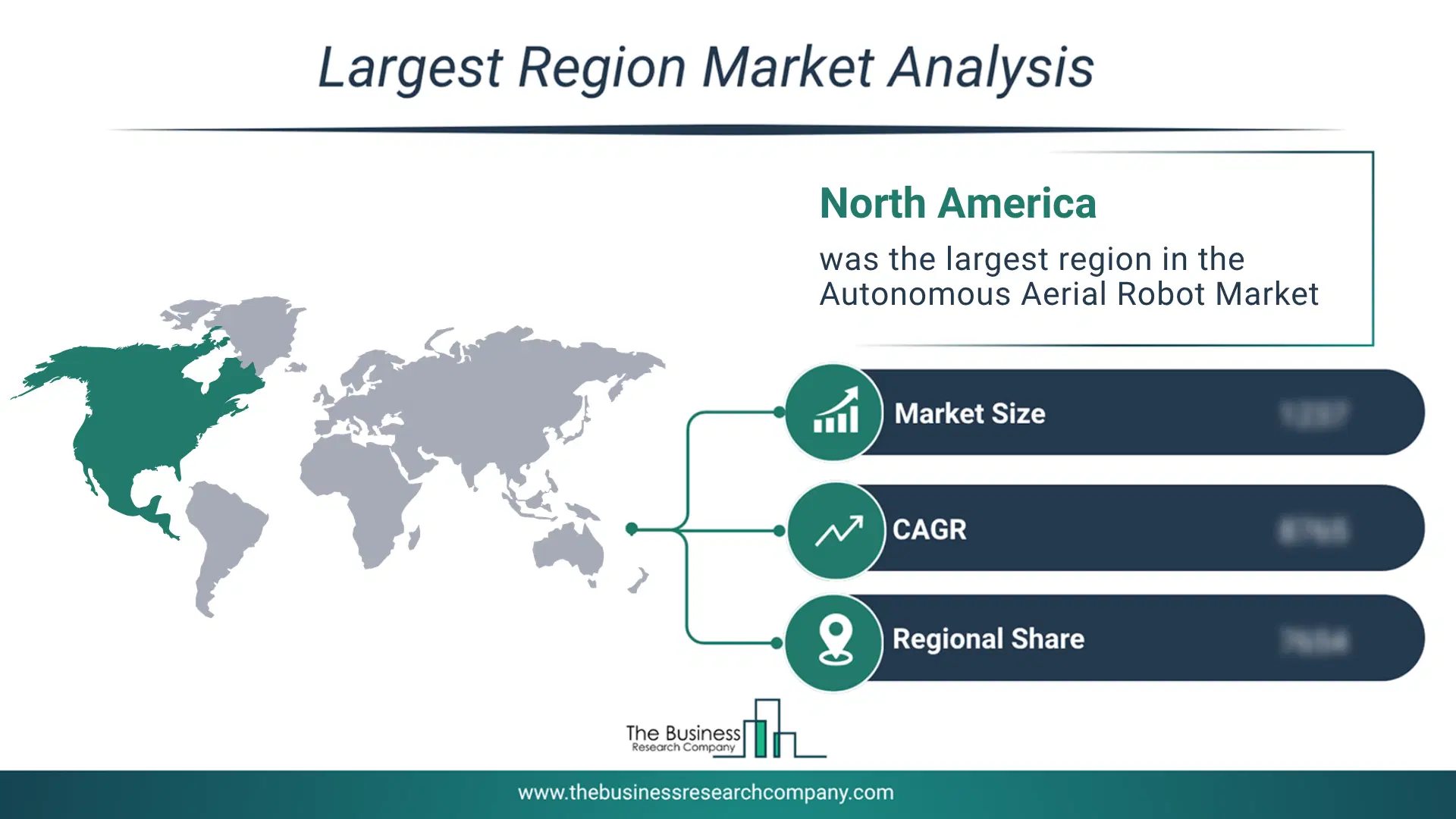
Regional Insights
North America was the largest region in the autonomous aerial robot market in 2025. Asia-Pacific is expected to be the fastest-growing region in the forecast period. The regions covered in this market report are Asia-Pacific, South East Asia, Western Europe, Eastern Europe, North America, South America, Middle East, Africa. The countries covered in this market report are Australia, Brazil, China, France, Germany, India, Indonesia, Japan, Taiwan, Russia, South Korea, UK, USA, Canada, Italy, Spain.What Defines the Autonomous Aerial Robot Market?
The autonomous aerial robot market consists of sales of autonomous drones, unmanned aerial vehicles (UAVs), quadcopters, fixed-wing autonomous aircraft, and autonomous multicopters. Values in this market are ‘factory gate’ values, that is, the value of goods sold by the manufacturers or creators of the goods, whether to other entities (including downstream manufacturers, wholesalers, distributors, and retailers) or directly to end customers. The value of goods in this market includes related services sold by the creators of the goods.How is Market Value Defined and Measured?
The market value is defined as the revenues that enterprises gain from the sale of goods and/or services within the specified market and geography through sales, grants, or donations in terms of the currency (in USD unless otherwise specified). The revenues for a specified geography are consumption values that are revenues generated by organizations in the specified geography within the market, irrespective of where they are produced. It does not include revenues from resales along the supply chain, either further along the supply chain or as part of other products.
This chart presents market attractiveness based on a quantitative evaluation of growth, competition, strategic alignment, and risk, offering a clear view of opportunity areas for decision-making. This chart is for illustrative purposes; the full report contains the complete analysis.

This chart highlights the Total Addressable Market (TAM) by estimating the maximum revenue opportunity using an assumption-driven approach, supporting strategic planning and opportunity sizing across markets. The chart is illustrative; the full report provides a more comprehensive analysis.
What Key Data and Analysis Are Included in the Autonomous Aerial Robot Market Report 2026?
The autonomous aerial robot market research report is one of a series of new reports from The Business Research Company that provides market statistics, including industry global market size, regional shares, competitors with the market share, detailed market segments, market trends and opportunities, and any further data you may need to thrive in the autonomous aerial robot industry. The market research report delivers a complete perspective of everything you need, with an in-depth analysis of the current and future state of the industry.Autonomous Aerial Robot Market Report Forecast Analysis
| Report Attribute | Details |
|---|---|
| Market Size Value In 2026 | $4.35 billion |
| Revenue Forecast In 2030 | $6.94 billion |
| Growth Rate | CAGR of 12.4% from 2026 to 2030 |
| Base Year For Estimation | 2025 |
| Actual Estimates/Historical Data | 2020-2025 |
| Forecast Period | 2026 - 2030 |
| Market Representation | Revenue in USD Billion and CAGR from 2026 to 2030 |
| Segments Covered | Robot Type, Level Of Autonomy, Payload Capacity, Application, End Use |
| Regional Scope | Asia-Pacific, Western Europe, Eastern Europe, North America, South America, Middle East, Africa |
| Country Scope | The countries covered in the report are Australia, Brazil, China, France, Germany, India, Indonesia, Japan, Taiwan, Russia, South Korea, UK, USA, Canada, Italy, Spain. |
| Key Companies Profiled | SZ DJI Technology Co. Ltd., Turkish Aerospace Industries Inc., AeroVironment Inc., Skydio Inc., Parrot SA, EHang Holdings Limited, Baykar Technologies Inc., Wingtra AG, Flyability SA, Delair SAS, Chengdu JOUAV Automation Tech Co. Ltd., ideaForge Technology Limited, Harris Aerial LLC, Vertical Technologies Inc., Event 38 Unmanned Systems Inc. |
| Customization Scope | Request for Customization |
| Pricing And Purchase Options | Explore Purchase Options |