
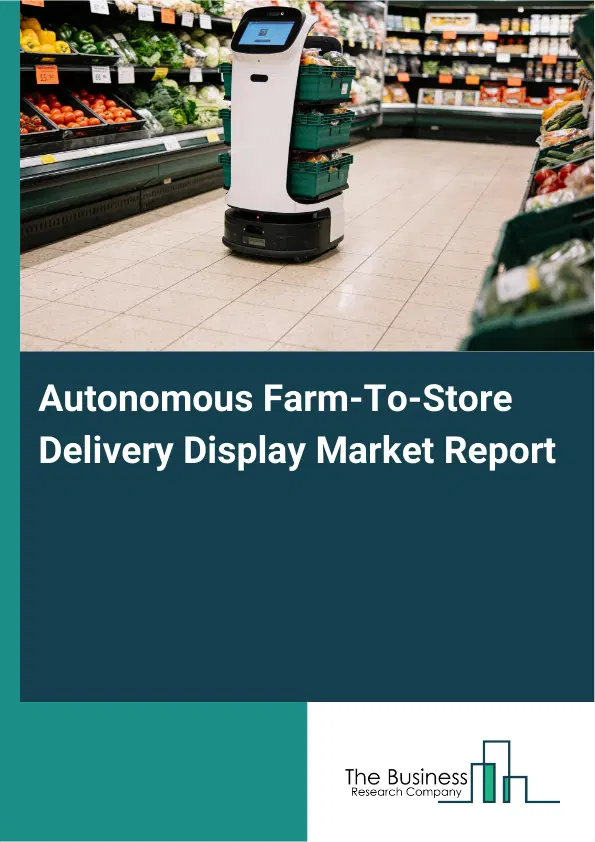
Autonomous Farm-To-Store Delivery Display Market Report 2026
Global Outlook – By Component (Hardware, Software, Services), By Vehicle Type (Ground Vehicles, Aerial Drones, Hybrid Vehicles), By Technology (Artificial Intelligence And Machine Learning, Internet Of Things, Global Positioning System And Navigation Systems, Other Technologies), By Application (Fruits And Vegetables, Dairy Products, Grains And Cereals, Meat And Poultry, Other Applications), By End User (Farmers, Retailers, Distributors, Logistics Providers) – Market Size, Trends, Strategies, and Forecast to 2030
Autonomous Farm-To-Store Delivery Display Market Overview
• Autonomous Farm-To-Store Delivery Display market size has reached to $1.9 billion in 2025 • Expected to grow to $4.78 billion in 2030 at a compound annual growth rate (CAGR) of 20.3% • Growth Driver: Rising Demand For Organic Products Fueling The Growth Of The Market Due To Increasing Consumer Awareness Of Health And Safety Benefits • Market Trend: Revolutionizing Urban Agriculture With Robotics-Driven Vertical Farm Solutions • North America was the largest region in 2025.What Is Covered Under Autonomous Farm-To-Store Delivery Display Market?
An autonomous farm-to-store delivery display is a technology-enabled system used in retail or supply chain settings to showcase fresh produce or goods delivered directly from farms via autonomous vehicles or drones. It helps to provide real-time visibility of farm-fresh products while ensuring efficient, contactless delivery, minimizing spoilage, and enhancing customer trust in product freshness. It often integrates tracking, temperature monitoring, and interactive information for consumers. The main components of autonomous farm-to-store delivery display are hardware, software, and services. An autonomous farm-to-store delivery display is a self-operating hardware unit designed to transport, store, and present fresh products directly from farms to retail locations, ensuring timely delivery, optimal freshness, and reduced human intervention in the supply chain. It is used widely in different vehicle types, including ground vehicles, aerial drones, and hybrid vehicles, utilizing technologies such as artificial intelligence and machine learning, the internet of things, global positioning systems and navigation systems, and others. It finds application in fruits and vegetables, dairy products, grains and cereals, meat and poultry, and others, serving end users such as farmers, retailers, distributors, and logistics providers.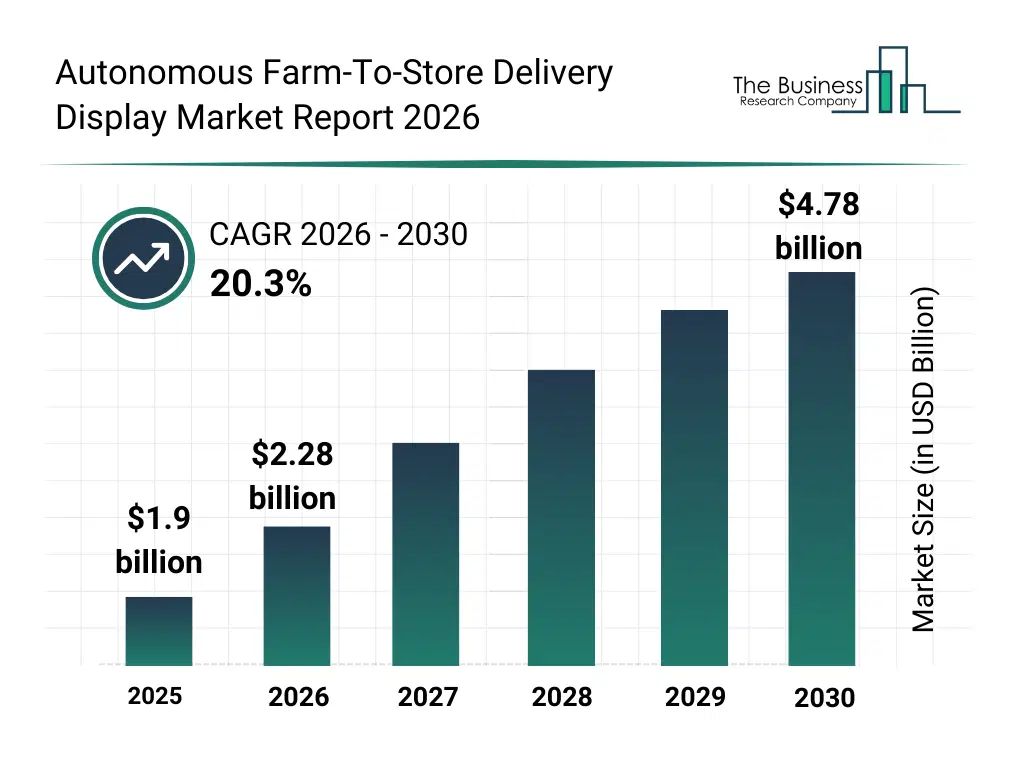
What Is The Autonomous Farm-To-Store Delivery Display Market Size and Share 2026?
The autonomous farm-to-store delivery display market size has grown exponentially in recent years. It will grow from $1.9 billion in 2025 to $2.28 billion in 2026 at a compound annual growth rate (CAGR) of 20.5%. The growth in the historic period can be attributed to growing demand for fresh produce traceability, rising focus on reducing food spoilage, increased adoption of digital tracking systems, growing development of autonomous delivery prototypes, rising interest in contactless retail models.What Is The Autonomous Farm-To-Store Delivery Display Market Growth Forecast?
The autonomous farm-to-store delivery display market size is expected to see exponential growth in the next few years. It will grow to $4.78 billion in 2030 at a compound annual growth rate (CAGR) of 20.3%. The growth in the forecast period can be attributed to increasing use of autonomous ground and aerial delivery systems, rising integration of real-time data displays in retail, growing adoption of ai-enabled route optimization, expansion of temperature-controlled robotic delivery units, rising demand for sustainable supply chain automation. Major trends in the forecast period include growing use of autonomous delivery vehicles for direct farm-to-store transport, increasing demand for real-time freshness and temperature monitoring displays, expansion of contactless retail displays featuring farm-origin transparency, rising integration of interactive consumer information panels in stores, greater adoption of automated delivery-to-display workflows reducing handling time.
Global Autonomous Farm-To-Store Delivery Display Market Segmentation
1) By Component: Hardware, Software, Services 2) By Vehicle Type: Ground Vehicles, Aerial Drones, Hybrid Vehicles 3) By Technology: Artificial Intelligence And Machine Learning, Internet Of Things, Global Positioning System And Navigation Systems, Other Technologies 4) By Application: Fruits And Vegetables, Dairy Products, Grains And Cereals, Meat And Poultry, Other Applications 5) By End User: Farmers, Retailers, Distributors, Logistics Providers Subsegments: 1) By Hardware: Delivery Robots And Drones, Sensors And Cameras, Navigation And Control Systems, Communication Devices, Display And Interface Units, Power And Battery Systems 2) By Software: Fleet Management Platforms, Route Optimization Solutions, Inventory And Supply Chain Management, Data Analytics And Insights, Security And Access Control, User Interaction Interfaces 3) By Services: Implementation And Integration, Training And Education, Consulting And Advisory, Support And Maintenance, Managed Services, Data Management And SecurityWhat Is Driver Of The Autonomous Farm-To-Store Delivery Display Market?
The increasing expansion of e-commerce platforms is expected to propel the growth of the autonomous farm-to-store delivery display market going forward. E-commerce platforms refer to online services or digital applications that allow consumers to order groceries and other household essentials via the internet. The increasing expansion of e-commerce platforms is due to growing consumer demand for convenience and contactless shopping, as it allows quick access to fresh produce without visiting physical stores. E-commerce platforms enhance autonomous farm-to-store delivery displays by integrating real-time order tracking and efficient logistics management, making last-mile delivery faster and more reliable. They improve operational efficiency by optimizing delivery routes and inventory handling, boosting overall customer satisfaction. For instance, in August 2025, according to the United States Census Bureau, a US-based government agency, e-commerce sales in the second quarter of 2025 rose by 5.3% (±1.2 percent) compared with the same quarter in 2024, whereas overall retail sales grew by 3.8% (±0.4 percent) over the same period. Therefore, the increasing expansion of e-commerce platforms is driving the growth of the autonomous farm-to-store delivery display industry.Key Players In The Global Autonomous Farm-To-Store Delivery Display Market
Major companies operating in the autonomous farm-to-store delivery display market are Ocado Group plc, Zipline International Inc., Nuro Inc., Gatik Inc., Kodiak Robotics Inc., Einride AB, Starship Technologies Ltd., Matternet Inc., Ottonomy.IO Inc., Udelv Inc., Agtonomy Inc., Cartken Inc., Refraction AI Inc., Aurora Innovation Inc., Serve Robotics Inc., Clevon AG, Wing, Flytrex, SkyDrop, JD Logistics Autonomous Delivery Unit, Meituan Autonomous Delivery, Coco Delivery, Eliport, Marble Robotics, Kiwibot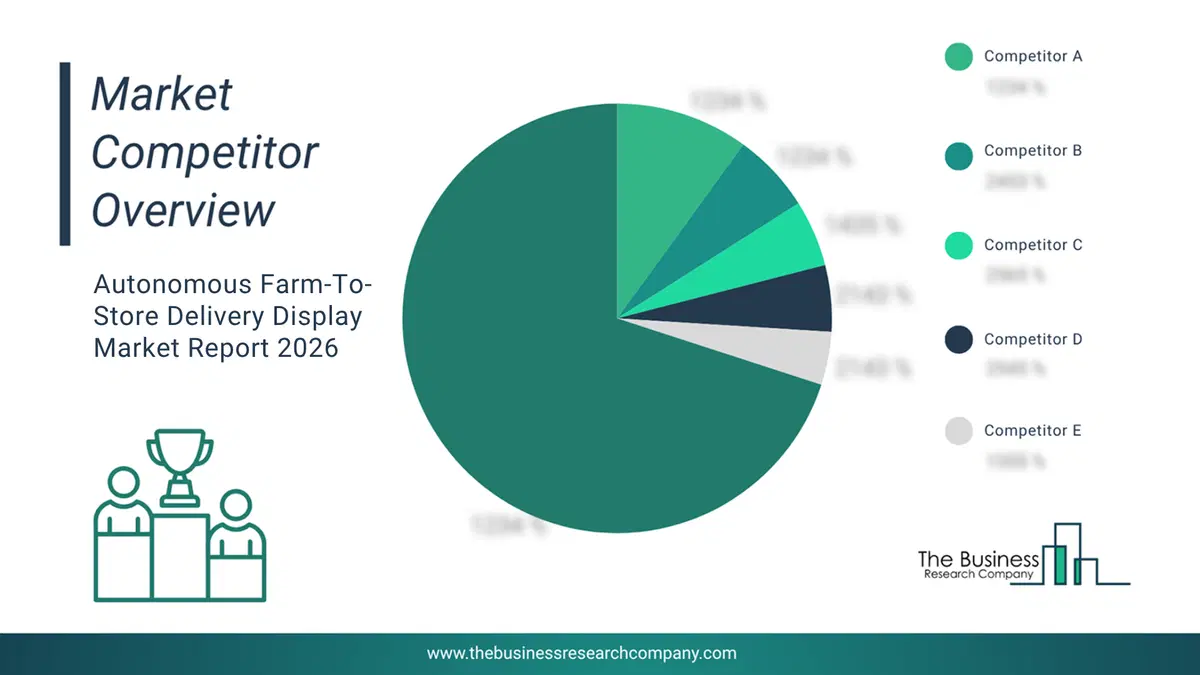
This chart is for illustrative purposes; the full report includes a detailed competitor analysis and comprehensive overview of the top 10 companies in the market.
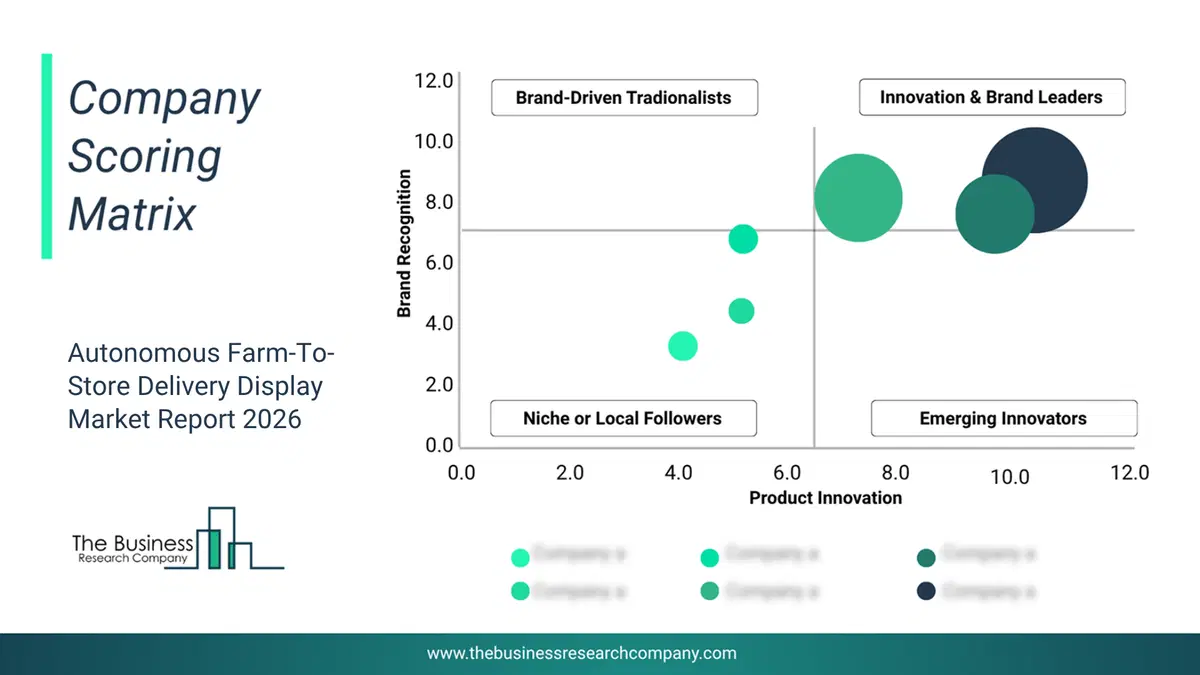
This chart maps companies by product innovation and brand strength, with bubble size indicating relative revenue, helping identify market leaders, challengers, and niche players. This is an illustrative chart; the full report provides a complete and accurate competitive analysis.
Global Autonomous Farm-To-Store Delivery Display Market Trends and Insights
Major companies operating in the autonomous farm-to-store delivery displays market are focusing on developing technologically advanced products, such as automated vertical farming systems, to improve supply chain efficiency, ensure fresher produce, and lower costs and environmental impact. Automated vertical farming systems are advanced agricultural setups that use robotics, AI, and controlled environments to grow crops in vertical stacks, automating tasks such as planting, monitoring, and harvesting to maximize efficiency and yield. For instance, in May 2025, AutoStore, a Norway-based automated storage and retrieval systems company, and OnePointOne, a US-based automated vertical farming systems company, launched Opollo Farm, a robotics-enabled vertical indoor farming platform. The system manages crops within a precision-controlled environment, minimizing space, maximizing efficiency, and accelerating growth cycles. It addresses labor shortages, water scarcity, and supply chain challenges, enabling high-quality, locally grown produce to be delivered efficiently to retail stores. This technology enables the direct supply of ultra-fresh produce to Whole Foods Market stores, ensuring rapid delivery from farm to shelf with minimal manual intervention.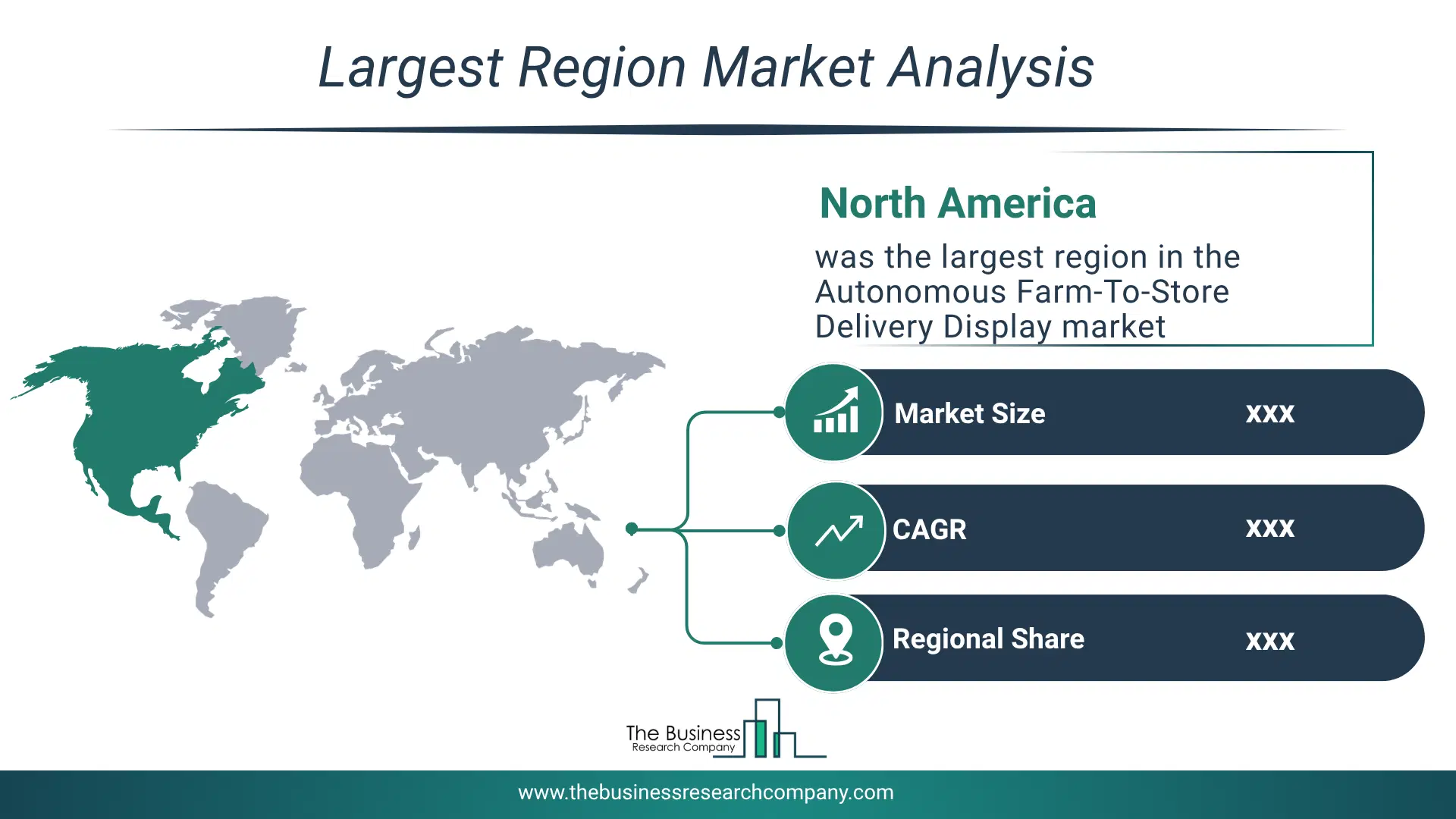
Regional Outlook
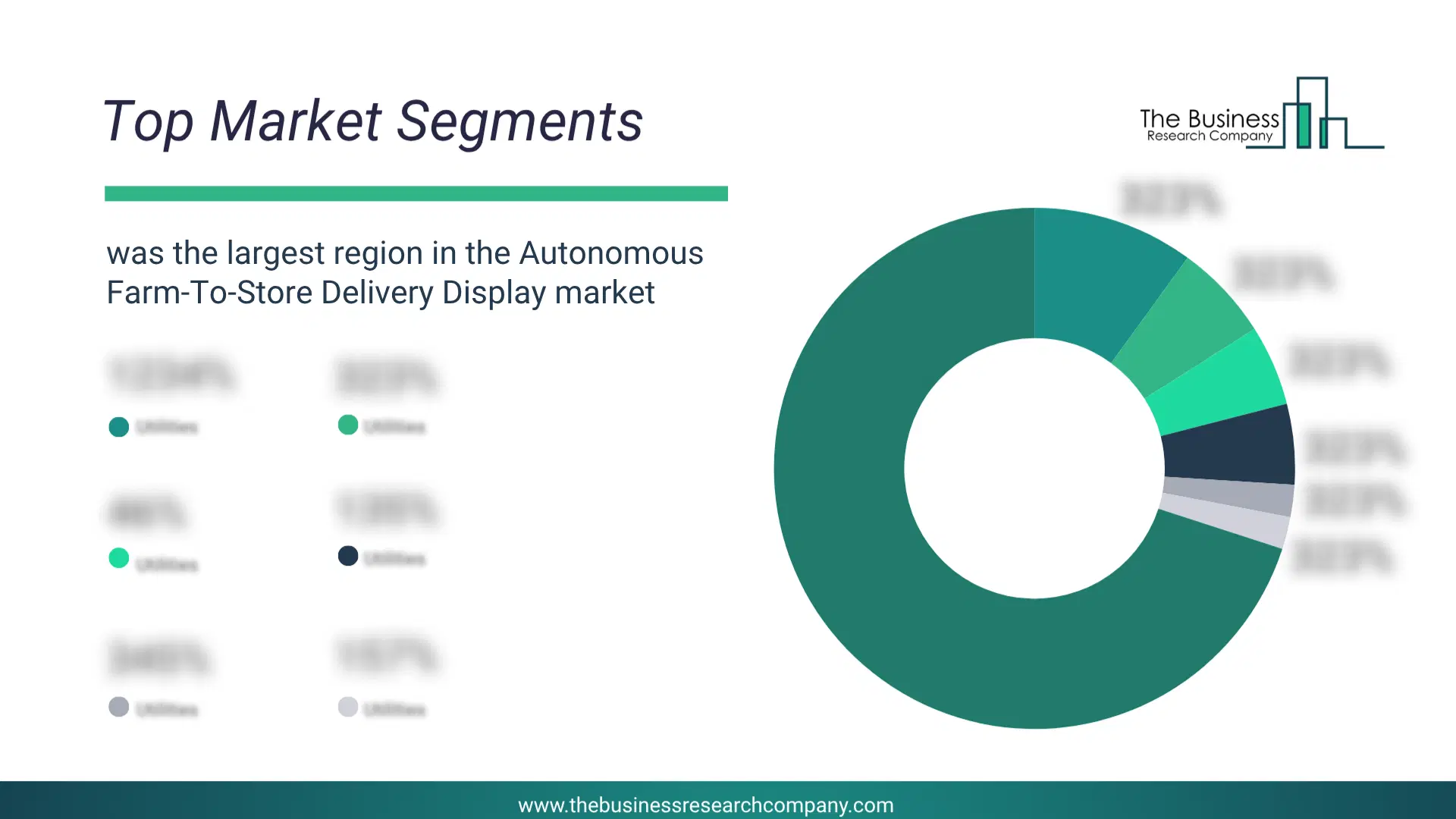
North America was the largest region in the autonomous farm-to-store delivery display market in 2025. The regions covered in this market report are Asia-Pacific, South East Asia, Western Europe, Eastern Europe, North America, South America, Middle East, Africa. The countries covered in this market report are Australia, Brazil, China, France, Germany, India, Indonesia, Japan, Taiwan, Russia, South Korea, UK, USA, Canada, Italy, SpainWhat Defines the Autonomous Farm-To-Store Delivery Display Market?
The autonomous farm-to-store delivery display market consists of revenues earned by entities by providing services such as automated last-mile delivery services, remote monitoring and fleet management, and on-demand cold chain logistics services. The market value includes the value of related goods sold by the service provider or included within the service offering. The autonomous farm-to-store delivery display market also includes sales of robotic farm harvesters, autonomous cold storage units, blockchain-enabled traceability platforms, and drone-assisted inventory monitoring systems. Values in this market are ‘factory gate’ values, that is the value of goods sold by the manufacturers or creators of the goods, whether to other entities (including downstream manufacturers, wholesalers, distributors and retailers) or directly to end customers. The value of goods in this market includes related services sold by the creators of the goods.How is Market Value Defined and Measured?
The market value is defined as the revenues that enterprises gain from the sale of goods and/or services within the specified market and geography through sales, grants, or donations in terms of the currency (in USD unless otherwise specified). The revenues for a specified geography are consumption values that are revenues generated by organizations in the specified geography within the market, irrespective of where they are produced. It does not include revenues from resales along the supply chain, either further along the supply chain or as part of other products.
This chart presents market attractiveness based on a quantitative evaluation of growth, competition, strategic alignment, and risk, offering a clear view of opportunity areas for decision-making. This chart is for illustrative purposes; the full report contains the complete analysis.

This chart highlights the Total Addressable Market (TAM) by estimating the maximum revenue opportunity using an assumption-driven approach, supporting strategic planning and opportunity sizing across markets. The chart is illustrative; the full report provides a more comprehensive analysis.
What Key Data and Analysis Are Included in the Autonomous Farm-To-Store Delivery Display Market Report 2026?
The autonomous farm-to-store delivery display market research report is one of a series of new reports from The Business Research Company that provides market statistics, including industry global market size, regional shares, competitors with the market share, detailed market segments, market trends and opportunities, and any further data you may need to thrive in the autonomous farm-to-store delivery display industry. The market research report delivers a complete perspective of everything you need, with an in-depth analysis of the current and future state of the industry.Autonomous Farm-To-Store Delivery Display Market Report Forecast Analysis
| Report Attribute | Details |
|---|---|
| Market Size Value In 2026 | $2.28 billion |
| Revenue Forecast In 2030 | $4.78 billion |
| Growth Rate | CAGR of 20.3% from 2026 to 2030 |
| Base Year For Estimation | 2025 |
| Actual Estimates/Historical Data | 2020-2025 |
| Forecast Period | 2026 - 2030 |
| Market Representation | Revenue in USD Billion and CAGR from 2026 to 2030 |
| Segments Covered | Component, Vehicle Type, Technology, Application, End User |
| Regional Scope | Asia-Pacific, Western Europe, Eastern Europe, North America, South America, Middle East, Africa |
| Country Scope | The countries covered in the report are Australia, Brazil, China, France, Germany, India, Indonesia, Japan, Taiwan, Russia, South Korea, UK, USA, Canada, Italy, Spain |
| Key Companies Profiled | Ocado Group plc, Zipline International Inc., Nuro Inc., Gatik Inc., Kodiak Robotics Inc., Einride AB, Starship Technologies Ltd., Matternet Inc., Ottonomy.IO Inc., Udelv Inc., Agtonomy Inc., Cartken Inc., Refraction AI Inc., Aurora Innovation Inc., Serve Robotics Inc., Clevon AG, Wing, Flytrex, SkyDrop, JD Logistics Autonomous Delivery Unit, Meituan Autonomous Delivery, Coco Delivery, Eliport, Marble Robotics, Kiwibot |
| Customization Scope | Request for Customization |
| Pricing And Purchase Options | Explore Purchase Options |