
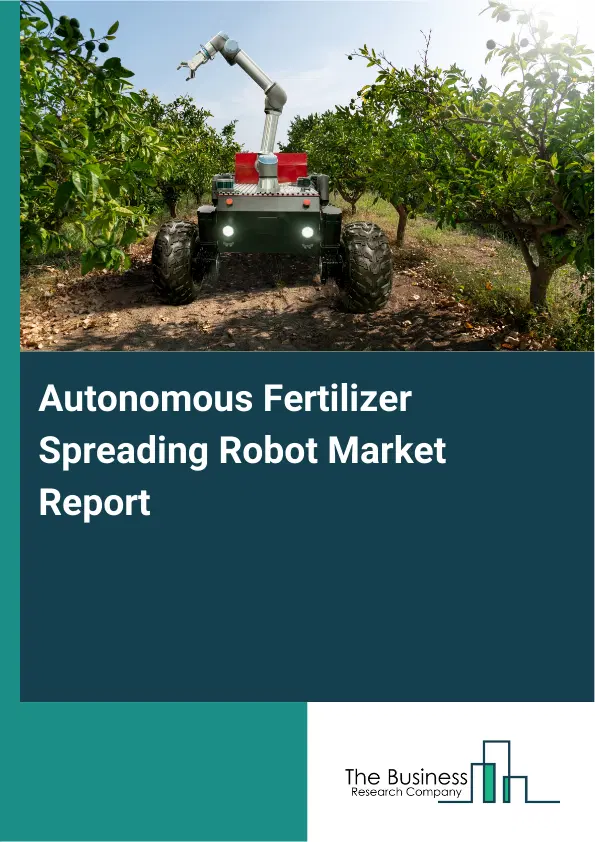
Autonomous Fertilizer Spreading Robot Market Report 2026
Global Outlook – By Product Type (Wheeled Robots, Tracked Robots, Drone-Based Robots, Other Types), By Technology (Global Positioning System (GPS) Or Global Navigation Satellite System (GNSS)-Based, Vision-Based, Sensor-Based, Other Technologies), By Power Source (Electric, Solar, Hybrid, Other Power Sources), By Application (Cereal Crops, Horticulture, Plantation Crops, Other Applications), By End-User (Large Farms, Small And Medium Farms, Research Institutes, Other End-Users) – Market Size, Trends, Strategies, and Forecast to 2030
Autonomous Fertilizer Spreading Robot Market Overview
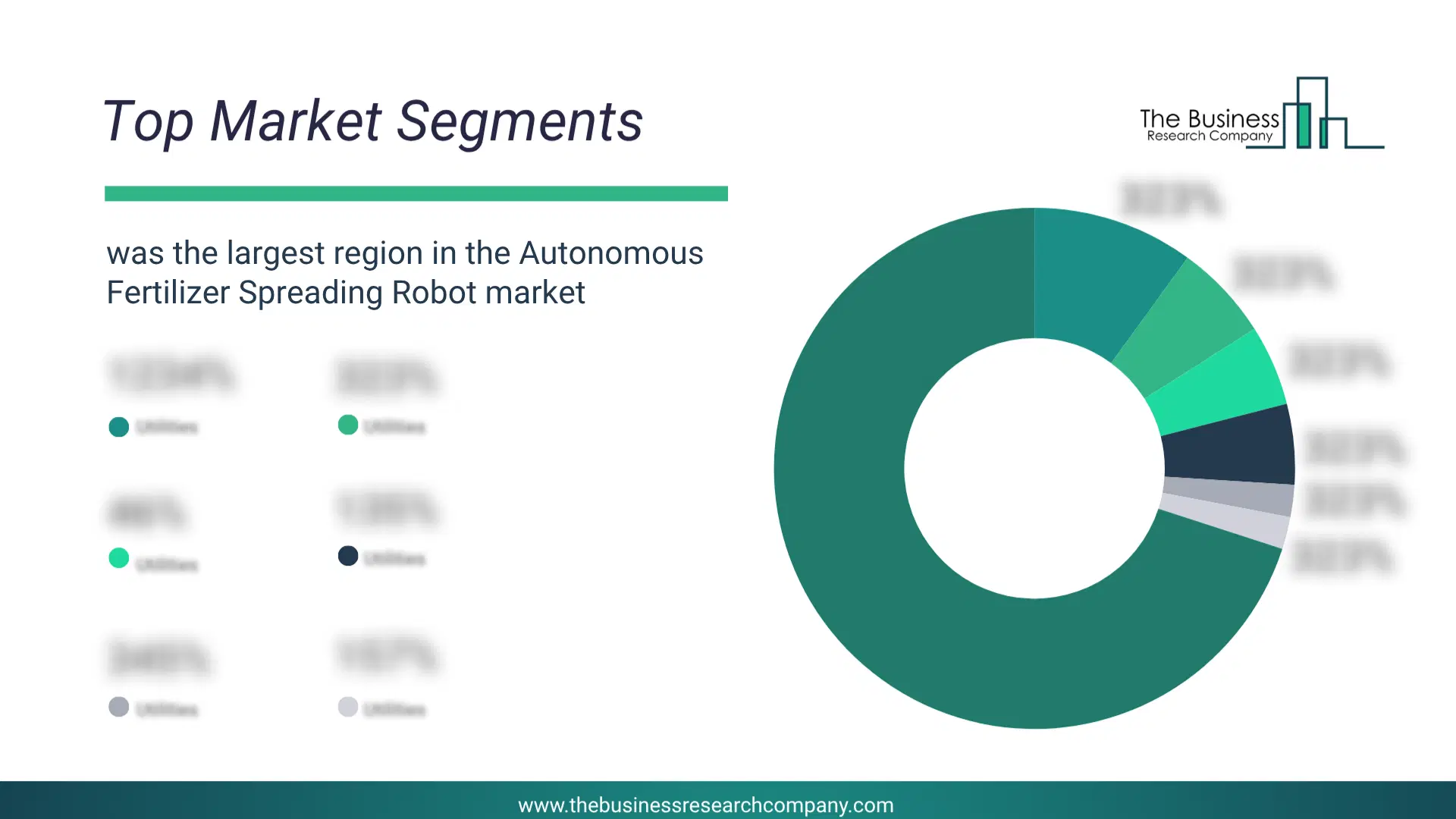
• Autonomous Fertilizer Spreading Robot market size has reached to $1.65 billion in 2025 • Expected to grow to $4.32 billion in 2030 at a compound annual growth rate (CAGR) of 21.2% • Growth Driver: Increasing Focus On Sustainable Agriculture Is Fueling The Growth Of The Market Due To Rising Awareness Of Environmental Protection And Resource Conservation • Market Trend: Strategic Investments Driving Innovation In Sustainable Farming Solutions • North America was the largest region in 2025 and Asia-Pacific is the fastest growing region.What Is Covered Under Autonomous Fertilizer Spreading Robot Market?
An autonomous fertilizer spreading robot is a self-operating agricultural machine equipped with advanced navigation systems, sensors, and robotics that enables it to move across fields without human intervention while precisely distributing fertilizer based on soil and crop requirements. Its purpose is to enhance farming efficiency by optimizing fertilizer usage, reducing labor dependency, and improving crop yields through precision agriculture techniques. The main product types of autonomous fertilizer spreading robots are wheeled robots, tracked robots, drone-based robots, and others. Wheeled robots are autonomous or remote-controlled machines that use wheels for mobility to navigate and perform tasks on various surfaces. The multiple technologies are global positioning system (GPS) or global navigation satellite system (GNSS)-based, vision-based, sensor-based, and others. The different power sources are electric, solar, hybrid, and others. The various applications involved are cereal crops, horticulture, plantation crops, and others, and they are used by several end-users such as large farms, small and medium farms, research institutes, and others.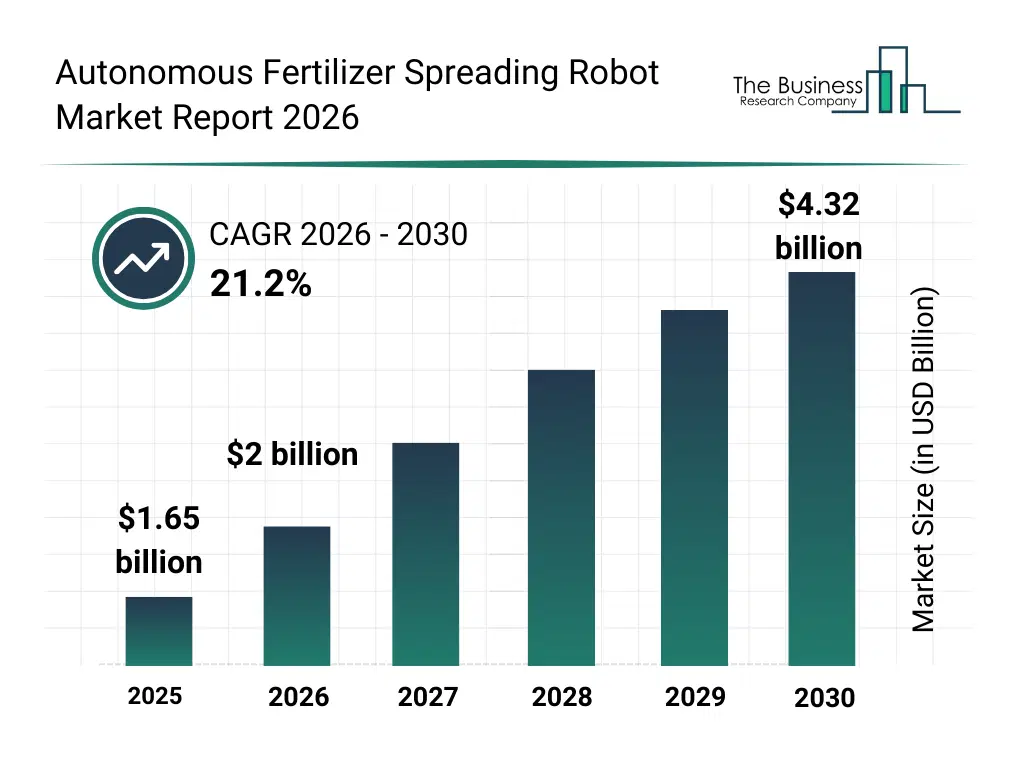
What Is The Autonomous Fertilizer Spreading Robot Market Size and Share 2026?
The autonomous fertilizer spreading robot market size has grown exponentially in recent years. It will grow from $1.65 billion in 2025 to $2 billion in 2026 at a compound annual growth rate (CAGR) of 21.2%. The growth in the historic period can be attributed to growing fertilizer consumption in commercial farming, rising demand for improved crop yields, increased adoption of basic mechanized spreaders, expanding use of soil testing methods, growing labor shortages in agriculture.What Is The Autonomous Fertilizer Spreading Robot Market Growth Forecast?
The autonomous fertilizer spreading robot market size is expected to see exponential growth in the next few years. It will grow to $4.32 billion in 2030 at a compound annual growth rate (CAGR) of 21.2%. The growth in the forecast period can be attributed to rising deployment of autonomous fertilizer robots, increasing adoption of precision agriculture tools, growing investment in ai-based soil analytics, expansion of sustainable farming initiatives, rising need for optimized fertilizer usage. Major trends in the forecast period include growing adoption of precision fertilizer application to reduce input waste, increasing use of autonomous robots to address farm labor shortages, rising demand for accurate soil nutrient mapping and targeted spreading, expansion of multi-terrain robots for diverse farm landscapes, greater use of drone-based fertilizer distribution for hard-to-reach areas.
Global Autonomous Fertilizer Spreading Robot Market Segmentation
1) By Product Type: Wheeled Robots, Tracked Robots, Drone-Based Robots, Other Types 2) By Technology: Global Positioning System (GPS) Or Global Navigation Satellite System (GNSS)-Based, Vision-Based, Sensor-Based, Other Technologies 3) By Power Source: Electric, Solar, Hybrid, Other Power Sources 4) By Application: Cereal Crops, Horticulture, Plantation Crops, Other Applications 5) By End-User: Large Farms, Small And Medium Farms, Research Institutes, Other End-Users Subsegments: 1) By Wheeled Robots: Electric Wheeled Fertilizer Spreaders, Hybrid Wheeled Fertilizer Spreaders, Diesel-Powered Wheeled Fertilizer Spreaders 2) By Tracked Robots: Rubber-Tracked Fertilizer Spreaders, Steel-Tracked Fertilizer Spreaders, Hybrid-Tracked Fertilizer Spreaders 3) By Drone-Based Robot: Fixed-Wing Fertilizer Drones, Multi-Rotor Fertilizer Drones, Hybrid Vertical Take-Off And Landing (VTOL) Fertilizer Drones 4) By Other Types: Autonomous Tractor-Mounted Fertilizer Systems, Robotic Arm Fertilizer Spreaders, Artificial Intelligence (AI)-Powered Multipurpose Fertilizer RobotsWhat Is Driver Of The Autonomous Fertilizer Spreading Robot Market?
The increasing focus on sustainable agriculture is expected to propel the growth of the autonomous fertilizer spreading robot market going forward. Sustainable agriculture is farming that meets current needs while protecting the environment and resources for future generations. The increasing focus on sustainable agriculture is due to growing awareness of environmental protection, particularly the need to preserve soil, water, and biodiversity. Autonomous fertilizer-spreading robots support sustainable agriculture by applying nutrients precisely, reducing waste, and minimizing environmental impact. For instance, in September 2024, according to the European Court of Auditors, a Luxembourg-based government agency, the goal is for 25% of EU agricultural land to become organic by 2030, which represents a substantial increase from 10.5% in 2022. Therefore, the increasing focus on sustainable agriculture is driving the growth of the autonomous fertilizer spreading robot industry.Key Players In The Global Autonomous Fertilizer Spreading Robot Market
Major companies operating in the autonomous fertilizer spreading robot market are John Deere Co., CNH Industrial N.V., Kubota Corporation, Yanmar Co. Ltd., FJDynamics Co. Ltd., Carbon Robotics, Agreenculture Robotics, Saga Robotics AS, EcoRobotix AG, Naïo Technologies SAS, AgXeed B.V., Agrobot Inc., SwarmFarm Robotics Pty Ltd., Small Robot Company Ltd., Arugga AI Farming Ltd., Verdant Robotics Inc., FarmBot Inc., Stout Industrial Technology Inc., FarmRobo Technologies, Upside Robotics Pvt. Ltd.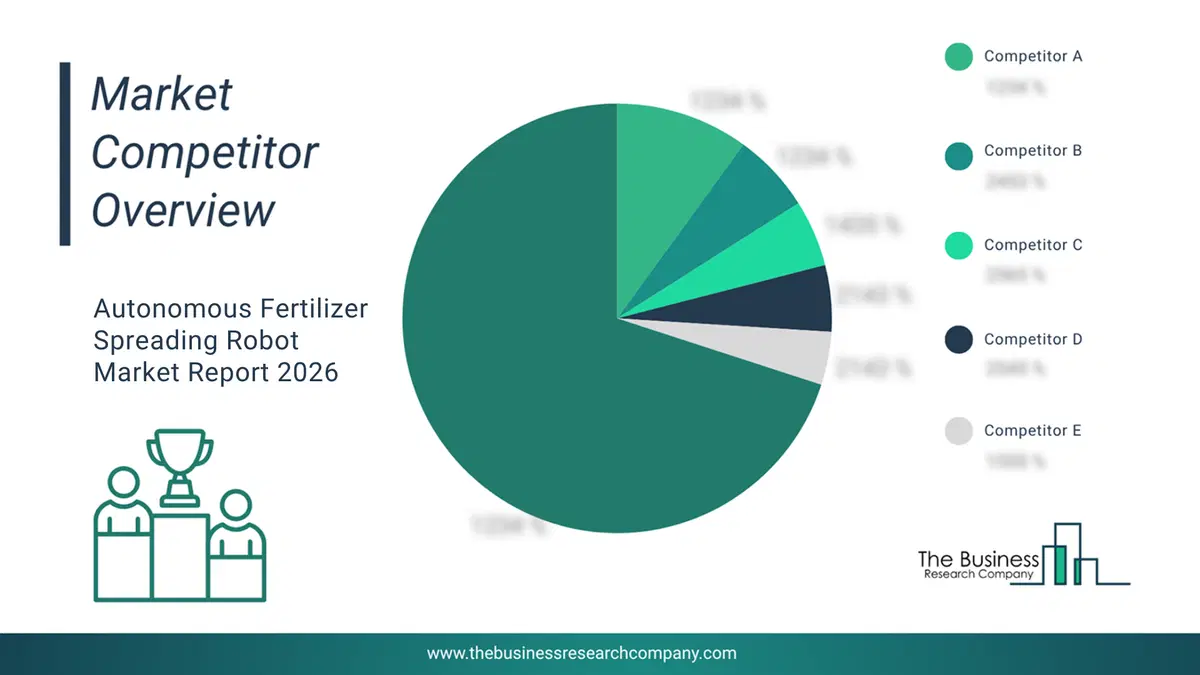
This chart is for illustrative purposes; the full report includes a detailed competitor analysis and comprehensive overview of the top 10 companies in the market.
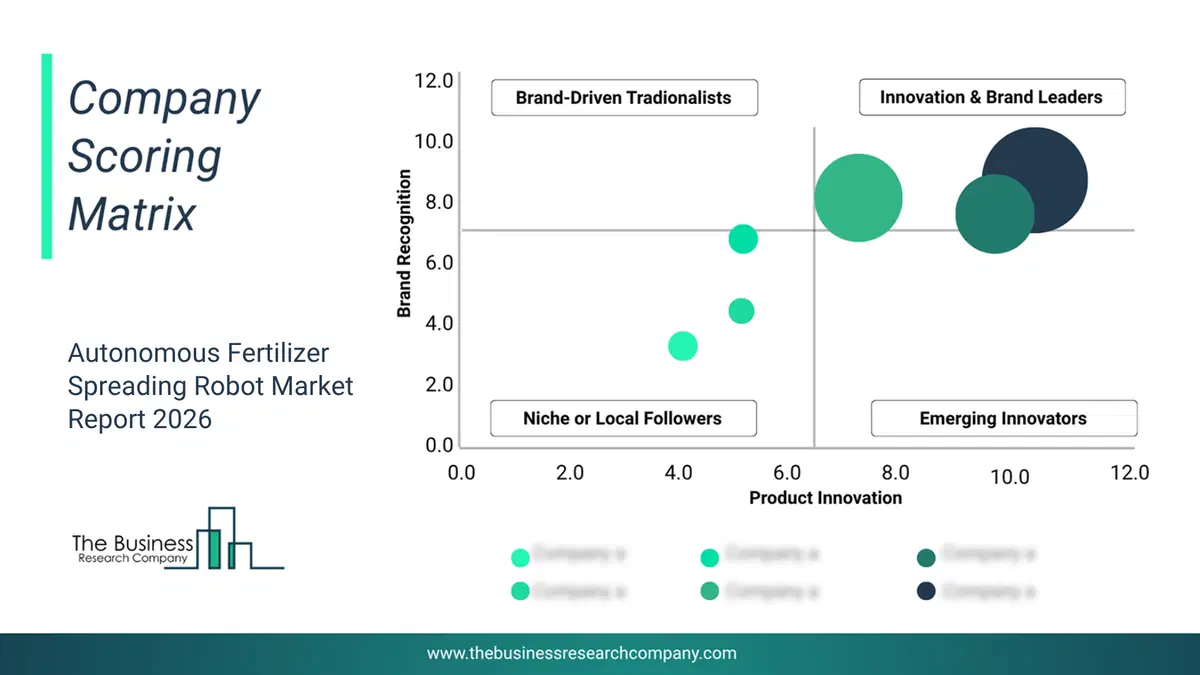
This chart maps companies by product innovation and brand strength, with bubble size indicating relative revenue, helping identify market leaders, challengers, and niche players. This is an illustrative chart; the full report provides a complete and accurate competitive analysis.
Global Autonomous Fertilizer Spreading Robot Market Trends and Insights
Major companies operating in the autonomous fertilizer spreading robot market are focusing on developing strategic investments to help businesses diversify risks and capture new market opportunities. Strategic investments are deliberate financial decisions aimed at supporting a company’s long-term objectives, enhancing its market position, and ensuring future growth. For instance, in December 2023, Chipotle Mexican Grill, a US-based restaurant chain, invested in Greenfield Robotics, a US-based agricultural technology company, and Nitricity, a US-based fertilizer system manufacturer, to promote autonomous agricultural robots and climate-smart fertilizers for shaping the future of farming. Chipotle has directed investment toward Greenfield Robotics to drive the innovation of autonomous farming robots. These machines stand out with functions such as micro-spraying for accurate nutrient application and soil testing for better crop health management. The company has also backed Nitricity, a pioneer in sustainable fertilizer production. What makes Nitricity unique is its use of renewable energy to manufacture climate-friendly fertilizers.What Are Latest Mergers And Acquisitions In The Autonomous Fertilizer Spreading Robot Market? Bonsai Robotics Acquires Farm-Ng To Strengthen Modular Autonomous Farming Solutions
In July 2025, Bonsai Robotics Inc., a US-based company that provides vision-based autonomous software for agriculture, acquired Farm-ng Inc. for an undisclosed amount. Through this acquisition, Bonsai aims to combine its advanced artificial intelligence autonomy systems with Farm-ng’s customizable robotic hardware to deliver affordable, mixed fleet solutions that improve operational efficiency and lower costs across diverse agricultural environments. Farm-ng Inc. is a US-based company that develops modular, electric, open-architecture robots for various farming tasks, including fertilizer spreading.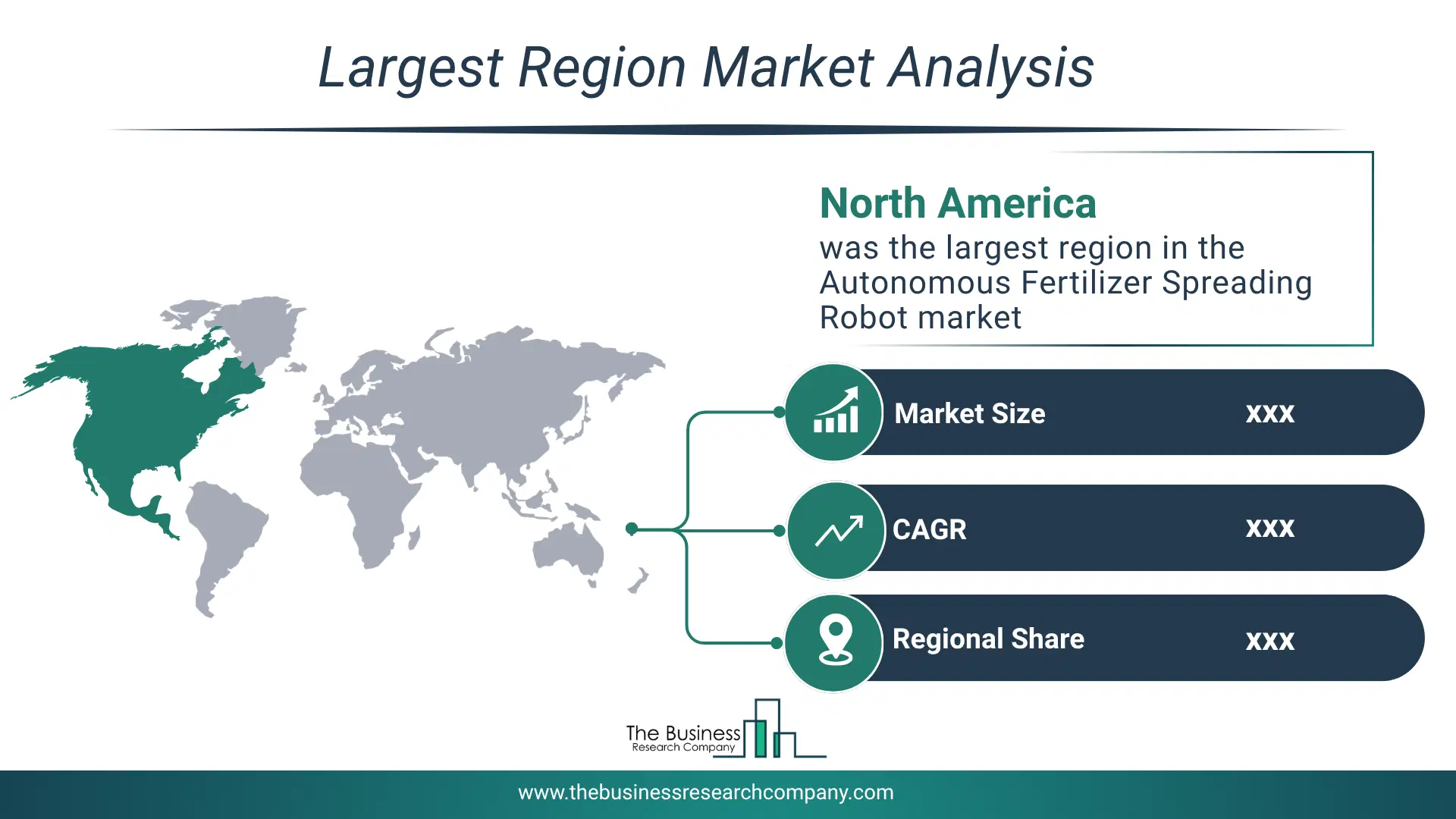
Regional Outlook
North America was the largest region in the autonomous fertilizer spreading robot market in 2025. Asia-Pacific is expected to be the fastest-growing region in the forecast period. The regions covered in this market report are Asia-Pacific, South East Asia, Western Europe, Eastern Europe, North America, South America, Middle East, Africa. The countries covered in this market report are Australia, Brazil, China, France, Germany, India, Indonesia, Japan, Taiwan, Russia, South Korea, UK, USA, Canada, Italy, SpainWhat Defines the Autonomous Fertilizer Spreading Robot Market?
The autonomous crop residue management robot market consists of sales of mulching and shredding robots, soil-incorporation robots, field-clearing robots, and solar-powered residue robots. Values in this market are ‘factory gate’ values, that is the value of goods sold by the manufacturers or creators of the goods, whether to other entities (including downstream manufacturers, wholesalers, distributors and retailers) or directly to end customers. The value of goods in this market includes related services sold by the creators of the goods.How is Market Value Defined and Measured?
The market value is defined as the revenues that enterprises gain from the sale of goods and/or services within the specified market and geography through sales, grants, or donations in terms of the currency (in USD unless otherwise specified). The revenues for a specified geography are consumption values that are revenues generated by organizations in the specified geography within the market, irrespective of where they are produced. It does not include revenues from resales along the supply chain, either further along the supply chain or as part of other products.
This chart presents market attractiveness based on a quantitative evaluation of growth, competition, strategic alignment, and risk, offering a clear view of opportunity areas for decision-making. This chart is for illustrative purposes; the full report contains the complete analysis.

This chart highlights the Total Addressable Market (TAM) by estimating the maximum revenue opportunity using an assumption-driven approach, supporting strategic planning and opportunity sizing across markets. The chart is illustrative; the full report provides a more comprehensive analysis.
What Key Data and Analysis Are Included in the Autonomous Fertilizer Spreading Robot Market Report 2026?
The autonomous fertilizer spreading robot market research report is one of a series of new reports from The Business Research Company that provides market statistics, including industry global market size, regional shares, competitors with the market share, detailed market segments, market trends and opportunities, and any further data you may need to thrive in the autonomous fertilizer spreading robot industry. The market research report delivers a complete perspective of everything you need, with an in-depth analysis of the current and future state of the industry.Autonomous Fertilizer Spreading Robot Market Report Forecast Analysis
| Report Attribute | Details |
|---|---|
| Market Size Value In 2026 | $2 billion |
| Revenue Forecast In 2030 | $4.32 billion |
| Growth Rate | CAGR of 21.2% from 2026 to 2030 |
| Base Year For Estimation | 2025 |
| Actual Estimates/Historical Data | 2020-2025 |
| Forecast Period | 2026 - 2030 |
| Market Representation | Revenue in USD Billion and CAGR from 2026 to 2030 |
| Segments Covered | Product Type, Technology, Power Source, Application, End-User |
| Regional Scope | Asia-Pacific, Western Europe, Eastern Europe, North America, South America, Middle East, Africa |
| Country Scope | The countries covered in the report are Australia, Brazil, China, France, Germany, India, Indonesia, Japan, Taiwan, Russia, South Korea, UK, USA, Canada, Italy, Spain |
| Key Companies Profiled | John Deere Co., CNH Industrial N.V., Kubota Corporation, Yanmar Co. Ltd., FJDynamics Co. Ltd., Carbon Robotics, Agreenculture Robotics, Saga Robotics AS, EcoRobotix AG, Naïo Technologies SAS, AgXeed B.V., Agrobot Inc., SwarmFarm Robotics Pty Ltd., Small Robot Company Ltd., Arugga AI Farming Ltd., Verdant Robotics Inc., FarmBot Inc., Stout Industrial Technology Inc., FarmRobo Technologies, Upside Robotics Pvt. Ltd. |
| Customization Scope | Request for Customization |
| Pricing And Purchase Options | Explore Purchase Options |