
Autonomous Fish Habitat Cleaning Robot Market Report 2026
Global Outlook – By Product Type (Surface Cleaning Robots, Submersible Cleaning Robots, Hybrid Cleaning Robots), By Technology (Artificial intelligence-Based Robots, Remote-Controlled Robots, Sensor-Based Robots, Other Technologies), By Distribution Channel (Direct Sales, Online Retail, Specialty Stores, Other Distribution Channels), By Application (Aquaculture Farms, Public Aquariums, Research Institutes, Natural Water Bodies, Other Applications), By End-User (Commercial, Government, Research, Other End-Users) – Market Size, Trends, Strategies, and Forecast to 2030
Autonomous Fish Habitat Cleaning Robot Market Overview
• Autonomous Fish Habitat Cleaning Robot market size has reached to $1.29 billion in 2025 • Expected to grow to $2.73 billion in 2030 at a compound annual growth rate (CAGR) of 16.1% • Growth Driver: Rising Aquaculture Production Fueling The Growth Of The Market Due To Increasing Demand For Sustainable Protein-Rich Seafood • Market Trend: AI-Powered Cleaning Robots Enhance Fish Health And Efficiency • Asia-Pacific was the largest region in 2025 and North America is the fastest growing region.What Is Covered Under Autonomous Fish Habitat Cleaning Robot Market?
Autonomous fish habitat cleaning robot is an automated device designed to maintain cleanliness and hygiene in aquatic environments such as fish tanks, ponds, or aquaculture systems. It operates independently using sensors and navigation systems to detect and remove debris, algae, and waste without human intervention. Its primary purpose is to ensure a healthy habitat for fish by improving water quality and reducing manual maintenance efforts. The main product types of autonomous fish habitat cleaning robot are surface cleaning robots, submersible cleaning robots, and hybrid cleaning robots. Surface cleaning robots are automated devices that clean floors, walls, or other surfaces without human intervention. This robot incorporates various technologies, such as artificial intelligence-based robots, remote-controlled robots, sensor-based robots, and others, and is distributed through direct sales, online retail, specialty stores, and others. It finds applications in aquaculture farms, public aquariums, research institutes, natural water bodies, and others, serving end users such as commercial, government, research, and others.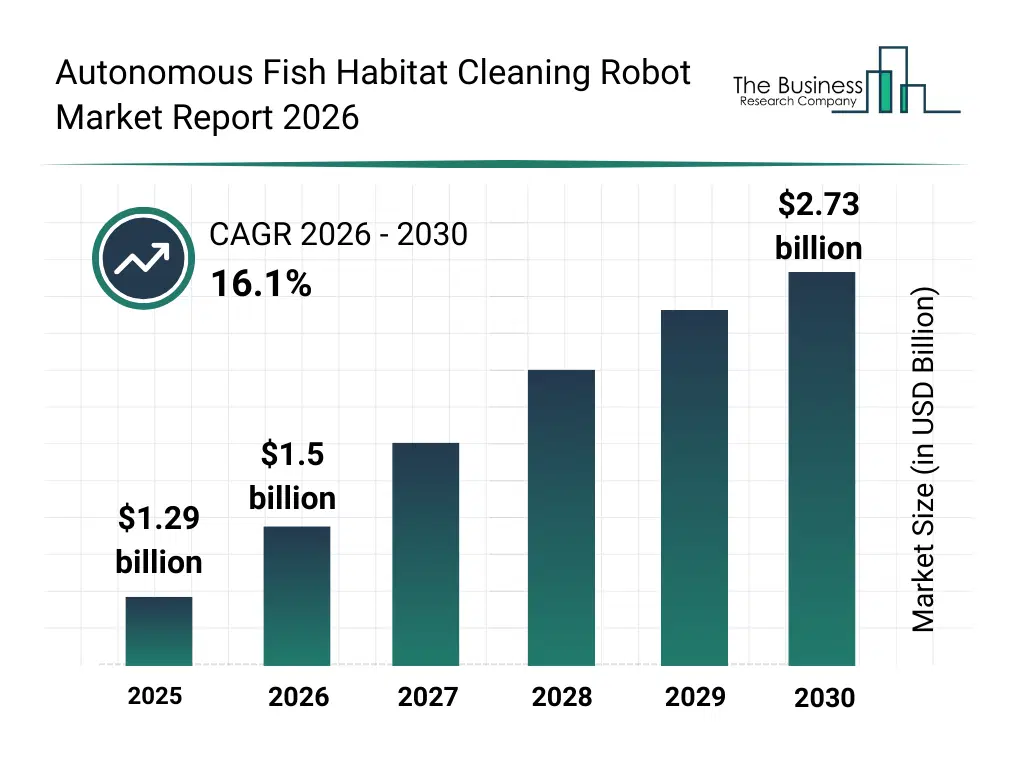
What Is The Autonomous Fish Habitat Cleaning Robot Market Size and Share 2026?
The autonomous fish habitat cleaning robot market size has grown rapidly in recent years. It will grow from $1.29 billion in 2025 to $1.5 billion in 2026 at a compound annual growth rate (CAGR) of 16.3%. The growth in the historic period can be attributed to growing aquaculture production worldwide, rising need for effective tank and pond maintenance, increasing concern over fish health issues, widespread use of manual cleaning tools historically, growing demand for improved water quality.What Is The Autonomous Fish Habitat Cleaning Robot Market Growth Forecast?
The autonomous fish habitat cleaning robot market size is expected to see rapid growth in the next few years. It will grow to $2.73 billion in 2030 at a compound annual growth rate (CAGR) of 16.1%. The growth in the forecast period can be attributed to rising adoption of autonomous cleaning technologies, increasing investment in aquaculture automation, growing need for cost-efficient maintenance solutions, expansion of hybrid and ai-powered habitat cleaning robots, rising regulatory emphasis on aquatic health standards. Major trends in the forecast period include increasing adoption of autonomous cleaning robots across aquaculture facilities, rising demand for algae and waste removal solutions to improve water quality, growing use of submersible cleaning robots for deep-tank maintenance, expansion of hybrid cleaning robots enabling multi-surface operations, greater requirement for low-maintenance automated habitat cleaning systems.
Global Autonomous Fish Habitat Cleaning Robot Market Segmentation
1) By Product Type: Surface Cleaning Robots, Submersible Cleaning Robots, Hybrid Cleaning Robots 2) By Technology: Artificial intelligence-Based Robots, Remote-Controlled Robots, Sensor-Based Robots, Other Technologies 3) By Distribution Channel: Direct Sales, Online Retail, Specialty Stores, Other Distribution Channels 4) By Application: Aquaculture Farms, Public Aquariums, Research Institutes, Natural Water Bodies, Other Applications 5) By End-User: Commercial, Government, Research, Other End-Users Subsegments: 1) By Surface Cleaning Robots: Autonomous Floating Cleaners, Wall-Mounted Cleaning Units, Remote-Controlled Surface Cleaners 2) By Submersible Cleaning Robots: Deep-Water Cleaning Robots, Shallow-Water Cleaning Robots, Fish Farm Net Cleaning Robots 3) By Hybrid Cleaning Robots: Dual-Mode Surface And Submersible Robots, Amphibious Cleaning Robots, Artificial Intelligence (AI)-Powered Multi-Functional RobotsWhat Is Driver Of The Autonomous Fish Habitat Cleaning Robot Market?
The rising aquaculture production is expected to propel the growth of the autonomous fish habitat cleaning robot market going forward. Aquaculture production refers to the breeding, rearing, and harvesting of aquatic organisms such as fish, shellfish, and seaweed in controlled environments. The rising aquaculture production is due to the growing demand for seafood as a sustainable, protein-rich food source amid declining wild fish stocks. Autonomous fish habitat cleaning robots support aquaculture production by ensuring continuous net cleanliness, reducing manual labor, and maintaining optimal water quality, which improves fish health and overall farm efficiency. For instance, in April 2025, according to the Department of Agriculture, Fisheries and Forestry, an Australia-based government department, the fisheries and aquaculture production volume is projected to reach 296,000 tonnes by 2024–25, a 1% increase from 2022-23. Therefore, the rising aquaculture production is driving the growth of the autonomous fish habitat cleaning robot industry.Key Players In The Global Autonomous Fish Habitat Cleaning Robot Market
Major companies operating in the autonomous fish habitat cleaning robot market are Festo AG & Co. KG, AKVA group ASA, InnovaSea Systems Inc., Deep Trekker Inc., Yanmar Marine International B.V., Ecorobotix SA, QYSEA Technology Co. Ltd., Weda AB, Aqua Nor, Aquarobotman Science & Technology Co. Ltd., Hydromea SA, Nido Robotics, RanMarine Technology B.V., Seaber SAS, Aquaai Corporation, Remora Robotics, RohamRobotic, EasyX Inc., BossAqua, KeelCrab, MOAI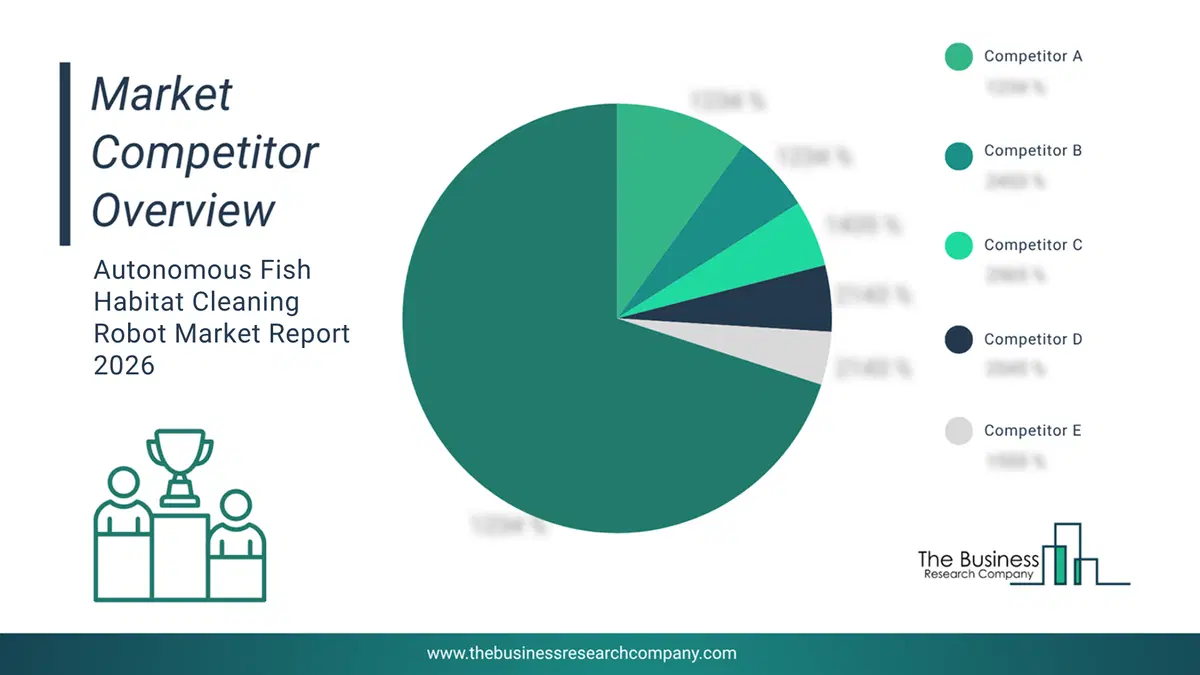
This chart is for illustrative purposes; the full report includes a detailed competitor analysis and comprehensive overview of the top 10 companies in the market.
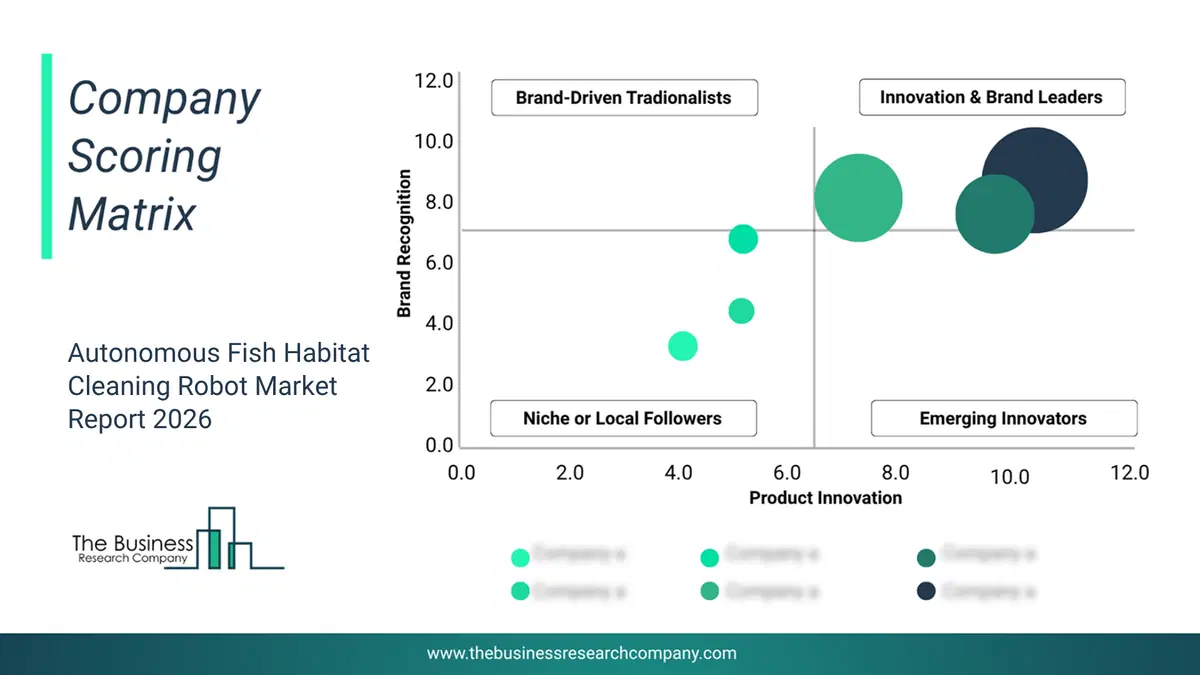
This chart maps companies by product innovation and brand strength, with bubble size indicating relative revenue, helping identify market leaders, challengers, and niche players. This is an illustrative chart; the full report provides a complete and accurate competitive analysis.
Global Autonomous Fish Habitat Cleaning Robot Market Trends and Insights
Major companies operating in the autonomous fish habitat cleaning robot market are focusing on developing technologically advanced products, such as AI-powered cleaning robots, to improve operational efficiency, reduce labor, and maintain fish health. Artificial intelligence (AI)-powered cleaning robots are autonomous machines that use artificial intelligence to detect, navigate, and clean efficiently, adapting to their environment with minimal human intervention. For instance, in November 2024, Remora Robotics AS, a Norway-based technology company, launched fully autonomous cage-washing robots designed for the aquaculture industry, specifically for cleaning fish farming nets and cages. These robots perform continuous, automated cleaning and AI-driven inspection of nets, collecting critical underwater data to support fish health, biosecurity, and operational efficiency. This system also integrates smart monitoring and real-time data analysis, providing fish farmers with improved gill health, reduced biological risks, and a more sustainable production environment.What Are Latest Mergers And Acquisitions In The Autonomous Fish Habitat Cleaning Robot Market? Scale Aquaculture Acquired Probotic To Enhance Aquaculture Operational Efficiency
In June 2025, Scale Aquaculture AS, a Norway-based aquaculture technology company, acquired Probotic AS for an undisclosed amount. With this acquisition, Scale Aquaculture aims to expand its product portfolio by enhancing the integration and interaction between floating collars, fishing nets, and autonomous net cleaning systems, ultimately improving fish welfare, operational efficiency, and sustainability in aquaculture. Probotic AS is a Norway-based aquatech company that develops autonomous fish habitat cleaning robots.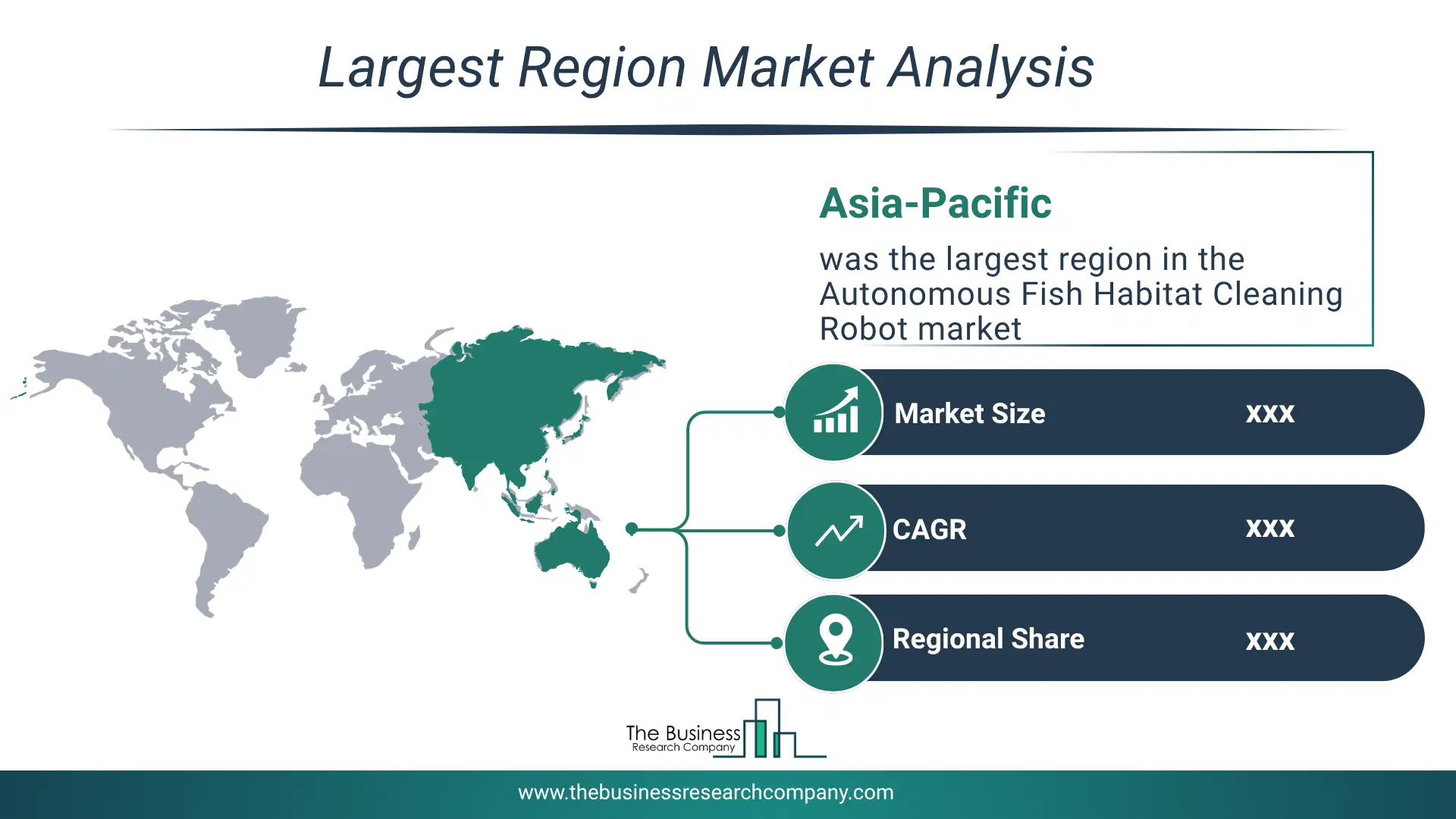
Regional Outlook
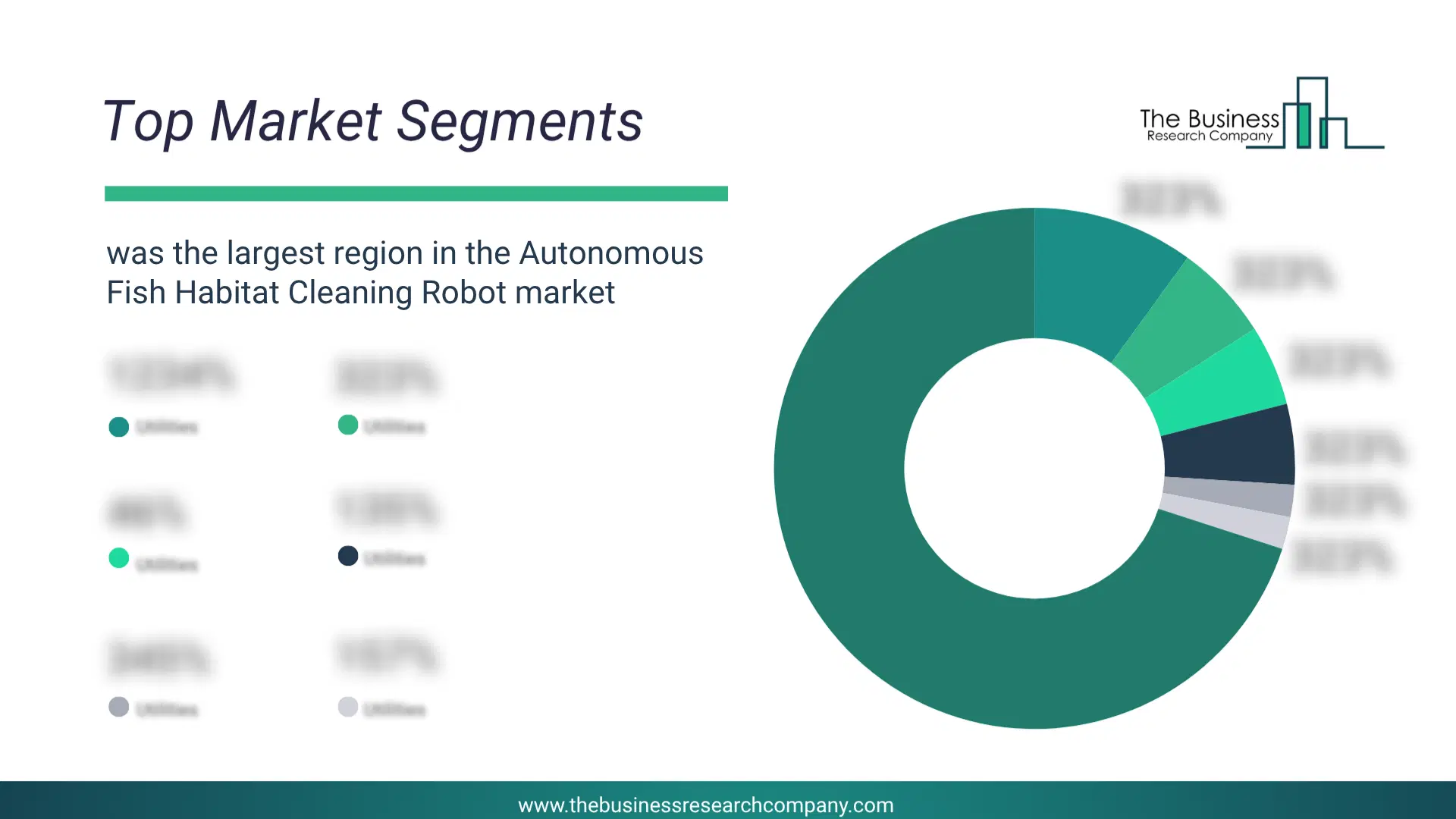
Asia-Pacific was the largest region in the autonomous fish habitat cleaning robots market in 2025. North America is expected to be the fastest-growing region in the forecast period. The regions covered in this market report are Asia-Pacific, South East Asia, Western Europe, Eastern Europe, North America, South America, Middle East, Africa. The countries covered in this market report are Australia, Brazil, China, France, Germany, India, Indonesia, Japan, Taiwan, Russia, South Korea, UK, USA, Canada, Italy, SpainWhat Defines the Autonomous Fish Habitat Cleaning Robot Market?
The autonomous fish habitat cleaning robot market consists of sales of reef cleaning robots, algae-scrubbing drones, fish farm net cleaning robots, sediment vacuum robots, and smart aquatic monitoring bots. Values in this market are ‘factory gate’ values, that is, the value of goods sold by the manufacturers or creators of the goods, whether to other entities (including downstream manufacturers, wholesalers, distributors, and retailers) or directly to end customers. The value of goods in this market includes related services sold by the creators of the goods.How is Market Value Defined and Measured?
The market value is defined as the revenues that enterprises gain from the sale of goods and/or services within the specified market and geography through sales, grants, or donations in terms of the currency (in USD unless otherwise specified). The revenues for a specified geography are consumption values that are revenues generated by organizations in the specified geography within the market, irrespective of where they are produced. It does not include revenues from resales along the supply chain, either further along the supply chain or as part of other products.
This chart presents market attractiveness based on a quantitative evaluation of growth, competition, strategic alignment, and risk, offering a clear view of opportunity areas for decision-making. This chart is for illustrative purposes; the full report contains the complete analysis.

This chart highlights the Total Addressable Market (TAM) by estimating the maximum revenue opportunity using an assumption-driven approach, supporting strategic planning and opportunity sizing across markets. The chart is illustrative; the full report provides a more comprehensive analysis.
What Key Data and Analysis Are Included in the Autonomous Fish Habitat Cleaning Robot Market Report 2026?
The autonomous fish habitat cleaning robot market research report is one of a series of new reports from The Business Research Company that provides market statistics, including industry global market size, regional shares, competitors with the market share, detailed market segments, market trends and opportunities, and any further data you may need to thrive in the autonomous fish habitat cleaning robot industry. The market research report delivers a complete perspective of everything you need, with an in-depth analysis of the current and future state of the industry.Autonomous Fish Habitat Cleaning Robot Market Report Forecast Analysis
| Report Attribute | Details |
|---|---|
| Market Size Value In 2026 | $1.5 billion |
| Revenue Forecast In 2030 | $2.73 billion |
| Growth Rate | CAGR of 16.1% from 2026 to 2030 |
| Base Year For Estimation | 2025 |
| Actual Estimates/Historical Data | 2020-2025 |
| Forecast Period | 2026 - 2030 |
| Market Representation | Revenue in USD Billion and CAGR from 2026 to 2030 |
| Segments Covered | Product Type, Technology, Distribution Channel, Application, End-User |
| Regional Scope | Asia-Pacific, Western Europe, Eastern Europe, North America, South America, Middle East, Africa |
| Country Scope | The countries covered in the report are Australia, Brazil, China, France, Germany, India, Indonesia, Japan, Taiwan, Russia, South Korea, UK, USA, Canada, Italy, Spain |
| Key Companies Profiled | Festo AG & Co. KG, AKVA group ASA, InnovaSea Systems Inc., Deep Trekker Inc., Yanmar Marine International B.V., Ecorobotix SA, QYSEA Technology Co. Ltd., Weda AB, Aqua Nor, Aquarobotman Science & Technology Co. Ltd., Hydromea SA, Nido Robotics, RanMarine Technology B.V., Seaber SAS, Aquaai Corporation, Remora Robotics, RohamRobotic, EasyX Inc., BossAqua, KeelCrab, MOAI |
| Customization Scope | Request for Customization |
| Pricing And Purchase Options | Explore Purchase Options |