
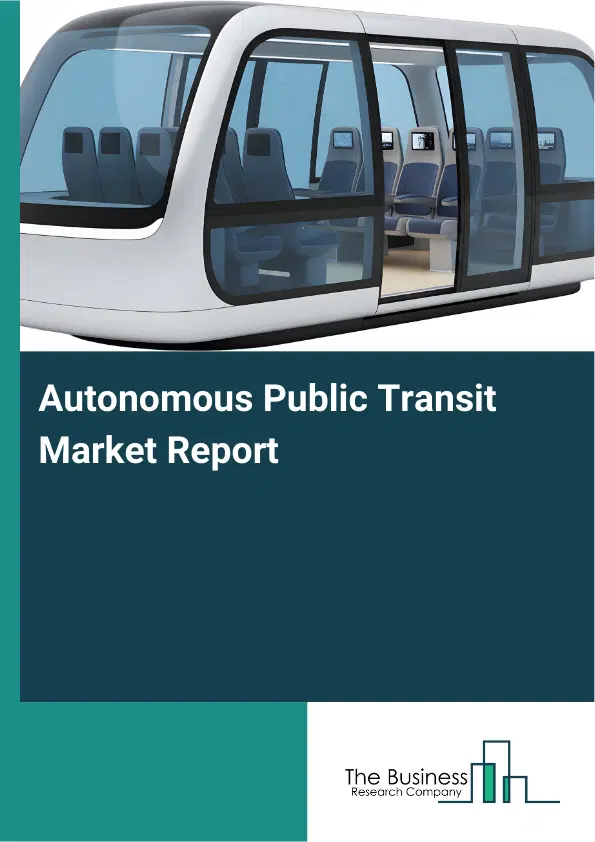
Autonomous Public Transit Market Report 2026
Global Outlook – By Vehicle Type (Autonomous Electric Buses, Autonomous Shuttles), By Component (Software, Hardware, Services), By Application (Urban Transportation, Rural Transportation) – Market Size, Trends, Strategies, and Forecast to 2030
Autonomous Public Transit Market Overview
• Autonomous Public Transit market size has reached to $3.17 billion in 2025 • Expected to grow to $9 billion in 2030 at a compound annual growth rate (CAGR) of 23.3% • Growth Driver: Rising Traffic Congestion Fuels Growth In The Market Due To Increasing Demand In Automated Mobility Solutions • Market Trend: Integration Of Sensor Fusion And AI In Driverless Public Transit • Asia-Pacific was the largest region in 2025 and Europe is the fastest growing region.Market Gains By 2030 – Top Opportunities By Segment
Market Gain identifies the most promising market opportunities by highlighting the segments or products expected to generate the highest incremental revenue growth over the next five years.
What Is Covered Under Autonomous Public Transit Market?
Autonomous public transit refers to a self-operating transportation system that utilizes advanced technologies such as artificial intelligence (AI), sensors, and real-time data analytics to navigate, control, and manage public vehicles such as buses, shuttles, or trains without direct human intervention, ensuring efficient, safe, and consistent service delivery. It optimizes urban mobility by reducing traffic congestion, lowering operational costs, and increasing accessibility and transportation equity, particularly in underserved or high-demand areas. The main vehicle types in autonomous public transit include autonomous electric buses, autonomous shuttles, and autonomous taxis. Autonomous electric buses are self-driving, battery-powered public transport vehicles designed to operate without human intervention while offering sustainable, low-emission urban mobility. These vehicles rely on components such as software, hardware, and services, and are used in applications including industrial transportation, urban transportation, and rural transportation.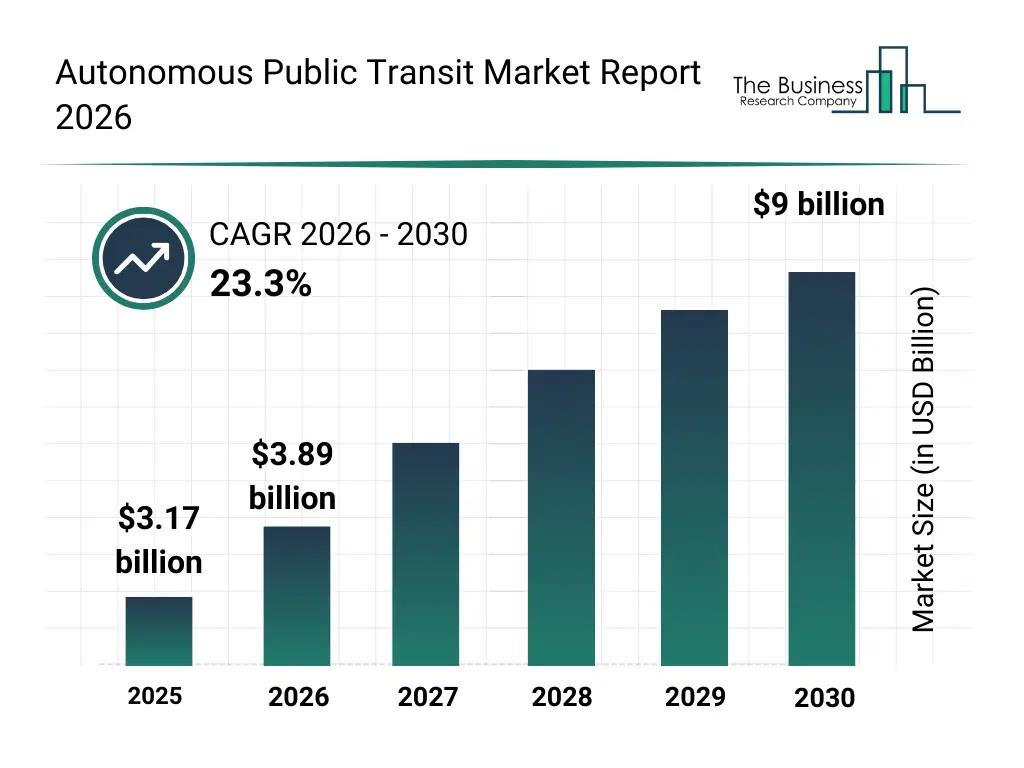
What Is The Autonomous Public Transit Market Size and Share 2026?
The autonomous public transit market size has grown exponentially in recent years. It will grow from $3.17 billion in 2025 to $3.89 billion in 2026 at a compound annual growth rate (CAGR) of 22.7%. The growth in the historic period can be attributed to urban congestion challenges, public transport digitization, electric bus adoption, pilot autonomous transit projects, government smart city initiatives.What Is The Autonomous Public Transit Market Growth Forecast?
The autonomous public transit market size is expected to see exponential growth in the next few years. It will grow to $9 billion in 2030 at a compound annual growth rate (CAGR) of 23.3%. The growth in the forecast period can be attributed to smart city investments, zero-emission mobility targets, AI-driven fleet management, autonomous vehicle regulations, public-private transit partnerships. Major trends in the forecast period include deployment of autonomous bus pilots, growth of last-mile autonomous shuttles, integration with smart city platforms, demand for low-emission transit, expansion of on-demand transit models.
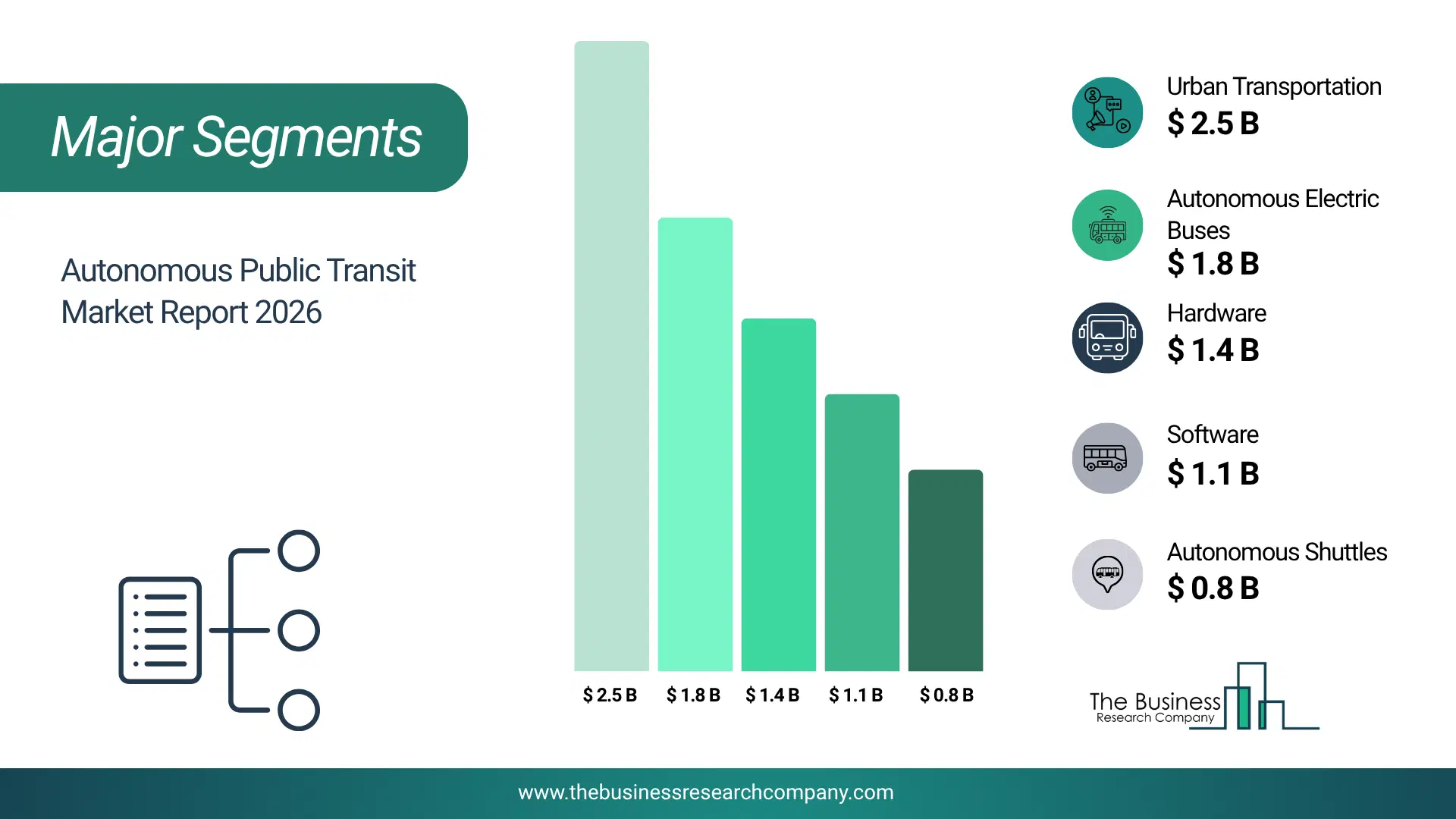
Global Autonomous Public Transit Market Segmentation
1) By Vehicle Type: Autonomous Electric Buses, Autonomous Shuttles 2) By Component: Software, Hardware, Services 3) By Application: Urban Transportation, Rural Transportation Subsegments: 1) By Autonomous Electric Buses: Battery Electric Buses, Hydrogen Fuel Cell Buses, Plug-In Hybrid Autonomous Buses, Articulated Autonomous Buses, Mini Or Mid-Size Autonomous Buses 2) By Autonomous Shuttles: Low-Speed Campus Shuttles, First-Mile Or Last-Mile Shuttles, On-Demand Autonomous Shuttles, Fixed Route Autonomous Shuttles, Shared Autonomous Shuttles The top segments in the autonomous public transit market will be: • Urban Transportation will reach $2509.91 Million by 2025. • Autonomous Electric Buses will reach $1809.2 Million by 2025. • Hardware will reach $1451.23 Million by 2025. • Software will reach $1198.89 Million by 2025. • Autonomous Shuttles will reach $896.22 Million by 2025.What Is The Driver Of The Autonomous Public Transit Market?
The increasing traffic congestion is expected to propel the growth of the autonomous public transit market going forward. Traffic congestion refers to road network conditions that arise when the volume of vehicles exceeds roadway capacity, leading to slower speeds, longer trip times, and vehicular queuing. The increasing traffic congestion is primarily due to the rapid growth in the urban population, leading to higher vehicle ownership and greater demand for road infrastructure. Autonomous public transit helps alleviate traffic congestion by optimizing route efficiency, reducing the number of privately owned vehicles on the road, and promoting shared mobility solutions that maximize passenger capacity while minimizing travel time and fuel consumption. For instance, in May 2024, according to the Department for Transport, a UK-based ministerial department, in 2023, vehicles traveled 330.8 billion miles on roads in Great Britain, marking a 2.2% increase from 2022. Therefore, the increasing traffic congestion is driving the growth of the autonomous public transit industry.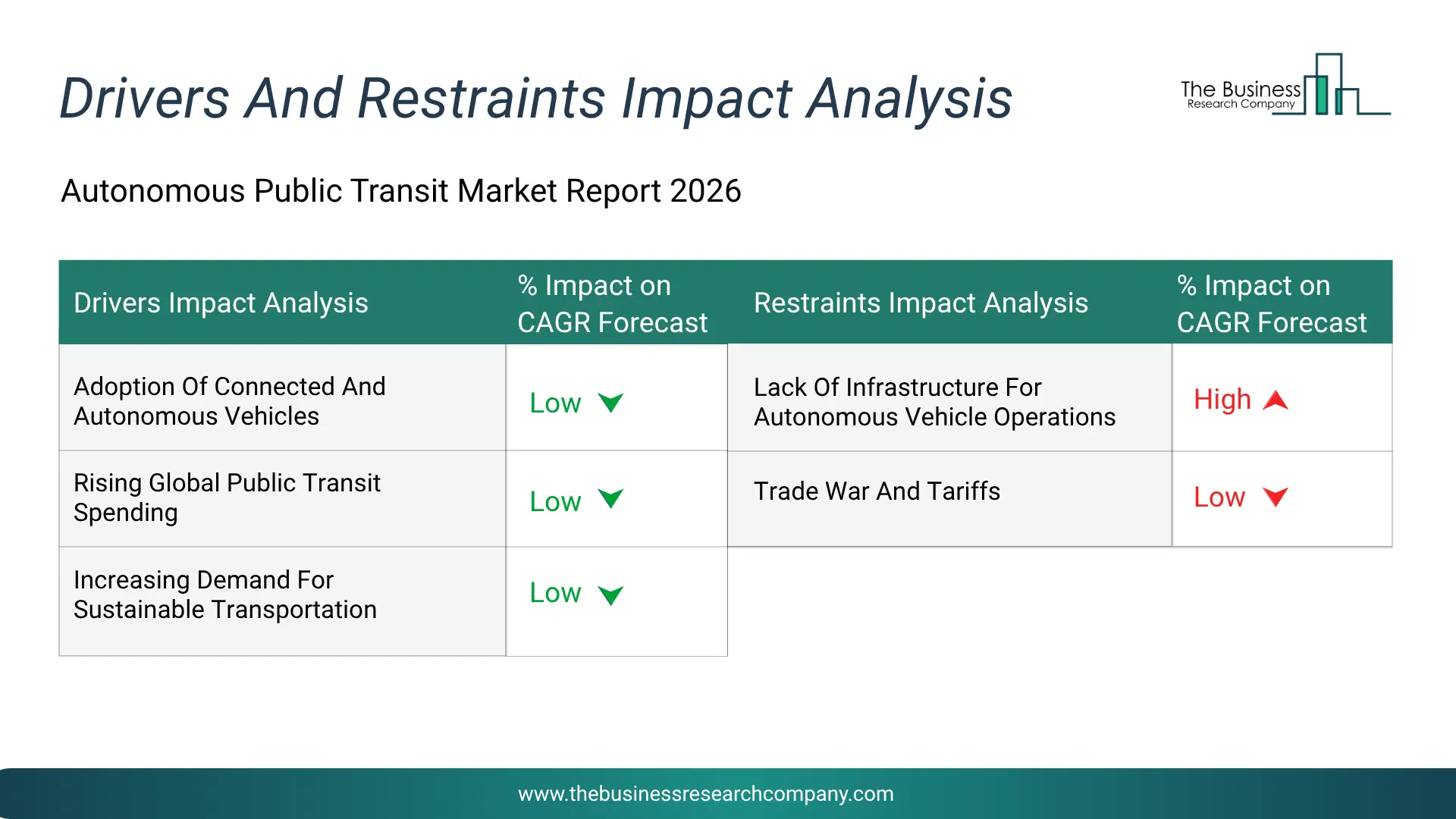
Infographic Chart Showing Key Market Drivers Analysis And Restraints For Autonomous Public Transit Market
The chart presents an impact analysis of key drivers and restraints, quantifying their relative influence on the market's growth rate and helping assess the balance between growth enablers and limiting factors. This chart offers a high-level perspective; the full report contains more detailed insights.
How Will The Drivers Impact Growth In The Global Autonomous Public Transit Market?
• Adoption Of Connected And Autonomous Vehicles (Low) – The adoption of connected and autonomous vehicles will become a key driver of growth in the autonomous public transit market by 2030. The adoption of connected and autonomous vehicles (CAVs) drives the growth of the autonomous public transit market because these technologies enable safer, more efficient and coordinated transit operations. Connected vehicles can communicate with each other and traffic infrastructure to optimize routes, reduce congestion and prevent accidents. Autonomous vehicles reduce reliance on human drivers, lowering labor costs and enabling continuous, reliable service. As a result, the adoption of connected and autonomous vehicles is anticipated to contributing to a 0.9% annual growth in the market. • Rising Global Public Transit Spending (Low) – The rising global public transit spending will emerge as a major factor driving the expansion of the autonomous public transit market by 2030. Rising global public transit investment is driving growth in the autonomous public transit market, as increased funding enables cities and transit agencies to upgrade infrastructure, integrate advanced technologies and deploy autonomous vehicle fleets. Enhanced financial support facilitates the implementation of smart systems and digital networks, making autonomous public transit more viable and scalable. Consequently, the rising global public transit spending is projected to contributing to a 0.8% annual growth in the market. • Increasing Demand For Sustainable Transportation (Low) – The increasing demand for sustainable transportation within digital manufacturing processes will serve as a key growth catalyst for the autonomous public transit market by 2030, the increasing demand for sustainable transportation drives the autonomous public transit market because autonomous vehicles (AVs) can be electric, energy-efficient and optimized for reduced emissions. Cities and transit agencies see AVs as a way to lower carbon footprints, decrease air pollution and support green mobility goals. Additionally, autonomous systems can improve route efficiency and reduce fuel consumption, making public transit both environmentally friendly and cost-effective. Therefore, this increasing demand for sustainable transportation is projected to supporting to a 0.6% annual growth in the market. • Favorable Government Initiatives (Low) – Favorable government initiatives are expected to drive the autonomous public transit market by providing funding, incentives and supportive regulations for autonomous vehicle deployment. Investments in smart infrastructure and streamlined safety frameworks are expected to accelerate the adoption of autonomous public transit systems.How Will The Restraints Impact Growth In The Global Autonomous Public Transit Market?
• High Initial Investment And Development Costs (Low) – High Initial Investment And Development Costs will restrict the growth of the Autonomous Public Transit market during the forecast period. Autonomous public transit systems require substantial investment in vehicle technology, infrastructure, and testing. The high development costs for autonomous driving systems and vehicle modifications create barriers for transit agencies. Cost constraints can lead to project delays and limited deployment, affecting market growth. • Lack Of Infrastructure For Autonomous Vehicle Operations (Low) – Lack Of Infrastructure For Autonomous Vehicle Operations will restrict the growth of the Autonomous Public Transit market during the forecast period. Autonomous public transit requires specialized infrastructure including dedicated lanes, charging facilities, and communication networks. The lack of adequate infrastructure in many cities limits the deployment of autonomous transit solutions. Infrastructure gaps require significant investment that may not be available in all regions, constraining market growth. • Trade War And Tariffs (Low) – Trade War And Tariffs will restrict the growth of the Autonomous Public Transit market during the forecast period. Autonomous transit technology relies on imported sensors, processors, and electronic components subject to trade tariffs. Trade tensions can increase costs and affect the affordability of autonomous transit solutions. Trade barriers may also limit technology transfer and international collaboration in autonomous vehicle development.Key Players In The Global Autonomous Public Transit Market
Major companies operating in the autonomous public transit market report include Amazon.com Inc., AB Volvo, Continental AG, Scania CV AB, Transdev, MAN Truck & Bus, Keolis, Yutong Bus Co. Ltd., Arrival UK Ltd., Waymo LLC, Nuro Inc., Motional Inc., Karsan, EasyMile, Aurora Innovation, Pony AI Inc., May Mobility, AutoX Inc., LILEE System, Navya, Perrone Robotics Inc.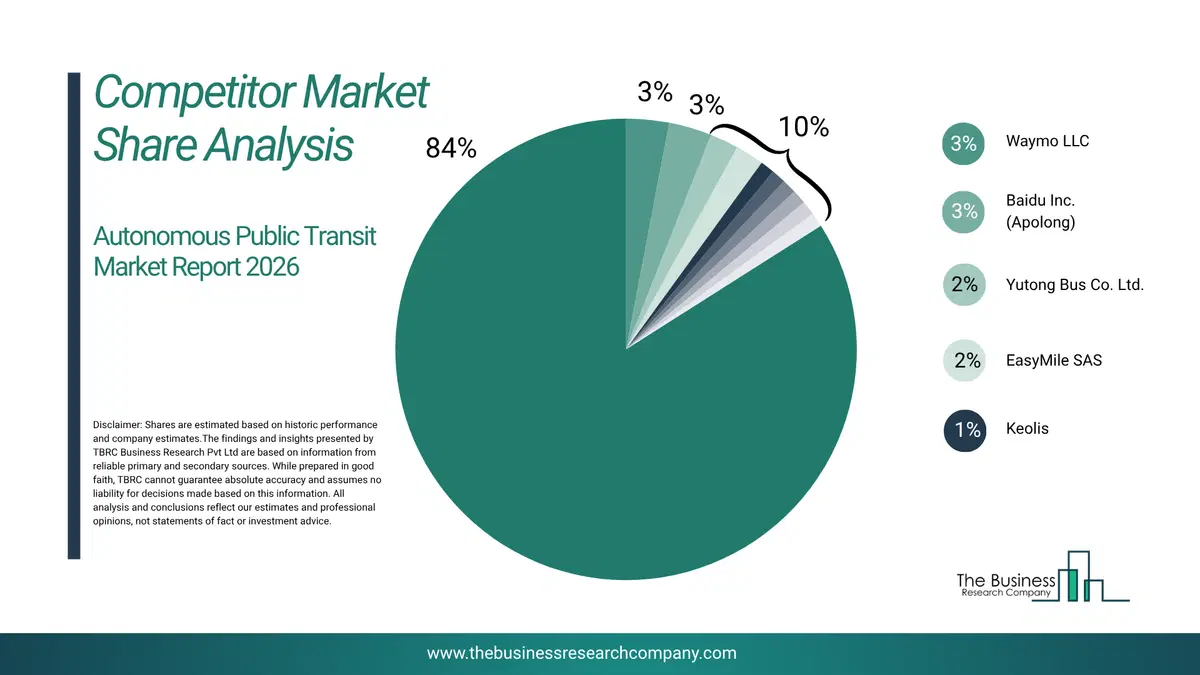
This chart is for illustrative purposes; the full report includes a detailed competitor analysis and comprehensive overview of the top 10 companies in the market.
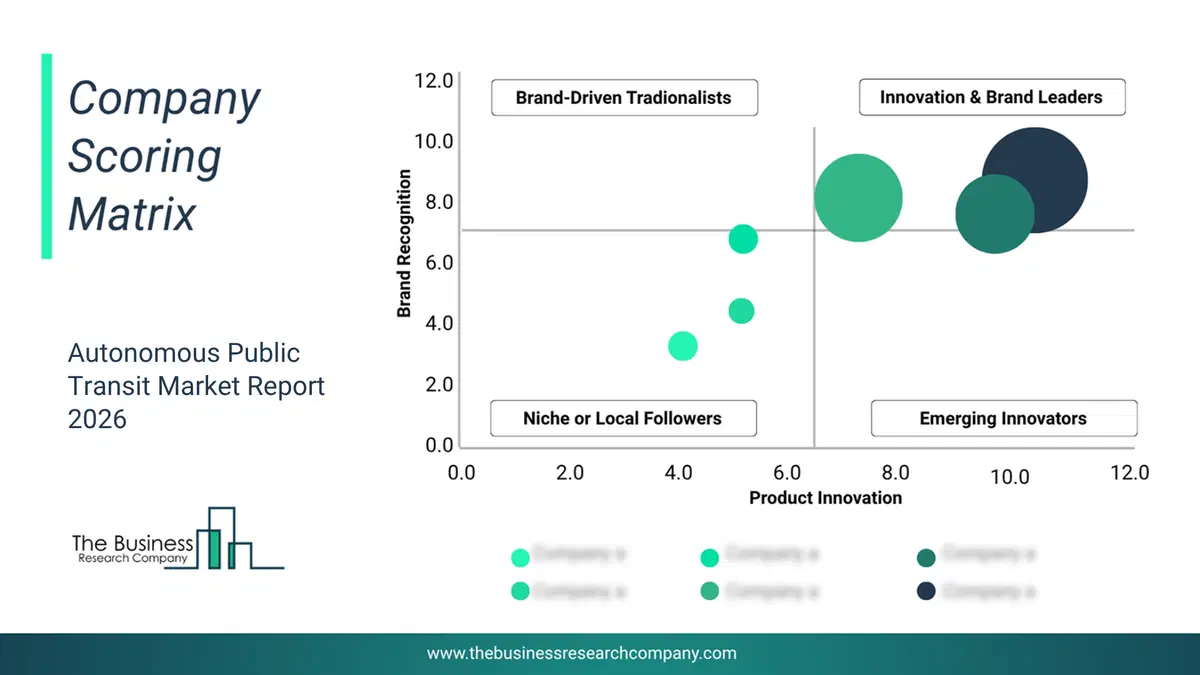
This chart maps companies by product innovation and brand strength, with bubble size indicating relative revenue, helping identify market leaders, challengers, and niche players. This is an illustrative chart; the full report provides a complete and accurate competitive analysis.
Global Autonomous Public Transit Market Trends and Insights
Major companies operating in the autonomous public transit market are focusing on developing innovative solutions, such as Level 4 driverless vehicles, to advance the integration of autonomous technology into public transportation systems. A Level 4 driverless vehicle is an autonomous vehicle capable of fully controlling all driving tasks within specific conditions or designated areas without human intervention. For instance, in August 2024, Karsan, a Turkey-based autonomous vehicle manufacturer, partnered with ADASTEC Corporation, a US-based autonomous driving technology company, to launch the Autonomous e-ATAK, an automated bus service featuring the world’s first Level-4 driverless public vehicle operating on a planned 2.2-kilometer route in Arbon. The Autonomous e-ATAK is equipped with advanced sensor fusion technology, including LiDAR, radar, and cameras, integrated with ADASTEC’s flowride.ai software platform to enable safe navigation, real-time decision-making, and full autonomy in complex urban environments.What Are Latest Mergers And Acquisitions In The Autonomous Public Transit Market?
In July 2023, Transdev Group S.A., a France-based transit mobility solutions provider company, acquired First Transit for an undisclosed amount. With this acquisition, Transdev aims to strengthen its competitive position in the Canadian public transportation market by integrating First Transit’s expertise in transit, shuttle services, paratransit, and fleet maintenance. First Transit Inc. is a US-based mobility solutions operator company specializing in providing autonomous public transit vehicles.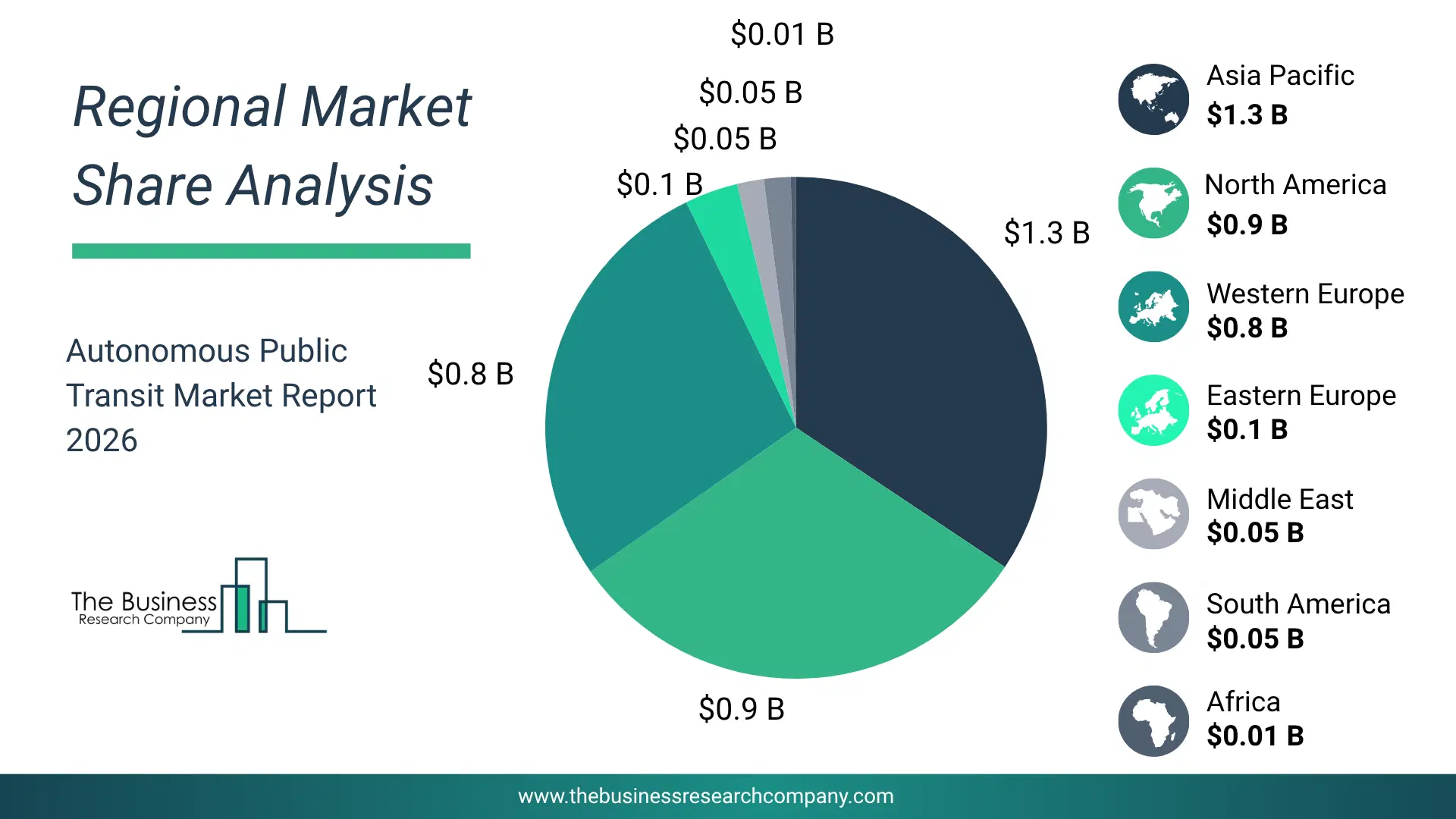
Regional Outlook
Asia-Pacific was the largest region in the autonomous public transit market in 2025. Europe is expected to be the fastest-growing region in the forecast period. The regions covered in this market report include Asia-Pacific, South East Asia, Western Europe, Eastern Europe, North America, South America, Middle East, Africa. The countries covered in this market report include Australia, Brazil, China, France, Germany, India, Indonesia, Japan, Taiwan, Russia, South Korea, UK, USA, Canada, Italy, SpainWhat Defines the Autonomous Public Transit Market?
The autonomous public transit market consists of revenues earned by entities by providing services such as route planning and optimization services, remote fleet management, and autonomous vehicle maintenance and diagnostics. The market value includes the value of related goods sold by the service provider or included within the service offering. The autonomous public transit market also includes sales of vehicle-to-everything (V2X) communication systems, advanced driver-assistance systems (ADAS), light detection and ranging (LiDAR) sensors, and autonomous driving software platforms. Values in this market are ‘factory gate’ values, that is the value of goods sold by the manufacturers or creators of the goods, whether to other entities (including downstream manufacturers, wholesalers, distributors and retailers) or directly to end customers. The value of goods in this market includes related services sold by the creators of the goods.How is Market Value Defined and Measured?
The market value is defined as the revenues that enterprises gain from the sale of goods and/or services within the specified market and geography through sales, grants, or donations in terms of the currency (in USD unless otherwise specified). The revenues for a specified geography are consumption values that are revenues generated by organizations in the specified geography within the market, irrespective of where they are produced. It does not include revenues from resales along the supply chain, either further along the supply chain or as part of other products.
This chart presents market attractiveness based on a quantitative evaluation of growth, competition, strategic alignment, and risk, offering a clear view of opportunity areas for decision-making. This chart is for illustrative purposes; the full report contains the complete analysis.

This chart highlights the Total Addressable Market (TAM) by estimating the maximum revenue opportunity using an assumption-driven approach, supporting strategic planning and opportunity sizing across markets. The chart is illustrative; the full report provides a more comprehensive analysis.
What Key Data and Analysis Are Included in the Autonomous Public Transit Market Report 2026?
The autonomous public transit market research report is one of a series of new reports from The Business Research Company that provides market statistics, including industry global market size, regional shares, competitors with the market share, detailed market segments, market trends and opportunities, and any further data you may need to thrive in the autonomous public transit industry. The market research report delivers a complete perspective of everything you need, with an in-depth analysis of the current and future state of the industry.Autonomous Public Transit Market Report Forecast Analysis
| Report Attribute | Details |
|---|---|
| Market Size Value In 2026 | $3.89 billion |
| Revenue Forecast In 2030 | $9 billion |
| Growth Rate | CAGR of 22.7% from 2026 to 2030 |
| Base Year For Estimation | 2025 |
| Actual Estimates/Historical Data | 2020-2025 |
| Forecast Period | 2026 - 2030 |
| Market Representation | Revenue in USD Billion and CAGR from 2026 to 2030 |
| Segments Covered | Vehicle Type, Component, Application |
| Regional Scope | Asia-Pacific, Western Europe, Eastern Europe, North America, South America, Middle East, Africa |
| Country Scope | The countries covered in the report are Australia, Brazil, China, France, Germany, India, Indonesia, Japan, Taiwan, Russia, South Korea, UK, USA, Canada, Italy, Spain. |
| Key Companies Profiled | Amazon.com Inc., AB Volvo, Continental AG, Scania CV AB, Transdev, MAN Truck & Bus, Keolis, Yutong Bus Co. Ltd., Arrival UK Ltd., Waymo LLC, Nuro Inc., Motional Inc., Karsan, EasyMile, Aurora Innovation, Pony AI Inc., May Mobility, AutoX Inc., LILEE System, Navya, Perrone Robotics Inc. |
| Customization Scope | Request for Customization |
| Pricing And Purchase Options | Explore Purchase Options |