
Autonomous Vehicle Market Report 2026
Global Outlook – By Level of Automation (Driver Assistance, Partial Automation, Conditional Automation, High Automation, Full Automation), By Component (Hardware, Software, Service), By Application (Transportation and Logistics, Civil, Defense, Other Applications) – Market Size, Trends, Strategies, and Forecast to 2030
Autonomous Vehicle Market Overview
• Autonomous Vehicle market size has reached to $80.49 billion in 2025 • Expected to grow to $277.5 billion in 2030 at a compound annual growth rate (CAGR) of 28.1% • Growth Driver: Energy-Efficient Vehicles Fueling The Rise Of Autonomous Vehicles Market • Market Trend: Advancements In Level 3 Autonomous Driving Technology For Enhanced Safety And Convenience • North America was the largest region in 2025 and Asia-Pacific is the fastest growing region.Market Gains By 2030 – Top Opportunities By Segment
Market Gain identifies the most promising market opportunities by highlighting the segments or products expected to generate the highest incremental revenue growth over the next five years.
What Is Covered Under Autonomous Vehicle Market?
An autonomous vehicle, often called a driverless vehicle, is a vehicle that operates and executes essential tasks without requiring human intervention. These vehicles rely on a blend of hardware and software technologies that empower them to navigate without direct physical control or supervision from a human operator. They can function in various modes, including autonomous mode, in which the vehicle's autonomous technology handles the driving task, and testing mode, wherein the vehicle is fitted with autonomous technology for evaluation and validation purposes. The main levels of automation in the autonomous vehicle are driver assistance, partial automation, conditional automation, high automation, and full automation. Driver assistance, also known as advanced driver-assistance systems (ADAS), refers to technologies used to make motor vehicle travel safer by automating, improving, or adapting some or all of the tasks involved in operating a vehicle, its components including hardware, software, service, and it used in transportation and logistics, civil, defense, other applications.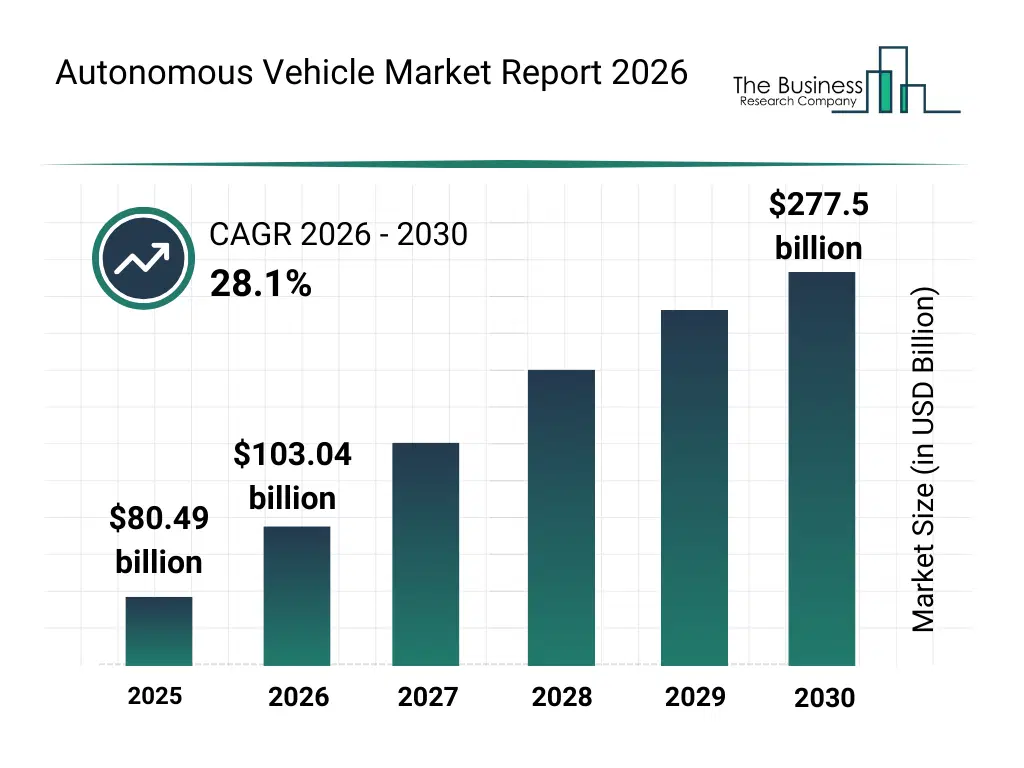
What Is The Autonomous Vehicle Market Size and Share 2026?
The autonomous vehicle market size has grown exponentially in recent years. It will grow from $80.49 billion in 2025 to $103.04 billion in 2026 at a compound annual growth rate (CAGR) of 28.0%. The growth in the historic period can be attributed to adas adoption, sensor cost reduction, automotive digitization, early autonomous pilot programs, demand for driver assistance.What Is The Autonomous Vehicle Market Growth Forecast?
The autonomous vehicle market size is expected to see exponential growth in the next few years. It will grow to $277.5 billion in 2030 at a compound annual growth rate (CAGR) of 28.1%. The growth in the forecast period can be attributed to ai algorithm advancements, electric autonomous vehicles growth, smart mobility policies, demand for logistics automation, connected vehicle infrastructure. Major trends in the forecast period include advancement of level 4 and level 5 vehicles, integration of advanced sensor suites, growth of autonomous logistics fleets, expansion of software-defined vehicles, focus on safety validation.
Global Autonomous Vehicle Market Segmentation
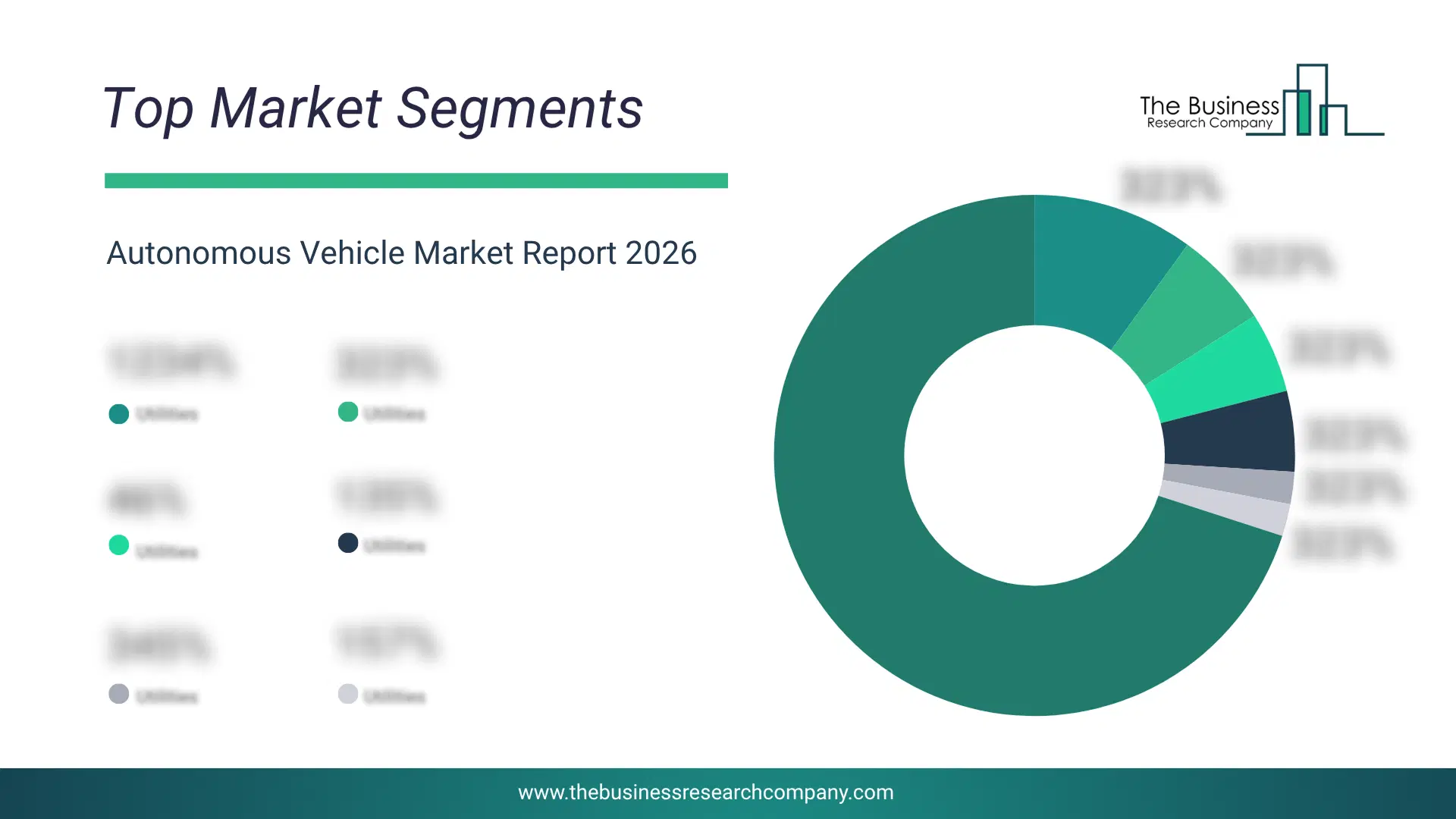
1) By Level of Automation: Driver Assistance, Partial Automation, Conditional Automation, High Automation, Full Automation 2) By Component: Hardware, Software, Service 3) By Application: Transportation and Logistics, Civil, Defense, Other Applications Subsegments: 1) By Driver Assistance: Adaptive Cruise Control, Lane Keeping Assistance, Parking Assistance 2) By Partial Automation: Automated Steering, Automated Acceleration And Braking 3) By Conditional Automation: Highway Autopilot, Traffic Jam Pilot 4) By High Automation: Self-Parking Systems, Fully Autonomous Urban Driving 5) By Full Automation: Fully Autonomous Vehicles The top segments in the autonomous vehicle market will be: • Driver Assistance will reach $99.58 Billion by 2030. • Partial Automation will reach $77 Billion by 2030. • Conditional Automation will reach $45.34 Billion by 2030. • High Automation will reach $30.22 Billion by 2030. • Full Automation will reach $22.54 Billion by 2030.What Is The Driver Of The Autonomous Vehicle Market?
The growing demand for energy-efficient vehicles is expected to propel the growth of the autonomous vehicle market going forward. Energy-efficient vehicles are designed to use less energy to perform the same tasks as their non-efficient counterparts. As governments worldwide intensify efforts to combat climate change and reduce greenhouse gas emissions, autonomous vehicles are predicted to reduce energy consumption. The development of connected and autonomous vehicles is being carried out with a focus on minimizing fuel and energy consumption, and energy-efficient vehicles play a crucial role in shaping the success of the autonomous vehicle market. For instance, in January 2024, according to a report published by Kelley Blue Book, a US-based Cox Automotive company, in 2023, a record 1.2 million car buyers in the United States chose electric vehicles, which accounted for 7.6% of the entire U.S. vehicle market, up from 5.9% in 2022. Therefore, the rise in demand for energy-efficient vehicles is driving the growth of the autonomous vehicle industry.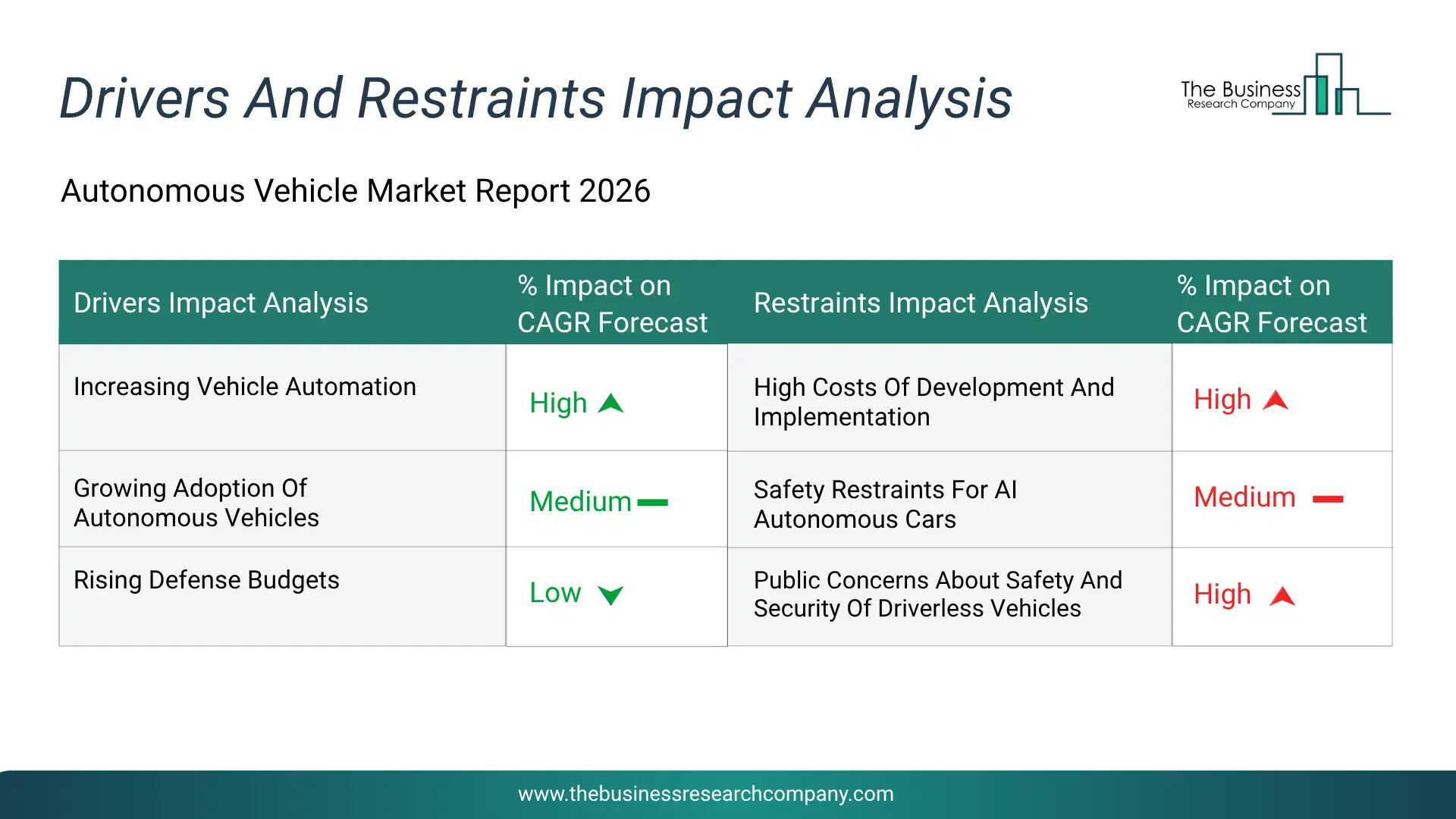
Infographic Chart Showing Key Market Drivers Analysis And Restraints For Autonomous Vehicle Market
The chart presents an impact analysis of key drivers and restraints, quantifying their relative influence on the market's growth rate and helping assess the balance between growth enablers and limiting factors. This chart offers a high-level perspective; the full report contains more detailed insights.
How Will The Drivers Impact Growth In The Global Autonomous Vehicle Market?
• Increasing Vehicle Automation (High) – During the forecast period, the increasing vehicle automation is expected to become a key growth driver for the autonomous vehicle market by 2030. Automotive manufacturers and technology developers are progressively integrating higher levels of automation into vehicles, ranging from advanced driver assistance to semi-autonomous driving capabilities. This transition is supported by continuous improvements in sensing technologies, real-time data processing, and control algorithms that enhance vehicle responsiveness and operational reliability. As vehicles become more capable of handling complex driving tasks with minimal human intervention, consumer confidence and adoption rates are expected to improve significantly. This ongoing shift toward higher automation levels is accelerating the commercialization of autonomous mobility solutions. • Growing Adoption Of Autonomous Vehicles (Medium) – During the forecast period, the growing adoption of autonomous vehicles is expected to emerge as a major factor driving the expansion of the autonomous vehicle market by 2030. Increasing deployment of self-driving vehicles across passenger mobility, logistics, and shared transportation services is creating strong demand for autonomous technologies. Companies are actively scaling pilot programs into commercial operations, particularly in urban environments where efficiency and safety improvements are critical. The integration of autonomous vehicles into ride-hailing, last-mile delivery, and public transportation systems is further strengthening market penetration. This growing real-world utilization is accelerating technology maturity and cost optimization. • Rising Defense Budgets (Low) – During the forecast period, the rising defense budgets is expected to act as a key growth catalyst for the autonomous vehicle market by 2030. Governments across major economies are increasing investments in autonomous and unmanned vehicle technologies for defense and security applications. Autonomous ground vehicles are being developed for surveillance, reconnaissance, logistics support, and hazardous mission environments where human risk must be minimized. Defense agencies are prioritizing advanced navigation, obstacle detection, and mission autonomy capabilities to enhance operational efficiency. The expansion of military modernization programs is therefore creating strong demand for robust and reliable autonomous systems.How Will The Restraints Impact Growth In The Global Autonomous Vehicle Market?
• High Costs Of Development And Implementation (High) – During the forecast period, high costs of development and implementation act as a major restraint for the autonomous vehicle market by creating significant financial barriers for companies. Developing self-driving technology requires heavy investment in advanced components such as AI systems, sensors, LiDAR, and high-performance computing platforms. In addition, extensive testing, validation, and regulatory compliance further increase overall expenditure. These high costs make autonomous vehicles expensive for end users, limiting mass adoption. Smaller companies also struggle to enter or sustain in the market due to limited capital. As a result, the overall pace of innovation and commercialization slows down. • Safety Restraints For AI Autonomous Cars (Medium) – During the forecast period, safety restraints for AI autonomous cars limit market growth by raising concerns about the reliability and decision-making capabilities of autonomous systems. These vehicles must operate in complex and unpredictable environments, where errors in judgment can lead to accidents and serious consequences. Regulatory authorities impose strict safety standards and testing requirements, which can delay product launches and increase development timelines. Any incidents involving autonomous vehicles can damage consumer trust and brand reputation. This cautious regulatory and consumer environment slows down widespread adoption. Therefore, safety concerns remain a key barrier to market expansion. • Public Concerns About Safety And Security Of Driverless Vehicles (Low) – During the forecast period, public concerns about safety and security of driverless vehicles act as a restraint by reducing consumer confidence and slowing adoption rates. Many people are hesitant to trust autonomous systems due to fears of accidents, system failures, and lack of human control. Additionally, concerns about cybersecurity threats, such as hacking or data breaches, further discourage acceptance. Negative media coverage and real-world incidents amplify these worries, influencing public perception. Companies must invest heavily in awareness, education, and safety improvements to address these concerns. This hesitation delays large-scale deployment and limits overall market growth.Key Players In The Global Autonomous Vehicle Market
Major companies operating in the autonomous vehicle market report include Volkswagen AG, Google LLC, Toyota Motor Corporation, Ford Motor Company, General Motors Company, Bayerische Motoren Werke AG, Honda Motor Co. Ltd., The Hyundai Motor Group, Tesla Inc., Nissan Motor Co. Ltd., Audi AG, Intel Corporation, AB Volvo, Groupe Renault, Denso Corporation, Mercedes-Benz Group AG, Uber Technologies Inc., NVIDIA Corporation, Baidu Inc., Waymo LLC, WeRide Corporation, Aurora Innovation Inc., Cruise LLC, AutoX Inc., Oxbotica Ltd.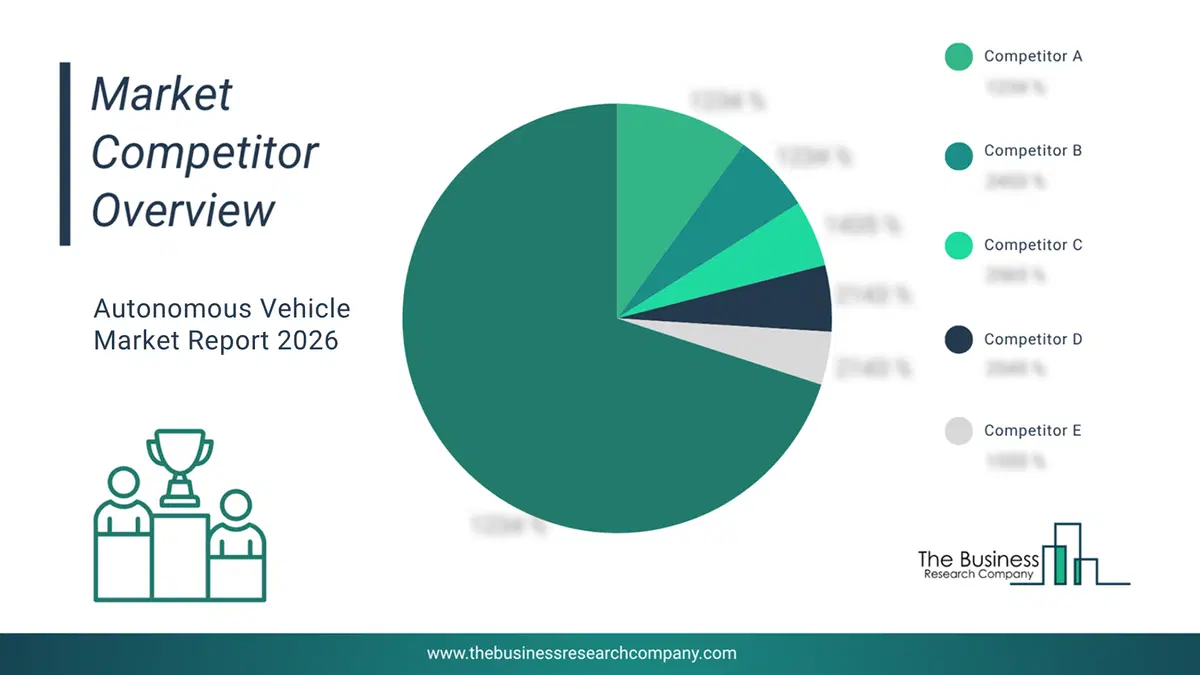
This chart is for illustrative purposes; the full report includes a detailed competitor analysis and comprehensive overview of the top 10 companies in the market.
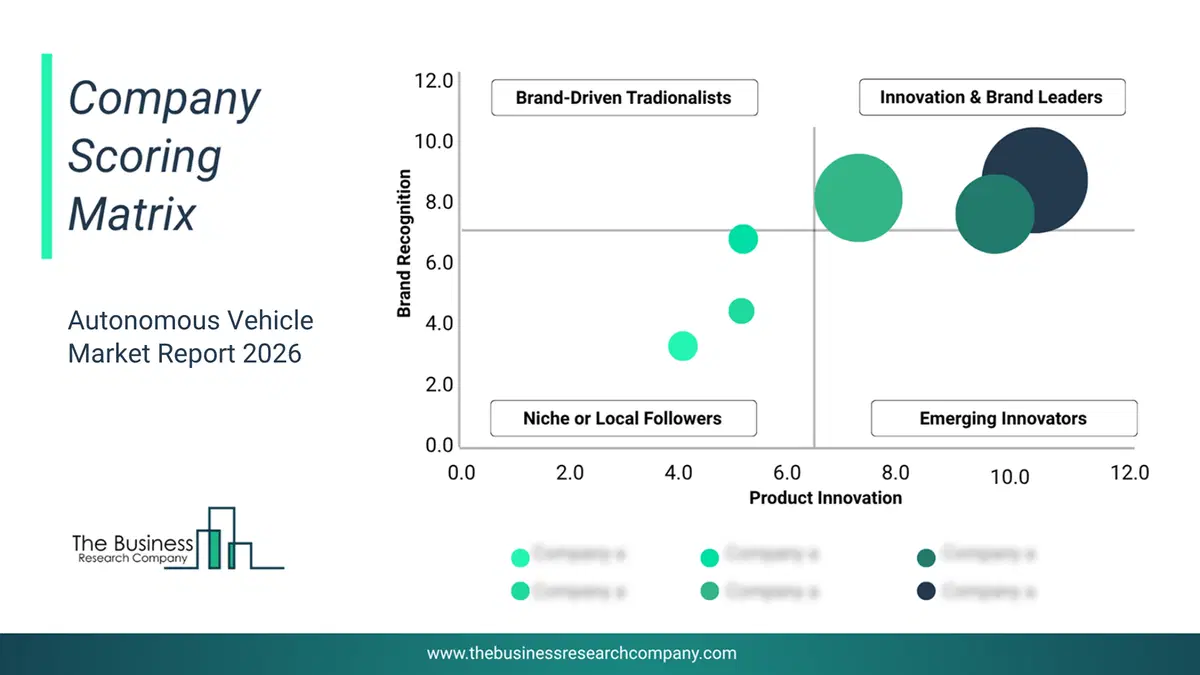
This chart maps companies by product innovation and brand strength, with bubble size indicating relative revenue, helping identify market leaders, challengers, and niche players. This is an illustrative chart; the full report provides a complete and accurate competitive analysis.
Global Autonomous Vehicle Market Trends and Insights
Major companies operating in the autonomous vehicle market are developing advanced solutions, such as drive pilot systems, to enhance safety, and convenience, and enable hands-free driving in controlled conditions. The Drive Pilot system is a Level 3 autonomous driving technology enabling hands-free driving in specific conditions while the vehicle monitors the surroundings. For instance, in April 2024, Mercedes-Benz Group AG, a Germany-based manufacturer of passenger cars and premium vans, launched The first level 3 self-driving car in the United States. The drive pilot system enables vehicles to operate autonomously but requires that the driver be ready to take control if needed. This is classified as Level 3 autonomy according to SAE International standards, which distinguishes it from Level 2 systems such as Tesla's Autopilot, where constant driver engagement is mandatory.What Are Latest Mergers And Acquisitions In The Autonomous Vehicle Market?
In February 2025, General Motors (GM), a US-based automotive manufacturer, acquired full ownership of Cruise LLC for an undisclosed amount. With this acquisition, GM aims to accelerate the development and commercialization of autonomous vehicle (AV) technology, streamline decision-making, enhance capital efficiency, and strengthen its long-term strategy for deploying safe and scalable self-driving mobility solutions. Cruise LLC is a US-based autonomous vehicle company specializing in self-driving technology and robotaxi services.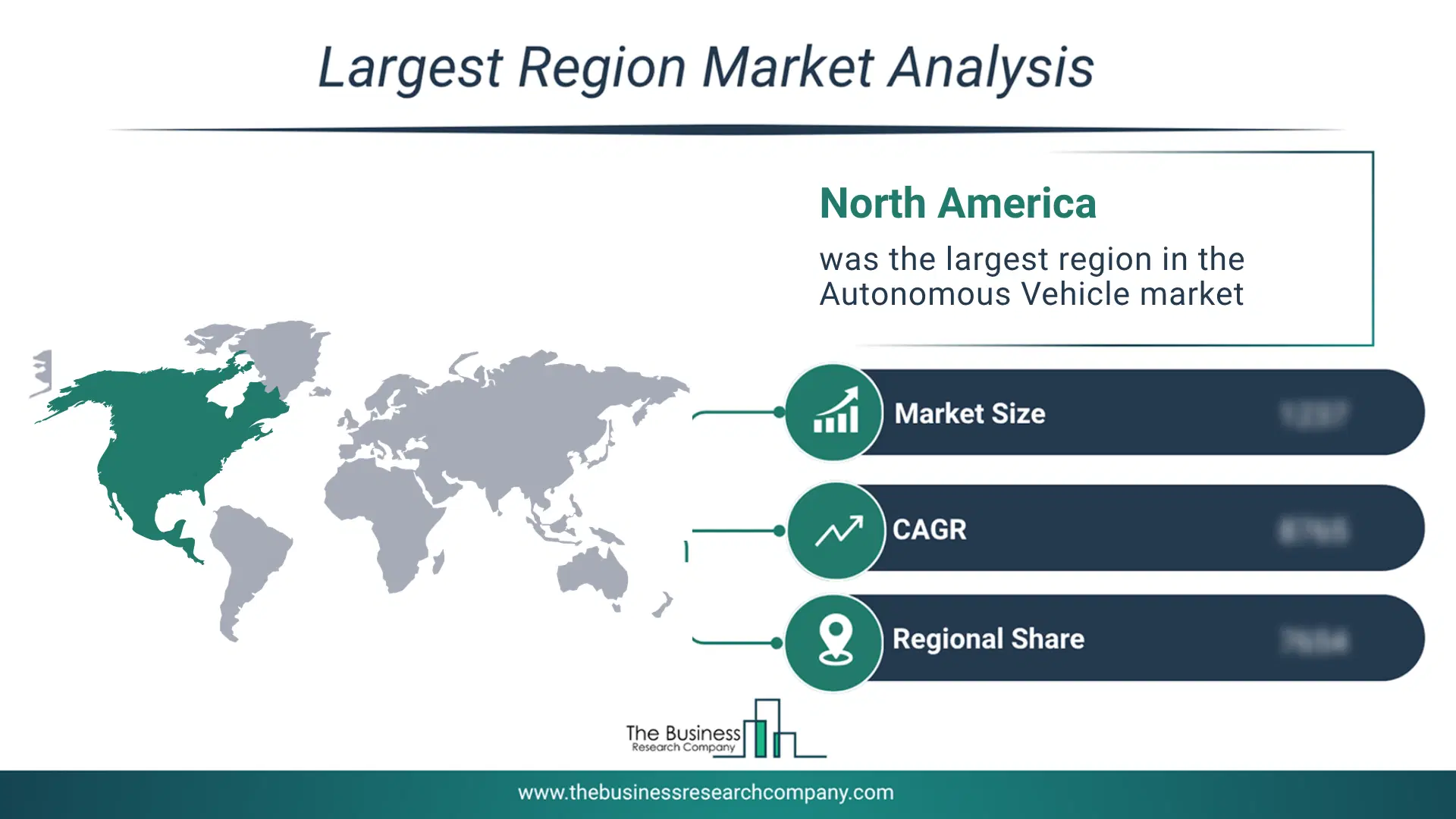
Regional Outlook
North America was the largest region in the autonomous vehicle market in 2025. Asia-Pacific is expected to be the fastest-growing region in the forecast period. The regions covered in this market report include Asia-Pacific, South East Asia, Western Europe, Eastern Europe, North America, South America, Middle East, Africa. The countries covered in this market report include Australia, Brazil, China, France, Germany, India, Indonesia, Japan, Taiwan, Russia, South Korea, UK, USA, Canada, Italy, SpainWhat Defines the Autonomous Vehicle Market?
The autonomous vehicle market consists of revenues earned by entities by providing services such as autonomous vehicle platforms, and safety and security solutions. The market value includes the value of related goods sold by the service provider or included within the service offering. The vi autonomous vehicle market also includes sales of fully autonomous and semi-autonomous vehicles. Values in this market are ‘factory gate’ values, that is, the value of goods sold by the manufacturers or creators of the goods, whether to other entities (including downstream manufacturers, wholesalers, distributors, and retailers) or directly to end customers. The value of goods in this market includes related services sold by the creators of the goods.How is Market Value Defined and Measured?
The market value is defined as the revenues that enterprises gain from the sale of goods and/or services within the specified market and geography through sales, grants, or donations in terms of the currency (in USD unless otherwise specified). The revenues for a specified geography are consumption values that are revenues generated by organizations in the specified geography within the market, irrespective of where they are produced. It does not include revenues from resales along the supply chain, either further along the supply chain or as part of other products.
This chart presents market attractiveness based on a quantitative evaluation of growth, competition, strategic alignment, and risk, offering a clear view of opportunity areas for decision-making. This chart is for illustrative purposes; the full report contains the complete analysis.

This chart highlights the Total Addressable Market (TAM) by estimating the maximum revenue opportunity using an assumption-driven approach, supporting strategic planning and opportunity sizing across markets. The chart is illustrative; the full report provides a more comprehensive analysis.
What Key Data and Analysis Are Included in the Autonomous Vehicle Market Report 2026?
The autonomous vehicle market research report is one of a series of new reports from The Business Research Company that provides market statistics, including industry global market size, regional shares, competitors with the market share, detailed market segments, market trends and opportunities, and any further data you may need to thrive in the autonomous vehicle industry. The market research report delivers a complete perspective of everything you need, with an in-depth analysis of the current and future state of the industry.Autonomous Vehicle Market Report Forecast Analysis
| Report Attribute | Details |
|---|---|
| Market Size Value In 2026 | $103.04 billion |
| Revenue Forecast In 2030 | $277.5 billion |
| Growth Rate | CAGR of 28.0% from 2026 to 2030 |
| Base Year For Estimation | 2025 |
| Actual Estimates/Historical Data | 2020-2025 |
| Forecast Period | 2026 - 2030 |
| Market Representation | Revenue in USD Billion and CAGR from 2026 to 2030 |
| Segments Covered | Level of Automation, Component, Application |
| Regional Scope | Asia-Pacific, Western Europe, Eastern Europe, North America, South America, Middle East, Africa |
| Country Scope | The countries covered in the report are Australia, Brazil, China, France, Germany, India, Indonesia, Japan, Taiwan, Russia, South Korea, UK, USA, Canada, Italy, Spain. |
| Key Companies Profiled | Volkswagen AG, Google LLC, Toyota Motor Corporation, Ford Motor Company, General Motors Company, Bayerische Motoren Werke AG, Honda Motor Co. Ltd., The Hyundai Motor Group, Tesla Inc., Nissan Motor Co. Ltd., Audi AG, Intel Corporation, AB Volvo, Groupe Renault, Denso Corporation, Mercedes-Benz Group AG, Uber Technologies Inc., NVIDIA Corporation, Baidu Inc., Waymo LLC, WeRide Corporation, Aurora Innovation Inc., Cruise LLC, AutoX Inc., Oxbotica Ltd. |
| Customization Scope | Request for Customization |
| Pricing And Purchase Options | Explore Purchase Options |