
Autonomous Vehicle Sensors Market Report 2026
Global Outlook – By Component (Hardware, Software, Electronic Control Unit (ECU)), By Type of Sensor (Radio Detection And Ranging (RADAR), Light Detection And Ranging (LiDAR), Ultrasound, Camera, Other Types of Sensor), By Vehicle Type (Passenger Vehicles, Commercial Vehicles, Two-Wheelers, Other Vehicles), By Vehicle Autonomy Level (Level 1 (Driver Assistance), Level 2 (Partial Automation), Level 3 (Conditional Automation), Level 4 (High Automation), Level 5 (Full Automation)), By Application (Obstacle Detection, Navigation, Collision Avoidance, Other Applications) – Market Size, Trends, Strategies, and Forecast to 2030
Autonomous Vehicle Sensors Market Overview
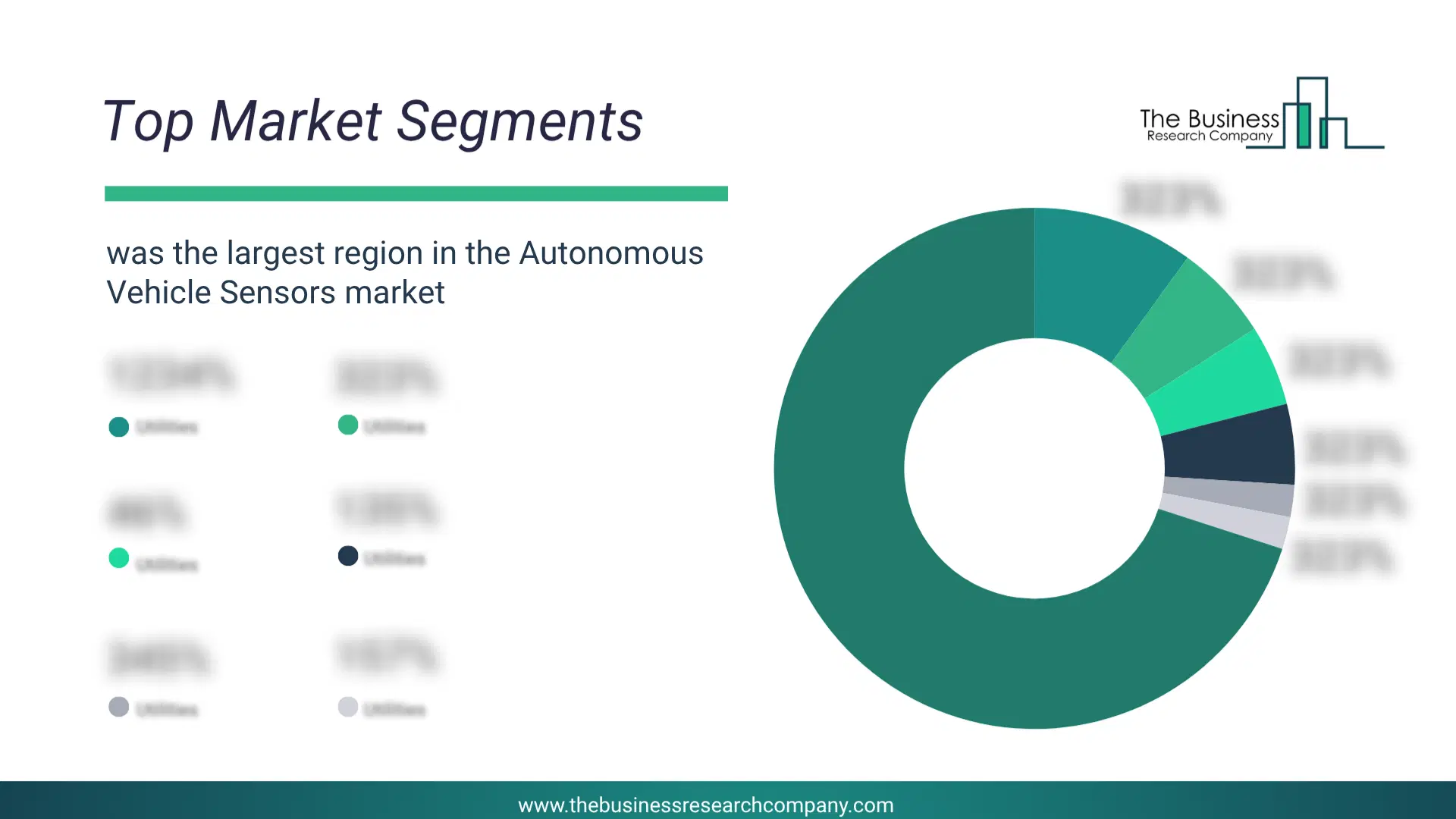
• Autonomous Vehicle Sensors market size has reached to $4.42 billion in 2025 • Expected to grow to $11.42 billion in 2030 at a compound annual growth rate (CAGR) of 20.8% • Growth Driver: Increasing Adoption Of Advanced Driver Assistance Systems (ADAS) Driving The Growth Of The Market Due To Rising Vehicle Safety Demands And Technological Integration • Market Trend: Next-Generation High-Resolution 4D LiDAR Sensors Enhance Autonomous Vehicle Perception • North America was the largest region in 2025 and Asia-Pacific is the fastest growing region.Market Gains By 2030 – Top Opportunities By Segment
Market Gain identifies the most promising market opportunities by highlighting the segments or products expected to generate the highest incremental revenue growth over the next five years.
What Is Covered Under Autonomous Vehicle Sensors Market?
The autonomous vehicle sensors refers to the advanced sensing technologies that enable vehicles to perceive their surroundings, detect obstacles, and navigate safely without human intervention. These sensors include LiDAR, radar, ultrasonic, and camera systems that work together to provide real-time data for object recognition, distance measurement, and environmental mapping. By integrating these technologies, autonomous vehicles can achieve higher levels of safety, efficiency, and precision in diverse driving conditions, supporting the broader adoption of self-driving transportation solutions. The main components of autonomous vehicle sensors include hardware, software, and electronic control units (ECUs). Hardware refers to the physical devices and components that detect, measure, and capture data from the vehicle’s surroundings for autonomous operation. The types of sensors include radio detection and ranging (RADAR), light detection and ranging (LiDAR), ultrasound, cameras, and others. The vehicle types include passenger vehicles, commercial vehicles, two-wheelers, and other vehicles. The vehicle autonomy levels include Level 1 (driver assistance), Level 2 (partial automation), Level 3 (conditional automation), Level 4 (high automation), and Level 5 (full automation). The applications include obstacle detection, navigation, collision avoidance, and others.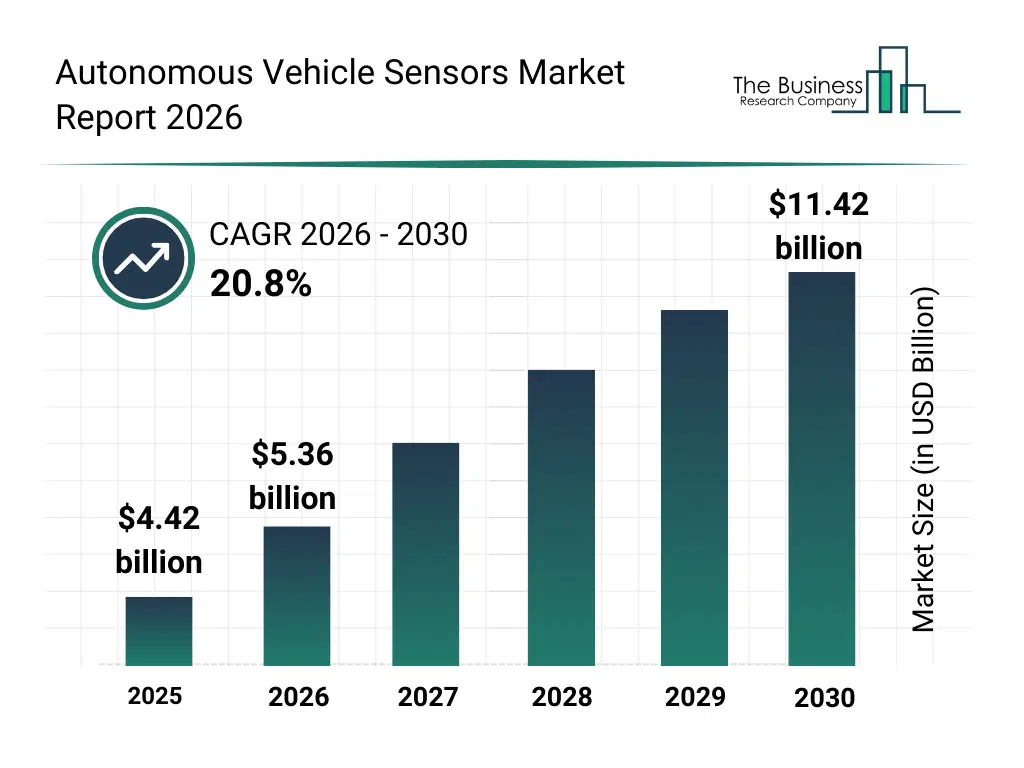
What Is The Autonomous Vehicle Sensors Market Size and Share 2026?
The autonomous vehicle sensors market size has grown exponentially in recent years. It will grow from $4.42 billion in 2025 to $5.36 billion in 2026 at a compound annual growth rate (CAGR) of 21.1%. The growth in the historic period can be attributed to increasing demand for safety systems, rising adoption of autonomous vehicles, growing use of radar technology, expansion of camera sensor integration, and increasing government support for smart transportation.What Is The Autonomous Vehicle Sensors Market Growth Forecast?
The autonomous vehicle sensors market size is expected to see exponential growth in the next few years. It will grow to $11.42 billion in 2030 at a compound annual growth rate (CAGR) of 20.8%. The growth in the forecast period can be attributed to rising investments in research and development, growing integration of artificial intelligence (AI)-enabled sensors, increasing deployment of lidar sensors, expansion of electric vehicle penetration, and rising focus on advanced driver assistance systems. Major trends in the forecast period include technological advancements in sensor fusion, innovations in high-resolution camera sensors, developments in radar signal processing, research and development in ultrasonic sensor ranges, and advancements in machine learning (ML) for object detection.
Global Autonomous Vehicle Sensors Market Segmentation
1) By Component: Hardware, Software, Electronic Control Unit (ECU) 2) By Type of Sensor: Radio Detection And Ranging (RADAR), Light Detection And Ranging (LiDAR), Ultrasound, Camera, Other Types of Sensor 3) By Vehicle Type: Passenger Vehicles, Commercial Vehicles, Two-Wheelers, Other Vehicles 4) By Vehicle Autonomy Level: Level 1 (Driver Assistance), Level 2 (Partial Automation), Level 3 (Conditional Automation), Level 4 (High Automation), Level 5 (Full Automation) 5) By Application: Obstacle Detection, Navigation, Collision Avoidance, Other Applications Subsegments: 1) By Hardware: Sensor Modules, Detection Units, Signal Processing Units, Communication Interfaces 2) By Software: Sensor Management Software, Data Interpretation Software, Navigation Processing Software, Vehicle Perception Software 3) By Electronic Control Unit (ECU): Control Processing Unit, Power Management Unit, Monitoring Control Unit, Safety Control Unit The top segments in the autonomous vehicle sensors market will be: • Hardware will reach $7.1 Billion by 2030. • Software will reach $2.9 Billion by 2030. • Electronic Control Unit (ECU) will reach $1.71 Billion by 2030.What Is The Driver Of The Autonomous Vehicle Sensors Market?
The increasing adoption of advanced driver assistance systems (ADAS) is expected to propel the growth of the autonomous vehicle sensors market going forward. Advanced driver assistance systems refers to the suite of electronic technologies that assist vehicle drivers in navigating and avoiding collisions, including features such as adaptive cruise control, lane departure warning, and automatic emergency braking, and provides the technological foundation for higher levels of vehicle autonomy. Adoption of advanced driver assistance systems (ADAS) is rising as governments and consumers increasingly prioritize road safety reduced traffic congestion and improved driving comfort supported by maturing sensor and AI technologies and favorable regulations. Autonomous vehicle sensors support advanced driver assistance systems by providing real-time detection and monitoring of the vehicle’s surroundings. They enhance safety and driving efficiency by enabling features such as collision avoidance, lane keeping, adaptive cruise control, and automated navigation. For instance, in September 2024, according to the Massachusetts Institute of Technology Research and Engineering (MITRE), a US-based research organization, by 2023, 10 of 14 advanced driver-assistance system (ADAS) features had achieved over 50% market penetration, with five features, including forward collision warning, automatic emergency braking, pedestrian detection, and lane departure warning reaching around 91–94% penetration in new vehicles. Therefore, the increasing adoption of advanced driver assistance systems (ADAS) is driving the growth of the autonomous vehicle sensor industry.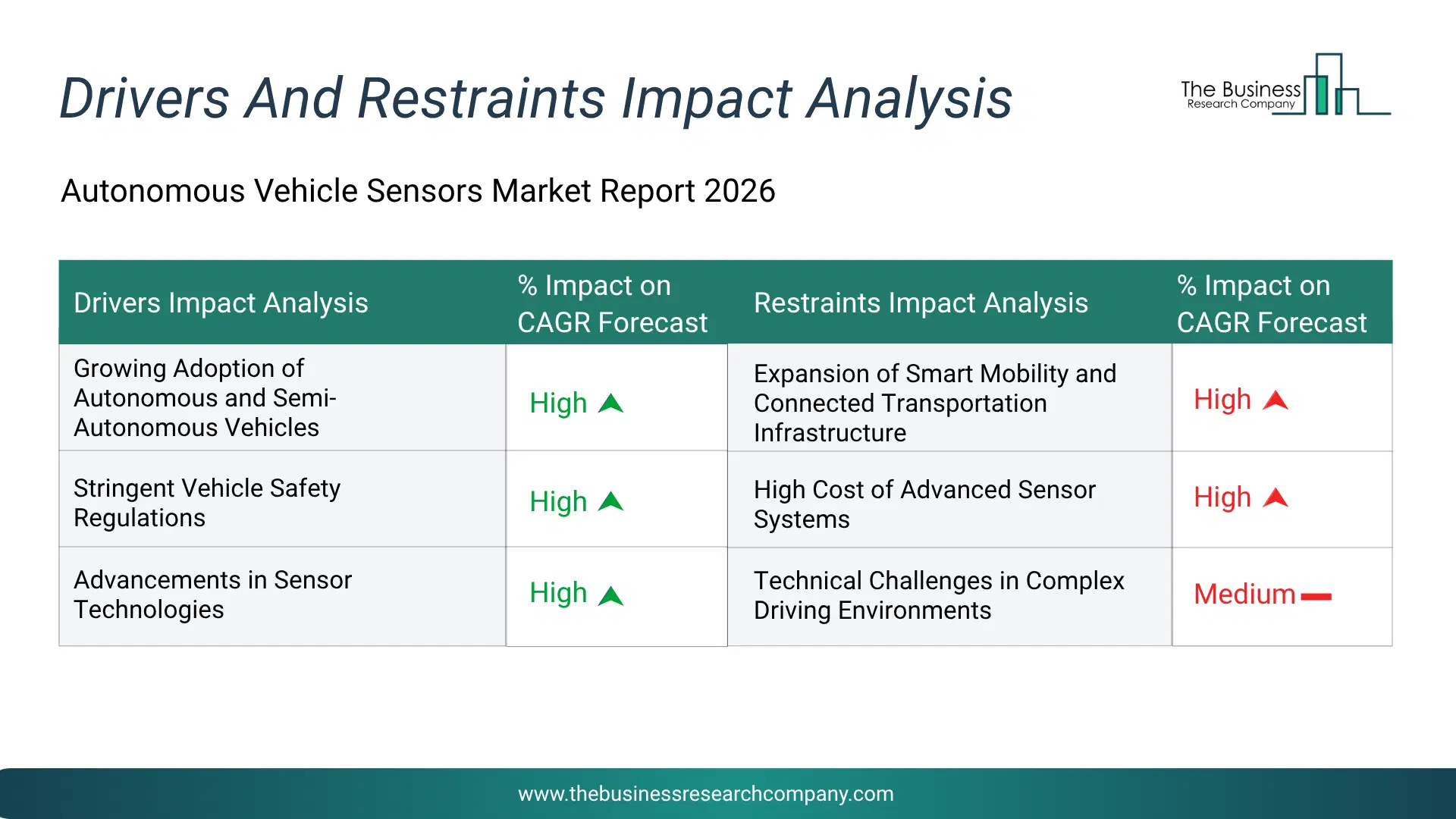
Infographic Chart Showing Key Market Drivers Analysis And Restraints For Autonomous Vehicle Sensors Market
The chart presents an impact analysis of key drivers and restraints, quantifying their relative influence on the market's growth rate and helping assess the balance between growth enablers and limiting factors. This chart offers a high-level perspective; the full report contains more detailed insights.
How Will The Drivers Impact Growth In The Global Autonomous Vehicle Sensors Market?
• Growing Adoption of Autonomous and Semi-Autonomous Vehicles (High) – During the forecast period, the growing adoption of autonomous and semi-autonomous vehicles is expected to become a key growth driver for the autonomous vehicle sensors market by 2030. The increasing deployment of autonomous and advanced driver assistance systems (ADAS) is driving demand for sophisticated sensor technologies. Vehicles require multiple sensors to perceive their surroundings and make driving decisions. Automakers are integrating LiDAR, radar, cameras, and ultrasonic sensors into new vehicle models. Higher levels of vehicle automation require greater sensor redundancy and accuracy. • Stringent Vehicle Safety Regulations (High) – During the forecast period, the stringent vehicle safety regulations is expected to emerge as a major factor driving the expansion of the autonomous vehicle sensors market by 2030. Governments worldwide are implementing stricter vehicle safety standards to reduce road accidents and fatalities. Regulations increasingly mandate features such as automatic emergency braking, lane departure warning, and adaptive cruise control. These systems rely heavily on advanced sensors for real-time environmental monitoring. Compliance with safety requirements encourages automakers to install more sensing technologies. As regulations become stricter, sensor adoption continues to accelerate. • Advancements in Sensor Technologies (High) – During the forecast period, the advancements in sensor technologies are expected to act as a key growth catalyst for the autonomous vehicle sensors market by 2030. Continuous improvements in LiDAR, radar, camera, and infrared technologies are enhancing performance while reducing costs. Modern sensors provide better object detection, higher resolution, and improved operation in adverse weather conditions. Sensor miniaturization and integration are making deployment more practical across vehicle segments. Enhanced reliability and durability support broader commercialization of autonomous vehicles.How Will The Restraints Impact Growth In The Global Autonomous Vehicle Sensors Market?
• Expansion of Smart Mobility and Connected Transportation Infrastructure (High) – During the forecast period, the governments and private organizations are investing heavily in smart transportation ecosystems. Connected vehicle networks and intelligent traffic management systems support autonomous vehicle operations. Autonomous sensors play a critical role in enabling real-time communication and navigation. Smart city initiatives in countries such as China, the U.S., and the UAE are encouraging deployment of autonomous mobility solutions. This infrastructure development creates sustained demand for advanced sensing systems. • High Cost of Advanced Sensor Systems (High) – During the forecast period, the advanced sensors, particularly high-performance LiDAR systems, remain expensive despite ongoing cost reductions. Autonomous vehicles often require multiple sensor types operating simultaneously, increasing overall vehicle costs. The high cost can limit adoption in mass-market vehicle segments. Manufacturers must balance performance requirements with affordability. This remains a significant barrier to widespread autonomous vehicle commercialization. • Technical Challenges in Complex Driving Environments (High) – During the forecast period, the autonomous sensors can face limitations in adverse weather conditions such as heavy rain, fog, snow, and dust. Sensor accuracy may be affected by environmental interference, reducing reliability in certain situations. Achieving consistent performance across diverse road conditions remains a technical challenge. Sensor fusion and redundancy help address these issues but increase system complexity and cost. These challenges can slow the pace of large-scale autonomous vehicle deployment.Key Players In The Global Autonomous Vehicle Sensors Market
Major companies operating in the autonomous vehicle sensors market are Robert Bosch GmbH, DENSO Corporation, Continental AG, Valeo SA, Texas Instruments Incorporated, Infineon Technologies AG, NXP Semiconductors N.V., ON Semiconductor Corporation, Trimble Inc., Nippon Seiki Co. Ltd., Sick AG, Hesai Technology Co. Ltd., Ouster Inc., Luminar Technologies Inc., Brigade Electronics Limited, Innoviz Technologies Ltd., Cepton Technologies Inc., Quanergy Systems Inc., Aeva Technologies Inc., Arbe Robotics Ltd.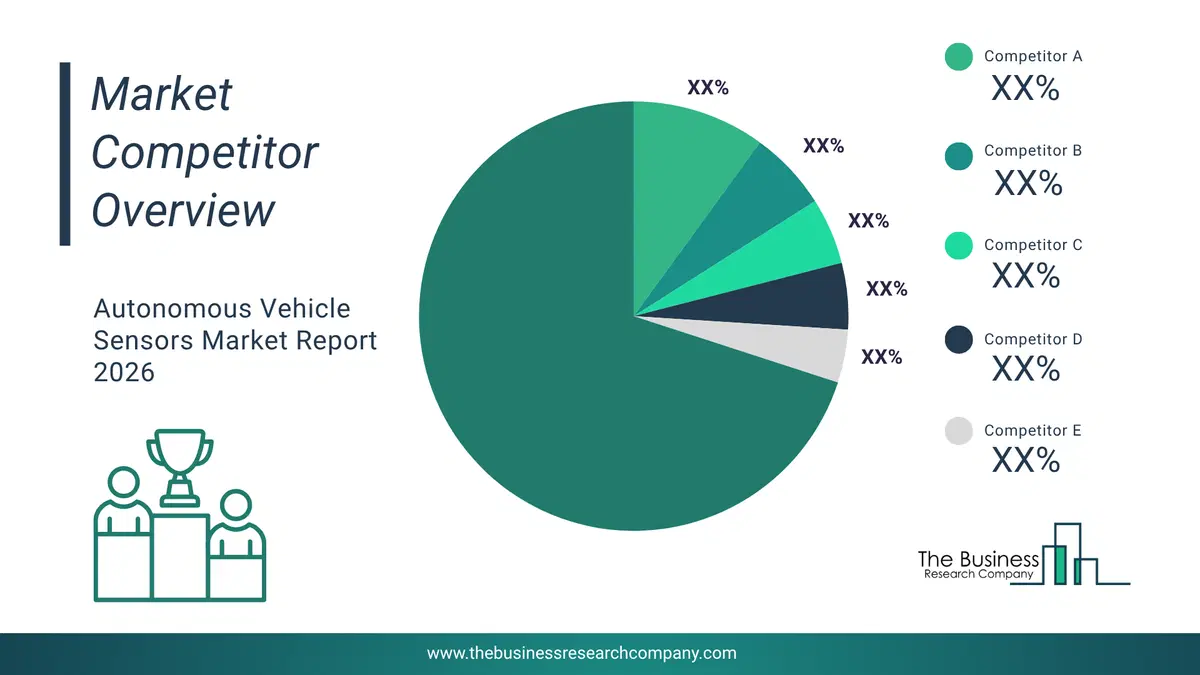
This chart is for illustrative purposes; the full report includes a detailed competitor analysis and comprehensive overview of the top 10 companies in the market.
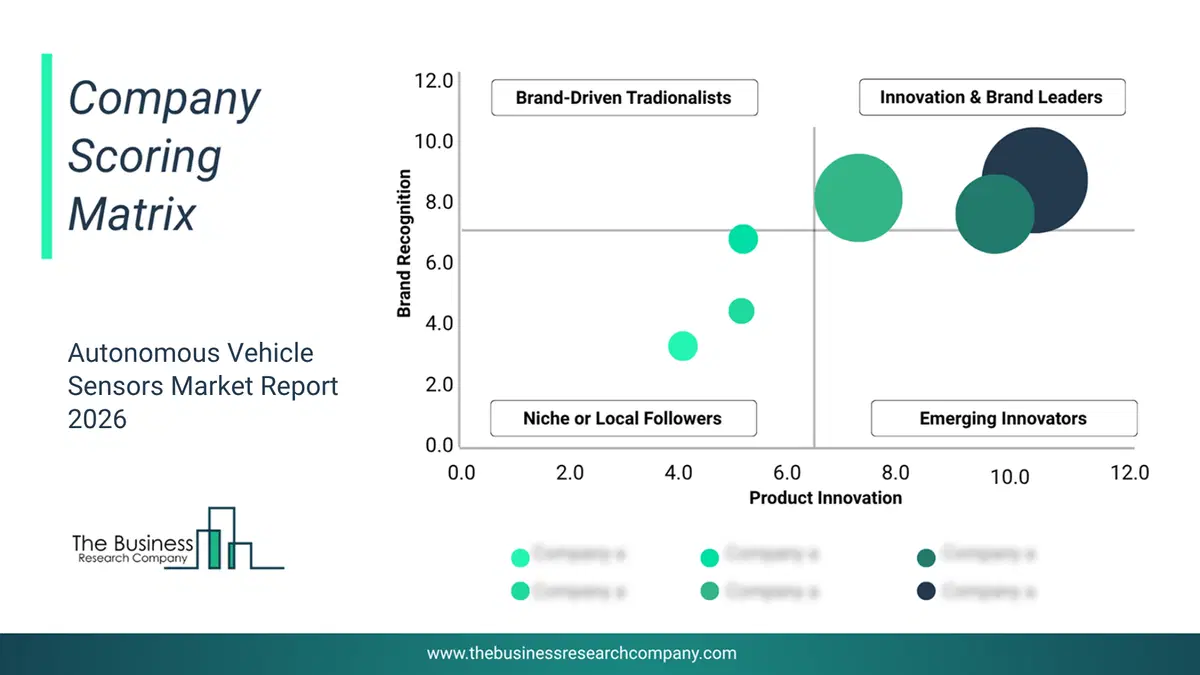
This chart maps companies by product innovation and brand strength, with bubble size indicating relative revenue, helping identify market leaders, challengers, and niche players. This is an illustrative chart; the full report provides a complete and accurate competitive analysis.
Global Autonomous Vehicle Sensors Market Trends and Insights
Major companies operating in the autonomous vehicle sensors market are focusing on developing advanced sensors, such as frequency modulated continuous wave (FMCW) 4d LiDAR technology, to improve object detection, range, and perception accuracy for higher levels of automation. Frequency modulated continuous wave (FMCW) 4D LiDAR technology refers to a sensing approach that uses frequency‑chirped continuous laser waves to simultaneously measure objects’ distance velocity and position in three-dimensional space over time for highly precise dynamic mapping. For instance, in January 2025, Aeva Technologies Inc., a US-based sensing and perception systems company, launched the Aeva Atlas Ultra 4D LiDAR sensor with up to three times the resolution of its predecessor, configurable 150 degree field of view, and detection range up to 500 meters, enhancing highway speed automated driving capabilities and seamless integration into passenger and commercial vehicles. New levels of automation and safety are made possible by Aeva's innovative Frequency Modulated Continuous Wave (FMCW) 4D LiDAR technology, which concurrently measures position and velocity. Automated driving systems can identify significant objects more quickly, more confidently, and from farther away by using immediate velocity data.What Are Latest Mergers And Acquisitions In The Autonomous Vehicle Sensors Market?
In February 2023, Ouster Inc., a US-based provider of high-resolution digital lidar sensors and perception solutions, merged with Velodyne Lidar Inc. for an undisclosed amount. With this acquisition, the combined company aims to accelerate the adoption of advanced lidar technology across autonomous vehicles, robotics, and smart infrastructure by unifying their product portfolios, increasing research and development scale, and improving commercial reach. Velodyne Lidar Inc. is a US-based LiDAR sensor manufacturer specializing in autonomous vehicle and ADAS sensing solutions.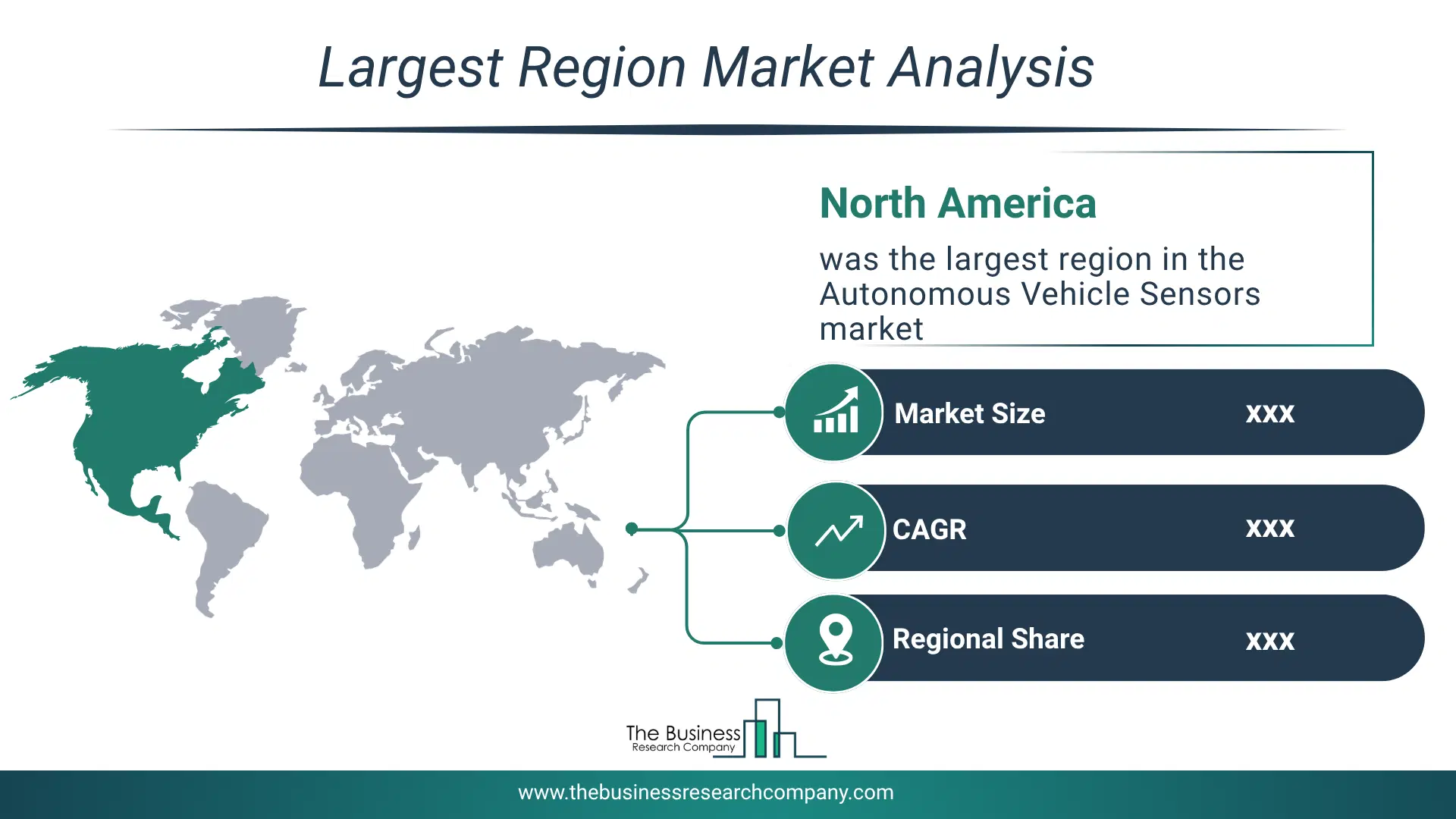
Regional Insights
North America was the largest region in the autonomous vehicle sensors in 2025. Asia-Pacific is expected to be the fastest-growing region in the forecast period. The regions covered in this market report are Asia-Pacific, South East Asia, Western Europe, Eastern Europe, North America, South America, Middle East, Africa. The countries covered in this market report are Australia, Brazil, China, France, Germany, India, Indonesia, Japan, Taiwan, Russia, South Korea, UK, USA, Canada, Italy, Spain.What Defines the Autonomous Vehicle Sensors Market?
The autonomous vehicle sensors market consists of sales of lidar sensors, radar sensors, ultrasonic sensors, camera sensors, infrared sensors Values in this market are ‘factory gate’ values, that is the value of goods sold by the manufacturers or creators of the goods, whether to other entities (including downstream manufacturers, wholesalers, distributors and retailers) or directly to end customers. The value of goods in this market includes related services sold by the creators of the goods.How is Market Value Defined and Measured?
The market value is defined as the revenues that enterprises gain from the sale of goods and/or services within the specified market and geography through sales, grants, or donations in terms of the currency (in USD unless otherwise specified). The revenues for a specified geography are consumption values that are revenues generated by organizations in the specified geography within the market, irrespective of where they are produced. It does not include revenues from resales along the supply chain, either further along the supply chain or as part of other products.
This chart presents market attractiveness based on a quantitative evaluation of growth, competition, strategic alignment, and risk, offering a clear view of opportunity areas for decision-making. This chart is for illustrative purposes; the full report contains the complete analysis.

This chart highlights the Total Addressable Market (TAM) by estimating the maximum revenue opportunity using an assumption-driven approach, supporting strategic planning and opportunity sizing across markets. The chart is illustrative; the full report provides a more comprehensive analysis.
What Key Data and Analysis Are Included in the Autonomous Vehicle Sensors Market Report 2026?
The autonomous vehicle sensors market research report is one of a series of new reports from The Business Research Company that provides market statistics, including industry global market size, regional shares, competitors with the market share, detailed market segments, market trends and opportunities, and any further data you may need to thrive in the autonomous vehicle sensors industry. The market research report delivers a complete perspective of everything you need, with an in-depth analysis of the current and future state of the industry.Autonomous Vehicle Sensors Market Report Forecast Analysis
| Report Attribute | Details |
|---|---|
| Market Size Value In 2026 | $5.36 billion |
| Revenue Forecast In 2030 | $11.42 billion |
| Growth Rate | CAGR of 21.1% from 2026 to 2030 |
| Base Year For Estimation | 2025 |
| Actual Estimates/Historical Data | 2020-2025 |
| Forecast Period | 2026 - 2030 |
| Market Representation | Revenue in USD Billion and CAGR from 2026 to 2030 |
| Segments Covered | Component, Type of Sensor, Vehicle Type, Vehicle Autonomy Level, Application |
| Regional Scope | Asia-Pacific, Western Europe, Eastern Europe, North America, South America, Middle East, Africa |
| Country Scope | The countries covered in the report are Australia, Brazil, China, France, Germany, India, Indonesia, Japan, Taiwan, Russia, South Korea, UK, USA, Canada, Italy, Spain. |
| Key Companies Profiled | Robert Bosch GmbH, DENSO Corporation, Continental AG, Valeo SA, Texas Instruments Incorporated, Infineon Technologies AG, NXP Semiconductors N.V., ON Semiconductor Corporation, Trimble Inc., Nippon Seiki Co. Ltd., Sick AG, Hesai Technology Co. Ltd., Ouster Inc., Luminar Technologies Inc., Brigade Electronics Limited, Innoviz Technologies Ltd., Cepton Technologies Inc., Quanergy Systems Inc., Aeva Technologies Inc., Arbe Robotics Ltd. |
| Customization Scope | Request for Customization |
| Pricing And Purchase Options | Explore Purchase Options |