
Aviation Carbon Fiber Market Report 2026
Global Outlook – By Type (Continuous, Long, Short), By Raw Material (Pan-Based Carbon Fiber, Pitch-Based Carbon Fiber), By End-Use (Commercial Aircraft, Military Aircraft) – Market Size, Trends, Strategies, and Forecast to 2030
Aviation Carbon Fiber Market Overview
• Aviation Carbon Fiber market size has reached to $2.88 billion in 2025 • Expected to grow to $4.32 billion in 2030 at a compound annual growth rate (CAGR) of 8.5% • Growth Driver: Rising Passenger Air Traffic Fuels Growth Of Aviation Carbon Fiber Market • Market Trend: Continuous Carbon Fiber Innovations To Enhance Aerospace Performance • North America was the largest region in 2025 and Asia-Pacific is the fastest growing region.Market Gains By 2030 – Top Opportunities By Segment
Market Gain identifies the most promising market opportunities by highlighting the segments or products expected to generate the highest incremental revenue growth over the next five years.
What Is Covered Under Aviation Carbon Fiber Market?
Aviation carbon fiber refers to the use of carbon fiber composites in the manufacturing of aircraft components. Carbon fiber is a type of advanced composite material that offers high strength, stiffness, and durability while being lightweight and fuel-efficient. The main types of aviation carbon fiber are continuous, long, and short. Continuous carbon fibers are fibers that are spun from a single, continuous filament. They are typically used in advanced applications such as aerospace because of their high strength and stiffness. The raw material types are pan-based carbon fiber and pitch-based carbon fiber, which are used in commercial aircraft, and military aircraft.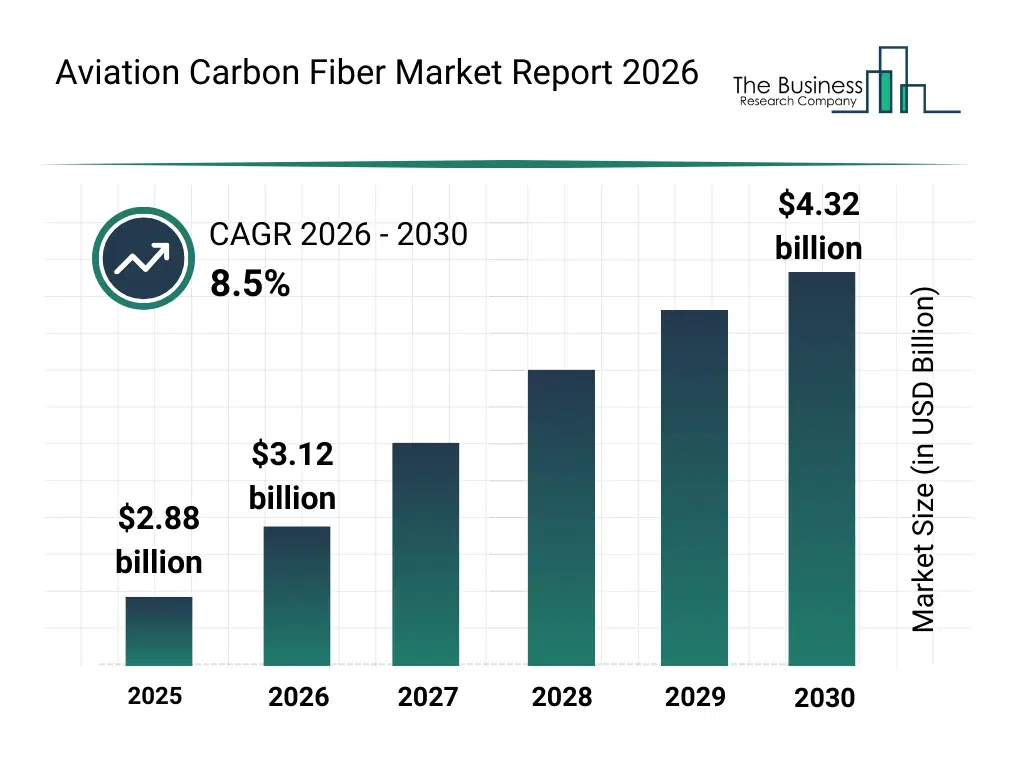
What Is The Aviation Carbon Fiber Market Size and Share 2026?
The aviation carbon fiber market size has grown strongly in recent years. It will grow from $2.88 billion in 2025 to $3.12 billion in 2026 at a compound annual growth rate (CAGR) of 8.1%. The growth in the historic period can be attributed to expansion of commercial aircraft production, increased use of composite materials in aviation, growth in defense aviation programs, advancements in composite material science, availability of high-strength fibers.What Is The Aviation Carbon Fiber Market Growth Forecast?
The aviation carbon fiber market size is expected to see strong growth in the next few years. It will grow to $4.32 billion in 2030 at a compound annual growth rate (CAGR) of 8.5%. The growth in the forecast period can be attributed to increasing aircraft fleet modernization, rising focus on fuel efficiency and emission reduction, expansion of next-generation aircraft programs, growing demand for military aircraft upgrades, increasing investments in advanced aerospace materials. Major trends in the forecast period include increasing use of carbon fiber in aircraft structures, rising demand for lightweight composite materials, growing adoption of fuel-efficient aircraft designs, expansion of advanced composite manufacturing techniques, enhanced focus on structural strength and durability.
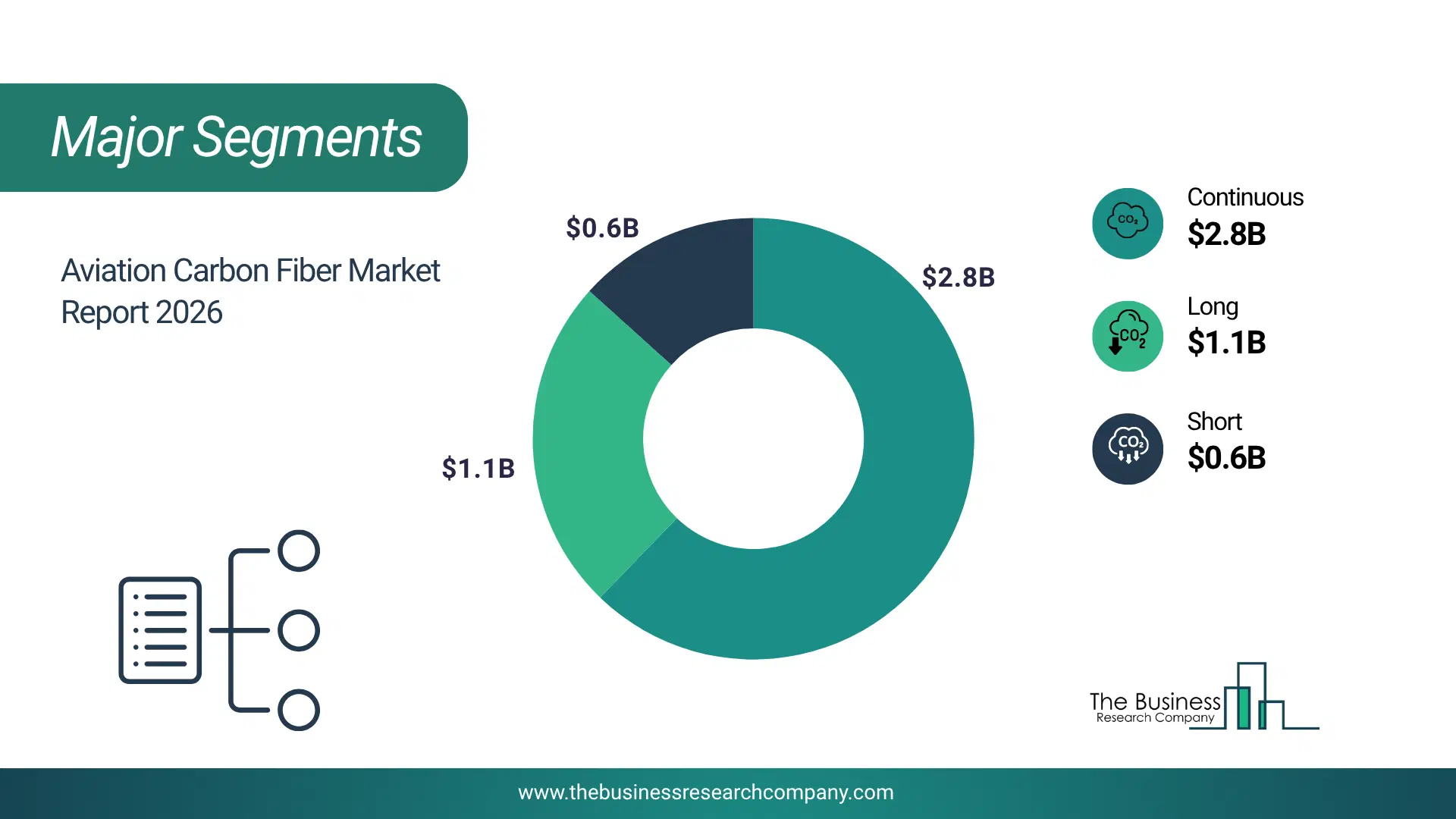
Global Aviation Carbon Fiber Market Segmentation
1) By Type: Continuous, Long, Short 2) By Raw Material: Pan-Based Carbon Fiber, Pitch-Based Carbon Fiber 3) By End-Use: Commercial Aircraft, Military Aircraft Subsegments: 1) By Continuous: Unidirectional Continuous Fiber, Fabricated Continuous Fiber 2) By Long: Long Fiber Reinforced Plastics (LFRP), Long Carbon Fiber For Composite Materials 3) By Short: Short Fiber Reinforced Plastics (SFRP), Short Carbon Fiber For Injection Molding The top segments in the aviation carbon fiber market will be: • Continuous will reach $2.75 billion by 2030. • Long will reach $1.05 billion by 2030. • Short will reach $0.53 billion by 2030.What Is The Driver Of The Aviation Carbon Fiber Market?
Growth in passenger air traffic is expected to propel the growth of the aviation carbon fiber market going forward. Passenger air traffic refers to an increase in the number of passengers traveling by air over time that can be measured in a variety of ways, including the number of passengers carried by airlines, the number of flights operated, and the revenue generated by the air travel industry. Carbon fiber composites are being used in aircraft manufacturing due to their lightweight properties, high strength, and fuel efficiency, which offer improved passenger experiences such as more spacious and comfortable cabins. For instance, in January 2024, according to the International Air Transport Association (IATA), a Canada-based association of world airlines, international traffic in 2023 climbed 41.6% versus 2022. Therefore, the growth in passenger air traffic is driving the growth of the aviation carbon fiber industry going forward.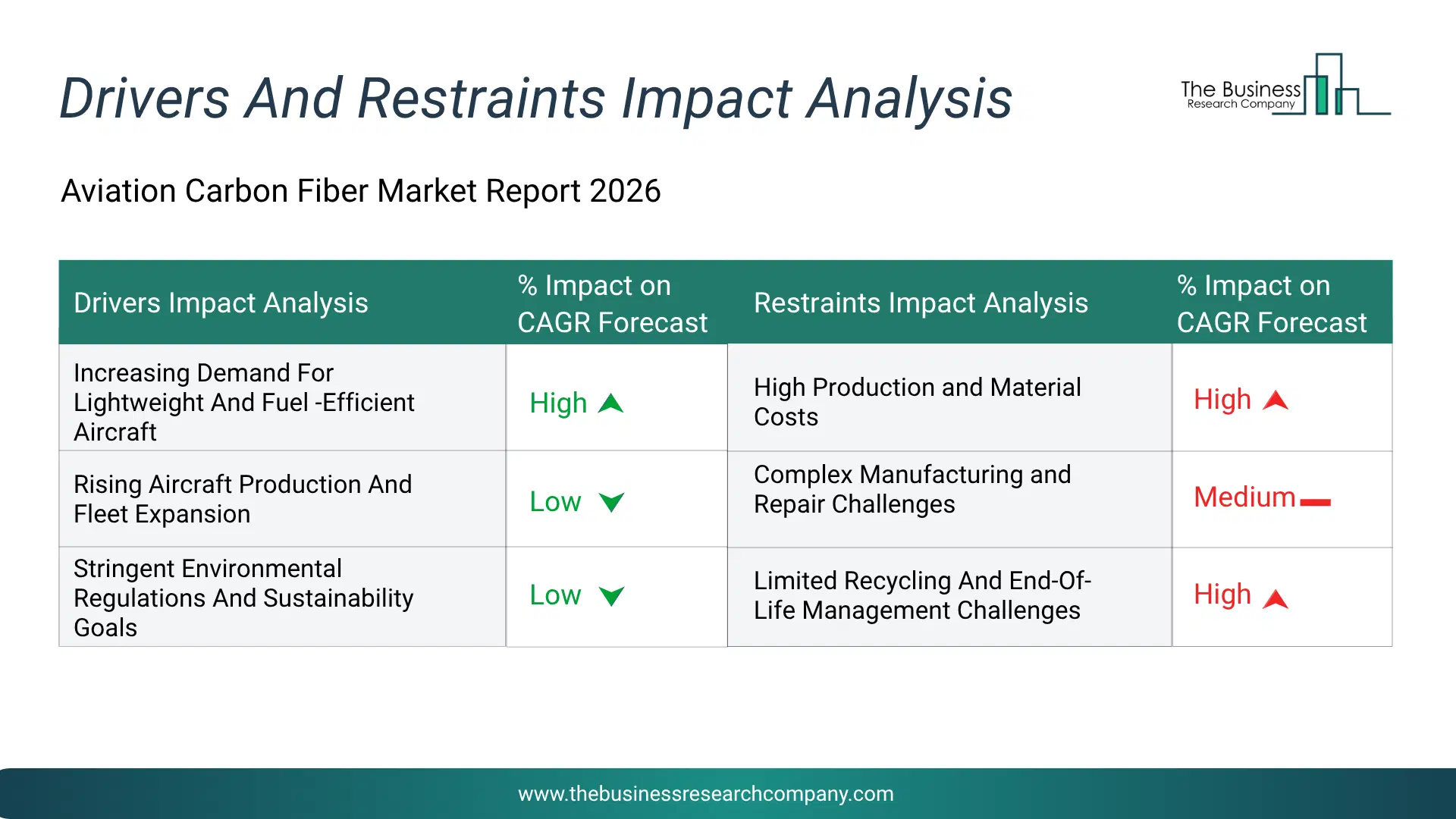
Infographic Chart Showing Key Market Drivers Analysis And Restraints For Aviation Carbon Fiber Market
The chart presents an impact analysis of key drivers and restraints, quantifying their relative influence on the market's growth rate and helping assess the balance between growth enablers and limiting factors. This chart offers a high-level perspective; the full report contains more detailed insights.
How Will The Drivers Impact Growth In The Global Aviation Carbon Fiber Market?
• Increasing Demand For Lightweight And Fuel -Efficient Aircraft (High) – During the forecast period, the increasing demand for lightweight and fuel -efficient aircraft is expected to become a key growth driver for the aviation carbon fiber market by 2030. The aviation industry faces continuous pressure to reduce fuel consumption, cut operating costs, and lower carbon emissions. Carbon fiber composites, with superior strength -to -weight ratios over aluminum and steel, are increasingly used in fuselage structures, wings, tail components, and interior assemblies. Their lightweight properties enhance fuel efficiency and flight range, and as commercial airlines and defense organizations invest in next -generation aircraft, demand for aviation -grade carbon fiber continues to rise, serving as a key market driver. • Rising Aircraft Production And Fleet Expansion (Low) – During the forecast period, the rising aircraft production and fleet expansion is expected to emerge as a major factor driving the expansion of the aviation carbon fiber market by 2030. The aviation sector is under constant pressure to lower fuel consumption, reduce operating costs, and decrease carbon emissions. Carbon fiber composites, offering higher strength-to-weight ratios than aluminum and steel, are widely used in fuselage structures, wings, tail components, and aircraft interiors. Their lightweight nature improves fuel efficiency and flight range, and with investments in next-generation aircraft by airlines and defense organizations, the demand for aviation-grade carbon fiber continues to grow, driving market expansion. • Stringent Environmental Regulations And Sustainability Goals (Low) – During the forecast period, the stringent environmental regulations and sustainability goals is expected to act as a key growth catalyst for the aviation carbon fiber market by 2030. Governments and international aviation authorities are enforcing stricter environmental regulations to lower greenhouse gas emissions and improve energy efficiency. Carbon fiber materials allow for lighter aircraft designs that help meet these evolving emission targets. Airlines are increasingly investing in fuel-efficient aircraft to fulfill sustainability goals, and this global focus on greener aviation solutions is driving greater adoption of composite materials, making environmental compliance a key growth driver in the aviation carbon fiber market.How Will The Restraints Impact Growth In The Global Aviation Carbon Fiber Market?
• High Production and Material Costs (High) – During the forecast period, the carbon fiber manufacturing involves complex production processes, including precursor preparation, carbonization, surface treatment, and composite fabrication, which require significant capital investment and energy consumption. The high cost of raw materials and processing limits widespread adoption, particularly in cost-sensitive aircraft programs. Additionally, fluctuations in precursor material prices and supply chain constraints may impact profitability and pricing strategies. These high costs act as a significant restraint, especially for smaller aerospace manufacturers or emerging markets. • Complex Manufacturing and Repair Challenges (Medium) – During the forecast period, the although carbon fiber offers superior performance, it requires specialized manufacturing techniques and skilled labor for fabrication, assembly, and quality control. Repair and maintenance of carbon fiber components are more complex compared to conventional metal structures, requiring advanced inspection technologies and trained technicians. Certification processes and strict aerospace standards further increase operational complexity. These factors may slow adoption and increase lifecycle costs, acting as a restraint on market growth. • Limited Recycling And End-Of-Life Management Challenges (High) – During the forecast period, the limited recycling and end-of-life management challenges act as a restraint for the aviation carbon fiber market by making it difficult to efficiently reuse or dispose of composite materials after their service life. The thermoset nature of most aerospace carbon fiber composites restricts conventional recycling methods, leading to higher waste management costs. Existing recycling technologies are still developing and often fail to fully retain material performance, limiting large-scale circular adoption. Additionally, strict aviation environmental regulations increase pressure on manufacturers to find sustainable disposal solutions. These challenges collectively increase lifecycle costs and slow broader market adoption.Key Players In The Global Aviation Carbon Fiber Market
Major companies operating in the aviation carbon fiber market are Toray Industries Inc., Hexcel Corporation, Teijin Carbon Co. Ltd., SGL Carbon SE, Solvay S.A., BGF Industries Inc., Taekwang Industrial Co. Ltd., Weihai Tuozhan Fibers Co. Ltd., Jiangsu Hengshen Co. Ltd., Mitsubishi Chemical Corporation, Bally Ribbon Mills, Park Aerospace Technologies Corp., Renegade Materials Corporation, Nippon Graphite Fiber Co. Ltd., Zoltek Companies Inc., Hyosung Advanced Materials Corporation, Zhongfu Shenying Carbon Fiber Co. Ltd., Jiangsu Tianniao High Technology Co. Ltd., Jilin Carbon Fiber Co. Ltd., Weihai Guangwei Composites Co. Ltd., Hengshen Co. Ltd., Jiangsu Hangke Composite Materials Technology Co. Ltd., Jiangsu Jiuding New Material Co. Ltd., Zhejiang Juxing Carbon Fiber Technology Co. Ltd., Zhejiang Guanghua Technology Co. Ltd., Zhejiang Mengtex Special Materials Technology Co. Ltd., Zhejiang Weitong Composite Material Co. Ltd., Zhejiang Hailong New Materials Co. Ltd., Zhejiang Jinggong Science & Technology Co. Ltd., Zhejiang Guxiandao High Technology Co. Ltd., Anshan Sinocarb Carbon Fibers Co. Ltd., DowAksa LLC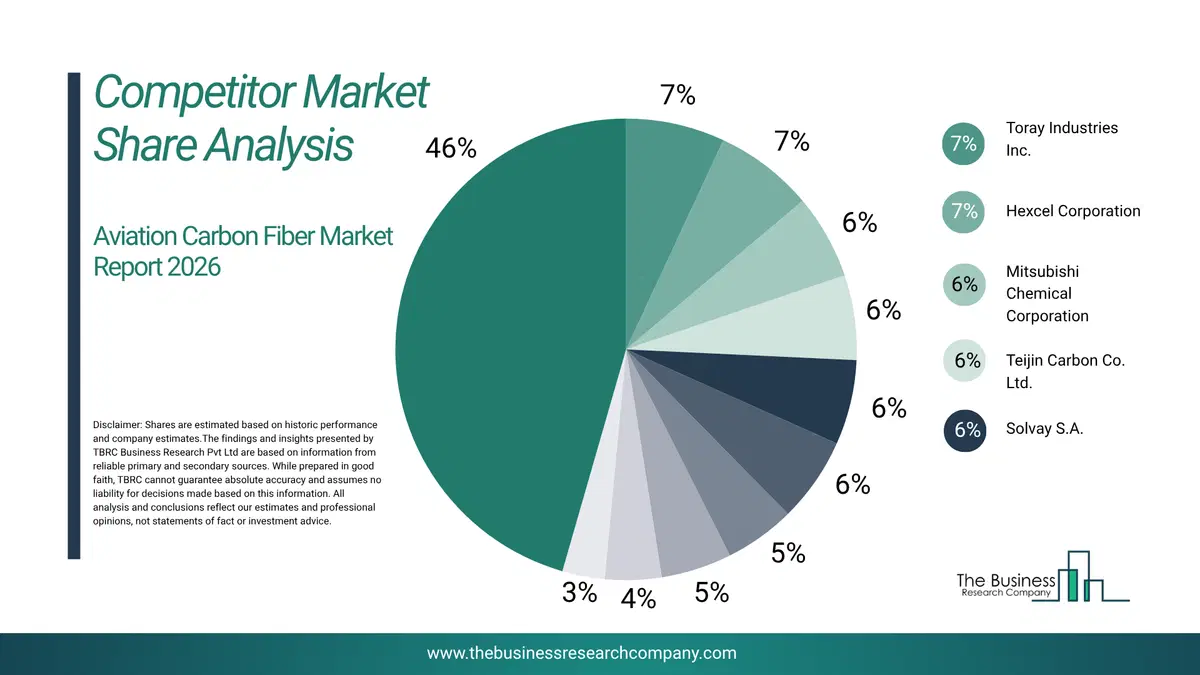
This chart is for illustrative purposes; the full report includes a detailed competitor analysis and comprehensive overview of the top 10 companies in the market.
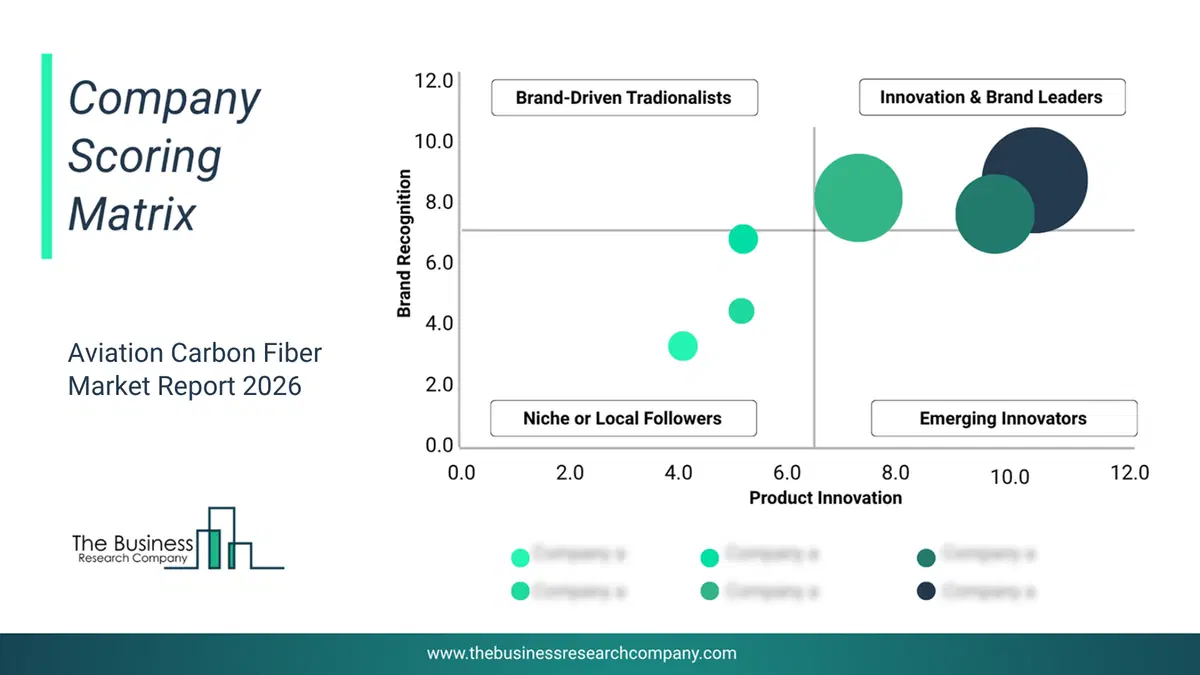
This chart maps companies by product innovation and brand strength, with bubble size indicating relative revenue, helping identify market leaders, challengers, and niche players. This is an illustrative chart; the full report provides a complete and accurate competitive analysis.
Global Aviation Carbon Fiber Market Trends and Insights
Major companies operating in the aviation carbon fiber market are focusing on product innovations such as continuous carbon fiber materials to meet the growing industry demand. Continuous carbon fiber materials are composite materials made from long strands of carbon fibers that are woven or aligned in a continuous form. For instance, in March 2024, Hexcel Corporation, a US-based producer of carbon fiber reinforcements and resin systems, launched its new HexTow IM9 24K continuous carbon fiber, aimed at advanced aerospace composite applications. This intermediate modulus fiber comprises 24, 000 filaments and offers a tensile strength exceeding 6, 300 MPa, with a modulus of 298 GPa. The IM9 24K provides a 12% enhancement in tensile strength over the previous IM7 fiber, focusing on delivering high performance and efficiency for aerospace vehicle structures.What Are Latest Mergers And Acquisitions In The Aviation Carbon Fiber Market?
In January 2025, Tex-Tech Industries Inc., a US-based provider of high-temperature and high-performance specialty materials and coatings, acquired Fiber Materials Inc. for an undisclosed amount. With this acquisition, Tex-Tech aims to enhance its portfolio of thermally protective materials and strengthen its capabilities to serve the rapidly growing space and defense industries. Fiber Materials Inc., is a US-based provider of high-temperature materials and reinforced composites, specializing in carbon/carbon and related composites used in critical applications such as thermal protection systems, re-entry vehicle nose tips, rocket motor throats, and nozzles.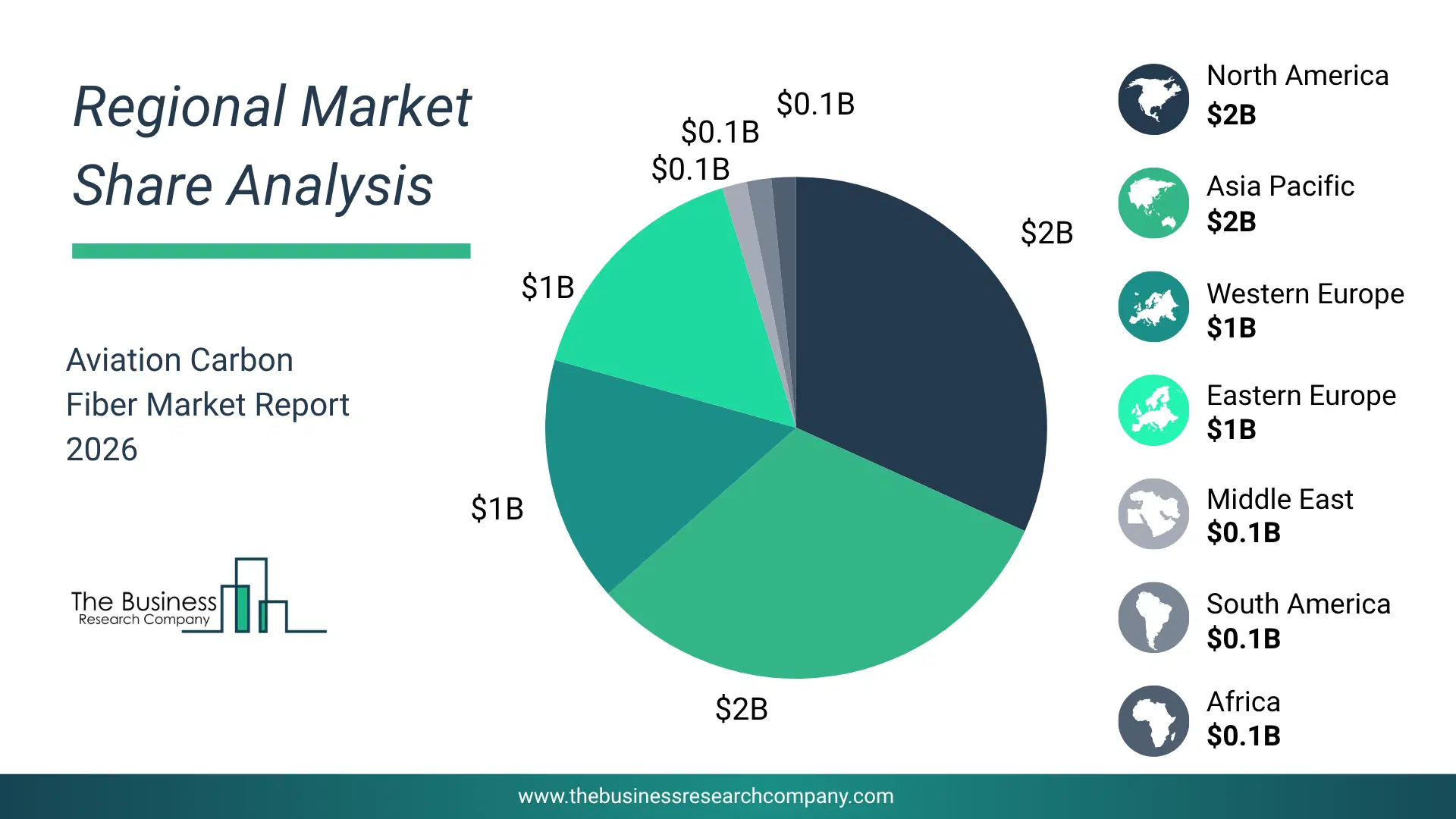
Regional Outlook
North America was the largest region in the aviation carbon fiber market in 2025.Asia-Pacific is expected to be the fastest-growing region in the global aviation carbon fiber market report forecast period. The regions covered in this market report are Asia-Pacific, South East Asia, Western Europe, Eastern Europe, North America, South America, Middle East, Africa. The countries covered in this market report are Australia, Brazil, China, France, Germany, India, Indonesia, Japan, Taiwan, Russia, South Korea, UK, USA, Canada, Italy, Spain.What Defines the Aviation Carbon Fiber Market?
The aviation carbon fiber market consists of sales of standard modulus carbon fiber, intermediate modulus carbon fiber, high modulus carbon fiber, and ultra-high modulus carbon fiber. Values in this market are ‘factory gate’ values, that is the value of goods sold by the manufacturers or creators of the goods, whether to other entities (including downstream manufacturers, wholesalers, distributors, and retailers) or directly to end customers. The value of goods in this market includes related services sold by the creators of the goods.How is Market Value Defined and Measured?
The market value is defined as the revenues that enterprises gain from the sale of goods and/or services within the specified market and geography through sales, grants, or donations in terms of the currency (in USD unless otherwise specified). The revenues for a specified geography are consumption values that are revenues generated by organizations in the specified geography within the market, irrespective of where they are produced. It does not include revenues from resales along the supply chain, either further along the supply chain or as part of other products.
This chart presents market attractiveness based on a quantitative evaluation of growth, competition, strategic alignment, and risk, offering a clear view of opportunity areas for decision-making. This chart is for illustrative purposes; the full report contains the complete analysis.

This chart highlights the Total Addressable Market (TAM) by estimating the maximum revenue opportunity using an assumption-driven approach, supporting strategic planning and opportunity sizing across markets. The chart is illustrative; the full report provides a more comprehensive analysis.
What Key Data and Analysis Are Included in the Aviation Carbon Fiber Market Report 2026?
The aviation carbon fiber market research report is one of a series of new reports from The Business Research Company that provides market statistics, including Market Report 2026?global market size, regional shares, competitors with the market share, detailed market segments, market trends and opportunities, and any further data you may need to thrive in the aviation carbon fiber Market Report 2026? The market research report delivers a complete perspective of everything you need, with an in-depth analysis of the current and future state of the Market Report 2026?Aviation Carbon Fiber Market Report Forecast Analysis
| Report Attribute | Details |
|---|---|
| Market Size Value In 2026 | $3.12 billion |
| Revenue Forecast In 2030 | $4.32 billion |
| Growth Rate | CAGR of 8.5% from 2026 to 2030 |
| Base Year For Estimation | 2025 |
| Actual Estimates/Historical Data | 2020-2025 |
| Forecast Period | 2026 - 2030 |
| Market Representation | Revenue in USD Billion and CAGR from 2026 to 2030 |
| Segments Covered | Type, Raw Material, End-Use |
| Regional Scope | Asia-Pacific, Western Europe, Eastern Europe, North America, South America, Middle East, Africa |
| Country Scope | The countries covered in the report are Australia, Brazil, China, France, Germany, India, ... |
| Key Companies Profiled | Toray Industries Inc., Hexcel Corporation, Teijin Carbon Co. Ltd., SGL Carbon SE, Solvay S.A., BGF Industries Inc., Taekwang Industrial Co. Ltd., Weihai Tuozhan Fibers Co. Ltd., Jiangsu Hengshen Co. Ltd., Mitsubishi Chemical Corporation, Bally Ribbon Mills, Park Aerospace Technologies Corp., Renegade Materials Corporation, Nippon Graphite Fiber Co. Ltd., Zoltek Companies Inc., Hyosung Advanced Materials Corporation, Zhongfu Shenying Carbon Fiber Co. Ltd., Jiangsu Tianniao High Technology Co. Ltd., Jilin Carbon Fiber Co. Ltd., Weihai Guangwei Composites Co. Ltd., Hengshen Co. Ltd., Jiangsu Hangke Composite Materials Technology Co. Ltd., Jiangsu Jiuding New Material Co. Ltd., Zhejiang Juxing Carbon Fiber Technology Co. Ltd., Zhejiang Guanghua Technology Co. Ltd., Zhejiang Mengtex Special Materials Technology Co. Ltd., Zhejiang Weitong Composite Material Co. Ltd., Zhejiang Hailong New Materials Co. Ltd., Zhejiang Jinggong Science & Technology Co. Ltd., Zhejiang Guxiandao High Technology Co. Ltd., Anshan Sinocarb Carbon Fibers Co. Ltd., DowAksa LLC |
| Customization Scope | Request for Customization |
| Pricing And Purchase Options | Explore Purchase Options |