
Baby Feeding Bottle Market Report 2026
Global Outlook – By Material (Plastic, Stainless Steel, Silicone, Glass), By Design (Standard Neck Nottles, Wide Neck Bottles, Angled Bottles), By Capacity (Standard Capacity, Large Capacity), By Distribution Channel (Online, Hypermarket, Pharmacies, Specialty Store) – Market Size, Trends, Strategies, and Forecast to 2030
Baby Feeding Bottle Market Overview
• Baby Feeding Bottle market size has reached to $3.25 billion in 2025 • Expected to grow to $4.02 billion in 2030 at a compound annual growth rate (CAGR) of 4.3% • Growth Driver: Rising Birth Rates Fuels Baby Feeding Bottle Market Growth • Market Trend: Revolutionary Baby Bottle Technology Sets New Industry Standard • North America was the largest region in 2025 and Asia-Pacific is the fastest growing region.Market Gains By 2030 – Top Opportunities By Segment
Market Gain identifies the most promising market opportunities by highlighting the segments or products expected to generate the highest incremental revenue growth over the next five years.
What Is Covered Under Baby Feeding Bottle Market?
A baby feeding bottle is a vessel crafted to contain milk or formula for infants, typically equipped with a nipple to aid in feeding by suckling. These bottles are crafted from either glass or BPA-free plastic, designed to replicate the breastfeeding sensation. These bottles often feature measurement markings for precise feeding and come in sizes ranging from 4 to 11 ounces to accommodate different feeding volumes as the baby grows. The main materials types of baby feeding bottles are plastic, stainless steel, silicone, and glass. Plastic refers to a synthetic material derived from polymers, known for its versatility, durability, and affordability, used in various applications including packaging, construction, and consumer goods. The various design types provided are standard neck bottles, wide neck bottles, and angled bottles. The various capacity ranges offered are standard capacity and large capacity. These are distributed by various channels including online, hypermarkets, pharmacies, specialty stores, and convenience stores.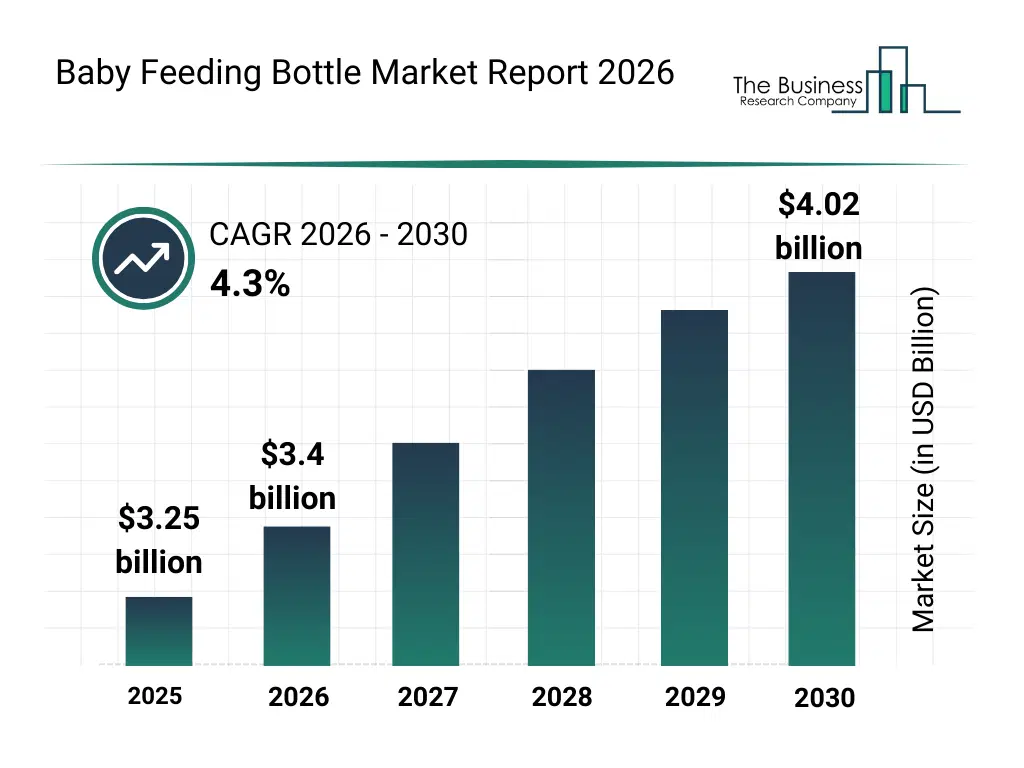
What Is The Baby Feeding Bottle Market Size and Share 2026?
The baby feeding bottle market size has grown steadily in recent years. It will grow from $3.25 billion in 2025 to $3.4 billion in 2026 at a compound annual growth rate (CAGR) of 4.5%. The growth in the historic period can be attributed to increasing infant population, rising awareness of safe feeding practices, expansion of retail availability of baby products, growing use of bottle feeding, increased product standardization.What Is The Baby Feeding Bottle Market Growth Forecast?
The baby feeding bottle market size is expected to see steady growth in the next few years. It will grow to $4.02 billion in 2030 at a compound annual growth rate (CAGR) of 4.3%. The growth in the forecast period can be attributed to increasing demand for eco-friendly feeding bottles, rising adoption of advanced material technologies, expansion of online baby product sales, growing preference for premium feeding solutions, increasing regulatory focus on product safety. Major trends in the forecast period include growing preference for bpa-free feeding bottles, rising demand for anti-colic bottle designs, expansion of glass and silicone bottle adoption, increasing focus on ergonomic and easy-clean designs, growth of premium baby feeding accessories.
Global Baby Feeding Bottle Market Segmentation
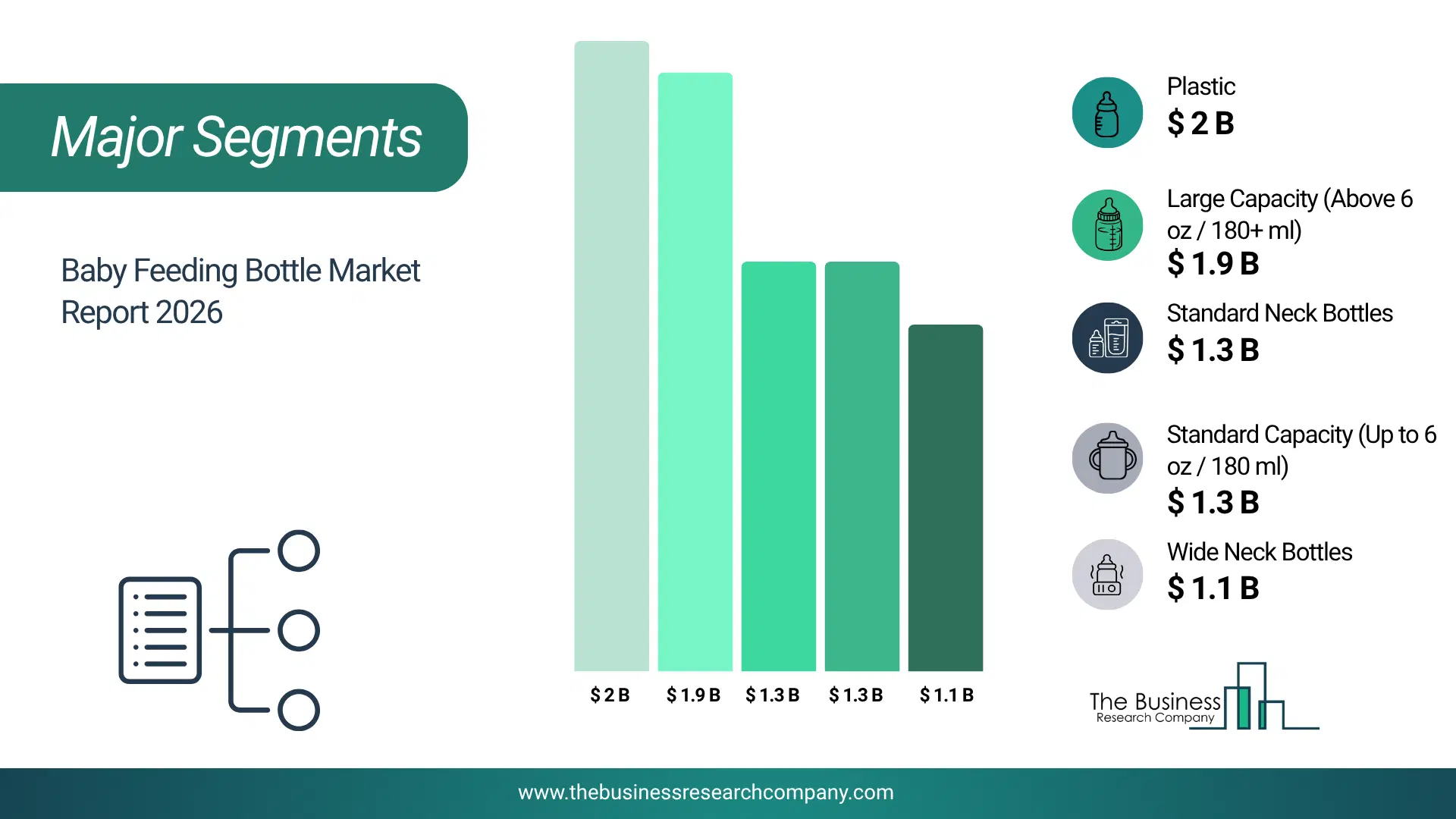
1) By Material: Plastic, Stainless Steel, Silicone, Glass 2) By Design: Standard Neck Nottles, Wide Neck Bottles, Angled Bottles 3) By Capacity: Standard Capacity, Large Capacity 4) By Distribution Channel: Online, Hypermarket, Pharmacies, Specialty Store Subsegments: 1) By Plastic: Polypropylene (PP), Tritan 2) By Stainless Steel: Single-Wall Stainless Steel Bottles, Double-Wall Stainless Steel Bottles 3) By Silicone: Food-Grade Silicone Bottles, Silicone Bottles With Anti-Colic Features 4) By Glass: Regular Glass Bottles, Tempered Glass Bottles, Borosilicate Glass Bottles The top segments in the baby feeding bottle market will be: • Plastic will reach $2094.42 Million by 2025. • Large Capacity (Above 6 oz / 180+ ml) will reach $1921.04 Million by 2025. • Standard Neck Bottles will reach $1358.57 Million by 2025. • Standard Capacity (Up to 6 oz / 180 ml) will reach $1330.74 Million by 2025. • Wide Neck Bottles will reach $1155.11 Million by 2025.What Is The Driver Of The Baby Feeding Bottle Market?
The increasing rate of birth is expected to drive the growth of the baby feeding bottle market. Birth rate refers to the number of live births per 1, 000 people in a population within a specified period, typically measured annually. There is a rise in improved healthcare, economic stability, cultural norms, and government policies promoting family planning and support for child-rearing. The growing birth rate fuels the heightened usage of baby feeding bottles, as many infants are born, demanding feeding solutions tailored to their nutritional requirements. For instance, in October 2025, according to the Australian Bureau of Statistics (ABS), an Australia-based government agency, there were in 2024, there were 292, 318 registered births, marking a 1.9% rise, equivalent to 5, 320 more births compared to 2023. Therefore, the rising birth rate is a key factor propelling the expansion of the baby feeding bottle industry.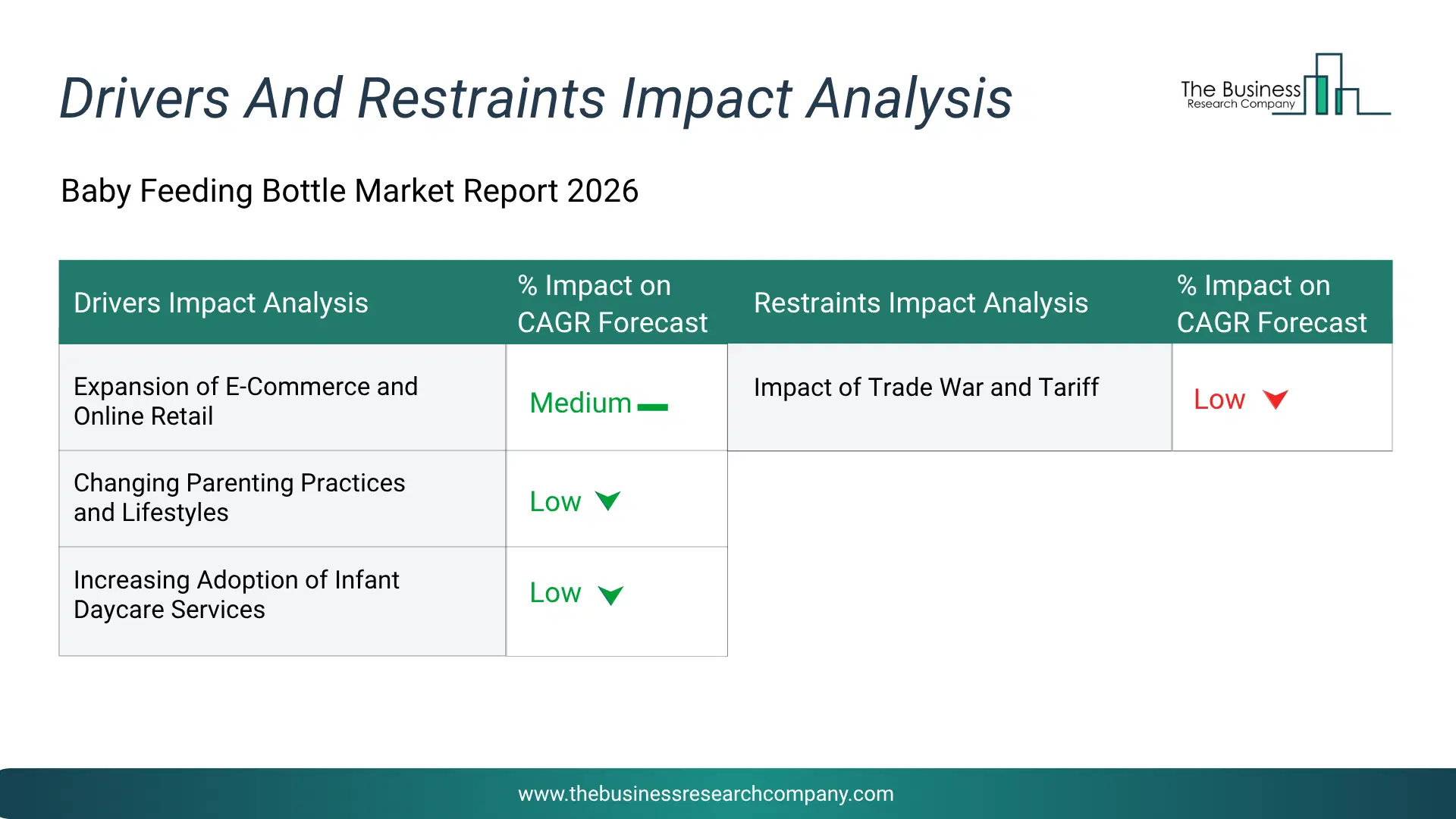
Infographic Chart Showing Key Market Drivers Analysis And Restraints For Baby Feeding Bottle Market
The chart presents an impact analysis of key drivers and restraints, quantifying their relative influence on the market's growth rate and helping assess the balance between growth enablers and limiting factors. This chart offers a high-level perspective; the full report contains more detailed insights.
How Will The Drivers Impact Growth In The Global Baby Feeding Bottle Market?
• Expansion of E-Commerce and Online Retail (Medium) – The expansion of e-commerce and online retail will become a key driver of growth in the baby feeding bottle market by 2030. E-commerce platforms have significantly expanded access to baby feeding bottles, enabling consumers in remote or underserved regions to purchase a wide variety of products, including premium international brands. This has been particularly impactful in emerging markets where offline retail infrastructure is limited. The convenience of online shopping, such as 24/7 availability, easy price comparisons, and home delivery appeals especially to working parents. Additionally, detailed product descriptions, safety certifications and customer reviews help buyers make informed choices, fostering trust and increasing the adoption of newer or higher end feeding bottle options. As a result, expansion of e-commerce and online retail is anticipated to contributing to a 1.5% annual growth in the market. • Changing Parenting Practices and Lifestyles (Low) – The changing parenting practices and lifestyles will become a key driver of growth in baby feeding bottle market by 2030. Modern lifestyles have significantly increased the demand for baby feeding bottles, as more parents, particularly working mothers, rely on them for convenience and flexibility in infant care. With busy schedules, families value time-saving solutions that allow for scheduled feeding and milk storage. Feeding bottles also support shared parenting, enabling fathers and other caregivers to participate in feeding routines, fostering stronger family involvement. Additionally, urban, mobile lifestyles have driven preference for portable and hygienic bottle options. This demand has spurred innovations such as anti-colic designs, temperature-sensing bottles and electric sterilizers, enhanced safety and efficiency while fueling market growth. As a result, changing parenting practices and lifestyles is anticipated to contributing to a 1.2% annual growth in the market. • Increasing Adoption of Infant Daycare Services (Low) – The increasing adoption of infant daycare services will serve as a key growth catalyst for baby feeding bottle market by 2030. With rising daycare enrolment, especially among infants of working parents, baby feeding bottles have become essential for providing expressed breast milk or formula during long separations from mothers. Daycare centres follow standardized, hygienic feeding routines and often prefer bottles for convenience and consistency, increasing daily usage. Frequent cleaning and sterilization in such settings accelerate wear and tear, prompting regular replacements and repeat purchases. Additionally, daycares often recommend BPA-free or anti-colic bottles, raising parental awareness and driving demand for high-quality options suited for multi-user environments. This institutional reliance significantly contributes to sustained market growth. Therefore, this increasing adoption of infant daycare services will be projected to supporting to a 0.5% annual growth in the market. • Increasing Incidence of Premature Births and Low Birth Weights (High) – The increasing incidence of premature births and low birth weights will serve as a key growth catalyst baby feeding bottle market by 2030. Premature and low birth weight infants often face difficulties with breastfeeding due to weak sucking reflexes, increasing the demand for baby feeding bottles with slow-flow nipples and medical-grade designs. Hospitals and Neonatal Intensive Care Units (NICUs) rely on these specialized bottles to ensure safe, controlled feeding for vulnerable newborns, with rising premature birth rates driving institutional demand. Additionally, parents of preterm babies frequently use breast pumps to provide expressed milk, requiring bottles compatible with both hospital and home-use systems. These needs collectively boost the market for high-quality, hygienic, and precision-based feeding solutions tailored to neonatal care. Therefore, this increasing incidence of premature births and low birth weights is projected to supporting to a 0.7% annual growth in the market.How Will The Restraints Impact Growth In The Global Baby Feeding Bottle Market?
• High Dependency on Traditional Breastfeeding (Medium) – High Dependency on Traditional Breastfeeding will restrict the growth of the Baby Feeding Bottle market during the forecast period. The increasing promotion and adoption of breastfeeding practices in many regions reduces the demand for baby feeding bottles. Public health campaigns emphasizing the benefits of breastfeeding may influence feeding choices, limiting bottle usage. Cultural preferences for breastfeeding and growing awareness of its benefits affect market growth and product demand. • Low Awareness of Bottle Hygiene (Low) – Low Awareness of Bottle Hygiene will restrict the growth of the Baby Feeding Bottle market during the forecast period. Limited awareness of proper bottle cleaning, sterilization, and hygiene practices can lead to health concerns and product recalls. Misuse and improper handling of feeding bottles can cause health issues, affecting consumer confidence in bottle products. The need for education about bottle hygiene may limit adoption in regions with low healthcare awareness. • Impact of Trade War and Tariff (Low) – Impact of Trade War and Tariff will restrict the growth of the Baby Feeding Bottle market during the forecast period. Baby feeding bottle production relies on imported materials including plastics, silicone, and packaging components. Trade tariffs and restrictions can increase production costs and affect product availability. Trade barriers may also limit export opportunities for baby feeding bottle manufacturers in certain regions.Key Players In The Global Baby Feeding Bottle Market
Major companies operating in the baby feeding bottle market are Koninklijke Philips N.V., Newell Brands Inc., Artsana S.p.A., Medela AG, Evenflo Company Inc., Munchkin Inc., Mapa GmbH, Lansinoh Laboratories Inc., Mayborn Group Limited, Handi-Craft Company, MAM Babyartikel GmbH, Green Sprouts Inc., Twistshake AB, Joovy LLC, Vital Baby Group Limited, Mimijumi LLC, Lifefactory Inc., Pura Stainless LLC, Kiinde LLC, Natursutten ApS, Difrax BV, Lollaland LLC, Olababy Inc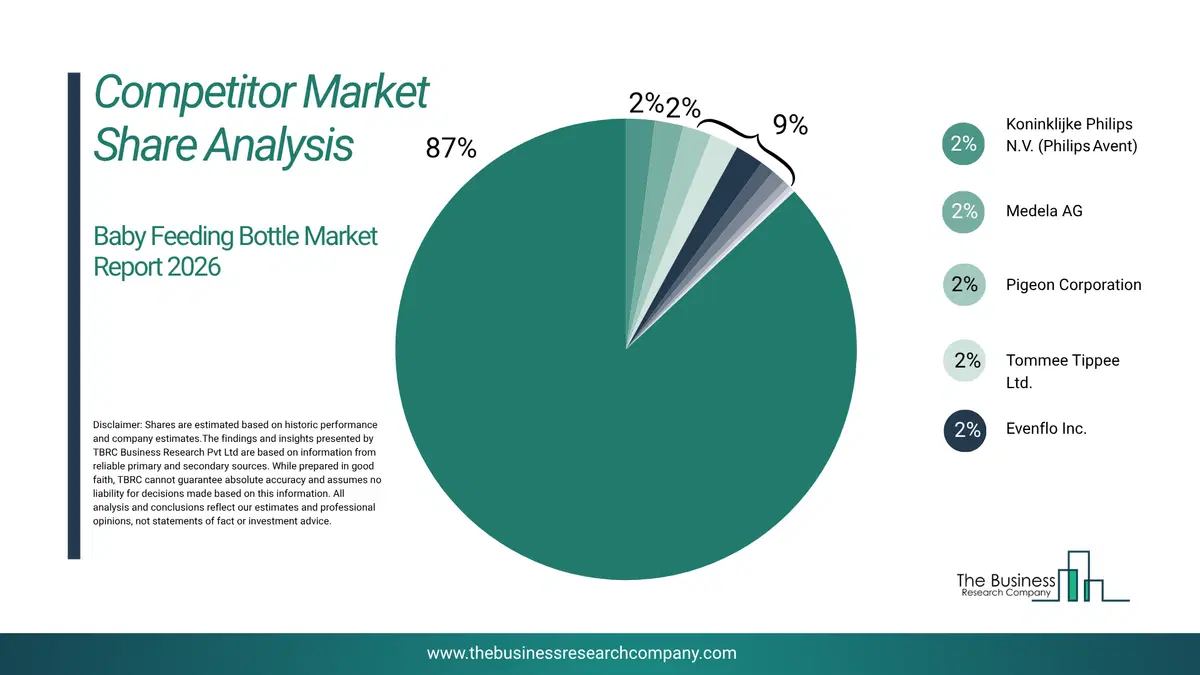
This chart is for illustrative purposes; the full report includes a detailed competitor analysis and comprehensive overview of the top 10 companies in the market.
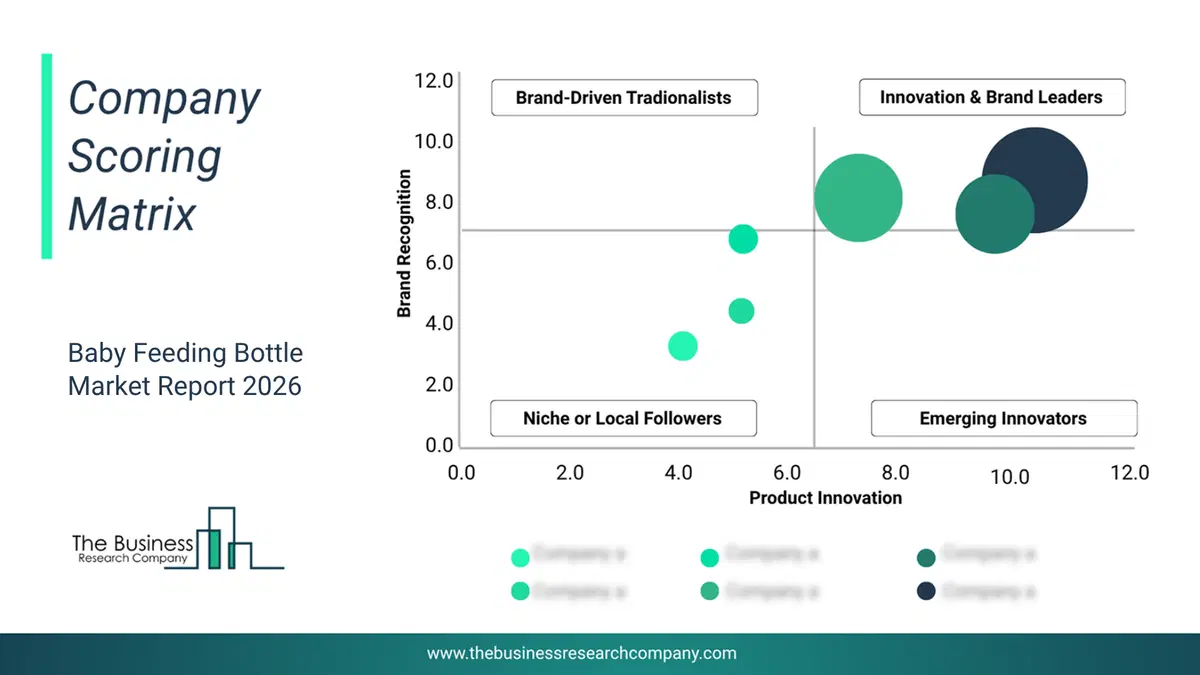
This chart maps companies by product innovation and brand strength, with bubble size indicating relative revenue, helping identify market leaders, challengers, and niche players. This is an illustrative chart; the full report provides a complete and accurate competitive analysis.
Global Baby Feeding Bottle Market Trends and Insights
Major companies operating in the baby feeding bottle market are focused on developing innovative products, such as self-warming baby bottle systems, to gain a competitive edge. A self-warming baby bottle provides a convenient solution for heating milk to the perfect temperature without the need for external heat sources. For instance, in March 2023, Ember Technologies, Inc., a US-based design-driven temperature control solutions company, launched the Ember Baby Bottle System. Utilizing Ember's patented temperature control technology, this system reliably warms milk to the ideal temperature for feedings in less than five minutes. Prioritizing safety and user-friendliness, the system incorporates triple redundancy protections and multipoint temperature sensing to guarantee optimal warmth with each use. Moreover, the lightweight, ergonomic bottle boasts a modular design, making it easy to clean, fill, and assemble.What Are Latest Mergers And Acquisitions In The Baby Feeding Bottle Market?
In December 2023, LyondellBasell Industries Holdings B.V., a US-based chemical company that produces chemicals, plastics, and refining products, collaborated with Pigeon Singapore Pte Ltd to advance sustainable research and development initiatives in baby nursing bottles to promote environmental responsibility and innovation. Pigeon nursing bottles will use LyondellBasell’s bio-based CirculenRenew polypropylene polymers as part of Pigeon’s transition away from using 100% virgin polypropylene resins. Pigeon Singapore Pte Ltd. is a subsidiary of Pigeon Corporation, a Japan-based company manufacturing baby and mother care products.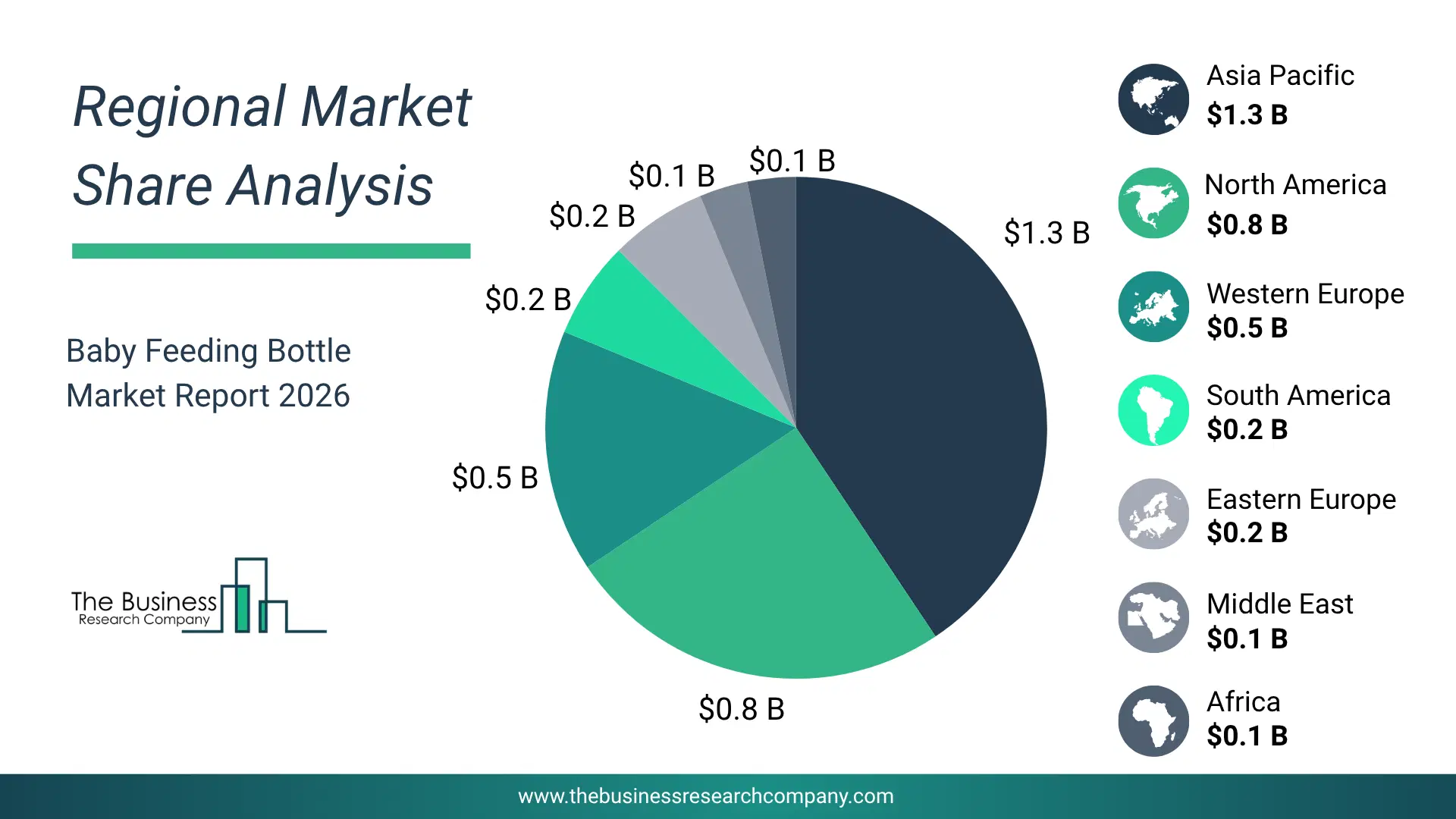
Regional Outlook
North America was the largest region in the baby feeding bottle market in 2025. Asia-Pacific is expected to be the fastest-growing region in the forecast period. The regions covered in this market report are Asia-Pacific, South East Asia, Western Europe, Eastern Europe, North America, South America, Middle East, Africa. The countries covered in this market report are Australia, Brazil, China, France, Germany, India, Indonesia, Japan, Taiwan, Russia, South Korea, UK, USA, Canada, Italy, Spain.What Defines the Baby Feeding Bottle Market?
The baby feeding bottle market consists of sales of disposable bottles, anti-colic bottles, traditional bottles, and specialized feeding systems for newborns and infants. Values in this market are ‘factory gate’ values, that is the value of goods sold by the manufacturers or creators of the goods, whether to other entities (including downstream manufacturers, wholesalers, distributors, and retailers) or directly to end customers. The value of goods in this market includes related services sold by the creators of the goods.How is Market Value Defined and Measured?
The market value is defined as the revenues that enterprises gain from the sale of goods and/or services within the specified market and geography through sales, grants, or donations in terms of the currency (in USD unless otherwise specified). The revenues for a specified geography are consumption values that are revenues generated by organizations in the specified geography within the market, irrespective of where they are produced. It does not include revenues from resales along the supply chain, either further along the supply chain or as part of other products.
This chart presents market attractiveness based on a quantitative evaluation of growth, competition, strategic alignment, and risk, offering a clear view of opportunity areas for decision-making. This chart is for illustrative purposes; the full report contains the complete analysis.

This chart highlights the Total Addressable Market (TAM) by estimating the maximum revenue opportunity using an assumption-driven approach, supporting strategic planning and opportunity sizing across markets. The chart is illustrative; the full report provides a more comprehensive analysis.
What Key Data and Analysis Are Included in the Baby Feeding Bottle Market Report 2026?
The baby feeding bottle market research report is one of a series of new reports from The Business Research Company that provides market statistics, including Market Report 2026?global market size, regional shares, competitors with the market share, detailed market segments, market trends and opportunities, and any further data you may need to thrive in the baby feeding bottle Market Report 2026? The market research report delivers a complete perspective of everything you need, with an in-depth analysis of the current and future state of the Market Report 2026?Baby Feeding Bottle Market Report Forecast Analysis
| Report Attribute | Details |
|---|---|
| Market Size Value In 2026 | $3.4 billion |
| Revenue Forecast In 2030 | $4.02 billion |
| Growth Rate | CAGR of 4.5% from 2026 to 2030 |
| Base Year For Estimation | 2025 |
| Actual Estimates/Historical Data | 2020-2025 |
| Forecast Period | 2026 - 2030 |
| Market Representation | Revenue in USD Billion and CAGR from 2026 to 2030 |
| Segments Covered | Material, Design, Capacity, Distribution Channel |
| Regional Scope | Asia-Pacific, Western Europe, Eastern Europe, North America, South America, Middle East, Africa |
| Country Scope | The countries covered in the report are Australia, Brazil, China, France, Germany, India, Indonesia, Japan, Taiwan, Russia, South Korea, UK, USA, Canada, Italy, Spain. |
| Key Companies Profiled | Koninklijke Philips N.V., Newell Brands Inc., Artsana S.p.A., Medela AG, Evenflo Company Inc., Munchkin Inc., Mapa GmbH, Lansinoh Laboratories Inc., Mayborn Group Limited, Handi-Craft Company, MAM Babyartikel GmbH, Green Sprouts Inc., Twistshake AB, Joovy LLC, Vital Baby Group Limited, Mimijumi LLC, Lifefactory Inc., Pura Stainless LLC, Kiinde LLC, Natursutten ApS, Difrax BV, Lollaland LLC, Olababy Inc |
| Customization Scope | Request for Customization |
| Pricing And Purchase Options | Explore Purchase Options |