

Bacterial Cell Culture Market Report 2026
Global Outlook – By Product Type (Media, Reagents, Sera, Consumables, Other Product Types), By Cell Type (Gram-Positive Bacteria, Gram-Negative Bacteria, Anaerobic Bacteria, Thermophilic Bacteria, Other Cell Types), By Application (Disease Diagnosis, Food Testing, Water Testing, Biopharmaceutical Production, Research Laboratories, Other Applications), By End User (Diagnostic Centers, Food Industry, Other End-Users) – Market Size, Trends, Strategies, and Forecast to 2030
Bacterial Cell Culture Market Overview
• Bacteria-based-agricultural-microbials-global-market-report" target="_blank">Bacterial Cell Culture market size has reached to $3.44 billion in 2025 • Expected to grow to $5.05 billion in 2030 at a compound annual growth rate (CAGR) of 7.9% • Growth Driver: Rising Incidence Of Infectious Illnesses Driving The Growth Of The Market Due To Increasing Pathogen Spread From Global Travel • Market Trend: Advancements In Automated Culturing Technology Enhancing Research Efficiency And Precision • North America was the largest region in 2025 and Asia-Pacific is the fastest growing region.What Is Covered Under Bacterial Cell Culture Market?
Bacterial cell culture refers to the controlled growth of bacterial cells in a laboratory environment. It involves creating conditions such as suitable nutrients, temperature, and pH that support bacterial multiplication and survival. This process enables detailed study of bacterial behavior, physiology, and biological characteristics under reproducible conditions. The main product types of bacterial cell culture include media, reagents, sera, consumables, and others. Bacterial cell culture media is a nutrient-rich substance specifically formulated to support the growth, maintenance, and proliferation of bacterial cells under controlled laboratory conditions. It is used for various cell types such as gram-positive bacteria, gram-negative bacteria, anaerobic bacteria, thermophilic bacteria, and others and is applied for disease diagnosis, food testing, water testing, biopharmaceutical production, research laboratories, and others. It is used by several end users, including diagnostic centers, the food industry, and others.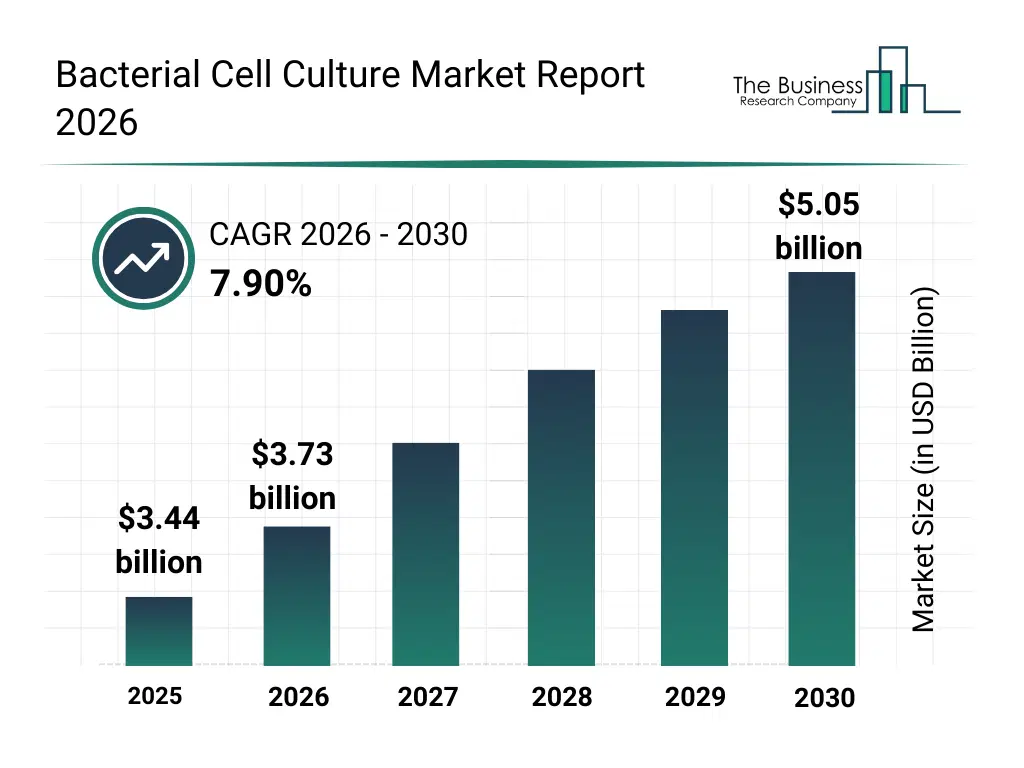
What Is The Bacterial Cell Culture Market Size and Share 2026?
The bacterial cell culture market size has grown strongly in recent years. It will grow from $3.44 billion in 2025 to $3.73 billion in 2026 at a compound annual growth rate (CAGR) of 8.2%. The growth in the historic period can be attributed to expansion of microbiology research laboratories, routine use in clinical diagnostics, growth of food safety testing requirements, adoption in academic research settings, standardized bacterial growth protocols.What Is The Bacterial Cell Culture Market Growth Forecast?
The bacterial cell culture market size is expected to see strong growth in the next few years. It will grow to $5.05 billion in 2030 at a compound annual growth rate (CAGR) of 7.9%. The growth in the forecast period can be attributed to increasing demand for rapid microbial diagnostics, expansion of biopharmaceutical fermentation processes, rising focus on antimicrobial resistance research, growth of environmental testing programs, integration with automated laboratory workflows. Major trends in the forecast period include increasing demand for high-purity culture media, rising adoption of automated microbial culturing systems, growing use in biopharmaceutical manufacturing, expansion of food and water safety testing, enhanced focus on rapid pathogen detection.
Global Bacterial Cell Culture Market Segmentation
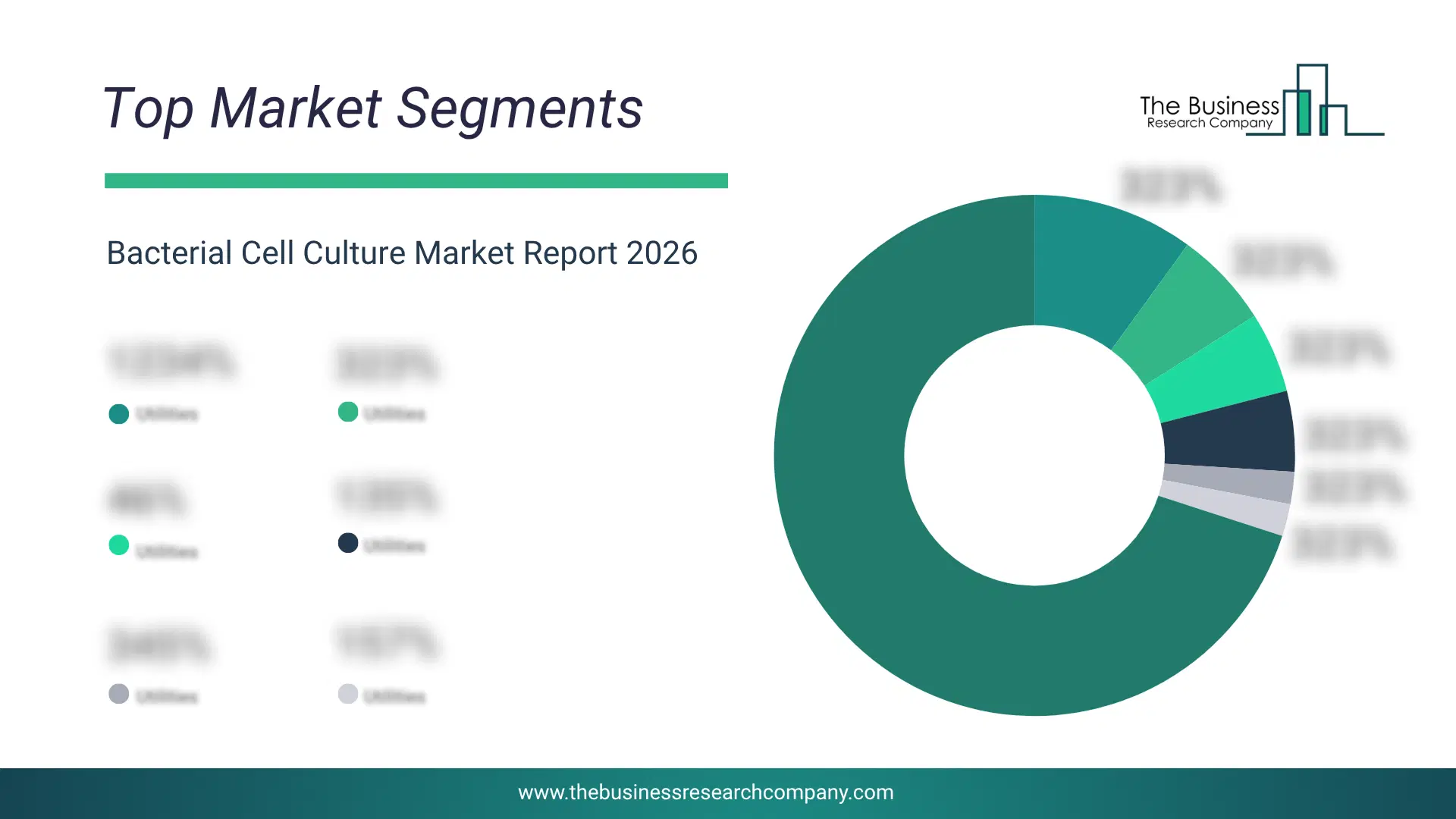
1) By Product Type: Media, Reagents, Sera, Consumables, Other Product Types 2) By Cell Type: Gram-Positive Bacteria, Gram-Negative Bacteria, Anaerobic Bacteria, Thermophilic Bacteria, Other Cell Types 3) By Application: Disease Diagnosis, Food Testing, Water Testing, Biopharmaceutical Production, Research Laboratories, Other Applications 4) By End User: Diagnostic Centers, Food Industry, Other End-Users Subsegments: 1) By Media: Liquid Media, Solid Media, Selective Media, Differential Media, Enriched Media 2) By Reagents: Antibiotics, Buffers, Stains And Dyes, Enzymes, Growth Factors 3) By Sera: Fetal Bovine Sera, Newborn Calf Sera, Horse Sera, Human Sera 4) By Consumables: Petri Dishes, Flasks And Bottles, Pipettes And Tips, Microplates, Tubes And Vials 5) By Other Product Types: Kits, Supplements, Additives, Standards And ControlsWhat Is The Driver Of The Bacterial Cell Culture Market?
The rising incidence of infectious illnesses is expected to propel the growth of the bacterial cell culture market going forward. Infectious illnesses are diseases caused by microorganisms like bacteria, viruses, fungi, or parasites, which can spread from one person or organism to another. Infectious illnesses are rising due to increasing global travel, which allows pathogens to spread rapidly across regions and populations that were previously isolated. Bacterial cell culture helps in infectious illnesses by allowing researchers to grow and examine bacteria in a controlled setting, which aids in precise identification and the creation of targeted treatments. For instance, in October 2024, according to the Center for Infectious Disease Research and Policy, a US-based public organization, the estimated total number of people who contracted TB, including undiagnosed cases, increased to 10.8 million in 2023, compared to 10.7 million in 2022. Therefore, the rising incidence of infectious illnesses is driving the growth of the bacterial cell culture industry.Key Players In The Global Bacterial Cell Culture Market
Major companies operating in the bacterial cell culture market are Danaher Corporation, Thermo Fisher Scientific Inc., Merck KGaA, Corning Incorporated, Lonza Group AG, Avantor Inc., Cytiva, Sartorius AG, FUJIFILM Irvine Scientific, Bio-Techne Corporation, Repligen Corporation, Takara Bio Inc., Becton Dickinson and Company, HiMedia Laboratories Pvt. Ltd., Capricorn Scientific GmbH, Athena Environmental Services Inc., Genexis Biotech Pvt. Ltd., BioProcess Technologies Ltd., Athena Medical Products Inc., Jin Kairui Biotechnology Co. Ltd.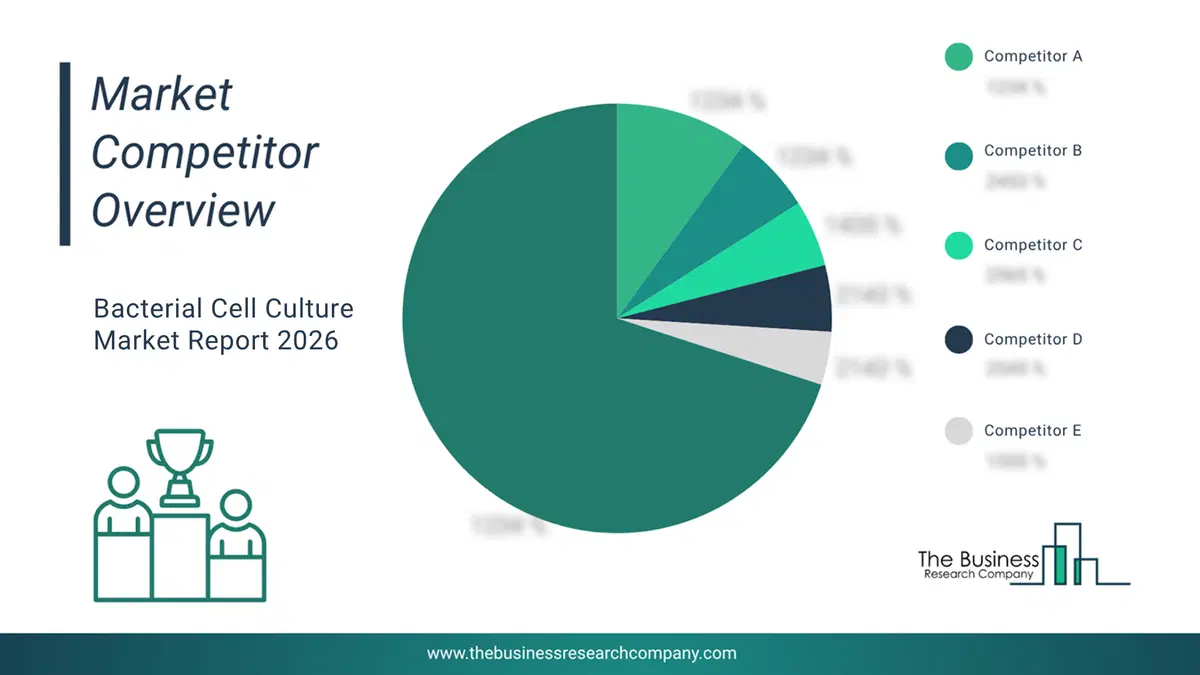
This chart is for illustrative purposes; the full report includes a detailed competitor analysis and comprehensive overview of the top 10 companies in the market.
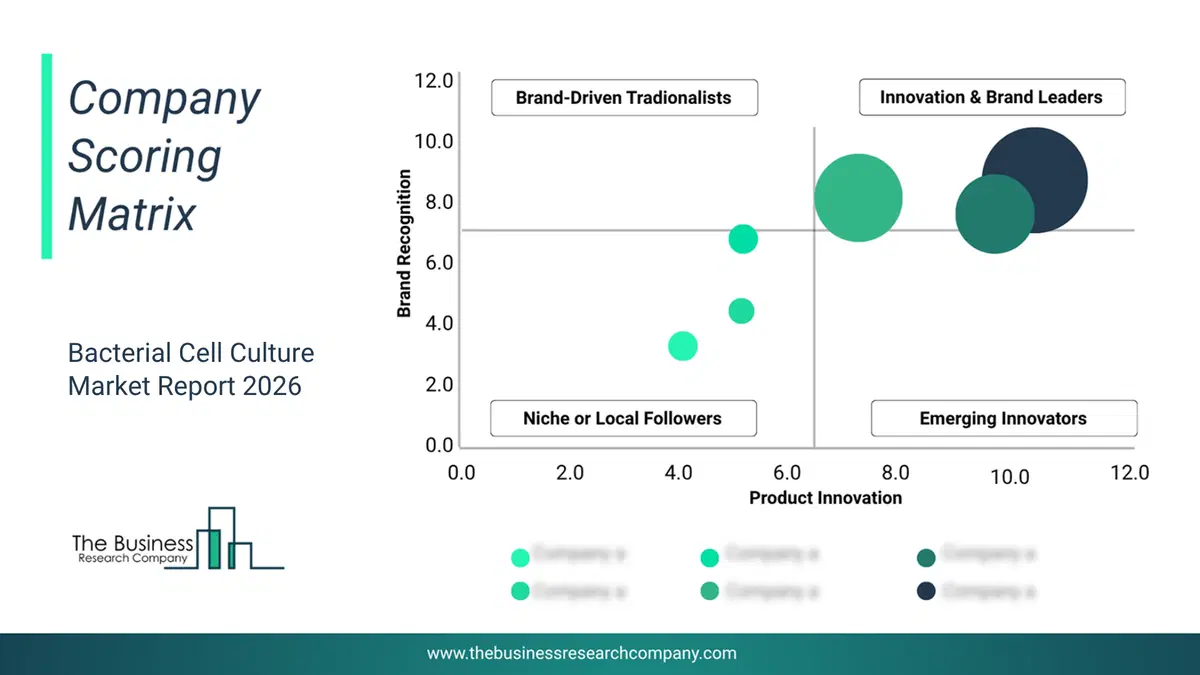
This chart maps companies by product innovation and brand strength, with bubble size indicating relative revenue, helping identify market leaders, challengers, and niche players. This is an illustrative chart; the full report provides a complete and accurate competitive analysis.
Global Bacterial Cell Culture Market Trends and Insights
Major companies operating in the bacterial cell culture market are focusing on developing advanced technologies, such as automated culturing technology, to allow for high-throughput experiments. Automated culturing technology refers to systems that use machines and software to grow and monitor cell or microbial cultures efficiently with minimal manual input. For instance, in September 2023, OGI Bio, a Scotland-based biotechnology company, launched the Mk2 Microbial Culturing System, the next generation of automated cell culturing technology. Building on the achievements of previous models, the Mk2 delivers higher performance, enhanced functionality, and user-friendly operation to meet the needs of contemporary research labs. It offers improved efficiency, reliability, and flexibility for automating microbial culture experiments. The system allows researchers to monitor microbial growth, dissolved oxygen, and fluorescent signals, while the Turbidostat pump enables precise control of these parameters for the first time. With these innovations, the Mk2 serves as a robust tool for advancing research in microbiology, biotechnology, and synthetic biology.What Are Latest Mergers And Acquisitions In The Bacterial Cell Culture Market?
In April 2025, Sartorius, a Germany-based life science company, partnered with Mabion S.A., for advancing biopharmaceutical development. As a result of this collaboration, Sartorius and Mabion will deliver a complete suite of integrated biopharmaceutical development services. Sartorius will focus on lab-scale development, leveraging its cell culture media and expertise in cell line and upstream process optimization, while Mabion will handle advanced upstream development, 10L bioreactor confirmation, downstream process optimization, analytics, validation, scale-up, and large-scale manufacturing. Mabion S.A. is a Poland-based contract development and manufacturing organization.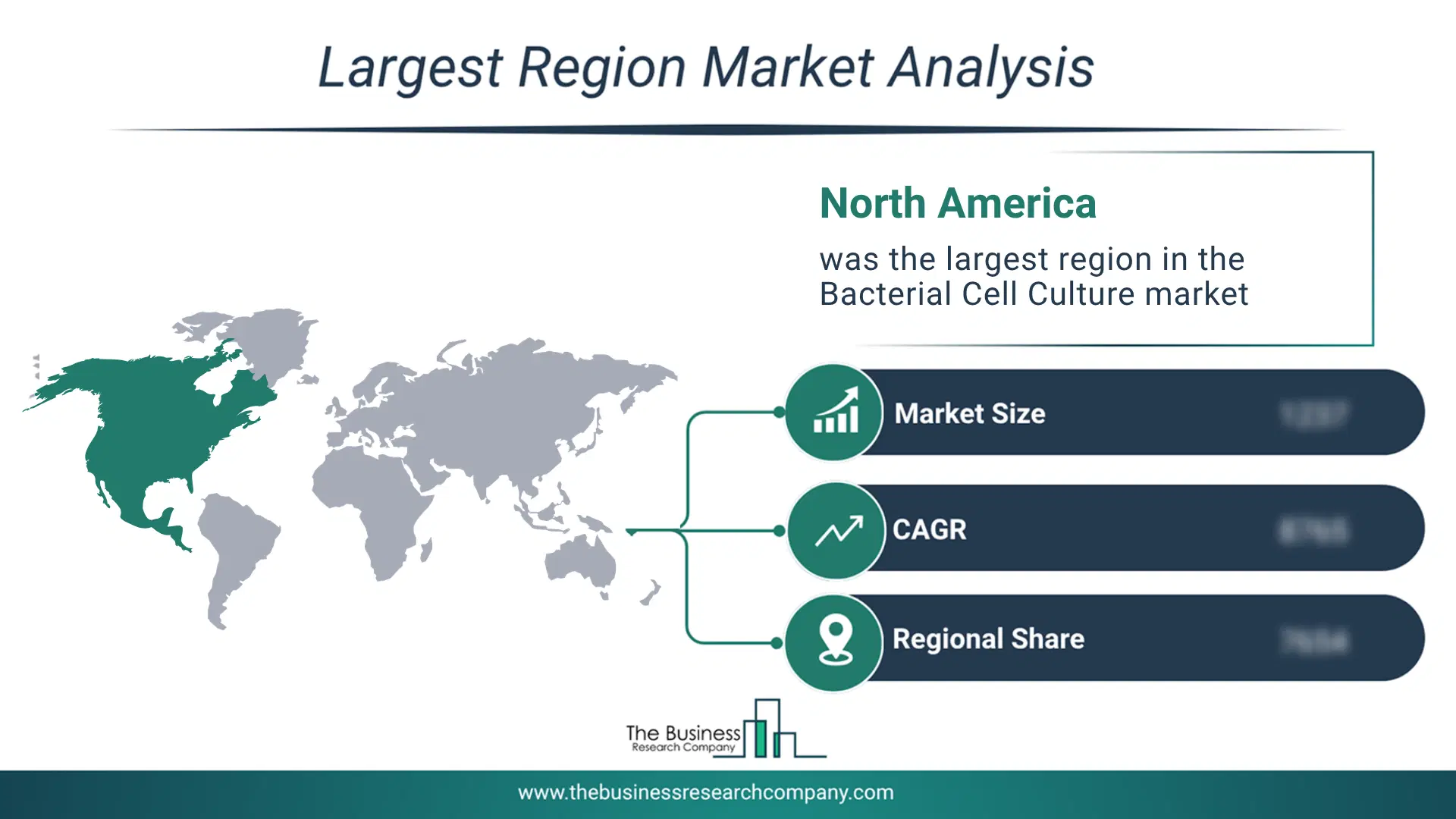
Regional Insights
North America was the largest region in the bacterial cell culture market in 2025. Asia-Pacific is expected to be the fastest-growing region in the forecast period. The regions covered in this market report are Asia-Pacific, South East Asia, Western Europe, Eastern Europe, North America, South America, Middle East, Africa. The countries covered in this market report are Australia, Brazil, China, France, Germany, India, Indonesia, Japan, Taiwan, Russia, South Korea, UK, USA, Canada, Italy, Spain.What Defines the Bacterial Cell Culture Market?
The bacterial cell culture market consists of sales of agar plates, inoculating loops, petri dishes, centrifuges, and cryopreservation systems. Values in this market are ‘factory gate’ values, that is the value of goods sold by the manufacturers or creators of the goods, whether to other entities (including downstream manufacturers, wholesalers, distributors and retailers) or directly to end customers. The value of goods in this market includes related services sold by the creators of the goods.How is Market Value Defined and Measured?
The market value is defined as the revenues that enterprises gain from the sale of goods and/or services within the specified market and geography through sales, grants, or donations in terms of the currency (in USD unless otherwise specified). The revenues for a specified geography are consumption values that are revenues generated by organizations in the specified geography within the market, irrespective of where they are produced. It does not include revenues from resales along the supply chain, either further along the supply chain or as part of other products.
This chart presents market attractiveness based on a quantitative evaluation of growth, competition, strategic alignment, and risk, offering a clear view of opportunity areas for decision-making. This chart is for illustrative purposes; the full report contains the complete analysis.

This chart highlights the Total Addressable Market (TAM) by estimating the maximum revenue opportunity using an assumption-driven approach, supporting strategic planning and opportunity sizing across markets. The chart is illustrative; the full report provides a more comprehensive analysis.
What Key Data and Analysis Are Included in the Bacterial Cell Culture Market Report 2026?
The bacterial cell culture market research report is one of a series of new reports from The Business Research Company that provides market statistics, including industry global market size, regional shares, competitors with the market share, detailed market segments, market trends and opportunities, and any further data you may need to thrive in the bacterial cell culture industry. The market research report delivers a complete perspective of everything you need, with an in-depth analysis of the current and future state of the industry.Bacterial Cell Culture Market Report Forecast Analysis
| Report Attribute | Details |
|---|---|
| Market Size Value In 2026 | $3.73 billion |
| Revenue Forecast In 2030 | $5.05 billion |
| Growth Rate | CAGR of 8.2% from 2026 to 2030 |
| Base Year For Estimation | 2025 |
| Actual Estimates/Historical Data | 2020-2025 |
| Forecast Period | 2026 - 2030 |
| Market Representation | Revenue in USD Billion and CAGR from 2026 to 2030 |
| Segments Covered | Product Type, Cell Type, Application, End User |
| Regional Scope | Asia-Pacific, Western Europe, Eastern Europe, North America, South America, Middle East, Africa |
| Country Scope | The countries covered in the report are Australia, Brazil, China, France, Germany, India, Indonesia, Japan, Taiwan, Russia, South Korea, UK, USA, Canada, Italy, Spain. |
| Key Companies Profiled | Danaher Corporation, Thermo Fisher Scientific Inc., Merck KGaA, Corning Incorporated, Lonza Group AG, Avantor Inc., Cytiva, Sartorius AG, FUJIFILM Irvine Scientific, Bio-Techne Corporation, Repligen Corporation, Takara Bio Inc., Becton Dickinson and Company, HiMedia Laboratories Pvt. Ltd., Capricorn Scientific GmbH, Athena Environmental Services Inc., Genexis Biotech Pvt. Ltd., BioProcess Technologies Ltd., Athena Medical Products Inc., Jin Kairui Biotechnology Co. Ltd. |
| Customization Scope | Request for Customization |
| Pricing And Purchase Options | Explore Purchase Options |