
Bactericide Market Report 2026
Global Outlook – By Type (Organic Bactericides, Inorganic Bactericides, Biological Bactericides), By Formulation Type (Liquid Bactericides, Granular Bactericides, Powdered Bactericides), By Crop Type (Cereals And Grains, Oilseeds And Pulses, Fruits And Vegetables), By Application (Agricultural Bactericides, Industrial Bactericides, Household Bactericides) – Market Size, Trends, Strategies, and Forecast to 2030
Bactericide Market Overview
• Bactericide market size has reached to $10.16 billion in 2025 • Expected to grow to $13.94 billion in 2030 at a compound annual growth rate (CAGR) of 6.5% • Growth Driver: Rising Food Security And Quality Concerns Driving The Growth Of The Market Due To Increasing Population And Food Contamination Risks • Market Trend: Companies Advancing Biological Crop Protection For Sustainable Agriculture • Asia-Pacific was the largest region in 2025 and North America is the fastest growing region.What Is Covered Under Bactericide Market?
A bactericide is a chemical or biological agent specifically formulated to kill bacteria by disrupting their cellular structures, metabolic functions, or replication processes. They protect crops from bacterial diseases, sterilize medical instruments, disinfect surfaces in public and industrial spaces, and maintain hygiene in water systems to reduce the risk of bacterial growth and transmission. The main types of bactericides are organic bactericides, inorganic bactericides, and biological bactericides. Organic bactericides are chemical or biological agents derived from carbon-based compounds that are used to control or eliminate bacterial infections in plants, soil, and water systems. The formulation types of this are liquid bactericides, granular bactericides, and powdered bactericides, variously used for crop types such as cereals and grains, oilseeds and pulses, and fruits and vegetables, which are used in applications including agricultural bactericides, industrial bactericides, and household bactericides.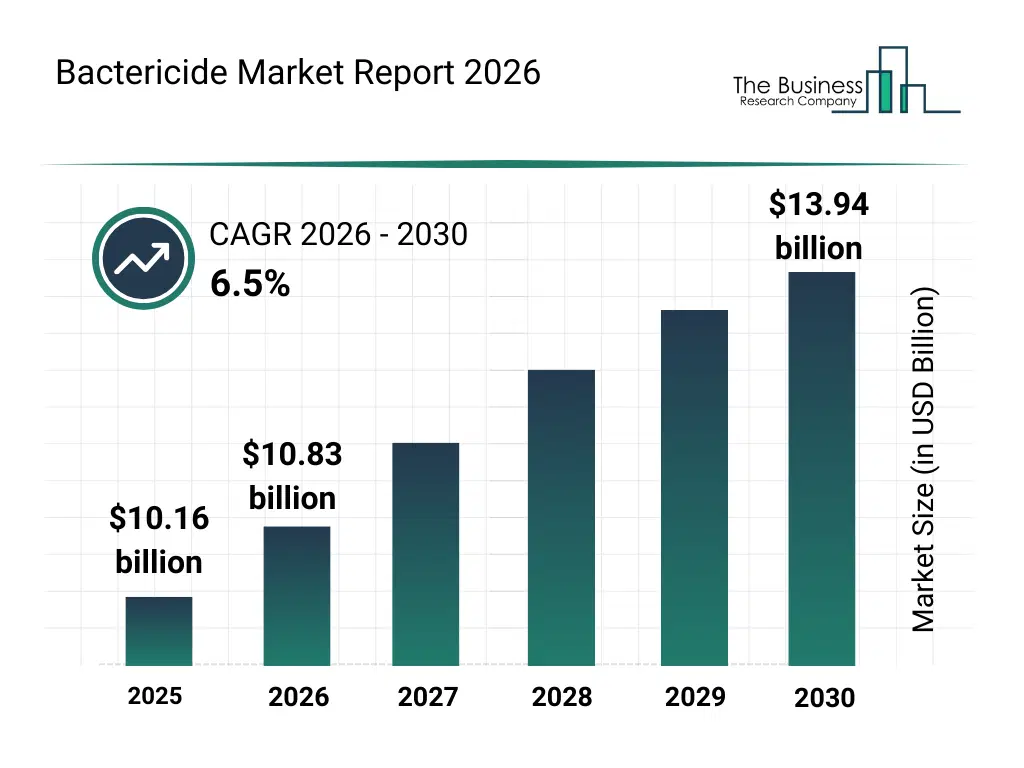
What Is The Bactericide Market Size and Share 2026?
The bactericide market size has grown strongly in recent years. It will grow from $10.16 billion in 2025 to $10.83 billion in 2026 at a compound annual growth rate (CAGR) of 6.6%. The growth in the historic period can be attributed to crop losses due to bacterial diseases, expansion of commercial agriculture, rising need for public sanitation, growth of healthcare infrastructure, widespread use of chemical disinfectants.What Is The Bactericide Market Growth Forecast?
The bactericide market size is expected to see strong growth in the next few years. It will grow to $13.94 billion in 2030 at a compound annual growth rate (CAGR) of 6.5%. The growth in the forecast period can be attributed to growth of sustainable agriculture practices, rising demand for biological solutions, stricter hygiene regulations, expansion of water treatment infrastructure, innovation in targeted bactericides. Major trends in the forecast period include increasing adoption of crop protection bactericides, growing demand for surface disinfection solutions, rising use of biological bactericides, expansion of water system sanitation applications, higher focus on broad spectrum antibacterial control.
Global Bactericide Market Segmentation
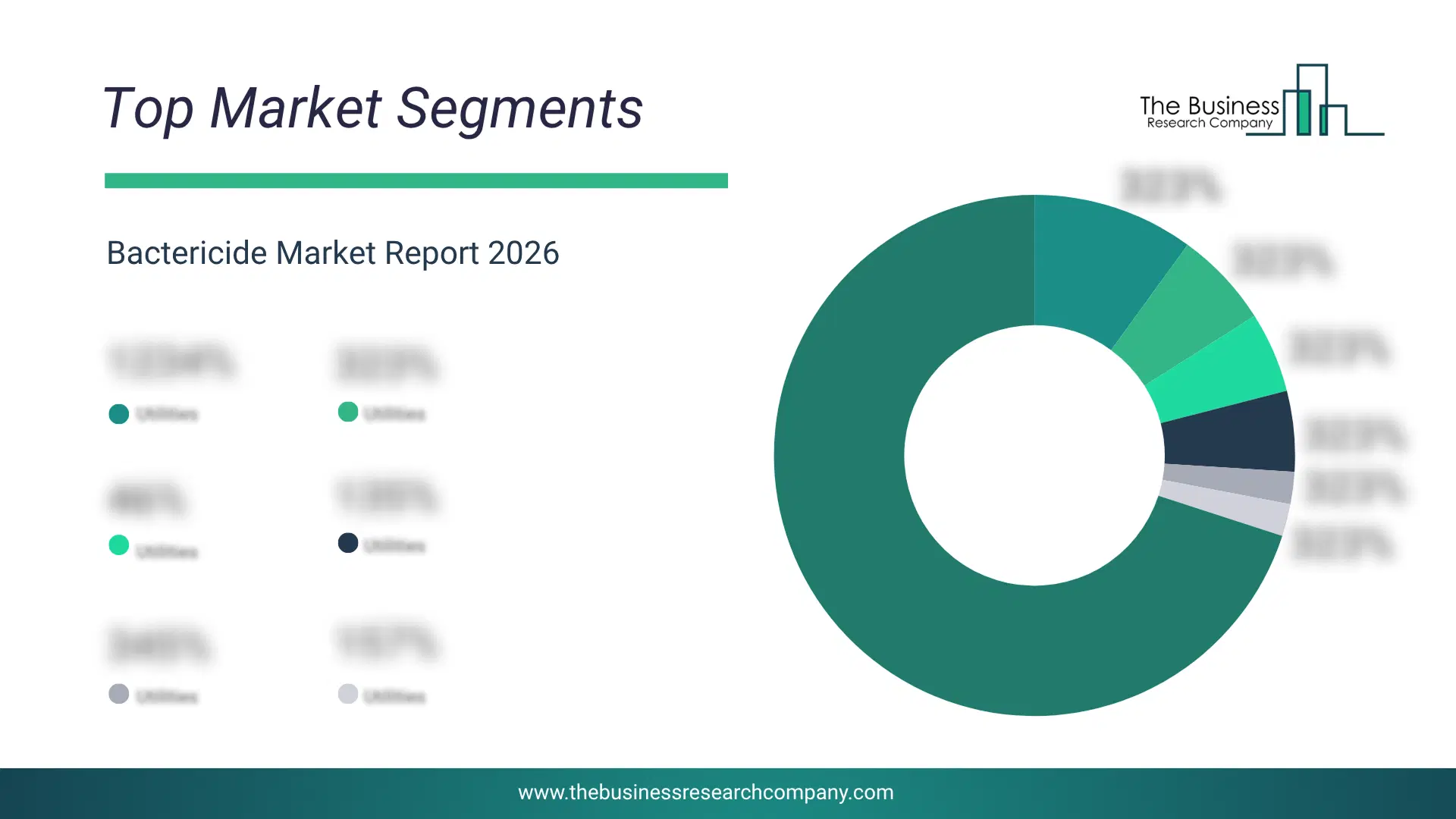
1) By Type: Organic Bactericides, Inorganic Bactericides, Biological Bactericides 2) By Formulation Type: Liquid Bactericides, Granular Bactericides, Powdered Bactericides 3) By Crop Type: Cereals And Grains, Oilseeds And Pulses, Fruits And Vegetables 4) By Application: Agricultural Bactericides, Industrial Bactericides, Household Bactericides Subsegments: 1) By Organic Bactericides: Amide Bactericides, Dithiocarbamate Bactericides, Antibiotic-Based Bactericides, Phenolic Bactericides 2) By Inorganic Bactericides: Copper-Based Bactericides, Sulfur-Based Bactericides, Quaternary Ammonium Compounds (QACs) 3) By Biological Bactericides: Bacteria-Based Bactericides, Fungal-Based Bactericides, Plant Extract-Based Bactericides, Essential Oil-Based BactericidesWhat Is The Driver Of The Bactericide Market?
The rising food security and quality concerns are expected to propel the growth of the bactericide market going forward. Food security and quality concerns refer to the availability, accessibility, and safety of food, ensuring that people have consistent access to sufficient, nutritious, and uncontaminated food to maintain a healthy life. An increase in food security and quality concerns is due to population growth, climate change, and food contamination risks. As the global population rises, the demand for food increases, putting pressure on agricultural systems to produce enough safe and nutritious food. Bactericides are crucial in addressing food security and quality concerns by preventing bacterial infections in crops and food products. They help protect agricultural yields by controlling harmful bacteria that can damage plants, reducing crop losses, and ensuring a stable food supply. For instance, in January 2025, according to the United States Department of Agriculture, a US-based federal agency, food insecurity affected 13.5% of U.S. households (18.0 million) in 2023, a rise from 12.8% (17.0 million) in 2022. Therefore, the rising food security and quality concerns are driving the growth of the bactericide industry.Key Players In The Global Bactericide Market
Major companies operating in the bactericide market are BASF SE, Syngenta Crop Protection AG, Bayer Crop Science AG, Sumitomo Chemical Company Ltd., Corteva Agriscience, Sinochem International Corporation, FMC Corporation, Adama Agricultural Solutions Ltd., UPL Limited, Nufarm Agriculture Inc., Albaugh LLC, Nippon Soda Co. Ltd., Arysta LifeScience, Isagro S.p.A., Biostadt India Limited, Koppert Biological Systems, Indofil Industries Limited, Valent BioSciences, Marrone Bio Innovations, Certis Biologicals, BioSafe Systems, Qingdao KingAgroot Chemical Company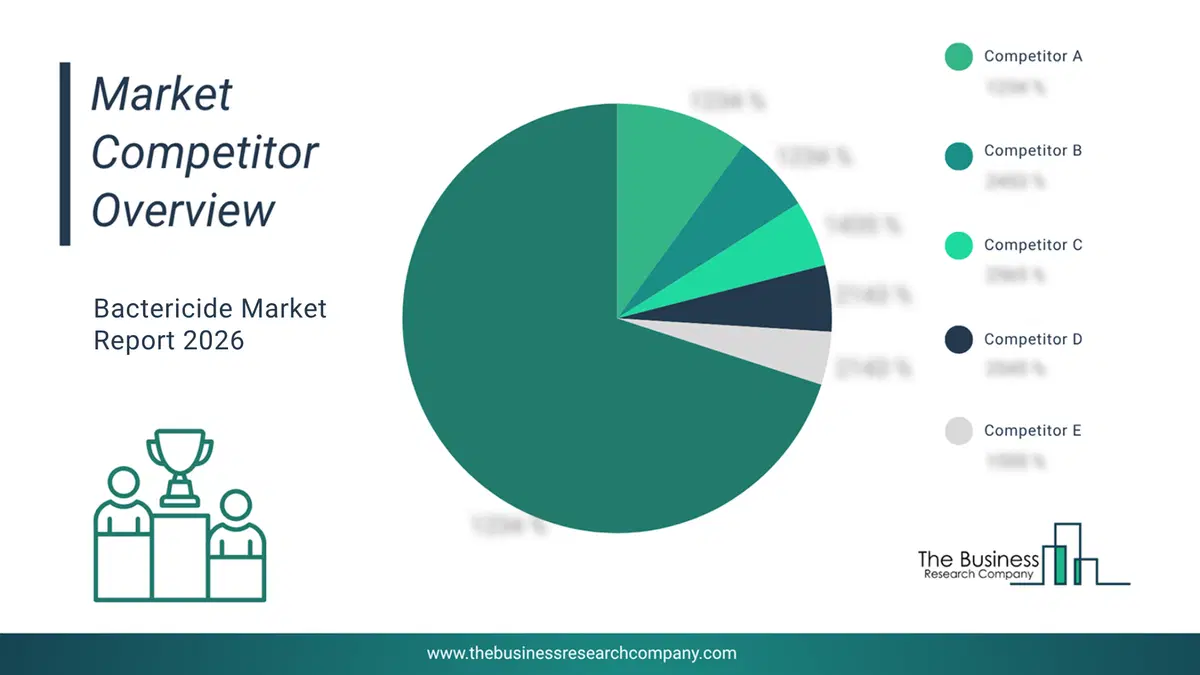
This chart is for illustrative purposes; the full report includes a detailed competitor analysis and comprehensive overview of the top 10 companies in the market.
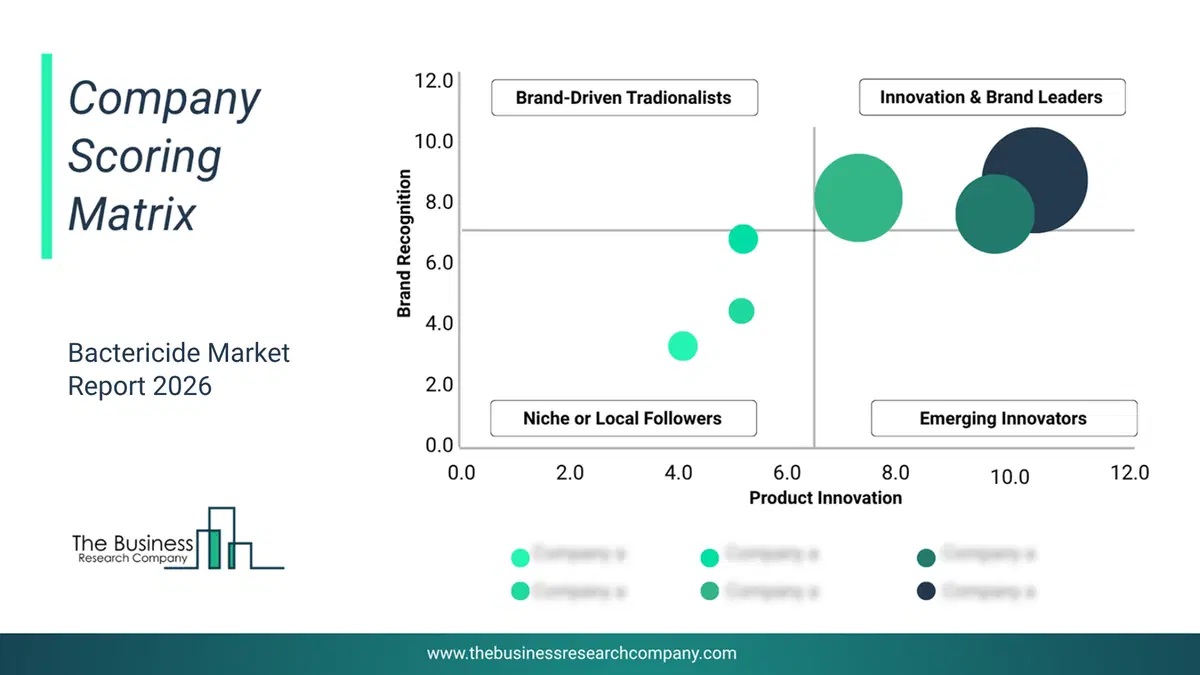
This chart maps companies by product innovation and brand strength, with bubble size indicating relative revenue, helping identify market leaders, challengers, and niche players. This is an illustrative chart; the full report provides a complete and accurate competitive analysis.
Global Bactericide Market Trends and Insights
Major companies operating in the bactericides market are focusing on developing innovative products, such as biological crop protection products, to enhance disease control while reducing chemical residues and environmental impact. A biological crop protection product uses natural organisms or compounds, such as microbes or plant extracts, to control pests and diseases sustainably. For instance, in October 2024, BioConsortia, Inc., a US-based biotechnology company, announced that the United States Environmental Protection Agency (US-EPA) had approved its Amara bio fungicide or bactericide, a biological crop protection product designed to combat foliar diseases in high-value fruits and vegetables. Amara works through a dual mode of action, where beneficial bacteria produce antimicrobial compounds that degrade fungal pathogen cells and enhance plant systemic resistance. This provides contact control and suppression of disease-causing organisms while ensuring higher consistency and efficacy than existing biological products. The approval marks a significant milestone for BioConsortia, reinforcing its commitment to sustainable agriculture by offering an alternative to synthetic chemical fungicides with improved residue management and environmental stability.What Are Latest Mergers And Acquisitions In The Bactericide Market?
In March 2024, Certis Biologicals, a U.S.-based provider of biological crop protection solutions, including bactericides, fungicides, and other sustainable agricultural products, acquired Howler and Theia fungicides from AgBiome for an undisclosed amount. With this acquisition, Certis Biologicals aims to strengthen its fungicide portfolio, enhance product offerings for crop protection, and expand its market presence in sustainable agriculture solutions. AgBiome, a U.S.-based biotechnology company, develops and commercializes innovative crop protection products, including bactericides and fungicides, leveraging microbial-based technologies.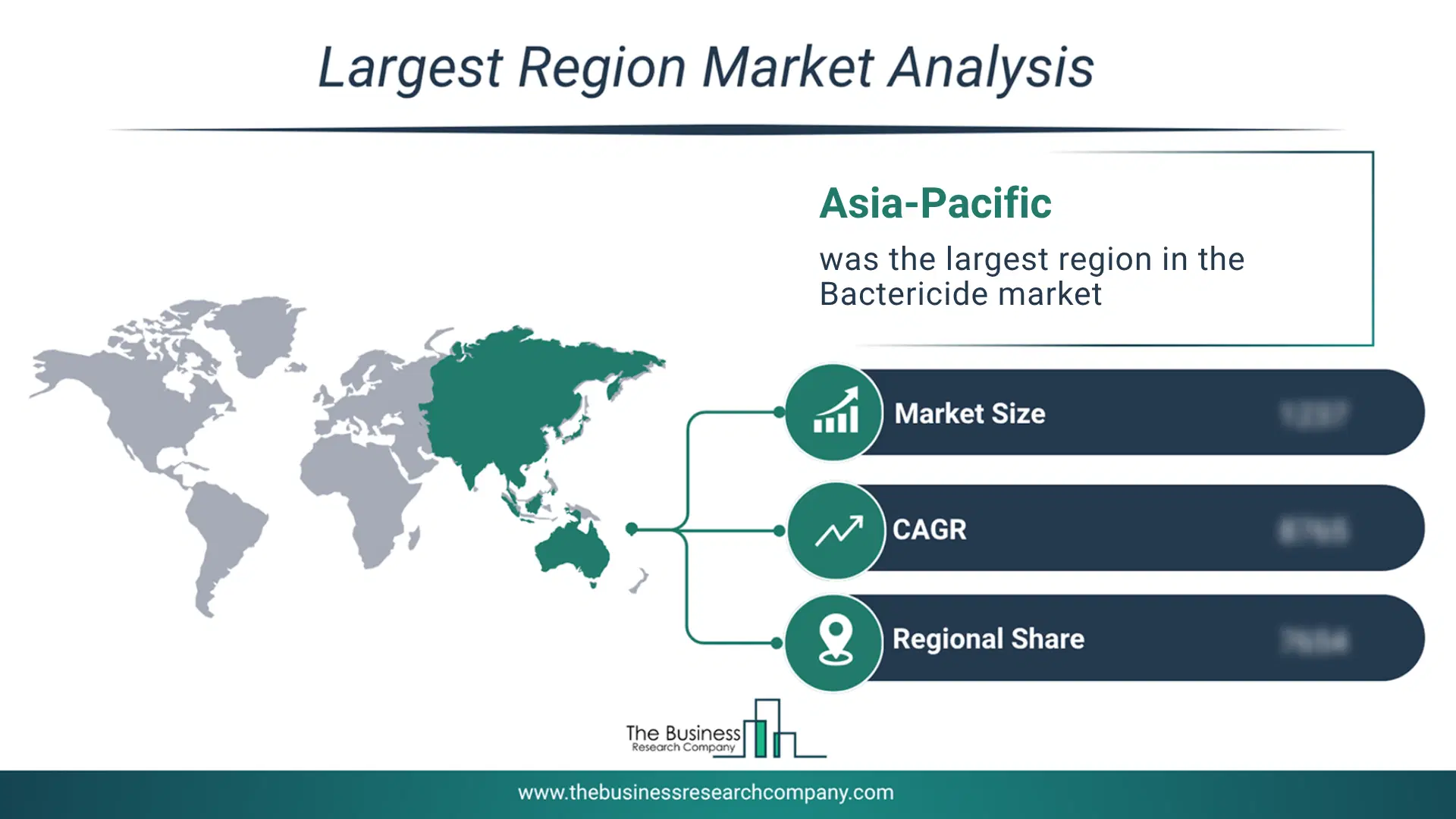
Regional Insights
Asia-Pacific was the largest region in the bactericide market in 2025. North America is expected to be the fastest-growing region in the forecast period. The regions covered in this market report are Asia-Pacific, South East Asia, Western Europe, Eastern Europe, North America, South America, Middle East, Africa The countries covered in this market report are Australia, Brazil, China, France, Germany, India, Indonesia, Japan, Taiwan, Russia, South Korea, UK, USA, Canada, Italy, SpainWhat Defines the Bactericide Market?
The bactericides market consists of sales of quaternary ammonium compounds (QACs), phenolic bactericides, organotin bactericides, silver-based bactericides, iodophor bactericides, oxazolidinone bactericides, and aldehyde-based bactericides. Values in this market are ‘factory gate’ values, that is the value of goods sold by the manufacturers or creators of the goods, whether to other entities (including downstream manufacturers, wholesalers, distributors and retailers) or directly to end customers. The value of goods in this market includes related services sold by the creators of the goods.How is Market Value Defined and Measured?
The market value is defined as the revenues that enterprises gain from the sale of goods and/or services within the specified market and geography through sales, grants, or donations in terms of the currency (in USD unless otherwise specified). The revenues for a specified geography are consumption values that are revenues generated by organizations in the specified geography within the market, irrespective of where they are produced. It does not include revenues from resales along the supply chain, either further along the supply chain or as part of other products.
This chart presents market attractiveness based on a quantitative evaluation of growth, competition, strategic alignment, and risk, offering a clear view of opportunity areas for decision-making. This chart is for illustrative purposes; the full report contains the complete analysis.

This chart highlights the Total Addressable Market (TAM) by estimating the maximum revenue opportunity using an assumption-driven approach, supporting strategic planning and opportunity sizing across markets. The chart is illustrative; the full report provides a more comprehensive analysis.
What Key Data and Analysis Are Included in the Bactericide Market Report 2026?
The bactericide market research report is one of a series of new reports from The Business Research Company that provides market statistics, including industry global market size, regional shares, competitors with the market share, detailed market segments, market trends and opportunities, and any further data you may need to thrive in the bactericide industry. The market research report delivers a complete perspective of everything you need, with an in-depth analysis of the current and future state of the industry.Bactericide Market Report Forecast Analysis
| Report Attribute | Details |
|---|---|
| Market Size Value In 2026 | $10.83 billion |
| Revenue Forecast In 2030 | $13.94 billion |
| Growth Rate | CAGR of 6.6% from 2026 to 2030 |
| Base Year For Estimation | 2025 |
| Actual Estimates/Historical Data | 2020-2025 |
| Forecast Period | 2026 - 2030 |
| Market Representation | Revenue in USD Billion and CAGR from 2026 to 2030 |
| Segments Covered | Type, Formulation Type, Crop Type, Application |
| Regional Scope | Asia-Pacific, Western Europe, Eastern Europe, North America, South America, Middle East, Africa |
| Country Scope | The countries covered in this market report are Australia, Brazil, China, France, Germany, India, Indonesia, Japan, Taiwan, Russia, South Korea, UK, USA, Canada, Italy, Spain |
| Key Companies Profiled | BASF SE, Syngenta Crop Protection AG, Bayer Crop Science AG, Sumitomo Chemical Company Ltd., Corteva Agriscience, Sinochem International Corporation, FMC Corporation, Adama Agricultural Solutions Ltd., UPL Limited, Nufarm Agriculture Inc., Albaugh LLC, Nippon Soda Co. Ltd., Arysta LifeScience, Isagro S.p.A., Biostadt India Limited, Koppert Biological Systems, Indofil Industries Limited, Valent BioSciences, Marrone Bio Innovations, Certis Biologicals, BioSafe Systems, Qingdao KingAgroot Chemical Company |
| Customization Scope | Request for Customization |
| Pricing And Purchase Options | Explore Purchase Options |