
Bamboo Market Report 2026
Global Outlook – By Type (Herbaceous Bamboos, Tropical Woody Bamboos, Temperate Woody Bamboos), By Species (Moso Bamboo, Bambusa Vulgaris, Other Species), By Application (Raw Materials, Industrial Products, Furniture, Shoots, Other Applications), By End-User (Wood And Furniture, Construction, Food, Pulp And Paper, Textile, Agriculture, Other End-Users) – Market Size, Trends, Strategies, and Forecast to 2030
Bamboo Market Overview
• Bamboo market size has reached to $79.36 billion in 2025 • Expected to grow to $115.3 billion in 2030 at a compound annual growth rate (CAGR) of 7.7% • Growth Driver: Surging Demand In Construction Industry Propels Growth Of The Bamboo Market • Market Trend: NTPC and NRL forge green partnership for bamboo-based Bio-Refinery initiative • Asia-Pacific was the largest region and fastest growing region.Market Gains By 2030 – Top Opportunities By Segment
Market Gain identifies the most promising market opportunities by highlighting the segments or products expected to generate the highest incremental revenue growth over the next five years.
What Is Covered Under Bamboo Market?
Bamboo refers to tree-like grasses belonging to the family Poaceae that are fast-growing, easily obtained, renewable, and valuable among all forest resources. These are used to make furniture, food, biofuels, chopsticks, papers, and so on, and they are also used as an input in flooring, roofing, and scaffolding, as well as medicinal purposes. The main types of bamboo markets are herbaceous bamboos, tropical woody bamboos, and temperate woody bamboos. Herbaceous bamboos are used for medicinal purposes and to safeguard the biodiversity of forests. Herbaceous bamboos refer to bamboos that have soft, tender stems and grow mostly in tropical jungles. The various species include moso bamboo, bambusa vulgaris, and others. The several applications include raw materials, industrial products, furniture, shoots, and others that are employed by wood and furniture, construction, food, pulp and paper, textiles, agriculture, and other end-users.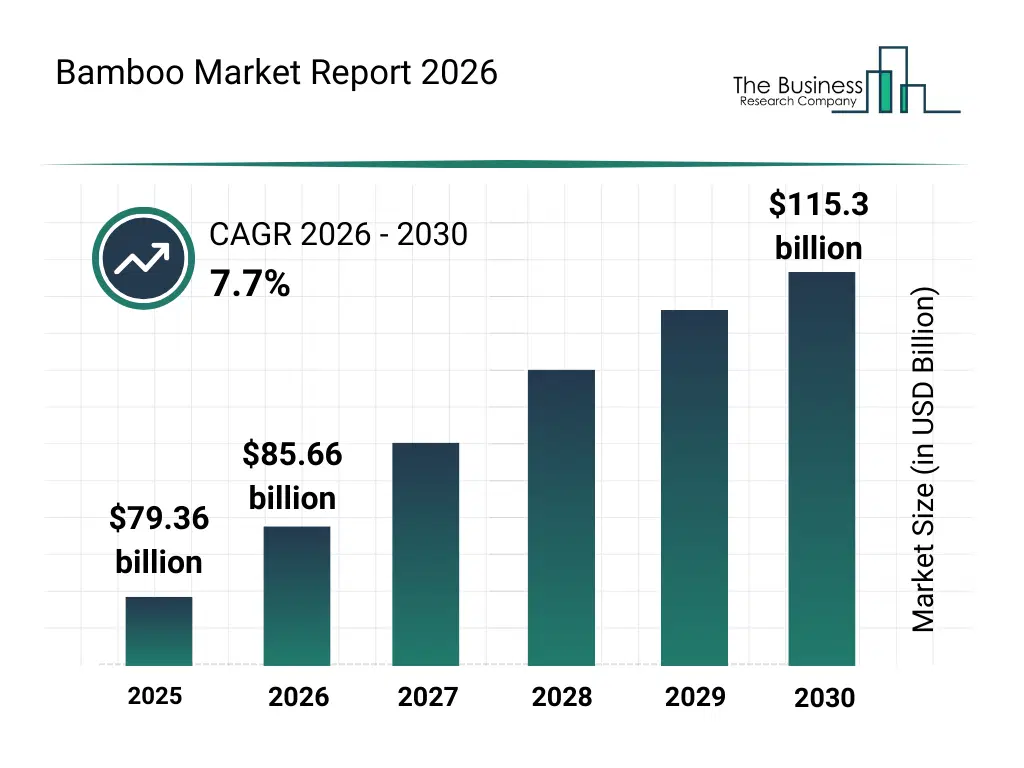
What Is The Bamboo Market Size and Share 2026?
The bamboo market size has grown strongly in recent years. It will grow from $79.36 billion in 2025 to $85.66 billion in 2026 at a compound annual growth rate (CAGR) of 7.9%. The growth in the historic period can be attributed to increasing awareness of renewable materials, expansion of bamboo farming activities, rising demand for eco-friendly raw materials, growth in furniture and housing sectors, traditional use of bamboo in regional industries.What Is The Bamboo Market Growth Forecast?
The bamboo market size is expected to see strong growth in the next few years. It will grow to $115.3 billion in 2030 at a compound annual growth rate (CAGR) of 7.7%. The growth in the forecast period can be attributed to increasing investments in bamboo processing technologies, rising adoption of bamboo as a plastic alternative, expansion of bamboo-based bio-composites, growing demand for sustainable building materials, increasing use of bamboo in circular economy models. Major trends in the forecast period include increasing use of bamboo in sustainable construction, rising demand for bamboo-based furniture products, growing adoption of bamboo fiber textiles, expansion of bamboo packaging applications, enhanced focus on high-yield bamboo cultivation.
Global Bamboo Market Segmentation
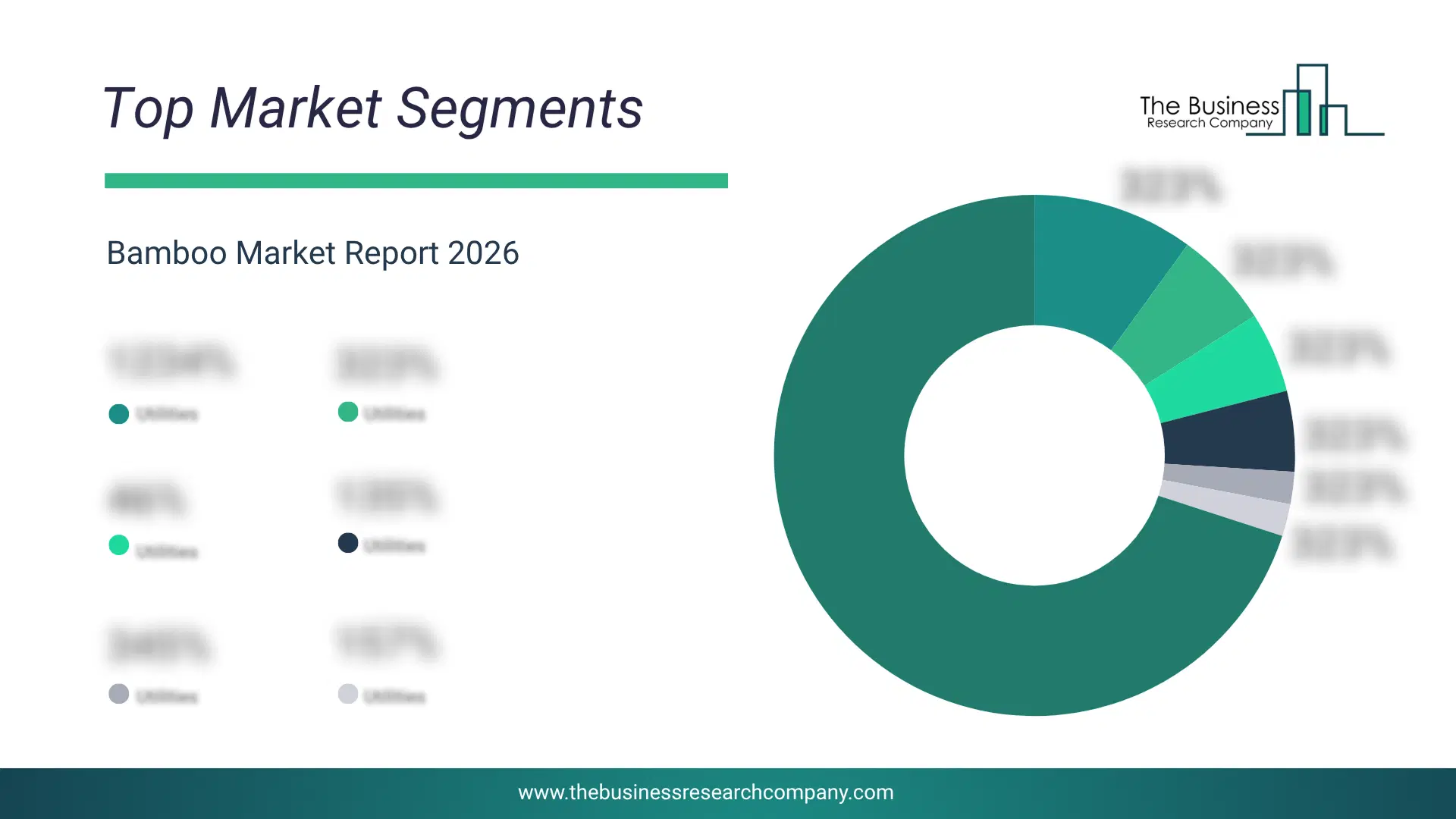
1) By Type: Herbaceous Bamboos, Tropical Woody Bamboos, Temperate Woody Bamboos 2) By Species: Moso Bamboo, Bambusa Vulgaris, Other Species 3) By Application: Raw Materials, Industrial Products, Furniture, Shoots, Other Applications 4) By End-User: Wood And Furniture, Construction, Food, Pulp And Paper, Textile, Agriculture, Other End-Users Subsegments: 1) By Herbaceous Bamboos: Small-Sized Bamboos, Fast-Growing Species, Varieties Used For Ornamental Purposes 2) By Tropical Woody Bamboos: Giant Bamboos, Timber Bamboos, Species Used For Construction And Furniture 3) By Temperate Woody Bamboos: Cold-Resistant Species, Varieties Used For Fencing And Landscaping, Species Used For Crafting And Basketry The top segments in the bamboo market will be: • Herbaceous Bamboos will reach $49.88 Billion by 2030. • Tropical Woody Bamboos will reach $35.6 Billion by 2030. • Temperate Woody Bamboos will reach $25.36 Billion by 2030.What Is The Driver Of The Bamboo Market?
The increasing demand in construction industry is expected to propel the growth of bamboo market going forward. Construction industry refers to the process of planning, designing, assembling, and building physical structures, facilities, or infrastructure. Construction industry activities are rising due to increased infrastructure development, as governments and private investors are expanding transportation, housing, and urban projects to support economic growth and population needs. Construction industry uses bamboo as a flooring material, providing a durable and attractive alternative to traditional hardwood flooring and for wall coverings, which adds an aesthetic and natural look to interiors. For instance, in November 2024, according to office for National statistics a report of Britain Government, the value of new construction work in Great Britain reached a record £139, 029 ($163127.59) million at current prices in 2023, marking a 4.2% increase, This growth was driven by a rise of £2, 050 ($2405.34) million in private sector projects and £3, 578 million in public sector work. Therefore, the increasing demand in construction industry is driving the growth of the 2-ethylhexanol market.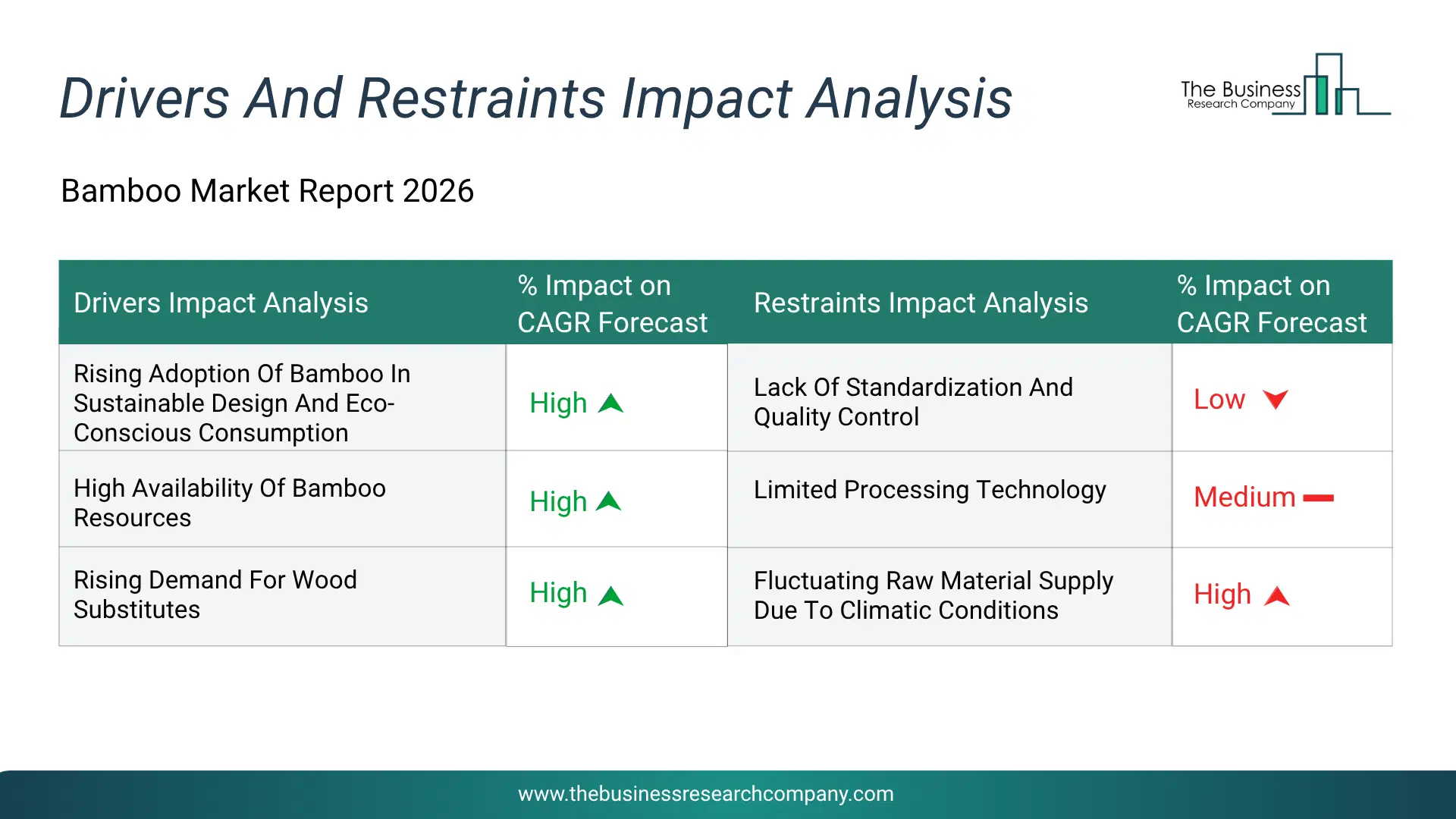
Infographic Chart Showing Key Market Drivers Analysis And Restraints For Bamboo Market
The chart presents an impact analysis of key drivers and restraints, quantifying their relative influence on the market's growth rate and helping assess the balance between growth enablers and limiting factors. This chart offers a high-level perspective; the full report contains more detailed insights.
How Will The Drivers Impact Growth In The Global Bamboo Market?
• Rising Adoption Of Bamboo In Sustainable Design And Eco-Conscious Consumption (High) – During the forecast period, the rising adoption of bamboo in sustainable design and eco-conscious consumption is expected to become a key growth driver for the bamboo market by 2030. Rising adoption of bamboo in sustainable design and eco-conscious consumption is a significant driver of the bamboo Market as consumers and industries increasingly prioritize environmentally responsible materials. Bamboo is renewable, biodegradable, and grows much faster than conventional timber, making it an attractive option for sustainable applications. Architects and interior designers are incorporating bamboo into flooring, furniture, decorative panels, and green building projects to meet sustainability goals. Growing awareness regarding carbon reduction and responsible sourcing further strengthens demand for bamboo-based products. Businesses are also adopting bamboo materials to enhance their environmental credentials and appeal to eco-conscious customers. The shift toward sustainable lifestyles across residential and commercial sectors continues to expand bamboo utilization. • High Availability Of Bamboo Resources (High) – During the forecast period, the high availability of bamboo resources is expected to emerge as a major factor driving the expansion of the bamboo market by 2030. High availability of bamboo resources acts as a major driver for the bamboo Market by ensuring a stable and cost-effective supply of raw materials. Bamboo grows abundantly in many regions across Asia, Latin America, and Africa, enabling large-scale cultivation and harvesting. Its rapid regeneration cycle allows producers to meet increasing demand without causing significant resource depletion. Easy availability reduces procurement challenges and supports continuous manufacturing operations for various bamboo products. It also encourages investments in processing facilities and value-added product development. The abundant resource base helps maintain competitive pricing compared to traditional wood materials. • Rising Demand For Wood Substitutes (High) – During the forecast period, the rising demand for wood substitutes is expected to act as a key growth catalyst for the bamboo market by 2030. Rising demand for wood substitutes is driving the bamboo Market as industries seek alternatives to conventional timber amid concerns over deforestation and shrinking forest resources. Bamboo offers comparable strength, durability, and versatility while requiring significantly less time to mature. Manufacturers are increasingly utilizing bamboo in furniture, flooring, construction materials, packaging, and consumer goods as a sustainable replacement for wood. Governments and environmental organizations are also promoting alternatives that reduce pressure on natural forests. The growing preference for eco-friendly building materials further boosts bamboo adoption across residential and commercial applications. In addition, bamboo products often provide cost advantages and attractive aesthetics.How Will The Restraints Impact Growth In The Global Bamboo Market?
• Lack Of Standardization And Quality Control (High) – During the forecast period, the lack of standardization and quality control acts as a significant restraint on the Bamboo Market by creating inconsistencies in product performance, durability, and reliability. Bamboo products often vary in strength, moisture content, and processing quality due to the absence of universally accepted standards across regions. This variation makes it difficult for manufacturers, builders, and consumers to assess product quality with confidence. In construction and industrial applications, inconsistent quality can raise concerns regarding safety and long-term performance. The lack of standardized certifications also limits international trade and market acceptance. Buyers may hesitate to adopt bamboo products when quality assurance is uncertain. As a result, these challenges restrict wider commercialization and slow overall market growth. • Limited Processing Technology (High) – During the forecast period, the limited processing technology restrains the Bamboo Market by reducing the efficiency and scalability of bamboo product manufacturing. In many regions, processing facilities still rely on traditional methods that may not fully utilize bamboo’s potential or ensure consistent product quality. Insufficient technological capabilities can lead to higher material wastage, lower productivity, and increased production costs. Advanced treatment and processing technologies are essential for improving durability, resistance to pests, and structural performance. The absence of modern equipment also limits the development of high-value bamboo products for construction, furniture, and industrial applications. This can reduce competitiveness against established alternatives such as wood, steel, and engineered materials. Consequently, technological limitations hinder innovation, restrict market expansion, and slow the adoption of bamboo-based solutions. • Fluctuating Raw Material Supply Due To Climatic Conditions (High) – During the forecast period, the fluctuating raw material supply due to climatic conditions restrains the growth of the bamboo market by affecting the consistent availability and quality of bamboo resources. Bamboo cultivation is influenced by rainfall patterns, temperature variations, pests, diseases, and other environmental factors that can impact growth cycles and harvest yields. Extreme weather events such as droughts, floods, and storms may reduce production volumes and disrupt supply chains. Inconsistent raw material availability can increase procurement costs and create challenges in meeting growing market demand. Manufacturers may also experience production delays and difficulties in maintaining stable product quality. As a result, climatic uncertainties act as a significant restraint on the growth of the bamboo market.Key Players In The Global Bamboo Market
Major companies operating in the bamboo market are Southern Bamboo Inc., Smith & Fong Co. Inc., Jiangxi Feiyu Industry Co. Ltd., Anji Tianzhen Bamboo Flooring Co. Ltd., Jiangxi Kangda Bamboo Ware Group Co. Ltd., Dasso Industrial Group Co. Ltd., CFF GmbH & Co. KG, Moso International BV, Liahren, Swicofil AG, Ecoplanet Bamboo, Wild Fibres, Kerala State Bamboo Corporation Ltd, EPITOME Bamboowood, International Fiber Corporation, Teragren, Bambooworld, Bamboo Village Company Limited, Tengda Bamboo-Wood Co. Ltd., Xingli Bamboo Products Company, Chengdu Grace Fiber Co. Ltd, Fujian Jianou Huayu Bamboo Industry Co. Ltd., Jiangxi Shanyou Industry Co. Ltd., Bamboo Bio Composites Sdn Bhd, EcoLife Bamboo, Shanghai Tenbro Bamboo Textile Co. Ltd, Bamboo Australia Pty. Ltd.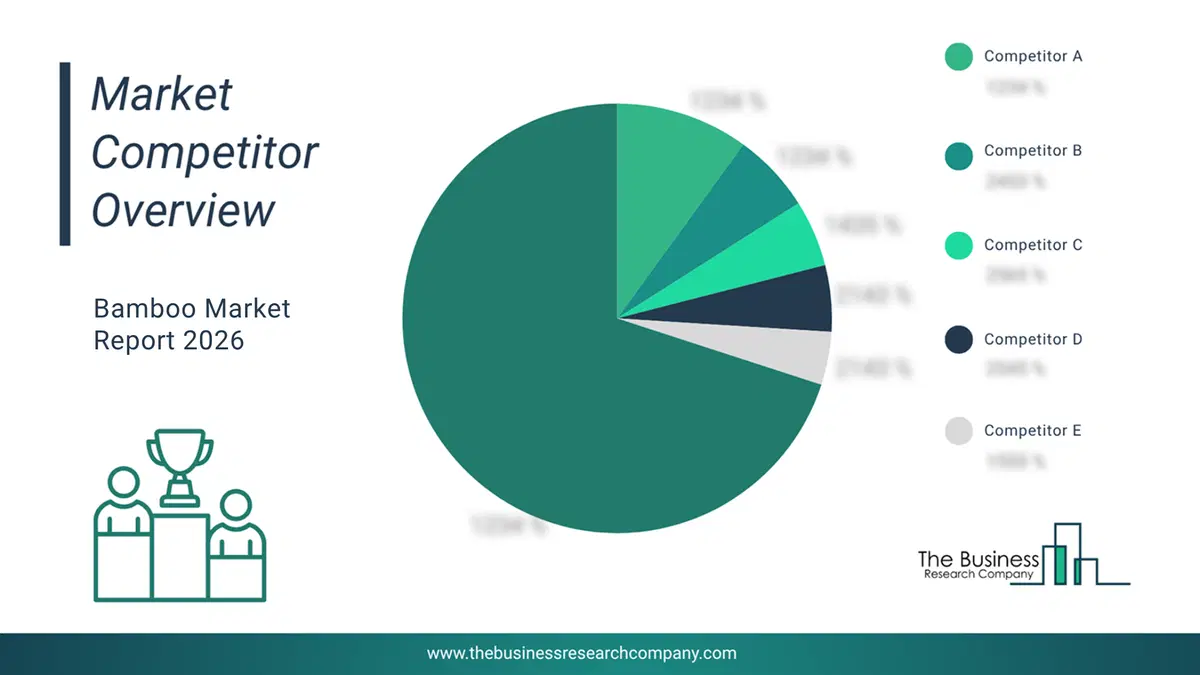
This chart is for illustrative purposes; the full report includes a detailed competitor analysis and comprehensive overview of the top 10 companies in the market.
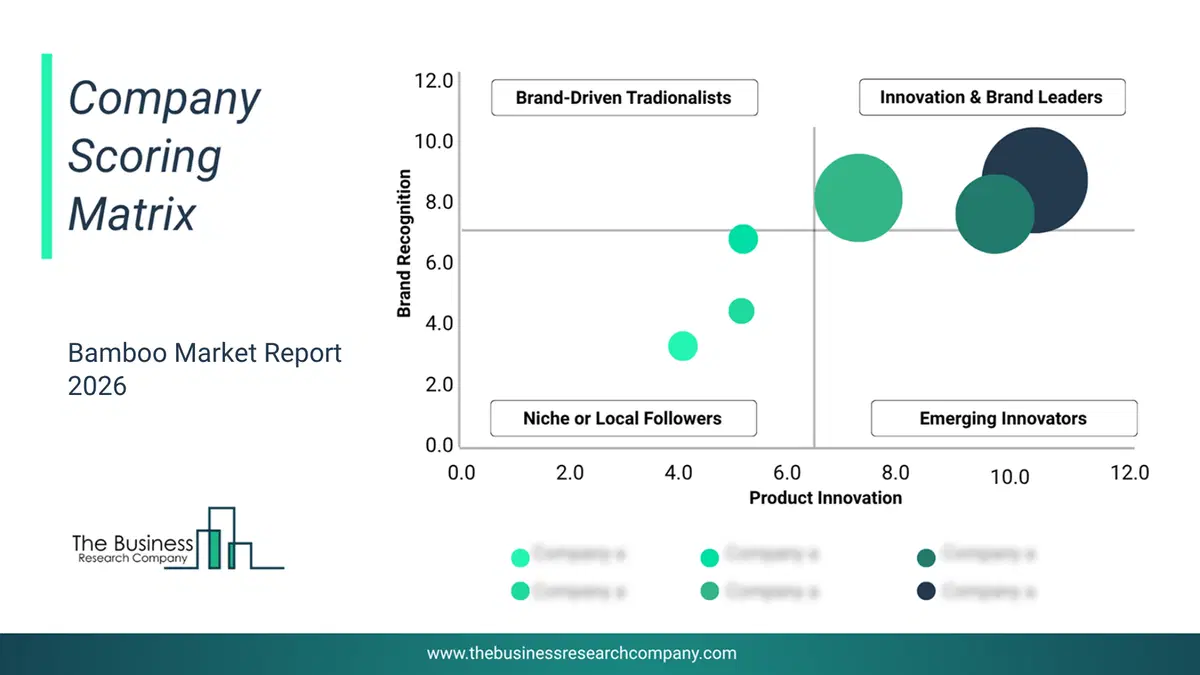
This chart maps companies by product innovation and brand strength, with bubble size indicating relative revenue, helping identify market leaders, challengers, and niche players. This is an illustrative chart; the full report provides a complete and accurate competitive analysis.
Global Bamboo Market Trends and Insights
Major companies operating in the bamboo market are focused on developing technological advancement such as a green partnership for a bamboo-based bio-refinery initiative to promote sustainable energy solutions and enhance the utilization of bamboo as a renewable resource. The bamboo-based bio-refinery initiative refers to a project that utilizes bamboo as a sustainable feedstock to produce biofuels and other bioproducts. For instance, in January 2024, NTPC, India-based and primarily provides electricity generation, while NRL, based in Numaligarh, focuses on refining petroleum and producing various fuel products. The bamboo-based bio-refinery initiative focuses on sustainable resource use, technological innovation for efficient biomass conversion, environmental benefits such as reduced carbon emissions, and economic growth through job creation in bamboo cultivation and processing.What Are Latest Mergers And Acquisitions In The Bamboo Market?
In January 2024, CloudClevr, a U.K-based company focuses on providing cloud solutions and technology services to help businesses with their digital transformation efforts acquired Bamboo Technology Group for an undisclosed amount. The aim of CloudClevr's acquisition of Bamboo Technology Group is to enhance technology offerings and strengthen its market position in cloud solutions. Bamboo Technology Group, a U.K-based company specializes in delivering cloud and technology solutions for various industries.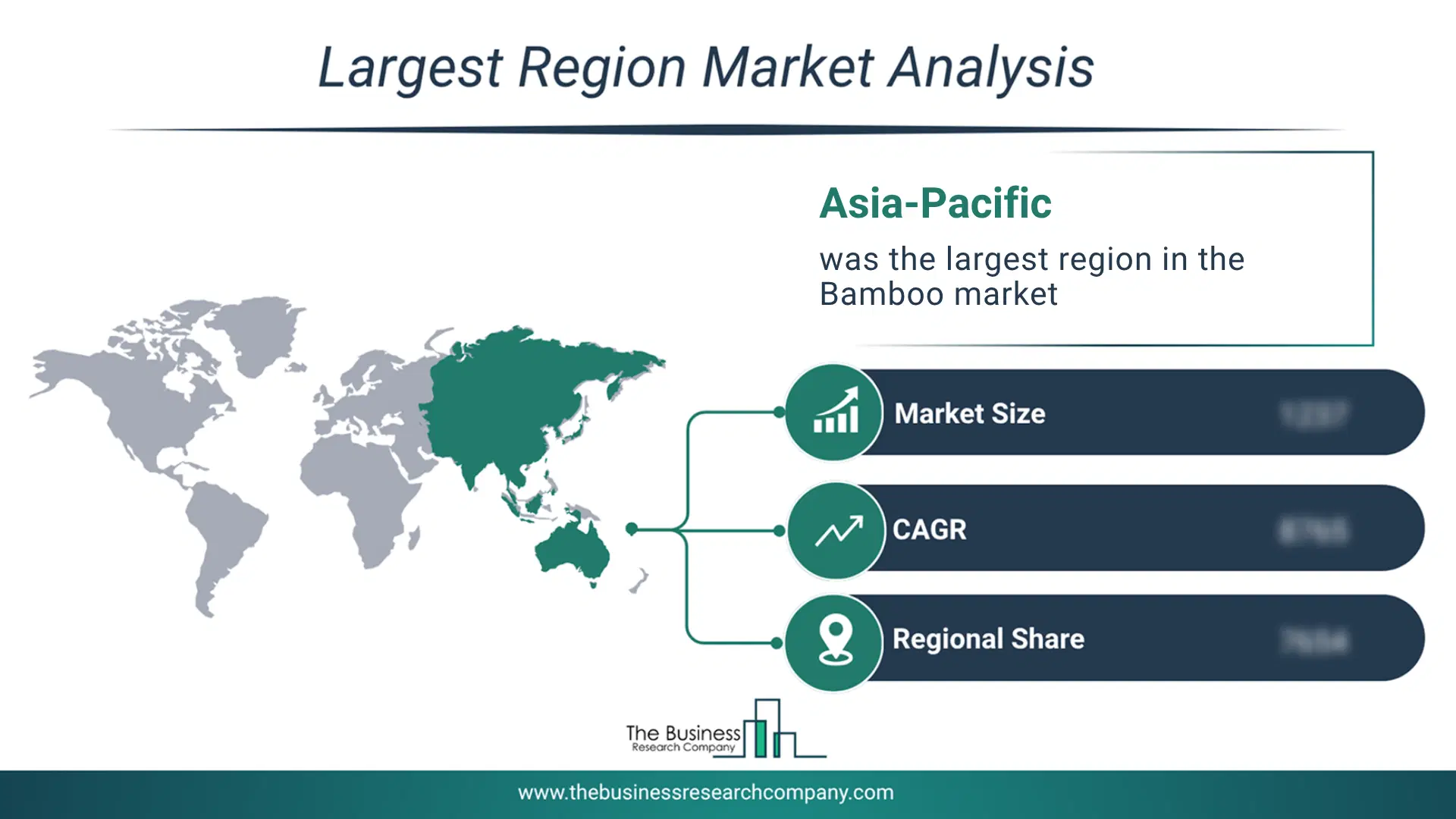
Regional Outlook
Asia-Pacific was the largest region in the bamboos market in 2025. Asia-Pacific is expected to be the fastest-growing region in the forecast period. The regions covered in this market report are Asia-Pacific, South East Asia, Western Europe, Eastern Europe, North America, South America, Middle East, Africa. The countries covered in this market report are Australia, Brazil, China, France, Germany, India, Indonesia, Japan, Taiwan, Russia, South Korea, UK, USA, Canada, Italy, Spain.What Defines the Bamboo Market?
The bamboo market consists of sales of hedge bamboo, dwarf green stripe bamboo, green-glaucous bamboo, and painted bamboo. Values in this market are ‘factory gate’ values, that is the value of goods sold by the manufacturers or creators of the goods, whether to other entities (including downstream manufacturers, wholesalers, distributors and retailers) or directly to end customers. The value of goods in this market includes related services sold by the creators of the goods.How is Market Value Defined and Measured?
The market value is defined as the revenues that enterprises gain from the sale of goods and/or services within the specified market and geography through sales, grants, or donations in terms of the currency (in USD unless otherwise specified). The revenues for a specified geography are consumption values that are revenues generated by organizations in the specified geography within the market, irrespective of where they are produced. It does not include revenues from resales along the supply chain, either further along the supply chain or as part of other products.
This chart presents market attractiveness based on a quantitative evaluation of growth, competition, strategic alignment, and risk, offering a clear view of opportunity areas for decision-making. This chart is for illustrative purposes; the full report contains the complete analysis.

This chart highlights the Total Addressable Market (TAM) by estimating the maximum revenue opportunity using an assumption-driven approach, supporting strategic planning and opportunity sizing across markets. The chart is illustrative; the full report provides a more comprehensive analysis.
What Key Data and Analysis Are Included in the Bamboo Market Report 2026?
The bamboo market research report is one of a series of new reports from The Business Research Company that provides market statistics, including Market Report 2026?global market size, regional shares, competitors with the market share, detailed market segments, market trends and opportunities, and any further data you may need to thrive in the bamboo Market Report 2026? The market research report delivers a complete perspective of everything you need, with an in-depth analysis of the current and future state of the Market Report 2026?Bamboo Market Report Forecast Analysis
| Report Attribute | Details |
|---|---|
| Market Size Value In 2026 | $85.66 billion |
| Revenue Forecast In 2030 | $115.3 billion |
| Growth Rate | CAGR of 7.9% from 2026 to 2030 |
| Base Year For Estimation | 2025 |
| Actual Estimates/Historical Data | 2020-2025 |
| Forecast Period | 2026 - 2030 |
| Market Representation | Revenue in USD Billion and CAGR from 2026 to 2030 |
| Segments Covered | Type, Species, Application, End-User |
| Regional Scope | Asia-Pacific, Western Europe, Eastern Europe, North America, South America, Middle East, Africa |
| Country Scope | The countries covered in the report are Australia, Brazil, China, France, Germany, India, ... |
| Key Companies Profiled | Southern Bamboo Inc., Smith & Fong Co. Inc., Jiangxi Feiyu Industry Co. Ltd., Anji Tianzhen Bamboo Flooring Co. Ltd., Jiangxi Kangda Bamboo Ware Group Co. Ltd., Dasso Industrial Group Co. Ltd., CFF GmbH & Co. KG, Moso International BV, Liahren, Swicofil AG, Ecoplanet Bamboo, Wild Fibres, Kerala State Bamboo Corporation Ltd, EPITOME Bamboowood, International Fiber Corporation, Teragren, Bambooworld, Bamboo Village Company Limited, Tengda Bamboo-Wood Co. Ltd., Xingli Bamboo Products Company, Chengdu Grace Fiber Co. Ltd, Fujian Jianou Huayu Bamboo Industry Co. Ltd., Jiangxi Shanyou Industry Co. Ltd., Bamboo Bio Composites Sdn Bhd, EcoLife Bamboo, Shanghai Tenbro Bamboo Textile Co. Ltd, Bamboo Australia Pty. Ltd. |
| Customization Scope | Request for Customization |
| Pricing And Purchase Options | Explore Purchase Options |