

Banking Cyber Security Market Report 2026
Global Outlook – By Type (Cloud Security, Network Security, Web Security, End Point Security, Application Security, Other Types), By Deployment Type (Cloud, On-premises), By Organization Size (Small And Medium Enterprise, Large Enterprise), By Application (Public Bank, Private Bank) – Market Size, Trends, Strategies, and Forecast to 2030
Banking Cyber Security Market Overview
• Banking Cyber Security market size has reached to $130.66 billion in 2025 • Expected to grow to $243.95 billion in 2030 at a compound annual growth rate (CAGR) of 13.3% • Growth Driver: Mobile Banking Adoption Fuels A Surge In The Banking Cybersecurity Market • Market Trend: Advancements In Banking Cybersecurity Through Extended Detection And Response (XDR) Platforms • North America was the largest region in 2025.Market Gains By 2030 – Top Opportunities By Segment
Market Gain identifies the most promising market opportunities by highlighting the segments or products expected to generate the highest incremental revenue growth over the next five years.
What Is Covered Under Banking Cyber Security Market?
Banking cyber security refers to the set of practices, measures, technologies, and strategies implemented by financial institutions to protect their digital systems, networks, data, and customer information from cyber threats, attacks, and unauthorized access. Banking cybersecurity provides an extra layer of security that protects consumer assets and data but also improves operational efficiency. The main types of banking cyber security are cloud security, network security, web security, end point security, application security, and others. Cloud security refers to the set of measures and technologies designed to protect data, applications, and infrastructure hosted in cloud environments. These are deployed on cloud and on-premises and are used by various organization sizes, including small and medium enterprises and large enterprises. The end users are public and private banks.
What Is The Banking Cyber Security Market Size and Share 2026?
The banking cyber security market size has grown rapidly in recent years. It will grow from $130.66 billion in 2025 to $147.86 billion in 2026 at a compound annual growth rate (CAGR) of 13.2%. The growth in the historic period can be attributed to increasing digitization of banking operations, rising cybercrime incidents targeting banks, expansion of online and mobile banking, regulatory emphasis on data protection, growth in digital payment systems.What Is The Banking Cyber Security Market Growth Forecast?
The banking cyber security market size is expected to see rapid growth in the next few years. It will grow to $243.95 billion in 2030 at a compound annual growth rate (CAGR) of 13.3%. The growth in the forecast period can be attributed to increasing adoption of cloud-native banking platforms, rising sophistication of cyber threats, expansion of open banking ecosystems, growing demand for real-time risk analytics, increasing regulatory compliance requirements. Major trends in the forecast period include increasing deployment of ai-driven threat detection systems, rising adoption of cloud-based security solutions, expansion of zero-trust security frameworks, growing focus on real-time fraud prevention, strengthening identity and access management controls.
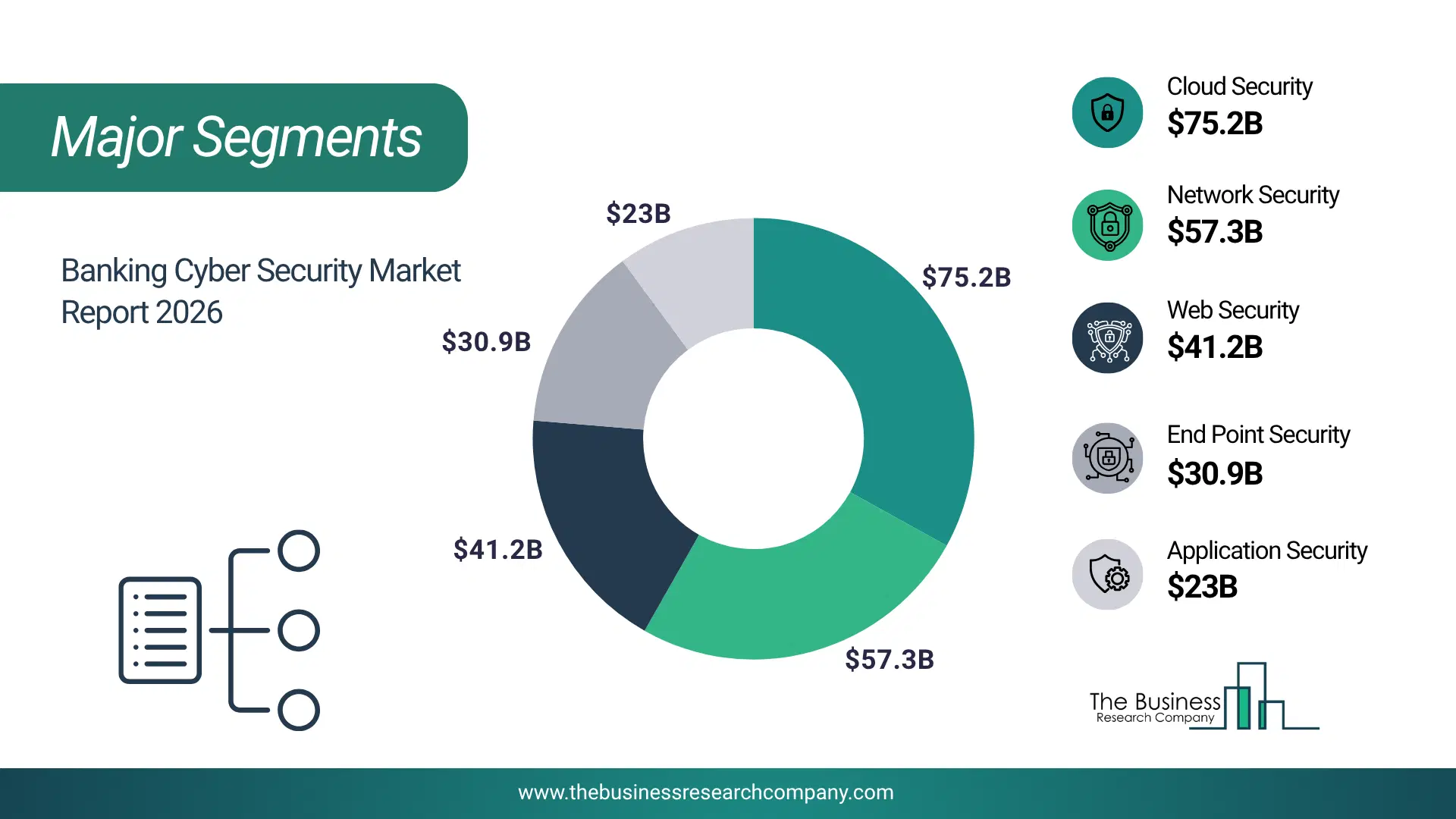
Global Banking Cyber Security Market Segmentation
1) By Type: Cloud Security, Network Security, Web Security, End Point Security, Application Security, Other Types 2) By Deployment Type: Cloud, On-premises 3) By Organization Size: Small And Medium Enterprise, Large Enterprise 4) By Application: Public Bank, Private Bank Subsegments: 1) By Cloud Security: Data Loss Prevention (DLP), Identity And Access Management (IAM), Cloud Security Posture Management (CSPM), Cloud Encryption 2) By Network Security: Firewalls, Intrusion Detection And Prevention Systems (IDPS), Virtual Private Networks (VPNs), Unified Threat Management (UTM) 3) By Web Security: Web Application Firewalls (WAF), Secure Web Gateways (SWG), DNS Security, Anti-Malware Solutions 4) By End Point Security: Antivirus And Anti-Malware, Endpoint Detection And Response (EDR), Mobile Device Management (MDM), Data Encryption Solutions 5) By Application Security: Application Security Testing (AST), Runtime Application Self-Protection (RASP), Software Composition Analysis (SCA), Secure Development Lifecycle (SDL) Tools 6) By Other Types: Security Information And Event Management (SIEM), Risk And Compliance Management, Identity Theft Protection, Fraud Detection And Prevention Solutions The top segments in the banking cyber security market will be: • Cloud Security will reach $75.18 billion by 2030. • Network Security will reach $57.3 billion by 2030. • Web Security will reach $41.13 billion by 2030. • End Point Security will reach $30.87 billion by 2030. • Application Security will reach $22.92 billion by 2030.What Is The Driver Of The Banking Cyber Security Market?
The rise of mobile banking is expected to propel the growth of the banking cybersecurity market going forward. Mobile banking refers to the use of a mobile device, such as a smartphone or tablet, to conduct various banking activities and financial transactions. Mobile banking provides convenience and accessibility, enabling users to manage their finances on the go. Banking cybersecurity in mobile banking protects sensitive financial data and transactions, safeguarding against cyber threats and unauthorized access. For instance, in October 2023, a national survey conducted on 2,211 participants by the American Bankers Association, a US-based trade association, found that in the past 12 months, 48% of bank customers have used mobile apps on phones or other mobile devices as their top option for managing their bank accounts, and 23% have used online banking via laptop or PC the most in the past 12 months. Therefore, the rise of mobile banking is driving the growth of the banking cybersecurity market.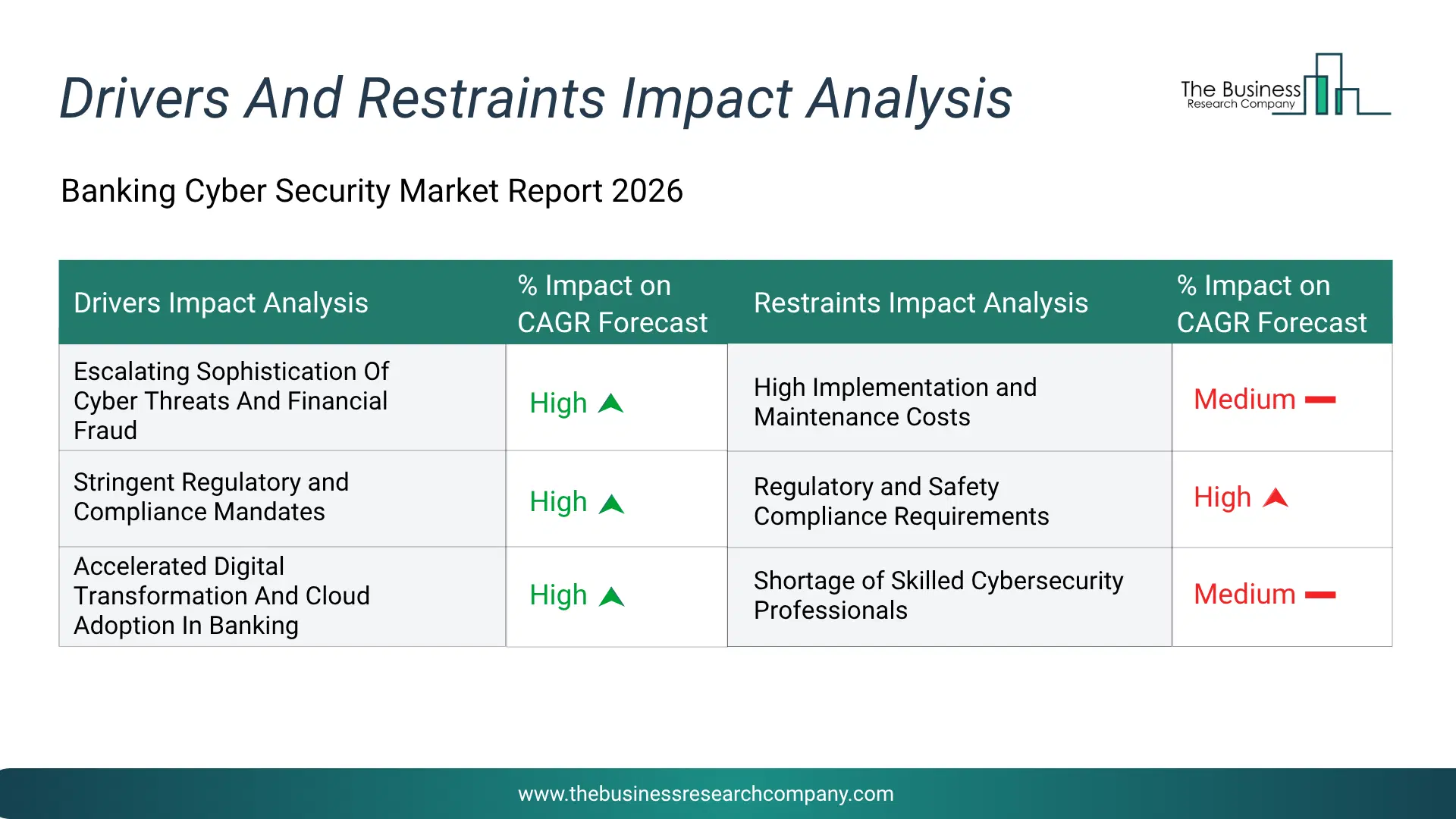
Infographic Chart Showing Key Market Drivers Analysis And Restraints For Banking Cyber Security Market
The chart presents an impact analysis of key drivers and restraints, quantifying their relative influence on the market's growth rate and helping assess the balance between growth enablers and limiting factors. This chart offers a high-level perspective; the full report contains more detailed insights.
How Will The Drivers Impact Growth In The Global Banking Cyber Security Market?
• Escalating Sophistication Of Cyber Threats And Financial Fraud (High) – During the forecast period, the escalating sophistication of cyber threats and financial fraud is expected to become a key growth driver for the banking cyber security market by 2030. The rapid evolution of ransomware, ai -powered phishing, deepfake fraud, and nation -state -sponsored cyberattacks is significantly increasing risk exposure for banks and financial institutions. Attack surfaces are expanding due to digital banking, apis, and interconnected fintech ecosystems. As a result, banks are accelerating investments in real -time threat intelligence, behavioral analytics, and advanced fraud detection systems. The urgency to prevent financial losses and reputational damage makes this the single most influential growth driver. • Stringent Regulatory and Compliance Mandates (High) – During the forecast period, the stringent regulatory and compliance mandates is expected to emerge as a major factor driving the expansion of the banking cyber security market by 2030. Global and regional regulations requiring enhanced data protection, operational resilience, and cyber risk management are compelling banks to modernize their cybersecurity infrastructure. Regulatory frameworks around data privacy, open banking security, third-party risk management, and incident reporting are becoming more rigorous. Compliance-driven spending on governance, risk, and compliance (grc) platforms, encryption technologies, and audit-ready monitoring systems is creating sustained demand across developed and emerging markets. • Accelerated Digital Transformation And Cloud Adoption In Banking (High) – During the forecast period, the accelerated digital transformation and cloud adoption in banking is expected to act as a key growth catalyst for the banking cyber security market by 2030. The migration of core banking systems to cloud environments, expansion of mobile banking, digital wallets, and open banking apis are reshaping financial services delivery models. This transformation increases vulnerability to identity-based attacks, misconfigurations, and cloud-native threats. Consequently, banks are investing heavily in zero-trust architectures, identity and access management (iam), cloud workload protection, and ai-driven security automation. The cybersecurity layer is becoming embedded within digital transformation strategies, directly driving market expansion.How Will The Restraints Impact Growth In The Global Banking Cyber Security Market?
• High Implementation and Maintenance Costs (Medium) – During the forecast period, the ground handling services are labor-intensive and require skilled personnel for ramp operations, baggage handling, and aircraft servicing. Rising labor costs, staff shortages, union regulations, and high employee turnover rates can increase operational expenses and reduce service efficiency. Training requirements and safety compliance standards further add to costs. These workforce-related challenges act as a significant restraint, particularly in developed markets with high wage structures. • Regulatory and Safety Compliance Requirements (High) – During the forecast period, the ground handling operations must comply with strict aviation safety standards, airport authority regulations, and international operational guidelines. Non-compliance can result in penalties, operational suspensions, or reputational damage. Frequent regulatory updates, security protocols, and environmental standards—such as emissions limits for ground support equipment—create additional compliance burdens. These regulatory complexities can slow operational flexibility and increase costs, acting as a restraint on market expansion. • Shortage of Skilled Cybersecurity Professionals (Medium) – During the forecast period, the shortage of skilled cybersecurity professionals acts as a restraint for the banking cyber security market by limiting the ability of financial institutions to effectively deploy, manage, and monitor advanced security systems. The growing complexity of cyber threats requires highly trained experts in threat detection, risk management, and incident response, which are currently in short supply. This talent gap increases dependency on expensive external services and slows down implementation of robust security frameworks. As a result, banks face higher operational risks and delayed security upgrades, hindering overall market growth.Key Players In The Global Banking Cyber Security Market
Major companies operating in the banking cyber security market are Microsoft Corporation, Intel Corporation, International Business Machines Corporation, Cisco Systems Inc., Honeywell International Inc., Hewlett Packard Enterprise Systems, Palo Alto Network Solutions Inc., Fortinet Security Solutions LLC, Splunk Data Solutions LLC, Check Point Software Technologies, CrowdStrike Cybersecurity Inc., McAfee Cybersecurity LLC, Trend Micro Security Inc, Proofpoint Inc., FireEye Inc., Rapid7 Inc., CyberArk Software Ltd., Varonis Systems Inc., Symantec Technologies Inc., EMC RSA Cybersecurity LLC, Sophos Cybersecurity Solutions Inc., Netsparker Technologies Inc., KnowBe4 Security Training Inc., Carbon Black Inc., Computer Science Corporation LLC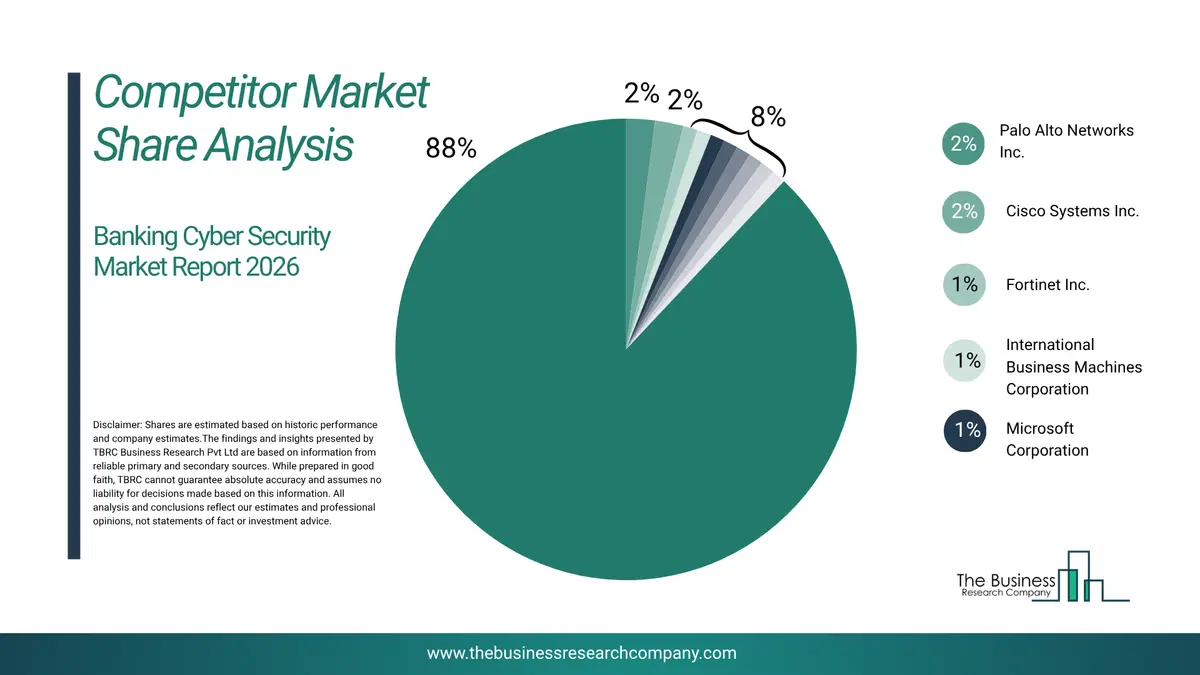
This chart is for illustrative purposes; the full report includes a detailed competitor analysis and comprehensive overview of the top 10 companies in the market.
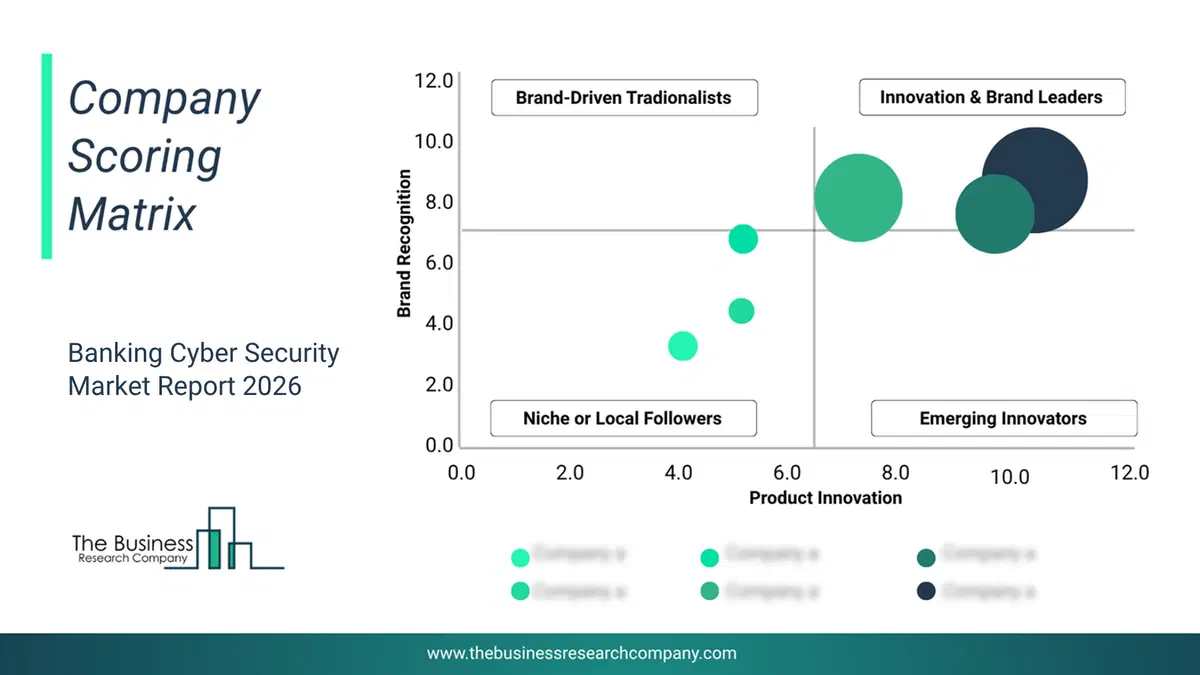
This chart maps companies by product innovation and brand strength, with bubble size indicating relative revenue, helping identify market leaders, challengers, and niche players. This is an illustrative chart; the full report provides a complete and accurate competitive analysis.
Global Banking Cyber Security Market Trends and Insights
Major companies operating in banking cybersecurity are increasing their focus on developing advanced platforms, such as the extended detection and response (XDR) platform, to enhance the market offering with cutting-edge solutions. Extended detection and response (XDR) is a cybersecurity platform that integrates and correlates information from multiple security products to provide a more comprehensive and contextualized view of potential security threats across an organization's IT environment. For instance, in April 2023, Cisco Systems Inc., a US-based technology company, launched a new Cisco XDR (extended detection and response) solution. This unique solution uses evidence-based automation to prioritize and resolve security events more efficiently. It uses machine learning to detect complex attacks, prioritize incidents based on risk and asset value, and automate security operations. It also streamlines security operations and improves enterprises' cybersecurity posture by providing additional features, integrations, license options, and support.What Are Latest Mergers And Acquisitions In The Banking Cyber Security Market?
In July 2023, Node4, a UK-based cloud-led digital transformation solutions company, acquired ThreeTwoFour for an undisclosed amount. The acquisition aimed to strengthen Node4's cybersecurity offering, expand into the finance and banking sectors, and enhance security and transformation capabilities for enterprise-level clients. ThreeTwoFour is a UK-based cybersecurity company specializing in providing banking cybersecurity.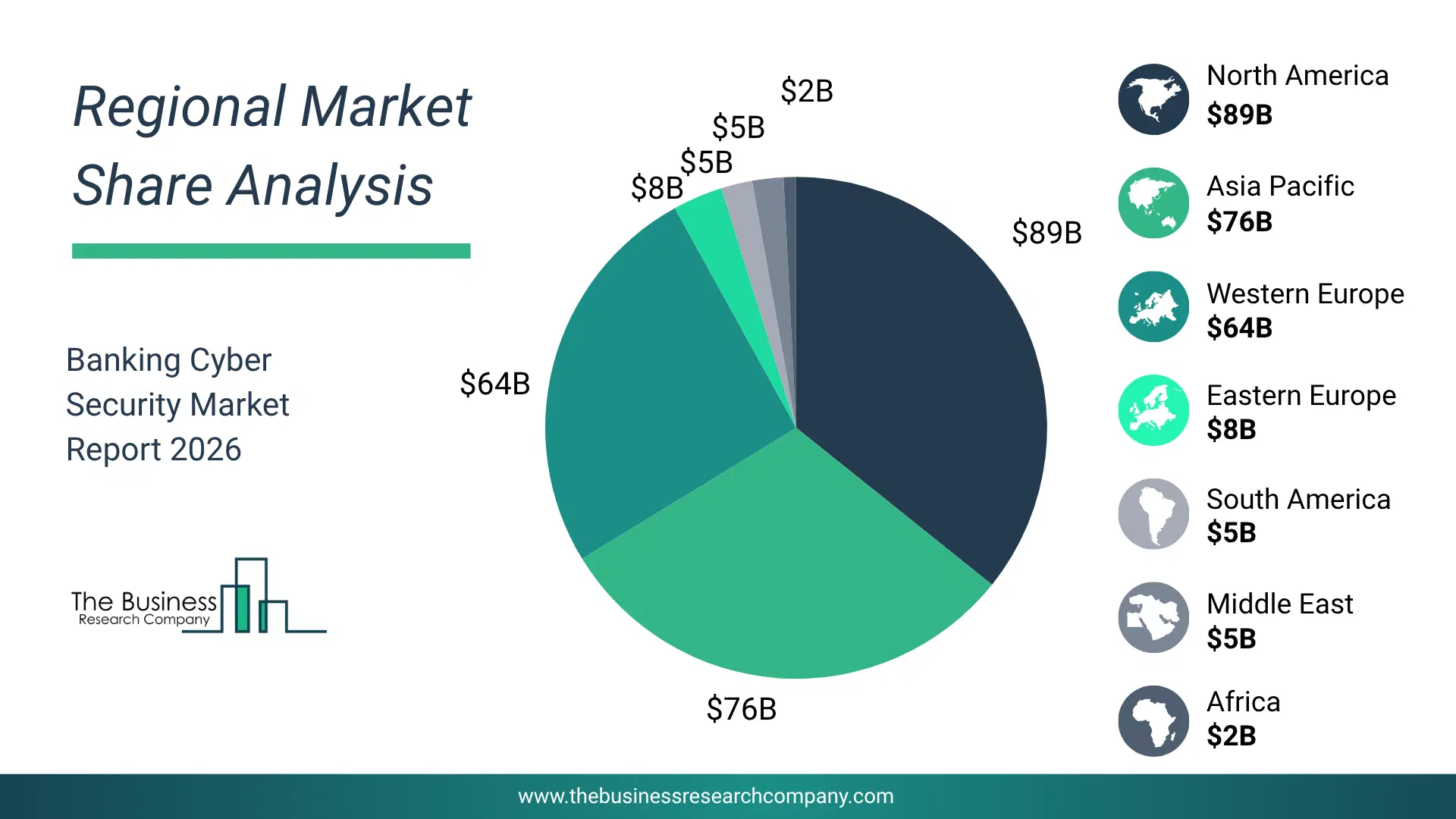
Regional Outlook
North America was the largest region in the banking cyber security market in 2025. The regions covered in this market report are Asia-Pacific, South East Asia, Western Europe, Eastern Europe, North America, South America, Middle East, Africa. The countries covered in this market report are Australia, Brazil, China, France, Germany, India, Indonesia, Japan, Taiwan, Russia, South Korea, UK, USA, Canada, Italy, Spain.What Defines the Banking Cyber Security Market?
The banking cyber security market includes revenues earned by entities by providing services such as security consulting and advisory, data encryption services, blockchain security services, and threat intelligence services. The market value includes the value of related goods sold by the service provider or included within the service offering. Only goods and services traded between entities or sold to end consumers are included.How is Market Value Defined and Measured?
The market value is defined as the revenues that enterprises gain from the sale of goods and/or services within the specified market and geography through sales, grants, or donations in terms of the currency (in USD unless otherwise specified). The revenues for a specified geography are consumption values that are revenues generated by organizations in the specified geography within the market, irrespective of where they are produced. It does not include revenues from resales along the supply chain, either further along the supply chain or as part of other products.
This chart presents market attractiveness based on a quantitative evaluation of growth, competition, strategic alignment, and risk, offering a clear view of opportunity areas for decision-making. This chart is for illustrative purposes; the full report contains the complete analysis.

This chart highlights the Total Addressable Market (TAM) by estimating the maximum revenue opportunity using an assumption-driven approach, supporting strategic planning and opportunity sizing across markets. The chart is illustrative; the full report provides a more comprehensive analysis.
What Key Data and Analysis Are Included in the Banking Cyber Security Market Report 2026?
The banking cyber security market research report is one of a series of new reports from The Business Research Company that provides market statistics, including Market Report 2026?global market size, regional shares, competitors with the market share, detailed market segments, market trends and opportunities, and any further data you may need to thrive in the banking cyber security Market Report 2026? The market research report delivers a complete perspective of everything you need, with an in-depth analysis of the current and future state of the Market Report 2026?Banking Cyber Security Market Report Forecast Analysis
| Report Attribute | Details |
|---|---|
| Market Size Value In 2026 | $147.86 billion |
| Revenue Forecast In 2030 | $243.95 billion |
| Growth Rate | CAGR of 13.3% from 2026 to 2030 |
| Base Year For Estimation | 2025 |
| Actual Estimates/Historical Data | 2020-2025 |
| Forecast Period | 2026 - 2030 |
| Market Representation | Revenue in USD Billion and CAGR from 2026 to 2030 |
| Segments Covered | Type, Deployment Type, Organization Size, Application |
| Regional Scope | Asia-Pacific, Western Europe, Eastern Europe, North America, South America, Middle East, Africa |
| Country Scope | The countries covered in the report are Australia, Brazil, China, France, Germany, India, ... |
| Key Companies Profiled | Microsoft Corporation, Intel Corporation, International Business Machines Corporation, Cisco Systems Inc., Honeywell International Inc., Hewlett Packard Enterprise Systems, Palo Alto Network Solutions Inc., Fortinet Security Solutions LLC, Splunk Data Solutions LLC, Check Point Software Technologies, CrowdStrike Cybersecurity Inc., McAfee Cybersecurity LLC, Trend Micro Security Inc, Proofpoint Inc., FireEye Inc., Rapid7 Inc., CyberArk Software Ltd., Varonis Systems Inc., Symantec Technologies Inc., EMC RSA Cybersecurity LLC, Sophos Cybersecurity Solutions Inc., Netsparker Technologies Inc., KnowBe4 Security Training Inc., Carbon Black Inc., Computer Science Corporation LLC |
| Customization Scope | Request for Customization |
| Pricing And Purchase Options | Explore Purchase Options |