
BAT (Botulism Antitoxin Heptavalent) Market Report 2026
Epidemiology, Pipeline Analysis, Market Insights & Forecasts
BAT (Botulism Antitoxin Heptavalent) Market Overview
• The BAT (Botulism Antitoxin Heptavalent) market growth in the historic period has been driven by past botulism outbreak incidents, reliance on limited antitoxin supplies • Market expansion is supported by rising biodefense investments, growth in national stockpile programs • Growth Driver: Foodborne Illness Awareness Boosts BAT (Botulism Antitoxin Heptavalent) Market Growth • North America was the largest region in 2025 and Asia-Pacific is the fastest growing region.Market Gains By 2030 – Top Opportunities By Segment
Market Gain identifies the most promising market opportunities by highlighting the segments or products expected to generate the highest incremental revenue growth over the next five years.
What Is Covered Under BAT (Botulism Antitoxin Heptavalent) Market?
BAT (botulism antitoxin heptavalent) is a medical treatment used to counteract botulism poisoning, caused by toxins produced by Clostridium botulinum. It contains antibodies against seven different botulinum toxin types (A, B, C, D, E, F, and G), which are the primary causes of botulism in humans. BAT is administered intravenously and is crucial for treating severe botulism cases, preventing further toxin effects on the nervous system. The main indications for BAT (botulism antitoxin heptavalent) are foodborne botulism, wound botulism, and infant botulism. Foodborne botulism occurs when individuals consume food contaminated with Clostridium botulinum bacteria, producing harmful neurotoxins. Immediate medical treatment with antitoxins can significantly improve recovery. This condition is often linked to improperly canned or preserved foods. It is distributed through various channels, such as hospitals, pharmacies, and online pharmacies, and utilized by end users such as adult and pediatric.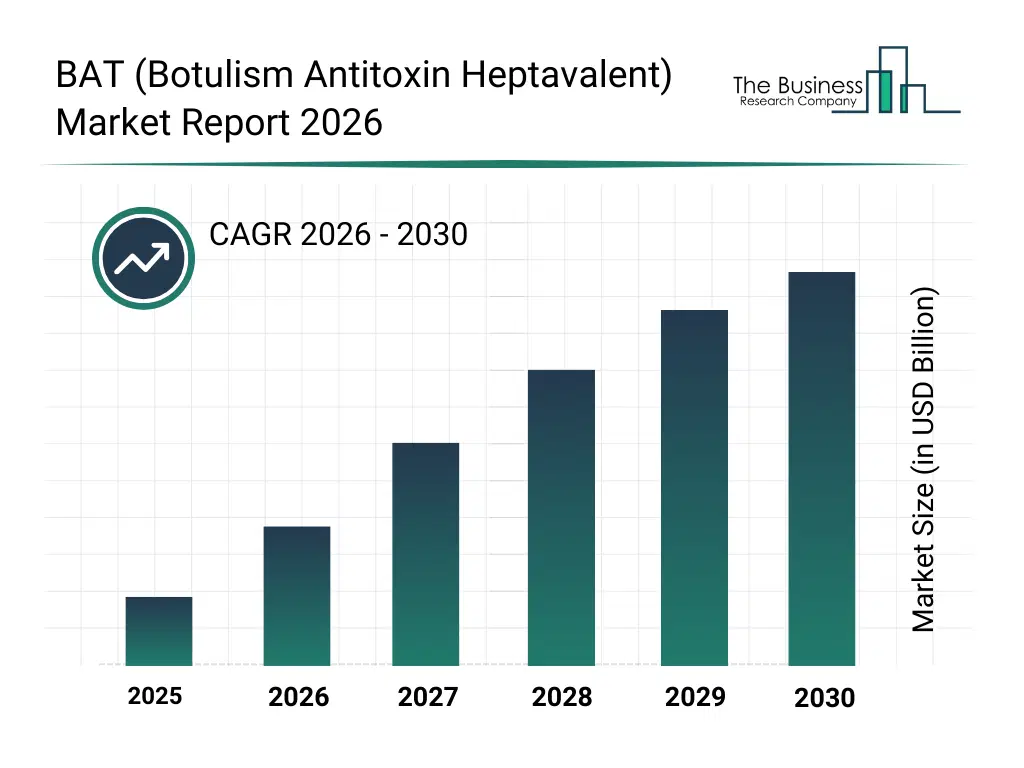
What Is The BAT (Botulism Antitoxin Heptavalent) Market Size and Share 2026?
The growth in the historic period can be attributed to past botulism outbreak incidents, reliance on limited antitoxin supplies, government emergency response programs, hospital intensive care expansion, increased awareness of foodborne toxin risks.What Is The BAT (Botulism Antitoxin Heptavalent) Market Growth Forecast?
The growth in the forecast period can be attributed to rising biodefense investments, growth in national stockpile programs, improved emergency response infrastructure, increasing food safety surveillance, expansion of public health funding. Major trends in the forecast period include increasing preparedness for bioterrorism threats, rising focus on emergency antitoxin stockpiling, expansion of critical care treatment protocols, growing government involvement in rare antitoxin supply, strengthening of hospital based acute response systems.
Global BAT (Botulism Antitoxin Heptavalent) Market Segmentation
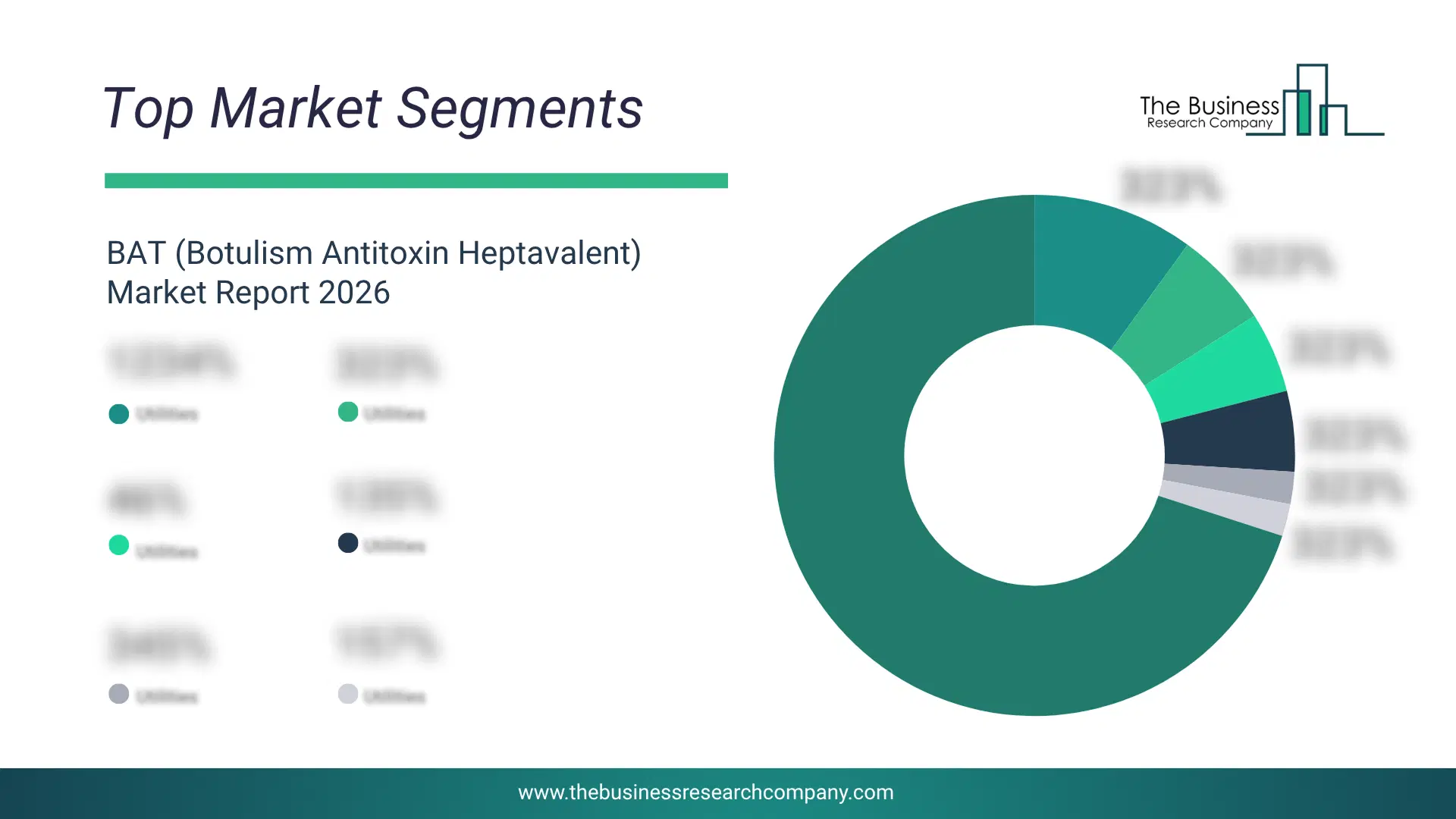
1) By Indication: Foodborne Botulism, Wound Botulism, Infant Botulism 2) By Distribution Channel: Hospitals, Pharmacies, Online Pharmacies 3) By End User: Adult, Pediatric The top segments in the bat (botulism antitoxin heptavalent) market will be: • Infant Botulism will reach $58.12 Billion by 2030. • Foodborne Botulism will reach $34.11 Billion by 2030. • Wound Botulism will reach $13.72 Billion by 2030.What Are The Drivers Of The BAT (Botulism Antitoxin Heptavalent) Market?
The rising awareness of foodborne illnesses is expected to propel the growth of the BAT (botulism antitoxin heptavalent) market going forward. Foodborne illnesses, also known as food poisoning, occur when people consume food or beverages contaminated with harmful bacteria, viruses, parasites, or toxins, leading to symptoms such as nausea, vomiting, diarrhea, and abdominal pain. The rise in foodborne illnesses is due to improper food handling, contaminated water, lack of hygiene, and inadequate cooking, leading to higher infection rates and widespread outbreaks. Botulism Antitoxin Heptavalent (BAT) neutralizes botulinum toxins, preventing further nerve damage and aiding recovery from botulism caused by contaminated food. For instance, in December 2024, according to the European Food Safety Authority (EFSA), an Italy-based food authority agency, the number of foodborne outbreaks reached 5,691 cases in 2023, an increase of 1.2% compared to 2022. Therefore, the rising awareness of foodborne illnesses is driving growth in the BAT (botulism antitoxin heptavalent) industry. The increasing prevalence of botulism cases is expected to propel the growth of the BAT (botulism antitoxin heptavalent) market going forward. Botulism is a rare but potentially life-threatening illness caused by a toxin produced by the bacterium Clostridium botulinum, which can enter the body through contaminated food, wounds, or, in infants, through ingestion of spores, leading to muscle paralysis and potentially severe complications if not treated promptly. The rise in botulism cases is due to improper food processing and storage, inadequate hygiene practices, contaminated water sources, and insufficient use of proper food safety measures, leading to higher infection rates and potential public health risks. BAT (Botulism Antitoxin Heptavalent) helps individuals with botulism by neutralizing botulinum toxins, reducing the risk of severe complications, aiding recovery, and improving overall treatment outcomes. For instance, in April 2023, according to the European Centre for Disease Prevention and Control (ECDC), a Sweden-based health protection agency, 87 cases of botulism associated with intragastric BoNT injections were reported in Germany between February and 30 March 2023, marking an increase of 18 cases compared to the same period in 2022. Therefore, the increasing prevalence of botulism cases is driving growth in the BAT (botulism antitoxin heptavalent) industry.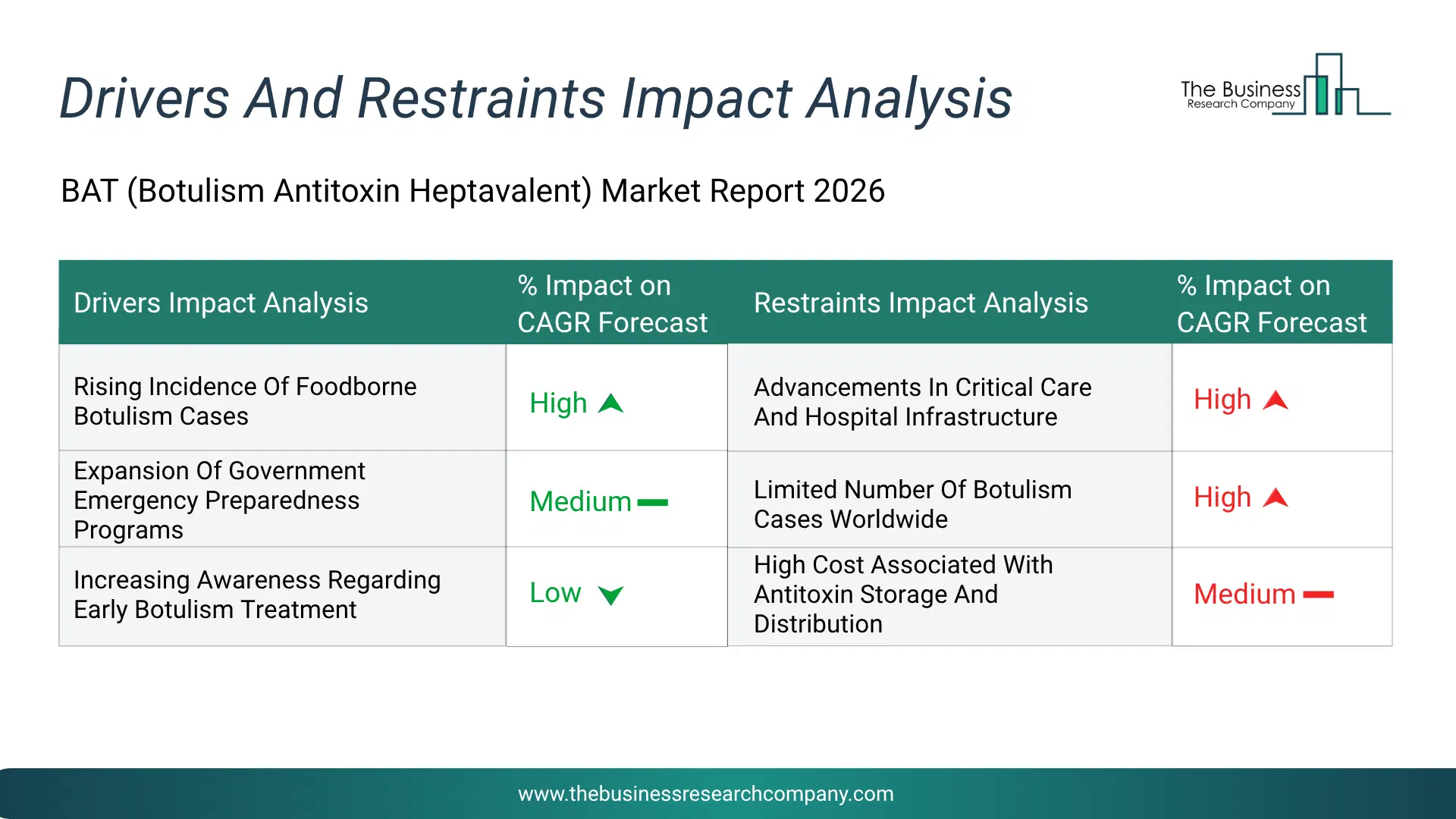
Infographic Chart Showing Key Market Drivers Analysis And Restraints For Bat (Botulism Antitoxin Heptavalent) Market
The chart presents an impact analysis of key drivers and restraints, quantifying their relative influence on the market's growth rate and helping assess the balance between growth enablers and limiting factors. This chart offers a high-level perspective; the full report contains more detailed insights.
How Will The Drivers Impact Growth In The Global BAT (Botulism Antitoxin Heptavalent) Market?
• Rising Incidence Of Foodborne Botulism Cases (High) – During the forecast period, the rising incidence of foodborne botulism cases is expected to become a key growth driver for the BAT (botulism antitoxin heptavalent) market by 2030. Increasing consumption of improperly preserved and contaminated food products is contributing to greater exposure risks associated with botulinum neurotoxins. Public health agencies and healthcare providers are emphasizing faster diagnosis and immediate therapeutic intervention to minimize disease severity and reduce mortality risks. Healthcare systems are therefore strengthening access to specialized antitoxin treatments capable of neutralizing toxin activity before progression of paralysis symptoms. This growing focus on improving emergency treatment availability is reinforcing steady market expansion. • Expansion Of Government Emergency Preparedness Programs (Medium) – During the forecast period, the expansion of government emergency preparedness programs is expected to emerge as a major factor driving the expansion of the BAT (botulism antitoxin heptavalent) market by 2030. National preparedness initiatives are encouraging larger strategic medical stockpiles and stronger response infrastructure to address biological emergencies and toxin-related threats. Public health organizations are prioritizing procurement of critical countermeasures to strengthen readiness capabilities during outbreaks and emergency scenarios. Increased investments in preparedness planning and coordinated response systems are further supporting wider availability of specialized antitoxin therapies. • Increasing Awareness Regarding Early Botulism Treatment (Low) – During the forecast period, the increasing awareness regarding early botulism treatment is expected to act as a key growth catalyst for the BAT (botulism antitoxin heptavalent) market by 2030. Growing educational initiatives among healthcare professionals and emergency medical personnel are improving recognition of early-stage botulism symptoms and accelerating treatment timelines. Medical institutions are emphasizing timely antitoxin administration to reduce complications and improve patient recovery outcomes. Additionally, broader public health awareness efforts are supporting earlier healthcare engagement and faster intervention pathways. As awareness regarding early treatment continues to expand globally, utilization of specialized botulism therapies is expected to rise.How Will The Restraints Impact Growth In The Global BAT (Botulism Antitoxin Heptavalent) Market?
• Advancements In Critical Care And Hospital Infrastructure (High) – During the forecast period, the improvements in critical care capabilities and hospital infrastructure are positively influencing the BAT market by enabling more effective management of severe botulism cases. Advanced intensive care units, ventilatory support systems, and specialized infectious disease departments are improving survival rates and encouraging wider adoption of antitoxin therapies. Many hospitals are strengthening emergency toxicology and neurology departments to address life-threatening neuroparalytic conditions. Enhanced cold-chain distribution systems are also improving storage and accessibility of biologic antitoxins. In addition, rising investments in tertiary healthcare facilities across emerging economies are expanding treatment accessibility. The integration of advanced diagnostic technologies with emergency care systems is expected to support faster intervention and sustained market growth over the coming years. • Limited Number Of Botulism Cases Worldwide (Medium) – During the forecast period, the rarity of botulism cases globally acts as a major restraint for the BAT market. Since botulism is considered an uncommon disease, the overall patient pool requiring antitoxin treatment remains limited compared to other infectious conditions. Low disease prevalence reduces routine purchasing volumes for hospitals and healthcare institutions. Pharmaceutical manufacturers may face challenges in maintaining large-scale production profitability due to limited commercial demand. Additionally, irregular outbreak patterns create uncertainty in inventory management and supply chain planning. The small patient population can also limit clinical research investments and slow new product innovation. As a result, overall revenue generation potential for the market remains comparatively constrained. • High Cost Associated With Antitoxin Storage And Distribution (Low) – During the forecast period, the bAT products require specialized storage, transportation, and handling conditions because they are biologic formulations derived from equine plasma. Maintaining cold-chain logistics and emergency inventory systems significantly increases operational costs for healthcare providers and distributors. Hospitals must allocate dedicated resources for storage compliance and rapid accessibility during emergencies. The financial burden is particularly challenging for smaller healthcare facilities and low-resource regions. Additionally, wastage risks associated with limited shelf life further increase cost pressures. These factors can reduce widespread adoption and restrict availability in underserved healthcare systems, thereby limiting overall market expansion.Key Players In The Global BAT (Botulism Antitoxin Heptavalent) Market
Major companies operating in the bat (botulism antitoxin heptavalent) market are Emergent BioSolutions Inc.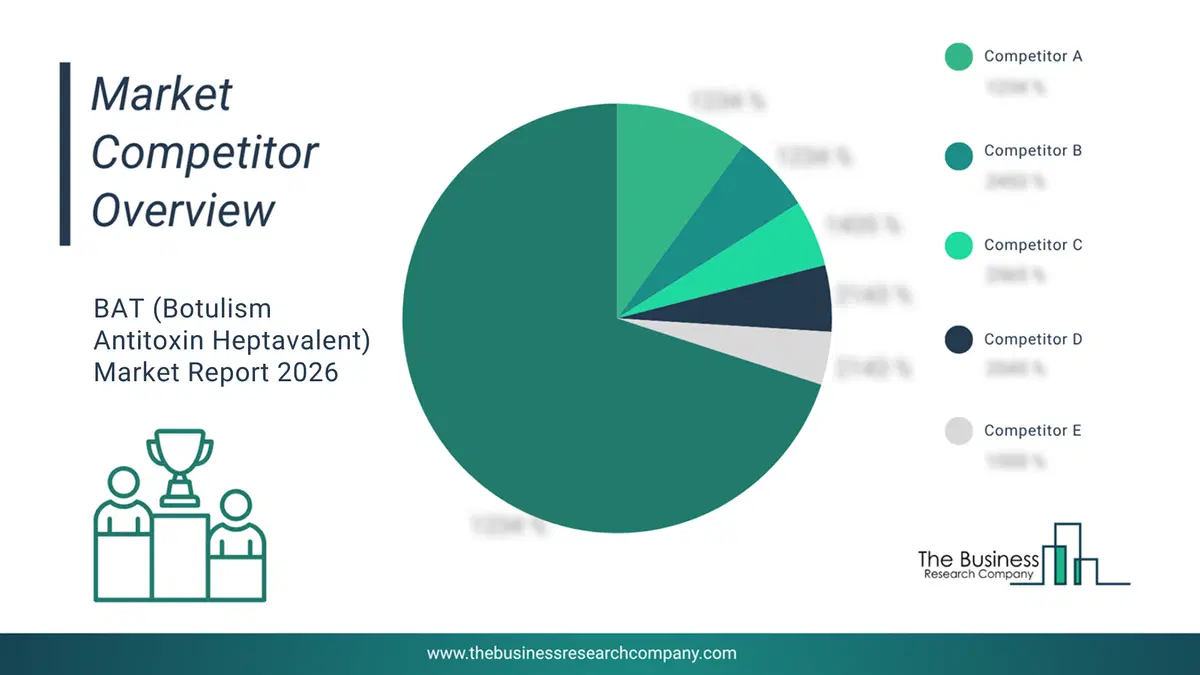
This chart is for illustrative purposes; the full report includes a detailed competitor analysis and comprehensive overview of the top 10 companies in the market.
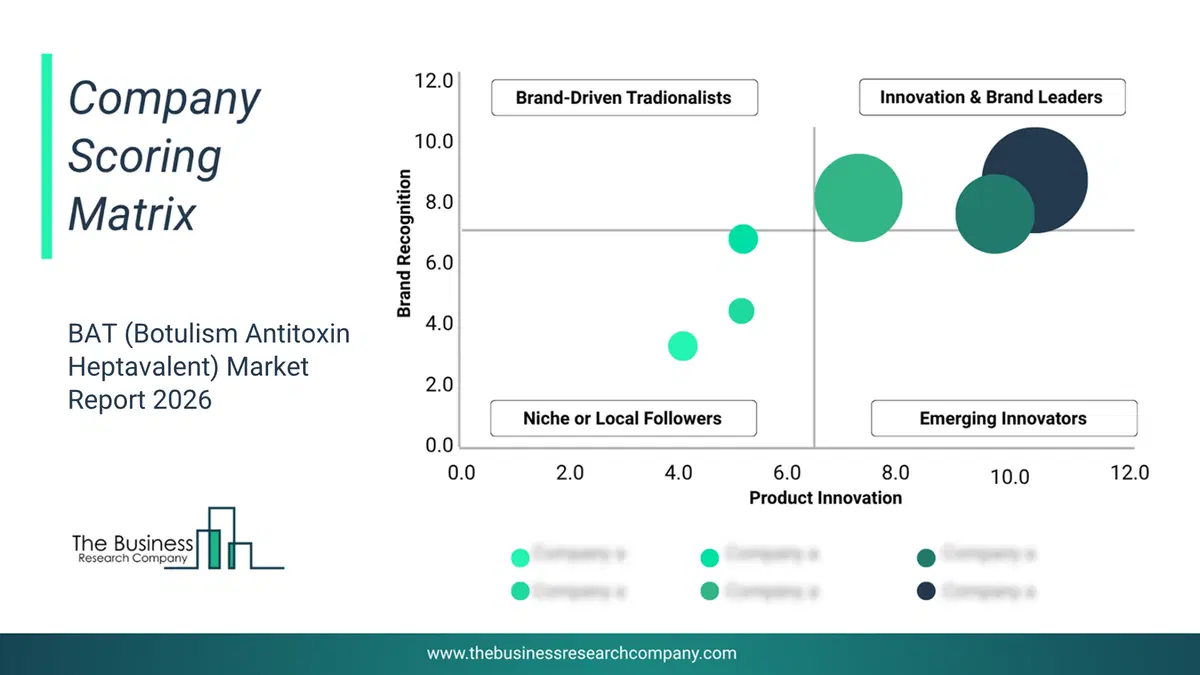
This chart maps companies by product innovation and brand strength, with bubble size indicating relative revenue, helping identify market leaders, challengers, and niche players. This is an illustrative chart; the full report provides a complete and accurate competitive analysis.
What Are Latest Mergers And Acquisitions In The BAT (Botulism Antitoxin Heptavalent) Market?
In July 2024, Emergent BioSolutions Inc., a US-based biopharmaceutical company, received a contract modification from the US Department of Health and Human Services for anthrax and smallpox, VIV for treating smallpox vaccine complications, and a botulism antitoxin for $250 million. With this partnership, Emergent BioSolutions aims to strengthen its role in public health preparedness by ensuring the continued supply and stockpiling of critical medical countermeasures, including the Botulism Antitoxin Heptavalent (BAT), to effectively respond to biological threats and emergencies such as botulism, anthrax, and smallpox, thereby enhancing national security and public health resilience. The U.S. Department of Health and Human Services (HHS) is a US-based federal agency that ensures the availability and stockpiling of medical countermeasures, such as Botulism Antitoxin Heptavalent (BAT), to respond to biological threats and public health emergencies.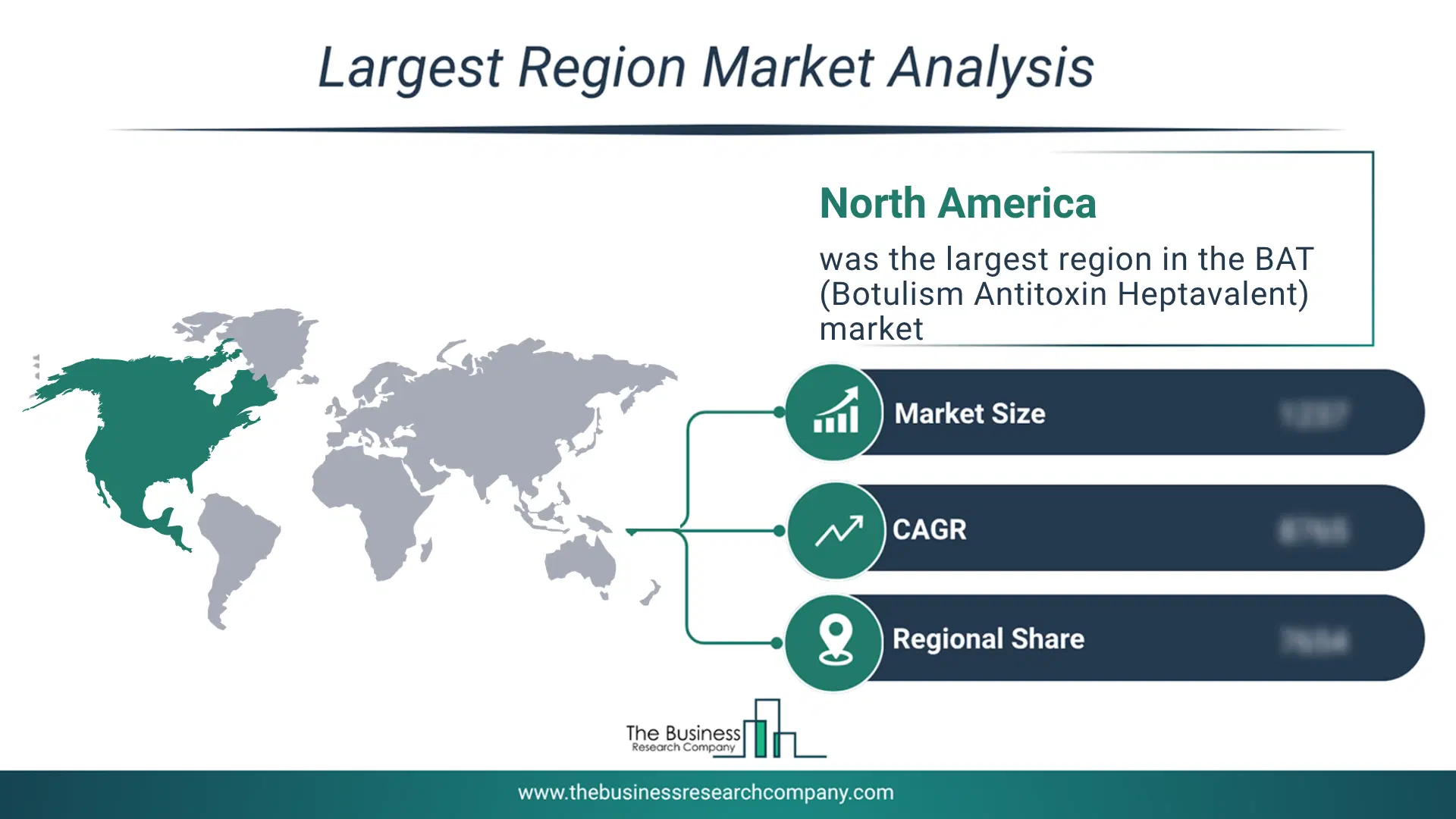
Regional Insights
North America was the largest region in the BAT (botulism antitoxin heptavalent) market in 2025. Asia-Pacific is expected to be the fastest-growing region in the forecast period. The regions covered in this market report are Asia-Pacific, Western Europe, Eastern Europe, North America, South America, Middle East, Africa. The countries covered in this market report are Australia, India, China, South Korea, Japan, UK, France, Germany, USA, Canada.What Defines the BAT (Botulism Antitoxin Heptavalent) Market?
The BAT (botulism antitoxin heptavalent) market includes sales of BAT vials and multi-dose vials. Values in this market are ‘factory gate’ values, that is, the value of goods sold by the manufacturers or creators of the goods, whether to other entities (including downstream manufacturers, wholesalers, distributors, and retailers) or directly to end customers. The value of goods in this market includes related services sold by the creators of the goods.How is Market Value Defined and Measured?
The market value is defined as the revenues that enterprises gain from the sale of goods and/or services within the specified market and geography through sales, grants, or donations in terms of the currency (in USD unless otherwise specified). The revenues for a specified geography are consumption values that are revenues generated by organizations in the specified geography within the market, irrespective of where they are produced. It does not include revenues from resales along the supply chain, either further along the supply chain or as part of other products.
This chart presents market attractiveness based on a quantitative evaluation of growth, competition, strategic alignment, and risk, offering a clear view of opportunity areas for decision-making. This chart is for illustrative purposes; the full report contains the complete analysis.

This chart highlights the Total Addressable Market (TAM) by estimating the maximum revenue opportunity using an assumption-driven approach, supporting strategic planning and opportunity sizing across markets. The chart is illustrative; the full report provides a more comprehensive analysis.
What Key Data and Analysis Are Included in the BAT (Botulism Antitoxin Heptavalent) Market Report 2026?
The bat (botulism antitoxin heptavalent) market research report is one of a series of new reports from The Business Research Company that provides market statistics, including industry global market size, regional shares, competitors with the market share, detailed market segments, market trends and opportunities, and any further data you may need to thrive in the bat (botulism antitoxin heptavalent) industry. The market research report delivers a complete perspective of everything you need, with an in-depth analysis of the current and future state of the industry.BAT (Botulism Antitoxin Heptavalent) Market Report Forecast Analysis
| Report Attribute | Details |
|---|---|
| Market Size Value In 2026 | $ billion |
| Revenue Forecast In 2030 | $ billion |
| Growth Rate | No CAGR found from 2026 to 2030 |
| Base Year For Estimation | 2025 |
| Actual Estimates/Historical Data | 2020-2025 |
| Forecast Period | 2026 - 2030 |
| Market Representation | Revenue in USD Billion and CAGR from 2026 to 2030 |
| Segments Covered | Indication, Distribution Channel, End User |
| Regional Scope | Asia-Pacific, Western Europe, Eastern Europe, North America, South America, Middle East, Africa |
| Country Scope | The countries covered in the report are Australia, Brazil, China, France, Germany, India, Indonesia, Japan, Taiwan, Russia, South Korea, UK, USA, Canada, Italy, Spain. |
| Key Companies Profiled | Emergent BioSolutions Inc. |
| Customization Scope | Request for Customization |
| Pricing And Purchase Options | Explore Purchase Options |