

Beauty Tech Market Report 2026
Global Outlook – By Type (Acne Devices, Hair Removal Devices, Hair Growth Devices, Cleansing Devices, Oxygen Steamer Devices, Rejuvenation Devices, Other Types), By Portability (Handheld Device, Fixed), By Mode Of Operation (Electric, Battery Operated, Manual), By Distribution Channel (Direct Sales, Retail, Online), By Application (Salon, Spa, Home, Other Applications) – Market Size, Trends, Strategies, and Forecast to 2030
Beauty Tech Market Overview
• Beauty Tech market size has reached to $79.38 billion in 2025 • Expected to grow to $146.04 billion in 2030 at a compound annual growth rate (CAGR) of 12.9% • Growth Driver: Skin Cancer Prevalence Driving Growth In Beauty Tech • Market Trend: L’Oréal Launches Big Bang Beauty Tech Innovation Program To Drive Beauty Tech Advancements In SAPMENA Region • North America was the largest region in 2025 and Asia-Pacific is the fastest growing region.Market Gains By 2030 – Top Opportunities By Segment
Market Gain identifies the most promising market opportunities by highlighting the segments or products expected to generate the highest incremental revenue growth over the next five years.
What Is Covered Under Beauty Tech Market?
Beauty tech, short for beauty technology, refers to integrating and applying technological advancements in the beauty and skincare industries. This field involves using various technologies, including artificial intelligence, augmented reality, virtual reality, data analytics, and more, to enhance and revolutionize different aspects of beauty, personal care, and grooming. The main types of beauty tech devices are acne devices, hair removal devices, hair growth devices, cleansing devices, oxygen steamer devices, rejuvenation devices, and others. Acne devices consist of various tools and gadgets, like light therapy devices, microdermabrasion tools, and high-frequency devices, aiming to address acne-causing bacteria, diminish inflammation, and enhance the overall appearance of the skin. Portability is categorized into types such as handheld devices, fixed devices that can be operated in electric, battery-operated, and manual modes. The distribution channels include direct sales, retail, and online use in applications such as salons, spas, homes, and others.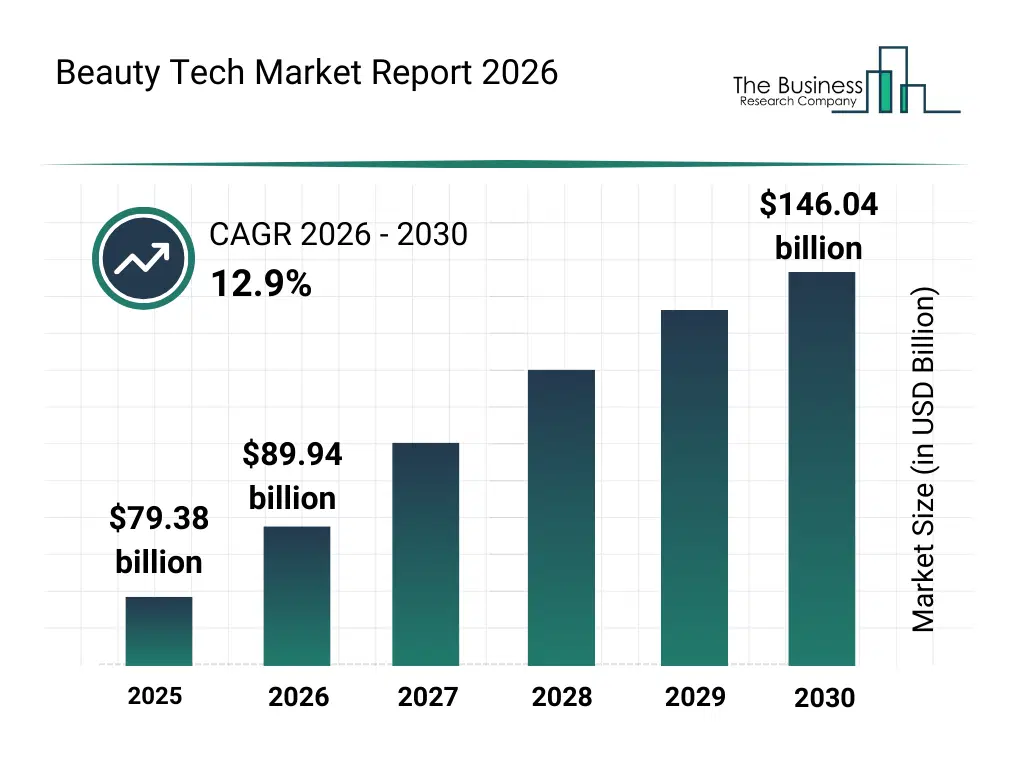
What Is The Beauty Tech Market Size and Share 2026?
The beauty tech market size has grown rapidly in recent years. It will grow from $79.38 billion in 2025 to $89.94 billion in 2026 at a compound annual growth rate (CAGR) of 13.3%. The growth in the historic period can be attributed to rising awareness of personal grooming, increasing acceptance of beauty devices, early adoption of technology-enabled skincare solutions, growing influence of digital beauty platforms, increasing disposable income supporting premium purchases.What Is The Beauty Tech Market Growth Forecast?
The beauty tech market size is expected to see rapid growth in the next few years. It will grow to $146.04 billion in 2030 at a compound annual growth rate (CAGR) of 12.9%. The growth in the forecast period can be attributed to rising demand for personalized beauty experiences, increasing shift toward smart connected beauty devices, growing preference for non-invasive beauty treatments, expanding online retail and digital beauty ecosystems, continuous innovation in advanced beauty care devices. Major trends in the forecast period include rising consumer preference for personalized beauty and skincare solutions, growing adoption of at-home beauty treatment devices, increasing integration of data-driven skincare diagnostics, expansion of premium and technologically advanced beauty products, strengthening focus on holistic wellness and self-care experiences.
Global Beauty Tech Market Segmentation
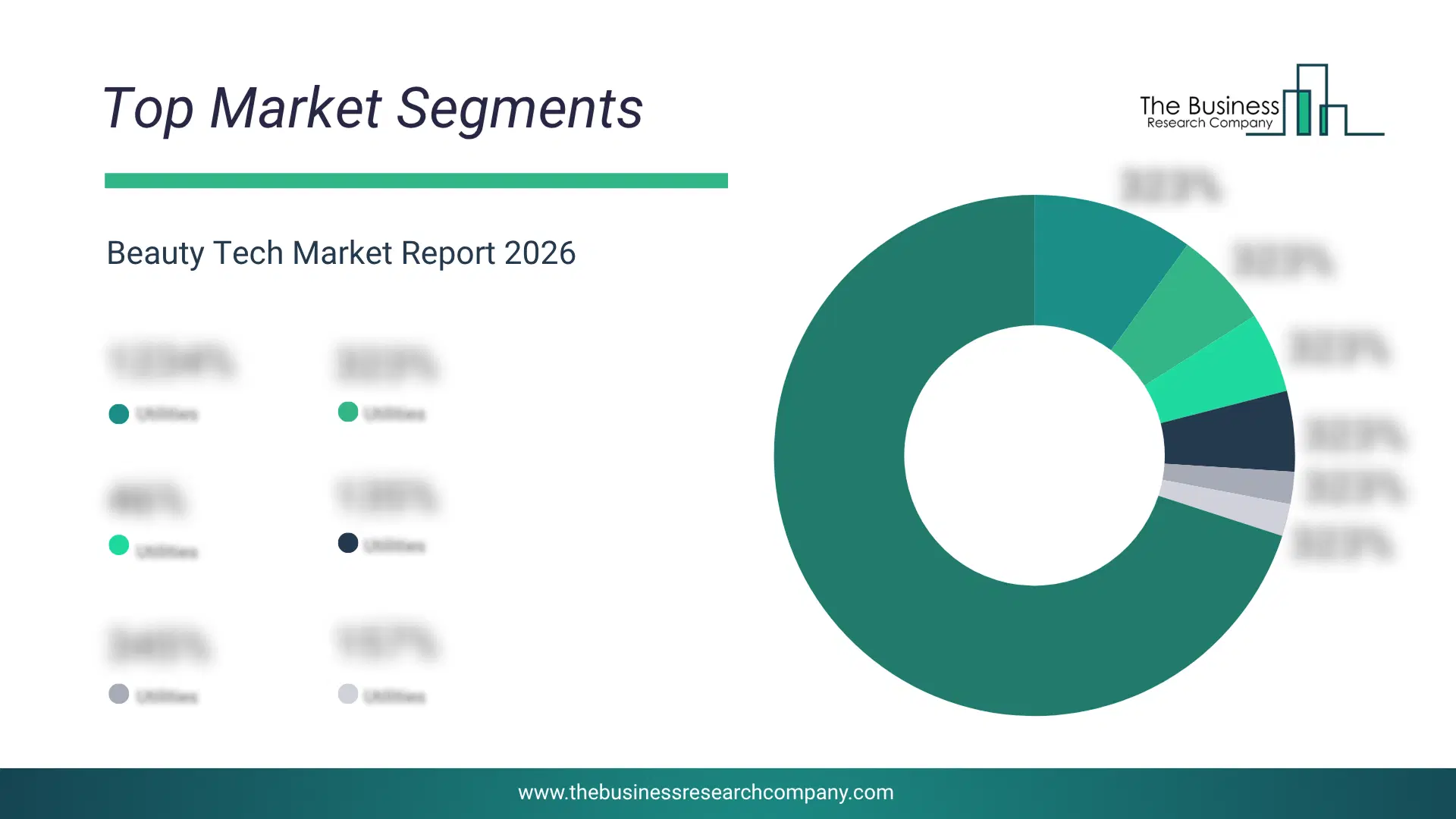
1) By Type: Acne Devices, Hair Removal Devices, Hair Growth Devices, Cleansing Devices, Oxygen Steamer Devices, Rejuvenation Devices, Other Types 2) By Portability: Handheld Device, Fixed 3) By Mode Of Operation: Electric, Battery Operated, Manual 4) By Distribution Channel: Direct Sales, Retail, Online 5) By Application: Salon, Spa, Home, Other Applications Subsegments: 1) By Acne Devices: Blue Light Therapy Devices, Microdermabrasion Devices, LED Acne Masks, Pore Cleansing Tools 2) By Hair Removal Devices: Laser Hair Removal Devices, IPL (Intense Pulsed Light) Devices, Electric Shavers, Waxing Devices 3) By Hair Growth Devices: Laser Caps And Helmets, Microneedling Devices, Scalp Massagers 4) By Cleansing Devices: Facial Cleansing Brushes, Sonic Cleansing Devices, Portable Facial Steamer, Exfoliating Tools 5) By Oxygen Steamer Devices: Facial Oxygen Steamer, Aromatherapy Steamers, Portable Oxygen Steamers, Home Spa Steamers 6) By Rejuvenation Devices: Radiofrequency Devices, Ultrasound Therapy Devices, LED Light Therapy Devices, Microneedling Devices 7) By Other Types: Anti-Aging Devices, Skin Tightening Devices The top segments in the insulated overhead line market will be: • Cross Linked Polyethylene (XLPE) Insulated Lines will reach $2.1 Billion by 2030. • Single Core Insulated Overhead Lines will reach $1.98 Billion by 2030. • Multi-Core Insulated Overhead Lines will reach $1.53 Billion by 2030. • Polyvinyl Chloride (PVC) Insulated Lines will reach $0.89 Billion by 2030. • Composite Insulated Overhead Lines will reach $0.51 Billion by 2030. The top segments in the beauty tech market will be: • Hair Removal Devices will reach $45.33 Billion by 2030. • Cleansing Devices will reach $32.34 Billion by 2030. • Rejuvenation Devices will reach $29.37 Billion by 2030. • Acne Devices will reach $29.29 Billion by 2030. • Hair Growth Devices will reach $18.21 Billion by 2030.What Is The Driver Of The Beauty Tech Market?
The increasing prevalence of skin-related disorders is expected to propel the growth of the beauty tech market going forward. Skin-related disorders are medical conditions that affect the skin, including infections, inflammations, allergic reactions, autoimmune disorders, skin cancers, and genetic conditions. The prevalence of skin-related disorders is increasing due to factors such as environmental pollution, changing lifestyles, increased UV exposure, and genetic predispositions. Beauty technology is utilized in managing skin diseases by employing AI-driven applications for early detection, telemedicine platforms for virtual consultations, and customized skincare solutions, thereby improving the accessibility and efficacy of treatments. For instance, in August 2023, Skin Health Institute Inc., an Australia-based non-profit organization, In Australia, psoriasis affects an estimated 2–3% of the population, highlighting it as a fairly common skin condition. Therefore, the increasing prevalence of skin-related disorders will drive the beauty technology market.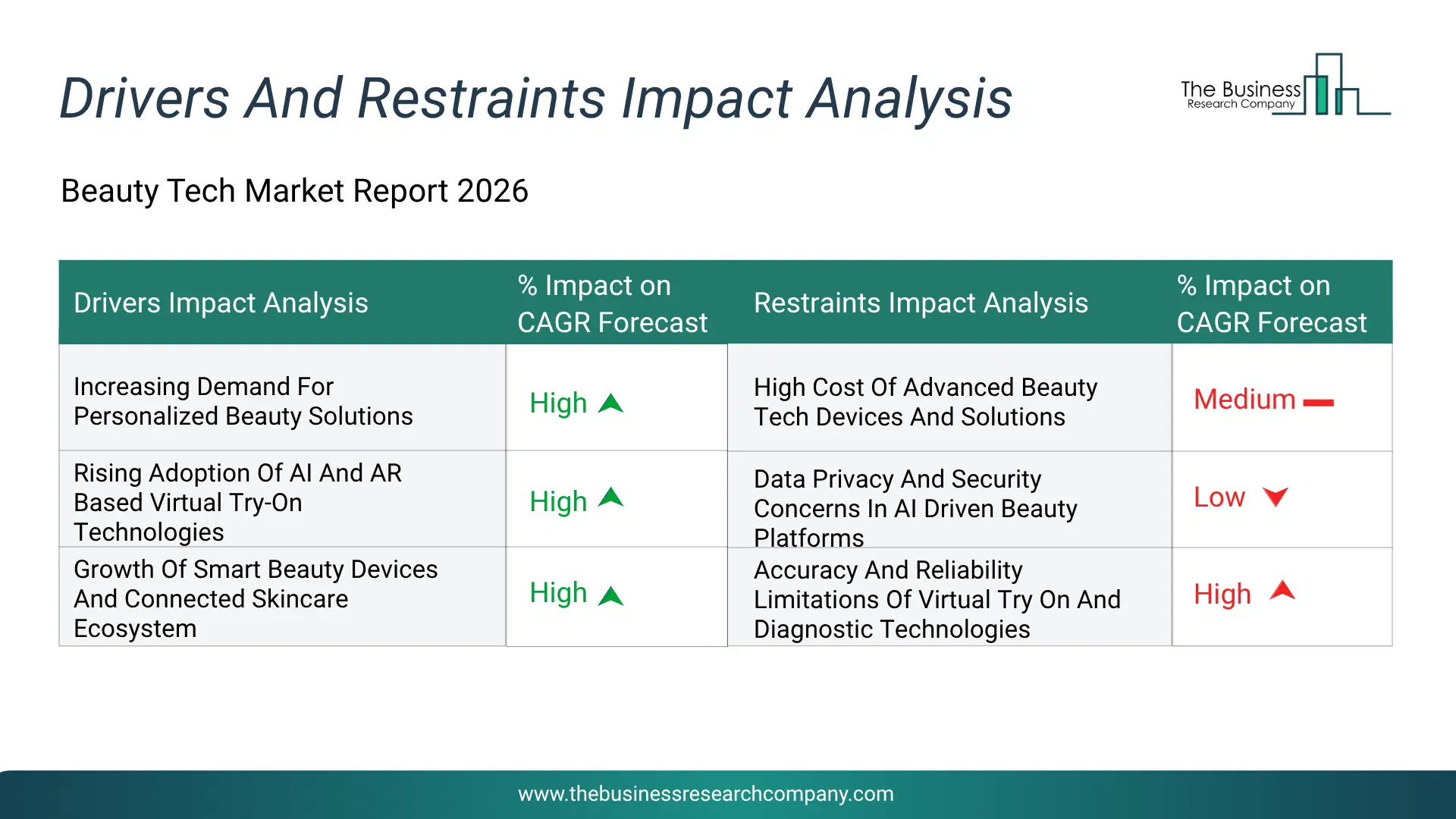
Infographic Chart Showing Key Market Drivers Analysis And Restraints For Beauty Tech Market
The chart presents an impact analysis of key drivers and restraints, quantifying their relative influence on the market's growth rate and helping assess the balance between growth enablers and limiting factors. This chart offers a high-level perspective; the full report contains more detailed insights.
How Will The Drivers Impact Growth In The Global Beauty Tech Market?
• Increasing Demand For Personalized Beauty Solutions (High) – During the forecast period, the increasing demand for personalized beauty solutions is expected to become a key growth driver for the beauty tech market by 2030. Rising consumer preference for customized skincare and haircare routines is accelerating the adoption of advanced beauty technologies. Consumers are increasingly seeking devices and digital platforms capable of analyzing skin conditions, recommending tailored treatments, and delivering personalized beauty experiences. This trend encourages beauty brands and technology providers to develop smart devices integrated with AI-powered diagnostics and real-time monitoring capabilities. Additionally, the growing focus on individual wellness and appearance is increasing investments in innovative beauty solutions designed to address specific consumer needs. Collectively, these factors support steady market growth by strengthening demand for personalized and technology-enabled beauty products and devices. • Rising Adoption Of AI And AR Based Virtual Try-On Technologies (High) – During the forecast period, the rising adoption of AI and AR based virtual try-on technologies is expected to emerge as a major factor driving the expansion of the beauty tech market by 2030. Increasing integration of augmented reality and artificial intelligence technologies into beauty applications is transforming the consumer shopping experience. Beauty brands and retailers are adopting virtual try-on solutions that allow consumers to digitally test makeup products, hairstyles, and skincare treatments before purchase. These technologies improve customer engagement, reduce product return rates, and support informed purchasing decisions. Furthermore, advancements in facial recognition, image analysis, and real-time rendering technologies are enhancing the accuracy and effectiveness of virtual beauty experiences. • Growth Of Smart Beauty Devices And Connected Skincare Ecosystem (High) – During the forecast period, the enabled beauty devices that provide automated treatments, usage tracking, and personalized skincare recommendations. This trend is encouraging manufacturers to introduce technologically advanced cleansing devices, hair removal systems, and rejuvenation tools integrated with connectivity features and data-driven insights. Furthermore, the expansion of IoT-enabled beauty platforms and mobile applications is enhancing device functionality and improving consumer convenience. Consequently, the growing demand for connected and intelligent beauty solutions directly supports the adoption of advanced beauty technologies globally.How Will The Restraints Impact Growth In The Global Beauty Tech Market?
• High Cost Of Advanced Beauty Tech Devices And Solutions (High) – During the forecast period, the high cost of advanced beauty tech devices and solutions acts as a major restraint for market growth. Smart mirrors, AI-powered skincare tools, and connected beauty wearables often require significant upfront investment. This makes adoption difficult for price-sensitive consumers and small salons or clinics. Additionally, frequent upgrades and maintenance costs further increase the total ownership burden. As a result, widespread penetration remains limited, especially in developing regions. • Data Privacy And Security Concerns In AI Driven Beauty Platforms (High) – During the forecast period, the data privacy and security concerns in AI driven beauty platforms significantly restrain market expansion. Beauty tech solutions often collect sensitive user data such as facial scans, skin conditions, and personal grooming habits. Consumers remain cautious about how this data is stored, shared, or used by companies. Any risk of data breaches or misuse reduces trust in digital beauty services. This hesitation slows down adoption of virtual consultations and personalized AI-based recommendations. • Accuracy And Reliability Limitations Of Virtual Try On And Diagnostic Technologies (High) – During the forecast period, the accuracy and reliability limitations of virtual try on and diagnostic technologies restrict consumer confidence in beauty tech. AI-based skin analysis tools and AR makeup simulations may not always deliver precise or realistic results. Variations in lighting, device quality, and algorithms can lead to inconsistent outputs. This reduces user satisfaction and weakens trust in digital beauty recommendations. Consequently, consumers often prefer traditional in-person beauty consultations over tech-based alternatives.Key Players In The Global Beauty Tech Market
Major companies operating in the beauty tech market report are Panasonic Corporation, Dyson Limited, Koninklijke Philips N.V., Xiaomi Corporation, Hitachi Ltd, Ya-Man Ltd, Foreo AB, Tria Beauty Inc., Nu Skin Enterprises Inc., L'Oréal S.A., Shiseido Company Limited, Johnson & Johnson, The Procter & Gamble Company, Beiersdorf AG, Amorepacific Corporation, Conair Corporation, FKA Brands Inc, MTG Co Ltd, Kao Corporation, Coty Inc.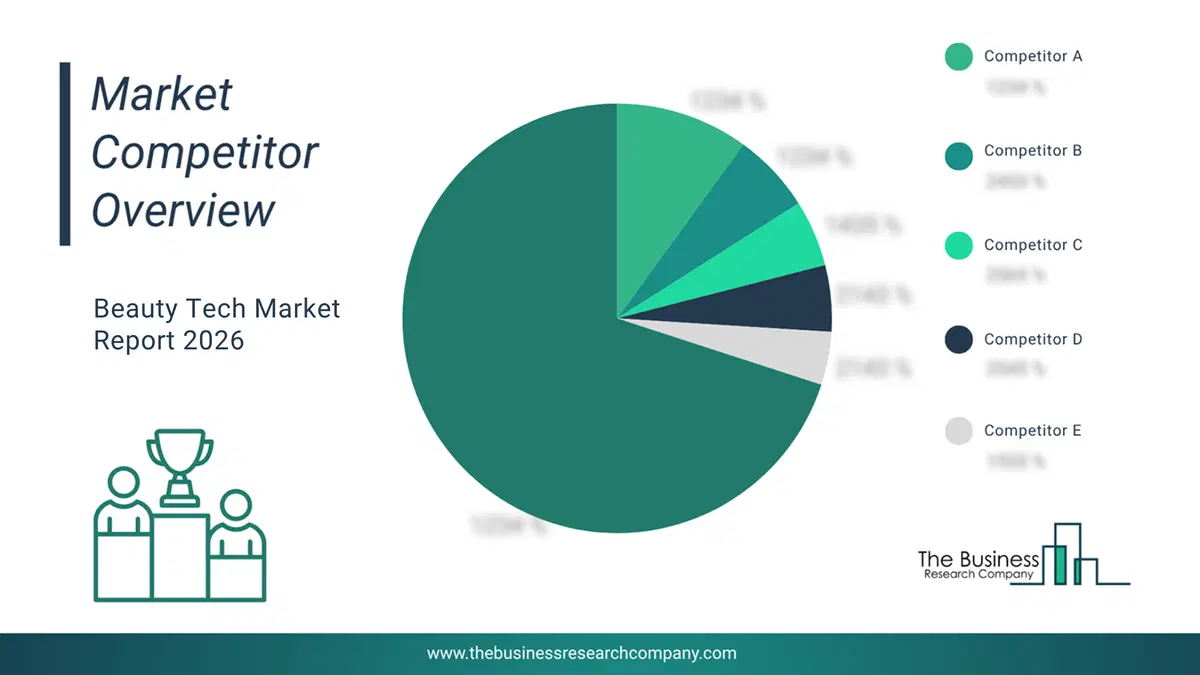
This chart is for illustrative purposes; the full report includes a detailed competitor analysis and comprehensive overview of the top 10 companies in the market.
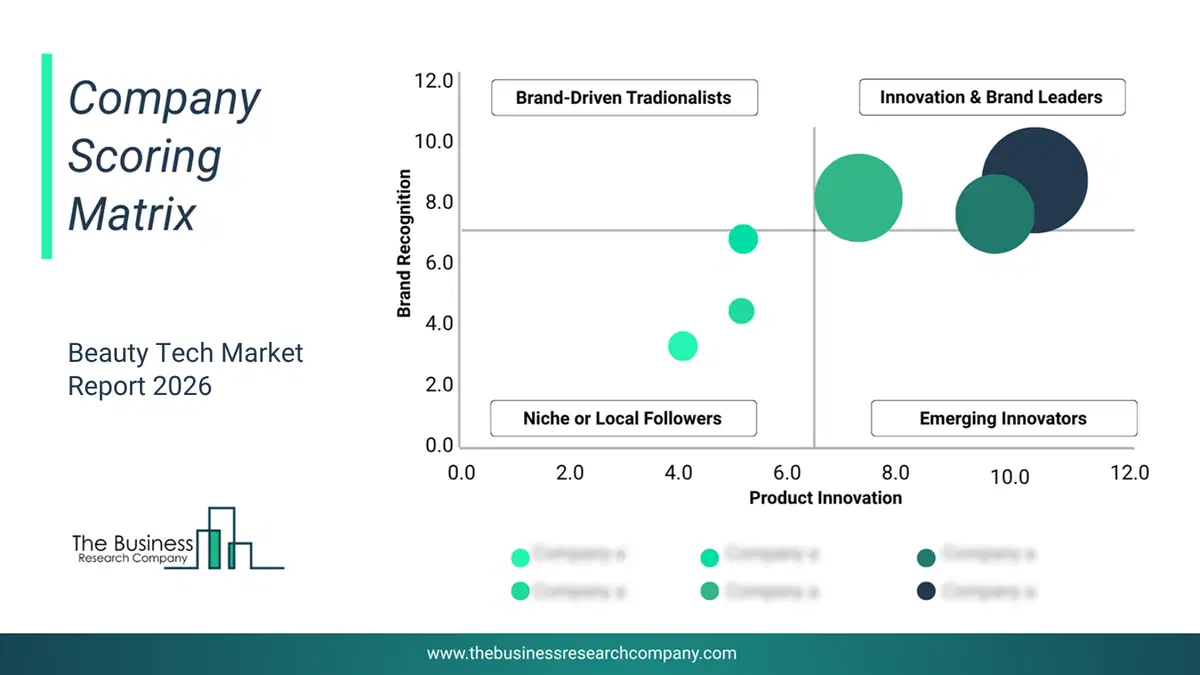
This chart maps companies by product innovation and brand strength, with bubble size indicating relative revenue, helping identify market leaders, challengers, and niche players. This is an illustrative chart; the full report provides a complete and accurate competitive analysis.
Global Beauty Tech Market Trends and Insights
Major companies operating in the beauty tech market are focusing on developing technologically advanced solutions, such as big bang beauty tech innovation programs, to address several industry demands. The big bang beauty tech innovation program uses AI for personalized recommendations, data analytics for insights, augmented reality for virtual try-ons, and sustainable practices for eco-friendly products. For instance, in June 2024, L’Oréal, a France-based company, launched the Big Bang Beauty Tech Innovation Program in the SAPMENA region, positioning it as the largest open innovation competition in the beauty industry. This initiative aims to connect startups with L’Oréal’s commercial and digital leaders to co-create advanced beauty technologies and marketing solutions. Startups will address five key challenge themes: consumer experience, content, media, new commerce, and tech for good. The top three winners will receive funding for a commercial pilot project and mentorship from L’Oréal executives and partners like Accenture and Google. With the SAPMENA region representing 40% of the world’s population and a vibrant startup ecosystem, this program highlights L’Oréal's commitment to driving innovation in beauty tech and enhancing consumer experiences in rapidly evolving markets.What Are Latest Mergers And Acquisitions In The Beauty Tech Market?
In June 2024, The Estée Lauder Companies Inc., a US-based manufacturer and marketer of beauty and cosmetics products, acquired DECIEM Beauty Group Inc. for an undisclosed amount. With this acquisition, Estée Lauder aimed to expand and diversify its skincare portfolio and strengthen global reach by integrating DECIEM’s digitally native, trend‑driven, consumer‑first brands. Deciem Beauty Group Inc. is a Canadian‑based company that provides beauty tech, primarily in the form of digital tools to enhance the online customer experience and internal operations.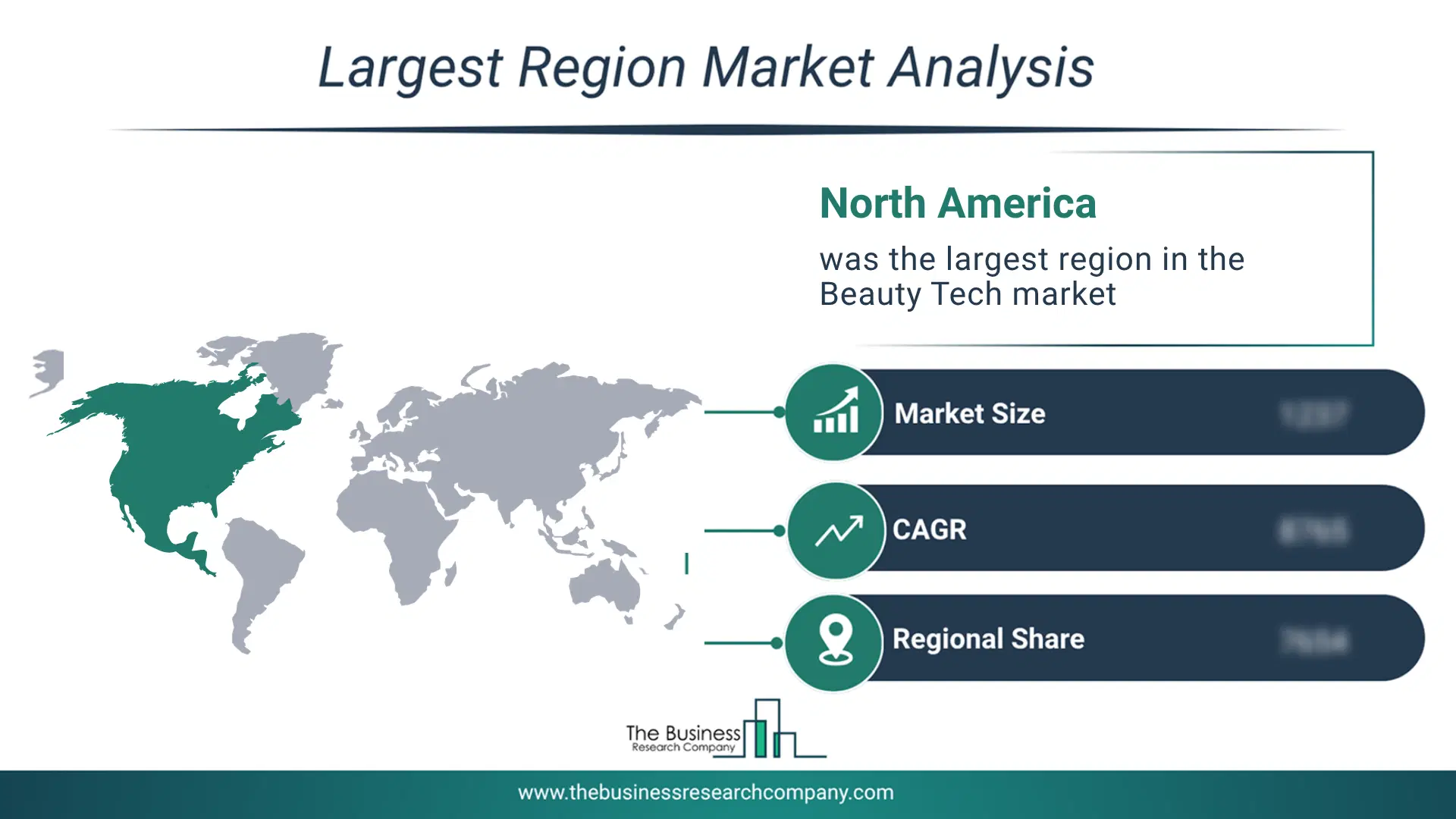
Regional Outlook
North America was the largest region in the beauty tech market in 2025. Asia-Pacific is expected to be the fastest-growing region in the forecast period. The regions covered in this market report are Asia-Pacific, South East Asia, Western Europe, Eastern Europe, North America, South America, Middle East, Africa. The countries covered in this market report are Australia, Brazil, China, France, Germany, India, Indonesia, Japan, Taiwan, Russia, South Korea, UK, USA, Canada, Italy, SpainWhat Defines the Beauty Tech Market?
The beauty tech market consists of revenues earned by entities providing services such as virtual beauty consultations, skincare analysis, and virtual makeup try-on services. The market value includes the value of related goods sold by the service provider or included within the service offering. The beauty tech market also includes sales of smart skincare devices, connected beauty mirrors, and beauty tech wearables. Values in this market are ‘factory gate’ values, that is, the value of goods sold by the manufacturers or creators of the goods, whether to other entities (including downstream manufacturers, wholesalers, distributors and retailers) or directly to end customers. The value of goods in this market includes related services sold by the creators of the goods.How is Market Value Defined and Measured?
The market value is defined as the revenues that enterprises gain from the sale of goods and/or services within the specified market and geography through sales, grants, or donations in terms of the currency (in USD unless otherwise specified). The revenues for a specified geography are consumption values that are revenues generated by organizations in the specified geography within the market, irrespective of where they are produced. It does not include revenues from resales along the supply chain, either further along the supply chain or as part of other products.
This chart presents market attractiveness based on a quantitative evaluation of growth, competition, strategic alignment, and risk, offering a clear view of opportunity areas for decision-making. This chart is for illustrative purposes; the full report contains the complete analysis.

This chart highlights the Total Addressable Market (TAM) by estimating the maximum revenue opportunity using an assumption-driven approach, supporting strategic planning and opportunity sizing across markets. The chart is illustrative; the full report provides a more comprehensive analysis.
What Key Data and Analysis Are Included in the Beauty Tech Market Report 2026?
The beauty tech market research report is one of a series of new reports from The Business Research Company that provides market statistics, including industry global market size, regional shares, competitors with the market share, detailed market segments, market trends and opportunities, and any further data you may need to thrive in the beauty tech industry. The market research report delivers a complete perspective of everything you need, with an in-depth analysis of the current and future state of the industry.Beauty Tech Market Report Forecast Analysis
| Report Attribute | Details |
|---|---|
| Market Size Value In 2026 | $89.94 billion |
| Revenue Forecast In 2030 | $146.04 billion |
| Growth Rate | CAGR of 13.3% from 2026 to 2030 |
| Base Year For Estimation | 2025 |
| Actual Estimates/Historical Data | 2020-2025 |
| Forecast Period | 2026 - 2030 |
| Market Representation | Revenue in USD Billion and CAGR from 2026 to 2030 |
| Segments Covered | Type, Portability, Mode Of Operation, Distribution Channel, Application |
| Regional Scope | Asia-Pacific, Western Europe, Eastern Europe, North America, South America, Middle East, Africa |
| Country Scope | The countries covered in the report are Australia, Brazil, China, France, Germany, India, Indonesia, Japan, Taiwan, Russia, South Korea, UK, USA, Canada, Italy, Spain. |
| Key Companies Profiled | Panasonic Corporation, Dyson Limited, Koninklijke Philips N.V., Xiaomi Corporation, Hitachi Ltd, Ya-Man Ltd, Foreo AB, Tria Beauty Inc., Nu Skin Enterprises Inc., L'Oréal S.A., Shiseido Company Limited, Johnson & Johnson, The Procter & Gamble Company, Beiersdorf AG, Amorepacific Corporation, Conair Corporation, FKA Brands Inc, MTG Co Ltd, Kao Corporation, Coty Inc. |
| Customization Scope | Request for Customization |
| Pricing And Purchase Options | Explore Purchase Options |