

Benign Prostatic Hyperplasia Treatment Market Report 2026
Global Outlook – By Treatment (Minimal Invasive Surgery, Invasive Surgery), By Therapeutic Class (Alpha Blockers, 5-Alpha Reductase Inhibitors, Phosphodiesterase-5 Inhibitors, Other Therapeutic classes), By End User (Home Healthcare, Hospitals And Clinics) - Market Size, Trends, Strategies, and Forecast to 2030
Benign Prostatic Hyperplasia Treatment Market Overview
• Benign Prostatic Hyperplasia Treatment market size has reached to $8.69 billion in 2025 • Expected to grow to $11.29 billion in 2030 at a compound annual growth rate (CAGR) of 5.3% • Growth Driver: Rising Adoption Of Minimally Invasive Surgeries Driving Growth In BPH Treatment • Market Trend: Minimally Invasive Drug-Eluting Therapies Transforming Treatment • North America was the largest region in 2025 and Asia-Pacific is the fastest growing region.What Is Covered Under Benign Prostatic Hyperplasia Treatment Market?
Benign prostatic hyperplasia (BPH) treatment refers to medical, minimally invasive, and surgical approaches used to manage the symptoms of an enlarged prostate. BPH is a common condition in aging men, leading to urinary issues such as frequent urination, weak stream, and incomplete bladder emptying. The main treatments of benign prostatic hyperplasia (BPH) include minimally invasive surgery (MIS) and invasive surgery. Minimally Invasive Surgery (MIS) refers to surgical techniques that use small incisions, specialized instruments, and advanced imaging technology to perform procedures with minimal trauma to the body. The therapeutic classes for BPH treatment include alpha blockers, 5-alpha reductase inhibitors, phosphodiesterase-5 inhibitors, and other therapeutic classes. These treatments cater to various end users, including home healthcare, hospitals and clinics, as well as research and manufacturing facilities.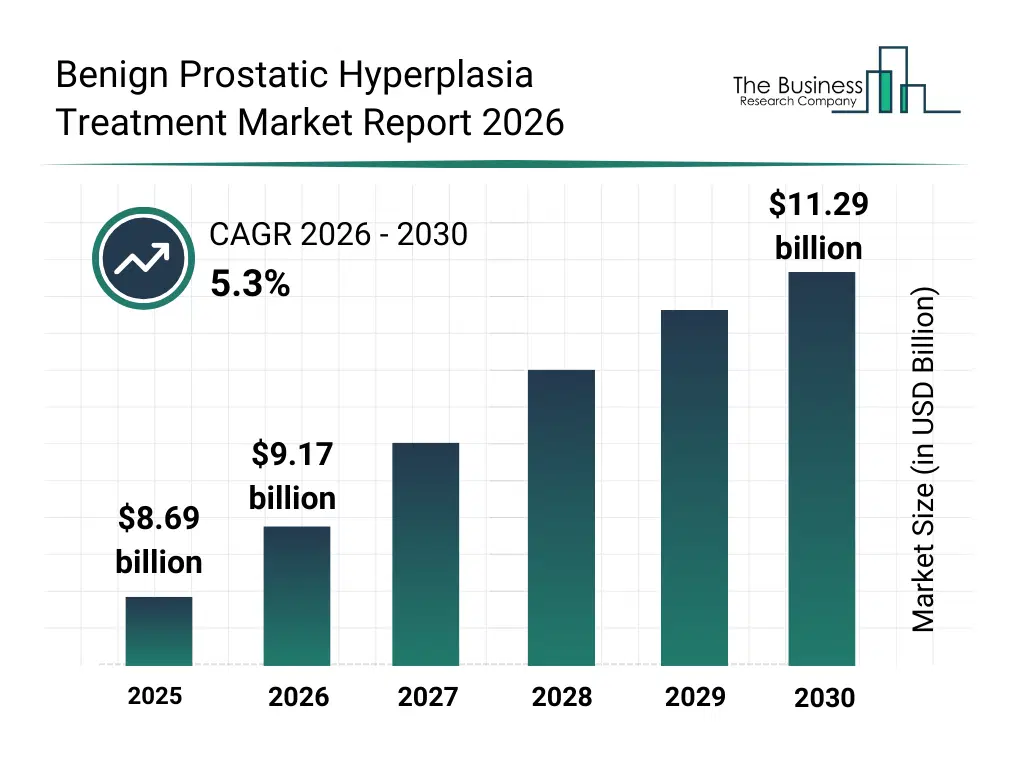
What Is The Benign Prostatic Hyperplasia Treatment Market Size and Share 2026?
The benign prostatic hyperplasia treatment market size has grown strongly in recent years. It will grow from $8.69 billion in 2025 to $9.17 billion in 2026 at a compound annual growth rate (CAGR) of 5.6%. The growth in the historic period can be attributed to increasing aging male population, rising prevalence of urinary disorders, expansion of urology specialty services, growing use of pharmacological treatments, improved access to diagnostic screening.What Is The Benign Prostatic Hyperplasia Treatment Market Growth Forecast?
The benign prostatic hyperplasia treatment market size is expected to see strong growth in the next few years. It will grow to $11.29 billion in 2030 at a compound annual growth rate (CAGR) of 5.3%. The growth in the forecast period can be attributed to increasing adoption of robotic-assisted prostate procedures, rising focus on personalized treatment planning, expansion of home-based therapy options, growing integration of digital patient monitoring tools, increasing demand for minimally invasive interventions. Major trends in the forecast period include increasing adoption of minimally invasive surgical techniques, rising demand for targeted drug therapies, growing use of combination treatment approaches, expansion of outpatient treatment settings, enhanced focus on symptom management and quality of life.
Global Benign Prostatic Hyperplasia Treatment Market Segmentation
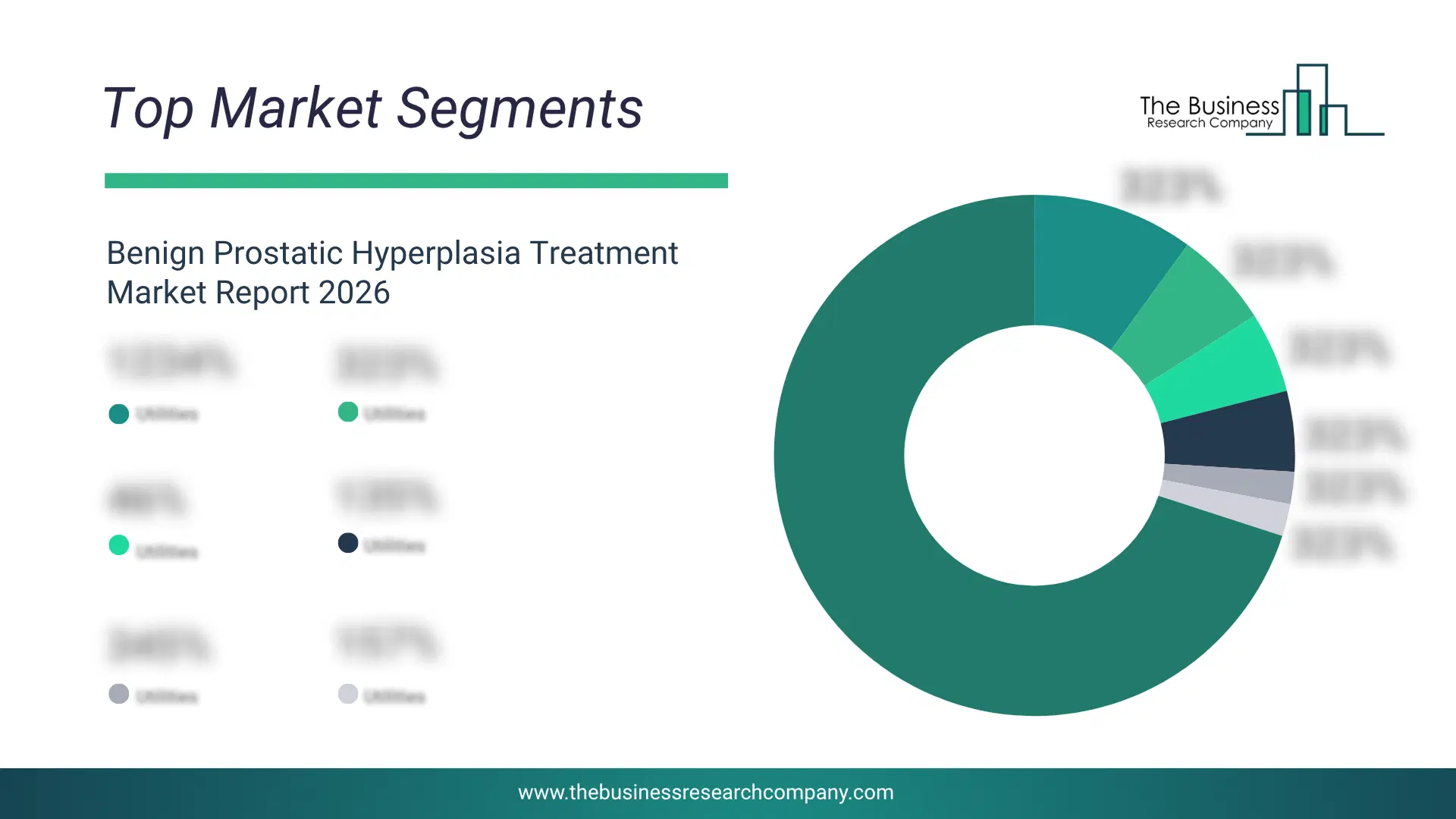
1) By Treatment: Minimal Invasive Surgery, Invasive Surgery 2) By Therapeutic Class: Alpha Blockers, 5-Alpha Reductase Inhibitors, Phosphodiesterase-5 Inhibitors, Other Therapeutic classes 3) By End User: Home Healthcare, Hospitals And Clinics Subsegments: 1) By Minimal Invasive Surgery: Transurethral Resection of the Prostate (TURP), Laser Surgery, Prostatic Urethral Lift, Transurethral Incision of the Prostate (TUIP), Microwave Therapy 2) By Invasive Surgery: Open Prostatectomy, Robotic ProstatectomyWhat Is The Driver Of The Benign Prostatic Hyperplasia Treatment Market?
The rise in adoption of minimally invasive surgeries is expected to propel the growth of the benign prostatic hyperplasia treatment market going forward. Minimally invasive surgeries are procedures that involve small incisions or no incisions at all, using specialized instruments to reduce recovery time, pain, and risk of complications. The rise in adoption of minimally invasive surgeries is driven by benefits such as shorter recovery times, reduced pain, lower risk of complications, and improved cosmetic outcomes. Benign prostatic hyperplasia treatment through minimally invasive surgeries provides patients with reduced recovery times, lower risks of complications, and effective symptom relief, enhancing overall surgical outcomes. For instance, in September 2023, according to the American Society of Plastic Surgeons (ASPS), a U.S.-based professional association, there were nearly 25.4 million minimally invasive cosmetic procedures performed in 2023, up 7% from 23.7 million in 2022. Therefore, the rise in adoption of minimally invasive surgeries is driving the growth of the benign prostatic hyperplasia treatment industry.Key Players In The Global Benign Prostatic Hyperplasia Treatment Market
Major companies operating in the benign prostatic hyperplasia treatment market are Astellas Pharma Inc., Bayer AG, Pfizer Inc., Merck & Co Inc., Eli Lilly and Company, AbbVie Inc., Teva Pharmaceutical Industries Ltd., Boehringer Ingelheim, Sanofi S.A., Boston Scientific Corporation, Olympus Corporation, Teleflex Incorporated, Cook Medical Incorporated, Coloplast Group, Medtronic Public Limited Company, Urovant Sciences Ltd., UroGen Pharma Ltd., Urologix Inc., Zenflow Inc., HistoSonics Inc.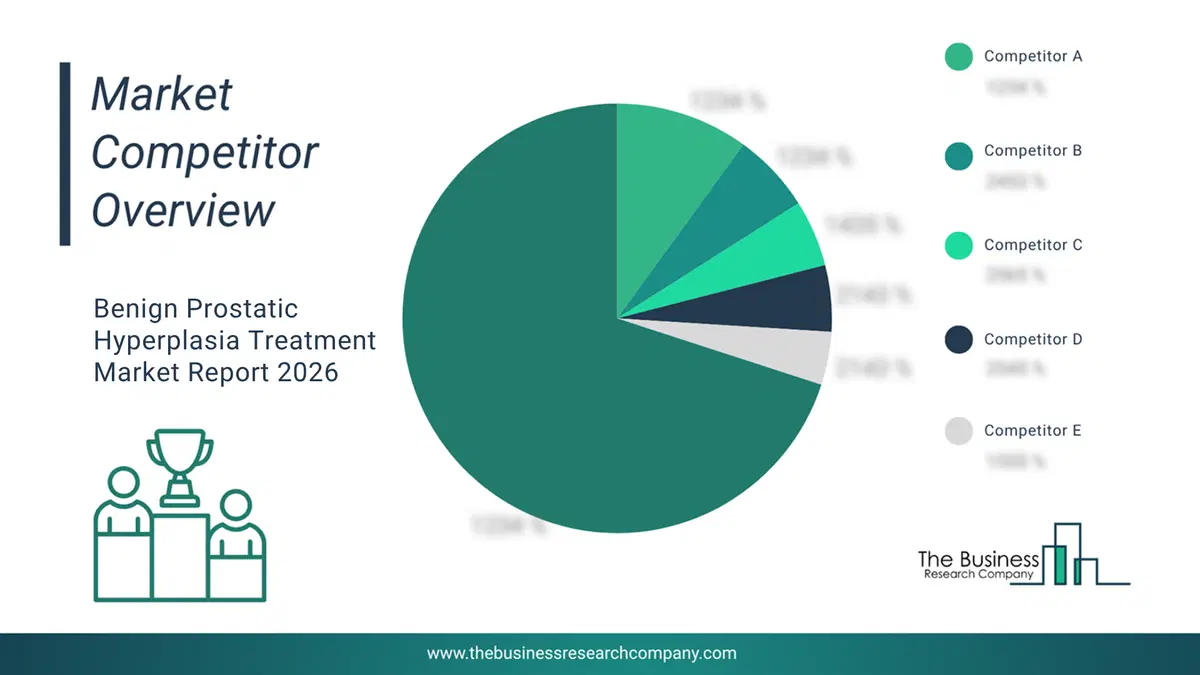
This chart is for illustrative purposes; the full report includes a detailed competitor analysis and comprehensive overview of the top 10 companies in the market.
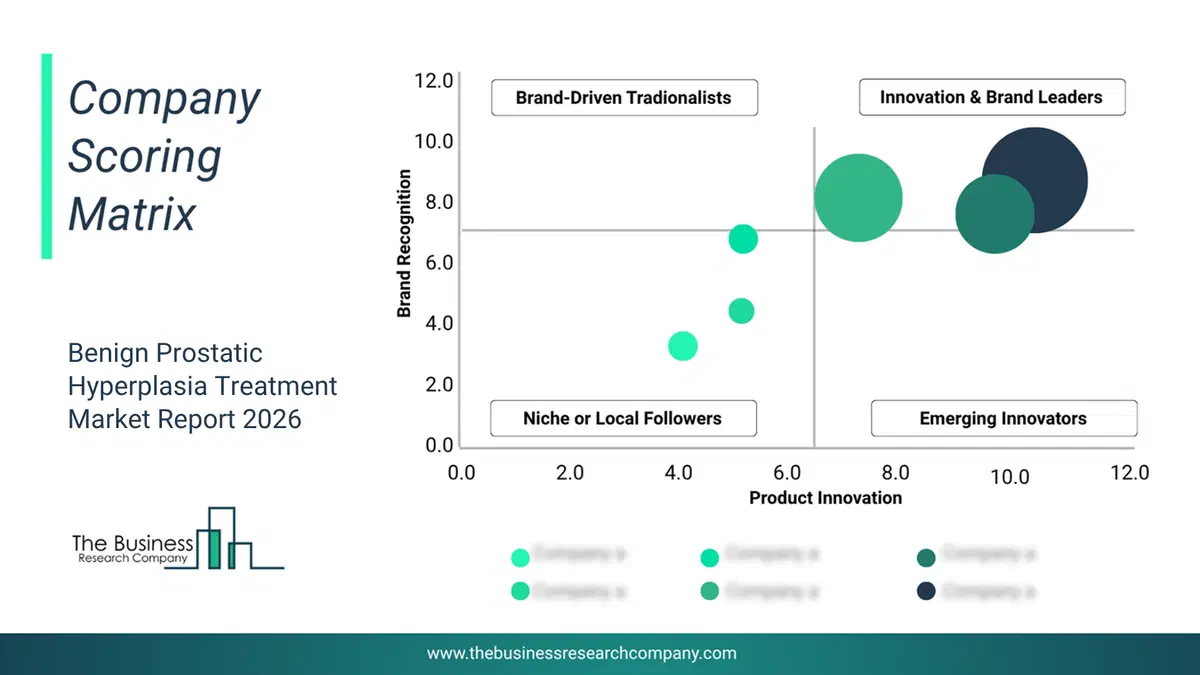
This chart maps companies by product innovation and brand strength, with bubble size indicating relative revenue, helping identify market leaders, challengers, and niche players. This is an illustrative chart; the full report provides a complete and accurate competitive analysis.
Global Benign Prostatic Hyperplasia Treatment Market Trends and Insights
Major companies operating in the benign prostatic hyperplasia treatment market are focusing on the development of innovative solutions, such as intraprostatic drug elution therapy, to gain a competitive advantage. Intraprostatic drug elution therapy involves placing a bioabsorbable implant directly into the prostate to locally deliver a therapeutic agent over time. For instance, in May 2025, Resurge Therapeutics, a US-based urology technology developer, introduced a paclitaxel-eluting bioabsorbable implant for BPH; it offers office-based deployment, targeted drug release, and minimal pain post-procedure. This localized delivery reduces systemic exposure, enhances efficacy, and preserves sexual function. However, long-term safety and large-scale adoption remain under evaluation.What Are Latest Mergers And Acquisitions In The Benign Prostatic Hyperplasia Treatment Market?
In October 2023, Laborie Medical Technologies, Inc., a US-based medical technology company, acquired Urotronic for $600 million. With this acquisition, Laborie Medical Technologies aims to expand its interventional urology portfolio, enhance its technological capabilities, and strengthen its global market position in minimally invasive urological treatments. Urotronic, Inc. is a US-based medical device company that specifically develops and markets a minimally invasive treatment for benign prostatic hyperplasia (BPH).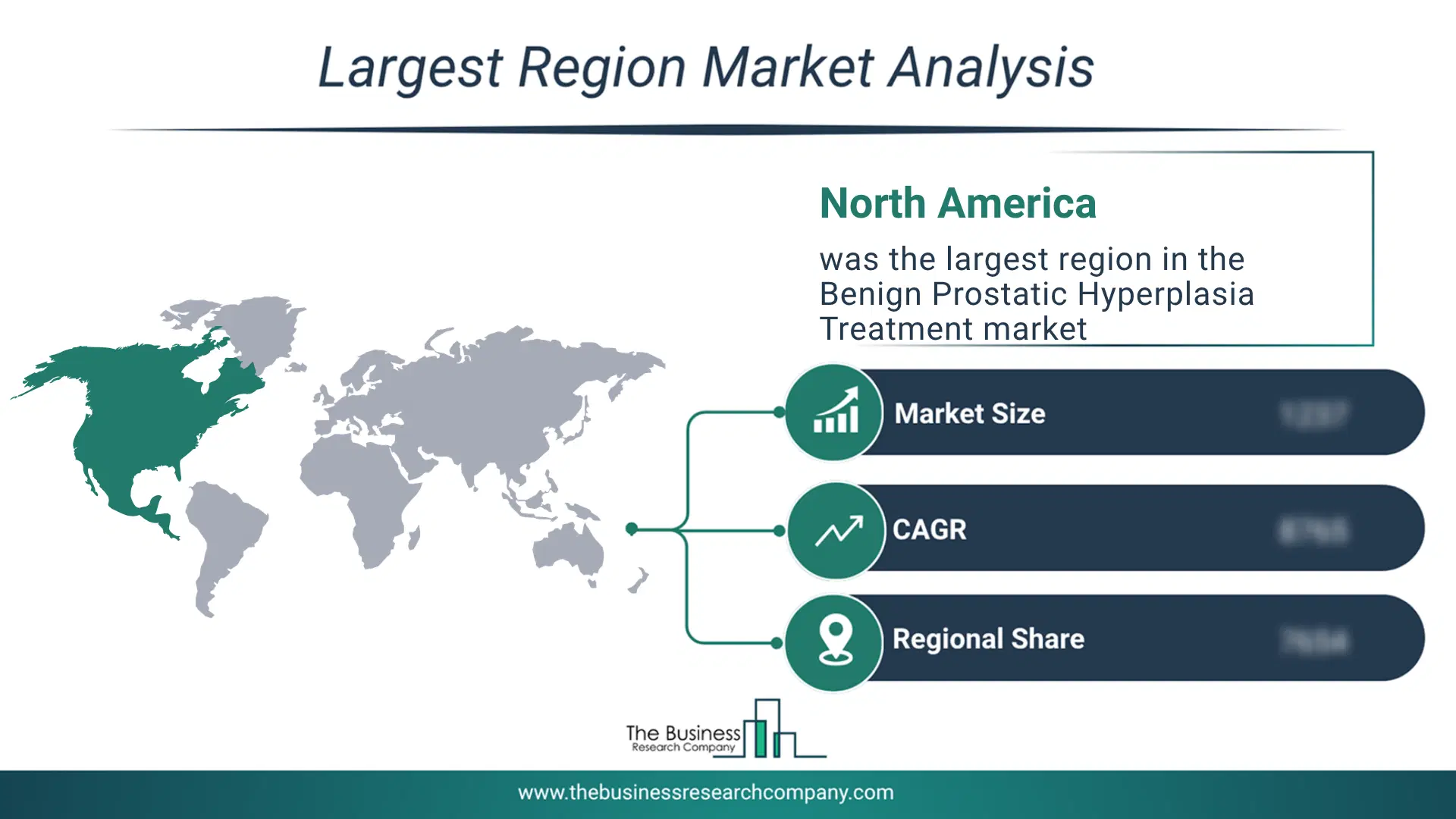
Regional Outlook
North America was the largest region in the benign prostatic hyperplasia treatment market in 2025. Asia-Pacific is expected to be the fastest-growing region in the forecast period. The regions covered in this market report are Asia-Pacific, South East Asia, Western Europe, Eastern Europe, North America, South America, Middle East, Africa. The countries covered in this market report are Australia, Brazil, China, France, Germany, India, Indonesia, Japan, Taiwan, Russia, South Korea, UK, USA, Canada, Italy, Spain.What Defines the Benign Prostatic Hyperplasia Treatment Market?
The benign prostatic hyperplasia treatment market consists of revenues earned by entities by providing services such as pharmacological treatments, minimally invasive procedures, surgical treatments, diagnostic services, and prostatic stents. The market value includes the value of related goods sold by the service provider or included within the service offering. The benign prostatic hyperplasia treatment market also includes sales of transurethral microwave thermotherapy, prostatic urethral lift, acupuncture, combination therapy, phosphodiesterase-5 inhibitors, and minimally invasive devices. Values in this market are ‘factory gate’ values, that is, the value of goods sold by the manufacturers or creators of the goods, whether to other entities (including downstream manufacturers, wholesalers, distributors, and retailers) or directly to end customers. The value of goods in this market includes related services sold by the creators of the goods.How is Market Value Defined and Measured?
The market value is defined as the revenues that enterprises gain from the sale of goods and/or services within the specified market and geography through sales, grants, or donations in terms of the currency (in USD unless otherwise specified). The revenues for a specified geography are consumption values that are revenues generated by organizations in the specified geography within the market, irrespective of where they are produced. It does not include revenues from resales along the supply chain, either further along the supply chain or as part of other products.
This chart presents market attractiveness based on a quantitative evaluation of growth, competition, strategic alignment, and risk, offering a clear view of opportunity areas for decision-making. This chart is for illustrative purposes; the full report contains the complete analysis.

This chart highlights the Total Addressable Market (TAM) by estimating the maximum revenue opportunity using an assumption-driven approach, supporting strategic planning and opportunity sizing across markets. The chart is illustrative; the full report provides a more comprehensive analysis.
What Key Data and Analysis Are Included in the Benign Prostatic Hyperplasia Treatment Market Report 2026?
The benign prostatic hyperplasia treatment market research report is one of a series of new reports from The Business Research Company that provides market statistics, including industry global market size, regional shares, competitors with the market share, detailed market segments, market trends and opportunities, and any further data you may need to thrive in the benign prostatic hyperplasia treatment industry. The market research report delivers a complete perspective of everything you need, with an in-depth analysis of the current and future state of the industry.Benign Prostatic Hyperplasia Treatment Market Report Forecast Analysis
| Report Attribute | Details |
|---|---|
| Market Size Value In 2026 | $9.17 billion |
| Revenue Forecast In 2030 | $11.29 billion |
| Growth Rate | CAGR of 5.3% from 2026 to 2030 |
| Base Year For Estimation | 2025 |
| Actual Estimates/Historical Data | 2020-2025 |
| Forecast Period | 2026 - 2030 |
| Market Representation | Revenue in USD Billion and CAGR from 2026 to 2030 |
| Segments Covered | Treatment, Therapeutic Class, End User |
| Regional Scope | Asia-Pacific, Western Europe, Eastern Europe, North America, South America, Middle East, Africa |
| Country Scope | The countries covered in the report are Australia, Brazil, China, France, Germany, India, Indonesia, Japan, Taiwan, Russia, South Korea, UK, USA, Canada, Italy, Spain |
| Key Companies Profiled | Astellas Pharma Inc., Bayer AG, Pfizer Inc., Merck & Co Inc., Eli Lilly and Company, AbbVie Inc., Teva Pharmaceutical Industries Ltd., Boehringer Ingelheim, Sanofi S.A., Boston Scientific Corporation, Olympus Corporation, Teleflex Incorporated, Cook Medical Incorporated, Coloplast Group, Medtronic Public Limited Company, Urovant Sciences Ltd., UroGen Pharma Ltd., Urologix Inc., Zenflow Inc., HistoSonics Inc. |
| Customization Scope | Request for Customization |
| Pricing And Purchase Options | Explore Purchase Options |