
Bi-Specific MAbS Market Report 2026
Global Outlook – By Drug (Catumaxomab (Removab), Blinatumomab, Duligotumab, Emicizumab, Amivantamab, Faricimab, Teclistamab), By Product Type (In Vivo, In Vitro), By Indication (Cancer, Haemophilia A, Ophthalmic), By End Use (Hospitals, Research Institutes, Other End-Users) – Market Size, Trends, Strategies, and Forecast to 2030
Bi-Specific MAbS Market Overview
• Bi-Specific MAbS market size has reached to $11.64 billion in 2025 • Expected to grow to $21.83 billion in 2030 at a compound annual growth rate (CAGR) of 13.5% • Growth Driver: Impact Of Increasing Cancer Prevalence On The Bi-Specific MAbs Market • Market Trend: Advancement Of CD20×CD3 T-Cell Engaging Antibodies Delivering Fixed-Duration And Durable Immunotherapy Outcomes In Hematologic Malignancies • North America was the largest region in 2025.What Is Covered Under Bi-Specific MAbS Market?
Bi-specific MAbs or bispecific monoclonal antibodies refer to antibodies that have two binding sites and are designed to bind to two antigens that are either distinct or have two different epitopes. Monoclonal antibodies (MoAbs) do not have the clinical therapeutic effects of BsAbs, which have a wide range of applications for the treatment of different diseases as well as tumor immunotherapy. The main types of bi-specific are catumaxomab (removal), blinatumomab, duligotumab, and SAR 156597. Catumaxomab is a rat-mouse hybrid monoclonal antibody used to treat malignant ascites, a condition that occurs in people who have metastasizing cancer. The various product types including in vivo, and in vitro are used for the treatment of cancer, autoimmune diseases, inflammatory diseases, infectious diseases, microbial diseases, and others. The bispecific monoclonal antibodies are used by hospitals, research institutes, and others.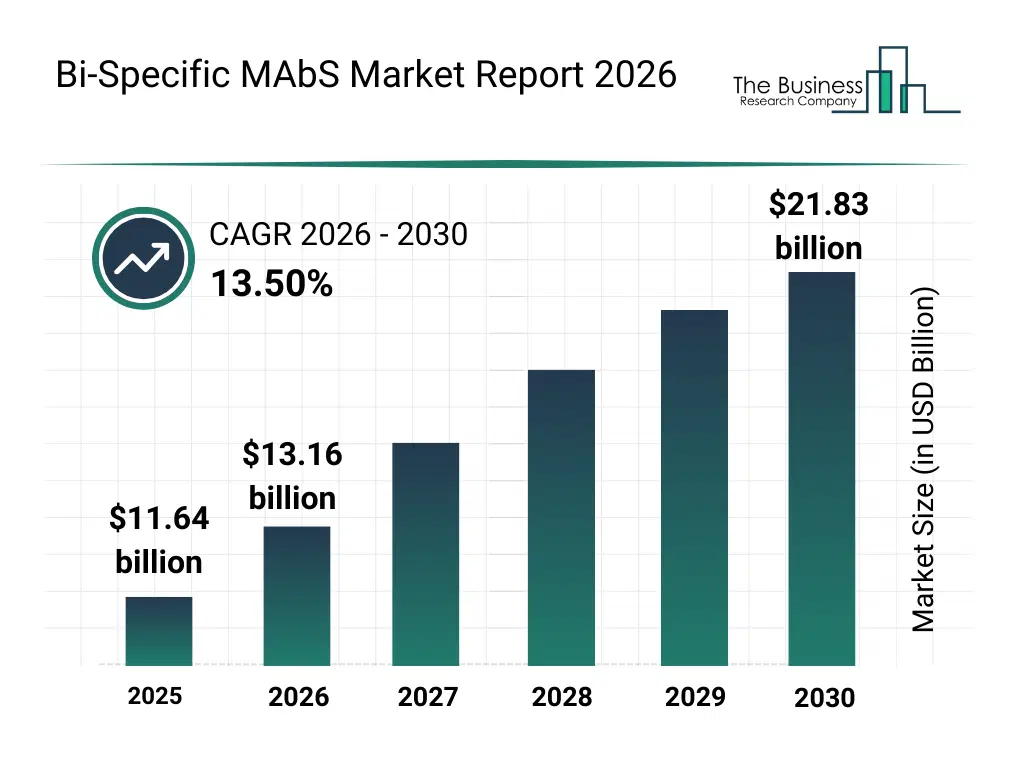
What Is The Bi-Specific MAbS Market Size and Share 2026?
The bi-specific mabs market size has grown rapidly in recent years. It will grow from $11.64 billion in 2025 to $13.16 billion in 2026 at a compound annual growth rate (CAGR) of 13.0%. The growth in the historic period can be attributed to approval of first bsabs therapies, growing incidence of hematological cancers, early adoption of monoclonal antibodies, investment in oncology r&d, rise in hospital-based clinical trials.What Is The Bi-Specific MAbS Market Growth Forecast?
The bi-specific mabs market size is expected to see rapid growth in the next few years. It will grow to $21.83 billion in 2030 at a compound annual growth rate (CAGR) of 13.5%. The growth in the forecast period can be attributed to advancements in gene and cell therapy integration, expansion of bsabs pipeline, increased r&d funding for rare diseases, growth in precision medicine adoption, emergence of novel bsabs delivery platforms. Major trends in the forecast period include expansion of tumor immunotherapy applications, development of multi-targeted bi-specific antibodies, growth in hemophilia and rare disease treatments, advancements in in vitro and in vivo platforms, rising collaborations between pharma and biotech firms.
Global Bi-Specific MAbS Market Segmentation
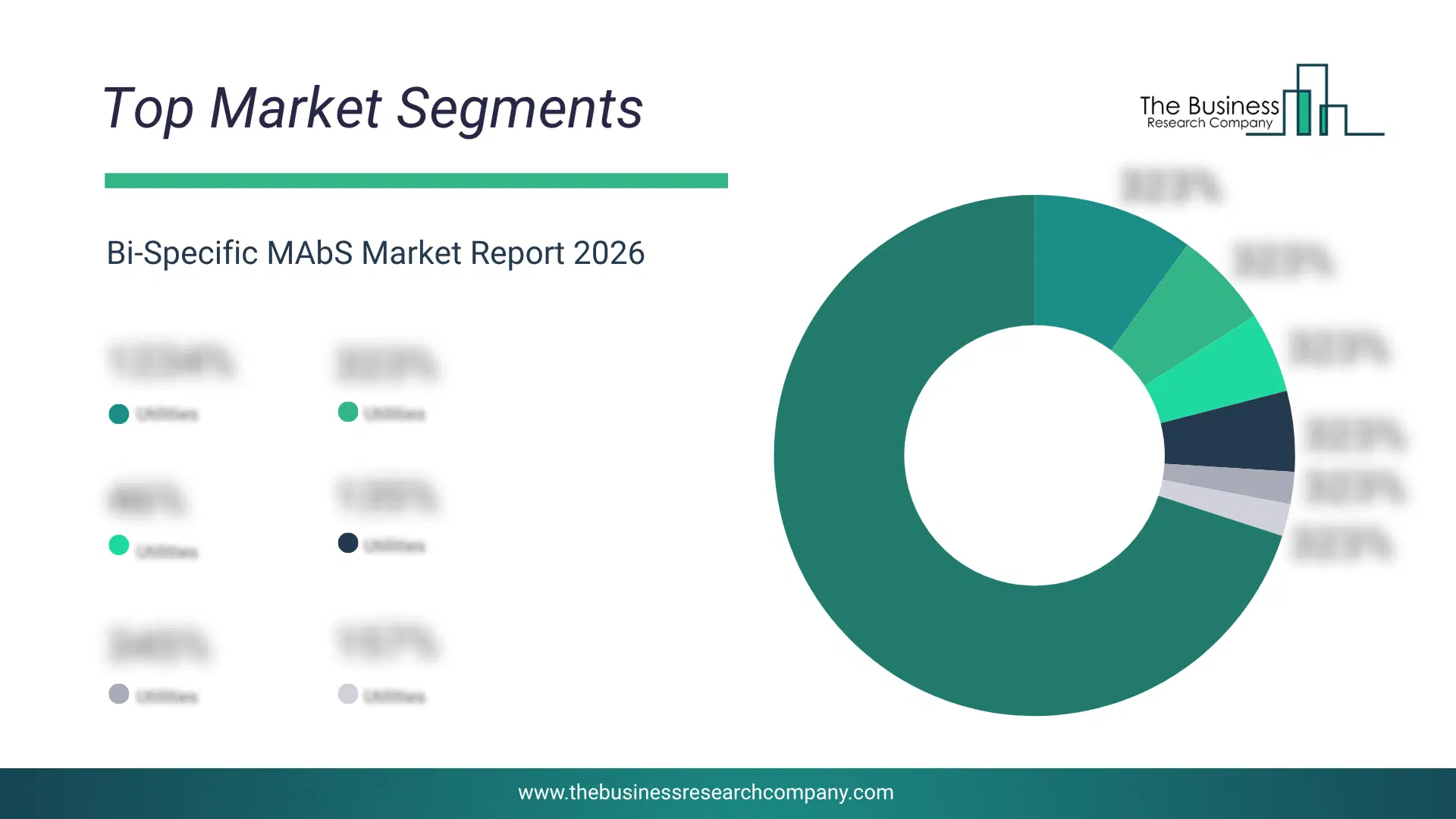
1) By Drug: Catumaxomab (Removab), Blinatumomab, Duligotumab, Emicizumab, Amivantamab, Faricimab, Teclistamab 2) By Product Type: In Vivo, In Vitro 3) By Indication: Cancer, Haemophilia A, Ophthalmic 4) By End Use: Hospitals, Research Institutes, Other End-Users Subsegments: 1) By Catumaxomab (Removab): Cancer Therapy, Targeting EpCAM and CD3 2) By Blinatumomab: Acute Lymphoblastic Leukemia (ALL) Treatment, Targeting CD19 and CD3 3) By Duligotumab: Oncology Treatments, Targeting Epidermal Growth Factor Receptor (EGFR) 4) By Emicizumab: Hemophilia A Treatment, Targeting Factor IXa and Factor X 5) By Amivantamab: Non-Small Cell Lung Cancer (NSCLC) Therapy, Targeting EGFR And MET 6) By Faricimab: Ophthalmology Treatment (Wet Age-related Macular Degeneration, Diabetic Macular Edema), Targeting Angiopoietin-2 And VEGF-A 7) By Teclistamab: Multiple Myeloma Treatment, Targeting BCMA and CD3What Is The Driver Of The Bi-Specific MAbS Market?
The increasing prevalence of cancer and other chronic diseases is projected to contribute to the growth of the bispecific monoclonal antibodies market over the forecast period. Bispecific monoclonal antibodies are developed for the treatment of various cancers, infectious diseases, central nervous system disorders, and autoimmune disorders. Bispecific monoclonal antibodies are considered to be more effective than monoclonal antibodies (moAbs) as these target two or more tumor antigens on cells to disrupt cancer progression. For instance, in 2023, according to the Cancer Facts & Figures 2023 report published by the American Cancer Society (ACS), a US-based voluntary health organization, there will be an estimated 609,820 cancer-related deaths in the USA. Therefore, a rising number of chronic diseases, including cancer, is anticipated to propel the demand for bi-specific MAbs to treat these diseases effectively.Key Players In The Global Bi-Specific MAbS Market
Major companies operating in the bi-specific mabs market are F. Hoffmann-La Roche AG, Amgen Inc, Johnson & Johnson, Kyowa Kirin, Zai Lab, Alphamab Oncology, Celldex Therapeutics, Biocon, EpimAb Biotherapeutics, ABL Bio, Takeda Pharmaceuticals, Innovent Biologics, Merck & Co Inc, Eli Lilly Company Inc., AbbVie Inc, Bayer AG, Pfizer Inc, Novartis AG, GlaxoSmithKline, AstraZeneca, Cytiva, Bristol Myers Squibb, AbCellera, BioMarin Pharmaceuticals, Sanofi S.A., Novo Nordisk A/S, Aspen Pharmacare, Baxter International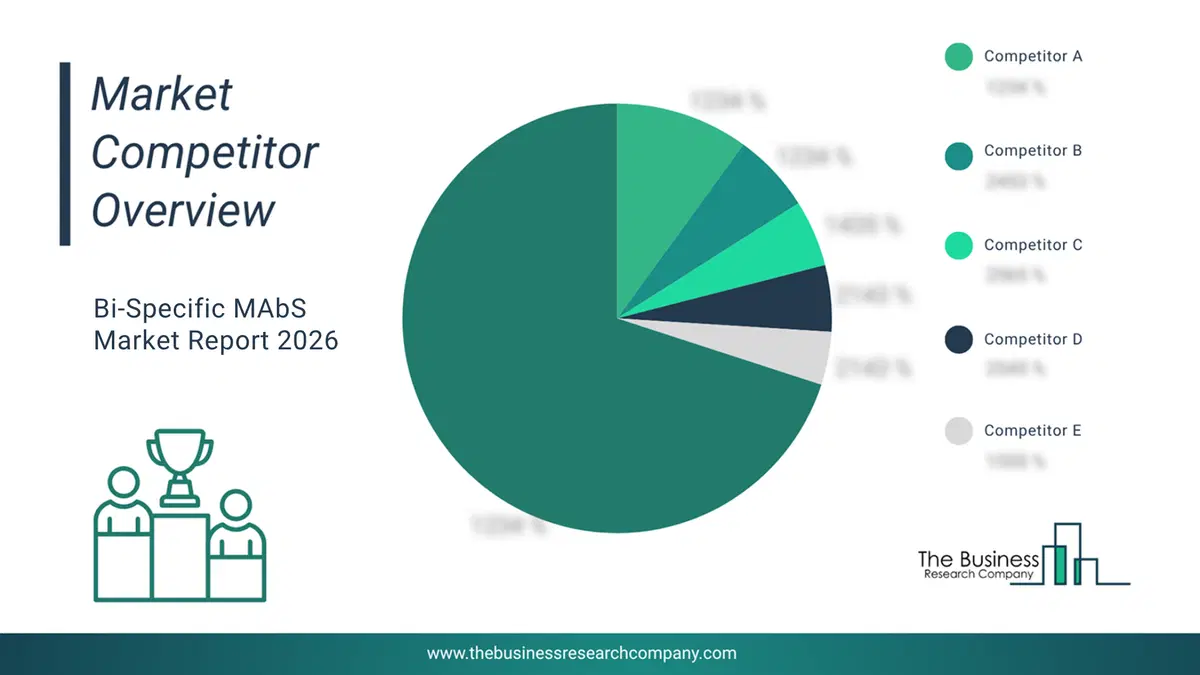
This chart is for illustrative purposes; the full report includes a detailed competitor analysis and comprehensive overview of the top 10 companies in the market.
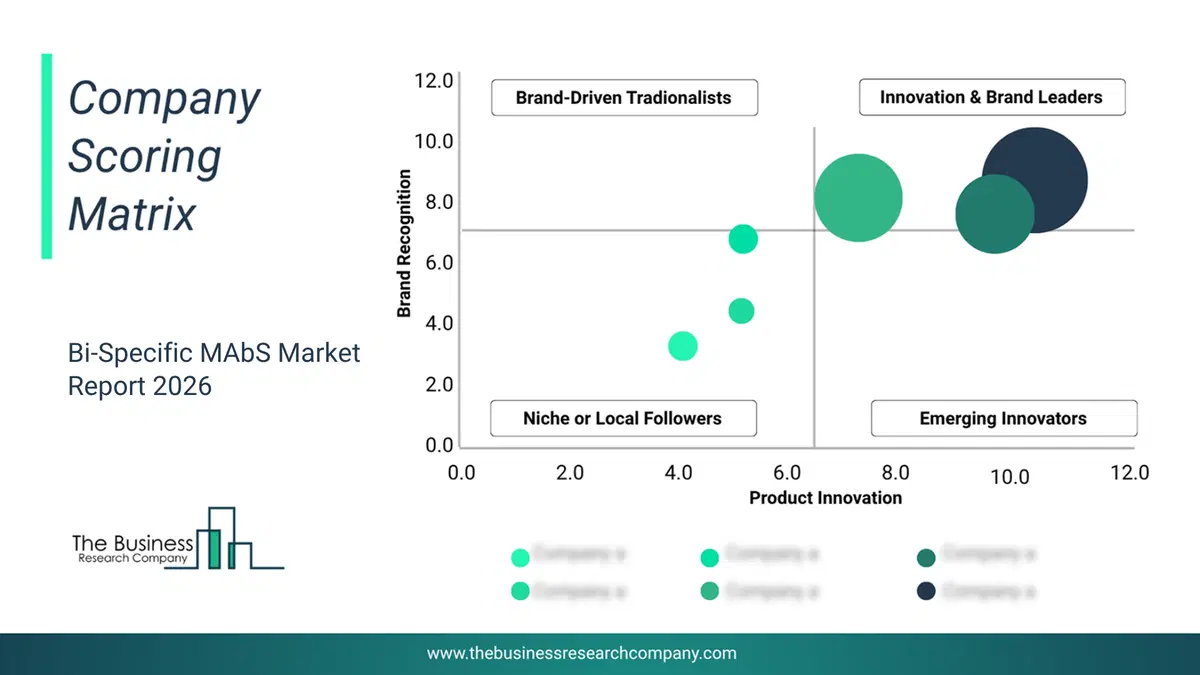
This chart maps companies by product innovation and brand strength, with bubble size indicating relative revenue, helping identify market leaders, challengers, and niche players. This is an illustrative chart; the full report provides a complete and accurate competitive analysis.
Global Bi-Specific MAbS Market Trends and Insights
Major companies operating in the bi‑specific mAbs market are focusing on technological advancements, such as CD20 × CD3 T‑cell engaging bispecific antibodies, to meet the rising demand for more effective, off‑the‑shelf immunotherapies in hematological malignancies that offer fixed-duration treatment courses. A CD20 × CD3 bispecific antibody is engineered to bring T cells in close proximity to B cells by binding CD3 on T cells and CD20 on B cells, thereby activating T-cell–mediated killing of malignant B cells; unlike traditional monoclonal antibodies that target only B cells (or only T-cell checkpoints), this design harnesses immune effector function in a highly directed way. For instance, in June 2023, Roche AG, a Switzerland‑based biopharmaceutical company, launched Columvi (glofitamab‑gxbm), a CD20×CD3 bispecific T-cell engager. Columvi has a novel 2:1 structural format (two CD20-binding domains and one CD3-binding domain), is given as a fixed-duration (approximately 8.5‑month) therapy, and is designed to provide durable responses in patients with relapsed or refractory diffuse large B-cell lymphoma (DLBCL). Its fixed-duration regimen offers the potential for a treatment-free period post-therapy, distinguishing it from continuous treatment approaches, and it has shown strong efficacy in clinical trials with manageable safety.What Are Latest Mergers And Acquisitions In The Bi-Specific MAbS Market?
In June 2024, Johnson & Johnson, a US-based pharmaceutical company, acquired Proteologix, Inc. for $850 million. This strategic acquisition enables Johnson & Johnson to integrate two promising bispecific antibodies, PX-128 and PX-130, targeting key pathways in conditions like atopic dermatitis and asthma. It bolsters J&J's immunology expertise while advancing its commitment to innovative care. The deal also provides access to further bispecific antibody programs, enhancing treatment for chronic conditions. Proteologix, Inc. is a US-based company involved in developing bispecific antibodies.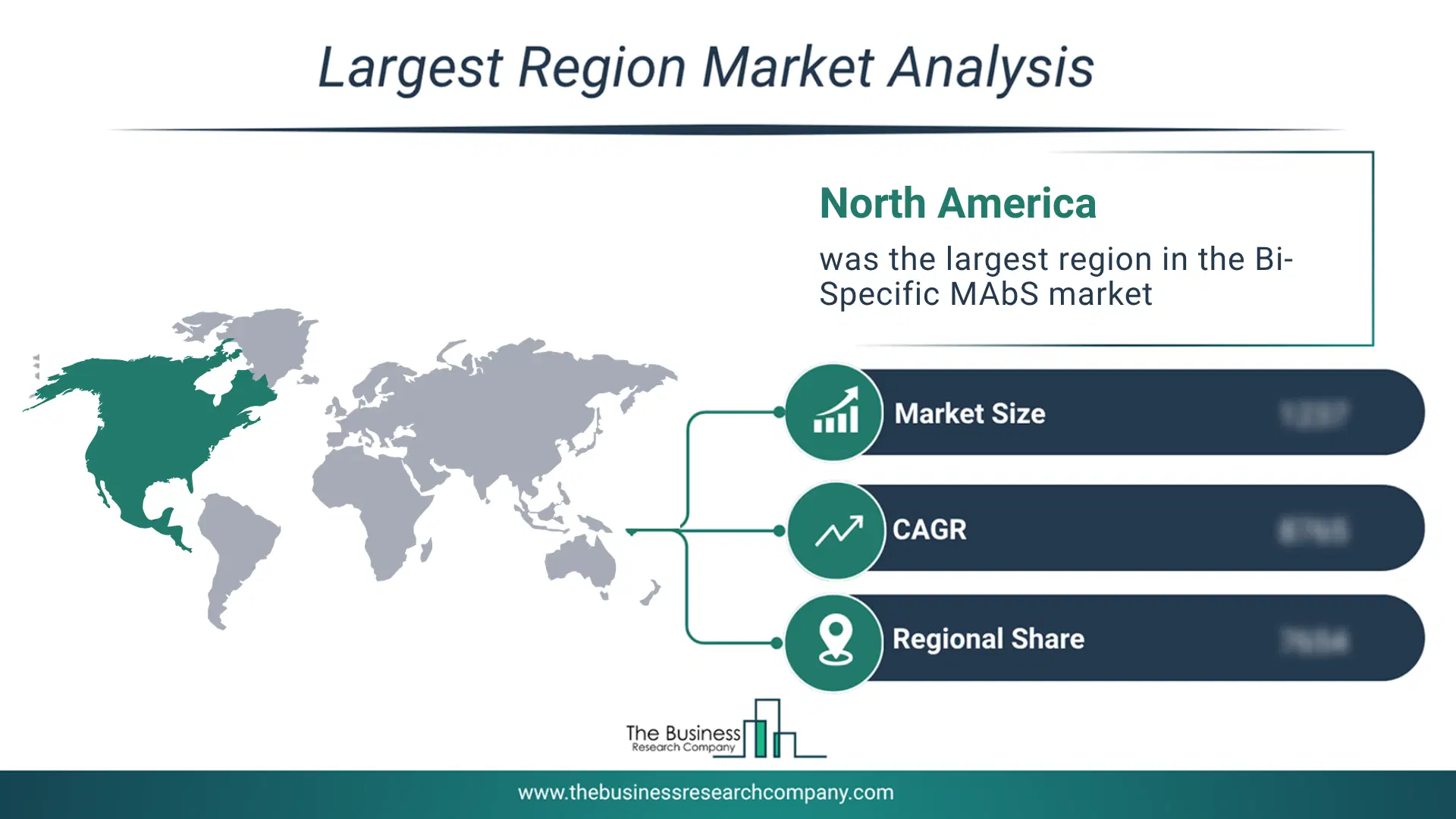
Regional Insights
North America was the largest region in the bi-specific MAbs market in 2025. The regions covered in this market report are Asia-Pacific, South East Asia, Western Europe, Eastern Europe, North America, South America, Middle East, Africa. The countries covered in this market report are Australia, Brazil, China, France, Germany, India, Indonesia, Japan, Taiwan, Russia, South Korea, UK, USA, Canada, Italy, Spain.What Defines the Bi-Specific MAbS Market?
The bi-specific MAbs or bispecific monoclonal antibodies market consists of sales of trifunctional antibodies, chemically linked Fabs, and bispecific T cell engagers. Values in this market are factory gate values, that is the value of goods sold by the manufacturers or creators of the goods, whether to other entities (including downstream manufacturers, wholesalers, distributors and retailers) or directly to end customers. The value of goods in this market includes related services sold by the creators of the goods.How is Market Value Defined and Measured?
The market value is defined as the revenues that enterprises gain from the sale of goods and/or services within the specified market and geography through sales, grants, or donations in terms of the currency (in USD unless otherwise specified). The revenues for a specified geography are consumption values that are revenues generated by organizations in the specified geography within the market, irrespective of where they are produced. It does not include revenues from resales along the supply chain, either further along the supply chain or as part of other products.
This chart presents market attractiveness based on a quantitative evaluation of growth, competition, strategic alignment, and risk, offering a clear view of opportunity areas for decision-making. This chart is for illustrative purposes; the full report contains the complete analysis.

This chart highlights the Total Addressable Market (TAM) by estimating the maximum revenue opportunity using an assumption-driven approach, supporting strategic planning and opportunity sizing across markets. The chart is illustrative; the full report provides a more comprehensive analysis.
What Key Data and Analysis Are Included in the Bi-Specific MAbS Market Report 2026?
The bi-specific mabs market research report is one of a series of new reports from The Business Research Company that provides market statistics, including industry global market size, regional shares, competitors with the market share, detailed market segments, market trends and opportunities, and any further data you may need to thrive in the bi-specific mabs industry. The market research report delivers a complete perspective of everything you need, with an in-depth analysis of the current and future state of the industry.Bi-Specific MAbS Market Report Forecast Analysis
| Report Attribute | Details |
|---|---|
| Market Size Value In 2026 | $13.16 billion |
| Revenue Forecast In 2030 | $21.83 billion |
| Growth Rate | CAGR of 13.0% from 2026 to 2030 |
| Base Year For Estimation | 2025 |
| Actual Estimates/Historical Data | 2020-2025 |
| Forecast Period | 2026 - 2030 |
| Market Representation | Revenue in USD Billion and CAGR from 2026 to 2030 |
| Segments Covered | Drug, Product Type, Indication, End Use |
| Regional Scope | Asia-Pacific, Western Europe, Eastern Europe, North America, South America, Middle East, Africa |
| Country Scope | The countries covered in the report are Australia, Brazil, China, France, Germany, India, Indonesia, Japan, Taiwan, Russia, South Korea, UK, USA, Canada, Italy, Spain. |
| Key Companies Profiled | F. Hoffmann-La Roche AG, Amgen Inc, Johnson & Johnson, Kyowa Kirin, Zai Lab, Alphamab Oncology, Celldex Therapeutics, Biocon, EpimAb Biotherapeutics, ABL Bio, Takeda Pharmaceuticals, Innovent Biologics, Merck & Co Inc, Eli Lilly Company Inc., AbbVie Inc, Bayer AG, Pfizer Inc, Novartis AG, GlaxoSmithKline, AstraZeneca, Cytiva, Bristol Myers Squibb, AbCellera, BioMarin Pharmaceuticals, Sanofi S.A., Novo Nordisk A/S, Aspen Pharmacare, Baxter International |
| Customization Scope | Request for Customization |
| Pricing And Purchase Options | Explore Purchase Options |