
Bidirectional Electric Vehicle Charger Market Report 2026
Global Outlook – By Charging Type (Less than 20 kW, 20-40kW, 40-100 kW, More Than 100 kW), By Propulsion Type (Battery Electric Vehicle (BEV), Plug-In Hybrid Electric Vehicle (PHEV)), By Source (Original Equipment Manufacturer (OEM), Aftermarket), By Deployment Of Charger (Domestic, Commercial), By Application (Vehicle-To-Grid (V2G), Vehicle-To-Home (V2H), Other Applications) – Market Size, Trends, Strategies, and Forecast to 2030
Bidirectional Electric Vehicle Charger Market Overview
• Bidirectional Electric Vehicle Charger market size has reached to $1.2 billion in 2025 • Expected to grow to $2.48 billion in 2030 at a compound annual growth rate (CAGR) of 15.1% • Growth Driver: Electric Vehicle Adoption Fuels Growth In Bidirectional Charger Market • Market Trend: Technological Advancements Drive Innovation In Bidirectional Electric Vehicle Charger Market • Asia-Pacific was the largest region in 2025.Market Gains By 2030 – Top Opportunities By Segment
Market Gain identifies the most promising market opportunities by highlighting the segments or products expected to generate the highest incremental revenue growth over the next five years.
What Is Covered Under Bidirectional Electric Vehicle Charger Market?
Bidirectional electric vehicle chargers refer to advanced charging systems capable of replenishing electric vehicle batteries and allowing energy to flow from the vehicle back to the grid or to power other devices. These chargers enable vehicle-to-grid (V2G) capabilities, enhancing the flexibility and efficiency of electric vehicle charging infrastructure. The main charging types of bidirectional electric vehicle chargers are less than 20 kWh, 20–40 kWh, 40–100 kWh, and more than 100 kWh. Less than 20 kWh refers to chargers with a power output of less than 20 kilowatt-hours. The different propulsion types include battery-electric vehicles (BEVs) and plug-in hybrid electric vehicles (PHEVs). Various sources, such as original equipment manufacturer (OEM) and aftermarket, are used for their application in vehicle-to-grid (v2g), vehicle-to-home (v2h), and other applications (vehicle-to-vehicle and vehicle-to-load). The various types of charger deployment are both domestic and commercial.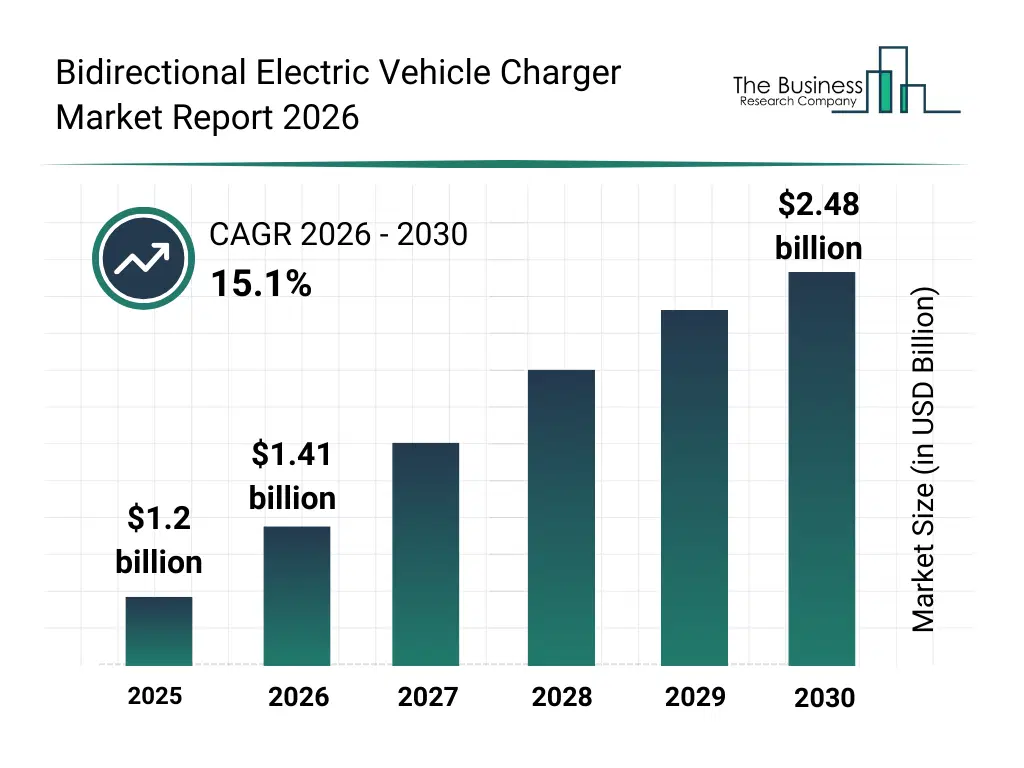
What Is The Bidirectional Electric Vehicle Charger Market Size and Share 2026?
The bidirectional electric vehicle charger market size has grown rapidly in recent years. It will grow from $1.2 billion in 2025 to $1.41 billion in 2026 at a compound annual growth rate (CAGR) of 17.7%. The growth in the historic period can be attributed to ev adoption growth, early v2g pilot projects, grid modernization initiatives, demand for smart energy management, government charging incentives.What Is The Bidirectional Electric Vehicle Charger Market Growth Forecast?
The bidirectional electric vehicle charger market size is expected to see rapid growth in the next few years. It will grow to $2.48 billion in 2030 at a compound annual growth rate (CAGR) of 15.1%. The growth in the forecast period can be attributed to grid balancing requirements, renewable energy integration, smart grid investments, demand for energy resilience, commercialization of v2g technology. Major trends in the forecast period include expansion of vehicle-to-grid infrastructure, rising adoption of smart charging systems, growth of residential bidirectional chargers, integration with renewable energy sources, development of high-power bidirectional chargers.
Global Bidirectional Electric Vehicle Charger Market Segmentation
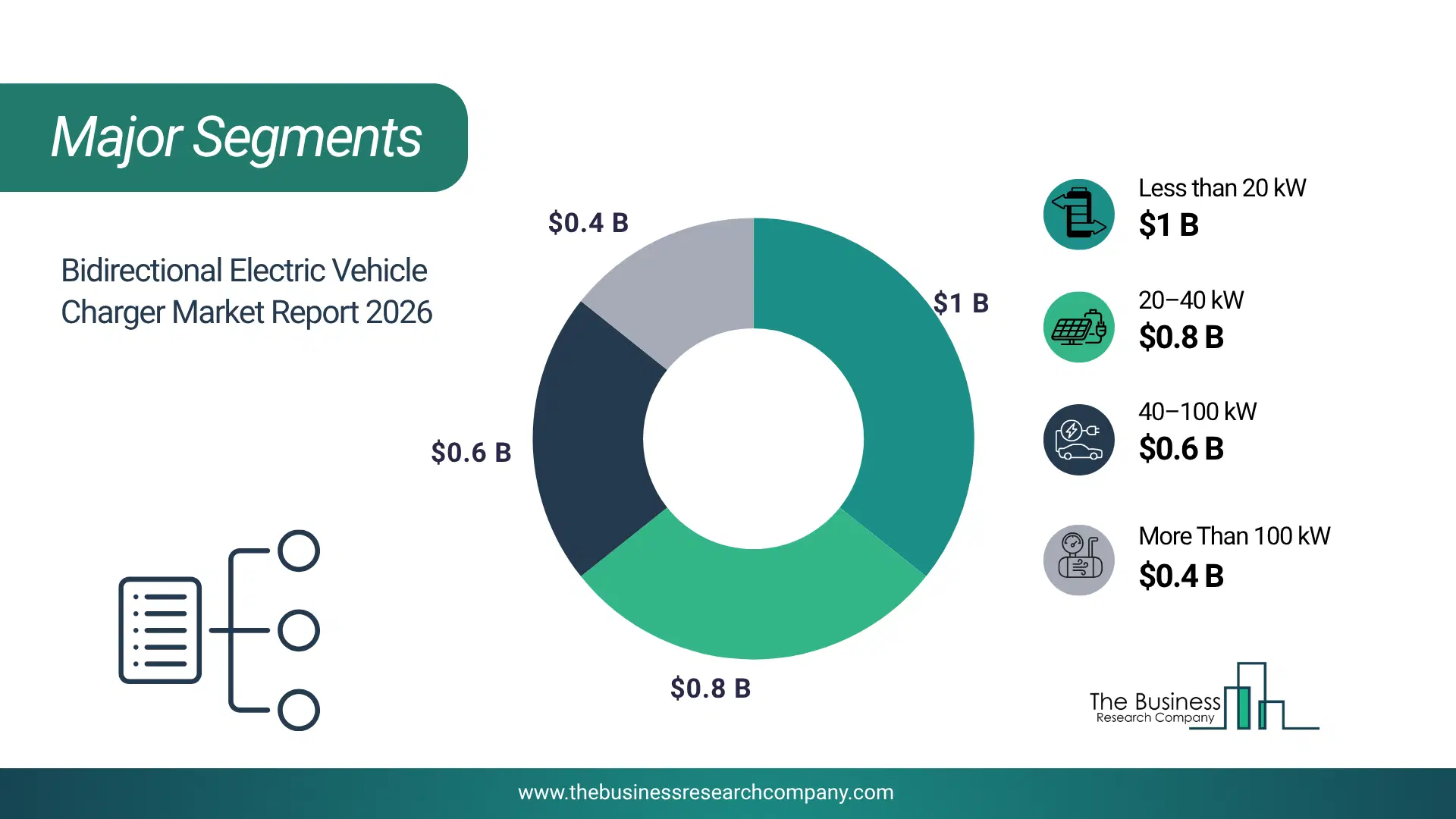
1) By Charging Type: Less than 20 kW, 20-40kW, 40-100 kW, More Than 100 kW 2) By Propulsion Type: Battery Electric Vehicle (BEV), Plug-In Hybrid Electric Vehicle (PHEV) 3) By Source: Original Equipment Manufacturer (OEM), Aftermarket 4) By Deployment Of Charger: Domestic, Commercial 5) By Application: Vehicle-To-Grid (V2G), Vehicle-To-Home (V2H), Other Applications Subsegments: 1) By Less Than 20 kW: Residential Chargers, Small Commercial Chargers 2) By 20-40 kW: Residential Chargers, Medium Commercial Chargers 3) By 40-100 kW: Commercial Chargers, Public Charging Stations 4) By More Than 100 kW: High-Power DC Fast Chargers, Supercharger Networks The top segments in the internet of energy market will be: • Hardware will reach $179.36 Billion by 2030. • Services will reach $108.21 Billion by 2030. • Software will reach $92.41 Billion by 2030. The top segments in the bidirectional electric vehicle charger market will be: • Less than 20 kW will reach $1.03 Billion by 2030. • 20–40 kW will reach $0.77 Billion by 2030. • 40–100 kW will reach $0.61 Billion by 2030. • More Than 100 kW will reach $0.38 Billion by 2030.What Is The Driver Of The Bidirectional Electric Vehicle Charger Market?
The increasing adoption of electric vehicles is expected to propel the growth of bidirectional electric vehicle charger markets going forward. Electric vehicles (EVs) refer to vehicles powered by electricity stored in rechargeable batteries, eliminating the need for traditional internal combustion engines and reducing reliance on fossil fuels. The increasing adoption of electric vehicles is due to technological advancements that enhance battery life, charging infrastructure, and overall performance. Bidirectional charging allows electric vehicles (EVs) to engage with the electrical grid in a dynamic and adaptable way. During high demand or grid instability, EVs can return surplus energy to the grid, offering ancillary services like frequency regulation, peak shaving, and demand response. For instance, in 2024, according to the International Energy Agency is a France-based autonomous intergovernmental organization, electric vehicle sales in 2023 rose by 3.5 million units compared to 2022, marking a 35% year-on-year growth. Therefore, the increasing adoption of electric vehicles is driving the growth of the bidirectional electric vehicle charger industry.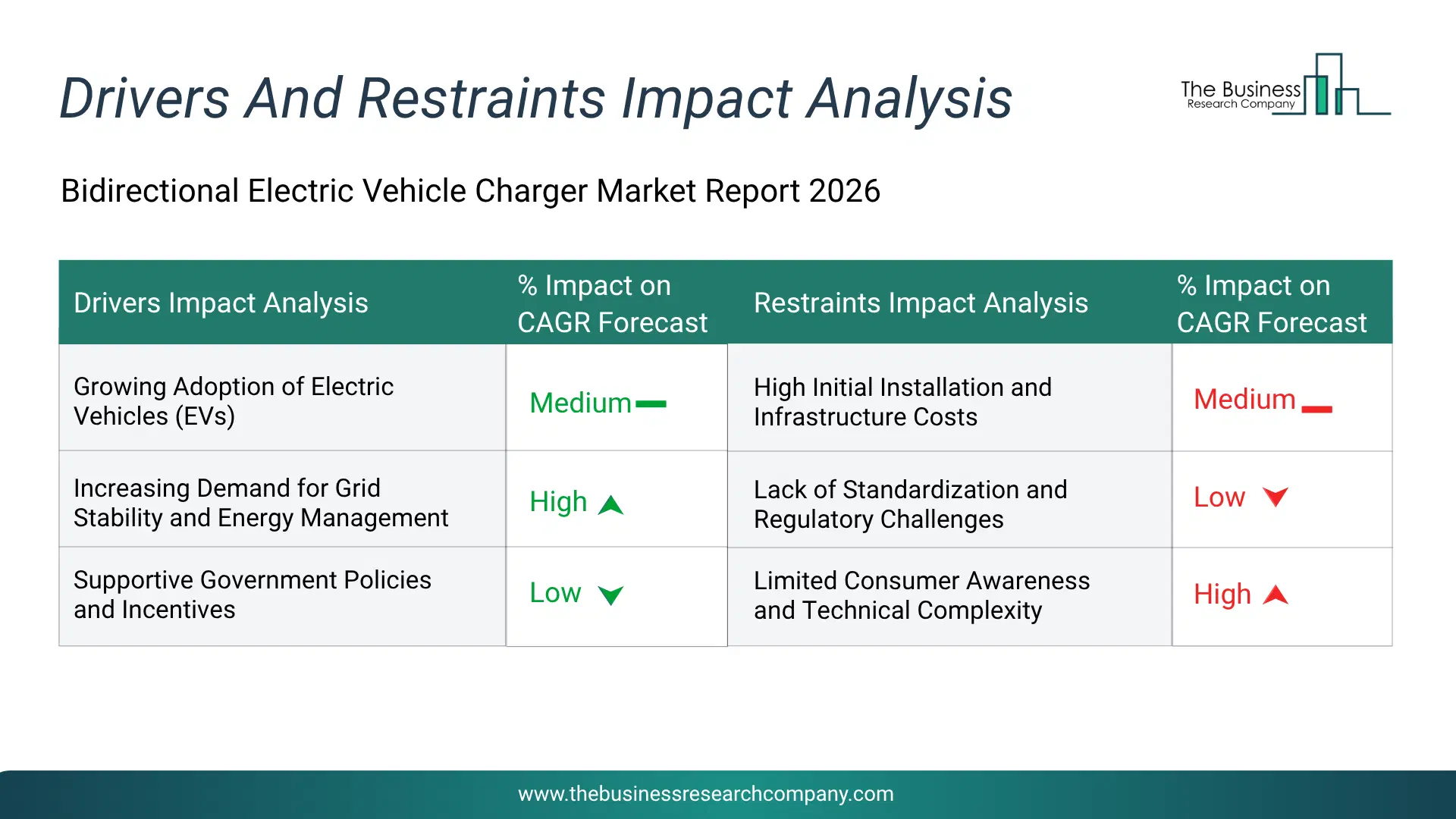
Infographic Chart Showing Key Market Drivers Analysis And Restraints For Bidirectional Electric Vehicle Charger Market
The chart presents an impact analysis of key drivers and restraints, quantifying their relative influence on the market's growth rate and helping assess the balance between growth enablers and limiting factors. This chart offers a high-level perspective; the full report contains more detailed insights.
How Will The Drivers Impact Growth In The Global Bidirectional Electric Vehicle Charger Market?
• Growing Adoption of Electric Vehicles (EVs) (Medium) – During the forecast period, the growing adoption of electric vehicles (EVs) is expected to become a key growth driver for the bidirectional electric vehicle charger market by 2030. Growing adoption of electric vehicles acts as a major driver for the bidirectional electric vehicle charger market because the increasing global shift toward sustainable transportation is accelerating demand for advanced charging infrastructure. As EV ownership rises, users seek more efficient and flexible charging solutions that not only charge vehicles but also enable energy discharge back to homes or the grid. Bidirectional chargers support vehicle-to-grid (V2G) functionality, allowing EVs to act as distributed energy resources. This capability enhances grid stability and energy optimization, making such chargers more attractive. Consequently, the rapid expansion of EV fleets significantly boosts the demand for bidirectional charging technologies. • Increasing Demand for Grid Stability and Energy Management (High) – During the forecast period, the increasing demand for grid stability and energy management is expected to emerge as a major factor driving the expansion of the bidirectional electric vehicle charger market by 2030. Increasing demand for grid stability and efficient energy management acts as a critical driver for the bidirectional electric vehicle charger market because modern power grids face challenges due to renewable energy integration and fluctuating electricity demand. Bidirectional chargers enable energy flow from EVs back to the grid, helping balance supply and demand during peak hours. This vehicle-to-grid capability supports load balancing, reduces strain on infrastructure, and enhances overall grid resilience. Utilities and governments are increasingly adopting such technologies to improve energy efficiency and reliability. • Supportive Government Policies and Incentives (Low) – During the forecast period, the supportive government policies and incentives is expected to act as a key growth catalyst for the bidirectional electric vehicle charger market by 2030. Supportive government policies and incentives act as a strong driver for the bidirectional electric vehicle charger market because many countries are promoting clean energy adoption and electrification of transportation. Governments are introducing subsidies, tax benefits, and regulatory frameworks to encourage the deployment of advanced EV charging infrastructure, including bidirectional systems. These policies aim to reduce carbon emissions and enhance renewable energy utilization through technologies like V2G. Financial support and favorable regulations lower adoption barriers for manufacturers and consumers alike. This policy-driven push accelerates innovation and widespread implementation of bidirectional charging solutions.How Will The Restraints Impact Growth In The Global Bidirectional Electric Vehicle Charger Market?
• High Initial Installation and Infrastructure Costs (Medium) – During the forecast period, the high initial installation and infrastructure costs act as a major restraint for the bidirectional electric vehicle charger market by increasing the financial burden on both consumers and grid operators. These systems require advanced hardware, grid integration technologies, and upgraded electrical infrastructure, making deployment significantly more expensive than conventional chargers. The need for power conversion systems and communication modules further adds to capital expenditure. Small-scale users and developing regions may delay adoption due to affordability concerns. As a result, market penetration slows despite the long-term efficiency benefits of bidirectional charging systems. • Lack of Standardization and Regulatory Challenges (High) – During the forecast period, the lack of standardization and evolving regulatory frameworks significantly restrain the growth of the bidirectional EV charger market. Different regions have varying grid codes, interoperability requirements, and communication protocols, making it difficult for manufacturers to develop universally compatible systems. Inconsistent policies regarding vehicle-to-grid (V2G) energy transactions further complicate implementation. Utilities and governments are still adapting to integrating EVs as energy resources, leading to delays in approvals and deployment. This regulatory uncertainty discourages investment and slows large-scale adoption of bidirectional charging technologies. • Limited Consumer Awareness and Technical Complexity (Low) – During the forecast period, the limited consumer awareness and the technical complexity of bidirectional charging systems hinder market growth. Many EV users are unfamiliar with V2G capabilities and the potential benefits of energy feedback to the grid. Additionally, installation and operation require technical expertise, including system integration and energy management knowledge. This complexity creates hesitation among end-users and businesses when considering adoption. The lack of widespread education and training further restricts utilization across residential and commercial sectors. Consequently, adoption rates remain slower than expected despite growing EV penetration.Key Players In The Global Bidirectional Electric Vehicle Charger Market
Major companies operating in the bidirectional electric vehicle charger market report include Volkswagen Group, Mercedes-Benz AG, Bayerische Motoren Werke AG, Hyundai Motor Company, Honda Motor Co. Ltd., Tesla Inc., Hitachi Ltd., Siemens AG, Audi AG, BYD Company Limited, Panasonic Corporation, Renault S.A., Schneider Electric SE, ABB Group, Eaton Corporation plc, LG Electronics Inc., ChargePoint Inc., EVBox Group, Tritium Pty Ltd, Blink Charging Co., Mitsubishi Electric Corporation, Toyota Industries Corporation, Nissan Motor Corporation, Delta Electronics Inc.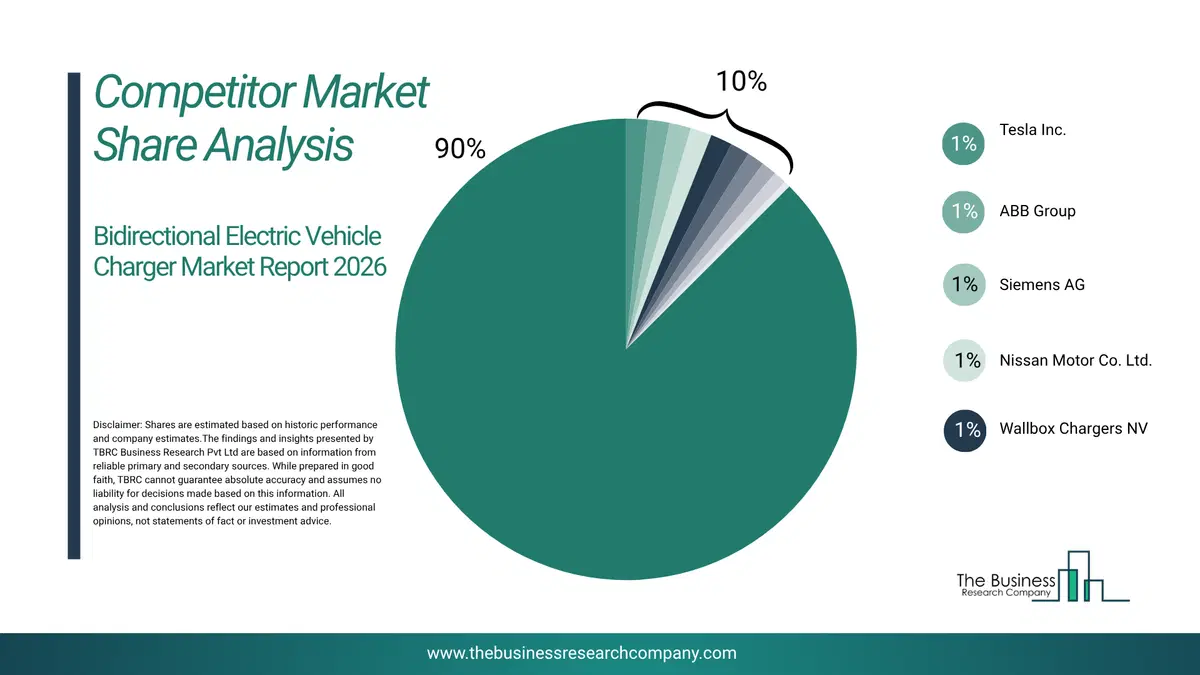
This chart is for illustrative purposes; the full report includes a detailed competitor analysis and comprehensive overview of the top 10 companies in the market.
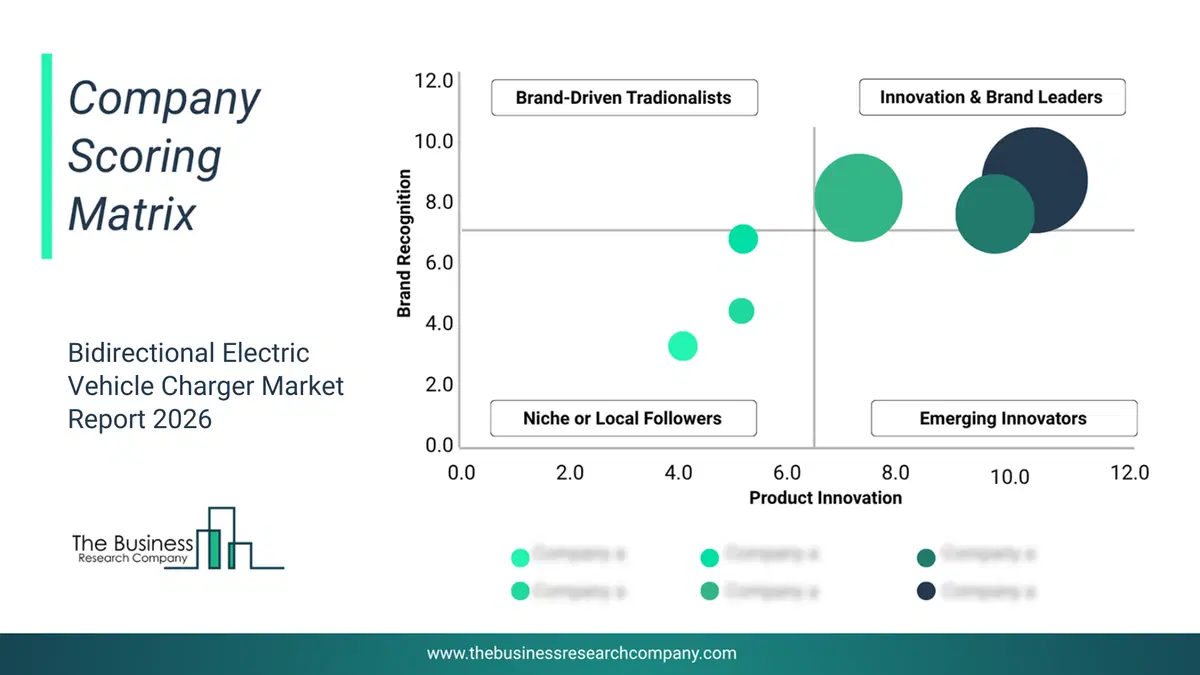
This chart maps companies by product innovation and brand strength, with bubble size indicating relative revenue, helping identify market leaders, challengers, and niche players. This is an illustrative chart; the full report provides a complete and accurate competitive analysis.
Global Bidirectional Electric Vehicle Charger Market Trends and Insights
Major companies operating in the bidirectional electric vehicle charger market focus on developing vehicle-to-grid (V2G) bi-directional chargers, such as the advanced EQ 200 charger, to gain a competitive edge. Advanced EQ 200 charger are charging stations facilitating electric vehicles feeding stored energy back into the grid. They achieve this by accommodating both charging from the grid and discharging energy back to it. For instance, in November 2023, Blink Charging Co., a US-based electric vehicle charging solutions company, launched an advanced EQ 200 charger. The EQ 200 represents an advanced category of bi-directional chargers aiming to transition from conventional static EV charging to a more adaptable and eco-friendly energy management system, aligning with the evolution of grid technology. It has intelligent features such as Bluetooth, Wi-Fi, Ethernet, and various connectivity options, including 2G and 4G. This charger seamlessly integrates with various load-balancing and smart energy management systems. This versatility enables it to support emerging technologies such as vehicle-to-grid (VTG) and vehicle-to-everything (VTX), ensuring adaptability as new systems come into play.What Are Latest Mergers And Acquisitions In The Bidirectional Electric Vehicle Charger Market?
In January 2024, Siemens, a Germany-based automation machine manufacturing company, acquired Heliox for an undisclosed amount. The acquisition broadens Siemens' range of charging solutions, spanning from 40 kW to beyond a megawatt for commercial EV depots. Additionally, it strengthened Siemens' market position in Europe and North America, reinforcing its expertise in power electronics. Heliox is a Netherlands-based company specializing in creating, constructing, servicing, and overseeing bidirectional electric vehicle chargers.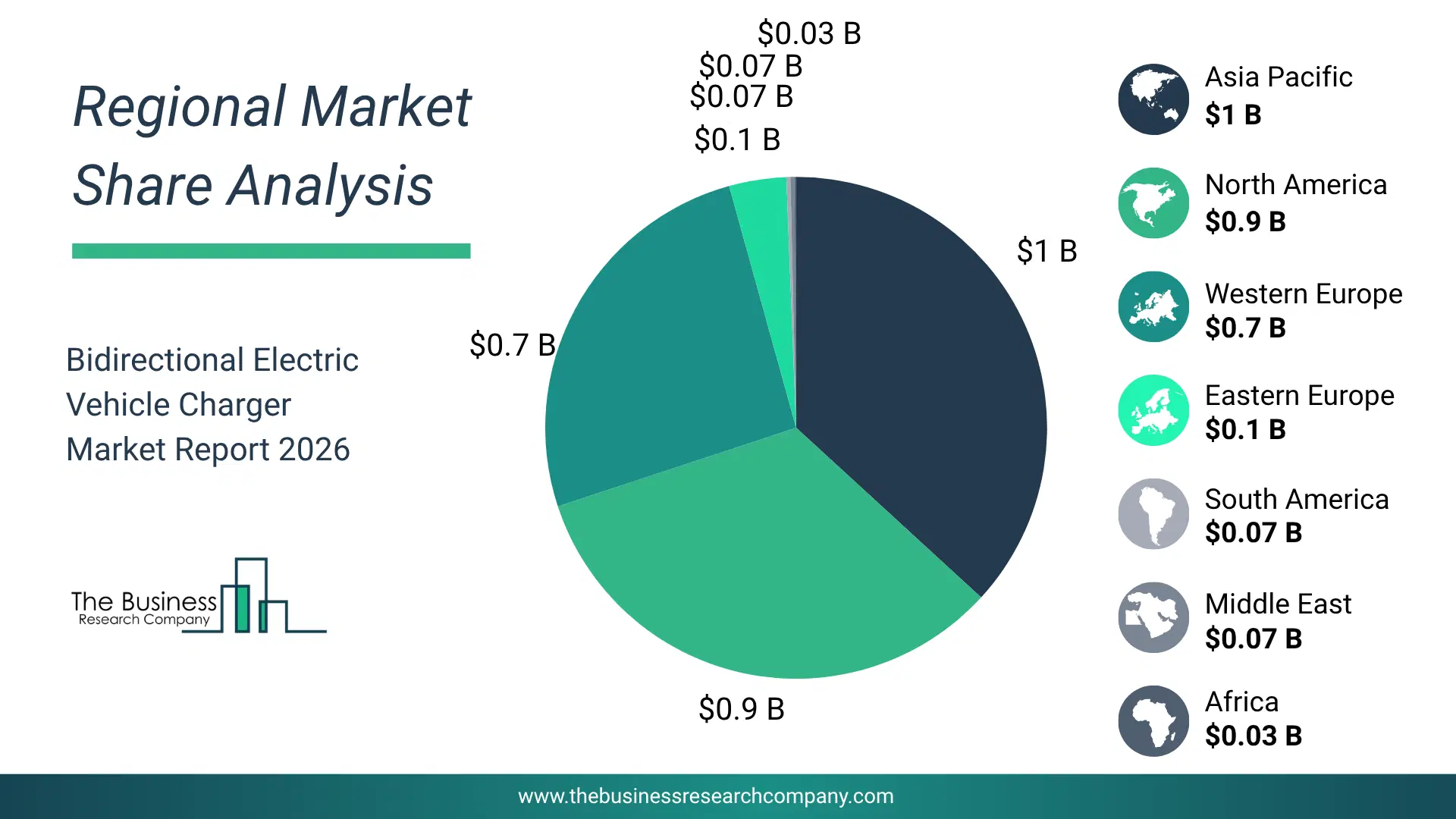
Regional Outlook
Asia-Pacific was the largest region in the bidirectional electric vehicle charger market in 2025. The regions covered in this market report include Asia-Pacific, South East Asia, Western Europe, Eastern Europe, North America, South America, Middle East, Africa. The countries covered in this market report include Australia, Brazil, China, France, Germany, India, Indonesia, Japan, Taiwan, Russia, South Korea, UK, USA, Canada, Italy, SpainWhat Defines the Bidirectional Electric Vehicle Charger Market?
The bidirectional electric vehicle charger market consists of sales of bidirectional chargers, power conversion systems, connectors and cables, sensors and monitoring equipment, and control and communication modules. Values in this market are ‘factory gate’ values, that is, the value of goods sold by the manufacturers or creators of the goods, whether to other entities (including downstream manufacturers, wholesalers, distributors, and retailers) or directly to end customers. The value of goods in this market includes related services sold by the creators of the goods.How is Market Value Defined and Measured?
The market value is defined as the revenues that enterprises gain from the sale of goods and/or services within the specified market and geography through sales, grants, or donations in terms of the currency (in USD unless otherwise specified). The revenues for a specified geography are consumption values that are revenues generated by organizations in the specified geography within the market, irrespective of where they are produced. It does not include revenues from resales along the supply chain, either further along the supply chain or as part of other products.
This chart presents market attractiveness based on a quantitative evaluation of growth, competition, strategic alignment, and risk, offering a clear view of opportunity areas for decision-making. This chart is for illustrative purposes; the full report contains the complete analysis.

This chart highlights the Total Addressable Market (TAM) by estimating the maximum revenue opportunity using an assumption-driven approach, supporting strategic planning and opportunity sizing across markets. The chart is illustrative; the full report provides a more comprehensive analysis.
What Key Data and Analysis Are Included in the Bidirectional Electric Vehicle Charger Market Report 2026?
The bidirectional electric vehicle charger market research report is one of a series of new reports from The Business Research Company that provides market statistics, including industry global market size, regional shares, competitors with the market share, detailed market segments, market trends and opportunities, and any further data you may need to thrive in the bidirectional electric vehicle charger industry. The market research report delivers a complete perspective of everything you need, with an in-depth analysis of the current and future state of the industry.Bidirectional Electric Vehicle Charger Market Report Forecast Analysis
| Report Attribute | Details |
|---|---|
| Market Size Value In 2026 | $1.41 billion |
| Revenue Forecast In 2030 | $2.48 billion |
| Growth Rate | CAGR of 17.7% from 2026 to 2030 |
| Base Year For Estimation | 2025 |
| Actual Estimates/Historical Data | 2020-2025 |
| Forecast Period | 2026 - 2030 |
| Market Representation | Revenue in USD Billion and CAGR from 2026 to 2030 |
| Segments Covered | Charging Type, Propulsion Type, Source, Deployment Of Charger, Application |
| Regional Scope | Asia-Pacific, Western Europe, Eastern Europe, North America, South America, Middle East, Africa |
| Country Scope | The countries covered in the report are Australia, Brazil, China, France, Germany, India, Indonesia, Japan, Taiwan, Russia, South Korea, UK, USA, Canada, Italy, Spain. |
| Key Companies Profiled | Volkswagen Group, Mercedes-Benz AG, Bayerische Motoren Werke AG, Hyundai Motor Company, Honda Motor Co. Ltd., Tesla Inc., Hitachi Ltd., Siemens AG, Audi AG, BYD Company Limited, Panasonic Corporation, Renault S.A., Schneider Electric SE, ABB Group, Eaton Corporation plc, LG Electronics Inc., ChargePoint Inc., EVBox Group, Tritium Pty Ltd, Blink Charging Co., Mitsubishi Electric Corporation, Toyota Industries Corporation, Nissan Motor Corporation, Delta Electronics Inc. |
| Customization Scope | Request for Customization |
| Pricing And Purchase Options | Explore Purchase Options |