
Big Data Software As A Service Market Report 2026
Global Outlook – By Component (Software, Services), By Deployment Model (Public Cloud, Private Cloud, Hybrid Cloud), By Organization Size (Small And Medium Enterprises, Large Enterprises), By Industry Vertical (Banking, Financial Services, And Insurance (BFSI), Healthcare, Retail, Manufacturing, Information Technology (IT) And Telecommunications, Government, Other Industry Verticals) – Market Size, Trends, Strategies, and Forecast to 2030
Big Data Software As A Service Market Overview
• Big Data Software As A Service market size has reached to $22.78 billion in 2025 • Expected to grow to $52.56 billion in 2030 at a compound annual growth rate (CAGR) of 18.1% • Growth Driver: The Increasing Adoption Of Cloud-Based Solutions Is Fueling The Growth Of The Market Due To Enabling Scalable, Remote, And Collaborative Data Management • Market Trend: Next-Generation End-To-End Interactive Platforms For Real-Time Data Analysis And Workflow Optimization • North America was the largest region in 2025.Market Gains By 2030 – Top Opportunities By Segment
Market Gain identifies the most promising market opportunities by highlighting the segments or products expected to generate the highest incremental revenue growth over the next five years.
What Is Covered Under Big Data Software As A Service Market?
Big data software as a service is a cloud-based model in which the provider manages and scales the software required to ingest, store, process, and analyze massive, rapidly changing, and diverse datasets. Customers can access this service over the internet without handling the underlying hardware or infrastructure. The solution enables organizations to transform large volumes of data into actionable insights and data-driven applications, offering benefits such as reduced upfront costs, scalable performance, streamlined operations, and faster experimentation. The main component of big data software as a service are software and services. Software refers to cloud-based applications and platforms that enable data processing, analytics, and visualization without requiring on-premise infrastructure. It is delivered through various deployment models, such as public cloud, private cloud, and hybrid cloud for several organization sizes, including small and medium enterprises and large enterprises, and is used by multiple industry verticals, such as banking, financial services, and insurance (BFSI), healthcare, retail, manufacturing, information technology (IT) and telecommunications, government and others.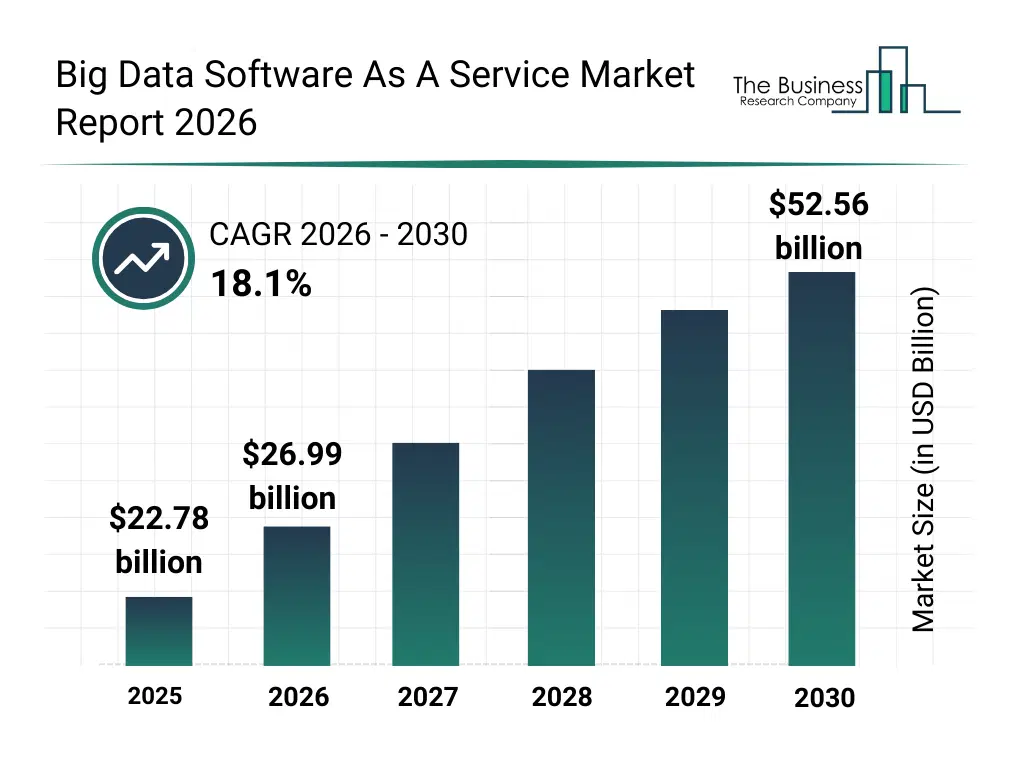
What Is The Big Data Software As A Service Market Size and Share 2026?
The big data software as a service market size has grown rapidly in recent years. It will grow from $22.78 billion in 2025 to $26.99 billion in 2026 at a compound annual growth rate (CAGR) of 18.5%. The growth in the historic period can be attributed to growth in cloud adoption among enterprises, increasing volumes of unstructured and structured data, demand for real-time data analytics, emergence of big data platforms as managed services, rising focus on data security and regulatory compliance.What Is The Big Data Software As A Service Market Growth Forecast?
The big data software as a service market size is expected to see rapid growth in the next few years. It will grow to $52.56 billion in 2030 at a compound annual growth rate (CAGR) of 18.1%. The growth in the forecast period can be attributed to expansion of AI-driven analytics as a service, adoption of hybrid and multi-cloud deployment models, growth in managed big data services, increasing demand for predictive and prescriptive analytics, investment in scalable and integrated data platforms. Major trends in the forecast period include cloud-native big data analytics, real-time stream processing as a service, AI-driven machine learning platforms, data governance and compliance management, scalable data pipeline orchestration.
Global Big Data Software As A Service Market Segmentation
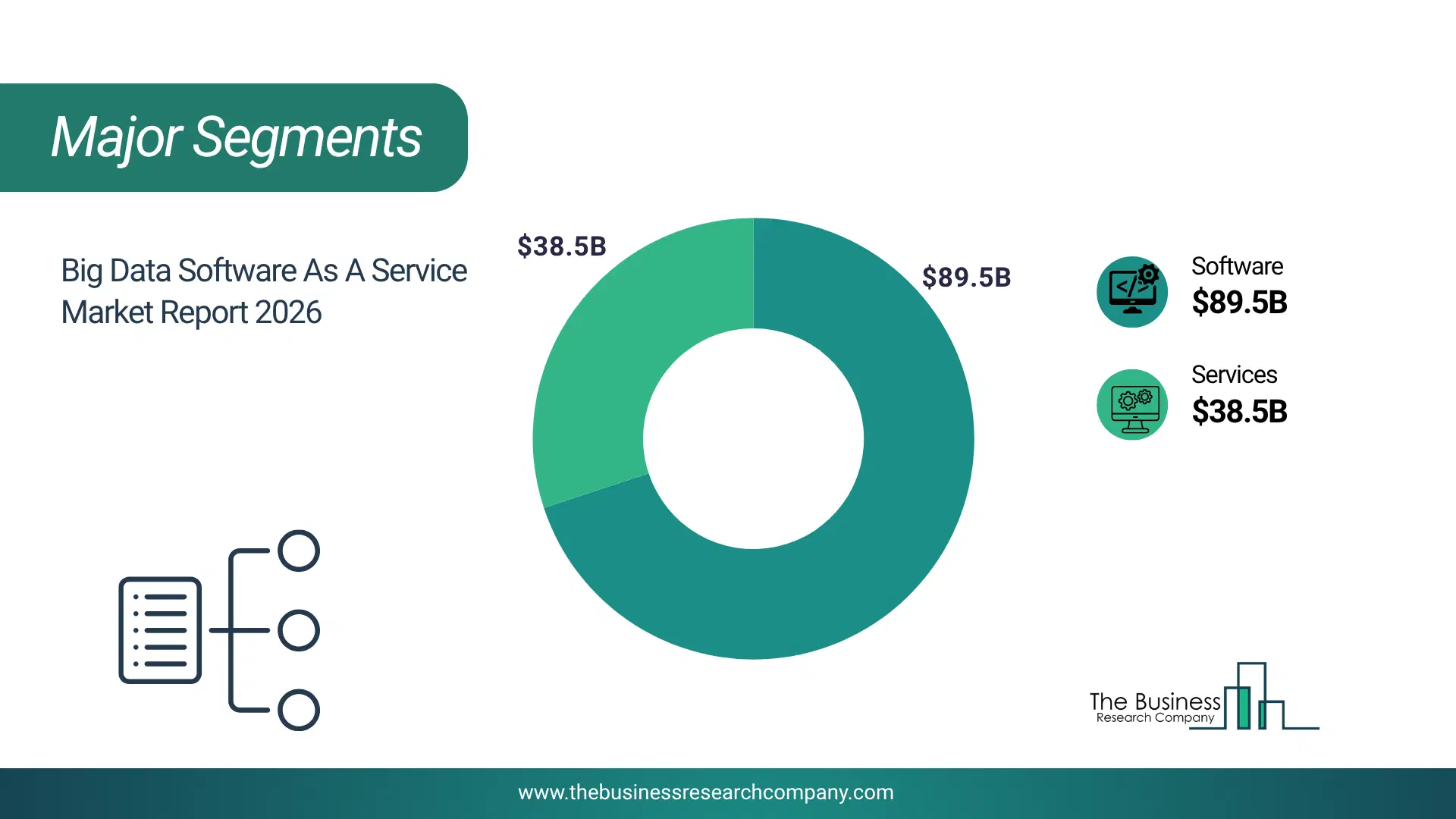
1) By Component: Software, Services 2) By Deployment Model: Public Cloud, Private Cloud, Hybrid Cloud 3) By Organization Size: Small And Medium Enterprises, Large Enterprises 4) By Industry Vertical: Banking, Financial Services, And Insurance (BFSI), Healthcare, Retail, Manufacturing, Information Technology (IT) And Telecommunications, Government, Other Industry Verticals Subsegments: 1) By Software: Data Warehousing As A Service, Data Integration And Extract-Transform-Load (ETL) As A Service, Real-Time Stream Processing As A Service, Machine Learning Platform And Model Training As A Service, Advanced Analytics And Business Intelligence As A Service, Data Pipeline Orchestration And Scheduling, Data Cataloging And Metadata Management, Data Governance And Regulatory Compliance Management, Data Security And Access Control Management, Monitoring And Performance Management 2) By Services: Consulting And Advisory Services, Implementation And Deployment Services, Integration Services, Support And Maintenance Services, Training And Education Services, Managed Big Data Services, Cloud Migration Services, Custom Application Development Services The top segments in the big data software as a service market will be: • Software will reach $89.5 billion by 2030. • Services will reach $38.42 billion by 2030.What Is The Driver Of The Big Data Software As A Service Market?
The increasing adoption of cloud-based solutions is expected to propel the growth of the big data software as a service market going forward. Cloud-based solutions are internet-delivered services and applications that allow flexible access, scalable resources, and remote handling of data and software. The demand for cloud-based solutions is increasing as they enable secure, remote access to data and applications, allowing seamless collaboration without reliance on physical hardware. Big data software as a service boosts cloud solutions by allowing businesses to analyze and visualize large datasets without on-premise infrastructure, offering real-time insights and scalable storage while enabling seamless collaboration across teams. For instance, in July 2025, according to the London Stock Exchange (LSEG), a UK-based publicly traded company, the LSEG global cloud survey reported that 87% of firms have boosted cloud spending in the past two years, 82% now use hybrid or multi-cloud setups, and 91% are accelerating AI adoption through cloud platforms.Therefore, the increasing adoption of cloud-based solutions is driving the growth of the big data software as a service industry.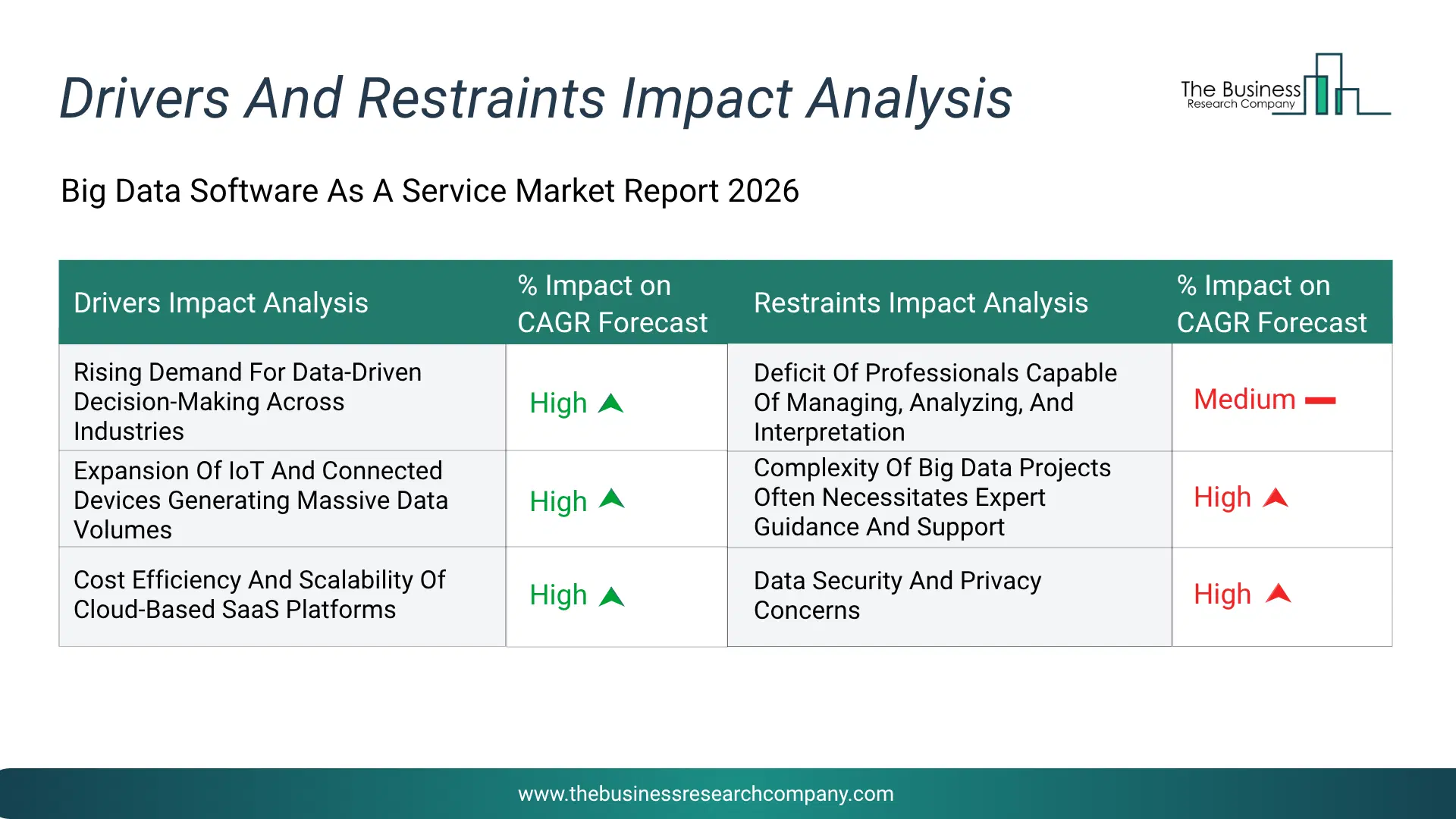
Infographic Chart Showing Key Market Drivers Analysis And Restraints For Big Data Software As A Service Market
The chart presents an impact analysis of key drivers and restraints, quantifying their relative influence on the market's growth rate and helping assess the balance between growth enablers and limiting factors. This chart offers a high-level perspective; the full report contains more detailed insights.
How Will The Drivers Impact Growth In The Global Big Data Software As A Service Market?
• Rising Demand For Data-Driven Decision-Making Across Industries (High) – During the forecast period, the rising demand for data-driven decision-making across industries is expected to become a key growth driver for the big data software as a service market by 2030. The growing emphasis on data-driven decision-making across industries is a major growth driver for the big data software as a service market. Organizations are increasingly leveraging real-time analytics to streamline operations, improve customer engagement, and strengthen their competitive positioning. Big data saas solutions allow enterprises to process and analyze large volumes of data efficiently without the need for extensive on-premises infrastructure investments. This scalability and accessibility equip decision-makers with predictive insights, trend analysis, and actionable intelligence to support strategic planning and performance optimization. • Expansion Of IoT And Connected Devices Generating Massive Data Volumes (High) – During the forecast period, the expansion of iot and connected devices generating massive data volumes is expected to emerge as a major factor driving the expansion of the big data software as a service market by 2030. The rapid growth of iot and connected devices is a key catalyst for the big data software as a service (saas) market, as these technologies generate enormous volumes of real-time data that demand advanced analytics and scalable storage solutions. Every connected device continuously captures data related to usage patterns, operational performance, and environmental conditions, significantly increasing overall data generation. Big data saas platforms allow organizations to seamlessly gather, manage, and analyze this data using cloud-based infrastructure, eliminating the need for substantial upfront capital investment. • Cost Efficiency And Scalability Of Cloud-Based SaaS Platforms (High) – During the forecast period, the cost efficiency and scalability of cloud-based saas platforms is expected to act as a key growth catalyst for the big data software as a service market by 2030. The affordability and scalability of cloud-based saas platforms serve as major growth drivers for the big data software as a service market, enabling organizations to utilize advanced analytics capabilities without significant upfront infrastructure costs. Companies can dynamically adjust computing resources according to their needs, ensuring cost optimization and operational flexibility. The pay-as-you-go pricing structure helps minimize ongoing expenses while enhancing overall efficiency. Additionally, this model empowers businesses of all sizes to access big data insights that were once primarily available to large enterprises.How Will The Restraints Impact Growth In The Global Big Data Software As A Service Market?
• Deficit Of Professionals Capable Of Managing, Analyzing, And Interpretation (Medium) – During the forecast period, the deficit of professionals skilled in managing, analyzing, and interpreting big data acts as a major restraint for the big data software as a service market. Despite the availability of advanced cloud-based analytics tools, organizations struggle to extract meaningful insights without qualified data scientists and analysts. This talent gap limits the effective utilization of big data saas platforms and reduces return on investment. Additionally, the lack of expertise slows down adoption rates and increases dependency on third-party service providers. As a result, businesses face challenges in fully leveraging data-driven decision-making and automation capabilities. • Complexity Of Big Data Projects Often Necessitates Expert Guidance And Support (High) – During the forecast period, the complexity of big data projects acts as a restraint for the big data software as a service market because implementing, integrating, and managing large-scale data systems often require advanced technical expertise. Organizations face challenges in aligning diverse data sources, ensuring data quality, and maintaining seamless performance across cloud environments. Without skilled professionals or external expert support, these complexities can delay deployment and increase operational costs. Smaller enterprises, in particular, may struggle to fully leverage the platform’s capabilities. Consequently, the need for specialized guidance slows adoption and limits the overall scalability of big data saas solutions. • Data Security And Privacy Concerns (High) – During the forecast period, the data security and privacy concerns act as a restraint for the big data software as a service market by increasing hesitation among organizations to fully migrate sensitive workloads to cloud-based platforms. The risk of data breaches, unauthorized access, and compliance violations with regulations such as data protection laws creates uncertainty for enterprises handling large volumes of critical information. This leads to stricter internal security requirements and slower adoption of saas-based big data solutions. Additionally, organizations often incur higher costs to implement encryption, access controls, and monitoring systems. As a result, security concerns limit widespread adoption and slow market growth.Key Players In The Global Big Data Software As A Service Market
Major companies operating in the big data software as a service market are Google LLC, Microsoft Corporation, Amazon Web Services Inc, International Business Machines Corporation, Oracle Corporation, SAP SE, Salesforce Inc., Hewlett Packard Enterprise Development LP, Databricks Inc, SAS Institute Inc, Snowflake Inc, Teradata Corporation, MongoDB Inc, Elastic NV, Confluent Inc, MicroStrategy Incorporated, Domo Inc, Collibra NV, Alation Inc, Starburst Data Inc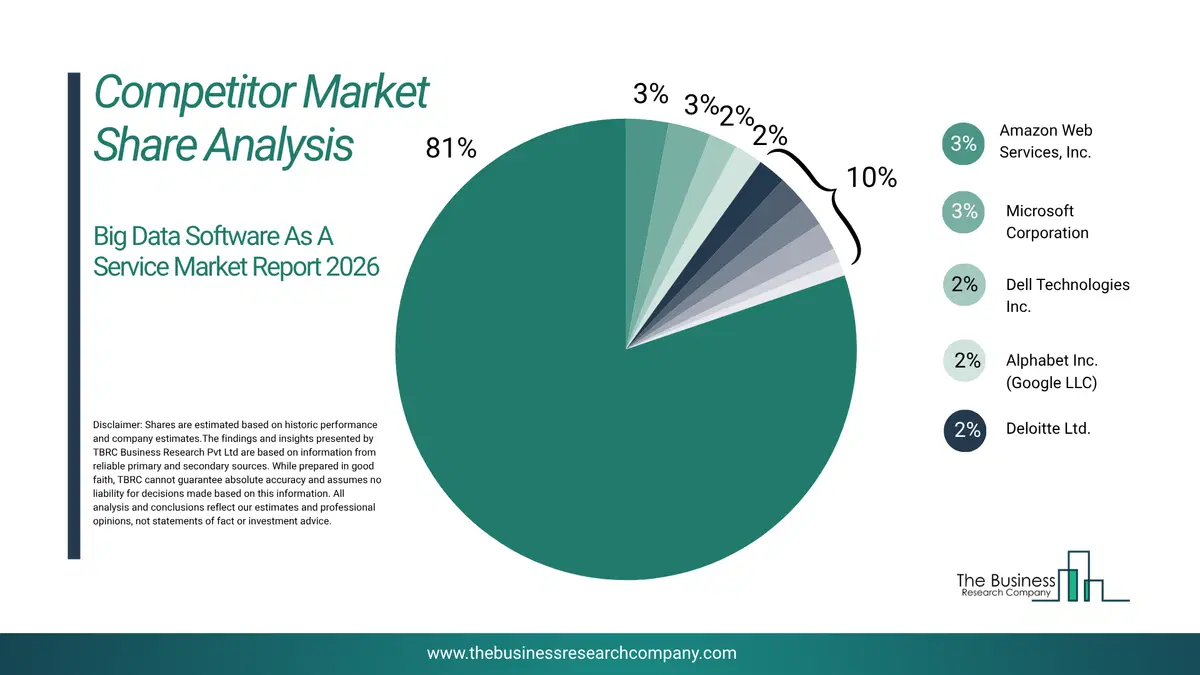
This chart is for illustrative purposes; the full report includes a detailed competitor analysis and comprehensive overview of the top 10 companies in the market.
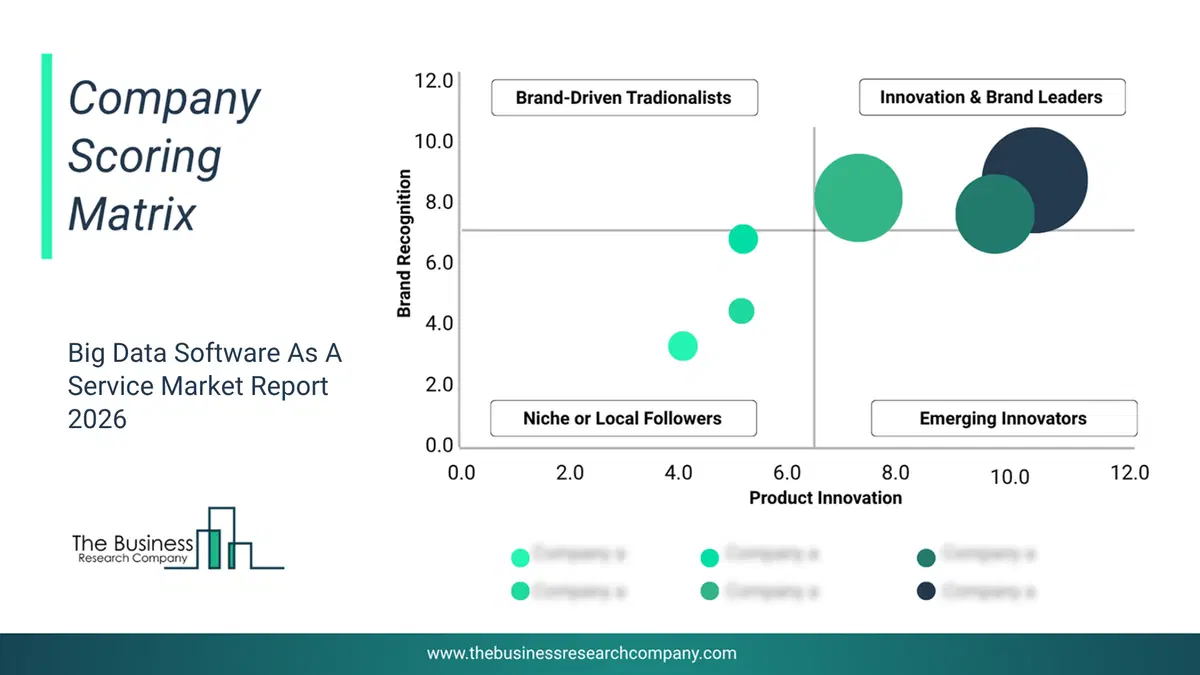
This chart maps companies by product innovation and brand strength, with bubble size indicating relative revenue, helping identify market leaders, challengers, and niche players. This is an illustrative chart; the full report provides a complete and accurate competitive analysis.
Global Big Data Software As A Service Market Trends and Insights
Major companies operating in the big data software-as-a-service market are focusing on developing advanced solutions such as end-to-end interactive environments to enable real-time data analysis and actionable insights for informed business decision-making. End-to-end interactive environments are unified platforms enabling users to handle data exploration, coding, visualization, and model deployment seamlessly while streamlining workflows by combining multiple tools and languages into a single collaborative interface. For instance, in June 2024, Snowflake Inc., a US-based cloud-based data storage company, launched Snowflake Notebooks, an integrated, end-to-end interactive environment within the Snowflake platform designed for data and AI teams. This cell-based interface integrates Python, SQL, and Markdown, enabling users to conduct data exploration, analysis, machine learning model development, and data engineering tasks all while utilizing Snowflake’s secure, scalable architecture and governance capabilities. The environment also connects with Snowpark ML, Streamlit, Cortex, and Iceberg tables, supporting seamless collaboration, automation, version control through native Git integration, and reduced data movement to enhance workflow efficiency on a single platform.What Are Latest Mergers And Acquisitions In The Big Data Software As A Service Market?
In June 2024, Databricks, a US-based software company that provides big data software as a service (SaaS) through its unified cloud platform designed for data engineering, partnered with NVIDIA to accelerate enterprise AI with efficient, high-performance data intelligence. The partnership aims to integrate NVIDIA CUDA-accelerated computing into Databricks’ platform to optimize data workflows, enhance generative AI development, and enable sustainable, efficient AI operations. NVIDIA is a US-based company that specializes in artificial intelligence computing.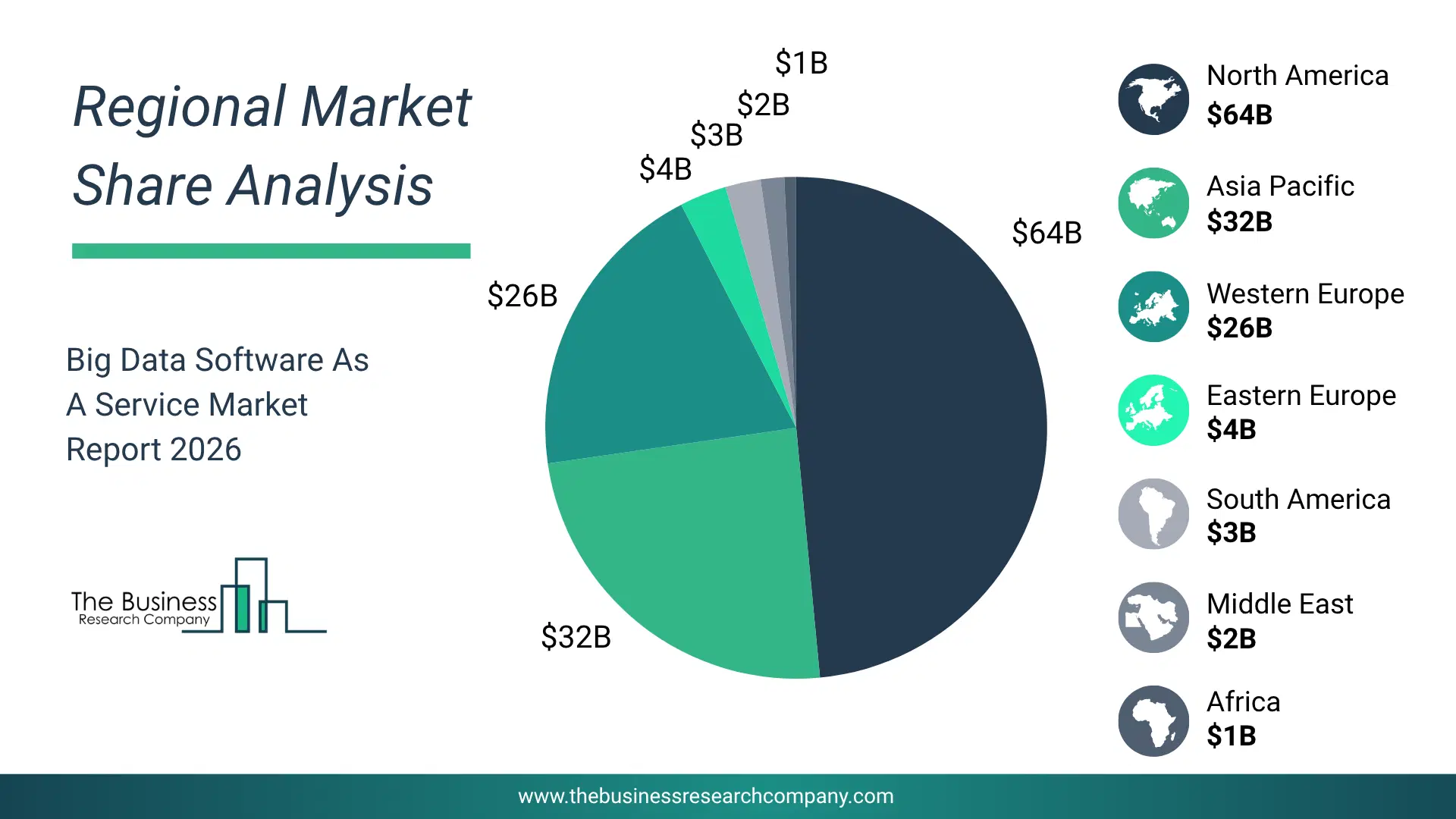
Regional Insights
North America was the largest region in the big data software as a service market in 2025. The regions covered in this market report are Asia-Pacific, South East Asia, Western Europe, Eastern Europe, North America, South America, Middle East, Africa. The countries covered in this market report are Australia, Brazil, China, France, Germany, India, Indonesia, Japan, Taiwan, Russia, South Korea, UK, USA, Canada, Italy, Spain.What Defines the Big Data Software As A Service Market?
The big data software as a service market includes revenues earned by entities by providing services such as data warehousing, data integration, real-time stream processing analytics and business intelligence, data pipeline orchestration and scheduling, data cataloging and metadata management, data governance and compliance management, and monitoring and observability services. The market value includes the value of related goods sold by the service provider or included within the service offering. Only goods and services traded between entities or sold to end consumers are included.How is Market Value Defined and Measured?
The market value is defined as the revenues that enterprises gain from the sale of goods and/or services within the specified market and geography through sales, grants, or donations in terms of the currency (in USD unless otherwise specified). The revenues for a specified geography are consumption values that are revenues generated by organizations in the specified geography within the market, irrespective of where they are produced. It does not include revenues from resales along the supply chain, either further along the supply chain or as part of other products.
This chart presents market attractiveness based on a quantitative evaluation of growth, competition, strategic alignment, and risk, offering a clear view of opportunity areas for decision-making. This chart is for illustrative purposes; the full report contains the complete analysis.

This chart highlights the Total Addressable Market (TAM) by estimating the maximum revenue opportunity using an assumption-driven approach, supporting strategic planning and opportunity sizing across markets. The chart is illustrative; the full report provides a more comprehensive analysis.
What Key Data and Analysis Are Included in the Big Data Software As A Service Market Report 2026?
The big data software as a service market research report is one of a series of new reports from The Business Research Company that provides market statistics, including industry global market size, regional shares, competitors with the market share, detailed market segments, market trends and opportunities, and any further data you may need to thrive in the big data software as a service industry. The market research report delivers a complete perspective of everything you need, with an in-depth analysis of the current and future state of the industry.Big Data Software As A Service Market Report Forecast Analysis
| Report Attribute | Details |
|---|---|
| Market Size Value In 2026 | $26.99 billion |
| Revenue Forecast In 2030 | $52.56 billion |
| Growth Rate | CAGR of 18.1% from 2026 to 2030 |
| Base Year For Estimation | 2025 |
| Actual Estimates/Historical Data | 2020-2025 |
| Forecast Period | 2026 - 2030 |
| Market Representation | Revenue in USD Billion and CAGR from 2026 to 2030 |
| Segments Covered | Component, Deployment Model, Organization Size, Industry Vertical |
| Regional Scope | Asia-Pacific, Western Europe, Eastern Europe, North America, South America, Middle East, Africa |
| Country Scope | The countries covered in the report are Australia, Brazil, China, France, Germany, India, ... |
| Key Companies Profiled | Google LLC, Microsoft Corporation, Amazon Web Services Inc, International Business Machines Corporation, Oracle Corporation, SAP SE, Salesforce Inc., Hewlett Packard Enterprise Development LP, Databricks Inc, SAS Institute Inc, Snowflake Inc, Teradata Corporation, MongoDB Inc, Elastic NV, Confluent Inc, MicroStrategy Incorporated, Domo Inc, Collibra NV, Alation Inc, Starburst Data Inc |
| Customization Scope | Request for Customization |
| Pricing And Purchase Options | Explore Purchase Options |