
Bio-based Materials Market Report 2026
Global Outlook – By Type (Bio-Based Polyurethane, Bio-Based Paraxylene, Bio-Based Polypropylene, Bio-Based Polyamides, Other Types), By Application (Rigid Packaging, Flexible Packaging, Consumer Goods, Automotive And Transport, Other Applications), By End Use (Food And Beverage, Automotive, Textiles, Agriculture, Other End Users) – Market Size, Trends, Strategies, and Forecast to 2030
Bio-based Materials Market Overview
• Bio-based Materials market size has reached to $47.42 billion in 2025 • Expected to grow to $126.12 billion in 2030 at a compound annual growth rate (CAGR) of 21.5% • Growth Driver: Environmental Awakening Fuels Bio-Based Materials Market Surge • Market Trend: Innovative Solutions Driving Bio-Based Materials Market Competition • Europe was the largest region in 2025 and Asia-Pacific is the fastest growing region.What Is Covered Under Bio-based Materials Market?
Bio-based materials are materials derived from renewable biomass sources such as plants, animals, or microorganisms. These materials offer an environmentally friendly alternative to traditional petroleum-based materials, contributing to sustainability and reducing carbon footprints across various industries. The main types of bio-based materials are bio-based polyurethane, bio-based paraxylene, bio-based polypropylene, bio-based polyamides, and others. Bio-based polyurethane is a sustainable polymer derived from renewable resources like plant oils or biomass, offering versatile applications in foam production, coatings, and adhesives. It is used for rigid packaging, flexible packaging, electrics and electronics, consumer goods, automotive and transport, and others, and it used in food and beverage, pharmaceuticals, automotive, textiles, agriculture, and others.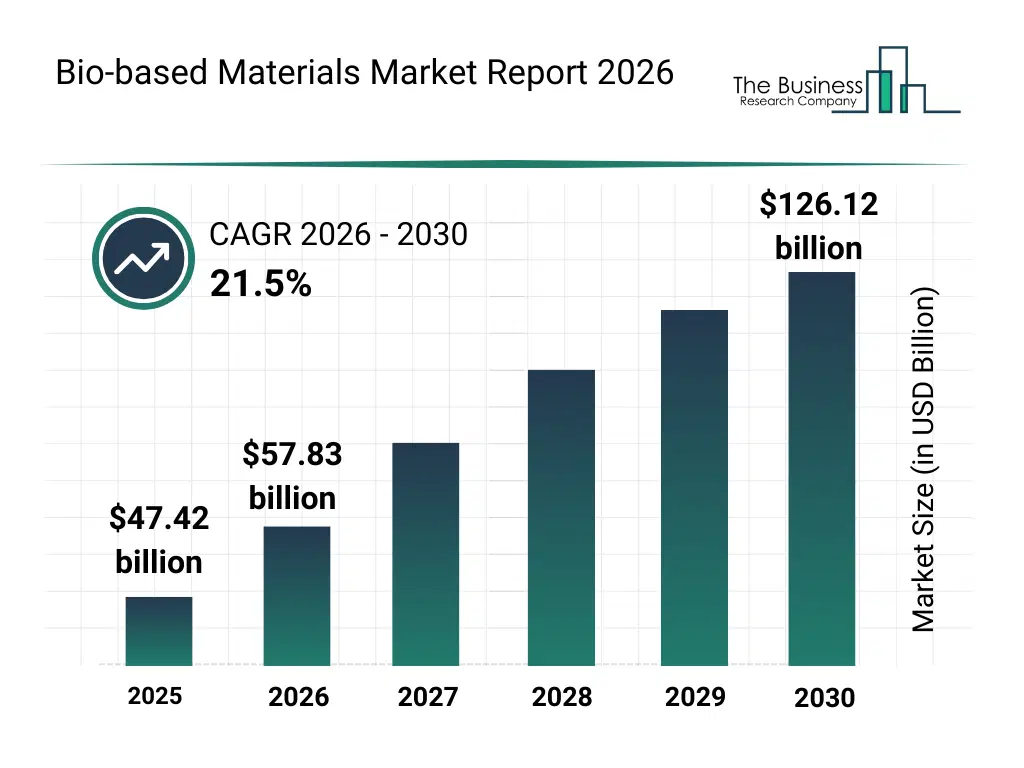
What Is The Bio-based Materials Market Size and Share 2026?
The bio-based materials market size has grown exponentially in recent years. It will grow from $47.42 billion in 2025 to $57.83 billion in 2026 at a compound annual growth rate (CAGR) of 22.0%. The growth in the historic period can be attributed to environmental awareness growth, rising plastic waste concerns, government sustainability initiatives, early adoption in packaging, bio polymer research advancements.What Is The Bio-based Materials Market Growth Forecast?
The bio-based materials market size is expected to see exponential growth in the next few years. It will grow to $126.12 billion in 2030 at a compound annual growth rate (CAGR) of 21.5%. The growth in the forecast period can be attributed to stricter carbon regulations, growth in electric vehicles, rising demand for biodegradable materials, investment in bio refineries, expansion of green manufacturing. Major trends in the forecast period include rising adoption of renewable polymer materials, increasing use in sustainable packaging applications, growing demand for low carbon footprint materials, expansion of bio based plastics in automotive components, higher focus on circular economy material solutions.
Global Bio-based Materials Market Segmentation
1) By Type: Bio-Based Polyurethane, Bio-Based Paraxylene, Bio-Based Polypropylene, Bio-Based Polyamides, Other Types 2) By Application: Rigid Packaging, Flexible Packaging, Consumer Goods, Automotive And Transport, Other Applications 3) By End Use: Food And Beverage, Automotive, Textiles, Agriculture, Other End Users Subsegments: 1) By Bio-Based Polyurethane: Rigid Polyurethane Foam, Flexible Polyurethane Foam, Coatings, Adhesives, Sealants, and Elastomers (CASE) 2) By Bio-Based Paraxylene: Bio-PET (Polyethylene Terephthalate), Bio-Polyester Resins 3) By Bio-Based Polypropylene: Bio-Polypropylene Homopolymer, Bio-Polypropylene Copolymer 4) By Bio-Based Polyamides: Bio-Based Nylon 6, Bio-Based Nylon 6,6 5) By Other Types: Bio-Based Polyethylene, Bio-Based Polylactic Acid (PLA)What Is The Driver Of The Bio-based Materials Market?
Increasing environmental awareness is expected to propel the growth of the bio-based materials market going forward. Environmental awareness refers to the understanding and recognition of environmental issues, including their causes, consequences, and potential solutions. the rise in environmental concerns has created a conducive environment for the growth of the bio-based material market, driven by a combination of regulatory support, consumer awareness, corporate responsibility, and advancements in sustainable technologies. Bio-based materials plays a pivotal role in increasing environmental awareness by promoting sustainable alternatives to traditional materials, reducing carbon emissions, and mitigating environmental degradation. For instance, in May 2023, according to the International Energy Agency (IEA), a France-based intergovernmental organization, global energy investment in clean energy witnessed a significant increase from $1408 billion in to $1740 billion in 2023. Therefore, increasing environmental awareness is driving the growth of the bio-based materials industry.Key Players In The Global Bio-based Materials Market
Major companies operating in the bio-based materials market are China Petroleum & Chemical Corporation (Sinopec), BASF SE, Sumitomo Chemical, Evonik Industries AG, Covestro AG, Braskem, Toray Industries Inc., Mitsui Chemicals, DuPont de Nemours Inc., Arkema SA, Eastman Chemical Company, DSM, LANXESS, Huntsman Corporation, Tosoh Corporation, Lubrizol, Clariant AG, Plastipak Holdings Inc., Corbion N.V., Japan Polypropylene Corporation, RAMPF Holding GmbH & Co. KG, Manali Petrochemical, RadiciGroup, Biobased Technologies, Virent Inc., TSE Industries Inc., Avantium, Anellotech Inc., Gevo Inc.
This chart is for illustrative purposes; the full report includes a detailed competitor analysis and comprehensive overview of the top 10 companies in the market.
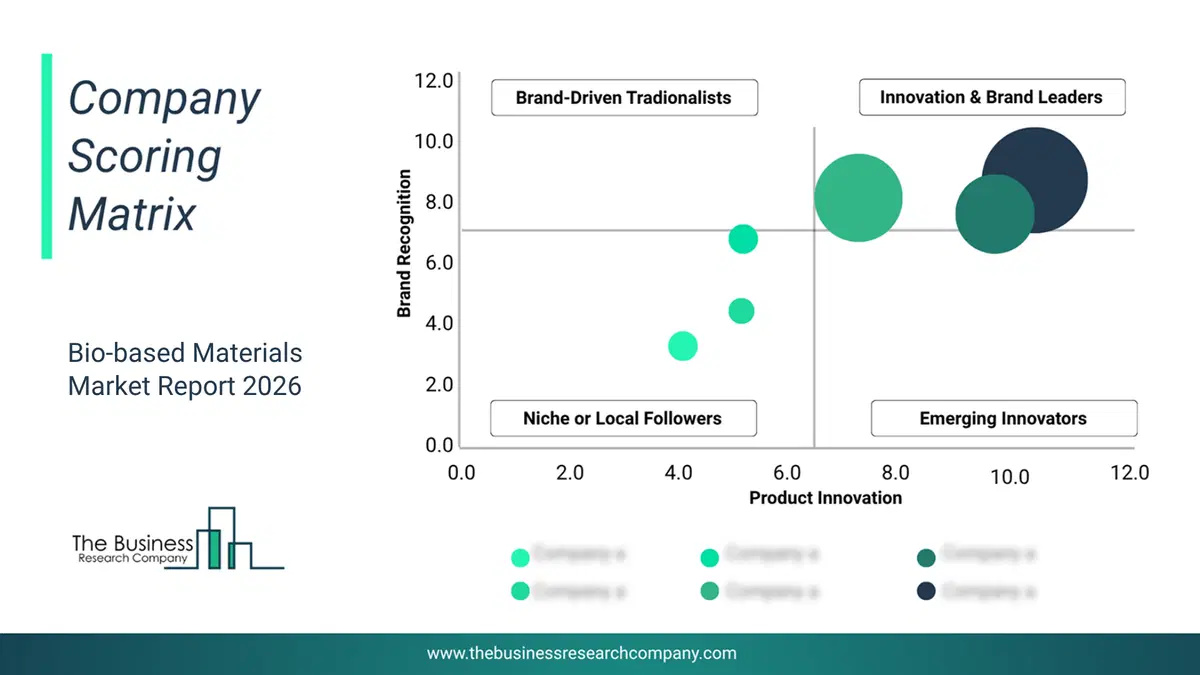
This chart maps companies by product innovation and brand strength, with bubble size indicating relative revenue, helping identify market leaders, challengers, and niche players. This is an illustrative chart; the full report provides a complete and accurate competitive analysis.
Global Bio-based Materials Market Trends and Insights
Major companies operating in the bio-based materials market are increasing their focus on developing advanced solutions and products, such as circular propylene glycol solutions, to gain a competitive edge in the market. Propylene glycol (PG) solutions are utilized in various industries for different purposes. For instance, in September 2023, The Dow Chemical Company (Dow), a US-based multinational corporation that provides raw materials and chemicals, launched new lower-carbon, bio-based, and circular propylene glycol (PG) solutions featuring innovative technologies. This platform leverages innovative technologies such as Decarbia, Ecolibrium, and Renuva to offer reduced carbon footprints, bio-based content, and circular economy benefits. This product represents a significant advancement in the bio-based materials market, providing sustainable alternatives that contribute to lower carbon emissions, promote renewable resources, and support the transition towards a circular economy.What Are Latest Mergers And Acquisitions In The Bio-based Materials Market?
In January 2023, Sumitomo Chemical Co. Ltd., a Japan-based chemical products company, acquired FBSciences Holdings Inc. for an undisclosed amount. This acquisition enriches Sumitomo's bio-based materials portfolio, incorporating advanced biostimulants and biopesticides, thereby fostering sustainable solutions in agriculture, public health, and forest health and contributing to the overall growth and innovation in the bio-based materials market. FBSciences Holdings Inc. is a US-based company that provides climate-smart biorationals for agriculture, including bio-based materials such as biostimulants and biopesticides.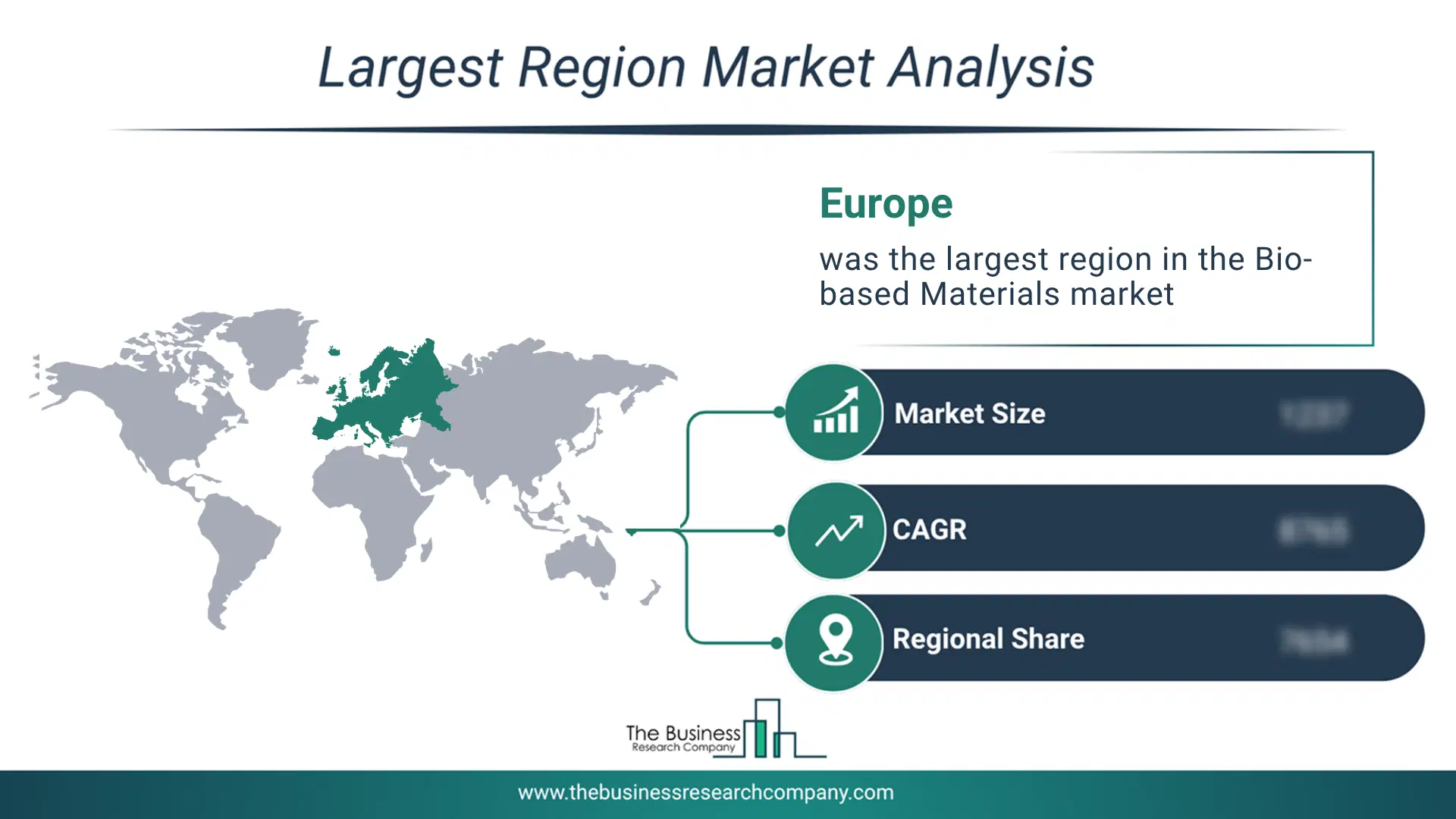
Regional Insights
Europe was the largest region in the bio-based materials market in 2025. Asia-Pacific is expected to be the fastest-growing region in the forecast period. The regions covered in this market report are Asia-Pacific, South East Asia, Western Europe, Eastern Europe, North America, South America, Middle East, Africa The countries covered in this market report are Australia, Brazil, China, France, Germany, India, Indonesia, Japan, Taiwan, Russia, South Korea, UK, USA, Canada, Italy, SpainWhat Defines the Bio-based Materials Market?
The bio-based materials market consists of sales of sustainable foam, renewable fibers, eco-friendly packaging, and green thermoplastics. Values in this market are ‘factory gate’ values, that is the value of goods sold by the manufacturers or creators of the goods, whether to other entities (including downstream manufacturers, wholesalers, distributors, and retailers) or directly to end customers. The value of goods in this market includes related services sold by the creators of the goods.How is Market Value Defined and Measured?
The market value is defined as the revenues that enterprises gain from the sale of goods and/or services within the specified market and geography through sales, grants, or donations in terms of the currency (in USD unless otherwise specified). The revenues for a specified geography are consumption values that are revenues generated by organizations in the specified geography within the market, irrespective of where they are produced. It does not include revenues from resales along the supply chain, either further along the supply chain or as part of other products.
This chart presents market attractiveness based on a quantitative evaluation of growth, competition, strategic alignment, and risk, offering a clear view of opportunity areas for decision-making. This chart is for illustrative purposes; the full report contains the complete analysis.

This chart highlights the Total Addressable Market (TAM) by estimating the maximum revenue opportunity using an assumption-driven approach, supporting strategic planning and opportunity sizing across markets. The chart is illustrative; the full report provides a more comprehensive analysis.
What Key Data and Analysis Are Included in the Bio-based Materials Market Report 2026?
The bio-based materials market research report is one of a series of new reports from The Business Research Company that provides market statistics, including industry global market size, regional shares, competitors with the market share, detailed market segments, market trends and opportunities, and any further data you may need to thrive in the bio-based materials industry. The market research report delivers a complete perspective of everything you need, with an in-depth analysis of the current and future state of the industry.Bio based Materials Market Report Forecast Analysis
| Report Attribute | Details |
|---|---|
| Market Size Value In 2026 | $57.83 billion |
| Revenue Forecast In 2030 | $126.12 billion |
| Growth Rate | CAGR of 22.0% from 2026 to 2030 |
| Base Year For Estimation | 2025 |
| Actual Estimates/Historical Data | 2020-2025 |
| Forecast Period | 2026 - 2030 |
| Market Representation | Revenue in USD Billion and CAGR from 2026 to 2030 |
| Segments Covered | Type, Application, End Use |
| Regional Scope | Asia-Pacific, Western Europe, Eastern Europe, North America, South America, Middle East, Africa |
| Country Scope | The countries covered in this market report are Australia, Brazil, China, France, Germany, India, Indonesia, Japan, Taiwan, Russia, South Korea, UK, USA, Canada, Italy, Spain |
| Key Companies Profiled | China Petroleum & Chemical Corporation (Sinopec), BASF SE, Sumitomo Chemical, Evonik Industries AG, Covestro AG, Braskem, Toray Industries Inc., Mitsui Chemicals, DuPont de Nemours Inc., Arkema SA, Eastman Chemical Company, DSM, LANXESS, Huntsman Corporation, Tosoh Corporation, Lubrizol, Clariant AG, Plastipak Holdings Inc., Corbion N.V., Japan Polypropylene Corporation, RAMPF Holding GmbH & Co. KG, Manali Petrochemical, RadiciGroup, Biobased Technologies, Virent Inc., TSE Industries Inc., Avantium, Anellotech Inc., Gevo Inc. |
| Customization Scope | Request for Customization |
| Pricing And Purchase Options | Explore Purchase Options |