

Bio-Based Naphtha Market Report 2026
Global Outlook – By Product Type (Light Bio-Naphtha, Heavy Bio-Naphtha), By Source (Vegetable Oils, Used Cooking Oil, Animal Fats, Biomass Residues, Other Sources), By Production Technology (Hydrotreatment (HEFA), Biomass Gasification And Fischer-Tropsch Synthesis, Pyrolysis, Catalytic Biomass Conversion, Other Production Technologies), By Distribution Channel (Direct Sales, Distributors And Traders), By Application (Petrochemical Feedstock, Bio-Based Plastics, Fuel Blending, Aromatics Production, Chemical Intermediates, Other Applications) – Market Size, Trends, Strategies, and Forecast to 2030
Bio-Based Naphtha Market Overview
• Bio-Based Naphtha market size has reached to $1.22 billion in 2025 • Expected to grow to $2.73 billion in 2030 at a compound annual growth rate (CAGR) of 17.3% • Growth Driver: Rising Production Of Bio-Based Plastics And Polymers Fueling The Growth Of The Market Due To Increasing Demand For Renewable Feedstocks • Market Trend: Strategic Partnerships Accelerate The Development Of Sustainable Renewable Feedstock Solutions • North America was the largest region in 2025 and Asia-Pacific is the fastest growing region.What Is Covered Under Bio-Based Naphtha Market?
Bio-based naphtha is a renewable hydrocarbon feedstock produced from sustainable biomass feedstocks through hydrotreatment, gasification, or pyrolysis. It has chemical properties similar to conventional petroleum naphtha and is primarily used as a feedstock for producing bio-based chemicals, plastics, fuels, and other petrochemical products while helping reduce greenhouse gas emissions and dependence on fossil resources. The main product types in the bio-based naphtha market include light bio-naphtha and heavy bio-naphtha. Light bio-naphtha refers to a renewable hydrocarbon fraction produced from biomass-derived feedstocks and used as a low-carbon alternative to fossil-based naphtha. These products are derived from vegetable oils, used cooking oil, animal fats, biomass residues, and other sources and produced through hydrotreatment (HEFA), biomass gasification and Fischer-Tropsch synthesis, pyrolysis, catalytic biomass conversion, and other production technologies. They are distributed through direct sales and distributors and traders and applications include petrochemical feedstock, bio-based plastics, fuel blending, aromatics production, chemical intermediates, and others.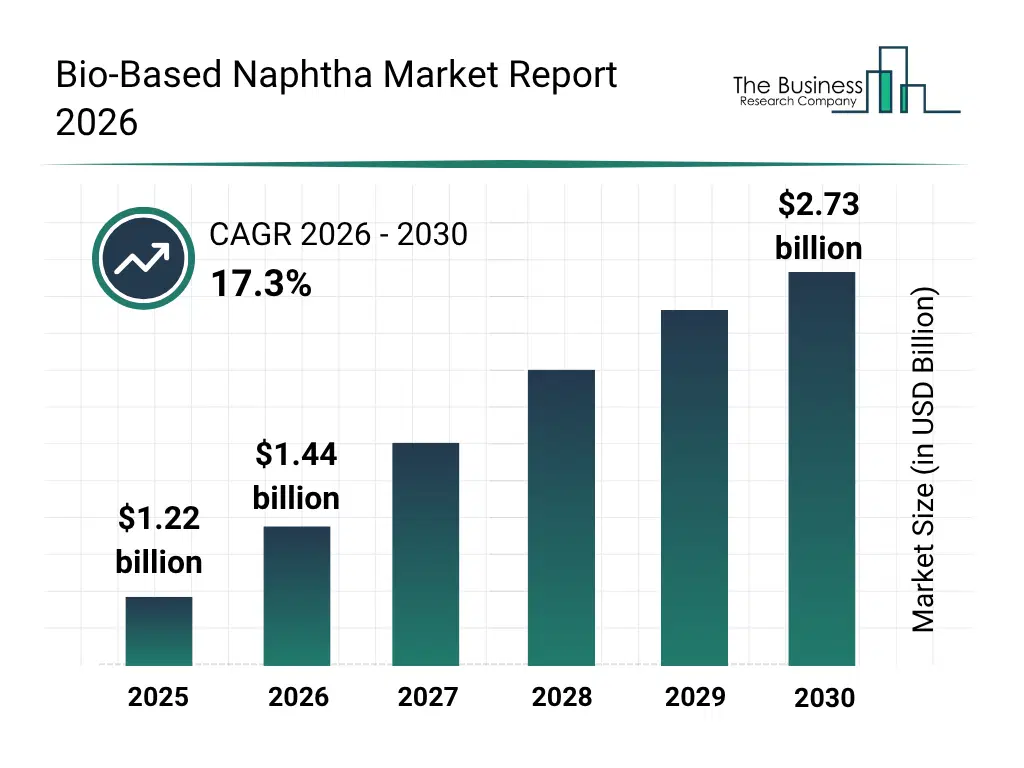
What Is The Bio-Based Naphtha Market Size and Share 2026?
The bio-based naphtha market size has grown rapidly in recent years. It will grow from $1.22 billion in 2025 to $1.44 billion in 2026 at a compound annual growth rate (CAGR) of 17.8%. The growth in the historic period can be attributed to rising demand for renewable petrochemical feedstocks, growing adoption of bio-based plastics, increasing use of sustainable fuel blending components, expanding utilization of waste-derived biomass feedstocks, rising demand for lower-carbon chemical intermediates.What Is The Bio-Based Naphtha Market Growth Forecast?
The bio-based naphtha market size is expected to see rapid growth in the next few years. It will grow to $2.73 billion in 2030 at a compound annual growth rate (CAGR) of 17.3%. The growth in the forecast period can be attributed to increasing regulatory support for renewable carbon feedstocks, growing demand for fossil-fuel substitution in petrochemical production, expanding availability of sustainable biomass residues, rising demand for circular and renewable plastics, increasing adoption of bio-based feedstocks by chemical manufacturers. Major trends in the forecast period include rising adoption of bio-based naphtha as a renewable petrochemical feedstock, growing use of bio-based naphtha in sustainable plastic production, increasing utilization of bio-based naphtha for fuel blending, expanding production of bio-based naphtha from waste-derived feedstocks, growing use of bio-based naphtha for renewable chemical intermediates.Tariff Impact On Bio-Based Naphtha Market
Tariffs are impacting the bio-based naphtha market by increasing the cost of imported biomass feedstocks, processing equipment, catalysts, and other inputs required for bio-based naphtha production. This is raising production costs and can slow the adoption of bio-based naphtha for petrochemical feedstock, bio-based plastics, fuel blending, and chemical intermediate applications, particularly in regions dependent on imported feedstocks and equipment. Production technology-intensive areas such as hydrotreatment, biomass gasification, Fischer-Tropsch synthesis, and pyrolysis are most affected due to their reliance on specialized imported equipment and processing inputs. However, tariffs are also encouraging domestic biomass sourcing, local production, regional supplier diversification, and development of more resilient renewable feedstock supply chains.
Global Bio Based Naphtha Market Segmentation
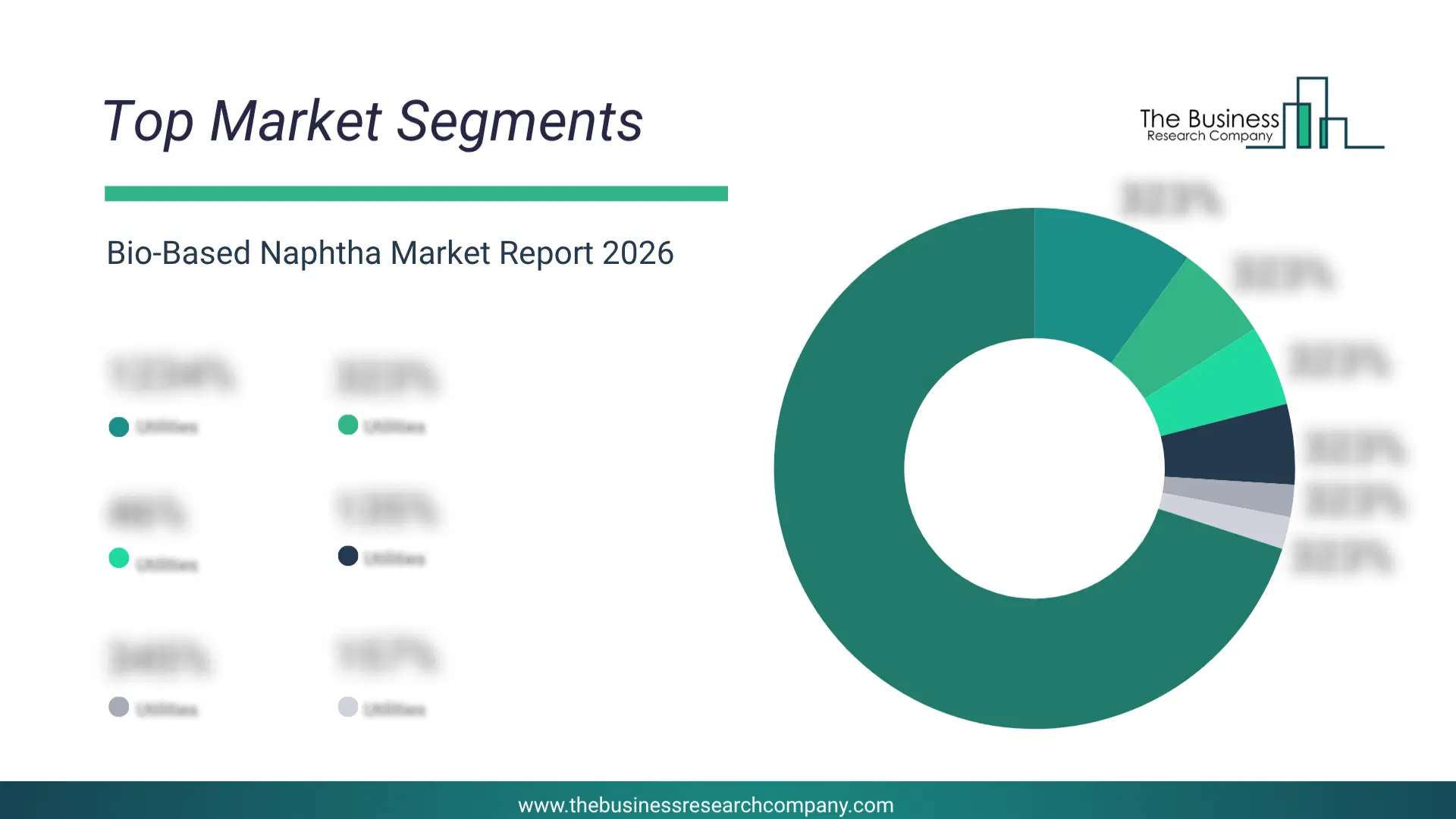
1) By Product Type: Light Bio-Naphtha, Heavy Bio-Naphtha 2) By Source: Vegetable Oils, Used Cooking Oil, Animal Fats, Biomass Residues, Other Sources 3) By Production Technology: Hydrotreatment (HEFA), Biomass Gasification And Fischer-Tropsch Synthesis, Pyrolysis, Catalytic Biomass Conversion, Other Production Technologies 4) By Distribution Channel: Direct Sales, Distributors And Traders 5) By Application: Petrochemical Feedstock, Bio-Based Plastics, Fuel Blending, Aromatics Production, Chemical Intermediates, Other Applications Subsegments: 1) By Light Bio-Naphtha: Straight-Run Light Bio-Naphtha, Hydrotreated Light Bio-Naphtha, Isomerized Light Bio-Naphtha 2) By Heavy Bio-Naphtha: Straight-Run Heavy Bio-Naphtha, Hydrotreated Heavy Bio-Naphtha, Reforming Heavy Bio-NaphthaWhat Is The Driver Of The Bio-Based Naphtha Market?
The rising production of bio-based plastics and polymers is expected to propel the growth of the bio-based naphtha market going forward. Bio-based plastics and polymers are plastic materials manufactured wholly or partly from renewable biological feedstocks instead of fossil-derived raw materials. The rising production of bio-based plastics and polymers is driven by increasing demand for sustainable packaging and stricter environmental regulations that encourage manufacturers to adopt low-carbon materials. The increasing production of bio-based plastics and polymers supports the growth of the bio-based naphtha market, as bio-based naphtha is used as a renewable feedstock for producing a wide range of bio-based plastics and polymer materials. For instance, in December 2025, according to the European Bioplastics e.V., a Belgium-based association, global bio-based plastics production capacity is projected to nearly double, increasing from 2.31 million metric tons in 2025 to approximately 4.69 million metric tons by 2030. Therefore, the rising production of bio-based plastics and polymers is driving the growth of the bio-based naphtha industry.Key Players In The Global Bio-Based Naphtha Market
Major companies operating in the bio-based naphtha market are Shell plc, TotalEnergies SE, BP p.l.c., Chevron Corporation, Phillips 66, Petróleo Brasileiro S.A. - Petrobras, Repsol S.A., Eni S.p.A., Neste Oyj, OMV Aktiengesellschaft, ENEOS Corporation, ORLEN S.A., Braskem S.A., Indian Oil Corporation Limited, Bharat Petroleum Corporation Limited, Galp Energia SGPS S.A., UPM-Kymmene Corporation, Moeve, S-Oil Corporation, SK Innovation Co. Ltd., PT Pertamina (Persero), Darling Ingredients Inc., Preem AB, World Energy LLC, Gevo Inc.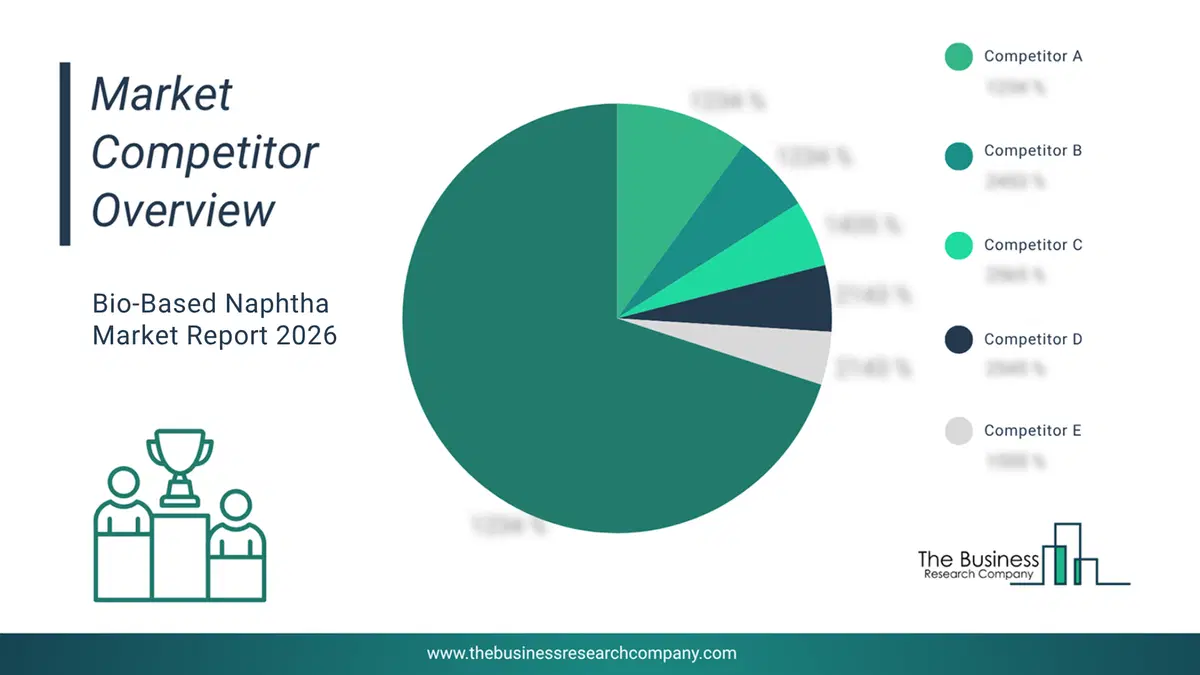
This chart is for illustrative purposes; the full report includes a detailed competitor analysis and comprehensive overview of the top 10 companies in the market.
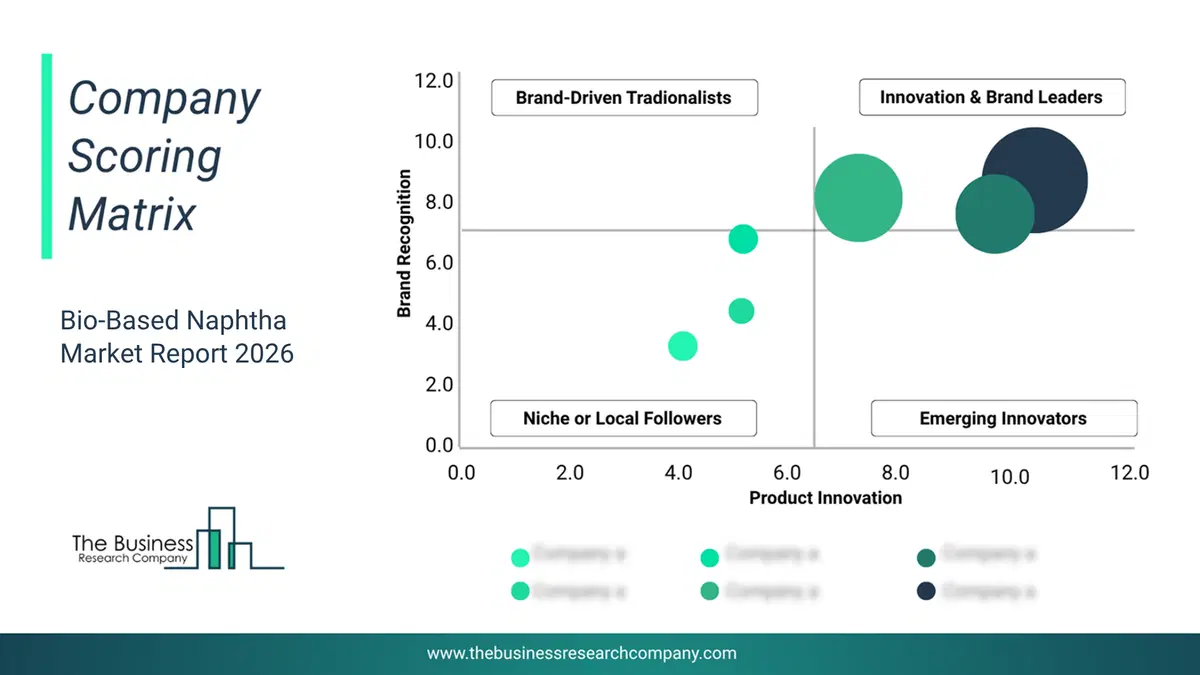
This chart maps companies by product innovation and brand strength, with bubble size indicating relative revenue, helping identify market leaders, challengers, and niche players. This is an illustrative chart; the full report provides a complete and accurate competitive analysis.
Global Bio-Based Naphtha Market Trends and Insights
Major companies operating in the bio-based naphtha market are adopting strategic partnerships and sustainable feedstock integration approaches to develop innovative renewable chemical solutions, reduce dependence on fossil-based raw materials, and support the transition toward low-carbon chemical production. Strategic partnerships help drive the growth of the bio-based naphtha by enabling collaboration among energy companies, chemical manufacturers, and downstream product manufacturers to establish renewable feedstock supply chains, integrate mass balance approaches, and expand the use of bio-derived materials in existing petrochemical applications. For instance, in February 2026, ENEOS Corporation, a Japan-based energy and chemicals company, collaborated with Mitsubishi Corporation, a Japan-based trading and business investment company, to supply bio-naphtha-derived paraxylene (Bio-PX) to Sony Corporation. Under the collaboration, ENEOS supplied Bio-PX produced at its Mizushima Refinery using renewable feedstocks through a mass balance approach, supporting a joint initiative involving 14 companies to establish a global supply chain aimed at reducing dependence on fossil-based feedstocks. The Bio-PX is intended to serve as a feedstock for polyethylene terephthalate (PET) resin used in Sony's audio-visual products and other applications. ENEOS has also obtained ISCC PLUS certification at multiple refineries to support the traceability and sustainable management of biomass-derived feedstocks.What Are Latest Mergers And Acquisitions In The Bio-Based Naphtha Market?
In January 2026, VARO Energy, a Switzerland-based energy company, acquired Preem AB for an undisclosed amount. With this acquisition, VARO aims to strengthen its renewable fuels portfolio, expand renewable feedstock processing capacity, and accelerate the production of sustainable hydrocarbon products, including renewable feedstocks used in the chemicals and polymers value chain. Preem AB is a Sweden-based energy company that produces renewable fuels, conventional transportation fuels, and renewable feedstocks for sustainable chemical and fuel applications.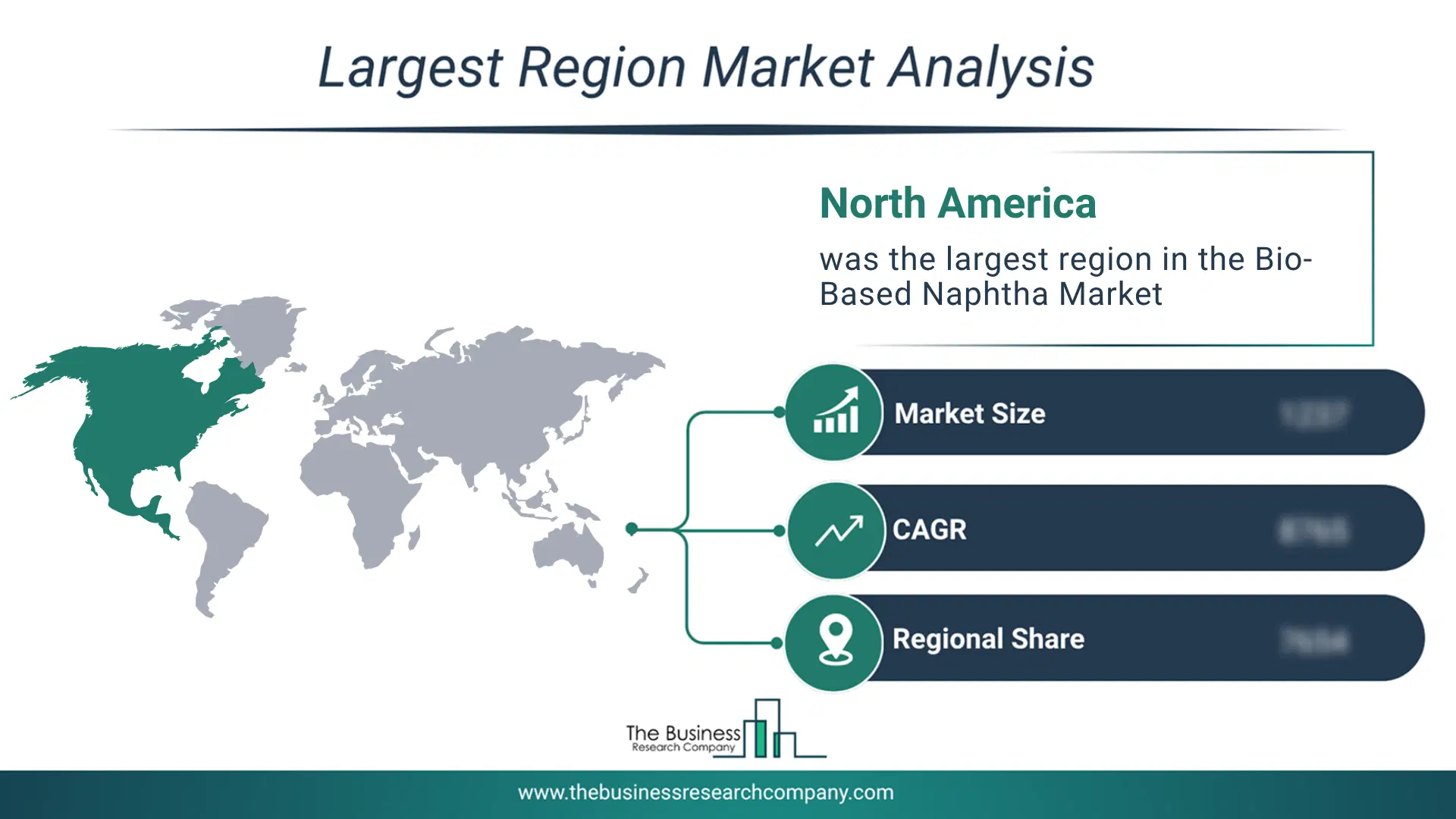
Regional Outlook
North America was the largest region in the bio-based naphtha market in 2025. Asia-Pacific is expected to be the fastest-growing region in the forecast period. The regions covered in this market report are Asia-Pacific, South East Asia, Western Europe, Eastern Europe, North America, South America, Middle East, Africa. The countries covered in this market report are Australia, Brazil, China, France, Germany, India, Indonesia, Japan, Taiwan, Russia, South Korea, UK, USA, Canada, Italy, Spain.What Defines the Bio-Based Naphtha Market?
The bio-based naphtha market consists of sales of blending stock, certified renewable naphtha, and low-carbon naphtha. Values in this market are ‘factory gate’ values, that is the value of goods sold by the manufacturers or creators of the goods, whether to other entities (including downstream manufacturers, wholesalers, distributors and retailers) or directly to end customers. The value of goods in this market includes related services sold by the creators of the goods.How is Market Value Defined and Measured?
The market value is defined as the revenues that enterprises gain from the sale of goods and/or services within the specified market and geography through sales, grants, or donations in terms of the currency (in USD unless otherwise specified). The revenues for a specified geography are consumption values that are revenues generated by organizations in the specified geography within the market, irrespective of where they are produced. It does not include revenues from resales along the supply chain, either further along the supply chain or as part of other products.
This chart presents market attractiveness based on a quantitative evaluation of growth, competition, strategic alignment, and risk, offering a clear view of opportunity areas for decision-making. This chart is for illustrative purposes; the full report contains the complete analysis.

This chart highlights the Total Addressable Market (TAM) by estimating the maximum revenue opportunity using an assumption-driven approach, supporting strategic planning and opportunity sizing across markets. The chart is illustrative; the full report provides a more comprehensive analysis.
What Key Data and Analysis Are Included in the Bio-Based Naphtha Market Report 2026?
The bio-based naphtha market research report is one of a series of new reports from The Business Research Company that provides market statistics, including industry global market size, regional shares, competitors with the market share, detailed market segments, market trends and opportunities, and any further data you may need to thrive in the bio-based naphtha industry. The market research report delivers a complete perspective of everything you need, with an in-depth analysis of the current and future state of the industry.Bio-Based Naphtha Market Report Forecast Analysis
| Report Attribute | Details |
|---|---|
| Market Size Value In 2026 | $1.44 billion |
| Revenue Forecast In 2030 | $2.73 billion |
| Growth Rate | CAGR of 17.3% from 2026 to 2030 |
| Base Year For Estimation | 2025 |
| Actual Estimates/Historical Data | 2020-2025 |
| Forecast Period | 2026 - 2030 |
| Market Representation | Revenue in USD Billion and CAGR from 2026 to 2030 |
| Segments Covered | Product Type, Source, Production Technology, Distribution Channel, Application |
| Regional Scope | Asia-Pacific, Western Europe, Eastern Europe, North America, South America, Middle East, Africa |
| Country Scope | The countries covered in the report are Australia, Brazil, China, France, Germany, India, Indonesia, Japan, Taiwan, Russia, South Korea, UK, USA, Canada, Italy, Spain. |
| Key Companies Profiled | Shell plc, TotalEnergies SE, BP p.l.c., Chevron Corporation, Phillips 66, Petróleo Brasileiro S.A. - Petrobras, Repsol S.A., Eni S.p.A., Neste Oyj, OMV Aktiengesellschaft, ENEOS Corporation, ORLEN S.A., Braskem S.A., Indian Oil Corporation Limited, Bharat Petroleum Corporation Limited, Galp Energia SGPS S.A., UPM-Kymmene Corporation, Moeve, S-Oil Corporation, SK Innovation Co. Ltd., PT Pertamina (Persero), Darling Ingredients Inc., Preem AB, World Energy LLC, Gevo Inc. |
| Customization Scope | Request for Customization |
| Pricing And Purchase Options | Explore Purchase Options |