

Bio- Carbon Dioxide (CO2) Utilization Market Report 2026
Global Outlook – By Technology (Biological Conversion, Chemical Conversion, Physical Conversion), By Application (Biofuels, Bioplastics, Chemicals, Food And Beverages, Other Applications), By End-User (Industrial, Agricultural, Energy, Other End-Users) – Market Size, Trends, Strategies, and Forecast to 2030
Bio- Carbon Dioxide (CO2) Utilization Market Overview
• Bio- Carbon Dioxide (CO2) Utilization market size has reached to $1.66 billion in 2025 • Expected to grow to $3.12 billion in 2030 at a compound annual growth rate (CAGR) of 13.5% • Growth Driver: Increasing Adoption Of Bio-Based Products Fuelling The Growth Of The Market Amid Rising Sustainability Mandates • Market Trend: Integration Of Biocatalytic Gas-Fermentation For Emission Reduction • Europe was the largest region in 2025 and Asia-Pacific is the fastest growing region.What Is Covered Under Bio- Carbon Dioxide (CO2) Utilization Market?
Bio-carbon dioxide (CO2) utilization refers to the process of using living organisms or biological systems to capture and convert CO2 into useful products. It typically involves microalgae, bacteria, or enzymes that absorb CO2 and transform it into materials like biofuels, proteins, fertilizers, or bioplastics through natural or engineered metabolic pathways. This is important because it helps reduce greenhouse gases while creating sustainable, low-carbon alternatives to fossil-based products. The main technologies of bio-carbon dioxide (CO₂) utilization are biological conversion, chemical conversion, and physical conversion. Biological conversion is a process that uses microorganisms or enzymes to transform carbon dioxide into useful products such as biofuels, chemicals, or biomass. The key applications involved are biofuels, bioplastics, chemicals, food and beverages, and others, and they are used by several end-users, such as industrial, agricultural, energy, and others.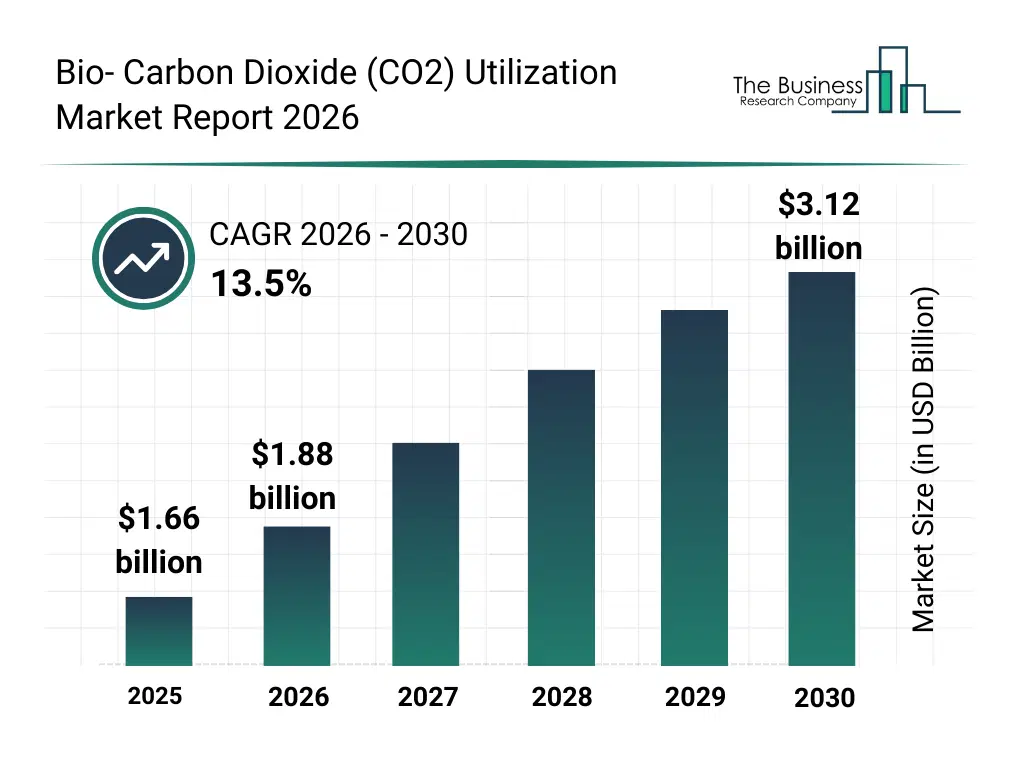
What Is The Bio- Carbon Dioxide (CO2) Utilization Market Size and Share 2026?
The bio- carbon dioxide (co2) utilization market size has grown rapidly in recent years. It will grow from $1.66 billion in 2025 to $1.88 billion in 2026 at a compound annual growth rate (CAGR) of 13.7%. The growth in the historic period can be attributed to rising greenhouse gas emissions, research in microbial fermentation, government climate initiatives, growth in renewable energy projects, availability of industrial co2 sources.What Is The Bio- Carbon Dioxide (CO2) Utilization Market Growth Forecast?
The bio- carbon dioxide (co2) utilization market size is expected to see rapid growth in the next few years. It will grow to $3.12 billion in 2030 at a compound annual growth rate (CAGR) of 13.5%. The growth in the forecast period can be attributed to net zero emission targets, investment in carbon utilization technologies, growth of bio based materials, advances in metabolic engineering, corporate sustainability commitments. Major trends in the forecast period include growing adoption of biological co2 conversion, expansion of algae based carbon utilization, increasing production of biofuels from co2, rising use of co2 derived bioplastics, focus on carbon neutral manufacturing.
Global Bio- Carbon Dioxide (CO2) Utilization Market Segmentation
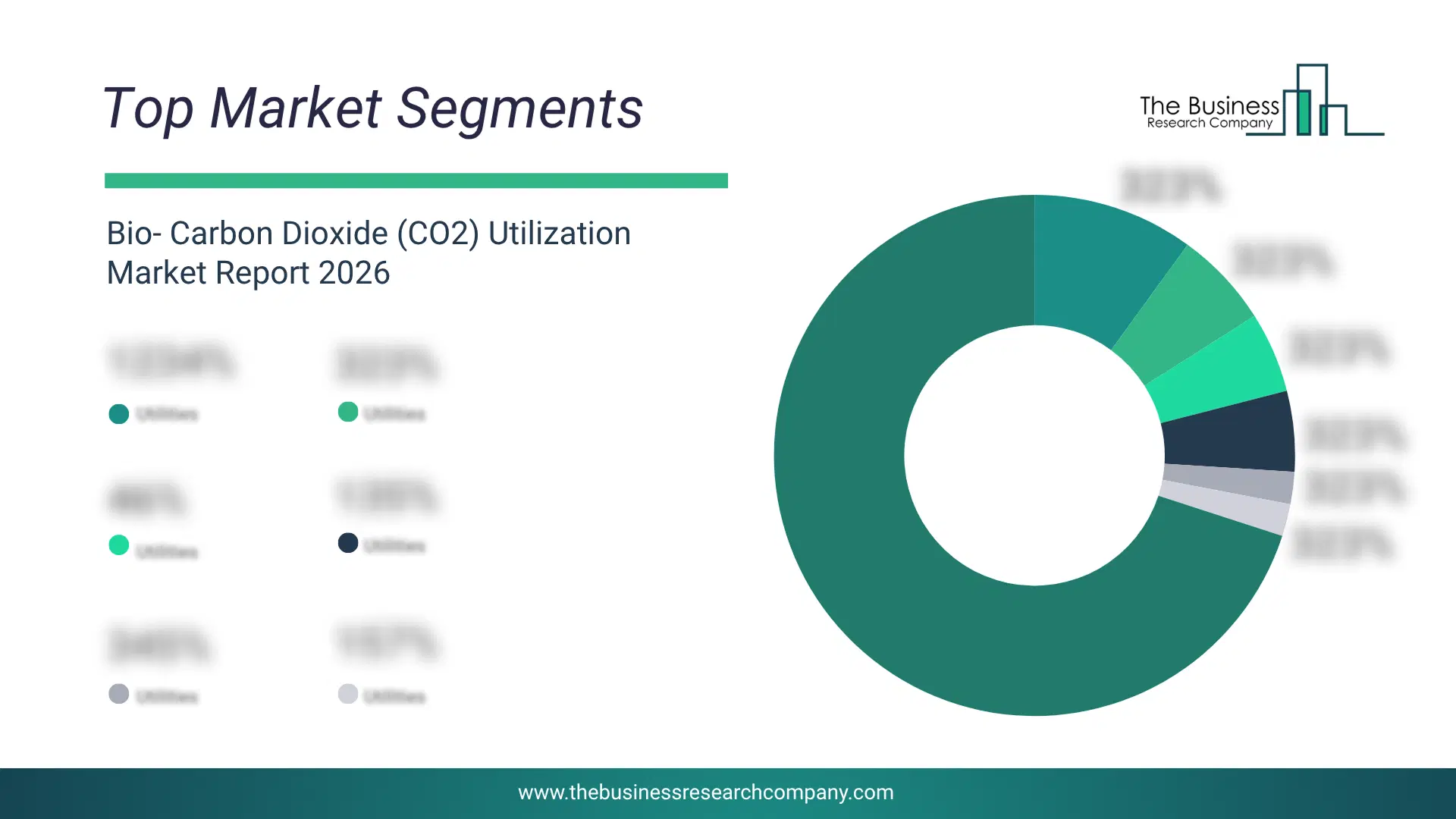
1) By Technology: Biological Conversion, Chemical Conversion, Physical Conversion 2) By Application: Biofuels, Bioplastics, Chemicals, Food And Beverages, Other Applications 3) By End-User: Industrial, Agricultural, Energy, Other End-Users Subsegments: 1) By Biological Conversion: Microbial Fermentation, Algae Cultivation, Enzymatic Conversion 2) By Chemical Conversion: Catalytic Hydrogenation, Mineral Carbonation, Thermochemical Conversion 3) By Physical Conversion: Supercritical Extraction, Adsorption And Separation, Cryogenic ProcessingWhat Is The Driver Of The Bio- Carbon Dioxide (CO2) Utilization Market?
The increasing adoption of bio-based products is expected to propel the growth of the bio-carbon dioxide (CO2) utilization market going forward. Bio-based products refer to materials and goods derived from renewable biological sources such as plants, algae, and microorganisms, instead of fossil-based feedstocks. Adoption of bio-based products is rising due to stricter environmental regulations that push manufacturers to replace fossil-based materials with renewable, lower-carbon alternatives. Bio-carbon dioxide (CO₂) utilization transforms captured CO₂ from biological or industrial sources into valuable feedstocks, thereby supporting the production of sustainable bio-based products such as biofuels, bioplastics, and biochemicals while reducing greenhouse gas emissions. For instance, in December 2023, according to the European Bioplastics Association, a Germany-based non-profit industry organization, global bioplastics production capacity was projected to increase from around 2.18 million tonnes in 2023 to nearly 7.43 million tonnes in 2028. Therefore, the increasing adoption of bio-based products is driving the growth for the bio-carbon dioxide (CO₂) utilization market.Key Players In The Global Bio- Carbon Dioxide (CO2) Utilization Market
Major companies operating in the bio- carbon dioxide (co2) utilization market are Hitachi Zosen Corporation+Y314:Z325, LanzaTech Global Inc., Newlight Technologies LLC., Air Protein Inc., Algenol Biotech LLC., String Bio Private Limited., Cemvita Factory Inc., Electrochaea GmbH., Buggypower Biotech S.A., Solar Foods Oy., NovoNutrients Inc., Phytonix Corporation., Pond Technologies Inc., Global Algae Innovations Inc., Seambiotic Ltd., Photanol BV., Kiverdi Inc., Aerbio, Arkeon Biotechnologies GmbH., MBD Energy Limited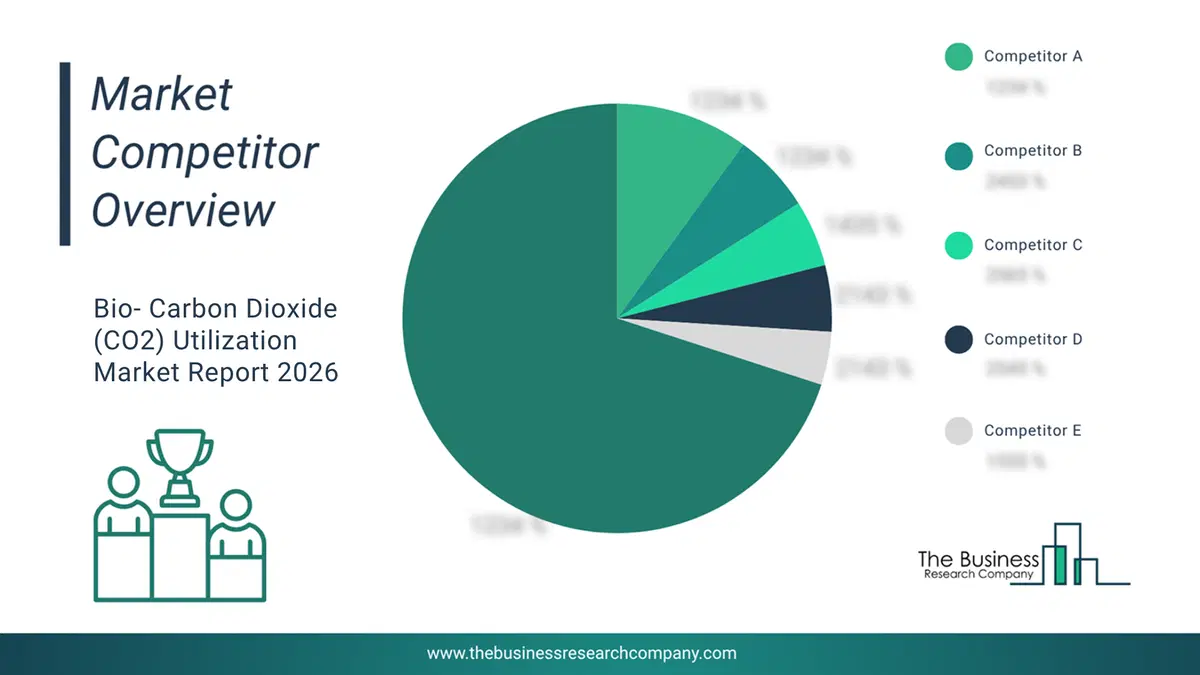
This chart is for illustrative purposes; the full report includes a detailed competitor analysis and comprehensive overview of the top 10 companies in the market.
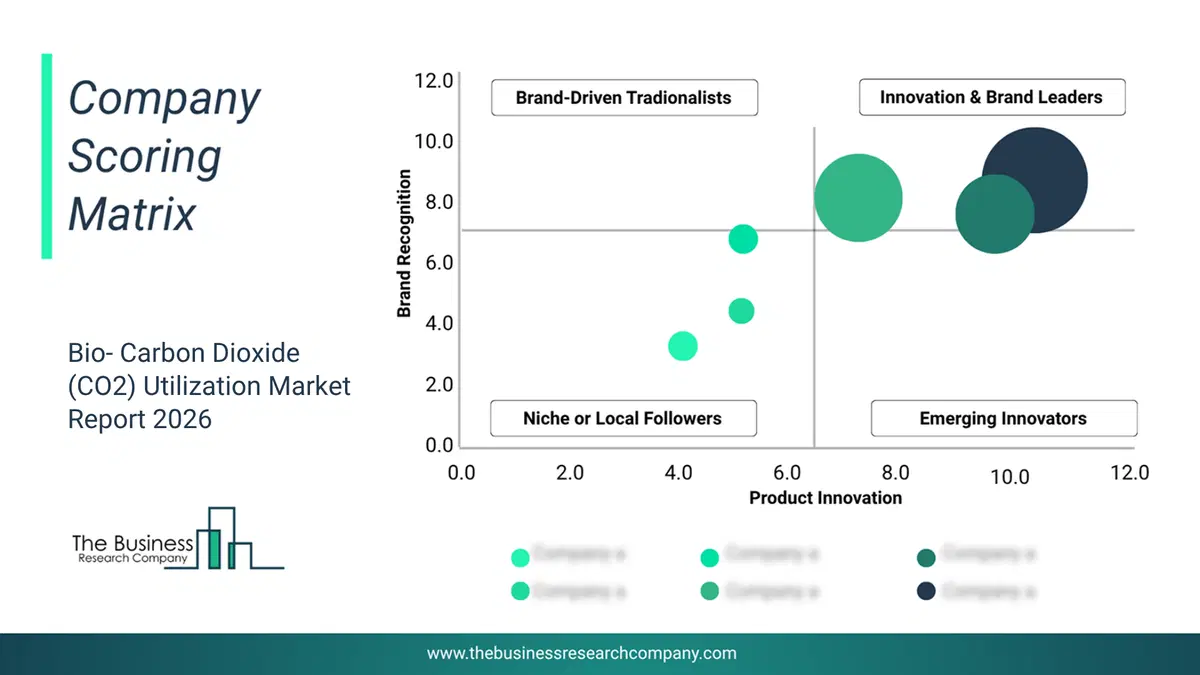
This chart maps companies by product innovation and brand strength, with bubble size indicating relative revenue, helping identify market leaders, challengers, and niche players. This is an illustrative chart; the full report provides a complete and accurate competitive analysis.
Global Bio- Carbon Dioxide (CO2) Utilization Market Trends and Insights
Major companies operating in the bio-carbon dioxide (CO2) utilization market are focusing on incorporating technological advancements such as biocatalytic gas-fermentation to enhance conversion efficiency and expand the production of low-carbon, value-added chemicals. Biocatalytic gas-fermentation is an advanced process that uses specially selected or engineered microorganisms to convert CO2 and hydrogen into commercial-grade compounds through biological catalysis, enabling capabilities such as continuous carbon conversion, modular deployment, and integration with industrial CO2 sources. For instance, in November 2023, Again, a Denmark-based carbon-to-chemicals biomanufacturing startup, launched its first CO2 utilization plant in Copenhagen. The facility uses biocatalytic gas-fermentation to transform waste industrial CO2 streams into carbon-negative chemicals, featuring direct gas feed without pre-treatment, modular bioreactor systems, and microbial fermentation that produces acetate and acetic acid. The plant improves industrial decarbonization and sustainable chemical production by turning captured CO2 into useful materials for textiles, packaging, and consumer goods.What Are Latest Mergers And Acquisitions In The Bio- Carbon Dioxide (CO2) Utilization Market?
In February 2024, CycleØ Group Limited, a UK-based provider of renewable gas solutions that develops, builds, and operates biomethane and green gas projects, acquired Biogasclean A/S for an undisclosed amount. With this acquisition, CycleØ gains access to Biogasclean’s proprietary biological methanation and biogas purification technology, thereby expanding its carbon dioxide (CO2) capture and conversion capabilities while improving its ability to produce fully circular green gas by converting biogenic CO2 into e-methane. Biogasclean is a Denmark-based provider of biological methanation and desulphurization technologies, known for its specialized expertise in upgrading biogas streams and transforming CO2 into renewable methane using microorganisms.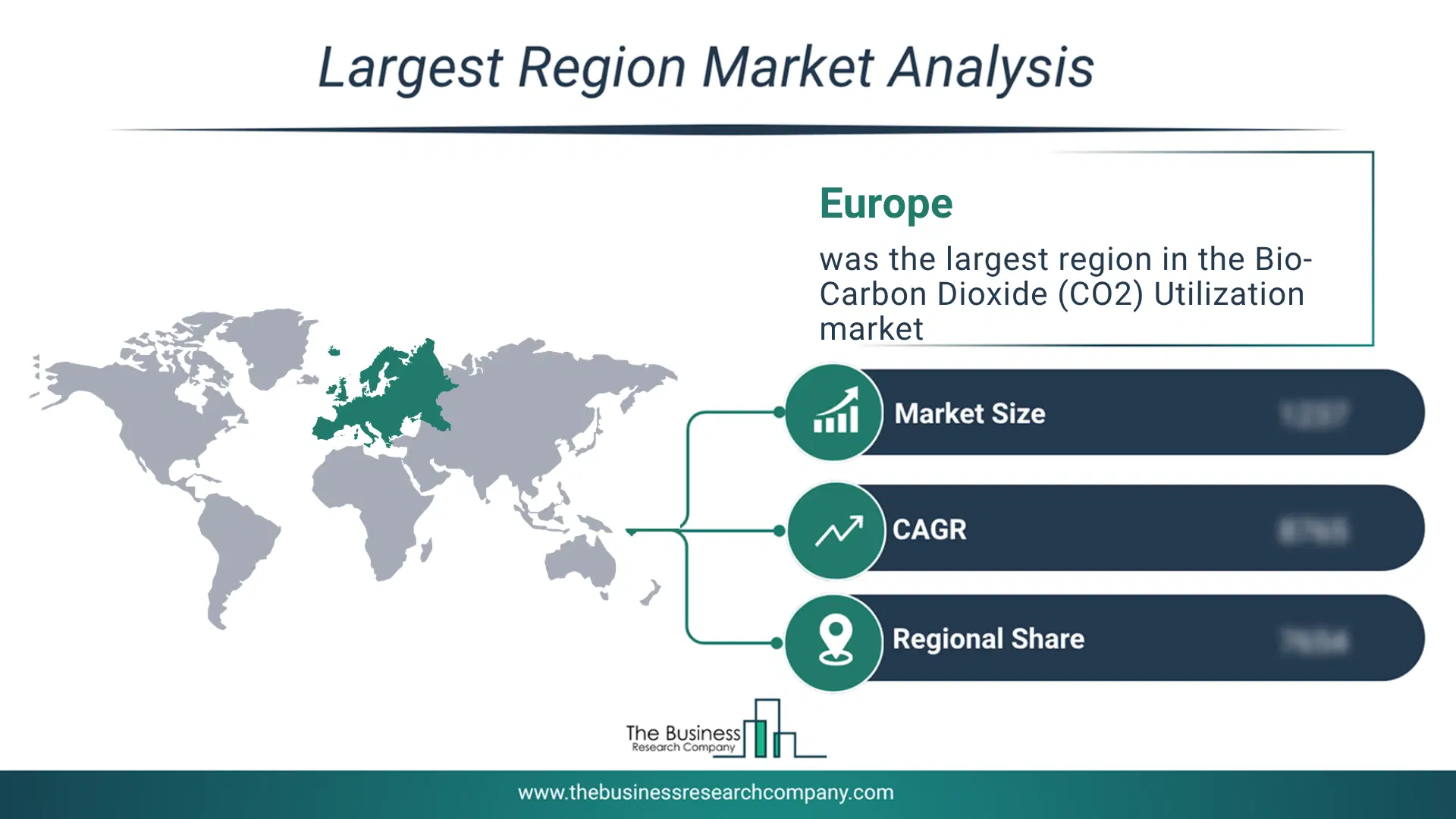
Regional Insights
Europe was the largest region in the bio- carbon dioxide (CO2) utilization market in 2025. Asia-Pacific is expected to be the fastest-growing region in the forecast period. The regions covered in this market report are Asia-Pacific, South East Asia, Western Europe, Eastern Europe, North America, South America, Middle East, Africa The countries covered in this market report are Australia, Brazil, China, France, Germany, India, Indonesia, Japan, Taiwan, Russia, South Korea, UK, USA, Canada, Italy, SpainWhat Defines the Bio- Carbon Dioxide (CO2) Utilization Market?
The bio- carbon dioxide (CO2) utilization market consists of revenues earned by entities by providing services such as carbon capture services, engineering and design services, project development services, technology integration services, monitoring and verification services, and carbon credit management services. The market value includes the value of related goods sold by the service provider or included within the service offering. The bio- carbon dioxide (CO2) utilization market also includes sales of proteins, animal feed ingredients, fertilizers, synthetic methane, building materials, and specialty polymers. Values in this market are ‘factory gate’ values, that is the value of goods sold by the manufacturers or creators of the goods, whether to other entities (including downstream manufacturers, wholesalers, distributors and retailers) or directly to end customers. The value of goods in this market includes related services sold by the creators of the goods.How is Market Value Defined and Measured?
The market value is defined as the revenues that enterprises gain from the sale of goods and/or services within the specified market and geography through sales, grants, or donations in terms of the currency (in USD unless otherwise specified). The revenues for a specified geography are consumption values that are revenues generated by organizations in the specified geography within the market, irrespective of where they are produced. It does not include revenues from resales along the supply chain, either further along the supply chain or as part of other products.
This chart presents market attractiveness based on a quantitative evaluation of growth, competition, strategic alignment, and risk, offering a clear view of opportunity areas for decision-making. This chart is for illustrative purposes; the full report contains the complete analysis.

This chart highlights the Total Addressable Market (TAM) by estimating the maximum revenue opportunity using an assumption-driven approach, supporting strategic planning and opportunity sizing across markets. The chart is illustrative; the full report provides a more comprehensive analysis.
What Key Data and Analysis Are Included in the Bio- Carbon Dioxide (CO2) Utilization Market Report 2026?
The bio- carbon dioxide (co2) utilization market research report is one of a series of new reports from The Business Research Company that provides market statistics, including industry global market size, regional shares, competitors with the market share, detailed market segments, market trends and opportunities, and any further data you may need to thrive in the bio- carbon dioxide (co2) utilization industry. The market research report delivers a complete perspective of everything you need, with an in-depth analysis of the current and future state of the industry.Bio Carbon Dioxide CO2 Utilization Market Report Forecast Analysis
| Report Attribute | Details |
|---|---|
| Market Size Value In 2026 | $1.88 billion |
| Revenue Forecast In 2030 | $3.12 billion |
| Growth Rate | CAGR of 13.7% from 2026 to 2030 |
| Base Year For Estimation | 2025 |
| Actual Estimates/Historical Data | 2020-2025 |
| Forecast Period | 2026 - 2030 |
| Market Representation | Revenue in USD Billion and CAGR from 2026 to 2030 |
| Segments Covered | Technology, Application, End-User |
| Regional Scope | Asia-Pacific, Western Europe, Eastern Europe, North America, South America, Middle East, Africa |
| Country Scope | The countries covered in this market report are Australia, Brazil, China, France, Germany, India, Indonesia, Japan, Taiwan, Russia, South Korea, UK, USA, Canada, Italy, Spain |
| Key Companies Profiled | Hitachi Zosen Corporation+Y314:Z325, LanzaTech Global Inc., Newlight Technologies LLC., Air Protein Inc., Algenol Biotech LLC., String Bio Private Limited., Cemvita Factory Inc., Electrochaea GmbH., Buggypower Biotech S.A., Solar Foods Oy., NovoNutrients Inc., Phytonix Corporation., Pond Technologies Inc., Global Algae Innovations Inc., Seambiotic Ltd., Photanol BV., Kiverdi Inc., Aerbio, Arkeon Biotechnologies GmbH., MBD Energy Limited |
| Customization Scope | Request for Customization |
| Pricing And Purchase Options | Explore Purchase Options |