
Bio Decontamination Equipment Market Report 2026
Global Outlook – By Product Type (Chamber Decontamination, Room Decontamination), By Technology Type (Hydrogen Peroxide Vapor, Chlorine Dioxide, Ultraviolet (UV) Radiation, Others Technology Types), By Application (Surface Decontamination, Air Decontamination), By End User (Hospitals, Pharmaceutical Companies, Research Laboratories, Food Processing Plants, Aerospace Enterprises) – Market Size, Trends, Strategies, and Forecast to 2030
Bio Decontamination Equipment Market Overview
• Bio Decontamination Equipment market size has reached to $1.21 billion in 2025 • Expected to grow to $2.08 billion in 2030 at a compound annual growth rate (CAGR) of 11.4% • Growth Driver: Rising Hospital-Acquired Infections Driving The Growth Of The Market Due To Increasing Risk Of Pathogen Transmission • Market Trend: Advancements In Contamination Control Tools Enhancing Hygiene And Regulatory Compliance In High-Risk Environments • North America was the largest region in 2025 and Asia-Pacific is the fastest growing region.What Is Covered Under Bio Decontamination Equipment Market?
Bio decontamination equipment refers to devices used to remove or destroy biological contaminants to maintain a clean and sterile environment. Such equipment ensures that microorganisms like bacteria, viruses, and spores are effectively reduced or eliminated from surfaces, air, and enclosed spaces. It plays a vital role in maintaining hygiene and biosafety standards by preventing contamination and supporting compliance with strict cleanliness regulations in controlled environments. The main product types of bio decontamination equipment include chamber decontamination and room decontamination. Chamber decontamination refers to the sterilization of enclosed and controlled chambers, which are designed for handling sensitive materials and processes where microbial contamination must be avoided. It uses various technologies, including hydrogen peroxide vapor, chlorine dioxide, ultraviolet (UV) radiation, and others, and is applied for surface decontamination, air decontamination, and water decontamination. It is used by several end users, including hospitals, pharmaceutical companies, research laboratories, food processing plants, and aerospace enterprises.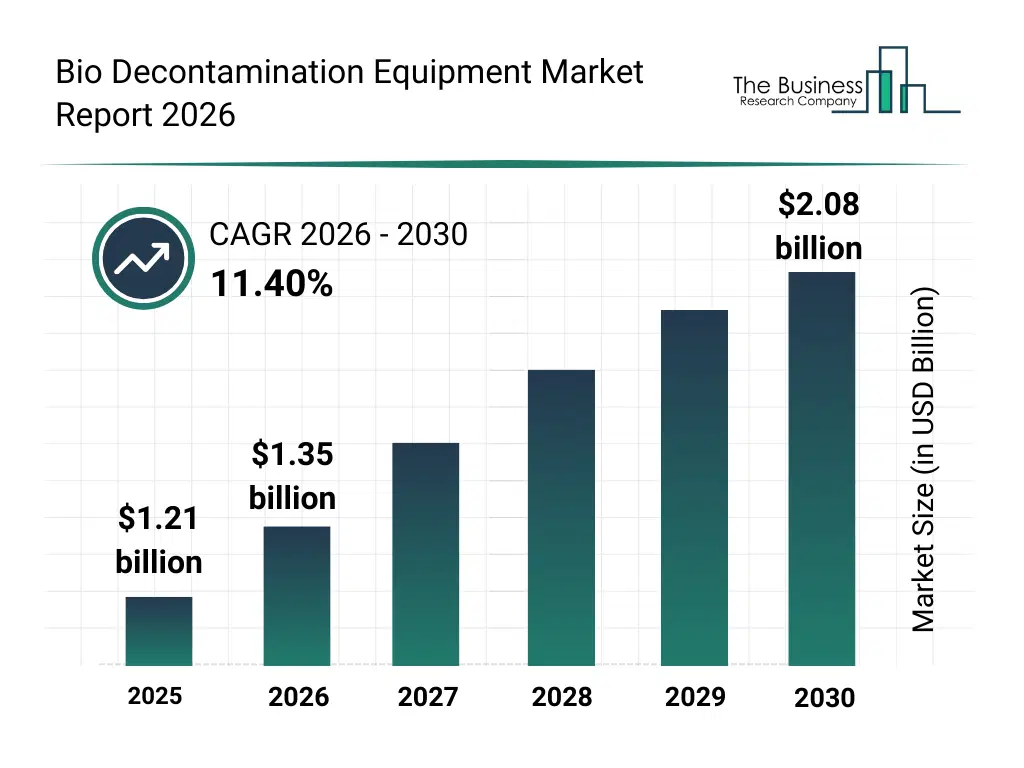
What Is The Bio Decontamination Equipment Market Size and Share 2026?
The bio decontamination equipment market size has grown rapidly in recent years. It will grow from $1.21 billion in 2025 to $1.35 billion in 2026 at a compound annual growth rate (CAGR) of 11.7%. The growth in the historic period can be attributed to stringent biosafety regulations, hospital-acquired infection concerns, manual cleaning inefficiencies, early adoption of UV and hydrogen peroxide systems, rising demand from pharmaceutical labs.What Is The Bio Decontamination Equipment Market Growth Forecast?
The bio decontamination equipment market size is expected to see rapid growth in the next few years. It will grow to $2.08 billion in 2030 at a compound annual growth rate (CAGR) of 11.4%. The growth in the forecast period can be attributed to integration of ai and automation, expansion of cleanroom facilities, adoption in food and aerospace industries, increasing awareness of pathogen control, government support for hygiene compliance. Major trends in the forecast period include AI-based contamination detection systems, iot-integrated decontamination equipment, automated room and surface sterilization, cloud-connected monitoring platforms, data-driven environmental control.
Global Bio Decontamination Equipment Market Segmentation
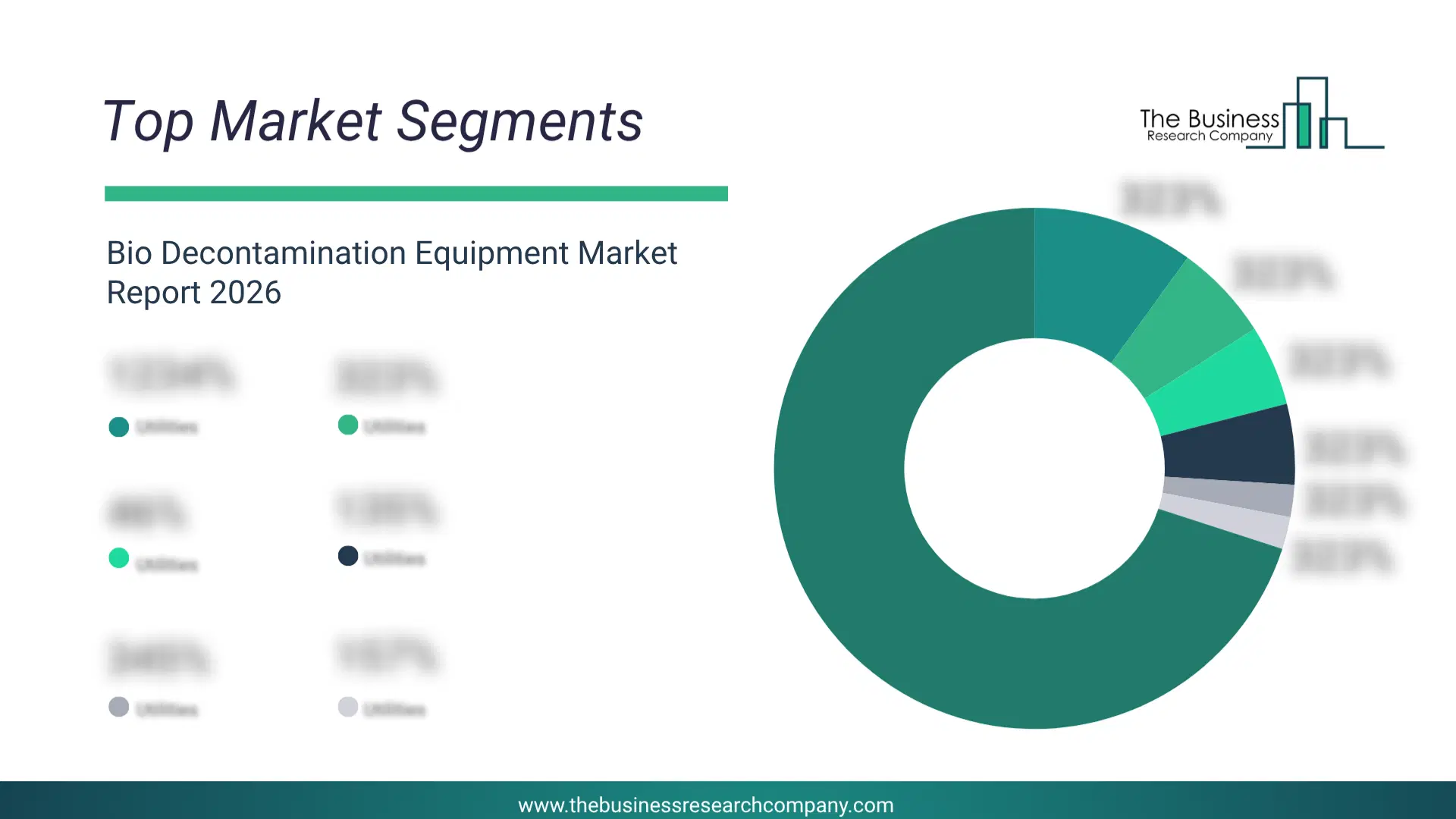
1) By Product Type: Chamber Decontamination, Room Decontamination 2) By Technology Type: Hydrogen Peroxide Vapor, Chlorine Dioxide, Ultraviolet (UV) Radiation, Others Technology Types 3) By Application: Surface Decontamination, Air Decontamination 4) By End User: Hospitals, Pharmaceutical Companies, Research Laboratories, Food Processing Plants, Aerospace Enterprises Subsegments: 1) By Chamber Decontamination: Hydrogen Peroxide Vapor Systems, Ultraviolet Light Chambers, Ozone-Based Chambers, Dry Fog Systems, Chlorine Dioxide Chambers 2) By Room Decontamination: Mobile Hydrogen Peroxide Units, Fixed Ultraviolet Systems, Fogging MachinesWhat Is The Driver Of The Bio Decontamination Equipment Market?
The increasing incidence of hospital-acquired infections is expected to propel the growth of the bio decontamination equipment market going forward. Hospital-acquired infections (HAIs) are infections that patients get while receiving medical treatment in a hospital or other healthcare facility, typically appearing 48 hours or more after admission. The rise in hospital-acquired infections is due to increasing patient admissions, as higher occupancy rates elevate the risk of cross-contamination and infection spread. Bio decontamination equipment helps prevent hospital-acquired infections by effectively eliminating harmful microorganisms from critical surfaces and air, thereby reducing the risk of pathogen transmission within healthcare environments. For instance, in March 2025, according to the Health Security Agency, a UK-based government body, hospital-acquired infections were observed in 7.6% of patients in 2023, with pneumonia and lower respiratory tract infections being the most common (29.6%), followed by urinary tract infections (17.5%) and sepsis or disseminated infections (10.6%). Therefore, the increasing incidence of hospital-acquired infections is driving the growth of the bio decontamination equipment industry.Key Players In The Global Bio Decontamination Equipment Market
Major companies operating in the bio decontamination equipment market are Steris Plc, Labconco Corporation, Turnkey Modular Systems Inc., AM Instruments Srl, Air Science LLC, Automated Systems of Tacoma LLC, UVDI Inc., Brinda Pharma Technologies Pvt. Ltd., TOMI Environmental Solutions Inc., De Lama S.p.A., Sanosil International AG, Suncombe Ltd., Weike Group, LifeAire Systems LLC, Germitec, CURIS Decontamination System, JCE Biotechnology, Noxilizer Inc., Hunan Kehuan Biological Technology Co. Ltd., LAF Technologies Pty Ltd., Cleamix Ltd., Solidfog Technologies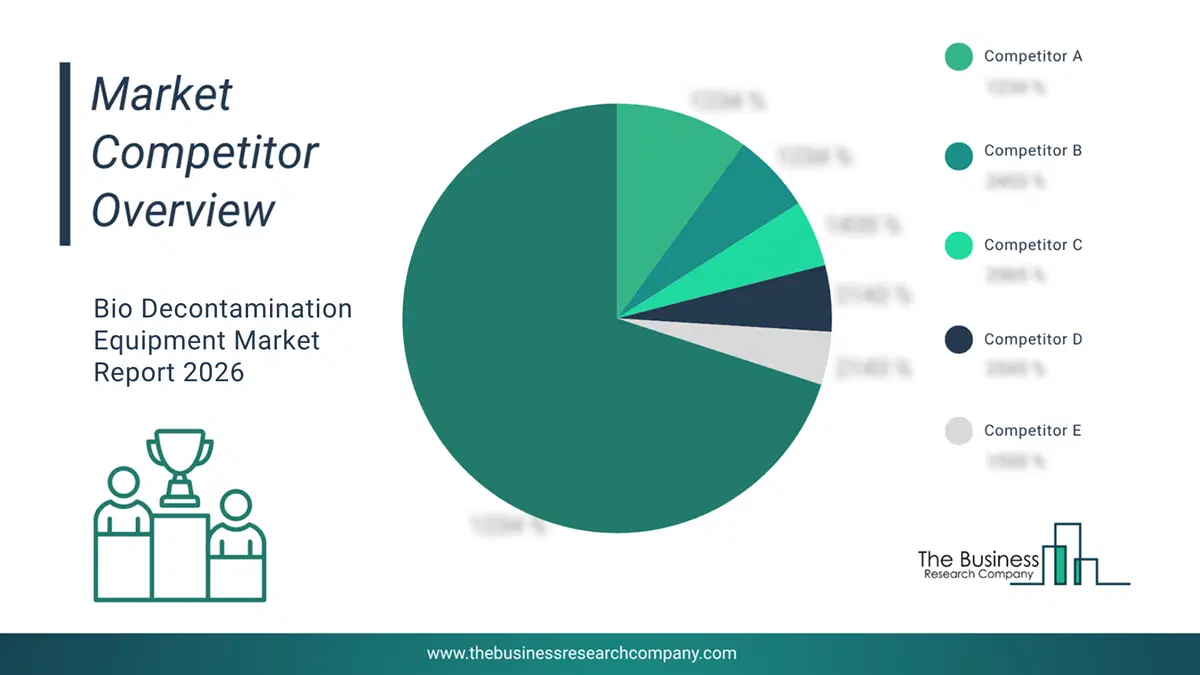
This chart is for illustrative purposes; the full report includes a detailed competitor analysis and comprehensive overview of the top 10 companies in the market.
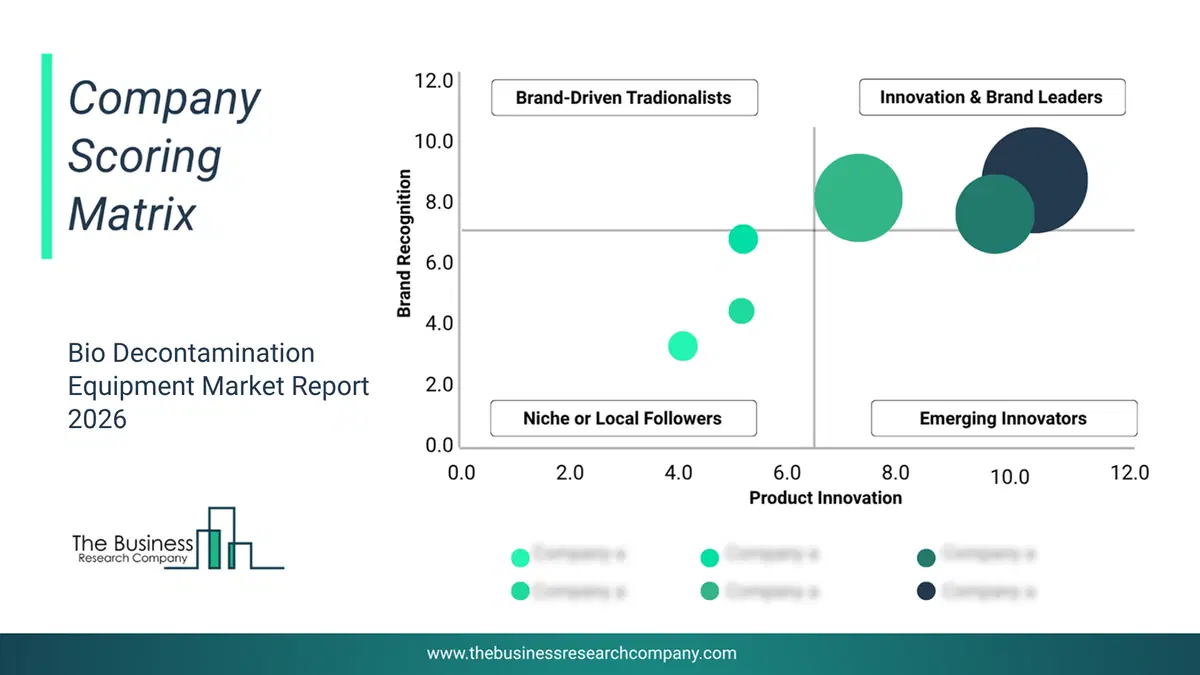
This chart maps companies by product innovation and brand strength, with bubble size indicating relative revenue, helping identify market leaders, challengers, and niche players. This is an illustrative chart; the full report provides a complete and accurate competitive analysis.
Global Bio Decontamination Equipment Market Trends and Insights
Major companies operating in the bio decontamination equipment market are focusing on developing advanced solutions, such as contamination control tools, to support regulatory compliance and quality standards in critical industries. Contamination control tools are instruments or systems used to maintain cleanliness by minimizing or removing harmful microbes and particles from a controlled environment. For instance, in May 2025, UMF Corporation, a US-based manufacturer of cleaning and hygiene products, launched the RPM (Ridged Performance Material) product line. The system is a complete 10-piece set of contamination control tools designed to ensure effective hygiene in high-risk environments such as hospital pharmacies, vivariums, food processing areas, and sites requiring hazardous substance remediation. At the core of these tools is the Ridged Performance Material, a cleaning medium that efficiently removes and absorbs contaminants from surfaces. The collection includes specialized contamination control tools like flat mops, wipers, applicators, and accessories, all engineered for maximum lint-free performance. A standout feature is the OTU Hook and Loop Frame, a single-use, fully recyclable polypropylene frame that provides a cost-effective alternative to traditional stainless steel or reusable mop frames.What Are Latest Mergers And Acquisitions In The Bio Decontamination Equipment Market?
In January 2024, Allentown LLC, a US-based life science solutions provider, acquired ClorDiSys for an undisclosed amount. Through this acquisition, Allentown Limited Liability Company aims to expand its solutions portfolio by adding decontamination, disinfection, and sterilization services, strengthening its presence in biomedical research and adjacent life science markets. ClorDiSys is a US-based provider of bio decontamination equipment.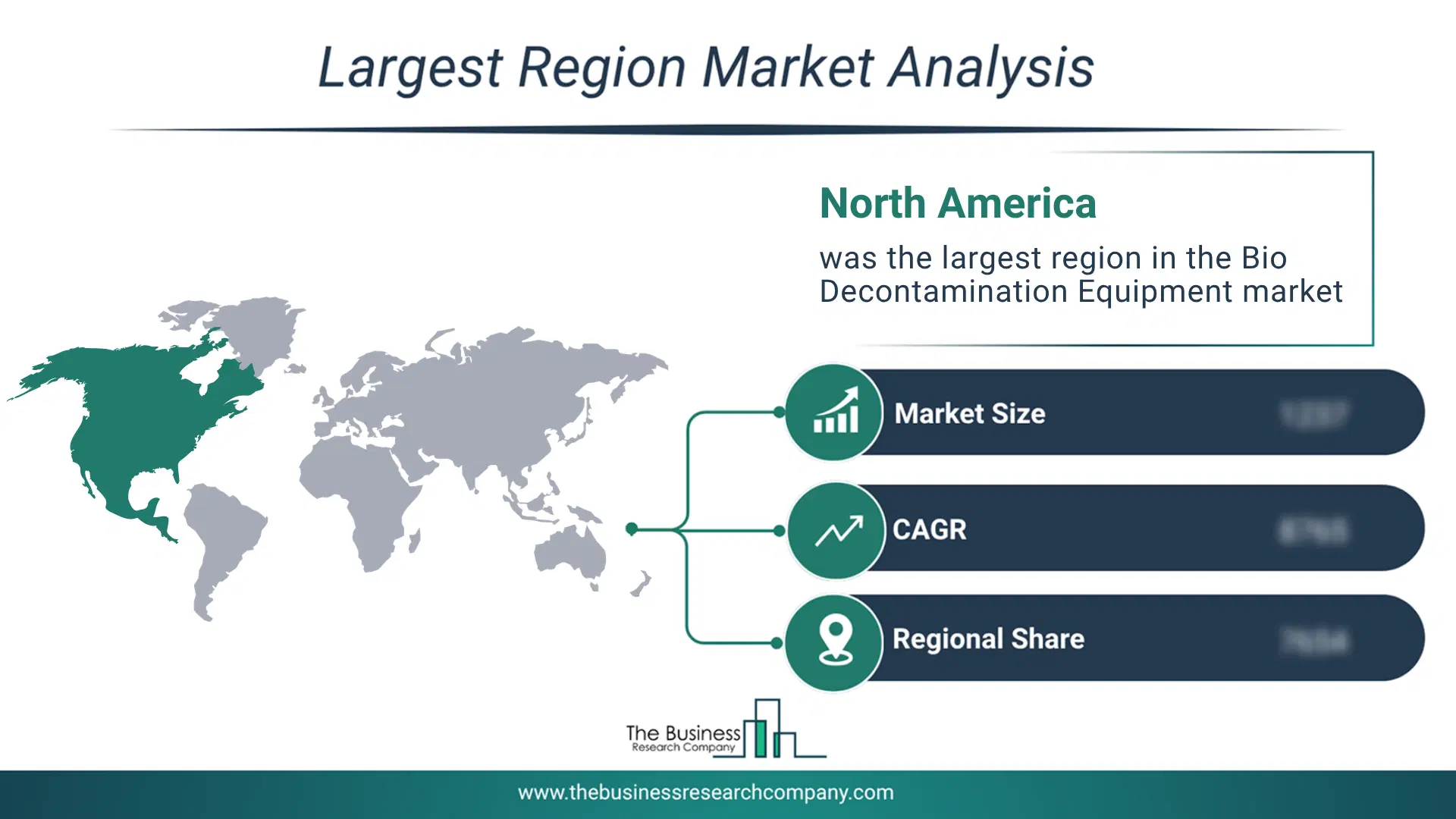
Regional Outlook
North America was the largest region in the bio decontamination equipment market in 2025. Asia-Pacific is expected to be the fastest-growing region in the forecast period. The regions covered in this market report are Asia-Pacific, South East Asia, Western Europe, Eastern Europe, North America, South America, Middle East, Africa. The countries covered in this market report are Australia, Brazil, China, France, Germany, India, Indonesia, Japan, Taiwan, Russia, South Korea, UK, USA, Canada, Italy, SpainWhat Defines the Bio Decontamination Equipment Market?
The bio decontamination equipment market consists of revenues earned by entities by providing services such as emergency decontamination, material compatibility testing, equipment maintenance, site surveys, and customized protocol development. The market value includes the value of related goods sold by the service provider or included within the service offering. The bio decontamination equipment market also includes sales of pass-through transfer chambers, surface decontamination spray systems, and decontamination foggers. Values in this market are ‘factory gate’ values, that is the value of goods sold by the manufacturers or creators of the goods, whether to other entities (including downstream manufacturers, wholesalers, distributors and retailers) or directly to end customers. The value of goods in this market includes related services sold by the creators of the goods.How is Market Value Defined and Measured?
The market value is defined as the revenues that enterprises gain from the sale of goods and/or services within the specified market and geography through sales, grants, or donations in terms of the currency (in USD unless otherwise specified). The revenues for a specified geography are consumption values that are revenues generated by organizations in the specified geography within the market, irrespective of where they are produced. It does not include revenues from resales along the supply chain, either further along the supply chain or as part of other products.
This chart presents market attractiveness based on a quantitative evaluation of growth, competition, strategic alignment, and risk, offering a clear view of opportunity areas for decision-making. This chart is for illustrative purposes; the full report contains the complete analysis.

This chart highlights the Total Addressable Market (TAM) by estimating the maximum revenue opportunity using an assumption-driven approach, supporting strategic planning and opportunity sizing across markets. The chart is illustrative; the full report provides a more comprehensive analysis.
What Key Data and Analysis Are Included in the Bio Decontamination Equipment Market Report 2026?
The bio decontamination equipment market research report is one of a series of new reports from The Business Research Company that provides market statistics, including industry global market size, regional shares, competitors with the market share, detailed market segments, market trends and opportunities, and any further data you may need to thrive in the bio decontamination equipment industry. The market research report delivers a complete perspective of everything you need, with an in-depth analysis of the current and future state of the industry.Bio Decontamination Equipment Market Report Forecast Analysis
| Report Attribute | Details |
|---|---|
| Market Size Value In 2026 | $1.35 billion |
| Revenue Forecast In 2030 | $2.08 billion |
| Growth Rate | CAGR of 11.4% from 2026 to 2030 |
| Base Year For Estimation | 2025 |
| Actual Estimates/Historical Data | 2020-2025 |
| Forecast Period | 2026 - 2030 |
| Market Representation | Revenue in USD Billion and CAGR from 2026 to 2030 |
| Segments Covered | Product Type, Technology Type, Application, End User |
| Regional Scope | Asia-Pacific, Western Europe, Eastern Europe, North America, South America, Middle East, Africa |
| Country Scope | The countries covered in the report are Australia, Brazil, China, France, Germany, India, Indonesia, Japan, Taiwan, Russia, South Korea, UK, USA, Canada, Italy, Spain. |
| Key Companies Profiled | Steris Plc, Labconco Corporation, Turnkey Modular Systems Inc., AM Instruments Srl, Air Science LLC, Automated Systems of Tacoma LLC, UVDI Inc., Brinda Pharma Technologies Pvt. Ltd., TOMI Environmental Solutions Inc., De Lama S.p.A., Sanosil International AG, Suncombe Ltd., Weike Group, LifeAire Systems LLC, Germitec, CURIS Decontamination System, JCE Biotechnology, Noxilizer Inc., Hunan Kehuan Biological Technology Co. Ltd., LAF Technologies Pty Ltd., Cleamix Ltd., Solidfog Technologies |
| Customization Scope | Request for Customization |
| Pricing And Purchase Options | Explore Purchase Options |