
Bio Organic Acid Market Report 2026
Global Outlook – By Type (Lactic Acid, Citric Acid, Fumaric Acid ), By Source (Natural Sources, Synthetic Sources ), By Form (Liquid, Powder ), By Application (Pharmaceuticals, Food And Beverage, Other Applications ), By End-Use Industries (Food And Beverage Industry, Pharmaceutical Industry, Agriculture) – Market Size, Trends, Strategies, and Forecast to 2030
Bio Organic Acid Market Overview
• Bio Organic Acid market size has reached to $6.93 billion in 2025 • Expected to grow to $8.98 billion in 2030 at a compound annual growth rate (CAGR) of 5.3% • Growth Driver: Growth In The Food And Beverage Sector Is Fueling The Market Due To The Rising Demand For Preservatives And Quality Enhancers • Market Trend: Advancing Sustainable Manufacturing Through Circular Production Innovation • North America was the largest region in 2025 and Asia-Pacific is the fastest growing region.What Is Covered Under Bio Organic Acid Market?
Bio-organic acids are naturally occurring compounds produced by microorganisms, plants, or animals through metabolic processes. They typically contain one or more carboxyl groups and play key roles in biological functions such as energy production and cellular regulation. Their purpose includes maintaining pH balance and supporting metabolic pathways in living organisms. The main types of bio organic acids include lactic acid, citric acid, acetic acid, propionic acid, formic acid, and fumaric acid. Lactic acid is a mild organic acid naturally produced in muscles, fermented foods, and through microbial fermentation. These are obtained from varied sources, such as natural sources and synthetic sources, and are available in different forms, including liquid and powder. They are used for various applications, such as polymers, pharmaceuticals, textiles, coatings, food and beverage, and others, for varied end users such as the food and beverage industry, pharmaceutical industry, chemical industry, agriculture, and textiles and leather industry.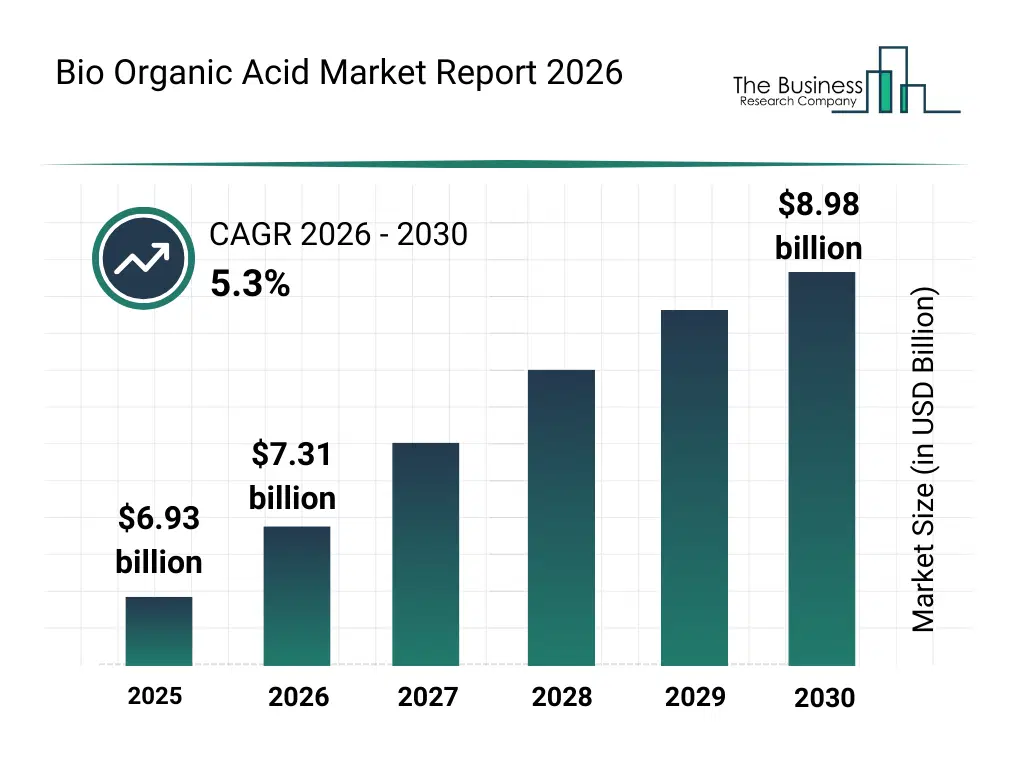
What Is The Bio Organic Acid Market Size and Share 2026?
The bio organic acid market size has grown strongly in recent years. It will grow from $6.93 billion in 2025 to $7.31 billion in 2026 at a compound annual growth rate (CAGR) of 5.6%. The growth in the historic period can be attributed to food acidulant demand, textile processing usage, pharmaceutical excipient adoption, traditional fermentation methods, agricultural raw material availability.What Is The Bio Organic Acid Market Growth Forecast?
The bio organic acid market size is expected to see strong growth in the next few years. It will grow to $8.98 billion in 2030 at a compound annual growth rate (CAGR) of 5.3%. The growth in the forecast period can be attributed to bio based chemical substitution, biodegradable polymer growth, clean label food demand, pharmaceutical manufacturing expansion, green chemistry initiatives. Major trends in the forecast period include rising use of fermentation based acids, growing demand for bio based polymers, expansion in food preservation applications, increased adoption in pharmaceutical formulations, focus on sustainable chemical production.
Global Bio Organic Acid Market Segmentation
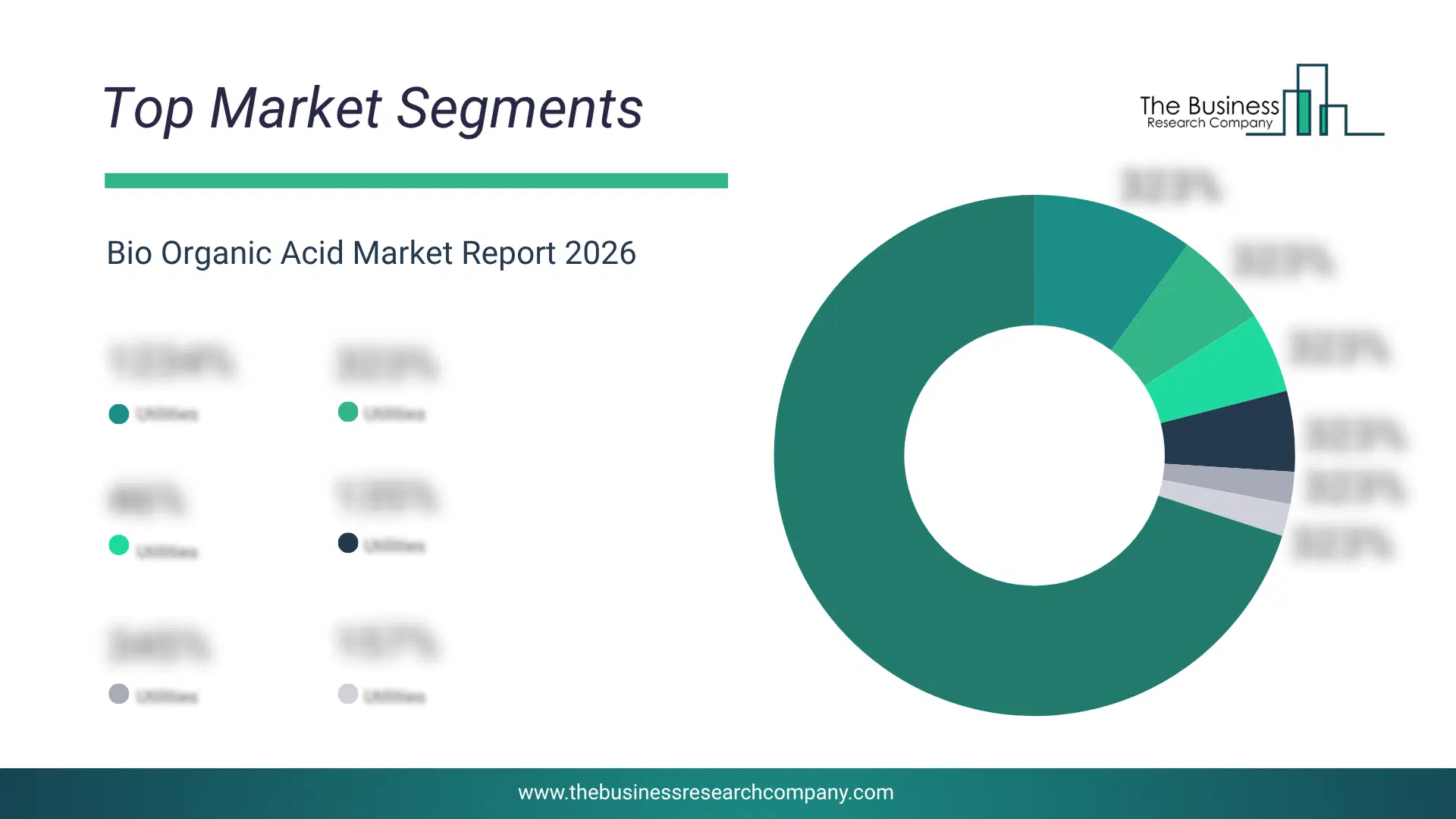
1) By Type: Lactic Acid, Citric Acid, Fumaric Acid 2) By Source: Natural Sources, Synthetic Sources 3) By Form: Liquid, Powder 4) By Application: Pharmaceuticals, Food And Beverage, Other Applications 5) By End-Use Industries: Food And Beverage Industry, Pharmaceutical Industry, Agriculture Subsegments: 1) By Lactic Acid: Food Grade Lactic Acid, Industrial Grade Lactic Acid, Pharmaceutical Grade Lactic Acid, Polylactic Acid (PLA) 2) By Citric Acid: Anhydrous Citric Acid, Monohydrate Citric Acid, Food & Beverage Grade, Industrial Grade 3) By Fumaric Acid: Food Grade, Technical Grade, Industrial Grade, Feed GradeWhat Is The Driver Of The Bio Organic Acid Market?
The rise in the food and beverage sector is expected to propel the growth of the bio organic acid market going forward. The food and beverage sector includes companies that produce, package, and supply food and drinks for people to consume. The food and beverage sector is growing due to increasing consumer demand for convenient and ready-to-eat products. Bio-organic acids are used in the food and beverage sector as preservatives, flavor enhancers, and pH regulators to improve shelf life and product quality. For instance, in June 2025, according to the United States Census Bureau, a US-based government agency, in May 2025, U.S. retail and food services sales reached $715.4 billion, showing a 3.3% increase compared to May 2024, after adjusting for seasonal and calendar differences. Therefore, the rise in the food and beverage sector is driving the growth of the bio organic acid industry.Key Players In The Global Bio Organic Acid Market
Major companies operating in the bio organic acid market are Cargill Incorporated, Archer-Daniels-Midland Company, BASF SE, Mitsubishi Chemical Corporation, Evonik Industries AG, DuPont de Nemours Inc., Eastman Chemical Company, Roquette Frères S.A., Novozymes A/S, Corbion N.V., Lallemand Inc., Jungbunzlauer Suisse AG, LanzaTech Global Inc., Norel S.A., ADDCON GmbH, GFBiochemicals Ltd, Musashino Chemical Laboratory Ltd., Afyren S.A., Anhui BBCA Biochemical Co. Ltd., Noack & Co. GmbH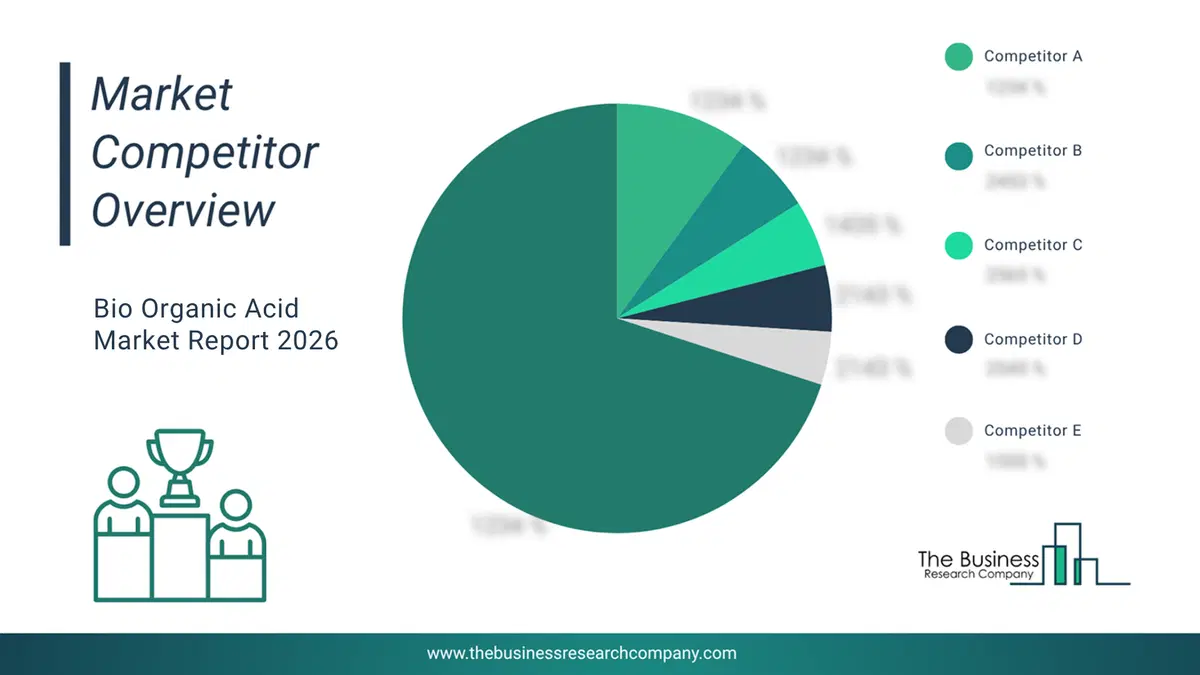
This chart is for illustrative purposes; the full report includes a detailed competitor analysis and comprehensive overview of the top 10 companies in the market.
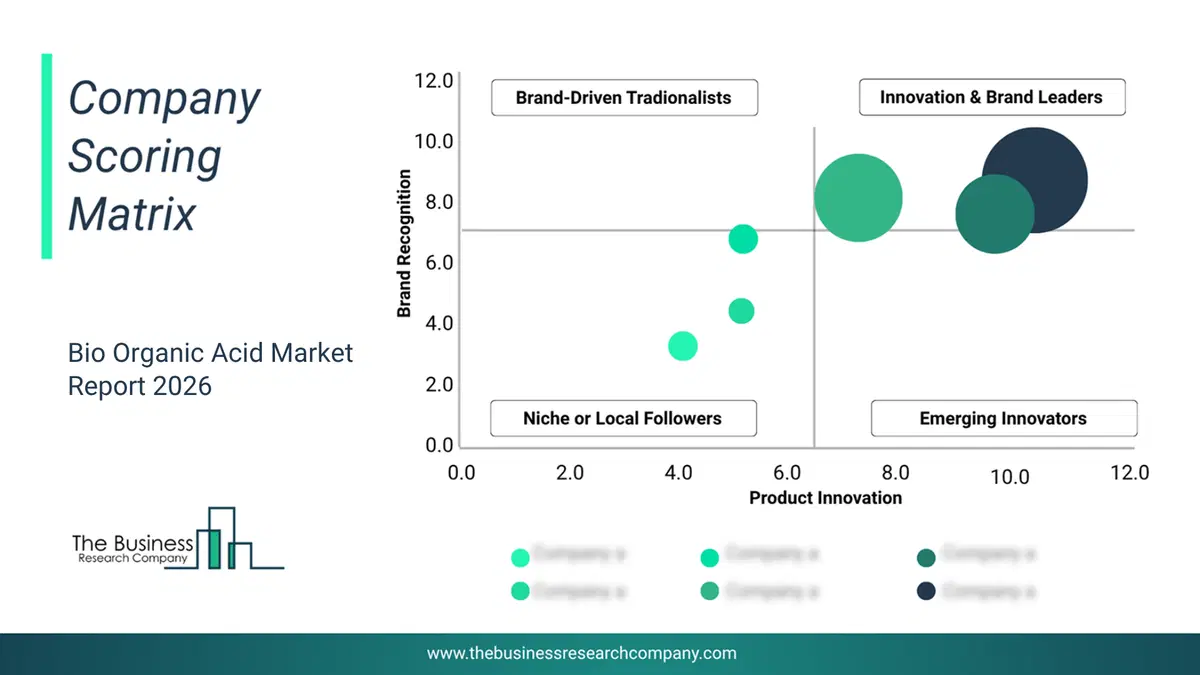
This chart maps companies by product innovation and brand strength, with bubble size indicating relative revenue, helping identify market leaders, challengers, and niche players. This is an illustrative chart; the full report provides a complete and accurate competitive analysis.
Global Bio Organic Acid Market Trends and Insights
Major companies operating in the bio organic acid market are focusing on expanding their footprint by establishing a circular lactic acid manufacturing plant to enhance production efficiency, meet growing global demand for sustainable and bio-based products, reduce environmental impact, and strengthen their position in key industries such as food and beverage, pharmaceuticals, bioplastics, and personal care. A circular lactic acid manufacturing plant follows eco-friendly processes that reduce waste, reuse materials, and recycle resources to create a more sustainable and efficient production cycle. For instance, in December 2023, Corbion N.V., a Netherlands-based food company, launched its new lactic acid plant in Rayong, Thailand, the first of its kind to use a circular production process with the lowest carbon footprint in the industry. The innovative method eliminates lime use and gypsum waste, making it more sustainable and cost-effective. The project achieved over 5 million safe working hours, highlighting Corbion’s commitment to sustainability, safety, and responsible innovation.What Are Latest Mergers And Acquisitions In The Bio Organic Acid Market?
In October 2023, Solugen Inc., a US-based chemical manufacturing company, partnered with Archer-Daniels-Midland (ADM) to scale the production of low-carbon bio-organic acids using plant-based feedstocks at a new facility in Minnesota. This partnership combines ADM’s dextrose with Solugen’s enzymatic Bioforge process to replace fossil-based materials across multiple industries with sustainable, high-performance bio-acids. Archer-Daniels-Midland (ADM) is a US-based food processing company that specializes in providing sustainable solutions in human and animal nutrition.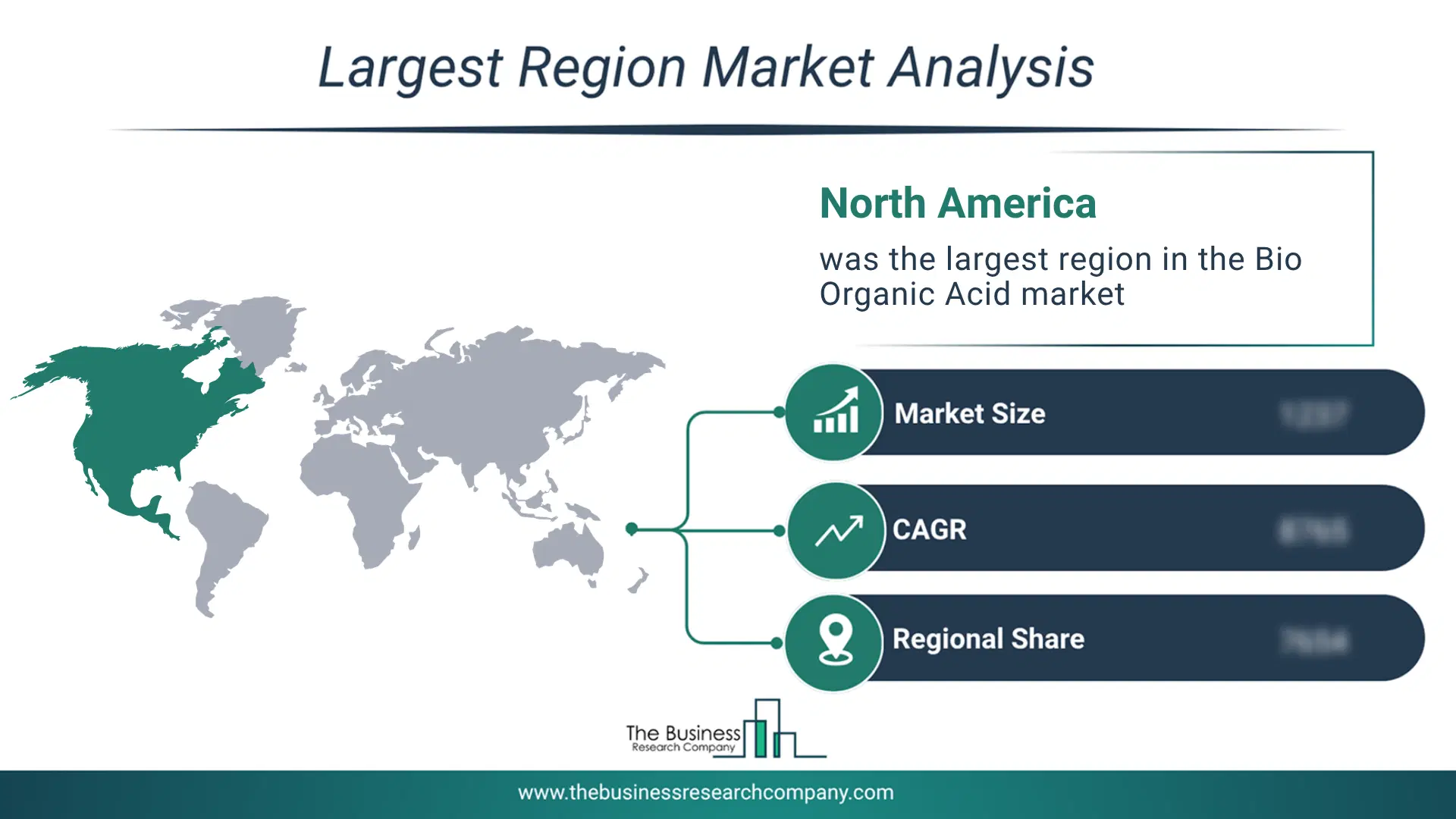
Regional Insights
North America was the largest region in the bio organic acid market in 2025. Asia-Pacific is expected to be the fastest-growing region in the forecast period. The regions covered in this market report are Asia-Pacific, South East Asia, Western Europe, Eastern Europe, North America, South America, Middle East, Africa The countries covered in this market report are Australia, Brazil, China, France, Germany, India, Indonesia, Japan, Taiwan, Russia, South Korea, UK, USA, Canada, Italy, SpainWhat Defines the Bio Organic Acid Market?
The bio organic acid market consists of sales of propionic acid, gluconic acid, and itaconic acid. Values in this market are ‘factory gate’ values, that is, the value of goods sold by the manufacturers or creators of the goods, whether to other entities (including downstream manufacturers, wholesalers, distributors, and retailers) or directly to end customers. The value of goods in this market includes related services sold by the creators of the goods.How is Market Value Defined and Measured?
The market value is defined as the revenues that enterprises gain from the sale of goods and/or services within the specified market and geography through sales, grants, or donations in terms of the currency (in USD unless otherwise specified). The revenues for a specified geography are consumption values that are revenues generated by organizations in the specified geography within the market, irrespective of where they are produced. It does not include revenues from resales along the supply chain, either further along the supply chain or as part of other products.
This chart presents market attractiveness based on a quantitative evaluation of growth, competition, strategic alignment, and risk, offering a clear view of opportunity areas for decision-making. This chart is for illustrative purposes; the full report contains the complete analysis.

This chart highlights the Total Addressable Market (TAM) by estimating the maximum revenue opportunity using an assumption-driven approach, supporting strategic planning and opportunity sizing across markets. The chart is illustrative; the full report provides a more comprehensive analysis.
What Key Data and Analysis Are Included in the Bio Organic Acid Market Report 2026?
The bio organic acid market research report is one of a series of new reports from The Business Research Company that provides market statistics, including industry global market size, regional shares, competitors with the market share, detailed market segments, market trends and opportunities, and any further data you may need to thrive in the bio organic acid industry. The market research report delivers a complete perspective of everything you need, with an in-depth analysis of the current and future state of the industry.Bio Organic Acid Market Report Forecast Analysis
| Report Attribute | Details |
|---|---|
| Market Size Value In 2026 | $7.31 billion |
| Revenue Forecast In 2030 | $8.98 billion |
| Growth Rate | CAGR of 5.6% from 2026 to 2030 |
| Base Year For Estimation | 2025 |
| Actual Estimates/Historical Data | 2020-2025 |
| Forecast Period | 2026 - 2030 |
| Market Representation | Revenue in USD Billion and CAGR from 2026 to 2030 |
| Segments Covered | Type, Source, Form, Application, End-Use Industries |
| Regional Scope | Asia-Pacific, Western Europe, Eastern Europe, North America, South America, Middle East, Africa |
| Country Scope | The countries covered in this market report are Australia, Brazil, China, France, Germany, India, Indonesia, Japan, Taiwan, Russia, South Korea, UK, USA, Canada, Italy, Spain |
| Key Companies Profiled | Cargill Incorporated, Archer-Daniels-Midland Company, BASF SE, Mitsubishi Chemical Corporation, Evonik Industries AG, DuPont de Nemours Inc., Eastman Chemical Company, Roquette Frères S.A., Novozymes A/S, Corbion N.V., Lallemand Inc., Jungbunzlauer Suisse AG, LanzaTech Global Inc., Norel S.A., ADDCON GmbH, GFBiochemicals Ltd, Musashino Chemical Laboratory Ltd., Afyren S.A., Anhui BBCA Biochemical Co. Ltd., Noack & Co. GmbH |
| Customization Scope | Request for Customization |
| Pricing And Purchase Options | Explore Purchase Options |