
Biobank Equipment Market Report 2026
Global Outlook – By Product (Cryogenic Storage Systems, Alarm And Monitoring Systems), By Sample Type (Blood Products, Human Tissue, Umbilical Cord Blood Stem Cells, Deoxyribonucleic Acid (DNA), Cell Lines), By Storage System (Automated Biobanking Systems, Manual Biobanking Systems, Hybrid Biobanking Systems, Modular Storage Systems, Compact Storage Systems), By Applications (Regenerative Medicine, Life Science Research, Clinical Research, Other Applications), By End-User (Biobanks And Biorepositories, Pharma And Biotech Companies, Academic And Research Institutes, Hospital And Diagnostic Centers) – Market Size, Trends, Strategies, and Forecast to 2030
Biobank Equipment Market Overview
• Biobank Equipment market size has reached to $4.18 billion in 2025 • Expected to grow to $6.5 billion in 2030 at a compound annual growth rate (CAGR) of 9.2% • Growth Driver: The Increasing Demand For Personalized Medicine Is Fueling The Growth Of The Market Due To The Need For Targeted Therapies And Precise Patient Care • Market Trend: Next-Generation Automated Biobank Storage Systems For Enhanced Sample Preservation • North America was the largest region in 2025 and Asia-Pacific is the fastest growing region.Market Gains By 2030 – Top Opportunities By Segment
Market Gain identifies the most promising market opportunities by highlighting the segments or products expected to generate the highest incremental revenue growth over the next five years.
What Is Covered Under Biobank Equipment Market?
Biobank equipment is a specialized tool and system that enables the collection, processing, and preservation of biological samples under controlled conditions to ensure long-term integrity. It supports accurate and efficient sample management, maintaining quality for future analysis and research. Biobank equipment enhances data reliability and traceability, facilitating consistent and reproducible scientific outcomes. The main product types of biobank equipment are cryogenic storage systems and alarm and monitoring systems. Cryogenic storage systems are specialized units designed to preserve biological samples at ultra-low temperatures, ensuring long-term stability and integrity. The sample types include blood products, human tissue, umbilical cord blood stem cells, deoxyribonucleic acid (DNA), and cell lines, and storage systems such as automated biobanking systems, manual biobanking systems, hybrid biobanking systems, modular storage systems, and compact storage systems. It is applied in various applications covering regenerative medicine, life science research, clinical research, and others and is used by several end-users comprising biobanks and biorepositories, pharma and biotech companies, academic and research institutes, and hospital and diagnostic centers.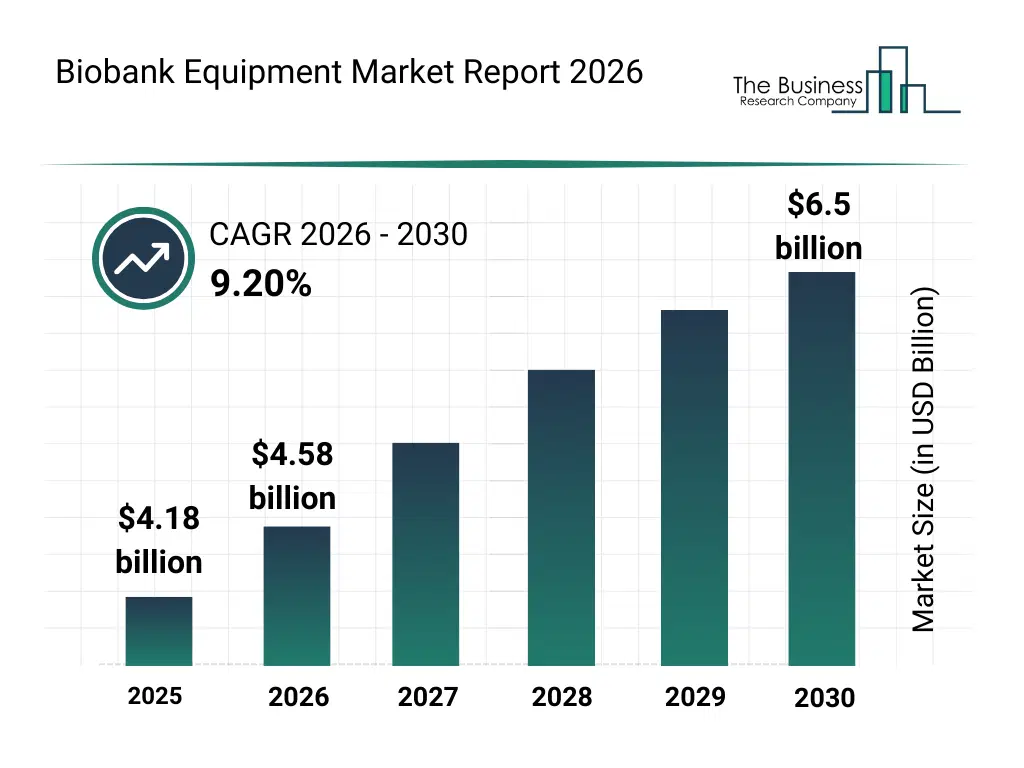
What Is The Biobank Equipment Market Size and Share 2026?
The biobank equipment market size has grown strongly in recent years. It will grow from $4.18 billion in 2025 to $4.58 billion in 2026 at a compound annual growth rate (CAGR) of 9.5%. The growth in the historic period can be attributed to growing biobanking initiatives, rising clinical research activity, manual sample handling inefficiencies, need for traceable sample storage, increasing genomics research.What Is The Biobank Equipment Market Growth Forecast?
The biobank equipment market size is expected to see strong growth in the next few years. It will grow to $6.5 billion in 2030 at a compound annual growth rate (CAGR) of 9.2%. The growth in the forecast period can be attributed to adoption of automated and hybrid biobanking systems, integration of ai and cloud analytics, expansion of regenerative medicine research, rising demand for cell and dna storage, technological innovation in cryogenic systems. Major trends in the forecast period include AI-enhanced sample management systems, iot-enabled cryogenic monitoring, automated biobanking platforms, cloud-based data tracking systems, high-throughput sample storage solutions.
Global Biobank Equipment Market Segmentation
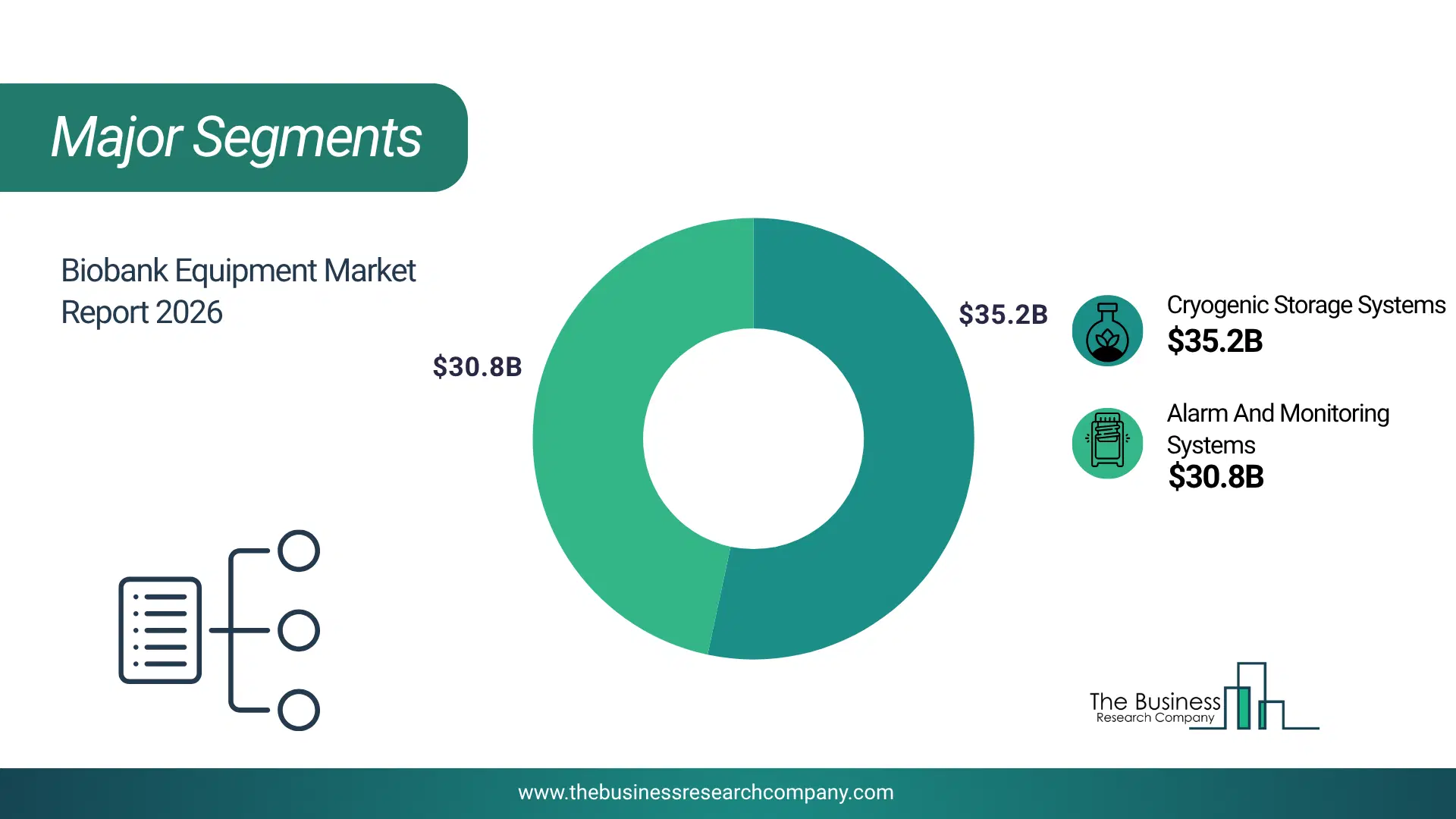
1) By Product: Cryogenic Storage Systems, Alarm And Monitoring Systems 2) By Sample Type: Blood Products, Human Tissue, Umbilical Cord Blood Stem Cells, Deoxyribonucleic Acid (DNA), Cell Lines 3) By Storage System: Automated Biobanking Systems, Manual Biobanking Systems, Hybrid Biobanking Systems, Modular Storage Systems, Compact Storage Systems 4) By Applications: Regenerative Medicine, Life Science Research, Clinical Research, Other Applications 5) By End-User: Biobanks And Biorepositories, Pharma And Biotech Companies, Academic And Research Institutes, Hospital And Diagnostic Centers Subsegments: 1) By Cryogenic Storage Systems: Cryogenic Storage Systems, Liquid Nitrogen Freezers, Ultra-Low Temperature Freezers, Cryogenic Vials, Cryogenic Storage Tanks 2) By Alarm And Monitoring Systems: Alarm And Monitoring Systems, Temperature Monitoring Systems, Humidity Monitoring Systems, Carbon Dioxide (CO2) Monitoring Systems, Remote Alarm Systems, Data Logging Systems The top segments in the biobank equipment market will be: • Cryogenic Storage Systems will reach $35.16 billion by 2030. • Alarm And Monitoring Systems will reach $30.78 billion by 2030.What Is The Driver Of The Biobank Equipment Market?
The increasing demand for personalized medicine is expected to propel the growth of the biobank equipment market going forward. Personalized medicine is an approach to patient care that tailors treatment and prevention strategies based on individual differences in patients' genes, environments, and lifestyles. The growing adoption of personalized medicine is driven by advances in genomic sequencing technologies and data analytics, which enable healthcare providers to develop more precise diagnostic tools and targeted therapies for individual patients. Biobank equipment aids personalized medicine by efficiently preserving and organizing biological samples with critical genetic and molecular information, enabling researchers to examine individual differences, discover biomarkers, and create therapies tailored to each patient. For instance, in February 2024, according to the Personalized Medicine Coalition, a US-based hospital and health care organization, in 2023, the FDA approved 16 new personalized treatments for rare disease patients, up from six in 2022. Therefore, the increasing demand for personalized medicine is driving the growth of the biobank equipment industry.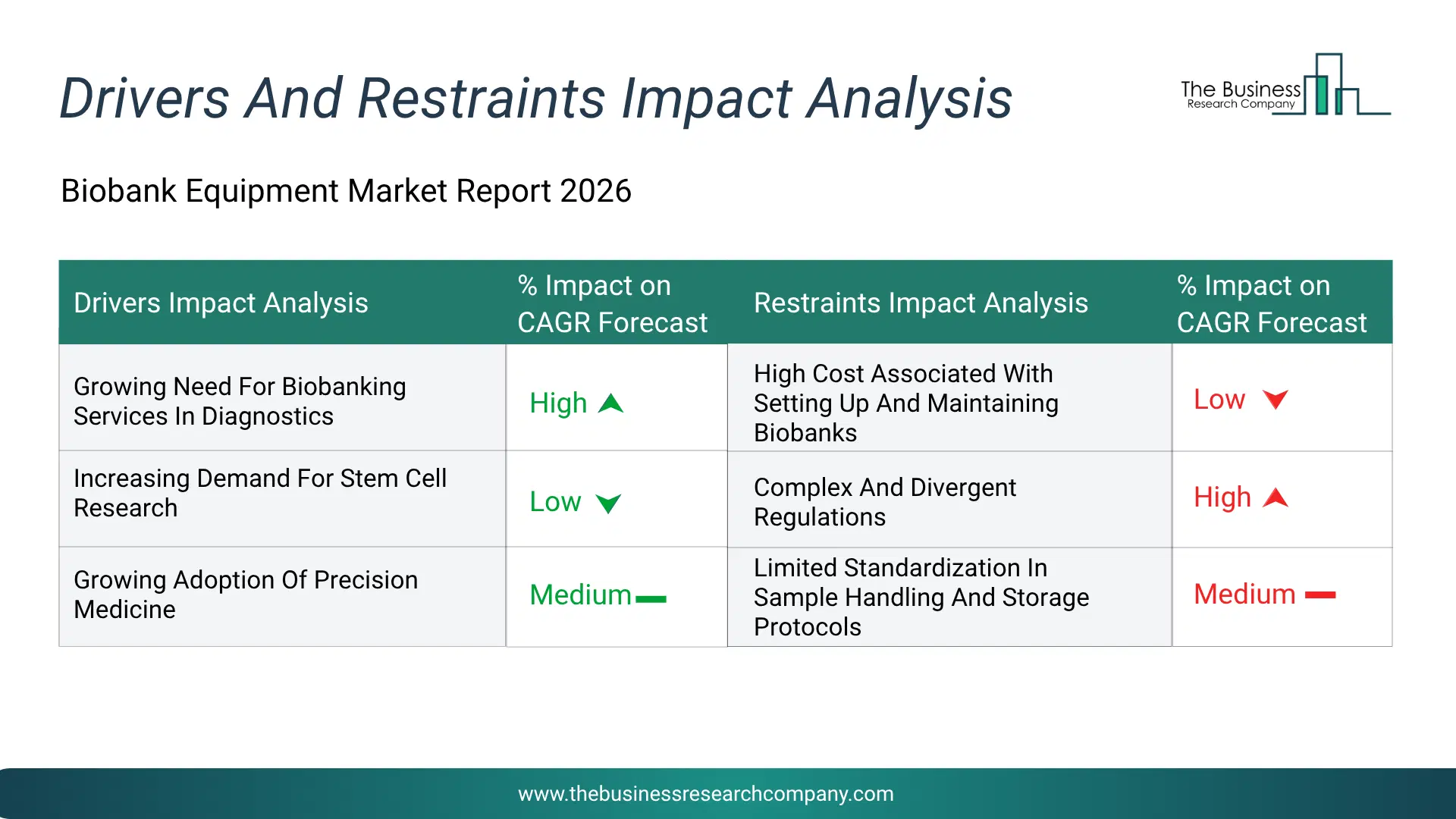
Infographic Chart Showing Key Market Drivers Analysis And Restraints For Biobank Equipment Market
The chart presents an impact analysis of key drivers and restraints, quantifying their relative influence on the market's growth rate and helping assess the balance between growth enablers and limiting factors. This chart offers a high-level perspective; the full report contains more detailed insights.
How Will The Drivers Impact Growth In The Global Biobank Equipment Market?
• Growing Need For Biobanking Services In Diagnostics (High) – During the forecast period, the growing need for biobanking services in diagnostics is expected to become a key growth driver for the biobank equipment market by 2030. The growing need for biobanking services in diagnostics drives the demand for biobank equipment because accurate and timely diagnosis relies on high-quality, well-preserved biological samples. Laboratories and diagnostic centers require specialized freezers, cryogenic storage systems, and automated handling equipment to maintain sample integrity and traceability. As personalized diagnostics and biomarker-based tests expand, the volume and diversity of samples needing storage increase. This necessitates advanced biobank solutions to efficiently manage large-scale sample collections. Consequently, the expansion of diagnostic biobanking directly boosts the adoption of biobank equipment. • Increasing Demand For Stem Cell Research (Low) – During the forecast period, the increasing demand for stem cell research is expected to emerge as a major factor driving the expansion of the biobank equipment market by 2030. The rising demand for stem cell research fuels the need for specialized biobank equipment, as stem cells require precise storage conditions to maintain viability and functionality. Advanced cryogenic storage systems, automated handling units, and monitoring tools are essential to ensure sample integrity over long periods. Expanding stem cell applications in regenerative therapies and disease modeling increase the volume and diversity of samples that must be securely stored. Efficient sample management through biobank equipment becomes critical to support research reproducibility and regulatory compliance. Therefore, growth in stem cell research directly drives adoption of biobank technologies. • Growing Adoption Of Precision Medicine (Medium) – During the forecast period, the growing adoption of precision medicine is expected to act as a key growth catalyst for the biobank equipment market by 2030. Precision medicine depends on analyzing patient-specific biological samples to tailor treatments, which significantly increases the need for biobank equipment. Accurate storage, tracking, and retrieval of samples such as dna, tissues, and blood are essential to support personalized diagnostic and therapeutic approaches. As precision medicine programs expand globally, laboratories require automated, scalable, and secure biobanking systems to manage large datasets efficiently. Maintaining sample integrity and traceability ensures reliable clinical outcomes and research insights. Consequently, the rise of precision medicine acts as a strong driver for the biobank equipment market.How Will The Restraints Impact Growth In The Global Biobank Equipment Market?
• High Cost Associated With Setting Up And Maintaining Biobanks (Low) – During the forecast period, the high cost associated with setting up and maintaining biobanks acts as a major restraint for the biobank equipment market. Advanced storage systems, automated handling units, and monitoring technologies require significant capital investment, which can limit adoption, especially among smaller laboratories and research centers. Additionally, ongoing operational expenses, such as energy consumption, maintenance, and skilled personnel, further increase the total cost of ownership. These financial barriers can slow the expansion of biobanking services and reduce demand for new equipment. As a result, cost considerations remain a key challenge for market growth. • Complex And Divergent Regulations (High) – During the forecast period, the complex and divergent regulations act as a significant restraint for the biobank equipment market because biobanks must comply with varying legal, ethical, and quality standards across regions. Differences in sample storage, handling, and data privacy rules create additional operational and compliance challenges for laboratories and research institutions. Meeting these regulatory requirements often involves costly documentation, audits, and system upgrades, increasing the overall investment needed. The lack of uniform standards can also limit cross-border collaborations and sample sharing. Consequently, regulatory complexity slows market adoption and growth of biobank equipment. • Limited Standardization In Sample Handling And Storage Protocols (Medium) – During the forecast period, the lack of uniform standardization in sample handling and storage protocols acts as a significant restraint for the biobank equipment market. Variations in procedures across biobanks, research institutions, and healthcare organizations create inconsistencies in equipment requirements and operational workflows. This forces manufacturers to offer highly customized solutions, increasing development complexity and costs. Additionally, inconsistent standards can lead to compatibility issues between different storage systems and reduce overall operational efficiency. The absence of globally harmonized protocols slows large-scale adoption and limits seamless integration of biobanking infrastructure.Key Players In The Global Biobank Equipment Market
Major companies operating in the biobank equipment market are Thermo Fisher Scientific Inc., Merck KGaA Darmstadt Germany, Becton Dickinson and Company, Agilent Technologies Inc., Revvity Inc., PHC Holdings Corporation, QIAGEN N.V., Eppendorf SE, Tecan Group Ltd., Bio-Techne Corporation, Hamilton Company, Azenta Life Sciences Inc., Promega Corporation, BioLife Solutions Inc., Standard BioTools Inc., SPT Labtech Ltd, LabVantage Solutions Inc., Izon Science Limited, askion GmbH, Custom Biogenic Systems Inc., Zhongke Meiling Cryogenics Co. Ltd.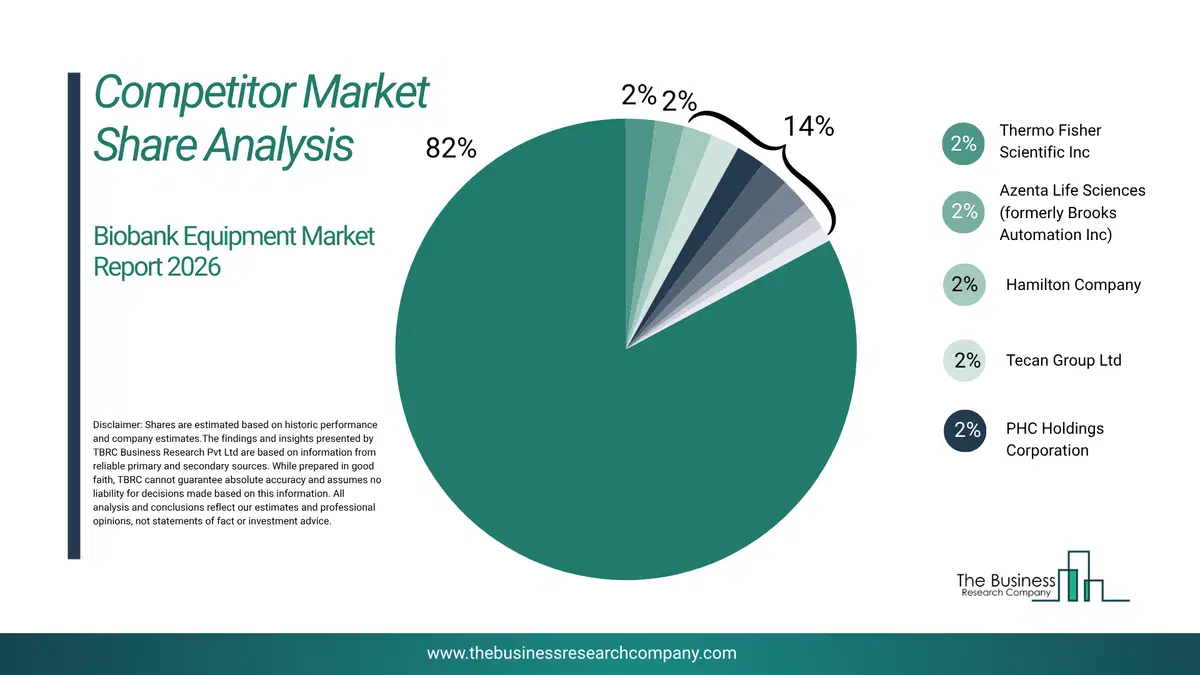
This chart is for illustrative purposes; the full report includes a detailed competitor analysis and comprehensive overview of the top 10 companies in the market.
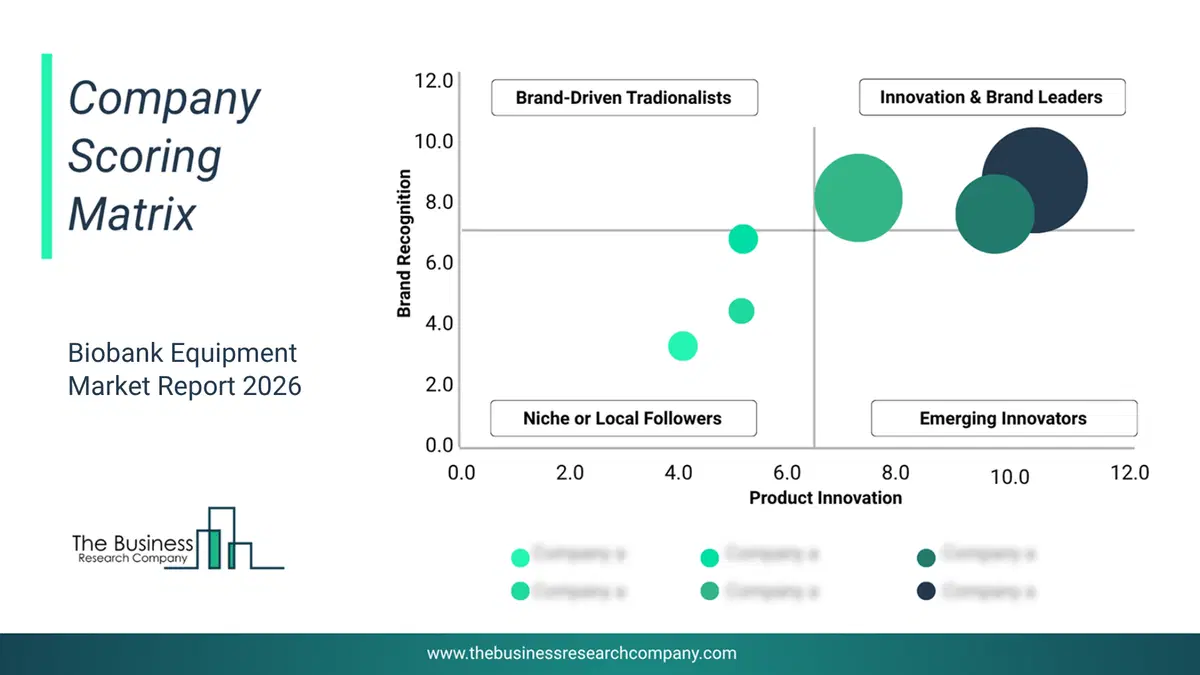
This chart maps companies by product innovation and brand strength, with bubble size indicating relative revenue, helping identify market leaders, challengers, and niche players. This is an illustrative chart; the full report provides a complete and accurate competitive analysis.
Global Biobank Equipment Market Trends and Insights
Major companies operating in the biobank equipment market are focusing on developing next-generation automated storage systems to enhance sample preservation and support the growing demand for personalized medicine. Automated storage systems are advanced solutions that organize, store, and retrieve biological samples using minimal human effort, ensuring precise handling, security, and preservation quality while employing robotics and digital controls to maintain sample integrity and traceability. For instance, in February 2024, Azenta Inc., a US-based provider of life sciences solutions, launched the BioArc Ultra. This next-generation, automated ultracold storage solution provides high-density, eco-friendly sample management for biorepositories. It offers efficient, automated handling of samples at -80°C while using an innovative refrigeration system with zero ozone depletion potential and zero global warming potential. The BioArc Ultra reduces power consumption and space requirements significantly compared to conventional systems, enhancing energy efficiency and sustainability in large-scale biological sample storage operations.What Are Latest Mergers And Acquisitions In The Biobank Equipment Market?
In November 2024, Standex International Corporation, a US-based industrial growth company, acquired Custom Biogenic Systems for $6.2 million. The acquisition aims to strengthen Standex International’s Scientific business segment by integrating Custom Biogenic Systems’ advanced cryogenic storage and refrigeration solutions. This deal enhances Standex’s presence in the pharmaceutical and biobank markets while broadening its technology portfolio with liquid nitrogen and controlled-rate freezer systems. Custom Biogenic Systems is a US-based manufacturer of biobank equipment.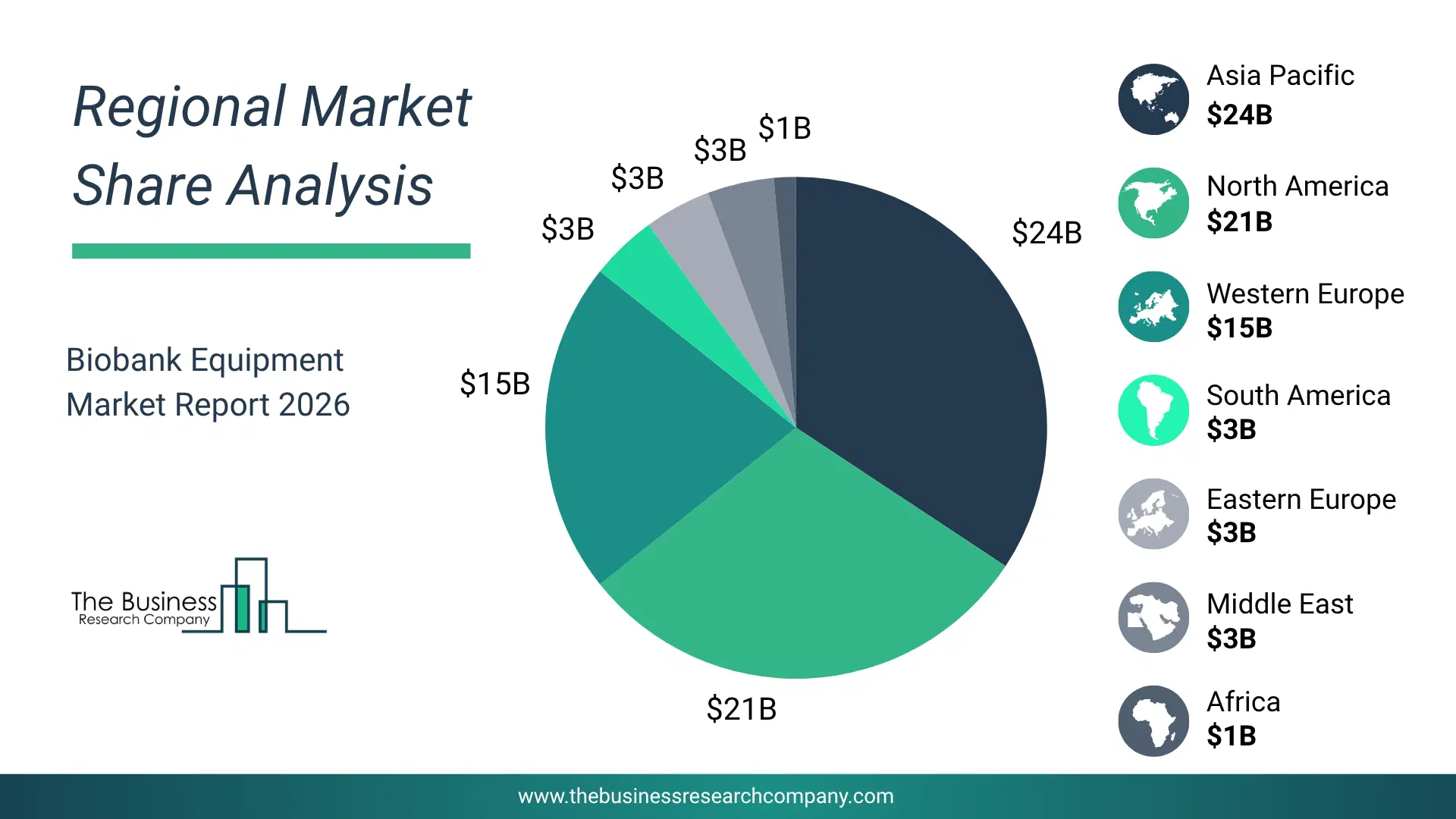
Regional Outlook
North America was the largest region in the biobank equipment market in 2025. Asia-Pacific is expected to be the fastest-growing region in the forecast period. The regions covered in this market report are Asia-Pacific, South East Asia, Western Europe, Eastern Europe, North America, South America, Middle East, Africa. The countries covered in this market report are Australia, Brazil, China, France, Germany, India, Indonesia, Japan, Taiwan, Russia, South Korea, UK, USA, Canada, Italy, SpainWhat Defines the Biobank Equipment Market?
The biobank equipment market consists of sales of sample storage freezers, centrifuges, biospecimen tracking systems, and temperature monitoring devices. Values in this market are ‘factory gate’ values, that is, the value of goods sold by the manufacturers or creators of the goods, whether to other entities (including downstream manufacturers, wholesalers, distributors, and retailers) or directly to end customers. The value of goods in this market includes related services sold by the creators of the goods.How is Market Value Defined and Measured?
The market value is defined as the revenues that enterprises gain from the sale of goods and/or services within the specified market and geography through sales, grants, or donations in terms of the currency (in USD unless otherwise specified). The revenues for a specified geography are consumption values that are revenues generated by organizations in the specified geography within the market, irrespective of where they are produced. It does not include revenues from resales along the supply chain, either further along the supply chain or as part of other products.
This chart presents market attractiveness based on a quantitative evaluation of growth, competition, strategic alignment, and risk, offering a clear view of opportunity areas for decision-making. This chart is for illustrative purposes; the full report contains the complete analysis.

This chart highlights the Total Addressable Market (TAM) by estimating the maximum revenue opportunity using an assumption-driven approach, supporting strategic planning and opportunity sizing across markets. The chart is illustrative; the full report provides a more comprehensive analysis.
What Key Data and Analysis Are Included in the Biobank Equipment Market Report 2026?
The biobank equipment market research report is one of a series of new reports from The Business Research Company that provides market statistics, including industry global market size, regional shares, competitors with the market share, detailed market segments, market trends and opportunities, and any further data you may need to thrive in the biobank equipment industry. The market research report delivers a complete perspective of everything you need, with an in-depth analysis of the current and future state of the industry.Biobank Equipment Market Report Forecast Analysis
| Report Attribute | Details |
|---|---|
| Market Size Value In 2026 | $4.58 billion |
| Revenue Forecast In 2030 | $6.5 billion |
| Growth Rate | CAGR of 9.2% from 2026 to 2030 |
| Base Year For Estimation | 2025 |
| Actual Estimates/Historical Data | 2020-2025 |
| Forecast Period | 2026 - 2030 |
| Market Representation | Revenue in USD Billion and CAGR from 2026 to 2030 |
| Segments Covered | Product, Sample Type, Storage System, Applications, End-User |
| Regional Scope | Asia-Pacific, Western Europe, Eastern Europe, North America, South America, Middle East, Africa |
| Country Scope | The countries covered in the report are Australia, Brazil, China, France, Germany, India, ... |
| Key Companies Profiled | Thermo Fisher Scientific Inc., Merck KGaA Darmstadt Germany, Becton Dickinson and Company, Agilent Technologies Inc., Revvity Inc., PHC Holdings Corporation, QIAGEN N.V., Eppendorf SE, Tecan Group Ltd., Bio-Techne Corporation, Hamilton Company, Azenta Life Sciences Inc., Promega Corporation, BioLife Solutions Inc., Standard BioTools Inc., SPT Labtech Ltd, LabVantage Solutions Inc., Izon Science Limited, askion GmbH, Custom Biogenic Systems Inc., Zhongke Meiling Cryogenics Co. Ltd. |
| Customization Scope | Request for Customization |
| Pricing And Purchase Options | Explore Purchase Options |