

Biobetters Market Report 2026
Global Outlook – By Drug Class (Erythropoietin Biobetters, Granulocyte-Colony Stimulating Factor (G-CSF) Bioreactors, Interferon Biobetters, Insulin Biobetters, Monoclonal Antibodies Biobetters, Antihemophilic Factors, Other Drug Classes), By Route Of Administration (Oral, Subcutaneous, Inhaled, Intravenous, Other Routes), By Disease Indication (Diabetes, Cancer, Renal Disease, Neurodegenerative Diseases, Genetic Disorder-Hemophilia, Other Diseases), By Distribution Channel (Hospital Pharmacies, Retail Pharmacies, Online Pharmacies) – Market Size, Trends, Strategies, and Forecast to 2030
Biobetters Market Overview
• Biobetters market size has reached to $75.29 billion in 2025 • Expected to grow to $121.61 billion in 2030 at a compound annual growth rate (CAGR) of 9.7% • Growth Driver: Impact Of Chronic Kidney Disease On The Biobetters Market • Market Trend: Advancing Biobetters Through Subcutaneous Innovation • North America was the largest region in 2025 and Asia-Pacific is the fastest growing region.What Is Covered Under Biobetters Market?
Biobetters refer to biologic drugs that are similar to existing biologics but have been enhanced to offer improved efficacy, safety, or other clinical benefits. These improvements can include better dosing regimens, reduced side effects, increased stability, or more convenient administration methods, providing a competitive advantage over the original biologics. The main drug classes of biobetters are erythropoietin biobetters, granulocyte-colony stimulating factor (G-CSF) bioreactors, interferon biobetters, insulin biobetters, monoclonal antibody biobetters, antihemophilic factors, and others. Erythropoietin biobetters are improved versions of erythropoietin, a hormone that boosts red blood cell production. Various routes of administration include oral, subcutaneous, inhaled, and intravenous, others for different disease indications, including diabetes, cancer, renal disease, neurodegenerative diseases, genetic disorders, and hemophilia, others through a variety of distribution channels, such as hospital pharmacies, retail pharmacies, and online pharmacies.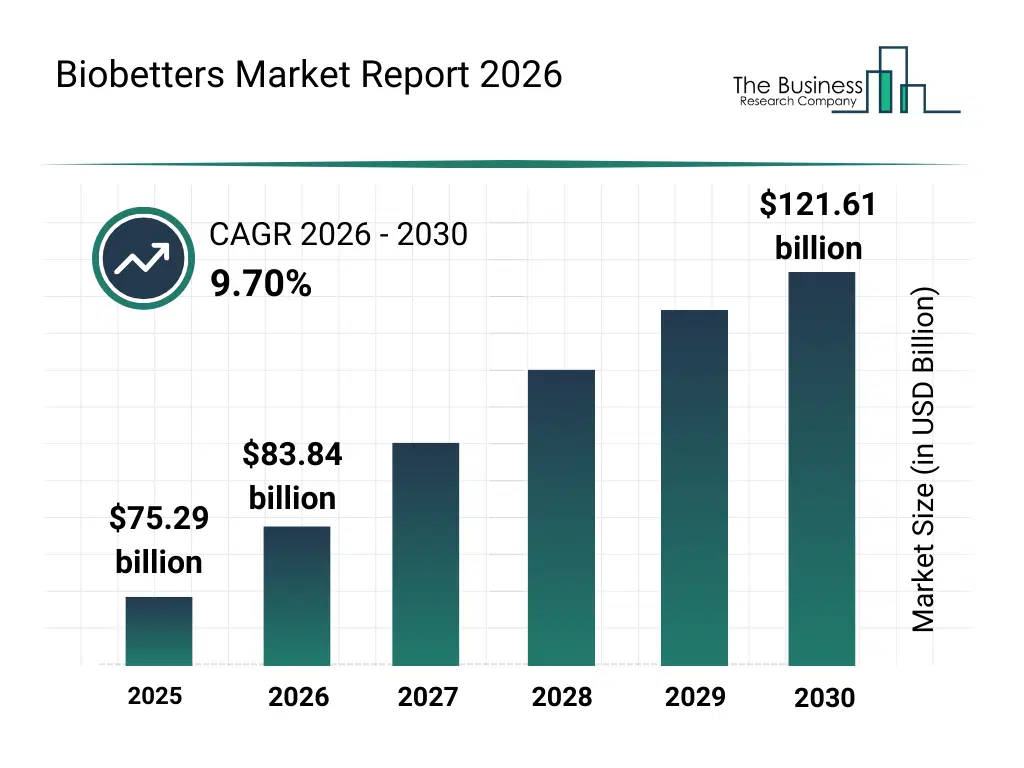
What Is The Biobetters Market Size and Share 2026?
The biobetters market size has grown rapidly in recent years. It will grow from $75.29 billion in 2025 to $83.84 billion in 2026 at a compound annual growth rate (CAGR) of 11.4%. The growth in the historic period can be attributed to rising prevalence of chronic diseases, increased awareness about biosimilars, advancements in biotechnology, supportive government initiatives, growing geriatric population.What Is The Biobetters Market Growth Forecast?
The biobetters market size is expected to see strong growth in the next few years. It will grow to $121.61 billion in 2030 at a compound annual growth rate (CAGR) of 9.7%. The growth in the forecast period can be attributed to increasing adoption of biobetters over original biologics, technological innovations in drug delivery systems, expansion of healthcare infrastructure in emerging markets, partnerships and collaborations in biopharma, rising demand for personalized medicine. Major trends in the forecast period include enhanced drug efficacy and safety, optimized dosing regimens, improved stability and shelf life, convenient administration methods, expansion in chronic disease treatment.
Global Biobetters Market Segmentation
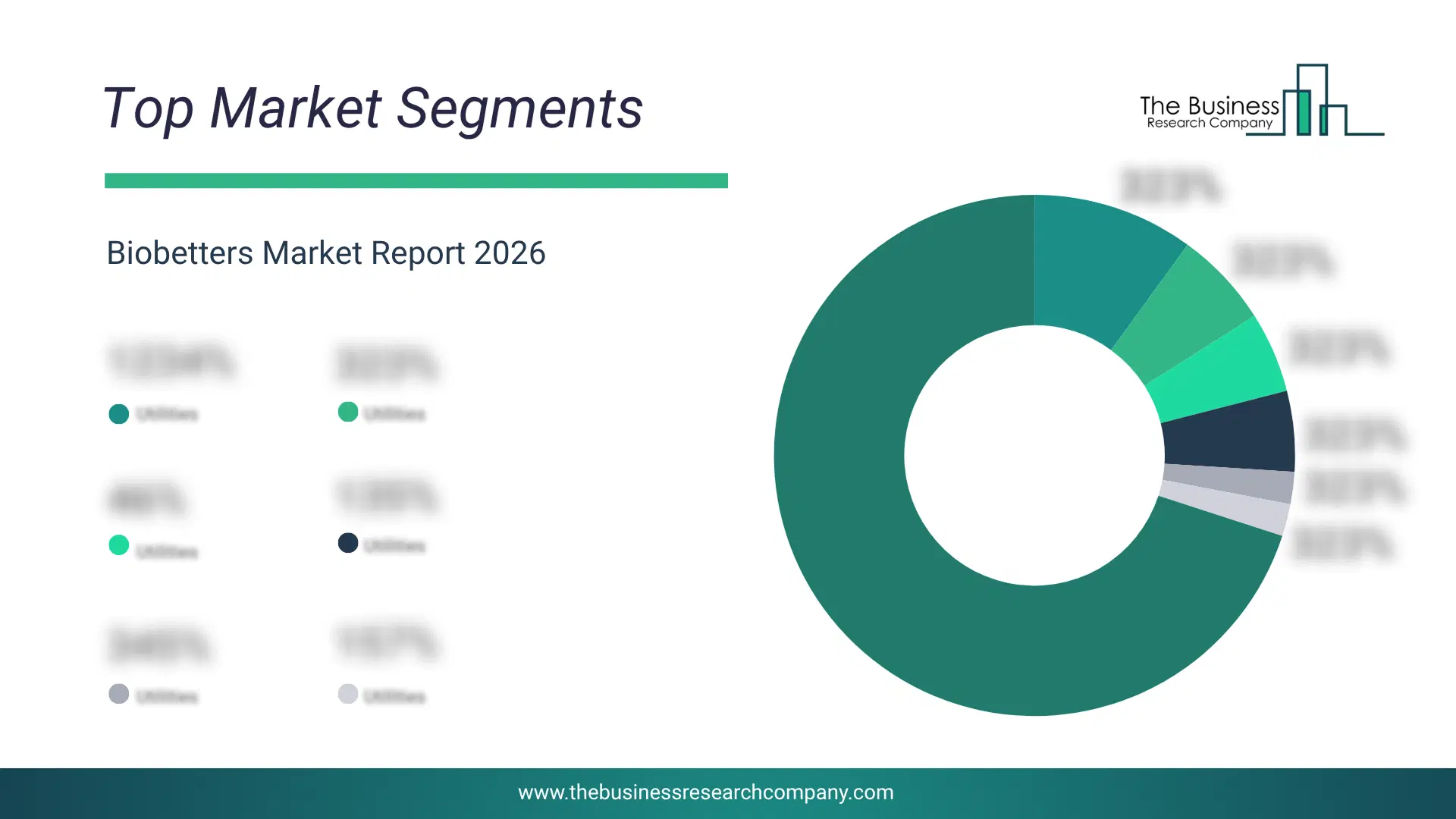
1) By Drug Class: Erythropoietin Biobetters, Granulocyte-Colony Stimulating Factor (G-CSF) Bioreactors, Interferon Biobetters, Insulin Biobetters, Monoclonal Antibodies Biobetters, Antihemophilic Factors, Other Drug Classes 2) By Route Of Administration: Oral, Subcutaneous, Inhaled, Intravenous, Other Routes 3) By Disease Indication: Diabetes, Cancer, Renal Disease, Neurodegenerative Diseases, Genetic Disorder-Hemophilia, Other Diseases 4) By Distribution Channel: Hospital Pharmacies, Retail Pharmacies, Online Pharmacies Subsegments: 1) By Erythropoietin Biobetters: Darbepoetin Alfa, Continuous Erythropoietin Receptor Activator (CERA) 2) By Granulocyte-Colony Stimulating Factor (G-CSF) Biobetters: Pegfilgrastim, Lipegfilgrastim 3) By Interferon Biobetters: Pegylated Interferon Alfa-2a, Pegylated Interferon Alfa-2b 4) By Insulin Biobetters: Long-Acting Insulin Analogs (Insulin Glargine), Rapid-Acting Insulin Analogs (Insulin Aspart) 5) By Monoclonal Antibodies Biobetters: Trastuzumab (Herceptin Biosimilars), Bevacizumab (Avastin Biosimilars), Rituximab (Rituxan Biosimilars) 6) By Antihemophilic Factors: Recombinant Factor VIII (Nuwiq), Recombinant Factor IX (Alprolix) 7) By Other Drug Classes: Growth Factors, Cytokines, Enzyme Replacement Therapies, VaccinesWhat Are The Drivers Of The Biobetters Market?
The rising incidence of chronic kidney diseases is expected to propel the growth of the biobetters market going forward. Chronic kidney disease (CKD) is a long-term condition in which the kidneys progressively lose their ability to filter waste and regulate essential bodily functions. The prevalence of CKD is increasing due to aging demographics, rising rates of diabetes and hypertension, sedentary habits, and improved diagnostic detection. The biobetters market supports CKD management by offering therapies with enhanced efficacy, improved safety profiles, and better dosing regimens compared to original biologics. For instance, in June 2023, according to Oxford Academic, a UK-based academic research platform, CKD prevalence in the UK is projected to rise from 0.00827 billion people in 2022 to 0.00861 billion people in 2032, reflecting a 4% increase. Therefore, the rising incidence of chronic kidney diseases is driving the growth of the biobetters industry. The increasing prevalence of autoimmune diseases is expected to propel the growth of the biobetters market going forward. Autoimmune diseases are disorders in which the immune system mistakenly attacks healthy cells and tissues in the body. The rise in autoimmune diseases is driven by genetic susceptibility, environmental triggers, and modern lifestyle factors. The biobetters market supports autoimmune disease management by offering biologic treatments with improved efficacy, reduced side effects, enhanced dosing regimens, and greater stability than original biologics. For instance, in September 2023, according to the Impact of IBD Report 2023 published by the IBD Clinical and Research Centre, a Canada-based non-profit organization, the prevalence of inflammatory bowel disease (IBD) in Canada reached 825 cases per 100,000 people in 2023, representing more than 0.00032 billion individuals, with projections indicating the number could rise to 0.00047 billion Canadians by 2035 as prevalence increases annually. Therefore, the increasing prevalence of autoimmune diseases is driving the growth of the biobetters industry.Key Players In The Global Biobetters Market
Major companies operating in the biobetters market are Amgen Inc., F. Hoffmann-La Roche Ltd., Genentech Inc., Sanofi Aventis LLC, Pfizer Inc., Novartis AG, Eli Lilly and Company, Regeneron Pharmaceuticals Inc., CSL Behring GmbH, Biogen Inc., Bristol-Myers Squibb Company, AbbVie Inc., Johnson & Johnson, Bayer AG, GlaxoSmithKline plc, Takeda Pharmaceutical Company Limited, Celltrion Inc., Teva Pharmaceutical Industries Ltd., Lonza Group AG, GRIFOLS USA LLC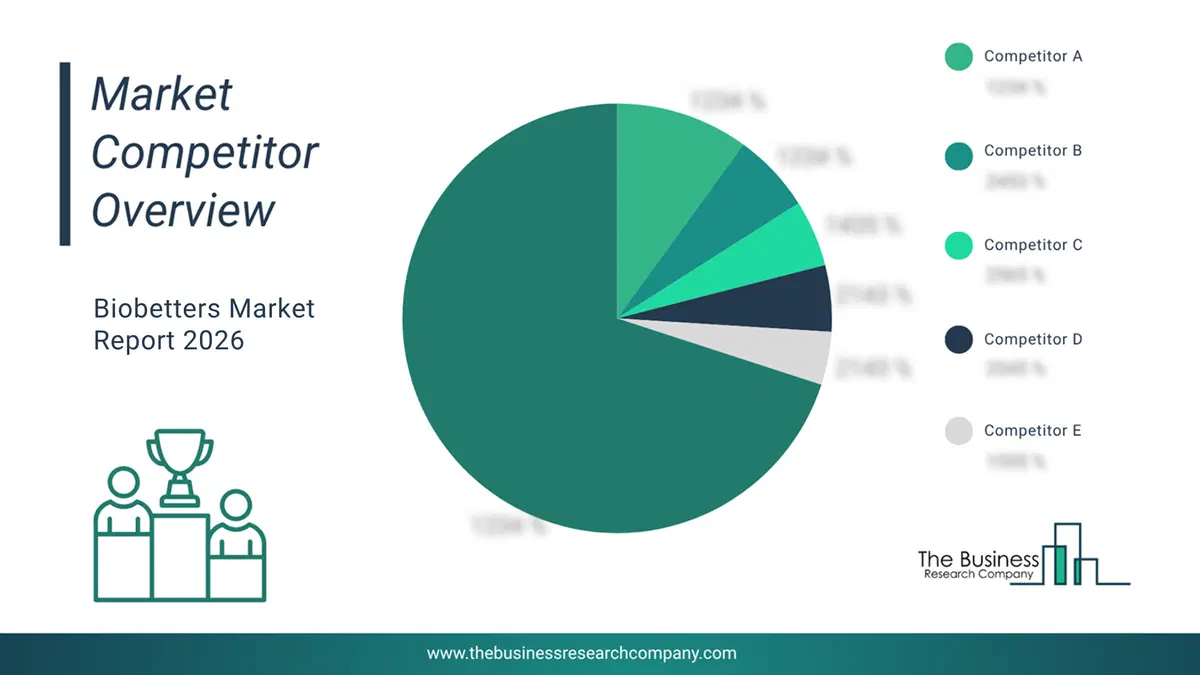
This chart is for illustrative purposes; the full report includes a detailed competitor analysis and comprehensive overview of the top 10 companies in the market.
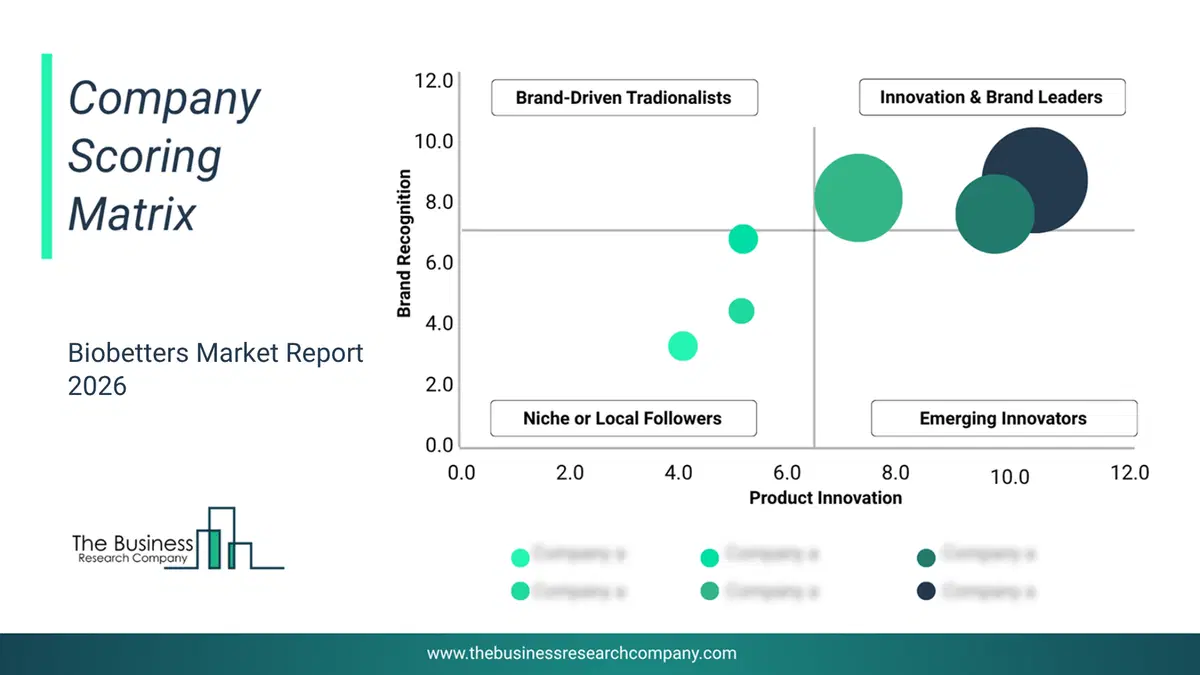
This chart maps companies by product innovation and brand strength, with bubble size indicating relative revenue, helping identify market leaders, challengers, and niche players. This is an illustrative chart; the full report provides a complete and accurate competitive analysis.
Global Biobetters Market Trends and Insights
Major companies operating in the biobetters market are focusing on developing biobetters for subcutaneous administration to improve patient convenience, enhance therapeutic outcomes, and reduce overall healthcare burdens. Subcutaneous administration of biobetters refers to the delivery of biologic therapies through an under-the-skin injection rather than traditional intravenous infusion, offering shorter administration times, greater comfort, and improved treatment adherence for patients managing chronic conditions. For instance, in May 2023, Celltrion, a South Korea-based biopharmaceutical company, received approval from the Brazilian Health Regulatory Agency for Remsima SC, a subcutaneous biobetter version of its infliximab biosimilar Remsima, designed for inflammatory bowel diseases such as Crohn’s disease and ulcerative colitis. The product offers the world’s first subcutaneous infliximab option, providing enhanced accessibility, improved convenience compared to IV infusion, and the potential for better clinical outcomes in long-term disease management.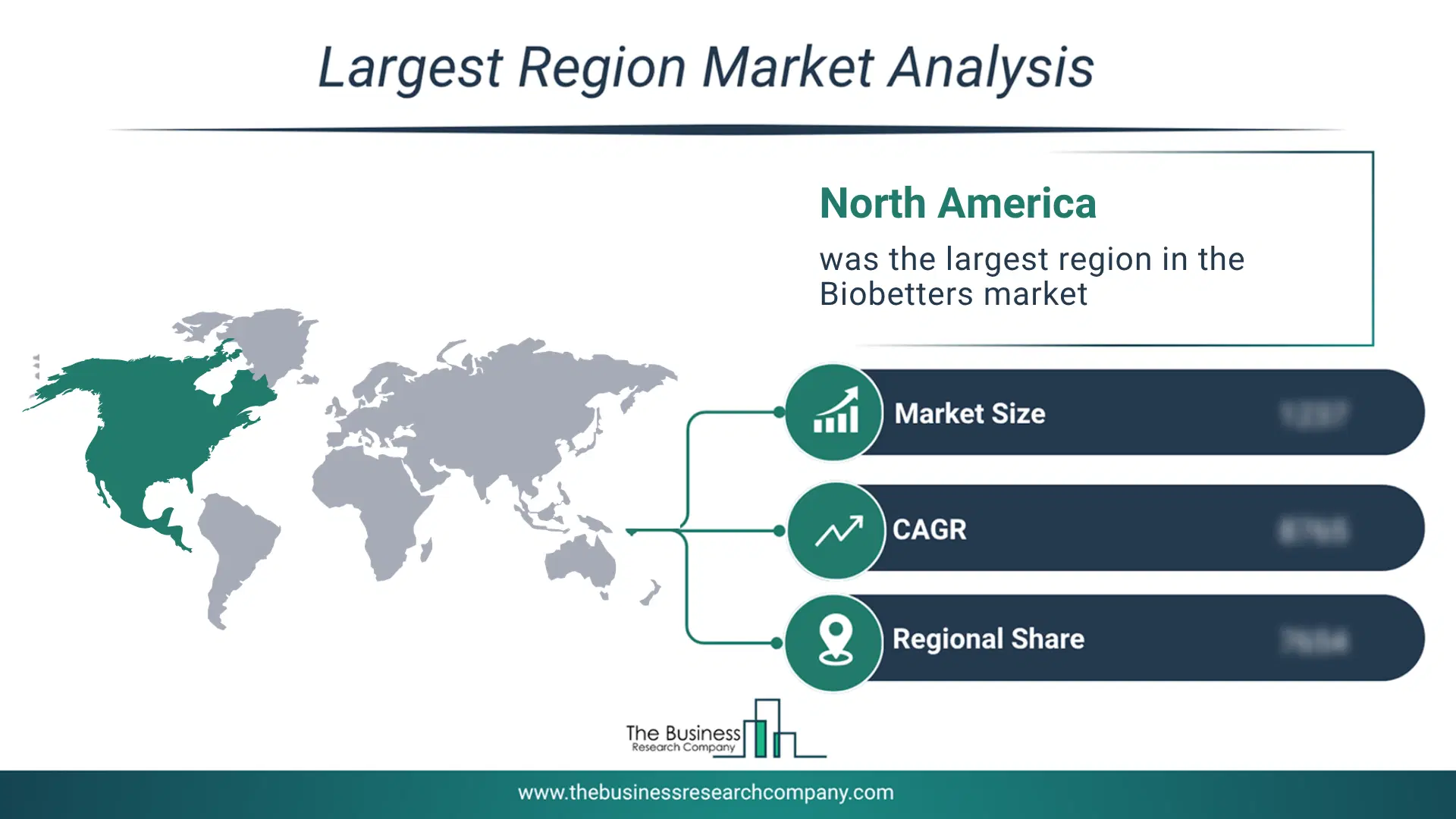
Regional Insights
North America was the largest region in the biobetters market in 2025. Asia-Pacific is expected to be the fastest-growing region in the forecast period. The regions covered in this market report are Asia-Pacific, South East Asia, Western Europe, Eastern Europe, North America, South America, Middle East, Africa. The countries covered in this market report are Australia, Brazil, China, France, Germany, India, Indonesia, Japan, Taiwan, Russia, South Korea, UK, USA, Canada, Italy, Spain.What Defines the Biobetters Market?
The biobetters market consists of sales of next-generation biologics, improved formulation products, and biosimilar drugs. Values in this market are ‘factory gate’ values, that is, the value of goods sold by the manufacturers or creators of the goods, whether to other entities (including downstream manufacturers, wholesalers, distributors, and retailers) or directly to end customers. The value of goods in this market includes related services sold by the creators of the goods.How is Market Value Defined and Measured?
The market value is defined as the revenues that enterprises gain from the sale of goods and/or services within the specified market and geography through sales, grants, or donations in terms of the currency (in USD unless otherwise specified). The revenues for a specified geography are consumption values that are revenues generated by organizations in the specified geography within the market, irrespective of where they are produced. It does not include revenues from resales along the supply chain, either further along the supply chain or as part of other products.
This chart presents market attractiveness based on a quantitative evaluation of growth, competition, strategic alignment, and risk, offering a clear view of opportunity areas for decision-making. This chart is for illustrative purposes; the full report contains the complete analysis.

This chart highlights the Total Addressable Market (TAM) by estimating the maximum revenue opportunity using an assumption-driven approach, supporting strategic planning and opportunity sizing across markets. The chart is illustrative; the full report provides a more comprehensive analysis.
What Key Data and Analysis Are Included in the Biobetters Market Report 2026?
The biobetters market research report is one of a series of new reports from The Business Research Company that provides market statistics, including industry global market size, regional shares, competitors with the market share, detailed market segments, market trends and opportunities, and any further data you may need to thrive in the biobetters industry. The market research report delivers a complete perspective of everything you need, with an in-depth analysis of the current and future state of the industry.Biobetters Market Report Forecast Analysis
| Report Attribute | Details |
|---|---|
| Market Size Value In 2026 | $83.84 billion |
| Revenue Forecast In 2030 | $121.61 billion |
| Growth Rate | CAGR of 11.4% from 2026 to 2030 |
| Base Year For Estimation | 2025 |
| Actual Estimates/Historical Data | 2020-2025 |
| Forecast Period | 2026 - 2030 |
| Market Representation | Revenue in USD Billion and CAGR from 2026 to 2030 |
| Segments Covered | Drug Class, Route Of Administration, Disease Indication, Distribution Channel |
| Regional Scope | Asia-Pacific, Western Europe, Eastern Europe, North America, South America, Middle East, Africa |
| Country Scope | The countries covered in the report are Australia, Brazil, China, France, Germany, India, Indonesia, Japan, Taiwan, Russia, South Korea, UK, USA, Canada, Italy, Spain. |
| Key Companies Profiled | Amgen Inc., F. Hoffmann-La Roche Ltd., Genentech Inc., Sanofi Aventis LLC, Pfizer Inc., Novartis AG, Eli Lilly and Company, Regeneron Pharmaceuticals Inc., CSL Behring GmbH, Biogen Inc., Bristol-Myers Squibb Company, AbbVie Inc., Johnson & Johnson, Bayer AG, GlaxoSmithKline plc, Takeda Pharmaceutical Company Limited, Celltrion Inc., Teva Pharmaceutical Industries Ltd., Lonza Group AG, GRIFOLS USA LLC |
| Customization Scope | Request for Customization |
| Pricing And Purchase Options | Explore Purchase Options |