
Biochemical Defense Market Report 2026
Global Outlook – By Product Type (Detection And Monitoring Systems, Decontamination Solutions, Protective Equipment, Immunological And Medical Countermeasures, Training And Simulation Systems), By Mode of Action (Detection-Based Defense, Neutralization-Based Defense, Protective Defense, Medical Countermeasure Response, Containment And Filtration-Based Defense), By Application (Biothreat Detection, Decontamination And Response, Public Health Preparedness, Military And Defense Operations, Research And Laboratory Use), By Distribution Channel (Government Procurement, Direct Institutional Sale, Specialty Distributors, By End-User (Government And Defense Agencies, Healthcare Facilities, Research Laboratories, Diagnostic Centers, Academic Institutions) – Market Size, Trends, Strategies, and Forecast to 2030
Biochemical Defense Market Overview
• Biochemical Defense market size has reached to $12 billion in 2025 • Expected to grow to $16.37 billion in 2030 at a compound annual growth rate (CAGR) of 6.5% • Growth Driver: Climate Change Increasing Pathogen Spread Is Driving The Market Due To Heightened Disease Risks And Public Health Threats • Market Trend: Advanced Computing Enhances Rapid Biological Threat Detection • North America was the largest region in 2025 and Asia-Pacific is the fastest growing region.Market Gains By 2030 – Top Opportunities By Segment
Market Gain identifies the most promising market opportunities by highlighting the segments or products expected to generate the highest incremental revenue growth over the next five years.
What Is Covered Under Biochemical Defense Market?
Biochemical defense refers to the mechanisms by which living organisms produce chemical substances such as toxins, enzymes, or antimicrobial compounds to protect themselves from predators, pathogens, or environmental stress. Its primary purpose is to inhibit or neutralize harmful agents, ensuring survival and maintaining physiological balance. The main product types of biochemical defense include detection and monitoring systems, decontamination solutions, protective equipment, immunological and medical countermeasures, and training and simulation systems. Detection and monitoring systems refer to technologies and devices designed to identify the presence of biochemical agents in the environment or on surfaces, enabling timely alerts and preventive action. The mode of action includes detection-based defense, neutralization-based defense, protective defense, medical countermeasure response, and containment and filtration-based defense. The various applications include biothreat detection, decontamination and response, public health preparedness, military and defense operations, and research and laboratory use. Different distribution channels include government procurement, direct institutional sales, specialty distributors, online technical platforms, and emergency supply channels, and they are used by several key end-users such as government and defense agencies, healthcare facilities, research laboratories, diagnostic centers, and academic institutions.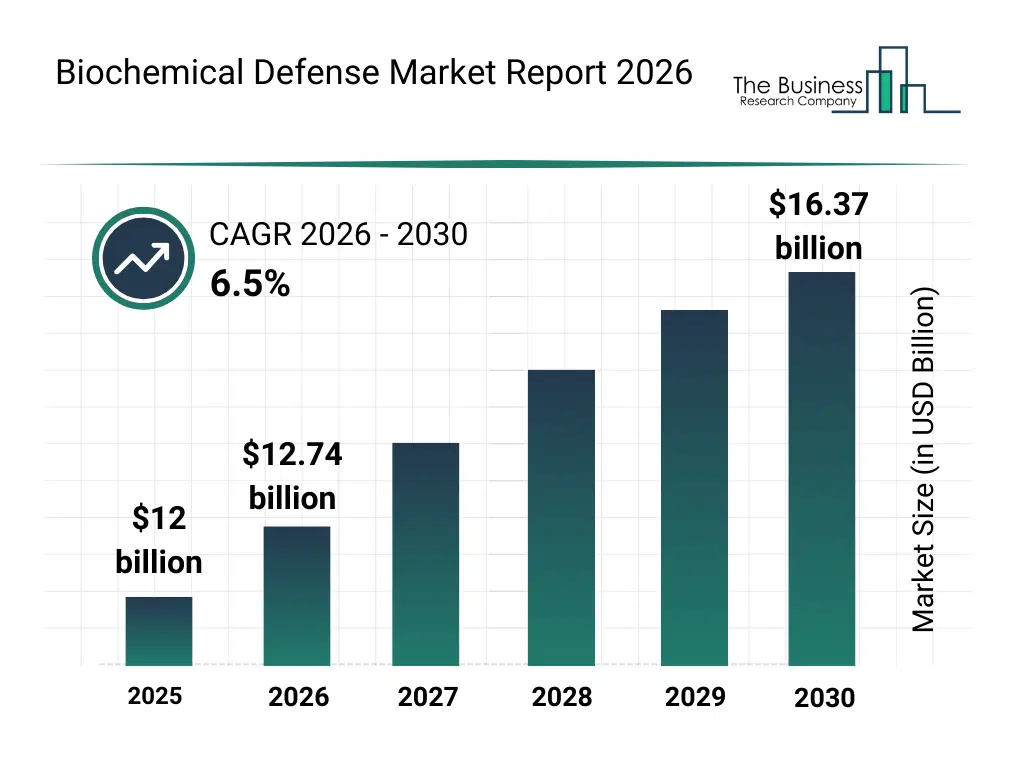
What Is The Biochemical Defense Market Size and Share 2026?
The biochemical defense market size has grown strongly in recent years. It will grow from $12 billion in 2025 to $12.74 billion in 2026 at a compound annual growth rate (CAGR) of 6.1%. The growth in the historic period can be attributed to development of biosensors and detection kits, adoption of decontamination protocols, growth in protective equipment usage, implementation of risk assessment and consulting services, advancement in immunoglobulin and diagnostic technologies.What Is The Biochemical Defense Market Growth Forecast?
The biochemical defense market size is expected to see strong growth in the next few years. It will grow to $16.37 billion in 2030 at a compound annual growth rate (CAGR) of 6.5%. The growth in the forecast period can be attributed to expansion of rapid-response decontamination solutions, integration with ai-based threat detection systems, growth in personal protective equipment with advanced materials, development of real-time biochemical monitoring networks, adoption in public health and military defense programs. Major trends in the forecast period include growing demand for rapid biochemical detection systems, increased adoption of advanced decontamination technologies, expansion of immunoglobulin-based protective solutions, rising development of next-generation biosurveillance tools, strengthening emphasis on biothreat preparedness and training programs.
Global Biochemical Defense Market Segmentation
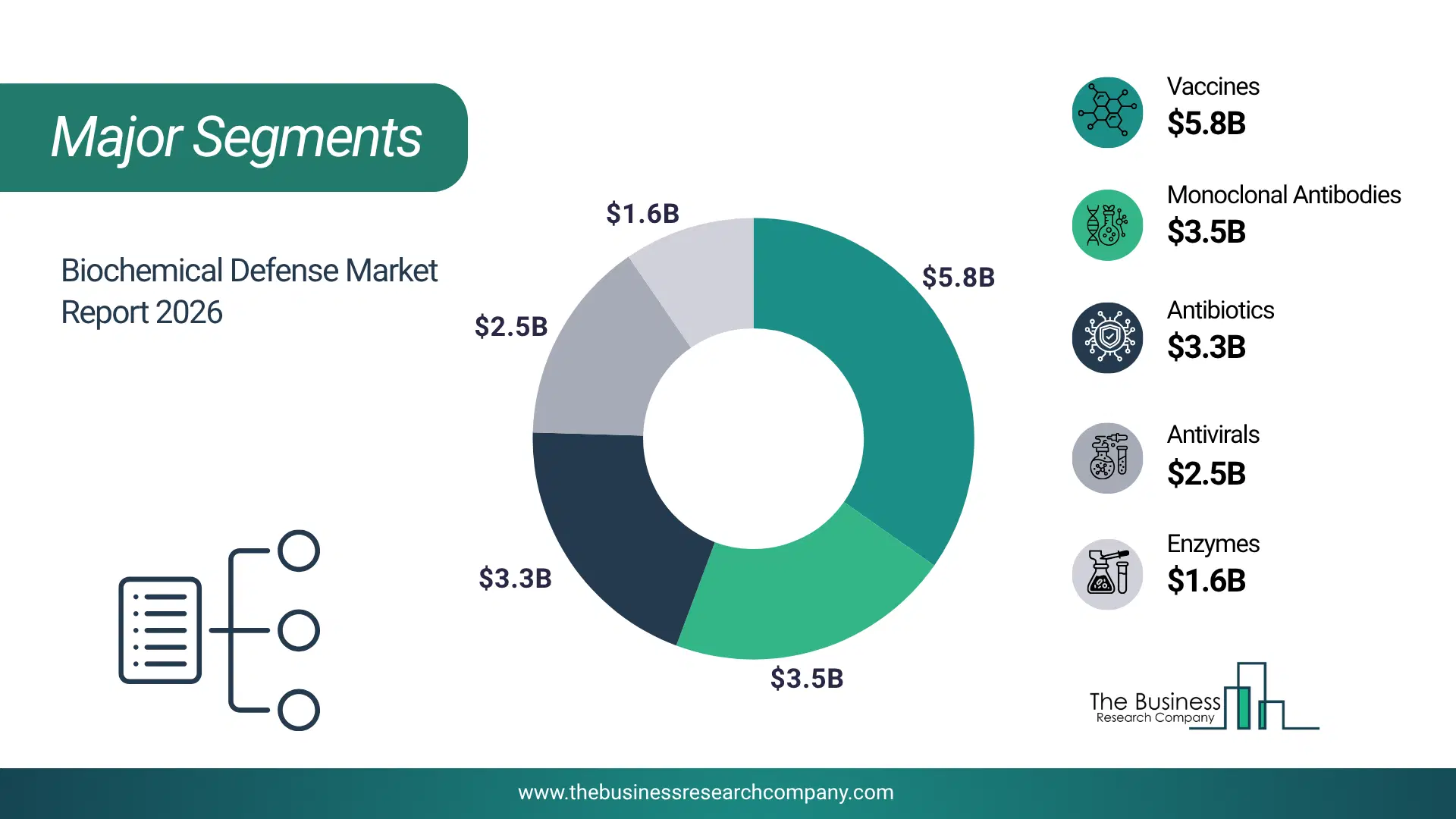
1) By Product Type: Detection And Monitoring Systems, Decontamination Solutions, Protective Equipment, Immunological And Medical Countermeasures, Training And Simulation Systems 2) By Mode of Action: Detection-Based Defense, Neutralization-Based Defense, Protective Defense, Medical Countermeasure Response, Containment And Filtration-Based Defense 3) By Application: Biothreat Detection, Decontamination And Response, Public Health Preparedness, Military And Defense Operations, Research And Laboratory Use 4) By Distribution Channel: Government Procurement, Direct Institutional Sales, Specialty Distributors, Online Technical Platforms, Emergency Supply Channels 5) By End-User: Government And Defense Agencies, Healthcare Facilities, Research Laboratories, Diagnostic Centers, Academic Institutions Subsegments: 1) By Detection And Monitoring Systems: Bioaerosol Detectors, Portable Biosensors, Rapid Diagnostic Kits, Environmental Monitoring Devices, Automated Biothreat Detection Systems 2) By Decontamination Solutions: Chemical Decontamination Agents, Biological Decontamination Agents, Enzymatic Neutralization Compounds, Surface Decontamination Foams, Large-Scale Decontamination Systems 3) By Protective Equipment: Respirators And Gas Masks, Protective Suits (CBRN Suits), Gloves And Boots, Powered Air-Purifying Respirators (PAPRs), Self-Contained Breathing Apparatus (SCBAs) 4) By Immunological And Medical Countermeasures: Antitoxins, Immunoglobulins, Biodefense-global-market-report" target="_blank">biodefense Vaccines, Broad-Spectrum Antivirals, Field Medical Treatment Kits 5) By Training And Simulation Systems: Virtual Reality Training Systems, Live Agent Simulation Tools, Laboratory Training Kits, Field Exercise Simulation Equipment, Emergency Response Training Platforms The top segments in the biochemical defense market will be: • Vaccines will reach $5.72 billion by 2030. • Monoclonal Antibodies will reach $3.4 billion by 2030. • Antibiotics will reach $3.21 billion by 2030. • Antivirals will reach $2.47 billion by 2030. • Enzymes will reach $1.57 billion by 2030.What Is Driver Of The Biochemical Defense Market?
Climate change increasing pathogen spread is expected to propel the growth of the biochemical defense market going forward. Climate change increasing pathogen spread refers to how rising temperatures, changing rainfall, and extreme weather create conditions that allow disease-causing organisms like mosquitoes, ticks, bacteria, and fungi to survive, multiply, and reach new areas. Climate change is increasing pathogen spread due to rising temperatures, altered rainfall patterns, extreme weather events, and shifting ecosystems. Biochemical defense supports climate change by increasing pathogen spread by providing early detection, rapid response, and containment of emerging pathogens; strengthening public health systems; and enabling development of vaccines. For instance, in October 2023, according to the World Health Organization (WHO), a Switzerland-based specialized agency of the United Nations, by the 2030s, climate change could cause an additional 250,000 deaths annually from diseases such as malaria and the effects of coastal flooding, threatening decades of progress in global health, development, and poverty reduction while exacerbating health inequalities. Therefore, climate change increasing pathogen spread is driving the growth of the biochemical defense industry.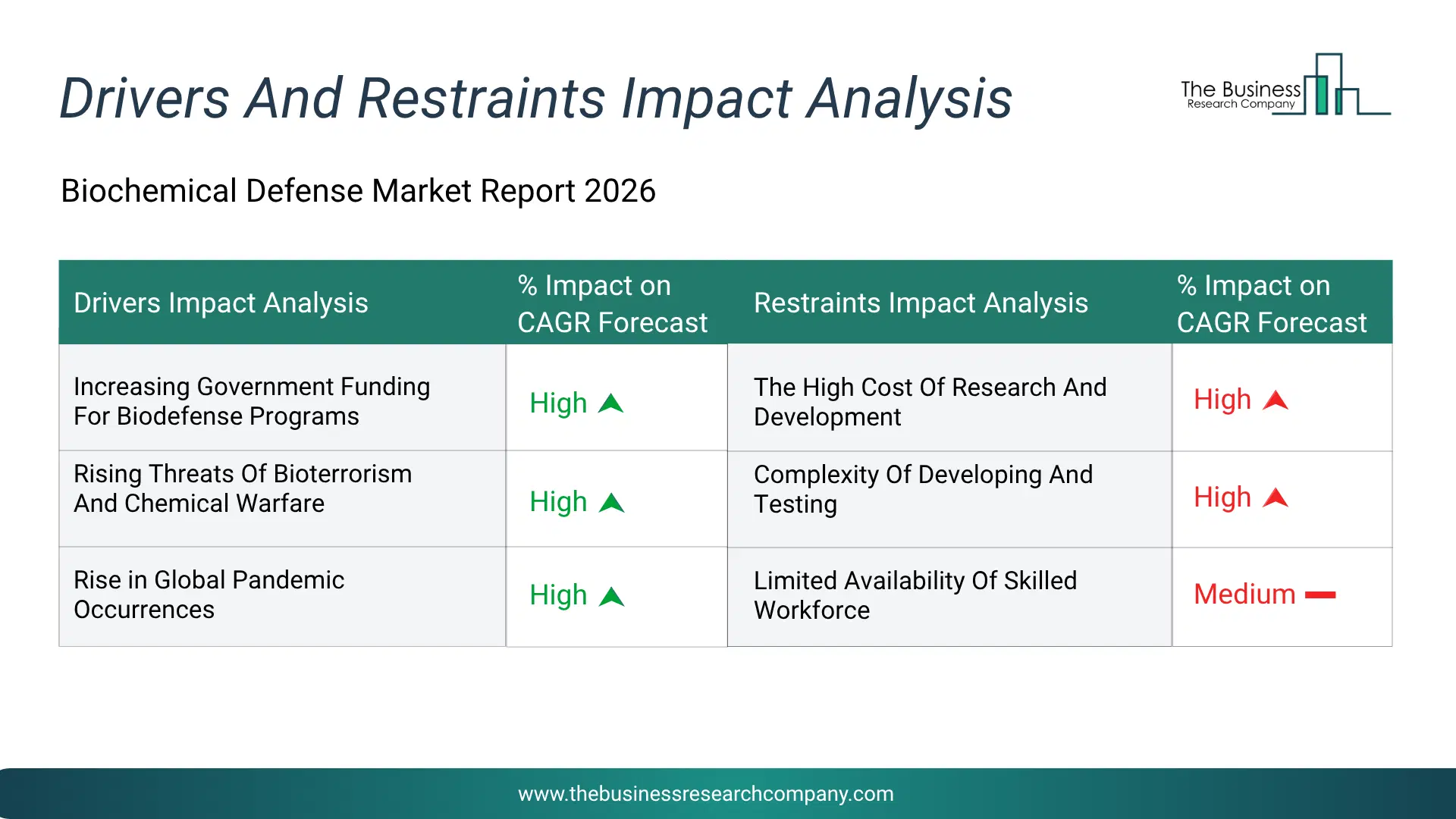
Infographic Chart Showing Key Market Drivers Analysis And Restraints For Biochemical Defense Market
The chart presents an impact analysis of key drivers and restraints, quantifying their relative influence on the market's growth rate and helping assess the balance between growth enablers and limiting factors. This chart offers a high-level perspective; the full report contains more detailed insights.
How Will The Drivers Impact Growth In The Global Biochemical Defense Market?
• Increasing Government Funding For Biodefense Programs (High) – During the forecast period, the increase in government funding for biodefense programs is expected to become a key growth driver for the biochemical defense market by 2030. Rising federal and national security budgets dedicated to biodefense initiatives are strengthening investments in research, development, and deployment of advanced countermeasure systems. As governments prioritize preparedness against bioterrorism, chemical warfare, and emerging infectious diseases, they are expanding funding for vaccines, detection systems, biosensors, decontamination technologies, and rapid response infrastructure. This financial support also enables the establishment of high-containment laboratories, national stockpiling strategies, and integrated early warning and surveillance networks. Additionally, sustained public funding reduces reliance on private capital for high-risk biodefense innovation, ensuring continuous product development and procurement activities. Collectively, these factors create stable and predictable demand across defense, healthcare, and emergency response sectors. • Rising Threats Of Bioterrorism And Chemical Warfare (High) – During the forecast period, the rising threats of bioterrorism and chemical warfare are expected to become a significant growth driver for the biochemical defense market by 2030. Increasing geopolitical tensions and the potential misuse of hazardous biological and chemical agents are intensifying the need for advanced preparedness and rapid response capabilities. Governments and defense agencies are therefore expanding investments in early detection systems, surveillance networks, personal protective equipment, and medical countermeasures to mitigate large -scale threats. The growing complexity of unconventional warfare scenarios is also accelerating the development of decontamination technologies and integrated emergency response solutions. Additionally, heightened global security concerns are encouraging stronger coordination between military, healthcare, and homeland security agencies to enhance national resilience. Collectively, these factors generate sustained demand for comprehensive biochemical defense solutions. • Rise in Global Pandemic Occurrences (High) – During the forecast period, the rise in global pandemic occurrences is expected to become a key growth driver for the biochemical defense market by 2030. Increasing frequency of infectious disease outbreaks has reinforced the importance of robust preparedness frameworks to counter naturally emerging biological threats. Events such as covid-19 have underscored the critical need for rapid diagnostics, scalable vaccine production platforms, advanced biocontainment facilities, and efficient distribution networks. In response, governments and healthcare systems are allocating greater resources toward early warning surveillance systems, stockpiling of medical countermeasures, personal protective equipment, and decontamination technologies. The expanding focus on public health security is also broadening the application of biochemical defense solutions beyond military and homeland security sectors into civilian healthcare infrastructure. Additionally, continuous monitoring of zoonotic and emerging pathogens is accelerating research and innovation in next-generation detection and response technologies. Collectively, these developments are strengthening long-term market demand.How Will The Restraints Impact Growth In The Global Biochemical Defense Market?
• The High Cost Of Research And Development (High) – During the forecast period, the high cost of research and development acts as a restraint for the biochemical defense market by limiting the ability of organizations to innovate and bring new solutions to market. Developing advanced biosensors, vaccines, and protective technologies requires substantial investment in specialized facilities, skilled expertise, and long testing cycles. These expenses often deter private companies from entering the market, making the sector heavily reliant on government funding. Smaller firms may struggle to compete due to limited financial resources, slowing overall technological advancement. Consequently, the high r&d costs create barriers to entry and restrict the pace of market expansion. • Complexity Of Developing And Testing (High) – During the forecast period, the complexity of developing and testing biochemical defense solutions acts as a restraint by prolonging product development cycles and increasing regulatory hurdles. Creating reliable vaccines, detection systems, or protective gear requires extensive validation to ensure safety, accuracy, and effectiveness against evolving threats. Testing these products often involves high-risk environments, specialized laboratories, and strict compliance standards, which add significant delays and costs. This complexity discourages rapid innovation and limits the timely availability of advanced solutions. As a result, market growth is slowed by the challenges of meeting stringent scientific and regulatory requirements. • Limited Availability Of Skilled Workforce (Medium) – During the forecast period, the limited availability of a highly skilled workforce acts as a restraint for the biochemical defense market by constraining the development, deployment, and maintenance of advanced defense technologies. This sector requires specialized expertise in biotechnology, microbiology, chemical engineering, and defense systems integration, which is not widely available across all regions. The shortage of trained professionals slows down research activities, delays project execution, and increases dependency on a small pool of experts. Additionally, competition for talent from pharmaceuticals and commercial biotech industries further intensifies the shortage. As a result, organizations face operational inefficiencies and slower innovation cycles, which collectively hinder market growth.Key Players In The Global Biochemical Defense Market
Major companies operating in the biochemical defense market are Emergent BioSolutions Inc., Thermo Fisher Scientific Inc., SIGA Technologies Inc., Bavarian Nordic A/S, Dynavax Technologies Inc., Cleveland BioLabs,Inc., Soligenix Inc., GlaxoSmithKline plc, Elusys Therapeutics Inc., General Dynamics Corporation (Dynport Vaccine Company LLC), EPIVAX Inc., Rheinmetall AG, Zeteo Tech LLC, MSA Safety Incorporated, Ichor Medical Systems, BioFire Defense LLC, Smiths Detection Group Ltd., Tonix Pharmaceuticals Holding Corp., AirBoss Defense Group Inc., Aeolus Pharmaceuticals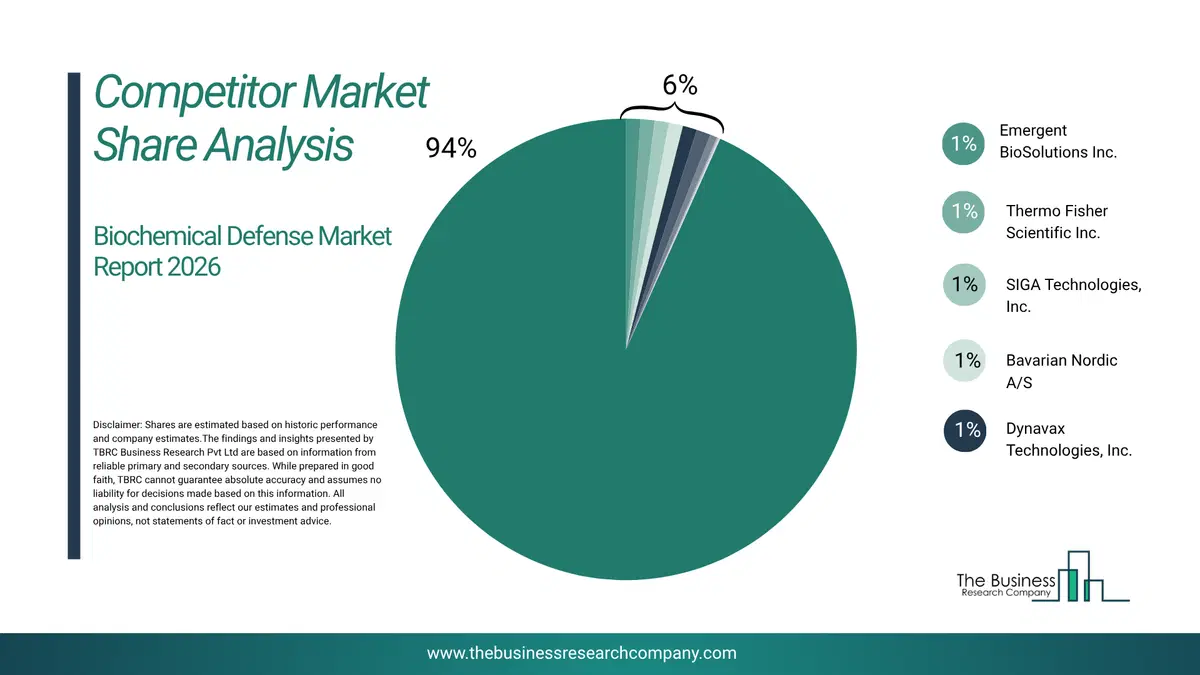
This chart is for illustrative purposes; the full report includes a detailed competitor analysis and comprehensive overview of the top 10 companies in the market.
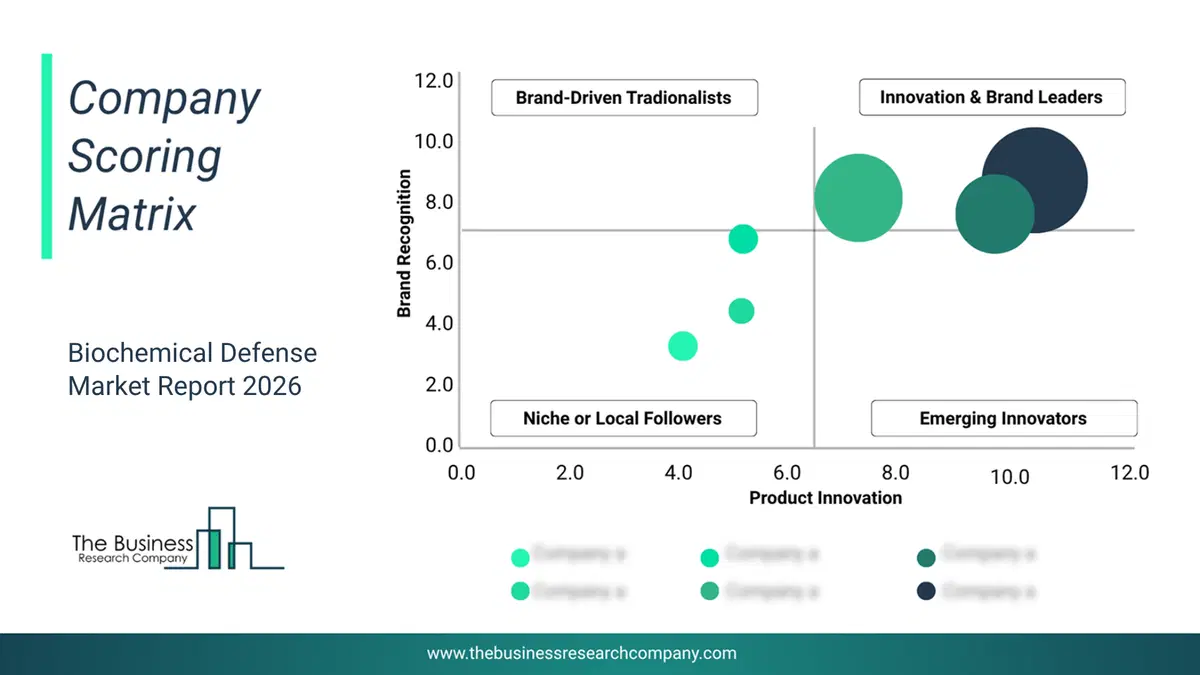
This chart maps companies by product innovation and brand strength, with bubble size indicating relative revenue, helping identify market leaders, challengers, and niche players. This is an illustrative chart; the full report provides a complete and accurate competitive analysis.
Global Biochemical Defense Market Trends and Insights
Major companies operating in the biochemical defense market are focusing on developing innovative solutions, such as supercomputing systems, to accelerate pathogen analysis and enhance rapid response capabilities. A supercomputing system is a high-performance computing platform designed to process massive biological and chemical data rapidly, enabling faster pathogen analysis and defense strategy development. For instance, in August 2024, the United States Department of Defense, a US-based government department, partnered with the National Nuclear Security Administration, a US-based federal agency, and launched a dedicated biological defense supercomputer at the Lawrence Livermore National Laboratory (LLNL) in California. This advanced supercomputer is designed for large-scale simulations and AI-driven modeling to enhance biosurveillance, threat detection, advanced materials research, and accelerated medical countermeasure development. It also incorporates a rapid-response laboratory for AI-assisted drug design and protein engineering, significantly shortening the development and testing timelines for defenses against biological threats, potentially reducing response times to just days or even hours.What Are Latest Mergers And Acquisitions In The Biochemical Defense Market? Ginkgo Bioworks Holdings Inc. Acquires AgBiome Inc’s Platform Assets To Advance AI-Driven Agricultural Biologicals Development
In April 2024, Ginkgo Bioworks Holdings Inc., a US-based biotech company, acquired the platform assets of AgBiome Inc. for an undisclosed amount. Through this acquisition, Ginkgo Bioworks Holdings Inc. aims to significantly expand its agricultural biological discovery and development platform by integrating AgBiome’s extensive microbial strain library, gene sequences, and validated product pipeline to accelerate innovation and deliver enhanced solutions to its customers in sustainable agriculture. AgBiome Inc. is a US-based biotechnology company that offers biochemical defense.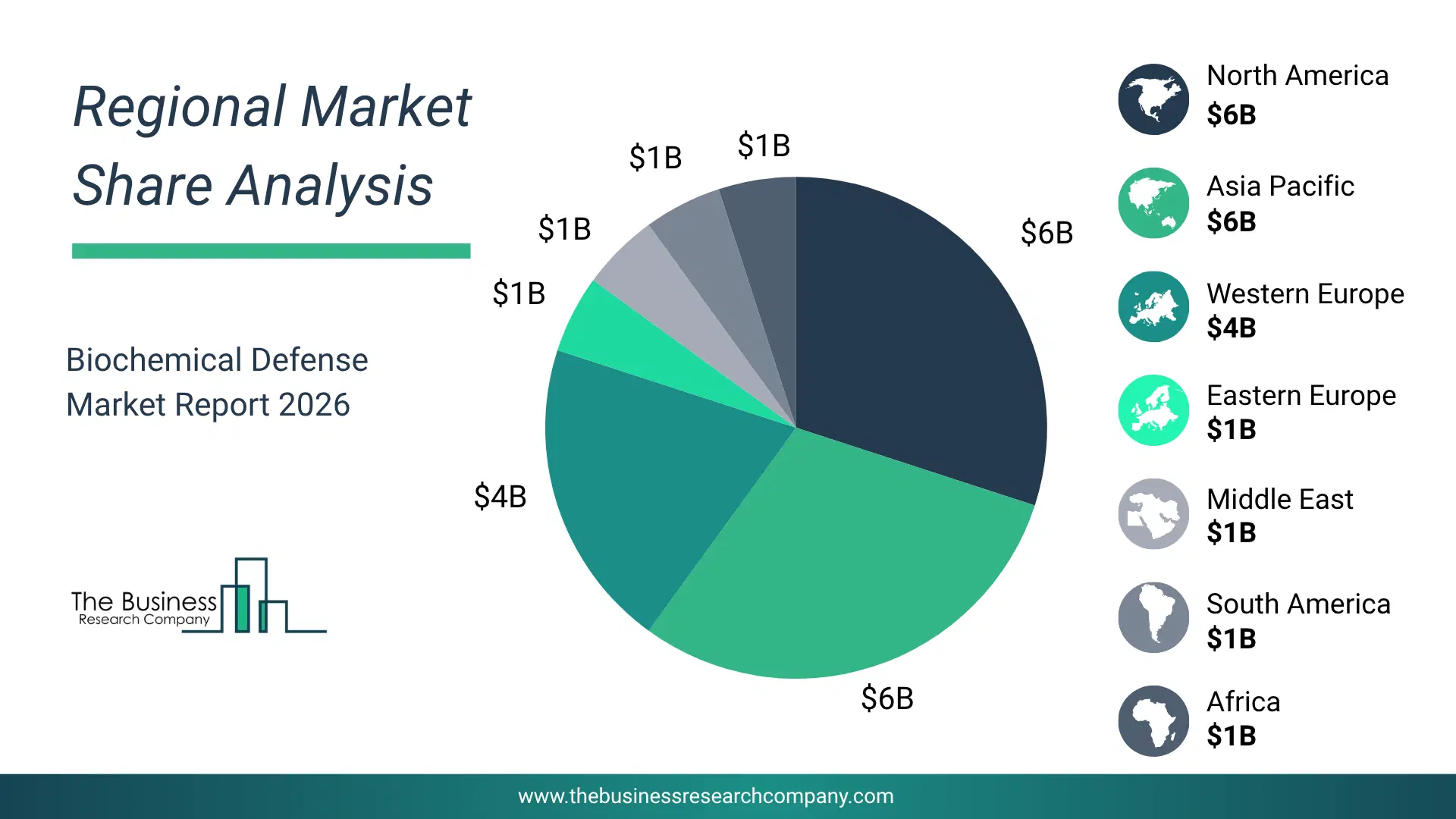
Regional Insights
North America was the largest region in the biochemical defense market in 2025. Asia-Pacific is expected to be the fastest-growing region in the forecast period. The regions covered in this market report are Asia-Pacific, South East Asia, Western Europe, Eastern Europe, North America, South America, Middle East, Africa. The countries covered in this market report are Australia, Brazil, China, France, Germany, India, Indonesia, Japan, Taiwan, Russia, South Korea, UK, USA, Canada, Italy, SpainWhat Defines the Biochemical Defense Market?
The biochemical defense market consists of revenues earned by entities by providing services such as detection and monitoring, decontamination services, consulting and risk assessment, training and simulation, and protective equipment provision. The market value includes the value of related goods sold by the service provider or included within the service offering. The biochemical defense market also includes sales of personal protective equipment, decontamination agents, biosensors, immunoglobulins, and diagnostic kits. Values in this market are ‘factory gate’ values, that is the value of goods sold by the manufacturers or creators of the goods, whether to other entities (including downstream manufacturers, wholesalers, distributors and retailers) or directly to end customers. The value of goods in this market includes related services sold by the creators of the goods.How is Market Value Defined and Measured?
The market value is defined as the revenues that enterprises gain from the sale of goods and/or services within the specified market and geography through sales, grants, or donations in terms of the currency (in USD unless otherwise specified). The revenues for a specified geography are consumption values that are revenues generated by organizations in the specified geography within the market, irrespective of where they are produced. It does not include revenues from resales along the supply chain, either further along the supply chain or as part of other products.
This chart presents market attractiveness based on a quantitative evaluation of growth, competition, strategic alignment, and risk, offering a clear view of opportunity areas for decision-making. This chart is for illustrative purposes; the full report contains the complete analysis.

This chart highlights the Total Addressable Market (TAM) by estimating the maximum revenue opportunity using an assumption-driven approach, supporting strategic planning and opportunity sizing across markets. The chart is illustrative; the full report provides a more comprehensive analysis.
What Key Data and Analysis Are Included in the Biochemical Defense Market Report 2026?
The biochemical defense market research report is one of a series of new reports from The Business Research Company that provides market statistics, including industry global market size, regional shares, competitors with the market share, detailed market segments, market trends and opportunities, and any further data you may need to thrive in the biochemical defense industry. The market research report delivers a complete perspective of everything you need, with an in-depth analysis of the current and future state of the industry.Biochemical Defense Market Report Forecast Analysis
| Report Attribute | Details |
|---|---|
| Market Size Value In 2026 | $12.74 billion |
| Revenue Forecast In 2030 | $16.37 billion |
| Growth Rate | CAGR of 6.5% from 2026 to 2030 |
| Base Year For Estimation | 2025 |
| Actual Estimates/Historical Data | 2020-2025 |
| Forecast Period | 2026 - 2030 |
| Market Representation | Revenue in USD Billion and CAGR from 2026 to 2030 |
| Segments Covered | Product Type, Mode of Action, Application, Distribution Channel, End-User |
| Regional Scope | Asia-Pacific, Western Europe, Eastern Europe, North America, South America, Middle East, Africa |
| Country Scope | The countries covered in the report are Australia, Brazil, China, France, Germany, India, ... |
| Key Companies Profiled | Emergent BioSolutions Inc., Thermo Fisher Scientific Inc., SIGA Technologies Inc., Bavarian Nordic A/S, Dynavax Technologies Inc., Cleveland BioLabs,Inc., Soligenix Inc., GlaxoSmithKline plc, Elusys Therapeutics Inc., General Dynamics Corporation (Dynport Vaccine Company LLC), EPIVAX Inc., Rheinmetall AG, Zeteo Tech LLC, MSA Safety Incorporated, Ichor Medical Systems, BioFire Defense LLC, Smiths Detection Group Ltd., Tonix Pharmaceuticals Holding Corp., AirBoss Defense Group Inc., Aeolus Pharmaceuticals |
| Customization Scope | Request for Customization |
| Pricing And Purchase Options | Explore Purchase Options |