

Biochemistry Analyzer Market Report 2026
Global Outlook – By Product Type (Semi-Automated, Fully-Automated), By Modality (Bench Top, Floor-Standing), By Application (Clinical Diagnostics, Bioreactor Byproduct Detection, Drug Development, Other Application), By End User (Hospitals, Diagnostic Centers, Pharmaceutical Companies, Biotechnology Companies, Academic Research Institutes, Contract Research Organizations) – Market Size, Trends, Strategies, and Forecast to 2030
Biochemistry Analyzer Market Overview
• Biochemistry Analyzer market size has reached to $4.58 billion in 2025 • Expected to grow to $6.29 billion in 2030 at a compound annual growth rate (CAGR) of 6.6% • Growth Driver: Cardiovascular Disorders Drive Growth In Biochemistry Analyzer Market • Market Trend: Immunoassay Analyzer Platforms Sets New Standards For Diagnostic Efficiency And Laboratory Performance • Europe was the largest region in 2025.Market Gains By 2030 – Top Opportunities By Segment
Market Gain identifies the most promising market opportunities by highlighting the segments or products expected to generate the highest incremental revenue growth over the next five years.
What Is Covered Under Biochemistry Analyzer Market?
A biochemistry analyzer is a medical laboratory instrument used to measure the concentration of various biochemical substances in biological samples. It performs tests to analyze enzymes, electrolytes, proteins, and other biochemical compounds. The analyzer works by analyzing samples through chemical reactions and producing results quickly and accurately. The main product types of biochemistry analyzers are semi-automated and fully-automated. A semi-automated biochemistry analyzer refers to a device that requires some manual intervention for sample preparation or reagent handling but automates the testing process. The modality types are categorized into bench-top and floor-standing for use in applications such as clinical diagnostics, bioreactor byproduct detection, drug development, and others by end users, including hospitals, diagnostic centers, pharmaceutical companies, biotechnology companies, academic research institutes, and contract research organizations.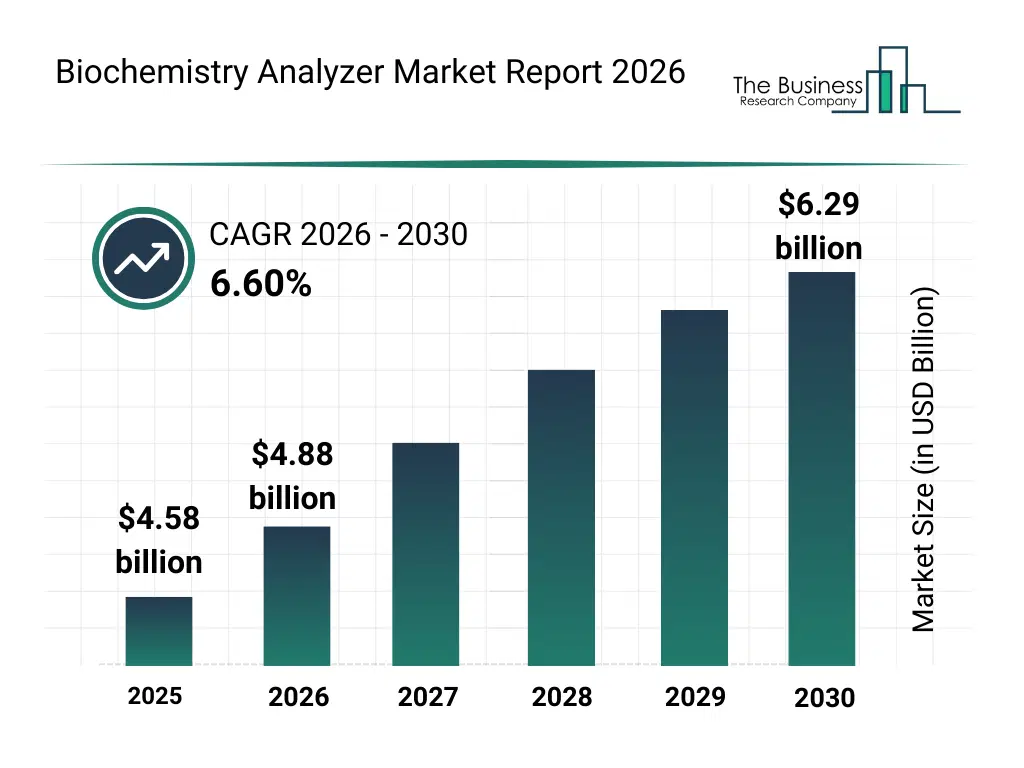
What Is The Biochemistry Analyzer Market Size and Share 2026?
The biochemistry analyzer market size has grown strongly in recent years. It will grow from $4.58 billion in 2025 to $4.88 billion in 2026 at a compound annual growth rate (CAGR) of 6.6%. The growth in the historic period can be attributed to growth in hospital laboratory testing volumes, early adoption of automated clinical chemistry analyzers, expansion of diagnostic center infrastructure, increasing prevalence of metabolic and chronic diseases, integration of biochemistry testing in routine health screening.What Is The Biochemistry Analyzer Market Growth Forecast?
The biochemistry analyzer market size is expected to see strong growth in the next few years. It will grow to $6.29 billion in 2030 at a compound annual growth rate (CAGR) of 6.6%. The growth in the forecast period can be attributed to rising demand for high-throughput analyzer platforms, growing use of biochemistry testing in biopharma r&d, increasing adoption in academic and contract research organizations, higher emphasis on rapid and accurate diagnostic workflows, expansion of clinical diagnostics in emerging healthcare markets. Major trends in the forecast period include increasing use of biochemistry analyzers in routine clinical diagnostics, growing demand for high-throughput and rapid result testing systems, rising adoption of biochemistry testing in drug development and research, expansion of analyzer utilization across hospitals and diagnostic centers, focus on accuracy, reliability, and standardization of biochemical testing.
Global Biochemistry Analyzer Market Segmentation
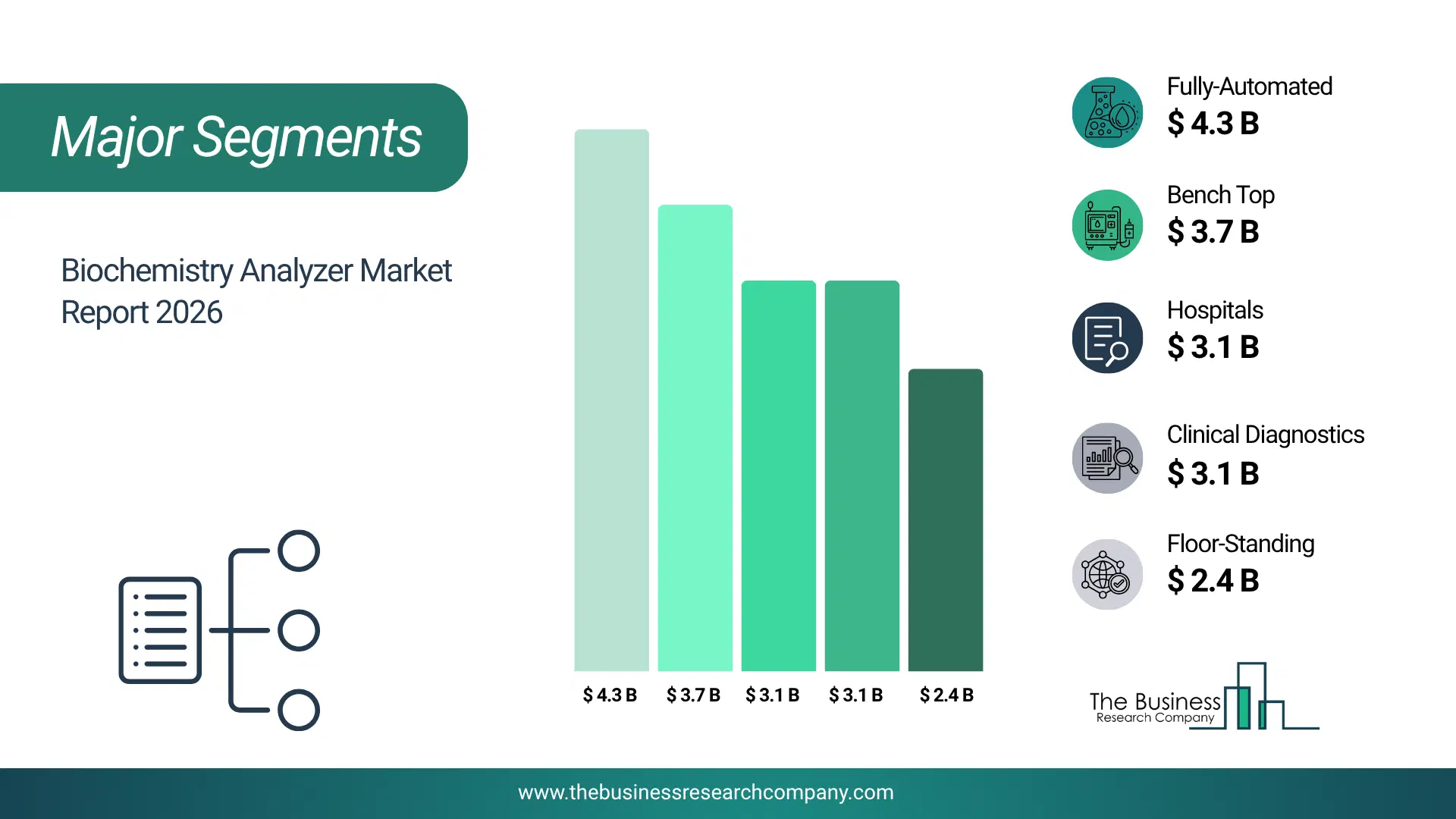
1) By Product Type: Semi-Automated, Fully-Automated 2) By Modality: Bench Top, Floor-Standing 3) By Application: Clinical Diagnostics, Bioreactor Byproduct Detection, Drug Development, Other Application 4) By End User: Hospitals, Diagnostic Centers, Pharmaceutical Companies, Biotechnology Companies, Academic Research Institutes, Contract Research Organizations Subsegments: 1) By Semi-Automated: Benchtop Semi-Automated Biochemistry Analyzers, Compact Semi-Automated Biochemistry Analyzers 2) By Fully-Automated: High-Throughput Fully-Automated Biochemistry Analyzers, Modular Fully-Automated Biochemistry Analyzers The top segments in the biochemistry analyzer market will be: • Fully-Automated will reach $4323.44 Million by 2030. • Bench Top will reach $3729.11 Million by 2030. • Hospitals will reach $3156.8 Million by 2030. • Clinical Diagnostics will reach $3167.89 Million by 2030. • Floor-Standing will reach $2477.31 Million by 2030.What Is The Driver Of The Biochemistry Analyzer Market?
The rise in cases of cardiovascular disorders is expected to propel the growth of the biochemistry analyzer market going forward. Cardiovascular diseases refer to a group of disorders that affect the heart and blood vessels. These conditions typically involve narrowed or blocked blood vessels that can lead to various complications, including heart attack, stroke, and peripheral artery disease (PAD). The incidence of cardiovascular diseases rises with the rise in aging population, sedentary lifestyles, poor dietary choices, and high rates of obesity. A biochemistry analyzer aids in the diagnosis and management of cardiovascular disorders by providing accurate and timely measurements of key biomarkers, enabling healthcare professionals to monitor patient health, assess risk factors, and tailor treatment plans effectively. For instance, in January 2024, according to the American Heart Association, a US-based nonprofit organization, the total number of deaths caused by cardiovascular diseases reached 931,578, from 928,741 in 2023. Moreover, the age-adjusted death rate from cardiovascular disease also saw a modest increase, reaching 233.3 per 100,000 in 2024, marking a 4.0% increase 224.4 per 100,000 in 2023. Therefore, an increasing number of cardiovascular disorder cases is driving the biochemistry analyzer industry.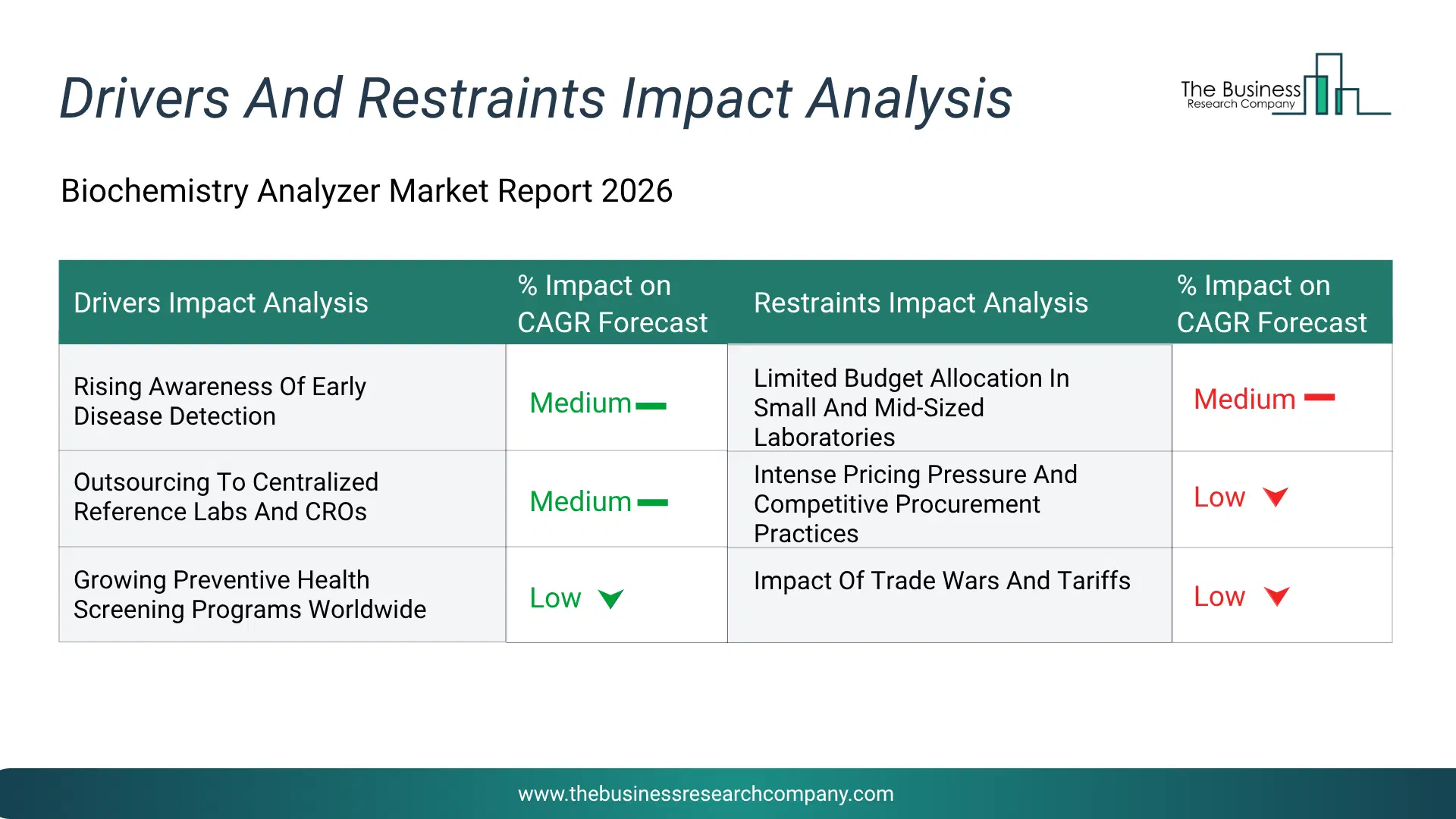
Infographic Chart Showing Key Market Drivers Analysis And Restraints For Biochemistry Analyzer Market
The chart presents an impact analysis of key drivers and restraints, quantifying their relative influence on the market's growth rate and helping assess the balance between growth enablers and limiting factors. This chart offers a high-level perspective; the full report contains more detailed insights.
How Will The Drivers Impact Growth In The Global Biochemistry Analyzer Market?
• Rising Awareness Of Early Disease Detection (Medium) – During the forecast period, the rising awareness of early disease detection is expected to be a key driver propelling expansion in the biochemistry analyzer market. Healthcare systems globally are shifting toward proactive care models that prioritize identifying metabolic imbalances, organ dysfunction and disease risk factors before the onset of advanced clinical symptoms. Early detection strategies heavily rely on biochemical testing panels, including glucose assessments, lipid profiling, liver function tests, renal function markers and electrolyte monitoring, all of which are processed using clinical chemistry analyzers. As patient awareness improves and healthcare providers emphasize routine screening as part of standard medical practice, laboratories will face sustained growth in sample volumes. The rising awareness of early disease detection growth contribution during the forecast period in 2025 is 1.5%. • Outsourcing To Centralized Reference Labs And CROs (Medium) – During the forecast period, the expansion of outsourcing to centralized reference labs and CROs is expected to be a key driver propelling growth in the biochemistry analyzer market. Healthcare providers and smaller diagnostic centers increasingly rely on centralized labs to manage complex biochemical testing due to cost efficiencies, standardized quality control and faster turnaround times. As outsourcing expands, centralized laboratories must scale their operational capabilities to process large volumes of biochemical samples efficiently. This will drive demand for high-throughput, fully automated clinical chemistry analyzers capable of continuous operation and integrated workflow management. In parallel, CROs conducting clinical trials and pharmaceutical research will require reliable analyzer systems to support standardized biochemical monitoring across multiple study sites. The expansion of outsourcing to centralized reference labs and CROs growth contribution during the forecast period in 2025 is 1.0%. • Growing Preventive Health Screening Programs Worldwide (Low) – During the forecast period, the growing preventive health screening programs worldwide are expected to be a key driver propelling growth in the biochemistry analyzer market. Governments, insurers and corporate healthcare initiatives are increasingly investing in structured screening programs aimed at detecting non-communicable diseases and metabolic disorders at earlier stages. Preventive screening panels typically include comprehensive biochemical evaluations such as blood glucose testing, lipid profiles, liver enzyme assessments, kidney function panels and electrolyte analysis. These tests form the core workload of clinical chemistry laboratories and directly depend on biochemistry analyzer systems. As screening programs expand geographically and become integrated into primary healthcare frameworks, laboratories will require additional analyzer capacity to accommodate rising test volumes. The growing preventive health screening programs worldwide growth contribution during the forecast period in 2025 is 0.8%. • Demand For Rapid And Accurate Diagnostic Testing (Low) – During the forecast period, the growth in demand for rapid and accurate diagnostic testing is expected to be a key driver propelling growth in the biochemistry analyzer market. Healthcare providers are under mounting pressure to reduce diagnostic turnaround times while maintaining high analytical precision, particularly in emergency care, intensive care units, oncology departments and high-volume outpatient settings. Clinical chemistry analyzers play a crucial role in delivering timely biochemical results that inform immediate clinical decisions. As patient volumes increase and healthcare delivery models emphasize efficiency, laboratories must adopt automated systems capable of processing large sample loads with minimal manual intervention. The growth in demand for rapid and accurate diagnostic testing growth contribution during the forecast period in 2025 is 0.5%.How Will The Restraints Impact Growth In The Global Biochemistry Analyzer Market?
• Limited Budget Allocation In Small And Mid-Sized Laboratories (Medium) – During the forecast period, limited budget allocation in small and mid-sized laboratories are restricting the growth of the biochemistry analyzer market. Independent laboratories, district hospitals and rural diagnostic centers often operate under tight operational budgets and face pressure to minimize capital spending while maintaining service availability. These facilities may prioritize basic laboratory equipment or essential consumables over investing in high-end automated analyzer platforms. Budget limitations can result in slower modernization cycles, continued reliance on semi-automated systems, or outsourcing of complex biochemical testing to centralized reference laboratories instead of installing new analyzer systems locally. Furthermore, reimbursement pressures and competitive pricing in diagnostic services may reduce profitability for smaller laboratories, further limiting their ability to finance new equipment purchases. Growth affected by the limited budget allocation in small and mid-sized laboratories during the forecast period in 2025 is -1.0%. • Intense Pricing Pressure And Competitive Procurement Practices (Medium) – During the forecast period, intense pricing pressure and competitive procurement practices is restricting the growth of the biochemistry analyzer market. Hospitals and diagnostic chains increasingly conduct centralized procurement processes that emphasize cost minimization and long-term contractual agreements. Competitive bidding environments often drive manufacturers to lower instrument prices or bundle analyzers with service agreements and reagent contracts, reducing profit margins. Additionally, strong competition among global and regional manufacturers intensifies price-based differentiation, limiting the ability to command premium pricing even for technologically advanced systems. In price-sensitive markets, procurement decisions may prioritize lower-cost alternatives over high-performance platforms, slowing the adoption of premium fully automated systems. Growth affected by the intense pricing pressure and competitive procurement practices during the forecast period in 2025 is -0.5%. • Impact Of Trade Wars And Tariffs (Low) – During the forecast period, the impact of trade wars and tariffs is restricting the growth of the biochemistry analyzer market. The imposition of tariffs on medical devices or key components can increase production costs, which may be passed on to end users in the form of higher equipment prices. Trade restrictions can also delay shipments, complicate regulatory approvals and create uncertainty in international procurement planning. For multinational manufacturers, geopolitical tensions may necessitate restructuring supply chains or establishing localized production facilities, increasing operational complexity and capital requirements. These disruptions can slow market expansion, particularly in regions reliant on imported diagnostic equipment and may deter smaller laboratories from investing in new analyzer systems due to price volatility and procurement uncertainty. Growth affected by the impact of trade wars and tariffs during the forecast period in 2025 is -0.3%.Key Players In The Global Biochemistry Analyzer Market
Major companies operating in the biochemistry analyzer market are Roche Holding AG, Thermo Fisher Scientific, Abbott Laboratories, Siemens Healthineers, Mindray Bio-Medical Electronics Co. Ltd., Hitachi High-Technologies Corporation, Beckman Coulter Inc., Sysmex Corporation, Bio-Rad Laboratories Inc, Ortho Clinical Diagnostics, Horiba Medical Ltd, Randox Laboratories Ltd., NOVA Biomedical Corp., Tecom Group, Dirui Industries Co. Ltd., Transasia Biomedicals Ltd., ELITechGroup, Rayto Life and Analytical Sciences Co. Ltd., DPC (Diagnostic Products Corporation), Cypress Diagnostics Inc, Urit Medical Electronic Group, Adaltis Inc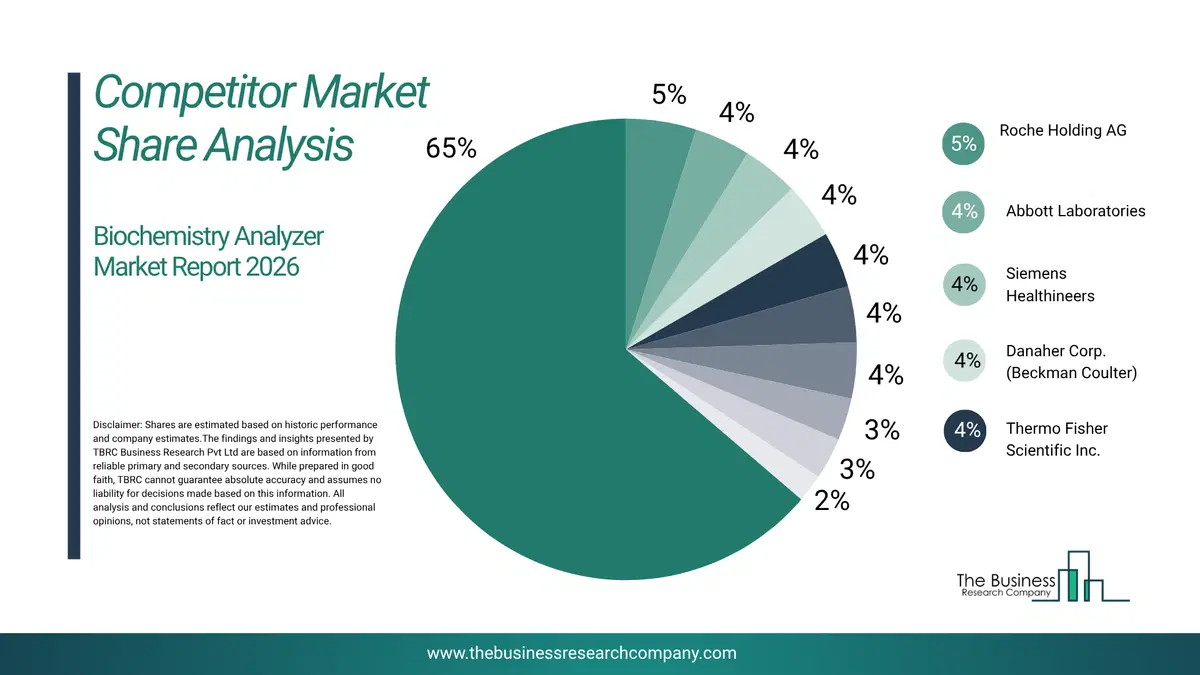
This chart is for illustrative purposes; the full report includes a detailed competitor analysis and comprehensive overview of the top 10 companies in the market.
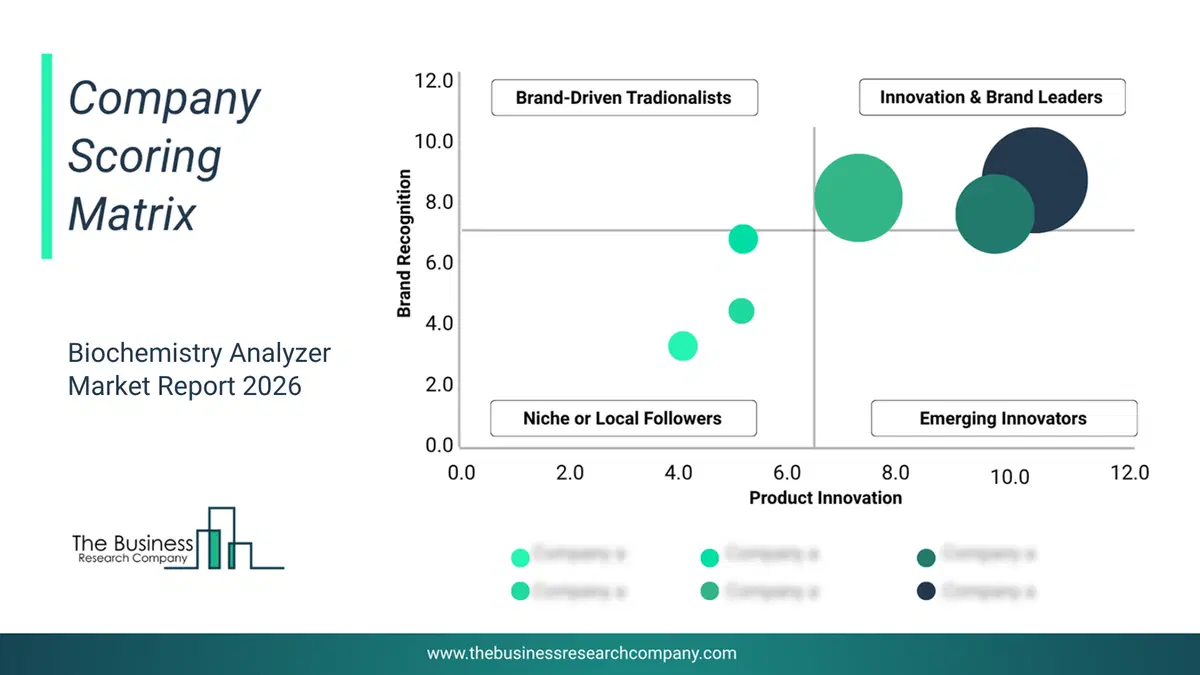
This chart maps companies by product innovation and brand strength, with bubble size indicating relative revenue, helping identify market leaders, challengers, and niche players. This is an illustrative chart; the full report provides a complete and accurate competitive analysis.
Global Biochemistry Analyzer Market Trends and Insights
Major companies operating in the biochemistry analyzer market are focusing on developing immunoassay analyzer platforms to enhance diagnostic accuracy and reduce maintenance requirements. Immunoassay analyzer platforms measure specific biomarkers in biological samples through immunoassay techniques and provide high accuracy and sensitivity in detecting various conditions, thereby improving diagnostic efficiency and supporting comprehensive patient care. For instance, in May 2023, Beckman Coulter Inc., a US-based clinical diagnostics company, launched the DxI 9000 Access Immunoassay Analyzer, a cutting-edge platform designed to elevate laboratory performance. This next-generation analyzer is capable of running up to 215 tests per hour per square meter. It features advanced innovations such as PrecisionVision Technology for real-time data accuracy, ZeroDaily Maintenance for reduced upkeep, and IntelliServe for proactive remote service and diagnostics. The DxI 9000 enhances assay sensitivity with the Lumi-Phos PRO Substrate, and it supports rapid, accurate heart failure diagnosis through its NT-proBNP assay. This system is designed to meet the increasing demands for speed, reliability and precision in clinical laboratories.What Are Latest Mergers And Acquisitions In The Biochemistry Analyzer Market?
In December 2023, Mindray Medical International Limited, a China-based medical device company that develops and manufactures medical equipment and accessories for humans and animals, acquired DiaSys Diagnostic Systems GmbH for an undisclosed amount. With this acquisition, Mindray Medical International Limited aims to enhance its in-vitro diagnostics portfolio, expand its global supply chain capabilities, and strengthen its competitive position in the healthcare market. DiaSys Diagnostic Systems GmbH is a Germany-based manufacturing company that specializes in providing innovative diagnostic solutions, including biochemistry analyzers.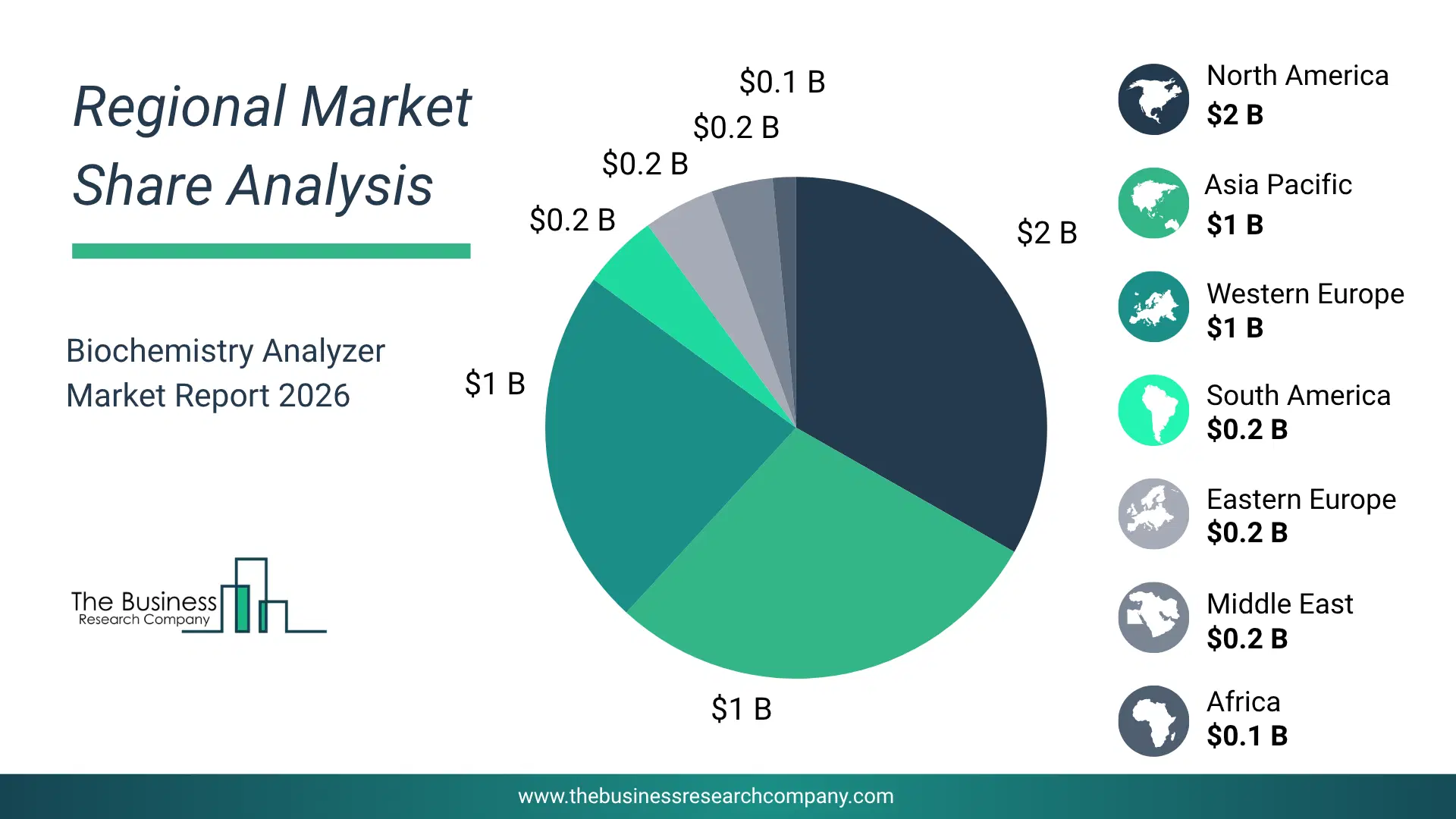
Regional Outlook
Europe was the largest region in the biochemistry analyzer market in 2025. The regions covered in this market report are Asia-Pacific, South East Asia, Western Europe, Eastern Europe, North America, South America, Middle East, Africa. The countries covered in this market report are Australia, Brazil, China, France, Germany, India, Indonesia, Japan, Taiwan, Russia, South Korea, UK, USA, Canada, Italy, SpainWhat Defines the Biochemistry Analyzer Market?
A biochemistry analyzer market consists of sales of reagent kits, control and calibration solutions, software for data management, and consumables to support the operation and performance of the analyzers. Values in this market are ‘factory gate’ values, that is the value of goods sold by the manufacturers or creators of the goods, whether to other entities (including downstream manufacturers, wholesalers, distributors and retailers) or directly to end customers. The value of goods in this market includes related services sold by the creators of the goods.How is Market Value Defined and Measured?
The market value is defined as the revenues that enterprises gain from the sale of goods and/or services within the specified market and geography through sales, grants, or donations in terms of the currency (in USD unless otherwise specified). The revenues for a specified geography are consumption values that are revenues generated by organizations in the specified geography within the market, irrespective of where they are produced. It does not include revenues from resales along the supply chain, either further along the supply chain or as part of other products.
This chart presents market attractiveness based on a quantitative evaluation of growth, competition, strategic alignment, and risk, offering a clear view of opportunity areas for decision-making. This chart is for illustrative purposes; the full report contains the complete analysis.

This chart highlights the Total Addressable Market (TAM) by estimating the maximum revenue opportunity using an assumption-driven approach, supporting strategic planning and opportunity sizing across markets. The chart is illustrative; the full report provides a more comprehensive analysis.
What Key Data and Analysis Are Included in the Biochemistry Analyzer Market Report 2026?
The biochemistry analyzer market research report is one of a series of new reports from The Business Research Company that provides market statistics, including industry global market size, regional shares, competitors with the market share, detailed market segments, market trends and opportunities, and any further data you may need to thrive in the biochemistry analyzer industry. The market research report delivers a complete perspective of everything you need, with an in-depth analysis of the current and future state of the industry.Biochemistry Analyzer Market Report Forecast Analysis
| Report Attribute | Details |
|---|---|
| Market Size Value In 2026 | $4.88 billion |
| Revenue Forecast In 2030 | $6.29 billion |
| Growth Rate | CAGR of 6.6% from 2026 to 2030 |
| Base Year For Estimation | 2025 |
| Actual Estimates/Historical Data | 2020-2025 |
| Forecast Period | 2026 - 2030 - 2035 |
| Market Representation | Revenue in USD Billion and CAGR from 2026 to 2030 |
| Segments Covered | Product Type, Modality, Application, End User |
| Regional Scope | Asia-Pacific, Western Europe, Eastern Europe, North America, South America, Middle East, Africa |
| Country Scope | The countries covered in the report are Australia, Brazil, China, France, Germany, India, Indonesia, Japan, Taiwan, Russia, South Korea, UK, USA, Canada, Italy, Spain. |
| Key Companies Profiled | Roche Holding AG, Thermo Fisher Scientific, Abbott Laboratories, Siemens Healthineers, Mindray Bio-Medical Electronics Co. Ltd., Hitachi High-Technologies Corporation, Beckman Coulter Inc., Sysmex Corporation, Bio-Rad Laboratories Inc, Ortho Clinical Diagnostics, Horiba Medical Ltd, Randox Laboratories Ltd., NOVA Biomedical Corp., Tecom Group, Dirui Industries Co. Ltd., Transasia Biomedicals Ltd., ELITechGroup, Rayto Life and Analytical Sciences Co. Ltd., DPC (Diagnostic Products Corporation), Cypress Diagnostics Inc, Urit Medical Electronic Group, Adaltis Inc |
| Customization Scope | Request for Customization |
| Pricing And Purchase Options | Explore Purchase Options |