

Biochemistry Analyzer Global Market Opportunities And Strategies To 2035
By Product Type (Fully-Automated, Semi-Automated), By Modality (Bench Top, Floor-Standing), By Application (Clinical Diagnostics, Drug Development, Bioreactor Byproduct Detection, Other Application), By End User (Hospitals, Diagnostic Centers, Academic Research Institutes, Pharmaceutical Companies, Biotechnology Companies, Contract Research Organizations), And By Region, Opportunities And Strategies – Global Forecast To 2035
Biochemistry Analyzer Market Definition
Biochemistry analyzers, also known as clinical chemistry analyzers are automated laboratory instruments used to measure chemical components in biological samples such as blood, serum, plasma, or urine. They perform tests to quantify substances including glucose, cholesterol, enzymes, electrolytes, proteins and metabolites using photometric, enzymatic, or ion-selective electrode technologies. The primary purpose of biochemistry analyzers is to support accurate and rapid diagnostic testing for disease detection, monitoring and treatment management. The biochemistry analyzer market consists of sales of biochemistry analyzer by entities (organizations, sole traders and partnerships) that are used whenever quantitative assessment of biochemical parameters is required, including routine health screening, emergency diagnostics, chronic disease monitoring, drug discovery, toxicology studies and bioprocess monitoring.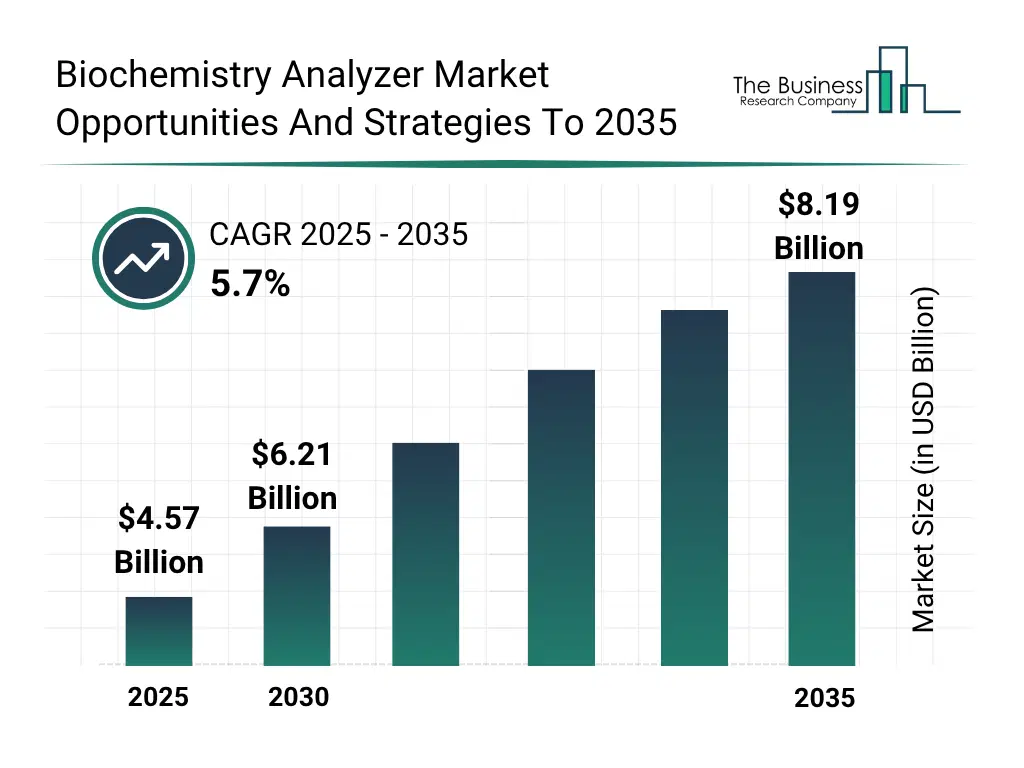
Biochemistry Analyzer Market Size
The global biochemistry analyzer market reached a value of nearly $4,573.5 million in 2025, having grown at a compound annual growth rate (CAGR) of 6.7% since 2020. The market is expected to grow from $4,573.5 million in 2025 to $6,206.4 million in 2030 at a rate of 6.3%. The market is then expected to grow at a CAGR of 5.7% from 2030 and reach $8,186.5 million in 2035. Growth in the historic period resulted from rising chronic disease burden, growth in hospital lab testing volumes, expansion of diagnostic centers or pathology chains and increasing clinical trials and CRO activity. Factors that negatively affected growth in the historic period were high capital cost and shortage of skilled professionals. Going forward, rising awareness of early disease detection, outsourcing to centralized reference labs and CROs, growing preventive health screening programs worldwide and demand for rapid and accurate diagnostic testing will drive the growth. Factors that could hinder the growth of the biochemistry analyzer market in the future include limited budget allocation in small and mid-sized laboratories, intense pricing pressure and competitive procurement practices and impact of trade wars and tariffs.
Biochemistry Analyzer Market Segmentation
The biochemistry analyzer market is segmented by product type, by modality, by application, by end user.by product type –
The biochemistry analyzer market is segmented by product type into:
- a) a) Fully-Automated
- b) b) Semi-Automated
By Modality –
The biochemistry analyzer market is segmented by modality into:
- a) Bench Top
- b) Floor-Standing
By Application –
The biochemistry analyzer market is segmented by application into:
- a) Clinical Diagnostics
- b) Drug Development
- c) Bioreactor Byproduct Detection
- d) Other Application
By End User –
The biochemistry analyzer market is segmented by end user into:
- a) Hospitals
- b) Diagnostic Centers
- c) Academic Research Institutes
- d) Pharmaceutical Companies
- c) Biotechnology Companies
- d) Contract Research Organizations
By Geography - The biochemistry analyzer market is segmented by geography into:
- China
- India
- Japan
- Australia
- Indonesia
- South Korea
- USA
- Canada
- Brazil
- France
- Germany
- UK
- Italy
- Spain
- Russia
-
o Asia Pacific
o Africa