

Bioconjugation Market Report 2026
Global Outlook – By Product And Service (Consumables, Instruments, Service), By Biomolecule Type (Antibodies, Proteins, Peptides, Oligonucleotides, Other Biomolecules), By Technique (Chemical Conjugation, Enzyme-Mediated Conjugation, Click Chemistry, Photoreactive Crosslinking, Other Techniques), By Application (Therapeutics, Research And Development, Diagnostics), By End Use (Pharmaceutical And Biotechnology Companies, Contract Research Organizations (CRO) And Contract Manufacturing Organizations (CMOs), Academic And Research Institutes, Hospitals, Clinical And Diagnostic Laboratories) – Market Size, Trends, Strategies, and Forecast to 2030
Bioconjugation Market Overview
• Bioconjugation market size has reached to $6.12 billion in 2025 • Expected to grow to $11.12 billion in 2030 at a compound annual growth rate (CAGR) of 12.7% • Growth Driver: Increasing Demand For Targeted Therapeutics Is Fueling The Growth Of The Market Due To Rising FDA Approvals And Emphasis On Precision Medicine • Market Trend: Advancements In Bioconjugation Focus On Precise Site-Specific Methods, Targeted Drug Delivery, And RNAI Delivery Innovations • North America was the largest region in 2025 and Asia-Pacific is the fastest growing region.What Is Covered Under Bioconjugation Market?
Bioconjugation refers to the process of chemically linking biomolecules such as proteins, peptides, nucleic acids, or carbohydrates to other molecules or functional surfaces. It enables controlled attachment of biological molecules to labels, drugs, carriers, or materials while preserving their biological activity and specificity. The process integrates selective chemical reactions, linker chemistries, and stabilization methods to ensure strong bonding, functional reliability, and compatibility with downstream biological and analytical applications. The main product types of bioconjugation include consumables, instruments, and service. Consumables refer to the reagents, kits, and materials used in bioconjugation experiments. Bioconjugation is applied to various biomolecule types, including antibodies, proteins, peptides, oligonucleotides, and other biomolecules. It uses techniques such as chemical conjugation, enzyme-mediated conjugation, click chemistry, photoreactive crosslinking, and other techniques. These solutions are utilized across applications such as therapeutics, research and development, and diagnostics, and are used by end users including pharmaceutical and biotechnology companies, contract research organizations and contract manufacturing organizations, academic and research institutes, and hospitals, clinical, and diagnostic laboratories.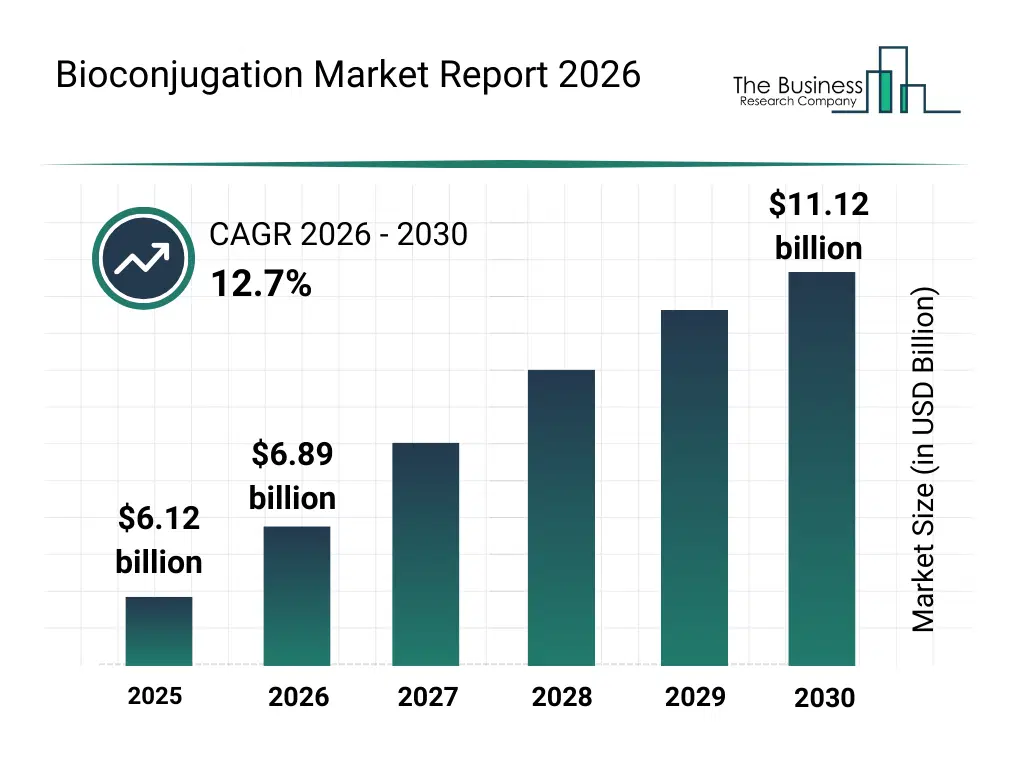
What Is The Bioconjugation Market Size and Share 2026?
The bioconjugation market size has grown rapidly in recent years. It will grow from $6.12 billion in 2025 to $6.89 billion in 2026 at a compound annual growth rate (CAGR) of 12.5%. The growth in the historic period can be attributed to increasing biologics research activity, expansion of antibody-based therapeutics, growth of diagnostic assay development, rising adoption of protein labeling techniques, availability of standardized conjugation kits.What Is The Bioconjugation Market Growth Forecast?
The bioconjugation market size is expected to see rapid growth in the next few years. It will grow to $11.12 billion in 2030 at a compound annual growth rate (CAGR) of 12.7%. The growth in the forecast period can be attributed to increasing development of targeted drug conjugates, rising investments in precision medicine research, expansion of companion diagnostics, growing use of conjugated biomolecules in imaging, increasing demand for scalable conjugation workflows. Major trends in the forecast period include increasing adoption of site-specific conjugation techniques, rising use of advanced linker chemistries, growing demand for high-purity conjugation reagents, expansion of automated conjugation platforms, enhanced focus on stability and reproducibility.
Global Bioconjugation Market Segmentation
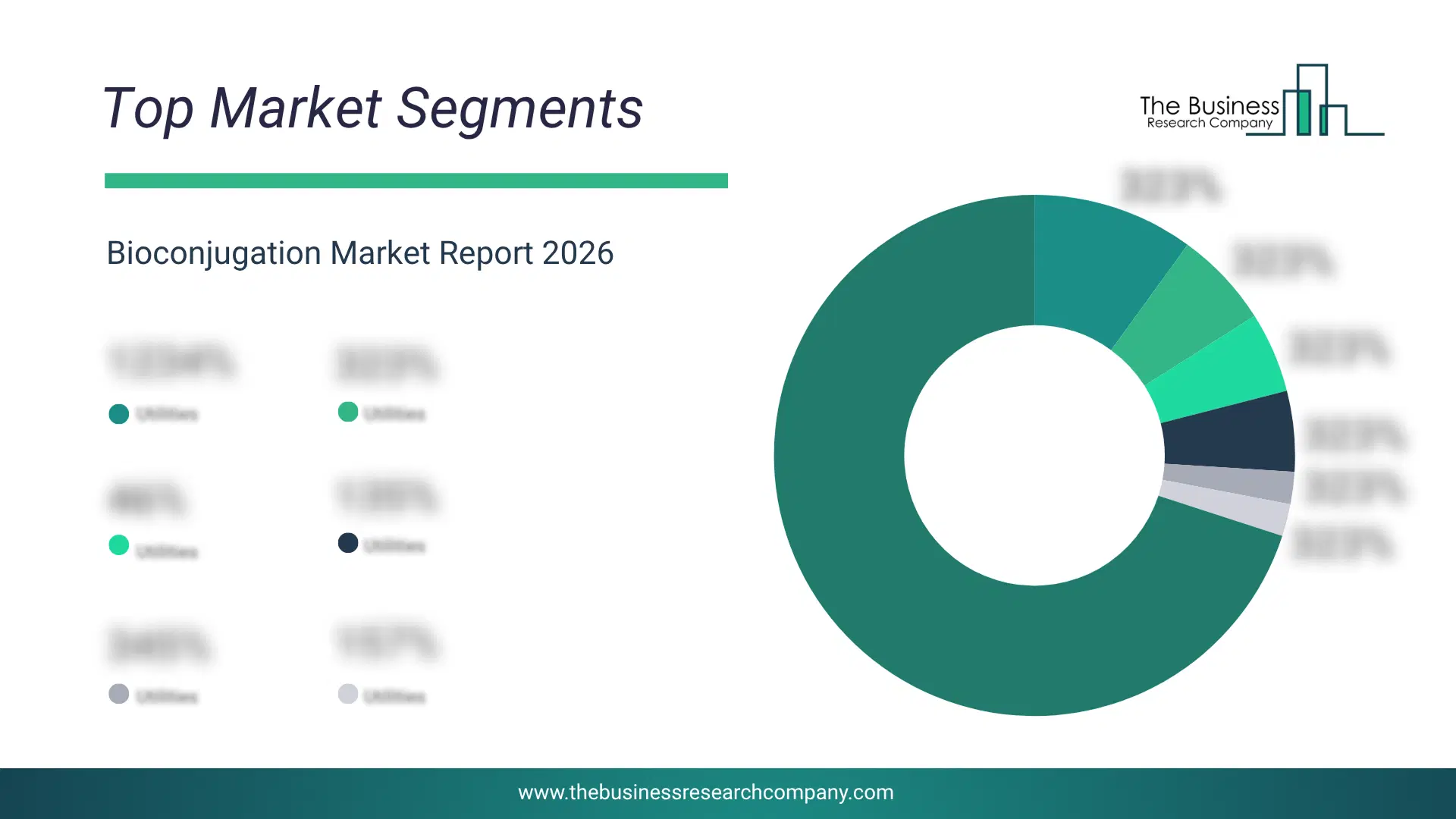
1) By Product And Service: Consumables; Instruments; Service 2) By Biomolecule Type: Antibodies; Proteins; Peptides; Oligonucleotides; Other Biomolecules 3) By Technique: Chemical Conjugation; Enzyme-Mediated Conjugation; Click Chemistry; Photoreactive Crosslinking; Other Techniques 4) By Application: Therapeutics; Research And Development; Diagnostics 5) By End Use: Pharmaceutical And Biotechnology Companies; Contract Research Organizations (CRO) And Contract Manufacturing Organizations (CMOs); Academic And Research Institutes; Hospitals, Clinical And Diagnostic Laboratories Subsegments: 1) By Consumables: Reagents; Buffers; Linkers; Kits; Resins; Chromatography Materials; Protein Purification Materials 2) By Instruments: Chromatography Systems; Spectroscopy Systems; Electrophoresis Systems; Automated Conjugation Platforms; Imaging Systems; Bioreactors 3) By Service: Custom Conjugation Services; Antibody Modification Services; Protein Labeling Services; Contract Research Services; Analytical Testing Services; Purification ServicesWhat Is The Driver Of The Bioconjugation Market?
The increasing demand for targeted therapeutics is expected to propel the growth of the bioconjugation market going forward. Targeted therapeutics refer to medical treatments designed to specifically target disease-causing cells or molecules, improving treatment effectiveness while minimizing damage to healthy tissues. The rise in targeted therapeutics is due to increasing demand for precision medicine, enabling more accurate treatment approaches that improve patient outcomes and reduce adverse side effects. The bioconjugation supports targeted therapeutics by enabling the precise linking of drugs to targeting molecules, improving selective delivery to diseased cells, and enhancing therapeutic efficacy. For instance, in February 2024, according to the West China Hospital, Sichuan University, a China-based medical research center advancing targeted therapies, over 47 novel targeted therapeutics were approved by the U.S. Food and Drug Administration in 2023, accounting for about 85.5% of all new drug approvals and showing an increased emphasis on precision-targeted treatment options in the United States. Therefore, increasing demand for targeted therapeutics is driving the growth of the bioconjugation industry.Key Players In The Global Bioconjugation Market
Major companies operating in the bioconjugation market are Thermo Fisher Scientific Inc., Merck KGaA, Danaher Corporation, Lonza Group AG, Agilent Technologies Inc., Charles River Laboratories International Inc., Sartorius AG, Bio-Rad Laboratories Inc., Vector Laboratories Inc., Promega Corporation, LGC Biosearch Technologies Ltd., TriLink BioTechnologies LLC, Creative PEGWorks Inc., Lumiprobe Corporation, Biotium Inc., Jena Bioscience GmbH, Quanta BioDesign Ltd., Setareh Biotech Inc., Baseclick GmbH, Biosynth Carbosynth Ltd., Glen Research Inc., BroadPharm Inc., and Biorbyt Ltd.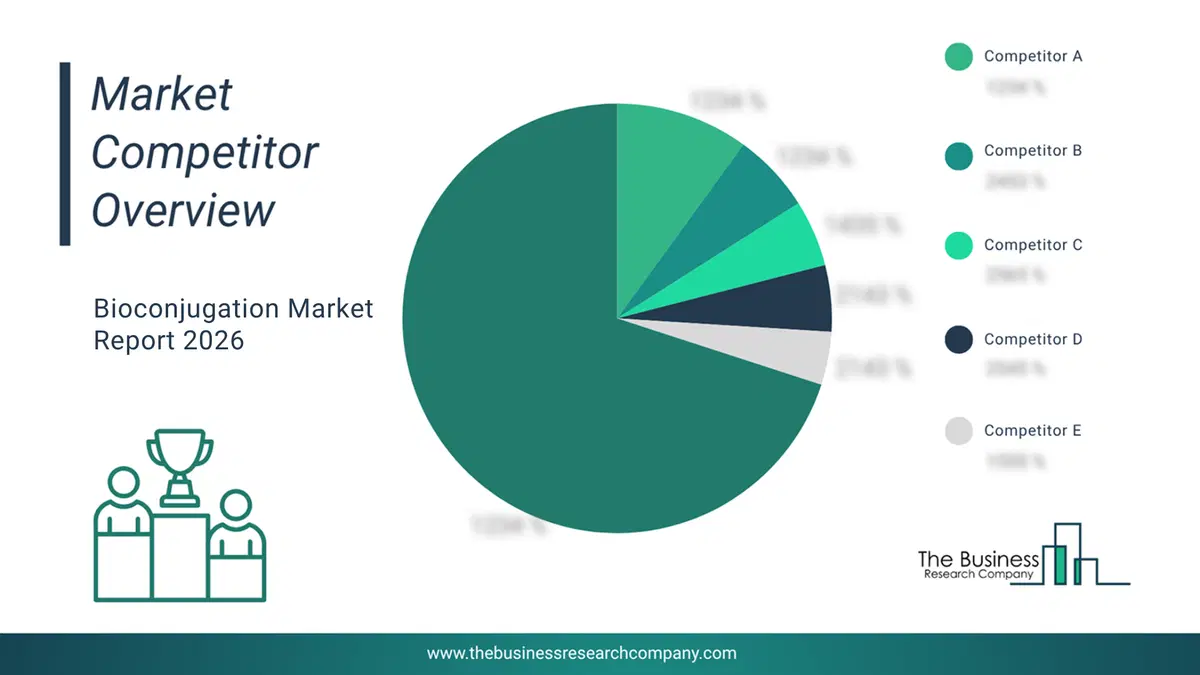
This chart is for illustrative purposes; the full report includes a detailed competitor analysis and comprehensive overview of the top 10 companies in the market.
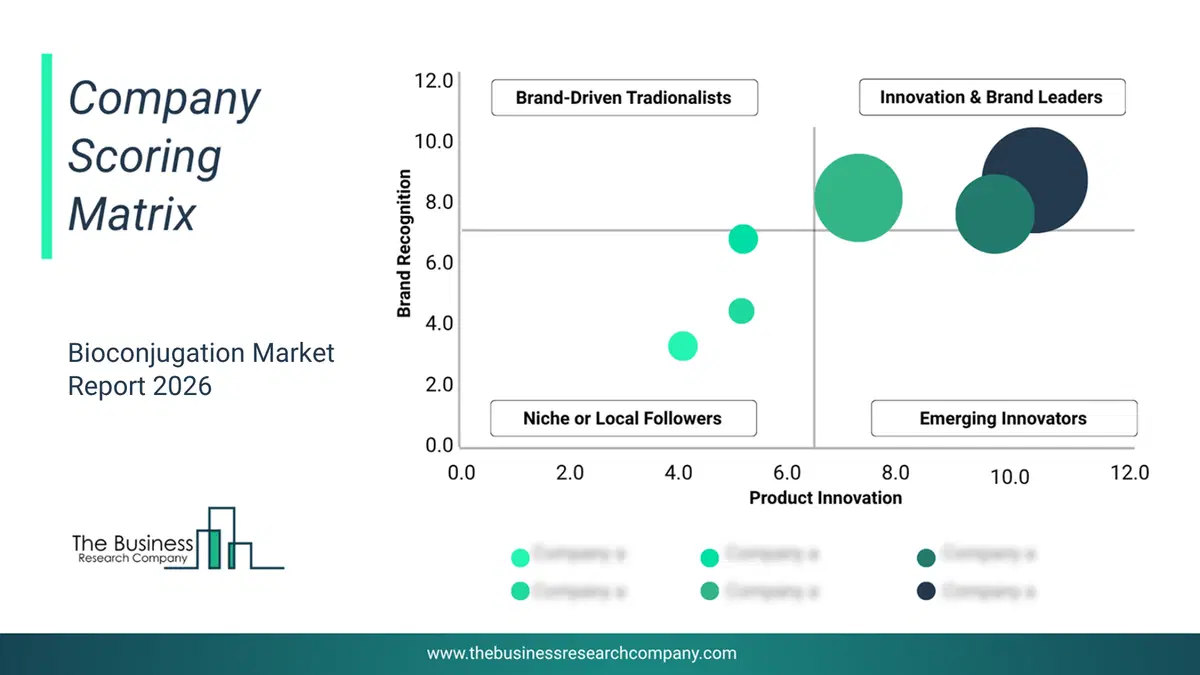
This chart maps companies by product innovation and brand strength, with bubble size indicating relative revenue, helping identify market leaders, challengers, and niche players. This is an illustrative chart; the full report provides a complete and accurate competitive analysis.
Global Bioconjugation Market Trends and Insights
Major companies operating in the bioconjugation market are focusing on developing advanced platforms, such as site-specific conjugation methods, to improve drug delivery precision, enhance coupling stability, and minimize off-target toxicity. Site-specific conjugation methods refer to bioconjugation techniques that allow controlled attachment of therapeutic molecules, such as drugs or RNAi, to biomolecules like antibodies, peptides, or oligonucleotides, ensuring consistent activity and safety. For instance, in August 2023, BOCSCI Inc., a US-based supplier of research chemicals and bioconjugation services, launched the XDC bioconjugation platform, a next-generation solution designed to optimize the synthesis of bioconjugates. Leveraging advanced conjugation strategies, including unnatural amino acid incorporation, engineered cysteine conjugation, enzyme-assisted ligation, and glycoconjugation generation, the platform enables precise manufacturing of antibody-drug conjugates, siRNA conjugates, and other targeted drug delivery molecules, empowering researchers to design safer and more effective biopharmaceuticals.What Are Latest Mergers And Acquisitions In The Bioconjugation Market?
In July 2023, Biosynth Carbosynth, a Switzerland-based company that provides custom synthesis and manufacturing services, acquired Celares for an undisclosed amount. Through this acquisition, Biosynth aims to expand its bioconjugation capabilities and polymer-based drug delivery solutions, enabling customized conjugation of antibodies, antigens, and peptides for pharmaceutical and diagnostic customers from development through commercialization. Celera Corporation is a US-based company specializing in bioconjugation, polymer-based drug delivery, and the chemical modification of biomolecules for enhanced therapeutic efficacy.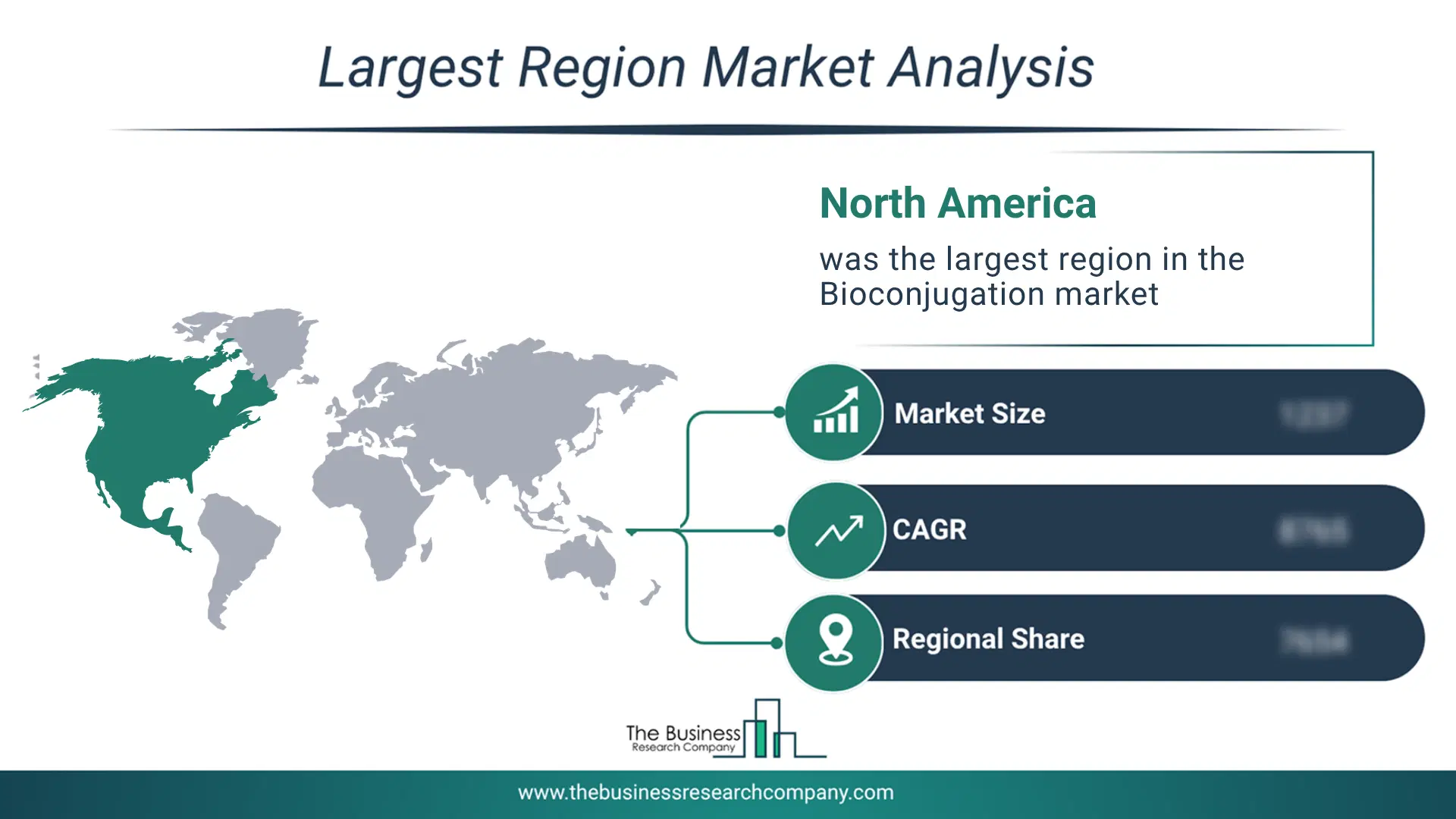
Regional Insights
North America was the largest region in the bioconjugation market in 2025. Asia-Pacific is expected to be the fastest-growing region in the forecast period. The regions covered in this market report are Asia-Pacific, South East Asia, Western Europe, Eastern Europe, North America, South America, Middle East, Africa. The countries covered in this market report are Australia, Brazil, China, France, Germany, India, Indonesia, Japan, Taiwan, Russia, South Korea, UK, USA, Canada, Italy, Spain.What Defines the Bioconjugation Market?
The bioconjugation market includes sales of linkers, crosslinkers, labeling reagents, and assay kits. Values in this market are ‘factory gate’ values, that is, the value of goods sold by the manufacturers or creators of the goods, whether to other entities (including downstream manufacturers, wholesalers, distributors, and retailers) or directly to end customers. The value of goods in this market includes related services sold by the creators of the goods.How is Market Value Defined and Measured?
The market value is defined as the revenues that enterprises gain from the sale of goods and/or services within the specified market and geography through sales, grants, or donations in terms of the currency (in USD unless otherwise specified). The revenues for a specified geography are consumption values that are revenues generated by organizations in the specified geography within the market, irrespective of where they are produced. It does not include revenues from resales along the supply chain, either further along the supply chain or as part of other products.
This chart presents market attractiveness based on a quantitative evaluation of growth, competition, strategic alignment, and risk, offering a clear view of opportunity areas for decision-making. This chart is for illustrative purposes; the full report contains the complete analysis.

This chart highlights the Total Addressable Market (TAM) by estimating the maximum revenue opportunity using an assumption-driven approach, supporting strategic planning and opportunity sizing across markets. The chart is illustrative; the full report provides a more comprehensive analysis.
What Key Data and Analysis Are Included in the Bioconjugation Market Report 2026?
The bioconjugation market research report is one of a series of new reports from The Business Research Company that provides market statistics, including industry global market size, regional shares, competitors with the market share, detailed market segments, market trends and opportunities, and any further data you may need to thrive in the bioconjugation industry. The market research report delivers a complete perspective of everything you need, with an in-depth analysis of the current and future state of the industry.Bioconjugation Market Report Forecast Analysis
| Report Attribute | Details |
|---|---|
| Market Size Value In 2026 | $6.89 billion |
| Revenue Forecast In 2030 | $11.12 billion |
| Growth Rate | CAGR of 12.5% from 2026 to 2030 |
| Base Year For Estimation | 2025 |
| Actual Estimates/Historical Data | 2020-2025 |
| Forecast Period | 2026 - 2030 |
| Market Representation | Revenue in USD Billion and CAGR from 2026 to 2030 |
| Segments Covered | Product And Service, Biomolecule Type, Technique, Application, End Use |
| Regional Scope | Asia-Pacific, Western Europe, Eastern Europe, North America, South America, Middle East, Africa |
| Country Scope | The countries covered in the report are Australia, Brazil, China, France, Germany, India, Indonesia, Japan, Taiwan, Russia, South Korea, UK, USA, Canada, Italy, Spain. |
| Key Companies Profiled | Thermo Fisher Scientific Inc., Merck KGaA, Danaher Corporation, Lonza Group AG, Agilent Technologies Inc., Charles River Laboratories International Inc., Sartorius AG, Bio-Rad Laboratories Inc., Vector Laboratories Inc., Promega Corporation, LGC Biosearch Technologies Ltd., TriLink BioTechnologies LLC, Creative PEGWorks Inc., Lumiprobe Corporation, Biotium Inc., Jena Bioscience GmbH, Quanta BioDesign Ltd., Setareh Biotech Inc., Baseclick GmbH, Biosynth Carbosynth Ltd., Glen Research Inc., BroadPharm Inc., and Biorbyt Ltd. |
| Customization Scope | Request for Customization |
| Pricing And Purchase Options | Explore Purchase Options |